


John 17:1
- ΤαῦταTautaThese thingsG3778D-APNDemonstrative pronoun Accusative Plural Neuter
- ἐλάλησενelalēsenspokeG2980V-AAI-3SVerb Aorist Active Indicative 3rd Singular
- ὁho<the>G3588T-NSMDefinite article Nominative Singular Masculine
- ἸησοῦςIēsousJesusG2424N-NSM-PNoun Nominative Singular Masculine Individual
- καὶkaiandG2532CONJConjunction
- ἐπάραςeparashaving lifted upG1869V-AAP-NSMVerb Aorist Active Participle Nominative Singular Masculine
- τοὺςtoustheG3588T-APMDefinite article Accusative Plural Masculine
- ὀφθαλμοὺςophthalmouseyesG3788N-APMNoun Accusative Plural Masculine
- αὐτοῦautouof HimG846P-GSMPersonal pronoun Genitive Singular Masculine
- εἰςeistoG1519PREPPreposition
- τὸνton<the>G3588T-ASMDefinite article Accusative Singular Masculine
- οὐρανὸνouranonheavenG3772N-ASMNoun Accusative Singular Masculine
- καὶkaiandG2532CONJConjunction
- εἶπεν·eipenHe saidG2036V-2AAI-3SVerb 2nd Aorist Active Indicative 3rd Singular
- πάτερpaterFatherG3962N-VSM-TNoun Vocative Singular Masculine Person Gentilic
- ἐλήλυθενelēluthenhas comeG2064V-2RAI-3SVerb 2nd Perfect Active Indicative 3rd Singular
- ἡhētheG3588T-NSFDefinite article Nominative Singular Feminine
- ὥρα·hōrahourG5610N-NSFNoun Nominative Singular Feminine
- δόξασόνdoxasondo glorifyG1392V-AAM-2SVerb Aorist Active Imperative 2nd Singular
- σουsouYourG4771P-2GSPersonal pronoun Genitive 2nd Singular
- τὸνton<the>G3588T-ASMDefinite article Accusative Singular Masculine
- υἱόνhuionSonG5207N-ASMNoun Accusative Singular Masculine
- ἵναinathatG2443CONJConjunction
- καὶkaialsoG2532CONJConjunction
- ὁhotheG3588T-NSMDefinite article Nominative Singular Masculine
- υἱὸςhuiosSonG5207N-NSMNoun Nominative Singular Masculine
- σουsouof youG4771P-2GSPersonal pronoun Genitive 2nd Singular
- δοξάσῃdoxasēmay glorifyG1392V-AAS-3SVerb Aorist Active Subjunctive 3rd Singular
- σέseYouG4771P-2ASPersonal pronoun Accusative 2nd Singular
English is a literal word-by-word gloss of the Greek, not the KJV's wording. Why?
This is the original text the KJV's translators worked from — each Greek word with its own literal English meaning in this verse, prepared by scholars at Tyndale House, Cambridge. The KJV translates whole sentences, not word by word, so its wording differs: one Greek word can become several English words, and the KJV may choose “charity” where the gloss reads “love”. Both are faithful — they answer different questions. For the KJV's own rendering, switch to the KJV text.
Details
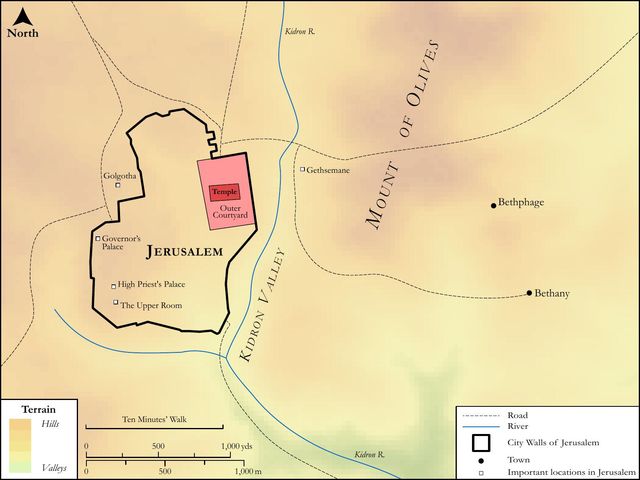
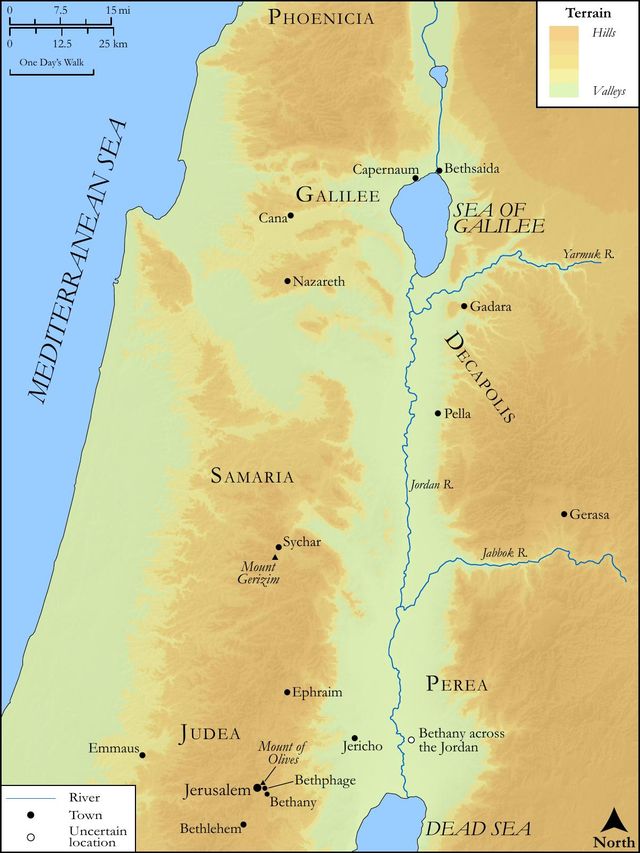
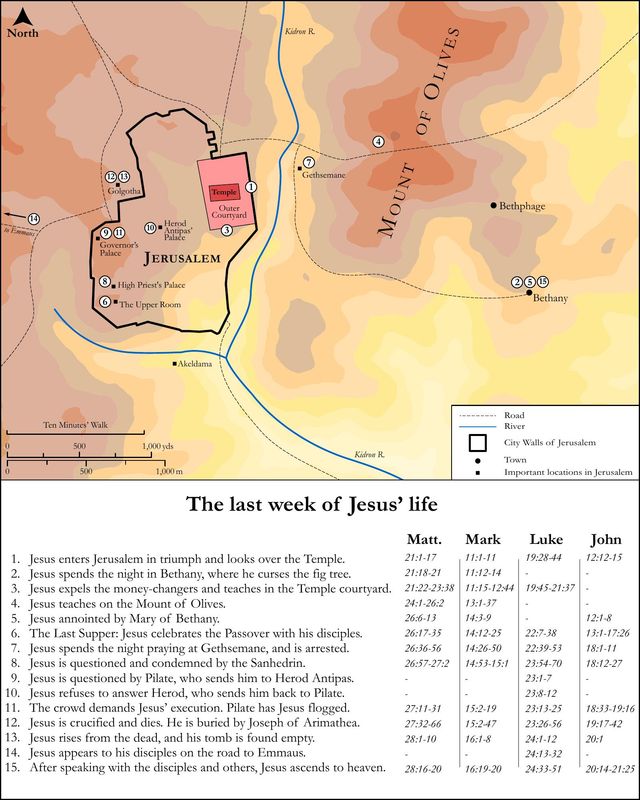
See on the biblical-era map
Study this verse
Public-domain commentary
Matthew Henry
From his Commentary on the Whole Bible. Henry comments on passages, not single verses — this entry covers John 17:1–5. His four-level outline is real structure in the source text, so it is rendered as structure.
Here we have, I. The circumstances of this prayer, Joh 17:1. Many a solemn prayer Christ made in the days of his flesh (sometimes he continued all night in prayer), but none of his prayers are recorded so fully as this. Observe,
1.The time when he prayed this prayer; when he had spoken these words, had given the foregoing farewell to his disciples, he prayed this prayer in their hearing; so that,
(1.)It was a prayer after a sermon; when he had spoken from God to them, he turned to speak to God for them. Note, Those we preach to we must pray for. He that was to prophesy upon the dry bones was also to pray, Come, O breath, and breathe upon them. And the word preached should be prayed over, for God gives the increase.
(2.)It was a prayer after sacrament; after Christ and his disciples had eaten the passover and the Lord's supper together, and he had given them a suitable exhortation, he closed the solemnity with this prayer, that God would preserve the good impressions of the ordinance upon them.
(3.)It was a family-prayer. Christ's disciples were his family, and, to set a good example before the masters of families, he not only, as the son of Abraham, taught his household (Gen 18:19), but, as a son of David, blessed his household (Sa2 6:20), prayed for them and with them.
(4.)It was a parting prayer. When we and our friends are parting, it is good to part with prayer, Act 20:36. Christ was parting by death, and that parting should be sanctified and sweetened by prayer. Dying Jacob blessed the twelve patriarchs, dying Moses the twelve tribes, and so, here, dying Jesus the twelve apostles.
(5.)It was a prayer that was a preface to his sacrifice, which he was now about to offer on earth, specifying the favours and blessings designed to be purchased by the merit of his death for those that were his; like a deed leading the uses of a fine, and directing to what intents and purposes it shall be levied. Christ prayed then as a priest now offering sacrifice, in the virtue of which all prayers were to be made.
(6.)It was a prayer that was a specimen of his intercession, which he ever lives to make for us within the veil. Not that in his exalted state he addresses himself to his Father by way of humble petition, as when he was on earth. No, his intercession in heaven is a presenting of his merit to his Father, with a suing out of the benefit of it for all his chosen ones.
2.The outward expression of fervent desire which he used in this prayer: He lifted up his eyes to heaven, as before (Joh 11:41); not that Christ needed thus to engage his own attention, but he was pleased thus to sanctify this gesture to those that use it, and justify it against those that ridicule it. It is significant of the lifting up of the soul to God in prayer, Psa 25:1. Sursum corda was anciently used as a call to prayer, Up with your hearts, up to heaven; thither we must direct our desires in prayer, and thence we must expect to receive the good things we pray for.
II.The first part of the prayer itself, in which Christ prays for himself. Observe here,
1.He prays to God as a Father: He lifted up his eyes, and said, Father. Note, As prayer is to be made to God only, so it is our duty in prayer to eye him as a Father, and to call him our Father. All that have the Spirit of adoption are taught to cry Abba, Father, Joh 17:25. For it will be of great use to us in prayer, both for direction and for encouragement, to call God as we hope to find him.
2.He prayed for himself first. Though Christ, as God, was prayed to, Christ, as man, prayed; thus it became him to fulfill all righteousness. It was said to him, as it is said to us, Ask, and I will give thee, Psa 2:8. What he had purchased he must ask for; and shall we expect to have what we never merited, but have a thousand times forfeited, unless we pray for it? This puts an honour upon prayer, that it was the messenger Christ sent on his errands, the way in which even he corresponded with Heaven. It likewise gives great encouragement to praying people, and cause to hope that even the prayer of the destitute shall not be despised; time was when he that is advocate for us had a cause of his own to solicit, a great cause, on the success of which depended all his honour as Mediator; and this he was to solicit in the same method that is prescribed to us, by prayers and supplications (Heb 5:7), so that he knows the heart of a petitioner (Exo 23:9), he knows the way. Now observe, Christ began with prayer for himself, and afterwards prayed for his disciples; this charity must begin at home, though it must not end there. We must love and pray for our neighbor as ourselves, and therefore must in a right manner love and pray for ourselves first. Christ was much shorter in his prayer for himself than in his prayer for his disciples. Our prayers for the church must not be crowded into a corner of our prayers; in making supplication for all saints, we have room enough to enlarge, and should not straiten ourselves. Now here are two petitions which Christ puts up for himself, and these two are one - that he might be glorified. But this one petition, Glorify thou me, is twice put up, because it has a double reference. To the prosecution of his undertaking further: Glorify me, that I may glorify thee, in doing what is agreed upon to be yet done, Joh 17:1-3. And to the performance of his undertaking hitherto: "Glorify me, for I have glorified thee. I have done my part, and now, Lord, do thine," Joh 17:4, Joh 17:5.
(1.)Christ here prays to be glorified, in order to his glorifying God (Joh 17:1): Glorify thy Son according to thy promise, that thy Son may glorify thee according to his understanding. Here observe,
[1.]What he prays for - that he might be glorified in this world: "The hour is come when all the powers of darkness will combine to vilify thy Son; now, Father, glorify him." The Father glorified the Son upon earth, First, Even in his sufferings, by the signs and wonders which attended them. When they that came to take him were thunder-struck with a word, - when Judas confessed him innocent, and sealed that confession with his own guilty blood, - when the judge's wife asleep, and the judge himself awake, pronounced him righteous, - when the sun was darkened, and the veil of the temple rent, then the Father not only justified, but glorified the Son. Nay, Secondly, Even by his sufferings; when he was crucified, he was magnified, he was glorified, Joh 13:31. It was in his cross that he conquered Satan and death; his thorns were a crown, and Pilate in the inscription over his head wrote more than he thought. But, Thirdly, Much more after his sufferings. The Father glorified the Son when he raised him from the dead, showed him openly to chosen witnesses, and poured out the Spirit to support and plead his cause, and to set up his kingdom among men, then he glorified him. This he here prays for, and insists upon.
[2.]What he pleads to enforce this request.
First, He pleads relation: Glorify thy Son; thy Son as God, as Mediator. It is in consideration of this that the heathen are given him for his inheritance; for thou art my Son, Psa 2:7, Psa 2:8. The devil had tempted him to renounce his sonship with an offer of the kingdoms of this world; but he rejected the offer with disdain, and depended upon his Father for his preferment, and here applies himself to him for it. Note, Those that have received the adoption of sons may in faith pray for the inheritance of sons; if sanctified, then glorified: Father, glorify thy Son.
Secondly, He pleads the time: The hour is come; the season prefixed to an hour. The hour of Christ's passion was determined in the counsel of God. He had often said his hour was not yet come; but now it was come, and he knew it. Man knows not his time (Ecc 9:12), but the Son of man did. He calls it this hour (Joh 12:27), and here, the hour; compare Mar 14:35; Joh 16:21. For the hour of the Redeemer's death, which was also the hour of the Redeemer's birth, was the most signal and remarkable hour, and, without doubt, the most critical, that ever was since the clock of time was first set a going. Never was there such an hour as that, nor did ever any hour challenge such expectations of it before, nor such reflections upon it after. 1. "The hour is come in the midst of which I need to be owned." Now is the hour when this grand affair is come to a crisis; after many a skirmish the decisive battle between heaven and hell is now to be fought, and that great cause in which God's honour and man's happiness are together embarked must now be either won or lost for ever. The two champions David and Goliath, Michael and the dragon, are now entering the lists; the trumpet sounds for an engagement that will be irretrievably fatal either to the one or to the other: "Now glorify thy Son, now give him victory over principalities and powers, now let the bruising of his heel be the breaking of the serpent's head, now let thy Son be so upheld as not to fail nor be discouraged." When Joshua went forth conquering and to conquer, it is said, The Lord magnified Joshua; so he glorified his Son when he made the cross his triumphant chariot. 2. "The hour is come in the close of which I expect to be crowned; the hour is come when I am to be glorified, and, set at thy right hand." Betwixt him and that glory there intervened a bloody scene of suffering; but, being short, he speaks as if he made little of it: The hour is come that I must be glorified; and he did not expect it till then. Good Christians in a trying hour, particularly a dying hour, may thus plead: "Now the hour is come, stand by me, appear for me, now or never: now the earthly tabernacle is to be dissolved, the hour is come that I should be glorified." Co2 5:1.
Thirdly, He pleads the Father's own interest and concern herein: That thy Son may also glorify thee; for he had consecrated his whole undertaking to his Father's honour. He desired to be carried triumphantly through his sufferings to his glory, that he might glorify the Father two ways: - 1. By the death of the cross, which he was now to suffer. Father, glorify thy name, expressed the great intention of his sufferings, which was to retrieve his Father's injured honour among men, and, by his satisfaction, to come up to the glory of God, which man, by his sin, came short of: "Father, own me in my sufferings, that I may honour thee by them." 2. By the doctrine of the cross, which was now shortly to be published to the world, by which God's kingdom was to be re-established among men. He prays that his Father would so grace his sufferings, and crown them, as not only to take off the offence of the cross, but to make it, to those that are saved, the wisdom of God and the power of God. If God had not glorified Christ crucified, by raising him from the dead, his whole undertaking had been crushed; therefore glorify me, that I may glorify thee. Now thereby he hath taught us, (1.) What to eye and aim at in our prayers, in all our designs and desires - and that is, the honour of God. It being our chief end to glorify God, other things must be sought and attended to in subordination and subserviency to the Lord. "Do this and the other for thy servant, that thy servant may glorify thee. Give me health, that I may glorify thee with my body; success, that I may glorify thee with my estate," etc. Hallowed be thy name must be our first petition, which must fix our end in all our other petitions, Pe1 4:11. (2.) He hath taught us what to expect and hope for. If we sincerely set ourselves to glorify our Father, he will not be wanting to do that for us which is requisite to put us into a capacity of glorifying him, to give us the grace he knows sufficient, and the opportunity he sees convenient. But, if we secretly honour ourselves more than him, it is just with him to leave us in the hand of our own counsels, and then, instead of honouring ourselves, we shall shame ourselves.
Fourthly, He pleads his commission (Joh 17:2, Joh 17:3); he desires to glorify his Father, in conformity to, and in pursuance of, the commission given him: "Glorify thy Son, as thou hast given him power, glorify him in the execution of the powers thou hast given him," so it is connected with the petition; or, that thy Son may glorify thee according to the power given him, so it is connected with the plea. Now see here the power of the Mediator.
a.The origin of his power: Thou hast given him power; he has it from God, to whom all power belongs. Man, in his fallen state, must, in order to his recovery, be taken under a new model of government, which could not be erected but by a special commission under the broad seal of heaven, directed to the undertaker of that glorious work, and constituting him sole arbitrator of the grand difference that was, and sole guarantee of the grand alliance that was to be, between God and man; so as to this office, he received his power, which was to be executed in a way distinct from his power and government as Creator. Note, The church's king is no usurper, as the prince of this world is; Christ's right to rule is incontestable.
b.The extent of his power: He has power over all flesh. (a.) Over all mankind. He has power in and over the world of spirits, the powers of the upper and unseen world are subject to him (Pe1 3:22); but, being now mediating between God and man, he here pleads his power over all flesh. They were men whom he was to subdue and save; out of that race he had a remnant given him, and therefore all that rank of beings was put under his feet. (b.) Over mankind considered as corrupt and fallen, for so he is called flesh, Gen 6:3. If he had not in this sense been flesh, he had not needed a Redeemer. Over this sinful race the Lord Jesus has all power; and all judgment, concerning them, is committed to him; power to bind or loose, acquit or condemn; power on earth to forgive sins or not. Christ, as Mediator, has the government of the whole world put into his hand; he is king of nations, has power even over those that know him not, nor obey his gospel; whom he does not rule, he over-rules, Psa 22:28; Psa 72:8; Mat 28:18; Joh 3:35.
c.The grand intention and design of this power: That he should give eternal life to as many as thou hast given him. Here is the mystery of our salvation laid open.
(a.)Here is the Father making over the elect to the Redeemer, and giving them to him as his charge and trust; as the crown and recompence of his undertaking. He has a sovereign power over all the fallen race, but a peculiar interest in the chosen remnant; all things were put under his feet, but they were delivered into his hand.
(b.)Here is the Son undertaking to secure the happiness of those that were given him, that he would give eternal life to them. See how great the authority of the Redeemer is. He has lives and crowns to give, eternal lives that never die, immortal crowns that never fade. Now consider how great the Lord Jesus is, who has such preferments in his gift; and how gracious he is in giving eternal life to those whom he undertakes to save. [a.] He sanctifies them in this world, gives them the spiritual life which is eternal life in the bud and embryo, Joh 4:14. Grace in the soul is heaven in that soul. [b.] He will glorify them in the other world; their happiness shall be completed in the vision and fruition of God. This only is mentioned, because it supposes all the other parts of his undertaking, teaching them, satisfying for them, sanctifying them, and preparing them for that eternal life; and indeed all the other were in order to this; we are called to his kingdom and glory, and begotten to the inheritance. What is last in execution was first in intention, and that is eternal life.
(c.)Here is the subserviency of the Redeemer's universal dominion to this: He has power over all flesh, on purpose that he might give eternal life to the select number. Note, Christ's dominion over the children of men is in order to the salvation of the children of God. All things are for their sakes, Co2 4:15. All Christ's laws, ordinances, and promises, which are given to all, are designed effectually to convey spiritual life, and secure eternal life, to all that were given to Christ; he is head over all things to the church. The administration of the kingdoms of providence and grace are put into the same hand, that all things may be made to concur for good to the called.
d.Here is a further explication of this grand design (Joh 17:3): "This is life eternal, which I am empowered and have undertaken to give, this is the nature of it, and this the way leading to it, to know thee the only true God, and all the discoveries and principles of natural religion, and Jesus Christ whom, thou has sent, as Mediator, and the doctrines and laws of that holy religion which he instituted for the recovery of man out of his lapsed state." Here is,
(a.)The great end which the Christian religion sets before us, and that is, eternal life, the happiness of an immortal soul in the vision and fruition of an eternal God. This he was to reveal to all, and secure to all that were given him. By the gospel life and immortality are brought to light, are brought to hand, a life which transcends this as much in excellency as it does in duration.
(b.)The sure way of attaining this blessed end, which is, by the right knowledge of God and Jesus Christ: "This is life eternal, to know thee," which may be taken two ways - [a.] Life eternal lies in the knowledge of God and Jesus Christ; the present principle of this life is the believing knowledge of God and Christ; the future perfection of that life will be the intuitive knowledge of God and Christ. Those that are brought into union with Christ, and live a life of communion with God in Christ, know, in some measure, by experience, what eternal life is, and will say, "If this be heaven, heaven is sweet." See Psa 17:15. [b.] The knowledge of God and Christ leads to life eternal; this is the way in which Christ gives eternal life, by the knowledge of him that has called us (Pe2 1:3), and this is the way in which we come to receive it. The Christian religion shows us the way to heaven, First, By directing us to God, as the author and felicity of our being; for Christ died to bring us to God. To know him as our Creator, and to love him, obey him, submit to him, and trust in him, as our owner ruler, and benefactor, - to devote ourselves to him as our sovereign Lord, depend upon him as our chief good, and direct all to his praise as our highest end, - this is life eternal. God is here called the only true God, to distinguish him from the false gods of the heathen, which were counterfeits and pretenders, not from the person of the Son, of whom it is expressly said that he is the true God and eternal life (Jo1 5:20), and who in this text is proposed as the object of the same religious regard with the Father. It is certain there is but one only living and true God and the God we adore is he. He is the true God, and not a mere name or notion; the only true God, and all that ever set up as rivals with him are vanity and a lie; the service of him is the only true religion. Secondly, By directing us to Jesus Christ, as the Mediator between God and man: Jesus Christ, whom thou hast sent. If man had continued innocent, the knowledge of the only true God would have been life eternal to him; but now that he is fallen there must be something more; now that we are under guilt, to know God is to know him as a righteous Judge, whose curse we are under; and nothing is more killing than to know this. We are therefore concerned to know Christ as our Redeemer, by whom alone we can now have access to God; it is life eternal to believe in Christ; and this he has undertaken to give to as many as were given him. See Joh 6:39, Joh 6:40. Those that are acquainted with God and Christ are already in the suburbs of life eternal.
(2.)Christ here prays to be glorified in consideration of his having glorified the Father hitherto, Joh 17:4, Joh 17:5. The meaning of the former petition was, Glorify me in this world; the meaning of the latter is, Glorify me in the other world. I have glorified thee on the earth, and now glorify thou me. Observe here,
[1.]With what comfort Christ reflects on the life he had lived on earth: I have glorified thee, and finished my work; it is as good as finished. He does not complain of the poverty and disgrace he had lived in, what a weary life he had upon earth, as ever any man of sorrows had. He overlooks this, and pleases himself in reviewing the service he had done his Father, and the progress he had made in his understanding. This is here recorded, First, For the honour of Christ, that his life upon earth did in all respects fully answer the end of his coming into the world. Note, 1. Our Lord Jesus had work given him to do by him that sent him; he came not into the world to live at ease, but to go about doing good, and to fulfill all righteousness. His Father gave him his work, his work in the vineyard, both appointed him to it and assisted him in it. 2. The work that was given him to do he finished. Though he had not, as yet, gone through the last part of his undertaking, yet he was so near being made perfect through sufferings that he might say, I have finished it; it was as good as done, he was giving it its finishing stroke eteleiōsa - I have finished. The word signifies his performing every part of his undertaking in the most complete and perfect manner. 3. Herein he glorified his Father; he pleased him, he praised him. It is the glory of God that his work is perfect, and the same is the glory of the Redeemer; what he is the author of he will be the finisher of. It was a strange way for the Son to glorify the Father by abasing himself (this looked more likely to disparage him), yet it was contrived that so he should glorify him: "I have glorified thee on the earth, in such a way as men on earth could bear the manifestation of thy glory." Secondly, It is recorded for example to all, that we may follow his example. 1. We must make it our business to do the work God has appointed us to do, according to our capacity and the sphere of our activity; we must each of us do all the good we can in this world. 2. We must aim at the glory of God in all. We must glorify him on the earth, which he has given unto the children of men, demanding only this quit-rent; on the earth, where we are in a state of probation and preparation for eternity. 3. We must persevere herein to the end of our days; we must not sit down till we have finished our work, and accomplished as a hireling our day. Thirdly, It is recorded for encouragement to all those that rest upon him. If he has finished the work that was given him to do, then he is a complete Saviour, and did not do his work by the halves. And he that finished his work for us will finish it in us to the day of Christ.
[2.]See with what confidence he expects the joy set before him (Joh 17:5): Now, O Father, glorify thou me. It is what he depends upon, and cannot be denied him.
First, See here what he prayed for: Glorify thou me, as before, Joh 17:1. All repetitions in prayer are not to be counted vain repetitions; Christ prayed, saying the same words (Mat 26:44), and yet prayed more earnestly. What his Father had promised him, and he was assured of, yet he must pray for; promises are not designed to supercede prayers, but to be the guide of our desires and the ground of our hopes. Christ's being glorified includes all the honours, powers, and joys, of his exalted state. See how it is described. 1. It is a glory with God; not only, Glorify my name on earth, but, Glorify me with thine own self. It was paradise, it was heaven, to be with his Father, as Pro 8:30; Dan 7:13; Heb 8:1. Note, The brightest glories of the exalted Redeemer were to be displayed within the veil, where the Father manifests his glory. The praises of the upper world are offered up to him that sits upon the throne and to the lamb in conjunction (Rev 5:13), and the prayers of the lower world draw out grace and peace from God our Father and our Lord Jesus Christ in conjunction; and thus the Father has glorified him with himself. 2. It is the glory he had with God before the world was. By this it appears, (1.) That Jesus Christ, as God, had a being before the world was, co-eternal with the Father; our religion acquaints us with one that was before all things, and by whom all things consist. (2.) That his glory with the Father is from everlasting, as well as his existence with the Father; for he was from eternity the brightness of his Father's glory, Heb 1:3. As God's making the world only declared his glory, but made no real additions to it; so Christ undertook the work of redemption, not because he needed glory, for he had a glory with the Father before the world, but because we needed glory. (3.) That Jesus Christ in his state of humiliation divested himself of this glory, and drew a veil over it; though he was still God, yet he was God manifested in the flesh, not in his glory. He laid down this glory for a time, as a pledge that he would go through with his undertaking, according to the appointment of his Father. (4.) That in his exalted state he resumed this glory, and clad himself again with his former robes of light. Having performed his undertaking, he did, as it were, reposcere pignus - take up his pledge, by this demand, Glorify thou me. He prays that even his human nature might be advanced to the highest honour it was capable of, his body a glorious body; and that the glory of the Godhead might now be manifested in the person of the Mediator, Emmanuel, God-man. He does not pray to be glorified with the princes and great men of the earth: no; he that knew both worlds, and might choose which he would have his preferment in, chose it in the glory of the other world, as far exceeding all the glory of this. He had despised the kingdoms of this world and the glory of them, when Satan offered them to him, and therefore might the more boldly claim the glories of the other world. Let the same mind be in us. "Lord, give the glories of this world to whom thou wilt give them, but let me have my portion of glory in the world to come. It is no matter, though I be vilified with men; but, Father, glorify thou me with thine own self."
Secondly, See here what he pleaded: I have glorified thee; and now, in consideration thereof, glorify thou me. For, 1. There was an equity in it, and an admirable becomingness, that if God was glorified in him, he should glorify him in himself, as he had observed, Joh 13:32. Such an infinite value there was in what Christ did to glorify his Father that he properly merited all the glories of his exalted state. If the Father was a gainer in his glory by the Son's humiliation, it was fit the Son should be no loser by it at long run, in his glory. 2. It was according to the covenant between them, that if the Son would make his soul an offering for sin he should divide the spoil with the strong (Isa 53:10, Isa 53:12), and the kingdom should be his; and this he had an eye to, and depended upon, in his sufferings; it was for the joy set before him that he endured the cross: and now in his exalted state he still expects the completing of his exaltation, because he perfected his undertaking, Heb 10:13. 3. It was the most proper evidence of his Father's accepting and approving the work he had finished. By the glorifying of Christ we are satisfied that God was satisfied, and therein a real demonstration was given that the Father was well pleased in him as his beloved Son. 4. Thus we must be taught that those, and only those, who glorify God on earth, and persevere in the work God hath given them to do, shall be glorified with the Father, when they must be no more in this world. Not that we can merit the glory, as Christ did, but our glorifying God is required as an evidence of our interest in Christ, through whom eternal life is God's free gift.
Historical interpretation
Nine Centuries of Reception
20 surviving comments on this verse. Each one is dated, so this reads as a timeline rather than a list.
Select a marker to jump to its quote. Markers stagger vertically where authors wrote within a few decades of each other.
Run through the whole Gospel, and you will find that He whom you believe to be the Father (described as acting for the Father, although you, for your part, forsooth, suppose that "the Father, being the husbandman," must surely have been on earth) is once more recognised by the Son as in heaven, when, "lifting up His eyes thereto," He commended His disciples to the safe-keeping of the Father.
He does not say that the day or the time but that the hour has come. An hour contains a portion of a day. What was this hour?… He was now to be spit on, scourged, crucified. But the Father glorifies the Son. The sun, instead of setting, fled, and all the other elements felt that same shock of the death of Christ. The stars in their courses, to avoid complicity in the crime, escaped by self-extinction from beholding the scene. The earth trembled under the weight of our Lord hanging on the cross and testified that it did not have the power to hold within it him who was dying.… The centurion proclaimed, “Truly this was the Son of God.” Creation is set free by the mediation of this sin offering. The very rocks lose their solidity and strength. Those who had nailed him to the cross confess that truly this is the Son of God. The outcome justifies the assertion. Our Lord had said, “Glorify your Son,” testifying that he was not the Son in name only but properly the Son. “Your Son,” he said. Many of us are sons [children] of God. But he is Son in another sense. He is the proper, true Son by nature, not by adoption; in truth, not in name; by birth, not by creation. After he was glorified, that centurion’s confession touched on the truth. And so, when the centurion confesses him to be the true Son of God, none of his believers might doubt what one of his persecutors could not deny.
But perhaps this proves weakness in the Son. He waited to be glorified by one superior to himself. And who does not confess that the Father is superior, seeing that he himself said, “The Father is greater than I”? But beware that you do not let the honor of the Father impair the glory of the Son.… But the prayer, “Father glorify your Son,” is completed by “that your Son also may glorify you.” So then the Son is not weak, inasmuch as he gives back in his turn glory for the glory that he receives.… This petition for glory to be given and paid back is neither a robbery of the Father nor a depreciation of the Son. Rather, it shows the same power of divinity to be in both.
(iii. Tr. c. 10) He doth not say that the day, or the time, but that the hour is come. An hour contains a portion of a day. What was this hour? He was now to be spit upon, scourged, crucified. But the Father glorifies the Son. The sun failed in his course, and with him all the other elements felt that death. The earth trembled under the weight of our Lord hanging on the Cross, and testified that it had not power to hold within it Him who was dying. The Centurion proclaimed, Truly this was the Son of God. (Matt. 27:54) The event answered the prediction. Our Lord had said, Glorify Thy Son, testifying that He was not the Son in name only, but properly the Son. Thy Son, He saith. Many of us are sons of God; but not such is the Son. For He is the proper, true Son by nature, not by adoption, in truth, not in name, by birth, not by creation. Therefore after His glorifying, to the manifestation of the truth there succeeded confession. The Centurion confesses Him to be the true Son of God, that so none of His believers might doubt what one of His persecutors could not deny.
(iii. de. Trin) But perhaps this proves weakness in the Son; His waiting to be glorified by one superior to Himself. And who does not confess that the Father is superior, seeing that He Himself saith, The Father is greater than I? But beware lest the honour of the Father impair the glory of the Son. It follows: That Thy Son also may glorify Thee. So then the Son is not weak, inasmuch as He gives back in His turn glory for the glory which He receives. This petition for glory to be given and repaid, shows the same divinity to be in both.
The Father glorified his own Son, having put everything under the sun under his rule. The Father in turn was glorified through the Son. The Son was glorified by the Father, for he was entrusted with all things, because he is the Son and offspring of the one who can do everything. The Father in turn was glorified, just as a father is glorified by his own son [child]. When the Son was known to have accomplished willingly every mighty deed, the favor of his reputation passes on to the one who begat him.… This glory, then, passes on to us. That which is altogether subordinate, which has been put under the hand of the Word of God (who is mightier than all things) and which has been saved once and for all must remain for the good, since it is no longer ruled by death or governed by corruption or made subject to sins and ancient evils.
"Father, the hour is come; glorify Thy Son, that Thy Son also may glorify Thee." Again He showeth us, that not unwilling He cometh to the Cross. For how could He be unwilling, who prayed that this might come to pass, and called the action "glory," not only for Himself the Crucified, but also for the Father? since this was the case, for not the Son only, but the Father also was glorified. For before the Crucifixion, not even the Jews knew Him; "Israel," it saith, "hath not known Me" (Isa. i. 3); but after the Crucifixion, all the world ran to Him.
(Hom. lxxx) After having said, In the world ye shall have tribulation, our Lord turns from admonition to prayer; thus teaching us in our tribulations to abandon all other things, and flee to God.
(Hom. lxxx. 1) He lifted up His eyes to heaven to teach us intentness in our prayers: that we should stand with uplifted eyes, not of the body only, but of the mind.
Jesus says, in effect, You gave the Son the kind of honor that accorded him universal dominion—although he would have received such honor later. And what a great honor it was already being the one chosen by God! Nonetheless, he says, you gave me this [honor], so glorify me, that is, in a way fitting to the honor of which you made me worthy. Reveal me before everyone at the time of my passion so that through the events that will happen on the cross everyone may know the greatness of my honor. They will recognize that I did not deserve to suffer, nor did I do so unwillingly, but I did it for the greater benefit of all people. So the words “glorify me” do not mean “give me glory.” Rather, they mean “reveal my glory” that was given to me by you. With the same meaning he added, “So that the Son may glorify you,” that is, from those things that were done to me [i.e., the Son], you also will be seen to be great and glorious through me. The more my works appear to be admirable, the more your dignity becomes known.
That the Son was glorified by the Father in His form of a servant, which the Father raised from the dead and set at His own right hand, is indicated by the event itself, and is nowhere doubted by the Christian. But as He not only said, "Father, glorify Thy Son," but likewise added, "that Thy Son may glorify Thee," it is worthy of inquiry how it was that the Son glorified the Father, seeing that the eternal glory of the Father neither suffered diminution in any human form, nor could be increased in respect of its own divine perfection. In itself, indeed, the glory of the Father could neither be diminished nor enlarged; but without any doubt it was less among men when God was known only in Judea: and as yet children praised not the name of the Lord from the rising of the sun to its going down. But inasmuch as this was effected by the gospel of Christ, to wit, that the Father became known through the Son to the Gentiles, assuredly the Son also glorified the Father. Had the Son, however, only died, and not risen again, He would without doubt have neither been glorified by the Father, nor have glorified the Father; but now having been glorified through His resurrection by the Father, He glorifies the Father by the preaching of His resurrection. For this is disclosed by the very order of the words: "Glorify," He says, "Thy Son, that Thy Son may glorify Thee;" saying, as it were, Raise me up again, that by me Thou mayest become known to all the world.
The glorification of the Son by the Father is understood by some to consist in this, that He spared Him not, but delivered Him up for us all. But if we say that He was glorified by His passion, how much more was He so by His resurrection! For in His passion our attention is directed more to His humility than to His glory, in accordance with the testimony of the apostle, who says, "He humbled Himself, and became obedient unto death, even the death of the cross:" and then he goes on to say of His glorification, "Wherefore God also hath highly exalted Him, and given Him a name which is above every name: that in the name of Jesus every knee should bow, of things in heaven, and things in earth, and things under the earth; and that every tongue should confess that the Lord Jesus Christ is in the glory of God the Father." This is the glorification of our Lord Jesus Christ, that took its commencement from His resurrection. His humility accordingly begins in the apostle's discourse with the passage where he says, "He emptied Himself, and took upon Him the form of a servant;" and reaches "even to the death of the cross." But His glory begins with the clause where he says, "Wherefore God also hath exalted Him;" and reaches on to the words, "is in the glory of God the Father."
When, therefore, He had told them on what account He had spoken all things, namely, that in Him they might have peace while having distress in the world, and had exhorted them to be of good cheer, because He had overcome the world; having thus finished His discourse to them, He then directed His words to the Father, and began to pray. For so the evangelist proceeds to say: "These things spake Jesus, and lifted up His eyes to heaven, and said: Father, the hour is come; glorify Thy Son." The Lord, the Only-begotten and coeternal with the Father, could in the form of a servant and out of the form of a servant, if such were needful, pray in silence; but in this other way He wished to show Himself as one who prayed to the Father, that He might remember that He was still our Teacher. Accordingly, the prayer which He offered for us, He made also known to us; seeing that it is not only the delivering of discourses to them by so great a Master, but also the praying for them to the Father, that is a means of edification to disciples. And if so to those who were present to hear what was said, it is certainly so also to us who were to have the reading of it when written.
(Tr. civ) Our Lord, in the form of a servant, could have prayed in silence had He pleased; but He remembered that He had not only to pray, but to teach. For not only His discourse, but His prayer also, was for His disciples' edification, yea and for ours who read the same. Father, the hour is come, shows that all time, and every thing that He did or suffered to be done, was at His disposing, Who is not subject to time. Not that we must suppose that this hour came by any fatal necessity, but rather by God's ordering. Away with the notion, that the stars could doom to death the Creator of the stars.
(Tr. civ) But if He was glorified by His Passion, how much more by His Resurrection? For His Passion rather showed His humility than His glory. So we must understand, Father, the hour is come, glorify Thy Son, to mean, the hour is come for sowing the seed, humility; defer not the fruit, glory.
Wherefore in saying this, "Father, the hour is come; glorify Thy Son," He showed that all time, and every occasion when He did anything or suffered anything to be done, were arranged by Him who was subject to no time: since those things, which were individually future in point of time, have their efficient causes in the wisdom of God, wherein there are no distinctions of time. Let it not, then, be supposed that this hour came through any urgency of fate, but rather by the divine appointment. It was no necessary law of the heavenly bodies that tied to its time the passion of Christ; for we may well shrink from the thought that the stars should compel their own Maker to die. It was not the time, therefore, that drove Christ to His death, but Christ who selected the time to die: who also fixed the time, when He was born of the Virgin, with the Father, of whom He was born independently of time. And in accordance with this true and salutary doctrine, the Apostle Paul also says, "But when the fullness of the time was come, God sent forth His Son;" and God declares by the prophet, "In an acceptable time have I heard Thee, and in a day of salvation have I helped thee;" and yet again the apostle, "Behold, now is the accepted time; behold, now is the day of salvation." He then may say, "Father, the hour is come," who has arranged every hour with the Father: saying, as it were, "Father, the hour," which we fixed together for the sake of men and of my glorification among them, "is come, glorify Thy Son, that Thy Son also may glorify Thee."
Before these words, which we are now, with the Lord's help, to make the subject of discourse, Jesus had said, "These things have I spoken unto you, that in me ye might have peace;" which we are to consider as referring, not to the later words uttered by Him immediately before, but to all that He had addressed to them, whether from the time that He began to account them disciples, or at least from the time after supper when He commenced this admirable and lengthened discourse. He gave them, indeed, such a reason for speaking to them, that either all He ever spake to them may with the utmost propriety be referred to that end, or those especially, as His last words, which He now spake when on the eve of dying for them, after that he who was to betray Him had quitted their company. For He gave this as the cause of His discourse, that in Him they might have peace, just as it is wholly on this account that we are Christians. For this peace will have no temporal end, but will itself be the end of every pious intention and action that are ours at present. For its sake we are endowed with His sacraments, for its sake we are instructed by His works and sayings, for its sake we have received the earnest of the Spirit, for its sake we believe and hope in Him, and according to His gracious giving are enkindled with His love: by this peace we are comforted in all our distresses, by it we are delivered from them all: for its sake we endure with fortitude every tribulation, that in it we may reign in happiness without any tribulation.
In order, then, that the Mediator between God and men, the man Christ Jesus, might be made lustrous or glorious by His resurrection, He was first humbled by suffering; for had He not died, He would not have risen from the dead. Humility is the earning of glory; glory, the reward of humility. This, however, was done in the form of a servant; but He was always in the form of God, and always shall His glory continue: yea, it was not in the past as if it were no more so in the present, nor shall it be, as if it did not yet exist; but without beginning and without end, His glory is everlasting. Accordingly, when He says, "Father, the hour is come; glorify Thy Son," it is to be understood as if He said, The hour is come for sowing the seed-corn of humility, delay not the fruit of my glory.
Fitly therewith did He bring His words to a close, which were proverbs to the disciples, who as yet had little understanding, but would afterwards understand them, when He had given them the Holy Spirit of promise, of whom He had said before: "These things have I spoken unto you being yet present with you. But the Comforter, the Holy Ghost, whom the Father will send in my name, He shall teach you all things, and bring all things to your remembrance, whatsoever I have said unto you." Such, doubtless, was to be the hour, wherein He promised that He would no more speak unto them in proverbs, but show them openly of the Father. For these same words of His, when revealed by the Holy Spirit, were no more to be proverbs to those who had understanding. For when the Holy Spirit was speaking in their hearts, there was not to be silence on the part of the only-begotten Son, who had said that in that hour He would show them plainly of the Father, which, of course, would no longer be a proverb to them when now endowed with understanding. But even this also, how it is that both the Son of God and the Holy Spirit speak at once in the hearts of their spiritual ones, yea the Trinity itself, which is ever inseparably at work, is a word to those who have, but a proverb to those who are without, understanding.
When an occasion calls us to prayer, it is fitting for us to pray for that which increases God’s glory before we pray for that which concerns ourselves.… The Savior indeed spoke these words to show how very necessary his own glory was to the Father so that he might be known to be consubstantial with him … for the Father is glorified in the glory of his offspring.
CHAPTER III. That no man should consider that the Son has any lack of God-befitting glory, though He be found to say, Father, glorify Thy Son.
Having given His disciples a sufficiency of things necessary for salvation, and incited them by fitting words and arguments to a more accurate apprehension of His doctrines, and made them best able to battle against temptation, and confirmed the courage of each one, he straightway changes the form of His speech for our profit, and turns it into a kind of prayer, allowing no interval to elapse between His discourse to them and His prayer to God the Father; herein also by His own conduct suggesting to us a type of admirable life. For the man who aims at serving God ought, I think, to bear in mind that he ought at all events either to be fond of discoursing to his brethren of things profitable or necessary for their salvation, or, if he be not so engaged, to hasten to employ the service of the tongue in supplications to God, so as to render it impossible for any random words to slip in between; for in this way the governance of the tongue may be well and suitably ordered. For is it not quite obvious that, in vain conversations, things blameworthy may very readily escape a man? Moreover, a wise man has said: In the multitude of words thou shalt not escape sin: but he that refraineth his lips is wise.
You may find besides another thing to admire, which is in no small degree profitable for us. The beginning of His prayer has reference to His own glory and that of God the Father, and afterwards, in intimate connection with this, He introduces His prayer for us. And why is this? The reason is one which convinces the pious man that loves God, and actually disposes the worker of good deeds to prayer. For just as we ought to perform good actions, and do all things, not turning to our own glory our zeal herein, but to the glory of the Father of the Universe, I mean God, for He says: Let your light shine before men, that they may see your good works, and glorify your Father Which is in heaven; so also it best befits us, when occasion calls us to prayer, to pray for what redounds to God's glory before what concerns ourselves, as indeed Christ also Himself enjoins us when He says: After this manner pray ye: Our Father Which art in heaven, Hallowed be Thy Name. Thy kingdom come. Thy will be done as in Heaven so on earth. Give us this day our daily bread. What Christ here does, then, ought to be to us the pattern of prayer. For it was necessary that not an elder or messenger, but Christ Himself, should manifest Himself to be our Leader and Guide in all good, and in the way which leadeth to God. For we are called, and are in very truth, as the prophet says, taught of God.
And what He says to His Father it is right that we should consider with the greatest care. For I think we ought in a spirit of the most earnest attention to handle the investigation of His words, and most carefully search after the true intent of His teaching. Father, then, He says, The hour is come; glorify Thy Son that Thy Son may also glorify Thee. So far as the mere form of His language is concerned, one could think that the speaker had some lack of glory; but any one who considers the majesty of the Only-begotten would, I think, quickly shrink from so grievous a conclusion. For it were great folly to think that the Son has any lack of glory, or falls short of the honour which is His due, though He is the Lord of glory, for so the inspired writings call Him. Especially when in another place we observe Him saying to His Father: O Father, glorify Me with the glory which I had with Thee before the world was. Then who can any longer doubt, or who is so demented and so far the enemy of all truth as not to know and confess that the Only-begotten is not bereft of Divine glory so far as His own Nature is concerned; but that since being in the form of God, and in perfect equality with Him, He counted it not a prize to be on an equality with God, but nevertheless descended to the humiliation of human nature, and emptied Himself of His glory, wearing this mean body; and from love towards us putting on the likeness of human littleness, now that the fitting time had actually arrived, at which He was destined, after fulfilling the mystery of our redemption, to gird Himself about with His pristine and essential glory; having wrought out the salvation of the whole world, and secured life and the knowledge of God to those that are therein; herein I say He shows that He has God's Will and favour, and makes this speech to Him, saying that He ought to recover the majesty due unto His Nature.
And how does He ascend into heaven? Surely He That even in the flesh showed Himself able to accomplish the deeds of a God was not in this subject to another's power, but ascended of Himself, being the Wisdom and Might of God the Father. For we must think that thus in no other way He accomplishes the words of a God with power. For all things are from the Father, but not without the Son. For how could God the Father perform any of His proper functions, if His Wisdom and Might, I mean the Son, were not with Him, and accomplishing with Him those things in which His power is seen in active operation? Therefore also the wise Evangelist who wrote this book at the beginning of His work says: All things were made by Him; and without Him was not any thing made. Since then the doctrine of His Consubstantiality compels us by consequence to think that all things proceed from the Father, but wholly through the Son in the Spirit, and that He, having slain death and corruption and taken away from the devil his kingdom, was about to illumine the whole world with the light of the Spirit, and to show Himself thereby henceforth in very deed the true God by Nature, He is impelled to say, Father, glorify Thy Son, that Thy Son may also glorify Thee. And no man of sense would maintain that the Son asks glory from the Father as a man from man, but rather that He also promises to give Him glory, as it were, in return. For it would be very unbecoming, nay rather wholly foolish, to have such an idea about God. The Saviour indeed spake these words to show how very necessary His own glory was to the Father, that He might be known to be Consubstantial with Him. For just as it would entail dishonour on God the Father, that the Son That was begotten of Him should not be such as He That is God by Nature and of God ought to be, so I think, to have His own Son invested with those attributes, which He is conceived of as having, and which are predicated of Him, will confer honour and glory upon Him. The Father therefore is glorified in the glory of His Offspring, as I said just now; giving glory to the Son, by considering throughout His earthly career, both from how great, and of what, a Father the Only-begotten sprang; and in turn receiving glory from the Son by the consideration of how great indeed is the Son, of Whom He is the Father. The honour and glory then, which is Theirs essentially and by Nature, will be reflected from the Son on the Father, and in turn from the Father on the Son.
If any man concede that, owing to the degradation of His Incarnation, our Lord here speaks more humbly than His true Nature warrants, for this was His custom, he will not altogether miss arriving at a proper conclusion, but will not quite attain to the truth in the inquiry. For, if He were seeking only honour from the Father, there would be nothing unlikely in setting down the request to the inferiority of human nature; but, since He promises to glorify the Father in turn, does it not follow of necessity, that we should readily embrace the view we have just given?
These things spake Jesus, those things that He had said at the supper, partly sitting as far as the words, Arise, let us go hence; (c. 14:31.) and thence standing, up to the end of the hymn which now commences, And lifted up His eyes and said, Father, the hour is come; glorify Thy Son.
Having encouraged the disciples to face bravely the coming tribulations, Christ raised their spirits again, this time by prayer. By praying, He teaches us that when temptations assail us we should put everything else aside and flee to God. However, one could say that Jesus was not actually praying, but rather conversing with the Father. Do not be surprised that it is said elsewhere that Jesus did pray, kneeling on the ground (see Mt. 26:39). For the Lord came, not only to reveal Himself to us, but to teach us every virtue by His own example, as a good instructor. Showing us that He goes willingly to His crucifixion, He says, Father, the hour is come. See how He longs for the Passion, and embraces it. He calls it His glory, and His Father’s glory, for indeed, by the Passion both were glorified. Before the crucifixion, He was practically unknown, even to the Jews: Israel does not know Me (Is. 1:3), He said. Afterwards, the whole world flocked to Him.
What exactly is the “glory” that belongs to Him and the Father? It is the benefitting of all flesh by God’s gifts. This is the glory of God. The Lord had previously commanded His disciples not to go into the way of the Gentiles (Mt. 10:5). Now, grace is no longer limited to the Jews. It is offered to the whole world. To this end, the Lord was planning to send the apostles to the Gentiles. But lest the disciples imagine this plan was His own notion, contrary to the will of the Father, Jesus reminds them that it is the Father Who has given Him power over all flesh. In what sense does Christ have power over all flesh, when, as we know, not everyone believes? Christ strives to bring everyone to faith. If some refuse to heed Him, it is not His fault, but the fault of those who reject His teaching. When it is said that the Father “gives” something to the Son, or that the Son “receives” something from the Father, understand that such expressions are a condescension to the limitations of His listeners’ understanding, as we have pointed out before. Christ was always careful to avoid speaking openly about His divinity. The Jews would have been outraged to hear Him claim to be divine, so He said only as much as they could bear at the time. We employ similar condescension when speaking to infants: without naming the object, we point to bread or water, and ask, “Do you want this?” Remember how, at the beginning of the Gospel, the Evangelist stated boldly about Christ: All things were made by Him (Jn. 1:3), and, As many as received Him, to them gave He power to become the sons of God, (Jn. 1:12). How then can He, Who gives others the power to become sons of God, lack divinity in Himself and require it as a gift from the Father? And so, understand that an exalted reality underlies the humble statement. To as many as Thou hast given Him—here is the modest expression; that He should give them eternal life—here, the revelation of the power and authority of the Only-begotten Godhead.
If God alone gives physical life, how much more so eternal life? Christ calls the Father the only true God, in contrast to the false gods of the Gentiles, but by no means does He exclude Himself from the divinity of the Father. Because He is the true Son, He must also be true God, as the Evangelist insists in his general epistle: Jesus Christ … is the true God, and eternal life (I Jn. 5:20). On the basis of the present text from the Gospel, the heretics would make a false god of the Son, and have the Father as their sole divinity. They should be careful not to forget everything else written by Saint John, who also tells us that the Son is the true light (Jn. 1:9). According to their reasoning, this must mean that the Father is a false light! And so, if the Evangelist calls the Father the only true God, it is to distinguish Him from the false gods of the Greeks, not from the Son. Incidentally, the heretics tie the passage, Ye … seek not the honour that cometh from God only (παρὰ τοῦ μόνου θεοῦ, Jn. 5:44), to the one we have been discussing. They imagine that this reinforces their argument that if the Father is the only God (ὁ μόνος Θεός), the Son cannot be God. What an absurd conclusion!
Continue studying John 17:1 across the web’s major study libraries — every link below opens this exact verse, chapter, or book on the destination site.
Read & Compare
 BibleGatewayThis verse in more than 200 translations and 70 languages.
 Bible.comThe YouVersion reader — hundreds of translations, reading plans, and highlights.
 ESV.orgCrossway's official English Standard Version reader.
 NET BibleThe NET translation with 60,000+ translators' notes on every rendering decision.
 STEP BibleTyndale House's free study tool — original text, vocabulary, and scholarly resources.
 BibliaLogos Bible Software's free web reader.
 USCCBThe New American Bible (Revised Edition) with the U.S. bishops' study notes.
Commentaries
 BibleHub CommentariesDozens of classic commentaries on this verse, gathered on one page.
 StudyLightMore than 100 commentary sets — the largest collection on the web.
 BibleRefPlain-English commentary on what this verse means, verse by verse.
 Enduring WordDavid Guzik's free commentary on this chapter, widely used by Bible teachers.
 Bible Study ToolsVerse commentary alongside Greek and Hebrew study aids.
Original Language & Research
- BibleHub InterlinearThe verse word by word — original language, transliteration, and English.
- BibleHub LexiconEvery word's original-language definition and Strong's entry.
 Blue Letter BibleDeep-study tools — Strong's numbers, concordance, and word studies.
 CNTR CollationThe earliest Greek manuscripts of this verse, collated letter by letter.
Sermons, Hymns & Audio


TrulyRandomVerse is not affiliated with these sites and doesn’t control their content. They’re linked because they’re genuinely useful.
Summary
John 17:1 inaugurates Jesus' profound High Priestly Prayer, a deeply intimate and significant moment delivered just hours before His arrest, trial, and crucifixion. In this opening verse, Jesus lifts His gaze heavenward, a posture of earnest supplication, and declares that "the hour is come." This declaration signifies the divinely appointed culmination of His earthly ministry, encompassing His suffering, death, resurrection, and ascension. His primary request is for mutual glorification between the Father and the Son, highlighting the profound unity and shared purpose within the Godhead in the unfolding of God's redemptive plan.
Context
ShowHideLiterary Context
John 17:1 marks a pivotal transition in John's Gospel, immediately following Jesus' extensive Upper Room Discourse (chapters John 13-16). These chapters contain Jesus' final, intimate teachings to His disciples, including the washing of their feet, the new commandment to love, warnings about persecution, and promises of the Holy Spirit. Chapter 17, often called Jesus' High Priestly Prayer, serves as a solemn and profound conclusion to these discourses, moving from teaching His disciples to interceding for them and for all future believers before He embarks on the path to Gethsemane and the cross. It is a moment of profound theological reflection and spiritual preparation for the ultimate sacrifice.
Historical & Cultural Context
Jesus' act of "lifting up his eyes to heaven" (G1869, G3788, G1519, G3772) is a common posture of prayer in ancient Jewish tradition, signifying direct address to God and an appeal to divine authority and presence. This posture underscores the earnestness and reverence of Jesus' prayer. The concept of "the hour" (G5610) was also deeply embedded in Jewish thought, often referring to a divinely appointed time, particularly in eschatological contexts. For Jesus, this "hour" was not merely a chronological moment but the preordained, climactic period of His redemptive work, fulfilling Old Testament prophecies and God's eternal plan. The prayer itself reflects the deep filial relationship between a Jewish son and his father, elevated here to the unique divine relationship between the Son and the Father.
Key Themes
ShowHideThis opening verse introduces several overarching themes that permeate John's Gospel and this prayer. The most prominent is the concept of "The Hour," which in John's Gospel consistently refers to the divinely appointed time for Jesus' passion, death, and subsequent glorification. Earlier, Jesus stated His hour had "not yet come" (John 2:4 and John 7:30), but here, He declares its arrival, signaling the climax of His mission. Another critical theme is Mutual Glorification, where the Father glorifies the Son, and the Son, in turn, glorifies the Father. This highlights the profound unity and interdependent relationship within the Trinity, where the Son's obedience and sacrifice bring glory to the Father, and the Father's exaltation of the Son reveals His own glory. This verse also sets the stage for the theme of Divine Purpose and Obedience, as Jesus fully embraces the Father's will, even unto death (Philippians 2:8).
Exposition and Analysis
ShowHideKey Word Analysis
ShowHideMeaning "to render (or esteem) glorious (in a wide application):--(make) glorify(-ious), full of (have) glory, honour, magnify." In this context, Jesus' request to be glorified by the Father refers to His exaltation through the cross, resurrection, and ascension, which reveals His divine nature and power. Conversely, His glorification of the Father involves His perfect obedience and the successful completion of the redemptive work, thereby magnifying the Father's character and plan.
Apparently a primary word, meaning "a 'father' (literally or figuratively, near or more remote):--father, parent." Jesus' direct address to God as "Father" underscores the intimate, unique, and eternal relationship He shares with the first person of the Trinity. This term highlights His divine Sonship and the profound communion that undergirds His entire mission and prayer.
Apparently a primary word, meaning "an 'hour' (literally or figuratively):--day, hour, instant, season, X short, (even-)tide, (high) time." In John's Gospel, "the hour" is a loaded theological term, signifying not merely a chronological moment but the divinely appointed, climactic time for Jesus' passion, death, resurrection, and ascension, through which God's redemptive plan is fulfilled. Its arrival signals the culmination of Jesus' earthly ministry.
Verse Breakdown
ShowHide"These words spake Jesus"
This phrase serves as a narrative transition, indicating that what follows is a direct utterance from Jesus, specifically His prayer, distinct from the preceding discourses to His disciples. It emphasizes the solemnity and intentionality of His words.
"and lifted up his eyes to heaven, and said"
This describes Jesus' posture and action, signifying a direct, earnest, and reverent address to God. Lifting eyes to heaven is a traditional gesture of prayer, indicating an appeal to the divine realm and a recognition of God's transcendence and authority. It sets the scene for a moment of profound spiritual communion.
"Father, the hour is come"
Jesus' intimate address to God as "Father" highlights His unique relationship and access. The declaration "the hour is come" is pivotal. It signifies the arrival of the preordained, climactic moment of His redemptive work—His suffering, death, and subsequent resurrection and exaltation. This is the culmination of God's sovereign plan for salvation.
"glorify thy Son, that thy Son also may glorify thee"
This is the core request and purpose of the prayer's opening. Jesus asks the Father to glorify Him, which will be accomplished through His sacrificial death and subsequent resurrection and ascension. The ultimate purpose of this glorification is reciprocal: so that the Son, through His perfect obedience and completed work, may in turn bring glory back to the Father, revealing the Father's character, power, and love to the world.
Literary Devices
ShowHideJohn 17:1 employs several significant literary devices. The most prominent is Symbolism, particularly in Jesus' act of "lifting up his eyes to heaven." This gesture is a universal symbol of prayer and direct communication with the divine, emphasizing the vertical dimension of Jesus' relationship with the Father. The phrase "the hour is come" functions as Foreshadowing and Thematic Repetition. Throughout John's Gospel, "the hour" has been anticipated and alluded to as a future, divinely appointed moment; its declaration here signals the imminent fulfillment of this central theme. Furthermore, the reciprocal request, "glorify thy Son, that thy Son also may glorify thee," demonstrates a powerful Parallelism and Chiasmus (ABBA structure), emphasizing the mutual and interdependent glorification within the Godhead, reinforcing the profound unity and shared purpose of the Father and the Son in the plan of redemption.
Theological and Thematic Connections
ShowHideJohn 17:1 profoundly illuminates the nature of the Trinity and the divine plan of salvation. It reveals the intimate and eternal relationship between the Father and the Son, characterized by perfect unity, shared purpose, and mutual glorification. Jesus' prayer is not a cry of weakness but a declaration of divine sovereignty and a request for the Father to complete the preordained work through Him. The "hour" signifies the climax of God's redemptive history, where the cross, resurrection, and ascension are not tragic accidents but the very means by which God's glory is supremely revealed to humanity. This mutual glorification underscores that the ultimate end of all God's works, including salvation, is His own glory.
Reflection and Application
ShowHideJohn 17:1 offers profound spiritual lessons for believers, inviting us into the very heart of Jesus' communion with the Father. Jesus' posture of lifting His eyes to heaven before His greatest trial teaches us the indispensable practice of earnest, focused prayer, especially in moments of deep challenge or significant transition. It reminds us that our ultimate strength and guidance come from aligning ourselves with God's will and seeking His glory above all else. Just as Jesus' "hour" arrived precisely as ordained, we are called to trust in God's perfect timing for our lives, understanding that even our trials and sufferings can be part of His sovereign plan for our glorification and His own. Our lives, like Christ's, are meant to be lived out for the purpose of glorifying God, finding our purpose in His will and our joy in His presence, even when the path leads through difficulty.
Questions for Reflection
ShowHideFAQ
ShowHideWhat is the significance of "the hour" in John's Gospel, and why is it declared to have "come" in John 17:1?
ShowHideIn John's Gospel, "the hour" (Greek: hē hōra) is a crucial theological motif that goes beyond mere chronological time. It refers to the divinely appointed, predetermined climax of Jesus' earthly ministry, encompassing His suffering, crucifixion, death, resurrection, and ascension. Early in His ministry, Jesus repeatedly stated that His hour had "not yet come" (e.g., John 2:4, John 7:30, John 8:20), indicating that the timing of these ultimate events was entirely in the Father's sovereign hands. In John 17:1, the declaration "the hour is come" signifies that this long-awaited, preordained moment has finally arrived. It marks the transition from Jesus' public ministry and private teachings to the fulfillment of His redemptive purpose on the cross, signaling the culmination of God's plan for salvation.
Christ-Centered Fulfillment
ShowHideJohn 17:1, initiating Jesus' High Priestly Prayer, finds its profound Christ-centered fulfillment in the entirety of the New Testament narrative. The "hour" that has "come" is the very moment of Christ's ultimate self-giving, leading to His crucifixion and subsequent resurrection. This "hour" is the pivotal point in salvation history where Jesus, as the perfect Lamb of God, fulfills the Old Testament sacrificial system, taking away the sin of the world (John 1:29). His request to the Father, "glorify thy Son, that thy Son also may glorify thee," is fulfilled in His exaltation through the cross, where His divine power and love are most fully displayed (John 12:23-24). The Father glorifies the Son by raising Him from the dead (Acts 2:24), seating Him at His right hand (Hebrews 1:3), and granting Him "all authority in heaven and on earth" (Matthew 28:18). In turn, the Son glorifies the Father by perfectly accomplishing the work of redemption, revealing the Father's character, power, and love to humanity (John 14:9). This mutual glorification is not merely an internal divine exchange but is extended to believers, who are called to glorify God through Christ (1 Corinthians 6:20) and will ultimately share in Christ's glory (Romans 8:17). Thus, John 17:1 anticipates the triumph of the cross and the eternal reign of Christ, through whom God's ultimate glory is revealed and shared.