


Philippians 2:9
“The Mind of Christ”Philippians 2:5–11
Bible text: King James Version (1769 Blayney text) · Public domain
Bible text: Berean Standard Bible · Public domain
Bible text: American Standard Version (1901) · Public domain
Bible text: World English Bible, Messianic edition · Public domain
Bible text: Geneva Bible (1599) · Public domain
Bible text: Young's Literal Translation · Public domain
- διὸdioThereforeG1352CONJConjunction
- καὶkaialsoG2532CONJConjunction
- ὁho[the]G3588T-NSMDefinite article Nominative Singular Masculine
- θεὸςtheosGodG2316N-NSM-TNoun Nominative Singular Masculine Title
- αὐτὸνautonHimG846P-ASMPersonal pronoun Accusative Singular Masculine
- ὑπερύψωσενhuperupsōsenhighly exaltedG5251V-AAI-3SVerb Aorist Active Indicative 3rd Singular
- καὶkaiandG2532CONJConjunction
- ἐχαρίσατοecharisatograntedG5483V-ADI-3SVerb Aorist Middle Deponent Indicative 3rd Singular
- αὐτῷautōto HimG846P-DSMPersonal pronoun Dative Singular Masculine
- ὄνομαonomanameG3686N-ASNNoun Accusative Singular Neuter
- τὸto[the]G3588T-ASNDefinite article Accusative Singular Neuter
- ὑπὲρhuperaboveG5228PREPPreposition
- πᾶνpaneveryG3956A-ASNAdjective Accusative Singular Neuter
- ὄνομαonomanameG3686N-ASNNoun Accusative Singular Neuter
English is a literal word-by-word gloss of the Greek, not the KJV's wording. Why?
This is the Greek text the KJV’s translators worked from, with each word given its own literal English meaning in this verse. The word-by-word meanings were prepared by scholars at Tyndale House, Cambridge. The KJV translates whole sentences rather than single words, so its wording often differs: one Greek word can become several English words, and the KJV may say “charity” where the word-by-word meaning reads “love”. The two are made for different purposes, and both are faithful to the Greek. To read the KJV’s own wording, switch to the KJV text.
Words in [ ] are added by the English.
Details
See on the biblical-era maps
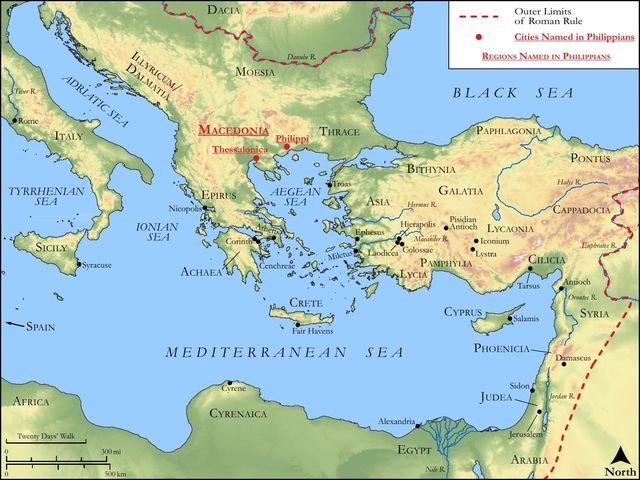
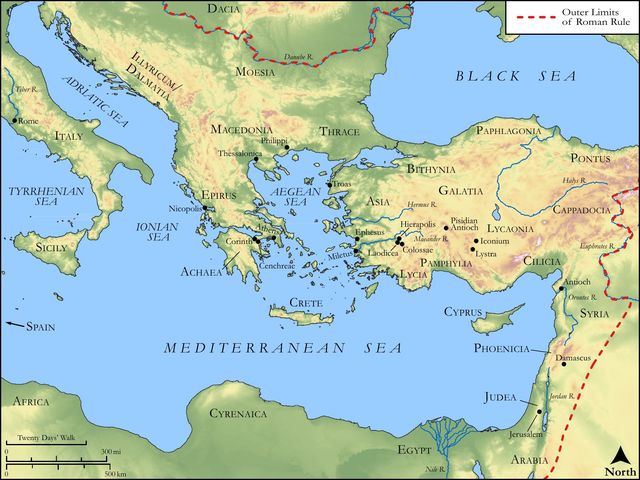
Study this verse
Public-domain commentary
Matthew Henry
From his Commentary on the Whole Bible. Henry wrote on whole passages, and this entry covers Philippians 2:1–11. He set out his notes in a three-level outline, kept here as he numbered it.
The apostle proceeds in this chapter where he left off in the last, with further exhortations to Christian duties. He presses them largely to like-mindedness and lowly-mindedness, in conformity to the example of the Lord Jesus, the great pattern of humility and love. Here we may observe,
I.The great gospel precept passed upon us; that is, to love one another.
This is the law of Christ's kingdom, the lesson of his school, the livery of his family. This he represents (Philippians 2:2) by being like-minded, having the same love, being of one accord, of one mind. We are of a like mind when we have the same love. Christians should be one in affection, whether they can be one in apprehension or no. This is always in their power, and always their duty, and is the likeliest way to bring them nearer in judgment. Having the same love. Observe, The same love that we are required to express to others, others are bound to express to us. Christian love ought to be mutual love. Love, and you shall be loved. Being of one accord, and of one mind; not crossing and thwarting, or driving on separate interests, but unanimously agreeing in the great things of God and keeping the unity of the Spirit in other differences. Here observe,
1.The pathetic pressing of the duty. He is very importunate with them, knowing what an evidence it is of our sincerity, and what a means of the preservation and edification of the body of Christ. The inducements to brotherly love are these: - (1.) "If there is any consolation in Christ. Have you experienced consolation in Christ? Evidence that experience by loving one another." The sweetness we have found in the doctrine of Christ should sweeten our spirits. Do we expect consolation in Christ? If we would not be disappointed, we must love one another. If we have not consolation in Christ, where else can we expect it? Those who have an interest in Christ have consolation in him, strong and everlasting consolation (Hebrews 6:18; 2 Thessalonians 2:16), and therefore ought to love one another. (2.) "Comfort of love. If there is any comfort in Christian love, in God's love to you, in your love to God, or in your brethren's love to us, in consideration of all this, be you like-minded. If you have ever found that comfort, if you would find it, if you indeed believe that the grace of love is a comfortable grace, abound in it." (3.) "Fellowship of the Spirit. If there is such a thing as communion with God and Christ by the Spirit, such a thing as the communion of saints, by virtue of their being animated and actuated by one and the same Spirit, be you like-minded; for Christian love and like-mindedness will preserve to us our communion with God and with one another." (4.) "Any bowels and mercies, in God and Christ, towards you. If you expect the benefit of God's compassions to yourselves, be you compassionate one to another. If there is such a thing as mercy to be found among the followers of Christ, if all who are sanctified have a disposition to holy pity, make it appear this way." How cogent are these arguments! One would think them enough to tame the most fierce, and mollify the hardest, heart. (5.) Another argument he insinuates is the comfort it would be to him: Fulfil you my joy. It is the joy of ministers to see people like-minded and living in love. He had been instrumental in bringing them to the grace of Christ and the love of God. "Now," says he, "if you have found any benefit by your participation of the gospel of Christ, if you have any comfort in it, or advantage by it, fulfil the joy of your poor minister, who preached the gospel to you."
2.He proposes some means to promote it.
(1.)Do nothing through strife and vain glory, Philippians 2:3. There is no greater enemy to Christian love than pride and passion. If we do things in contradiction to our brethren, this is doing them through strife; if we do them through ostentation of ourselves, this is doing them through vain-glory: both are destructive of Christian love and kindle unchristian heats. Christ came to slay all enmities; therefore let there not be among Christians a spirit of opposition. Christ came to humble us, and therefore let there not be among us a spirit of pride.
(2.)We must esteem others in lowliness of mind better than ourselves, be severe upon our own faults and charitable in our judgments of others, be quick in observing our own defects and infirmities, but ready to overlook and make favourable allowances for the defects of others. We must esteem the good which is in others above that which is in ourselves; for we best know our own unworthiness and imperfections.
(3.)We must interest ourselves in the concerns of others, not in a way of curiosity and censoriousness, or as busy-bodies in other men's matters, but in Christian love and sympathy: Look not every man on his own things, but every man also on the things of others, Philippians 2:4. A selfish spirit is destructive of Christian love. We must be concerned not only for our own credit, and ease, and safety, but for those of others also; and rejoice in the prosperity of others as truly as in our own. We must love our neighbour as ourselves, and make his case our own.
II.Here is a gospel pattern proposed to our imitation, and that is the example of our Lord Jesus Christ:
Let this mind be in you which was also in Christ Jesus, Philippians 2:5. Observe, Christians must be of Christ's mind. We must bear a resemblance to his life, if we would have the benefit of his death. If we have not the Spirit of Christ, we are none of his, Romans 8:9. Now what was the mind of Christ? He was eminently humble, and this is what we are peculiarly to learn of him. Learn of me, for I am meek and lowly in heart, Matthew 11:29. If we were lowly-minded, we should be like-minded; and, if we were like Christ, we should be lowly-minded. We must walk in the same spirit and in the same steps with the Lord Jesus, who humbled himself to sufferings and death for us; not only to satisfy God's justice, and pay the price of our redemption, but to set us an example, and that we might follow his steps. Now here we have the two natures and the two states of our Lord Jesus. It is observable that the apostle, having occasion to mention the Lord Jesus, and the mind which was in him, takes the hint to enlarge upon his person, and to give a particular description of him. It is a pleasing subject, and a gospel minister needs not think himself out of the way when he is upon it; any fit occasion should be readily taken.
1.Here are the two natures of Christ: his divine nature and his human nature.
(1.)Here is his divine nature: Who being in the form of God (Philippians 2:6), partaking of the divine nature, as the eternal and only begotten Son of God. This agrees with John 1:1, In the beginning was the Word, and the Word was with God: it is of the same import with being the image of the invisible God (Colossians 1:15), and the brightness of his glory, and express image of his person, Hebrews 1:3. He thought it no robbery to be equal with God; did not think himself guilty of any invasion of what did not belong to him, or assuming another's right. He said, I and my Father are one, John 10:30. It is the highest degree of robbery for any mere man or mere creature to pretend to be equal with God, or profess himself one with the Father. This is for a man to rob God, not in tithes and offerings, but of the rights of his Godhead, Malachi 3:8. Some understand being in the form of God - en morphē Theou huparchōn, of his appearance in a divine majestic glory to the patriarchs, and the Jews, under the Old Testament, which was often called the glory, and the Shechinah. The word is used in such a sense by the Septuagint and in the New Testament. He appeared to the two disciples, en hetera morphē - In another form, Mark 16:12. Metemorphōthē - he was transfigured before them, Matthew 17:2. And he thought it no robbery to be equal with God; he did not greedily catch at, nor covet and affect to appear in that glory; he laid aside the majesty of his former appearance while he was here on earth, which is supposed to be the sense of the peculiar expression, ouk harpagmon hēgēsato. Vid. Bishop Bull's Def. cap. 2 sect. 4 et alibi, and Whitby in loc.
(2.)His human nature: He was made in the likeness of men, and found in fashion as a man. He was really and truly man, took part of our flesh and blood, appeared in the nature and habit of man. And he voluntarily assumed human nature; it was his own act, and by his own consent. We cannot say that our participation of the human nature is so. Herein he emptied himself, divested himself of the honours and glories of the upper world, and of his former appearance, to clothe himself with the rags of human nature. He was in all things like to us, Hebrews 2:17.
2.Here are his two estates, of humiliation and exaltation.
(1.)His estate of humiliation. He not only took upon him the likeness and fashion of a man, but the form of a servant, that is, a man of mean estate. He was not only God's servant whom he had chosen, but he came to minister to men, and was among them as one who serveth in a mean and servile state. One would think that the Lord Jesus, if he would be a man, should have been a prince, and appeared in splendour. But quite the contrary: He took upon him the form of a servant. He was brought up meanly, probably working with his supposed father at his trade. His whole life was a life of humiliation, meanness, poverty, and disgrace; he had nowhere to lay his head, lived upon alms, was a man of sorrows and acquainted with grief, did not appear with external pomp, or any marks of distinction from other men. This was the humiliation of his life. But the lowest step of his humiliation was his dying the death of the cross. He became obedient to death, even the death of the cross. He not only suffered, but was actually and voluntarily obedient; he obeyed the law which he brought himself under as Mediator, and by which he was obliged to die. I have power to lay down my life, and I have power to take it again: this commandment have I received of my Father, John 10:18. And he was made under the law, Galatians 4:4. There is an emphasis laid upon the manner of his dying, which had in it all the circumstances possible which are humbling: Even the death of the cross, a cursed, painful, and shameful death, - a death accursed by the law (Cursed is he that hangeth on a tree) - full of pain, the body nailed through the nervous parts (the hands and feet) and hanging with all its weight upon the cross, - and the death of a malefactor and a slave, not of a free-man, - exposed as a public spectacle. Such was the condescension of the blessed Jesus.
(2.)His exaltation: Wherefore God also hath highly exalted him. His exaltation was the reward of his humiliation. Because he humbled himself, God exalted him; and he highly exalted him, huperupsōse, raised him to an exceeding height. He exalted his whole person, the human nature as well as the divine; for he is spoken of as being in the form of God as well as in the fashion of man. As it respects the divine nature, it could only be the recognizing of his rights, or the display and appearance of the glory he had with the Father before the world was (John 17:5), not any new acquisition of glory; and so the Father himself is said to be exalted. But the proper exaltation was of his human nature, which alone seems to be capable of it, though in conjunction with the divine. His exaltation here is made to consist in honour and power. In honour; so he had a name above every name, a title of dignity above all the creatures, men and angels. And in power: Every knee must bow to him. The whole creation must be in subjection to him: things in heaven, and things in earth, and things under the earth, the inhabitants of heaven and earth, the living and the dead. At the name of Jesus; not at the sound of the word, but the authority of Jesus; all should pay a solemn homage. And that every tongue should confess that Jesus Christ is Lord - every nation and language should publicly own the universal empire of the exalted Redeemer, and that all power in heaven and earth is given to him, Matthew 28:18. Observe the vast extent of the kingdom of Christ; it reaches to heaven and earth, and to all the creatures in each, to angels as well as men, and to the dead as well as the living. - To the glory of God the Father. Observe, It is to the glory of God the Father to confess that Jesus Christ is Lord; for it is his will that all men should honour the Son as they honour the Father, John 5:23. Whatever respect is paid to Christ redounds to the honour of the Father. He who receiveth me receiveth him who sent me, Matthew 10:40.
Historical interpretation
Three Centuries of Reception
22 surviving comments on this verse. Each one is dated, so this reads as a timeline rather than a list.
Select a marker to jump to its quote. Markers stagger vertically where authors wrote within a few decades of each other.
None of the faithful doubt that the Son of God was begotten in perfect reception of all that belongs to the character of God. The Son received all the attributes of divinity in being born from God the Father. It was then that he received “the name that is above all names,” that is, that he should be called what the Father is called. Nothing different is predicated of him with regard to the future, since he has all things before him. So he was born for the re-creation and restoration of all these. Seeing that order and reason demand that every knee should bow to the name of the Father, the Father bestowed this name upon the Son because of the salvation he was to perform. This name was bestowed when he begot the Son. The Father begot him that he might enjoy the same honor as the Father himself.
It was not the Word of God who needed or received exaltation. For the Word was in the beginning exalted with the Father. It was the Son of Man who was exalted from lowliness. This exaltation occurred when he had glorified God in his death.
Let us wait for Him, beloved brethren, our Judge and Avenger, who shall equally avenge with Himself the congregation of His Church, and the number of all the righteous from the beginning of the world. Let him who hurries, and is too impatient for his revenge, consider that even He Himself is not yet avenged who is the Avenger. God the Father ordained His Son to be adored; and the Apostle Paul, mindful of the divine command, lays it down, and says: "God hath exalted Him, and given Him a name which is above every name, that in the name of Jesus every knee should bow, of things heavenly, and things earthly, and things beneath." And in the Apocalypse the angel withstands John, who wishes to worship him, and says: "See thou do it not; for I am thy fellow-servant, and of thy brethren. Worship Jesus the Lord." How great is the Lord Jesus, and how great is His patience, that He who is adored in heaven is not yet avenged on earth! Let us, beloved brethren, consider His patience in our persecutions and sufferings; let us give an obedience full of expectation to His advent; and let us not hasten, servants as we are, to be defended before our Lord with irreligious and immodest eagerness. Let us rather press onward and labour, and, watching with our whole heart, and stedfast to all endurance, let us keep the Lord's precepts; so that when that day of anger and vengeance shall come, we may not be punished with the impious and sinners, but may be honoured with the righteous and those that fear God.
He received “the name that is above every name,” which we must certainly understand as nothing other than the name of God. For it belongs to God to be above all. So it follows that the name that is above all belongs to him who is above all, namely, God.
For that Jesus represented Christ: for when he was at first called Auses, Moses, foreseeing the future, ordered that he should be called Jesus; that since he had been chosen as the leader of the warfare against Amalek, who was the enemy of the children of Israel, he might both subdue the adversary by the emblem of the name, and lead the people into the land of promise. And for this reason he was also successor to Moses, to show that the new law given by Christ Jesus was about to succeed to the old law which was given by Moses.
That [saving sacrifice] which no human or angelic or divine power had yet endured he accepted for the sake of our salvation. Therefore upon him alone the Father has bestowed the name that is above every name, committing to him the judgment of all.
The “name that is above every name” is God. It is not given to God in order that he should become God. For God the Son was the Word in the beginning with the Father. But the man assumed by the Son takes on his mission. In this way the Son of God, who had always existed, remains still equally God when joined to the humanity that he received from the Virgin. Treatise , On the Priority of the Father
“Therefore,” he says, “God exalted him.” But who was it that was exalted? Evidently the one who underwent the torture of the cross and death. It was not God himself, who is always on high throughout. Treatise , On the Priority of the Father
He received “the name that is above every name.” He received this name because of his saving word, because of the mystery of his passion, where death was vanquished by the very death of Christ. Through this grace he received the name. It was at that point that the name rightly accrued to him. But the reality to which the name pointed was already given before. The Word, the very power of God, did not become real for the first time only when it entered flesh. Rather it possessed its reality as the power, wisdom, action and work of God from the outset, when it was called the Word and when it indeed was the Word. It is that same Word that has now put on flesh … that has received the title of Son, which title is above every name.
That “God has highly exalted him” does not imply that the essential nature of the Word at long last became exalted. For God the Son is and always was equal to God the Father. The exaltation is of the humanity.… The text says “he humbled himself” with reference to the assumption of the flesh. So too it says “he exalted him” with reference to the flesh. It was the human race that needed this, because of the humiliation of its flesh and because of its consequent death. Thus the Word who is immortal and the image of the Father “has taken the form of a slave” and suffered death on the cross as a man for our sake. He did this in order that he might thus present himself as an offering to the Father. It is thus as a man that he is said to have been exalted for our sake. Hence all of us die in Christ and through his death may again be exalted in Christ himself.
Scripture says that the gift was given to him who “emptied himself,” who “took the form of a slave,” who was “made to appear as a man,” who was “obedient to the Father.” But if it was a mere man and nothing else who was obedient to God the Father, what is remarkable about that?… His name is not above every name unless he is so by his very nature. A titular name rests solely on usage, not on the nobility of one’s nature. The creation does not bend its knees for a titular God but for the real God.
Some argue “the name which is above every name” was given only to his humanity. In no way could this be so. For it is not possible that God should lack those things that he once had. For God, even while assuming humanity, remained God.
He shows what and how much his humility deserved, so that we, trampling down our boastfulness, might find ourselves all the more humble.
It is not assumed here that the Son of God was lacking or imperfect before “the name that is above every name” was given to Christ.… Even before his passion he showed himself equal to God, as I have stated. Hence it is clear that he was born perfect, for he is seen to have possessed all things from the beginning. He was born in the fullness of divinity for the very purpose of doing all that he was destined to perform. So he had already received the gift before he performed the things that he was born to do. It therefore seems that the gift of God, which consists in his being Son, was that his name should be “above every name,” which consists in his being God.
It is obvious that the highest is in need of no exaltation. Only what is lowly can be lifted to the exalted state, becoming now what it was not before. Being united to the Lord the human nature is lifted up to share in his divinity. What is exalted is that which has been lifted up from lowliness.
God is “above every name.” The only proper way to name God is as above every name. God exceeds every operation of the intellect. God cannot be contained in any nominal definition. This is a sign to us of God’s incommunicable greatness.
You see that he reveals Christ to be a man but not merely so, since he is the mediator of God and humanity.… He is trueborn God by nature with respect to his Father, but with respect to humanity he is Mary’s trueborn son by nature, begotten without the seed of a man.
"Wherefore also God highly exalted Him, and gave Him the Name which is above every name: that in the Name of Jesus every knee should bow, of things in heaven, and things in earth, and things under the earth; and that every tongue should confess that Jesus Christ is Lord, to the glory of God the Father." Let us say against the heretics, If this is spoken of one who was not incarnate, if of God the Word, how did He highly exalt Him? Was it as if He gave Him something more than He had before? He would then have been imperfect in this point, and would have been made perfect for our sakes. For if He had not done good deeds to us, He would not have obtained that honor! "And gave Him the Name." See, He had not even a name, as you say! But how, if He received it as His due, is He found here to have received it by grace, and as a gift? And that "the Name which is above every name": and of what kind, let us see, is the Name? "That at the Name of Jesus," saith He, "every knee should bow." They (the heretics) explain name by glory. This glory then is above all glory, and this glory is in short that all worship Him! But ye hold yourselves far off from the greatness of God, who think that ye know God, as He knoweth Himself, and from this it is plain, how far off ye are from right thoughts of God. And this is plain from hence. Is this, tell me, glory? Therefore before men were created, before the angels or the archangels, He was not in glory. If this be the glory which is above every glory, for this is the name that is "above every name," though He were in glory before, yet was He in glory inferior to this. It was for this then that He made the things that are, that He might be raised to glory, not from His own goodness, but because He required glory from us! See ye not their folly? see ye not their impiety?
Now if they had said this of Him that was incarnate, there had been reason, for God the Word allows that this be said of His flesh. It touches not His divine nature, but has to do altogether with the dispensation. What means "of things in heaven, and things in the earth, and things under the earth"? It means the whole world, and angels, and men, and demons; or that both the just and the living and sinners.
"And every tongue," should "confess that Jesus Christ is Lord, to the glory of God the Father." That is, that all should say so; and this is glory to the Father. Seest thou how wherever the Son is glorified, the Father is also glorified? Thus too when the Son is dishonored, the Father is dishonored also. If this be so with us, where the difference is great between fathers and sons, much more in respect of God, where there is no difference, doth honor and insult pass on to Him. If the world be subjected to the Son, this is glory to the Father. And so when we say that He is perfect, wanting nothing, and not inferior to the Father, this is glory to the Father, that he begat such a one. This is a great proof of His power also, and goodness, and wisdom, that He begat one no whit inferior, neither in wisdom nor in goodness. When I say that He is wise as the Father, and no whit inferior, this is a proof of the great wisdom of the Father; when I say that He is powerful as the Father, this is a proof of the Father's power. When I say that He is good as the Father, this is the greatest evidence of His goodness, that He begat such (a Son), in no whit less or inferior to Himself. When I say that He begat Him not inferior in substance but equal, and not of another substance, in this I again wonder at God, His power, and goodness, and wisdom, that He hath manifested to us another, of Himself, such as Himself, except in His not being the Father. Thus whatsoever great things I say of the Son, pass on to the Father. Now if this small and light matter (for it is but a light thing to God's glory that the world should worship Him) is to the glory of God, how much more so are all those other things?
The “name that is above every name” is God. It is not given to God in order that he should become God. For God the Son was the Word in the beginning with the Father. But the man assumed by the Son takes on his mission. In this way the Son of God, who had always existed, remains still equally God when joined to the humanity that he received from the Virgin.
“Therefore,” he says, “God exalted him.” But who was it that was exalted? Evidently the one who underwent the torture of the cross and death. It was not God himself, who is always on high throughout.
Even to the most inattentive it is obvious that the divine nature needs nothing. He did not become human by being raised up from lowliness. Rather he abased himself from the utmost height. He did not receive what he did not have before but received as a man what he possessed as God.
Through the Son human nature was redeemed. It was human nature that he undoubtedly came to redeem. It was this human nature that the Son took up into the unity of his person. And because his humanity is never sundered from the Son of God, it therefore rules in heaven and earth over all angels and all humanity.
Continue studying Philippians 2:9 across the web’s major study libraries — every link below opens this exact verse, chapter, or book on the destination site.
Read & Compare
 BibleGatewayThis verse in more than 200 translations and 70 languages.
 Bible.comThe YouVersion reader — hundreds of translations, reading plans, and highlights.
 ESV.orgCrossway's official English Standard Version reader.
 NET BibleThe NET translation with 60,000+ translators' notes on every rendering decision.
 STEP BibleTyndale House's free study tool — original text, vocabulary, and scholarly resources.
 BibliaLogos Bible Software's free web reader.
 USCCBThe New American Bible (Revised Edition) with the U.S. bishops' study notes.
Commentaries
 BibleHub CommentariesDozens of classic commentaries on this verse, gathered on one page.
 StudyLightMore than 100 commentary sets — the largest collection on the web.
 BibleRefPlain-English commentary on what this verse means, verse by verse.
 Enduring WordDavid Guzik's free commentary on this chapter, widely used by Bible teachers.
 Bible Study ToolsVerse commentary alongside Greek and Hebrew study aids.
Original Language & Research
- BibleHub InterlinearThe verse word by word — original language, transliteration, and English.
- BibleHub LexiconEvery word's original-language definition and Strong's entry.
 Blue Letter BibleDeep-study tools — Strong's numbers, concordance, and word studies.
 CNTR CollationThe earliest Greek manuscripts of this verse, collated letter by letter.
Sermons, Hymns & Audio


TrulyRandomVerse is not affiliated with these sites and does not control their content.
Written with AI assistance. Always check it against Scripture.
This verse
Because Christ humbled himself and obeyed, God raised him to the highest place and freely gave him the name that is above every name.
“Wherefore God also hath highly exalted him,”
dió links the exaltation to the obedience, and hyperypsóō means to raise above all. The Father is the one who acts, through the resurrection and ascension.
“and given him a name”
charízomai, a free and gracious gift from the Father.
“which is above every name:”
ónoma, a name that carries his person and authority, over every title in heaven and on earth.
Passage studyPhilippians 2:5–11
The Mind of Christ
Summary
Paul calls the believers at Philippi to share the mind of Christ Jesus, and then he shows them that mind in its fullest form. Christ was in the form of God and equal with God, yet he emptied himself, took the form of a servant and became a man. He humbled himself further still and obeyed the Father all the way to death on a cross. For this reason God has raised him to the highest place and given him the name above every name, so that every knee will bow at the name of Jesus, in heaven, on earth and under the earth, and every tongue will confess that Jesus Christ is Lord, to the glory of God the Father. In seven verses we learn who Jesus is, how far he came down for us, how high God has lifted him, and what kind of mind he forms in his people.
The mind that was in Christ Jesus
Paul has just pleaded with the believers at Philippi to be “of one accord, of one mind” (Philippians 2:1–4). He tells them, “Let nothing be done through strife or vainglory; but in lowliness of mind let each esteem other better than themselves” (Philippians 2:3), and “Look not every man on his own things, but every man also on the things of others” (Philippians 2:4). Then he points them to Jesus. The humility he asks of them is the mind of Christ himself, and the verses that follow show that mind from Christ’s glory with God, down through his death on the cross, and up to his exaltation.
The word translated “mind” is the verb phronéō. It speaks of a whole way of thinking: a person’s attitude, values, priorities and outlook, the settled direction of heart and will that shapes what he does. So the command reaches deep. Paul is asking for a change on the inside that will show in every action and every relationship in the church. He gives it as a command, “Let this mind be in you”, and he expects them to take it up and keep growing in it. Some translations read “have this mind among yourselves”, which suits a letter so concerned with a church living as one.
The preposition en, “in”, speaks of where something is found. The mind that was in Christ Jesus is to be found in his people too, and the word “also” (kai) ties the two together. What marked Jesus is what is to mark those who follow him, in their inner disposition as well as in their outward deeds.
Paul says elsewhere that “we have the mind of Christ” (1 Corinthians 2:16). He calls believers to “be ye transformed by the renewing of your mind” (Romans 12:2), and to put off the old man and “put on the new man, which after God is created in righteousness and true holiness” (Ephesians 4:22–24). This mind is also what keeps a church whole, as Paul urges the Ephesians to walk “with all lowliness and meekness, with longsuffering, forbearing one another in love; Endeavouring to keep the unity of the Spirit in the bond of peace” (Ephesians 4:1–3).
Why the Philippians needed this
Paul wrote this letter from prison, most likely in Rome, around A.D. 60–62. The church at Philippi was the first he had founded in Europe, and it loved him deeply and gave generously to his work. Philippi was a Roman colony, proud of its citizenship, and Roman life prized honour, status and personal achievement. Into that world Paul sets a Lord who gave up his rank and served, which ran against everything the city admired. The church had its strains as well. Later in the letter Paul pleads with two women, Euodia and Syntyche: “I beseech Euodias, and beseech Syntyche, that they be of the same mind in the Lord” (Philippians 4:2). He also warns against false teachers: “Beware of dogs, beware of evil workers, beware of the concision” (Philippians 3:2). Rivalry inside and pressure from outside both called for the mind of Christ.
How this mind grows in us
Christ is both the pattern of this mind and the one who gives it. He calls us to learn of him, “for I am meek and lowly in heart” (Matthew 11:29), and the Spirit of Christ who dwells in believers gives them life and makes them like him (Romans 8:9–11). The fruit of that Spirit is “love, joy, peace, longsuffering, gentleness, goodness, faith, meekness, temperance” (Galatians 5:22–23). So this mind grows as we study Christ’s life and words in the Gospels, ask God in prayer for grace to change us within, take up chances to put others’ interests before our own, even in small things, and bring our thoughts and motives before God, repenting of the pride we find there. It is the growth of a lifetime, and it rests on Christ’s finished work and his presence with us.
Why verses 6 to 11 are called the Christ Hymn
Verses 6 to 11 are often called the Christ Hymn, because they may be an early Christian hymn or creed that Paul brought into his letter. Their shape is clear. Christ goes down from equality with God (verse 6) to the form of a servant and the likeness of men (verse 7), and on to death on a cross (verse 8). Then God lifts him up (verse 9), until all creation bows (verse 10) and confesses him Lord (verse 11). The cross stands at the lowest point, and from there everything turns. Paul places this great teaching about who Christ is in the middle of practical counsel about living together, because for him the way we treat one another flows straight from who Jesus is and what he did.
Christ was in the form of God
The descent starts in heaven. “Being” translates hypárchōn, a word for a state that already exists and continues, something that belonged to him all along. In that state Christ was “in the form of God”. The word for form, morphḗ, means the essential nature of a thing, what it truly is, as opposed to a passing appearance. A human being has all that makes a person human, and in the same way the Son, from eternity, had all that makes God God: his nature, his attributes, his very being. He was truly God.
“Equal” is ísos, the same in amount and kind, matching in nature, rank and standing. Together with “the form of God”, it affirms that the Son is fully and by nature equal with the Father, far beyond a resemblance or a delegated authority.
Scripture says the same in many places. “In the beginning was the Word, and the Word was with God, and the Word was God” (John 1:1), and all things were made by him (John 1:1–3). Christ is “the image of the invisible God” (Colossians 1:15), by whom all things were created and in whom all things consist (Colossians 1:15–17). He is “the brightness of his glory, and the express image of his person” (Hebrews 1:3), and “in him dwelleth all the fulness of the Godhead bodily” (Colossians 2:9).
So the one who later “was made flesh, and dwelt among us” (John 1:14) is God himself, far above any prophet, exalted man or created being. This is why his humility astonishes us. The lower he goes in the verses that follow, the more we see of his love, because he came down from the highest height there is. Our salvation rests on this, for it comes wholly from the willing self-giving of the divine Son.
What does “thought it not robbery” mean?
The verb “thought” is hēgéomai, a word that first meant to lead and came to mean to count or regard. It describes a considered judgment, and here it is the Son’s own deliberate view of his equality with God.
“Robbery” is harpagmós, from harpazō, to seize or snatch. It means something taken by force, or a prize to be grasped and clung to. The KJV wording says that the Son counted his equality with God as rightly his. It belonged to his nature, so it was his already, and he had nothing to seize. The same word also carries the thought of something held on to tightly for one’s own advantage, and the verse that follows shows what the Son did with his rights. Though they were truly his, he chose to humble himself for our salvation, letting go of the glory and privileges of his deity while remaining God.
How Christ emptied himself
Verse 7 opens with “But”, allá, a strong word of contrast. Over against all that the Son was by right, he made an active and willing choice to go down.
“Made himself of no reputation” translates ekenōsen, from kenóō, “to make empty” or “to abase”. Literally, he emptied himself, and from this word comes the name the church gives to his self-emptying, the kenosis. He emptied himself of the outward display of his divine glory and of his rights and privileges as God, and he accepted the limits and weakness of human life. Paul says the same thing in other words: “though he was rich, yet for your sakes he became poor, that ye through his poverty might be rich” (2 Corinthians 8:9).
Did Christ stop being God when he emptied himself?
He remained fully God throughout his earthly life, and what he emptied himself of was the outward display of his glory and the independent use of his divine rights. He submitted himself to the Father’s will, relied on the Holy Spirit, and chose to humble himself completely for the sake of our redemption. In this self-emptying God’s power is shown in its deepest form, in humble self-giving love, and we see that God comes close to us in our suffering and in our redemption.
The form of a servant
Then he “took upon him the form of a servant”. To take, lambánō, is to take hold of something or receive it, and it speaks again of a deliberate choice. The word for form is morphḗ once more, the same word as “the form of God” in verse 6. As truly as he was in the form of God, Christ truly became a servant, in his very being and in all he did. The word for servant, doûlos, means a slave or bondservant, the lowest place in that society, a person without rights or reputation.
In the Greek and Roman world the gods were pictured as powerful and distant, and people served them. A god who served others would have shocked the people of Philippi, and that is exactly the Lord Paul sets before them. Jesus said of himself that “the Son of man came not to be ministered unto, but to minister, and to give his life a ransom for many” (Matthew 20:28, Mark 10:45). His whole earthly ministry was service, and his servant’s form led on to the cross.
Was Christ’s humanity real?
He “was made in the likeness of men”. “Was made” is gínomai, “to become” or “to come into being”, a real change. The Son truly became a man. “In”, en, places him within the sphere of human life and nature, and “men” is ánthrōpos, mankind as a whole, so he joined himself to the whole human race. “Likeness”, homoíōma, means resemblance. He shared our nature in body, mind and feeling, and knew hunger, thirst, weariness, sorrow and temptation. The word “likeness” also quietly marks him out from sinful humanity, for he “was in all points tempted like as we are, yet without sin” (Hebrews 4:15).
Hebrews explains why this mattered: “Forasmuch then as the children are partakers of flesh and blood, he also himself likewise took part of the same”, so that he might be “a merciful and faithful high priest in things pertaining to God, to make reconciliation for the sins of the people” (Hebrews 2:14–17). Jesus is truly God and truly man, two natures perfectly united in one person. He had to be truly human to stand for us, to fulfil the righteous demands of the law, and to offer himself as the perfect, sinless sacrifice, the Lamb of God “which taketh away the sin of the world” (John 1:29).
Obedient unto death, even the death of the cross
“Fashion” is schēma, the outward figure or manner of a thing. “Being found in fashion as a man” means that all who met Jesus found a man, living a human life under human conditions in every outward way, while he remained God. Paul uses morphḗ for what Christ is and schēma for how he appeared and lived among us, and both are true of him.
Then he went lower still. “He humbled himself” is etapeinōsen heauton. The verb tapeinóō means to bring low, to humble in condition or in heart, and the pronoun heautoû, “himself”, shows that he did it to himself. Taking human nature was already a great humbling, and Christ went further, freely choosing the lowest place.
He “became obedient”, genomenos hypēkoos. The adjective hypḗkoos describes someone who listens closely and so submits, and joined to gínomai it shows Christ actively taking up his Father’s plan. His obedience reached all the way “unto death”, the most costly thing that could be asked. Hebrews says, “Though he were a Son, yet learned he obedience by the things which he suffered; And being made perfect, he became the author of eternal salvation unto all them that obey him” (Hebrews 5:8–9).
His obedience undoes the first man’s disobedience: “For as by one man’s disobedience many were made sinners, so by the obedience of one shall many be made righteous” (Romans 5:19). Adam’s sin brought sin and death into the world, and Christ’s obedience to the end brings righteousness and life to all who believe (Romans 5:18–19).
Was Christ’s obedience his own free choice?
It was. “He humbled himself”, with its reflexive pronoun, tells us that Christ began and carried out this humbling himself. God’s plan of salvation was fixed from eternity, and the Son entered it willingly, in loving submission to the Father. Jesus said of his life, “No man taketh it from me, but I lay it down of myself” (John 10:18). His obedience was both purposed by God and freely chosen, because the Son is perfectly one with the Father’s will to save.
Why does Paul add “even the death of the cross”?
Because the cross was the lowest death of all. In the Roman world crucifixion was a public spectacle meant to cause as much pain, shame and terror as possible. It was kept for the lowest criminals, for slaves and for rebellious non-citizens, as a brutal warning against defying Rome. Victims often suffered for days, exposed to the weather and to public mockery.
For Jews it carried a curse as well, for the law says “he that is hanged is accursed of God” (Deuteronomy 21:23). Paul shows what that curse meant for us: “Christ hath redeemed us from the curse of the law, being made a curse for us: for it is written, Cursed is every one that hangeth on a tree” (Galatians 3:13). The sinless Son took the death that was shameful to Rome and cursed under the law, and so bore the penalty of our sin in our place.
There is love in this. “But God commendeth his love toward us, in that, while we were yet sinners, Christ died for us” (Romans 5:8). Jesus “endured the cross, despising the shame”, for the joy that was set before him (Hebrews 12:2). Peter writes that he “his own self bare our sins in his own body on the tree”, and that he left us “an example, that ye should follow his steps” (1 Peter 2:21–24). At the cross God’s justice and his love meet. There Christ blotted out the handwriting that was against us, and “having spoiled principalities and powers, he made a shew of them openly, triumphing over them in it” (Colossians 2:14–15). What looked like defeat was the means of his triumph.
Why God highly exalted Jesus
“Wherefore”, dió, ties God’s act directly to what came before. Because Christ humbled himself and obeyed to the death, God exalted him. “Highly exalted” is hyperypsóō, a compound of hyper, “above” or “beyond”, and the verb “to lift up”. It means to exalt above all, to the highest place there is.
This exaltation came through the resurrection and ascension. Jesus was “declared to be the Son of God with power, according to the spirit of holiness, by the resurrection from the dead” (Romans 1:4), and Peter preached him “by the right hand of God exalted” (Acts 2:33). God set him at his own right hand, “Far above all principality, and power, and might, and dominion, and every name that is named” (Ephesians 1:20–21). The Son has returned to the glory he had before, and he now reigns as the risen and glorified God-man, in the place of highest authority and honour, where he intercedes for his people.
God “gave” him the name, and the verb charízomai means to give freely, as a favour or a kindness. The Father gives the name out of his own goodness, in answer to the Son’s obedience, and Christ receives it as a gift. Jesus taught the same pattern: “he that humbleth himself shall be exalted” (Luke 14:11, Luke 18:14). In Christ himself it reaches its highest fulfilment.
Which name is the name above every name?
In Scripture a name, ónoma, carries a person’s character, authority, reputation and very self. A name above every name means the highest authority and standing there can be, over every power and title, human or angelic, in heaven or on earth.
Believers differ on which name Paul means. Some take it to be the name “Jesus” itself, since verse 10 speaks of bowing “at the name of Jesus”. Most take it to be the title “Lord”, Kyrios, which verse 11 goes on to confess. The early church read the Old Testament in Greek, in the Septuagint, which used Kyrios for the divine name Yᵉhôvâh, the name the KJV prints as “the LORD”. On this reading the Father gives Jesus the very name of God, and so affirms his full deity and his rule over all. Hebrews says that he “hath by inheritance obtained a more excellent name” than the angels (Hebrews 1:4), and when he comes again the name written on him is “KING OF KINGS, AND LORD OF LORDS” (Revelation 19:16).
Every knee shall bow at the name of Jesus
Verse 10 begins with “That”, hína, “in order that”, and gives God’s purpose in exalting his Son. Bowing “at the name of Jesus” is bowing to Jesus himself, to his person, his authority and all that his name stands for, because God has given that name its supreme place.
The knee, góny, is the joint that bends in homage, and to bow, kámptō, is to bend. To bend the knee was the common sign of honour and submission before kings, emperors and gods, and “every knee” takes in every creature.
Paul names three realms. “Things in heaven” are the beings of heaven, the angels and the heavenly host. “Things in earth” are all mankind and every earthly power. “Things under the earth”, katachthónios, are those below, the dead and the departed spirits, and the demonic powers as well. Together they cover the whole of creation, so the authority of Jesus reaches every being in every place. John saw this in a vision: “every creature which is in heaven, and on the earth, and under the earth, and such as are in the sea, and all that are in them, heard I saying, Blessing, and honour, and glory, and power, be unto him that sitteth upon the throne, and unto the Lamb for ever and ever” (Revelation 5:13).
The words come from Isaiah, where the LORD says, “I have sworn by myself, the word is gone out of my mouth in righteousness, and shall not return, That unto me every knee shall bow, every tongue shall swear” (Isaiah 45:23). Paul quotes the same promise in Romans: “As I live, saith the Lord, every knee shall bow to me, and every tongue shall confess to God” (Romans 14:11). Here he gives to Jesus the homage the LORD claims for himself, and so he declares that Jesus is God, equal with the Father. To Jewish and Roman hearers alike this was an astonishing claim.
The reign of Jesus is a present truth as well as a future one. He now upholds “all things by the word of his power” (Hebrews 1:3), and God has “put all things under his feet, and gave him to be the head over all things to the church” (Ephesians 1:20–23). “For he must reign, till he hath put all enemies under his feet” (1 Corinthians 15:25), and he will come again in glory, as John saw him riding out of heaven, called Faithful and True (Revelation 19:11–16).
Does every knee bowing mean that everyone will be saved?
Every knee will bow, in one of two ways. Those who trust in Christ bow willingly and with joy. Those who have rejected him will bow as well, compelled to acknowledge the authority they refused. The bowing shows that his rule is beyond dispute, and salvation belongs to those who believe in him. Paul quotes Isaiah’s words in Romans as he speaks of all of us standing before the judgment seat of Christ (Romans 14:11), and John saw the dead judged before the great white throne, where “whosoever was not found written in the book of life was cast into the lake of fire” (Revelation 20:11–15).
Every tongue shall confess that Jesus Christ is Lord
Verse 11 adds the voice to the bended knee. The tongue, glōssa, is the organ of speech, and so it stands for language and speaking. “Every tongue” takes in all peoples and every language, every rational being whatever its origin or former allegiance.
To confess is exomologéō, built from ek, “out”, and homologéō, “to say the same thing” or “to agree”. It means to acknowledge fully and to declare openly and publicly, and the prefix strengthens it. This confession is spoken aloud, before all.
Its content is “Jesus Christ is Lord”. “Jesus Christ” names the man Jesus of Nazareth, who is the Messiah, the Christ. “Lord” is kýrios. As an ordinary title it meant master, or sir, one supreme in authority. In the Septuagint it was the word used for Yᵉhôvâh. To confess Jesus as Kyrios is to confess him as the LORD of the Old Testament, one with the Father in nature and sovereign over all creation. Jesus said, “All power is given unto me in heaven and in earth” (Matthew 28:18).
In Paul’s day this confession was costly. Roman emperors were called “Lord” and demanded worship and loyalty as divine figures, and “Caesar is Lord” was a standard pledge of that loyalty. To say “Jesus Christ is Lord” set Christ above Caesar, and it often led to persecution. For Jews who held fast to the one God, it was a claim many stumbled over.
For believers this confession is made now, gladly and in faith: “That if thou shalt confess with thy mouth the Lord Jesus, and shalt believe in thine heart that God hath raised him from the dead, thou shalt be saved” (Romans 10:9). What every tongue will one day say, God’s people say already.
Why is it “to the glory of God the Father”?
The hymn ends with the Father. The exaltation of the Son and the confession of every tongue bring praise and honour to God the Father. The Father planned salvation, sent the Son, and receives glory for the Son’s obedience, sacrifice and reign. Father and Son are perfectly one in purpose, so the honour given to the Son is honour given to the Father, as Jesus said: “That all men should honour the Son, even as they honour the Father. He that honoureth not the Son honoureth not the Father which hath sent him” (John 5:23). The Son’s glory shows and magnifies the Father’s majesty.
Having this mind among us
Paul wrote all this to help a church live together, and it does the same for us. When the strife and vainglory of verse 3 rise up in a family, a church or a workplace, the answer is a person, Jesus, who held the highest rights there are and used them for others. We can loosen our grip on status, recognition and getting our own way, take the lower place, and look to the things of others, because he did all this first and did it for us. In God’s eyes greatness is found in going down to serve.
Christ’s self-emptying belongs to him alone, since he alone was in the form of God, and still the mind behind it can be ours, by his Spirit. That mind shows itself in ordinary choices: seeking to be reconciled with someone in place of winning the argument, finding joy in giving, and caring for the good of the whole church.
The exaltation of Christ is also our hope. The one who humbled himself to save us now reigns and intercedes for us, with all authority over sin, death and every power set against him. His exaltation is the pledge of our own resurrection, and in his time God will honour those who follow Christ’s way of humility. Our present obedience and service count, because they belong to God’s plan for all creation.
And the confession that every tongue will make one day is one you can make now, willingly and with joy. Each time you bow your knee to Jesus in prayer, or say with your mouth that he is Lord, you join ahead of time in the praise of all creation, to the glory of God the Father.
Philippians 2:5
“Let this mind be in you,”
A command. phronéō covers the whole bent of heart and will, and “in you” points inward and, in a church, to the life the believers share.
“which was also in Christ Jesus:”
Christ is the standard and the source of this mind. The verses that follow show it in action, from his glory to his cross.
Philippians 2:6
“Who, being in the form of God,”
hypárchōn points to a continuing state, and morphḗ to what he truly is. Before he became man the Son was God in his very being.
“thought it not robbery”
The Son’s own considered judgment (hēgéomai): equality with God was rightly his, and verse 7 shows that he chose to use it for others.
“to be equal with God:”
ísos, equal in nature and rank. The Son is on a par with the Father in every respect.
Philippians 2:7
“But made himself of no reputation,”
allá turns sharply from his rights to his choice. kenóō, he emptied himself, of the outward display of his glory and his privileges.
“and took upon him the form of a servant,”
lambánō, a deliberate taking. doûlos is the slave’s place, described with the same morphḗ used of his deity.
“and was made in the likeness of men:”
gínomai, he became. homoíōma and ánthrōpos join him to the whole human race, sharing our nature yet without sin.
Philippians 2:8
“And being found in fashion as a man,”
schēma, his outward manner of life. Those who saw him found a real man.
“he humbled himself,”
tapeinóō with heautoû: the lowering was his own act, a further step beyond becoming man.
“and became obedient unto death,”
hypḗkoos, attentive and submissive. He obeyed to the limit, death itself, and so reversed Adam’s disobedience.
“even the death of the cross.”
The most shameful death Rome knew, and under the law a cursed one (Deuteronomy 21:23). This is the lowest point of the hymn.
Philippians 2:9 This verse
“Wherefore God also hath highly exalted him,”
dió links the exaltation to the obedience, and hyperypsóō means to raise above all. The Father is the one who acts, through the resurrection and ascension.
“and given him a name”
charízomai, a free and gracious gift from the Father.
“which is above every name:”
ónoma, a name that carries his person and authority, over every title in heaven and on earth.
Philippians 2:10
“That at the name of Jesus”
hína gives the purpose of the exaltation. The homage goes to Jesus himself.
“every knee should bow,”
góny and kámptō, the bent knee of homage, given willingly by believers and by compulsion from his enemies.
“of things in heaven, and things in earth, and things under the earth;”
Angels, mankind, and katachthónios, the dead and the powers below. Every realm of creation is included.
Philippians 2:11
“And that every tongue should confess”
glōssa and exomologéō, an open, public acknowledgement from every people and language.
“that Jesus Christ is Lord,”
kýrios, the Septuagint’s word for the LORD, now confessed of Jesus of Nazareth, the Messiah, as Isaiah foretold of the LORD (Isaiah 45:23).
“to the glory of God the Father.”
The whole movement ends in the Father’s glory, and the Son’s honour is the Father’s honour.
Last revised