


Matthew 17:2
Bible text: King James Version (1769 Blayney text) · Public domain
Bible text: Berean Standard Bible · Public domain
Bible text: American Standard Version (1901) · Public domain
Bible text: World English Bible, Messianic edition · Public domain
Bible text: Geneva Bible (1599) · Public domain
Bible text: Young's Literal Translation · Public domain
- καὶkaiAndG2532CONJConjunction
- μετεμορφώθηmetemorphōthēHe was transfiguredG3339V-API-3SVerb Aorist Passive Indicative 3rd Singular
- ἔμπροσθενemprosthenbeforeG1715PREPPreposition
- αὐτῶνautōnthemG846P-GPMPersonal pronoun Genitive Plural Masculine
- καὶkaiandG2532CONJConjunction
- ἔλαμψενelampsenshoneG2989V-AAI-3SVerb Aorist Active Indicative 3rd Singular
- τὸtotheG3588T-NSNDefinite article Nominative Singular Neuter
- πρόσωπονprosōponfaceG4383N-NSNNoun Nominative Singular Neuter
- αὐτοῦautouof HimG846P-GSMPersonal pronoun Genitive Singular Masculine
- ὡςhōslikeG5613PRTParticle or Disjunctive
- ὁhotheG3588T-NSMDefinite article Nominative Singular Masculine
- ἥλιοςhēliossunG2246N-NSMNoun Nominative Singular Masculine
- τὰta<the>G3588T-NPNDefinite article Nominative Plural Neuter
- δὲdeandG1161CONJConjunction
- ἱμάτιαhimatiathe clothesG2440N-NPNNoun Nominative Plural Neuter
- αὐτοῦautouof HimG846P-GSMPersonal pronoun Genitive Singular Masculine
- ἐγένετοegenetohe becameG1096V-2ADI-3SVerb 2nd Aorist Middle Deponent Indicative 3rd Singular
- λευκὰleukawhiteG3022A-NPNAdjective Nominative Plural Neuter
- ὡςhōsasG5613PRTParticle or Disjunctive
- τὸtotheG3588T-NSNDefinite article Nominative Singular Neuter
- φῶςphōslightG5457N-NSNNoun Nominative Singular Neuter
English is a literal word-by-word gloss of the Greek, not the KJV's wording. Why?
This is the original text the KJV's translators worked from — each Greek word with its own literal English meaning in this verse, prepared by scholars at Tyndale House, Cambridge. The KJV translates whole sentences, not word by word, so its wording differs: one Greek word can become several English words, and the KJV may choose “charity” where the gloss reads “love”. Both are faithful — they answer different questions. For the KJV's own rendering, switch to the KJV text.
Details
See on the biblical-era maps
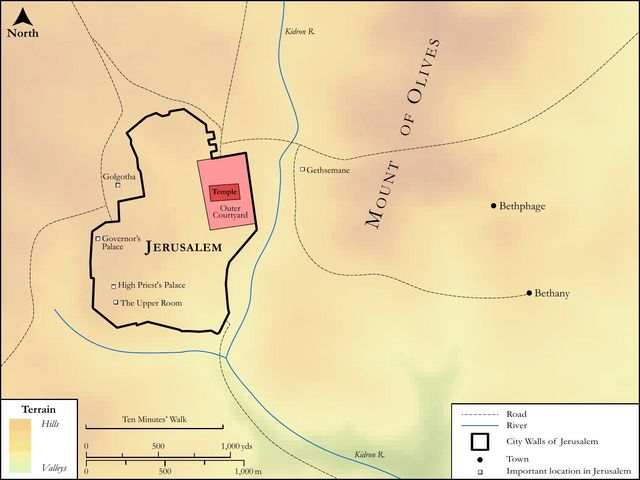
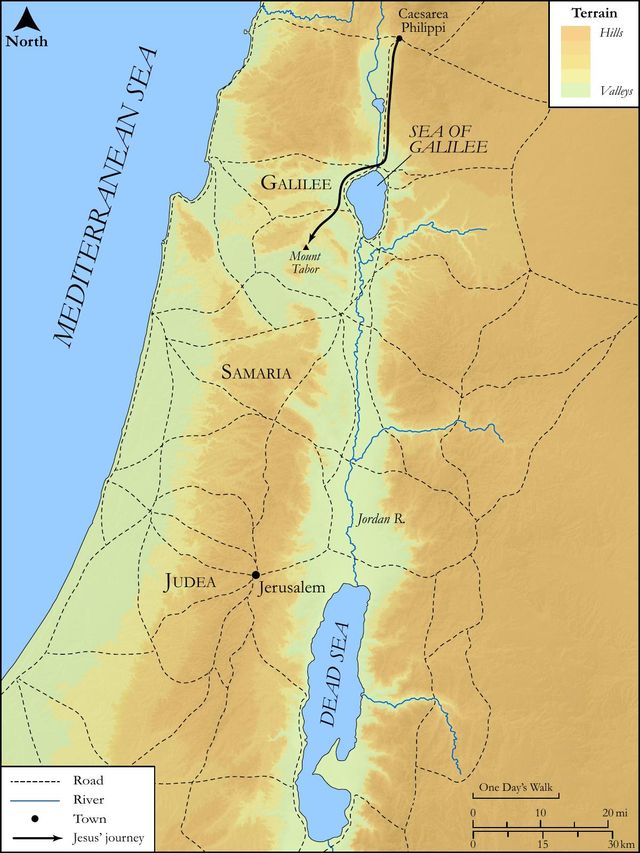
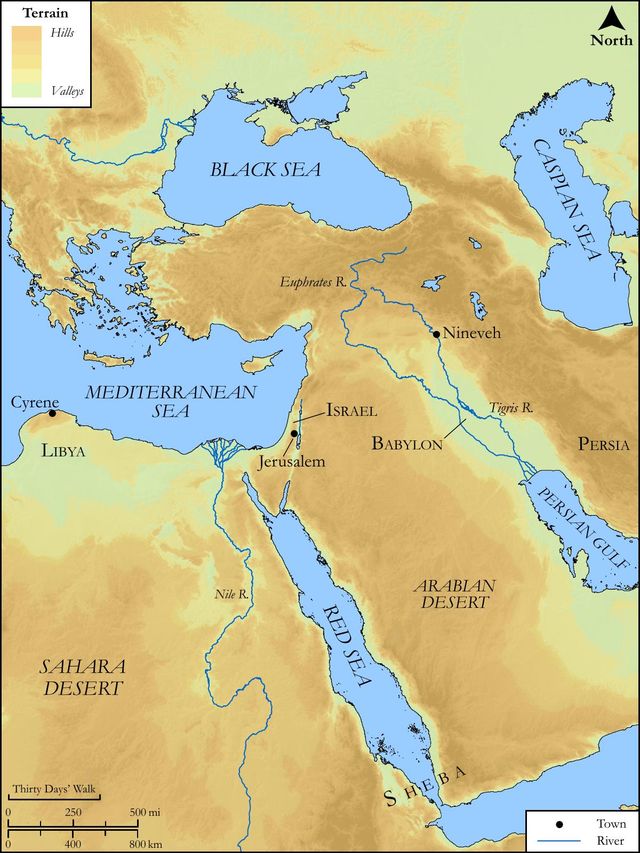
Study this verse
Public-domain commentary
Matthew Henry
From his Commentary on the Whole Bible. Henry comments on passages, not single verses — this entry covers Matthew 17:1–13. His four-level outline is real structure in the source text, so it is rendered as structure.
We have here the story of Christ's transfiguration; he had said that the Son of man should shortly come in his kingdom, with which promise all the three evangelists industriously connect this story; as if Christ's transfiguration were intended for a specimen and an earnest of the kingdom of Christ, and of that light and love of his, which therein appears to his select and sanctified ones. Peter speaks of this as the power and coming of our Lord Jesus (Pe2 1:16); because it was an emanation of his power, and a previous notice of his coming, which was fitly introduced by such prefaces.
When Christ was here in his humiliation, though his state, in the main, was a state of abasement and afflictions, there were some glimpses of his glory intermixed, that he himself might be the more encouraged in his sufferings, and others the less offended. His birth, his baptism, his temptation, and his death, were the most remarkable instances of his humiliation; and these were each of them attended with some signal points of glory, and the smiles of heaven. But the series of his public ministry being a continued humiliation, here, just in the midst of that, comes in this discovery of his glory. As, now that he is in heaven, he has his condescensions, so, when he was on earth, he had his advancements.
Now concerning Christ's transfiguration, observe,
I.The circumstances of it, which are here noted, Mat 17:1.
1.The time; six days after he had the solemn conference with his disciples, Mat 16:21. St Luke saith, It was about eight days after, six whole days intervening, and this the eighth day, that day seven-night. Nothing is recorded to be said or done by our Lord Jesus for six days before his transfiguration; thus, before some great appearances, there was silence in heaven for the space of half an hour, Rev 8:1. Then when Christ seems to be doing nothing for his church, expect, ere long, something more than ordinary.
2.The place; it was on top of a high mountain apart. Christ chose a mountain,
(1.)As a secret place. He went apart; for though a city upon a hill can hardly be hid, two or three persons upon a hill can hardly be found; therefore their private oratories were commonly on mountains. Christ chose a retired place to be transfigured in, because his appearing publicly in his glory was not agreeable to his present state; and thus he would show his humility, and teach us that privacy much befriends our communion with God. Those that would maintain intercourse with Heaven, must frequently withdraw from the converse and business of this world; and they will find themselves never less alone than when alone, for the Father is with them.
(2.)Though a sublime place, elevated above things below. Note, Those that would have a transforming fellowship with God, must not only retire, but ascend; lift up their hearts, and seek things above. The call is, Come up hither, Rev 4:1.
3.The witnesses of it. He took with him Peter and James and John.
(1.)He took three, a competent number to testify what they should see; for out of the mouth of two or three witnesses shall every word be established. Christ makes his appearances certain enough, but not too common; not to all the people, but to witnesses (Act 10:41), that they might be blessed, who have not seen, and yet have believed.
(2.)He took these three because they were the chief of his disciples, the first three of the worthies of the Son of David; probably they excelled in gifts and graces; they were Christ's favourites, singled out to be the witnesses of his retirements. They were present when he raised the damsel to life, Mar 5:37. They were afterward to be the witnesses of his agony, and this was to prepare them for that. Note, A sight of Christ's glory, while we are here in this world, is a good preparative for our sufferings with him, as these are preparatives for the sight of his glory in the other world. Paul, who had abundance of trouble, had abundance of revelations.
II.The manner of it (Mat 17:2); He was transfigured before them.
The substance of his body remained the same, but the accidents and appearances of it were greatly altered; he was not turned into a spirit, but his body, which had appeared in weakness and dishonour, now appeared in power and glory. He was transfigured, metamorphōthē - he was metamorphosed. The profane poets amused and abused the world with idle extravagant stories of metamorphoses, especially the metamorphoses of their gods, such as were disparaging and diminishing to them, equally false and ridiculous; to these some think Peter has an eye, when, being about to mention this transfiguration of Christ, he saith, We have not followed cunningly devised fables when we made it known unto you, Pe2 1:16. Christ was both God and man; but, in the days of his flesh, he took on him the form of a servant - morphēn doulou, Phi 2:7. He drew a veil over the glory of his godhead; but now, in his transfiguration, he put by that veil, appeared en morphē theou - in the form of God (Phi 2:6), and gave his disciples a glimpse of his glory, which could not but change his form.
The great truth which we declare, is, that God is light (Jo1 1:5), dwells in the light (Ti1 6:16), covers himself with light, Psa 104:2. And therefore when Christ would appear in the form of God, he appeared in light, the most glorious of all visible beings, the first-born of the creation, and most nearly resembling the eternal Parent. Christ is the Light; while he was in the world, he shined in darkness, and therefore the world knew him not (Joh 1:5, Joh 1:10); but, at this time, that Light shined out of the darkness.
Now his transfiguration appeared in two things:
1.His face did shine as the sun. The face is the principal part of the body, by which we are known; therefore such a brightness was put on Christ's face, that face which afterward he hid not from shame and spitting. It shone as the sun when he goes forth in his strength, so clear, so bright; for he is the Sun of righteousness, the Light of the world. The face of Moses shone but as the moon, with a borrowed reflected light, but Christ's shone as the sun, with an innate inherent light, which was the more sensibly glorious, because it suddenly broke out, as it were, from behind a black cloud.
2.His raiment was white as the light. All his body was altered, as his face was; so that beams of light, darting from every part through his clothes, made them white and glittering. The shining of the face of Moses was so weak, that it could easily be concealed by a thin veil; but such was the glory of Christ's body, that his clothes were enlightened by it.
III.The companions of it.
He will come, at last, with ten thousands of his saints; and, as a specimen of that, there now appeared unto them Moses and Elias talking with him, Mat 17:3. Observe,
1.There were glorified saints attending him, that, when there were three to bear record on earth, Peter, James, and John, there might be some to bear record from heaven too. Thus here was a lively resemblance of Christ's kingdom, which is made up of saints in heaven and saints on earth, and to which belong the spirits of just men made perfect. We see here, that they who are fallen asleep in Christ are not perished, but exist in a separate state, and shall be forthcoming when there is occasion.
2.These two were Moses and Elias, men very eminent in their day. They had both fasted forty days and forty nights, as Christ did, and wrought other miracles, and were both remarkable at their going out of the world as well as in their living in the world. Elias was carried to heaven in a fiery chariot, and died not. The body of Moses was never found, possibly it was preserved from corruption, and reserved for this appearance. The Jews had great respect for the memory of Moses and Elias, and therefore they came to witness of him, they came to carry tidings concerning him to the upper world. In them the law and the prophets honoured Christ, and bore testimony to him. Moses and Elias appeared to the disciples; they saw them, and heard them talk, and, either by their discourse or by information from Christ, they knew them to be Moses and Elias; glorified saints shall know one another in heaven. They talked with Christ. Note, Christ has communion with the blessed, and will be no stranger to any of the members of that glorified corporation. Christ was now to be sealed in his prophetic office, and therefore these two great prophets were fittest to attend him, as transferring all their honour and interest to him; for in these last days God speaks to us by his Son, Heb 1:1.
IV.The great pleasure and satisfaction that the disciples took in the sight of Christ's glory.
Peter, as usual, spoke or the rest; Lord, it is good for us to be here. Peter here expresses,
1.The delight they had in this converse; Lord, it is good to be here. Though upon a high mountain, which we may suppose rough and unpleasant, bleak and cold, yet it is good to be here. He speaks the sense of his fellow-disciples; It is good not only for me, but for us. He did not covet to monopolize this favour, but gladly takes them in. He saith this to Christ. Pious and devout affections love to pour out themselves before the Lord Jesus. The soul that loves Christ, and loves to be with him, loves to go and tell him so; Lord, it is good for us to be here. This intimates a thankful acknowledgment of his kindness in admitting them to this favour. Note, Communion with Christ is the delight of Christians. All the disciples of the Lord Jesus reckon it is good for them to be with him in the holy mount. It is good to be here where Christ is, and whither he brings us along with him by his appointment; it is good to be here, retired and alone with Christ; to be here, where we may behold the beauty of the Lord Jesus, Psa 27:4. It is pleasant to hear Christ compare notes with Moses and the prophets, to see how all the institutions of the law, and all the predictions of the prophets, pointed at Christ, and were fulfilled in him.
2.The desire they had of the continuance of it; Let us make here three tabernacles. There was in this, as in many other of Peter's sayings, a mixture of weakness and of goodwill, more zeal than discretion.
(1.)Here was a zeal for this converse with heavenly things, a laudable complacency in the sight they had of Christ's glory. Note, Those that by faith behold the beauty of the Lord in his house, cannot but desire to dwell there all the days of their life. It is good having a nail in God's holy place (Ezr 9:8), a constant abode; to be in holy ordinances as a man at home, not as a wayfaring man. Peter thought this mountain was a fine spot of ground to build upon, and he was for making tabernacles there; as Moses in the wilderness made a tabernacle for the Shechinah, or divine glory.
It argued great respect for his Master and the heavenly guests, with some commendable forgetfulness of himself and his fellow-disciples, that he would have tabernacles for Christ, and Moses, and Elias, but none for himself. He would be content to lie in the open air, on the cold ground, in such good company; if his Master have but where to lay his head, no matter whether he himself has or no.
(2.)Yet in this zeal he betrayed a great deal of weakness and ignorance. What need had Moses and Elias of tabernacles? They belonged to that blessed world, where they hunger no more, nor doth the sun light upon them. Christ had lately foretold his sufferings, and bidden his disciples expect the like; Peter forgets this, or, to prevent it, will needs be building tabernacles in the mount of glory, out of the way of trouble. Still he harps upon, Master, spare thyself, though he had been so lately checked for it. Note, There is a proneness in good men to expect the crown without the cross. Peter was for laying hold of this as the prize, though he had not yet fought his fight, nor finished his course, as those other disciples, Mat 20:21. We are out in our aim, if we look for a heaven here upon earth. It is not for strangers and pilgrims (such as we are in our best circumstances in this world), to talk of building, or to expect a continuing city.
Yet it is some excuse for the incongruity of Peter's proposal, not only that he knew not what he said (Luk 9:33), but also that he submitted the proposal to the wisdom of Christ; If thou wilt, let us make tabernacles. Note, Whatever tabernacles we propose to make to ourselves in this world, we must always remember to ask Christ's leave.
Now to this which Peter said, there was no reply made; the disappearing of the glory would soon answer it. They that promise themselves great things on earth will soon be undeceived by their own experience.
V.The glorious testimony which God the Father gave to our Lord Jesus, in which he received from him honour and glory (Pe2 1:17), when there came this voice from the excellent glory. This was like proclaiming the titles of honour or the royal style of a prince, when, at his coronation, he appears in his robes of state; and be it known, to the comfort of mankind, the royal style of Christ is taken from his mediation. Thus, in vision, he appeared with a rainbow, the seal of the covenant, about his throne (Rev 4:3); for it is his glory to be our Redeemer.
Now concerning this testimony from heaven to Christ, observe.
1.How it came, and in what manner it was introduced.
(1.)There was a cloud. We find often in the Old Testament, that a cloud was the visible token of God's presence; he came down upon mount Sinai in a cloud (Exo 19:9), and so to Moses, Exo 34:5; Num 11:25. He took possession of the tabernacle in a cloud, and afterwards of the temple; where Christ was in his glory, the temple was, and there God showed himself present. We know not the balancing of the clouds, but we know that much of the intercourse and communication between heaven and earth is maintained by them. By the clouds vapours ascend, and rains descend; therefore God is said to make the clouds his chariots; so he did here when he descended upon this mount.
(2.)It was a bright cloud. Under the law it was commonly a thick and dark cloud that God made the token of his presence; he came down upon mount Sinai in a thick cloud (Exo 19:16), and said he would dwell in thick darkness; see Kg1 8:12. But we are now come, not to the mount that was covered with thick blackness and darkness (Heb 12:18), but to the mount that is crowned with a bright cloud. Both the Old Testament and the New Testament dispensation had tokens of God's presence; but that was a dispensation of darkness, and terror, and bondage, this of light, love, and liberty.
(3.)It overshadowed them. This cloud was intended to break the force of that great light which otherwise would have overcome the disciples, and have been intolerable; it was like the veil which Moses put upon his face when it shone. God, in manifesting himself to his people, considers their frame. This cloud was to their eyes as parables to their understandings, to convey spiritual things by things sensible, as they were able to bear them.
(4.)There came a voice out of the cloud, and it was the voice of God, who now, as of old, spake in the cloudy pillar, Psa 99:7. Here was no thunder, or lightning, or voice of a trumpet, as there was when the law was given by Moses, but only a voice, a still small voice, and that not ushered in with a strong wind, or an earthquake, or fire, as when God spake to Elias, Kg1 19:11, Kg1 19:12. Moses then and Elias were witnesses, that in these last days God hath spoken to us by his Son, in another way than he spoke formerly to them. This voice came from the excellent glory (Pe2 1:17), the glory which excelleth, in comparison of which the former had no glory; though the excellent glory was clouded, yet thence came a voice, for faith comes by hearing.
2.What this testimony from heaven was; This is my beloved Son, hear ye him. Here we have,
(1.)The great gospel mystery revealed; This is my beloved Son, in whom I am well pleased. This was the very same that was spoken from heaven at his baptism (Mat 3:17); and it was the best news that ever came from heaven to earth since man sinned. It is to the same purport with that great doctrine (Co2 5:19), That God was in Christ, reconciling the world unto himself. Moses and Elias were great men, and favourites of Heaven, yet they were but servants, and servants that God was not always well pleased in; for Moses spoke unadvisedly, and Elias was a man subject to passions; but Christ is a Son, and in him God was always well pleased. Moses and Elias were sometimes instruments of reconciliation between God and Israel; Moses was a great intercessor, and Elias a great reformer; but in Christ God is reconciling the world; his intercession is more prevalent than that of Moses, and his reformation more effectual than that of Elias.
This repetition of the same voice that came from heaven at his baptism was no vain repetition; but, like the doubling of Pharoah's dream, was to show the thing was established. What God hath thus spoken once, yea twice, no doubt he will stand to, and he expects we should take notice of it. It was spoken at his baptism, because then he was entering upon his temptation, and his public ministry; and now it was repeated, because he was entering upon his sufferings, which are to be dated from hence; for now, and not before, he began to foretel them, and immediately after his transfiguration it is said (Luk 9:51), that the time was come that he should be received up; this therefore was then repeated, to arm him against the terror, and his disciples against the offence, of the cross. When sufferings begin to abound, consolations are given in more abundantly, Co2 1:5.
(2.)The great gospel duty required, and it is the condition of our benefit by Christ; Hear ye him. God is well pleased with none in Christ but those that hear him. It is not enough to give him the hearing (what will that avail us?) but we must hear him and believe him, as the great Prophet and Teacher; hear him, and be ruled by him, as the great Prince and Lawgiver; hear him, and heed him. Whoever would know the mind of God, must hearken to Jesus Christ; for by him God has in these last days spoken to us. This voice from heaven has made all the sayings of Christ as authentic as if they had been thus spoken out of a cloud. God does here, as it were, turn us over to Christ for all the revelations of his mind; and it refers to that prediction concerning the Prophet God would raise up like unto Moses (Deu 18:18); him shall ye hear.
Christ now appeared in glory; and the more we see of Christ's glory, the more cause we shall see to hearken to him: but the disciples were gazing on that glory of his which they saw; they are therefore bid not to look at him, but to hear him. Their sight of his glory was soon intercepted by the cloud, but their business was to hear him. We walk by faith, which comes by hearing, not by sight, Co2 5:7.
Moses and Elias were now with him; the law and the prophets; hitherto it was said, Hear them, Luk 16:29. The disciples were ready to equal them with Christ, when they must have tabernacles for them as well as for him. They had been talking with Christ, and probably the disciples were very desirous to know what they said, and to hear something more from them; No, saith God, hear him, and that is enough; him, and not Moses and Elias, who were present, and whose silence gave consent to this voice; they had nothing to say to the contrary; whatever interest they had in the world as prophets, they were willing to see it all transferred to Christ, that in all things he might have the pre-eminence. Be not troubled that Moses and Elias make so short a stay with you; hear Christ, and you will not want them.
IV.The fright which the disciples were put into by this voice, and the encouragement Christ gave them.
1.The disciples fell on their faces, and were sore afraid. The greatness of the light, and the surprise of it, might have a natural influence upon them, to dispirit them. But that was not all, ever since man sinned, and heard God's voice in the garden, extraordinary appearances of God have ever been terrible to man, who, knowing he has no reason to expect any good, has been afraid to hear any thing immediately from God. Note, even then when fair weather comes out of the secret place, yet with God is terrible majesty, Job 37:22. See what dreadful work the voice of the Lord makes, Psa 29:4. It is well for us that God speaks to us by men like ourselves, whose terror shall not make us afraid.
2.Christ graciously raised them up with abundance of tenderness. Note, The glories and advancements of our Lord Jesus do not at all lessen his regard to, and concern for, his people that are compassed about with infirmity. It is comfortable to think, that now, in his exalted state, he has a compassion for, and condescends to, the meanest true believer. Observe here, (1.). What he did; he came, and touched them. His approaches banished their fears; and when they apprehended that they were apprehended of Christ, there needed no more to make them easy. Christ laid his right hand upon John is a like case, and upon Daniel, Rev 1:17; Dan 8:18; Dan 10:18. Christ's touches were often healing, and here they were strengthening and comforting. (2.) What he said; Arise, and be not afraid. Note, Though a fear of reverence in our converse with Heaven is pleasing to Christ, yet a fear of amazement is not so, but must be striven against. Christ said, Arise. Note, It is Christ by his word, and the power of his grace going along with it, that raises up good men from their dejections, and silences their fears; and none but Christ can do it; Arise, be not afraid. Note, causeless fears would soon vanish, if we would not yield to them, and lie down under them, but get up, and do what we can against them. considering what they had seen and heard, they had more reason to rejoice than to fear, and yet, it seems, they needed this caution. Note, Through the infirmity of the flesh, we often frighten ourselves with that wherewith we should encourage ourselves. Observe, After they had an express command from heaven to hear Christ, the first word they had from him was, Be not afraid, hear that. Note, Christ's errand into the world was to give comfort to good people, that, being delivered out of the hands of their enemies, they might serve God without fear, Luk 1:74, Luk 1:75.
VII.The disappearing of the vision (Mat 17:8); They lift up themselves, and then lift up their eyes, and saw no man, save Jesus only.
Moses and Elias were gone, the rays of Christ's glory were laid aside, or veiled again. They hoped this had been the day of Christ's entrance into his kingdom, and his public appearance in that external splendour which they dreamed of; but see how they are disappointed. Note, It is not wisdom to raise our expectations high in this world, for the most valuable of our glories and joys here are vanishing, even those of near communion with God are so, not a continual feast, but a running banquet. If sometimes we are favoured with special manifestations of divine grace, glimpses and pledges of future glory, yet they are withdrawn presently; two heavens are too much for those to expect that never deserve one. Now they saw no man, save Jesus only. Note, Christ will tarry with us when Moses and Elias are gone. The prophets do not live for ever (Zac 1:5), and we see the period of our ministers' conversation; but Jesus Christ is the same yesterday, today, and for ever, Heb 13:7, Heb 13:8.
VIII.The discourse between Christ and his disciples as they came down from the mountain, Mat 17:9-13.
Observe, 1. They came down from the mountain. Note, We must come down from the holy mountains, where we have communion with God, and complacency in that communion, and of which we are saying. It is good to be here; even there we have no continuing city. Blessed be God, there is a mountain of glory and joy before us, whence we shall never come down. But observe, When the disciples came down, Jesus came with them. Note, When we return to the world again after an ordinance, it must be our care to take Christ with us, and then it may be our comfort that he is with us.
2.As they came down, they talked of Christ. Note, When we are returning from holy ordinance, it is good to entertain ourselves and one another with discourse suitable to the work we have been about. That communication which is good to the use of edifying is then in a special manner seasonable; as, on the contrary, that which is corrupt, is worse then than at another time.
Here is, (1.) The charge that Christ gave the disciples to keep the vision very private for the present (Mat 17:9); Tell it to no man till the Son of man is risen. If they had proclaimed it, the credibility of it would have been shocked by his sufferings, which were now hastening on. But let the publication of it be adjourned till after his resurrection, and then that and his subsequent glory will be a great confirmation of it. Note, Christ observed a method in the manifestation of himself; he would have his works put together, mutually to explain and illustrate each other, that they might appear in their full strength and convincing evidence. Every thing is beautiful in its season. Christ's resurrection was properly the beginning of the gospel state and kingdom, to which all before was but preparatory and by way of preface; and therefore, though this was transacted before, it must not be produced as evidence till then (and then it appears to have been much insisted on by Pe2 1:16-18), when the religion it was designed for the confirmation of was brought to its full consistence and maturity. Christ's time is the best and fittest for the manifesting of himself and must be attended to by us.
(2.)An objection which the disciples made against something Christ had said (Mat 17:10); "Why then say the scribes that Elias must first come? If Elias make so short a stay, and is gone so suddenly, and we must say nothing of him; why have we been taught out of the law to expect his public appearance in the world immediately before the setting up of the Messiah's kingdom? Must the coming of Elias be a secret, which every body looks for?" or thus; "If the resurrection of the Messiah, and with it the beginning of his kingdom, be at hand, what becomes of that glorious preface and introduction to it, which we expect in the coming of Elias?" The scribes, who were the public expositors of the law, said this according to the scripture (Mal 4:5); Behold I send you Elijah the prophet. The disciples spoke the common language of the Jews, who made that the saying of the scribes which was the saying of the scripture, whereas of that which ministers speak to us according to the word of God, we should say, "God speaks to us, not the ministers;" for we must not receive it as the word of men, Th1 2:13. Observe, When the disciples could not reconcile what Christ said with what they had heard out of the Old Testament, they desired him to explain it to them. Note, When we are puzzled with scripture difficulties, we must apply ourselves to Christ by prayer for his Spirit to open our understandings and to lead us into all truth.
(3.)The solving of this objection. Ask, and it shall be given, ask instruction, and it shall be given.
[1.]Christ allows the prediction (Mat 17:11); "Elias truly shall first come, and restore all things; so far you are in the right." Christ did not come to alter or invalidate any thing foretold in the Old Testament. Note, Corrupt and mistaken glosses may be sufficiently rejected and exploded, without diminishing or derogating from the authority or dignity of the sacred text. New Testament prophecies are true and good, and are to be received and improved, though some hot foolish men may have misinterpreted them and drawn wrong inferences from them. He shall come, and restore all things; not restore them to their former state (John Baptist went not about to do that), but he shall accomplish all things (so it may be read), all things that were written of him, all the predictions of the coming of Elias. John Baptist came to restore things spiritually, to revive the decays of religion, to turn the hearts of the fathers to the children; which means the same with this, he shall restore all things. John preached repentance, and that restores all things.
[2.]He asserts the accomplishment. The scribes say true, that Elias is come, Mat 17:12. Note, God's promises are often fulfilled, and men perceive it not, but enquire, Where is the promise? when it is already performed. Elias is come, and they knew him not; they knew him not to be the Elias promised, the forerunner of the Messiah. The scribes busied themselves in criticizing upon the scripture, but understood not by the signs of the times the fulfilling of the scripture. Note, It is easier to explain the word of God than to apply it and make a right use of it. But it is no wonder that the morning star was not observed, when he who is the Sun itself, was in the world, and the world knew him not.
Because they knew him not, they have done to him whatsoever they listed; if they had known, they would not have crucified Christ, or beheaded John, Co1 2:8. They ridiculed John, persecuted him, and at last put him to death; which was Herod's doing, but is here charged upon the whole generation of unbelieving Jews, and particularly the scribes, who, though they could not prosecute John themselves, were pleased with what Herod did. He adds, Likewise also shall the Son of man suffer of them. Marvel not that Elias should be abused and killed by those who pretended, with a great deal of reverence, to expect him, when the Messiah himself will be in like manner treated. Note, The sufferings of Christ took off the strangeness of all other sufferings (Joh 15:18); when they had imbrued their hands in the blood of John Baptist, they were ready to do the like to Christ. Note, As men deal with Christ's servants, so they would deal with him himself; and they that are drunk with the blood of the martyrs still cry, Give, give, Act 12:1-3.
(4.)The disciples' satisfaction in Christ's reply to their objection (Mat 17:13); They understood that he spake unto them of John the Baptist. He did not name John, but gives them such a description of him as would put them in mind of what he had said to them formerly concerning him; This is Elias. This is a profitable way of teaching; it engages the learners' own thoughts, and makes them, if not their own teachers, yet their own remembrancers; and thus knowledge becomes easy to him that understands. When we diligently use the means of knowledge, how strangely are mists scattered and mistakes rectified!
Historical interpretation
Seventeen Centuries of Reception
16 surviving comments on this verse. Each one is dated, so this reads as a timeline rather than a list.
Select a marker to jump to its quote. Markers stagger vertically where authors wrote within a few decades of each other.
The Lord, again, in the retirement of the mount, had changed His raiment for a robe of light; but He still retained features which Peter could recognise. In that same scene Moses also and Elias gave proof that the same condition of bodily existence may continue even in glory-the one in the likeness of a flesh which he had not yet recovered, the other in the reality of one which he had not yet put off.
Or because in six days this whole visible world was made; so he who is above all the things of this world, may ascend into the high mountain, and there see the glory of the Word of God.
Mystically; When any one has passed the six days according as we have said, he beholds Jesus transfigured before the eyes of his heart. For the Word of God has various forms, appearing to each man according as He knows that it will be expedient for him; and He shows Himself to none in a manner beyond his capacity; whence he says not simply, He was transfigured, but, before them. For Jesus, in the Gospels, is merely understood by those who do not mount by means of exalting works and words upon the high mountain of wisdom; but to them that do mount up thus, He is no longer known according to the flesh, but is understood to be God the Word. Before these then Jesus is transfigured, and not before those who live sunk in worldly conversation. But these, before whom He is transfigured, have been made sons of God, and He is shown to them as the Sun of righteousness. His raiment is made white as the light, that is, the words and sayings of the Gospels with which Jesus is clothed according to those things which were spoken of Him by the Apostles.
However, if any man discerns a spiritual sense in the Law agreeing with the teaching of Jesus, and in the Prophets finds the hidden wisdom of Christ, (1 Cor. 2:7.) he beholds Moses and Elias in the same glory with Jesus.
But some may ask, when he was transfigured before those who were led up by him into the lofty mountain, did he appear to them in the form of God or in the preincarnate form that he earlier had? Did he appear to those left below in the form of a servant, but to those who had followed him after the six days to the lofty mountain, did he have not the form of a servant but the form of God? Listen carefully, if you can, and at the same time be attentive spiritually. It is not simply said that he was transfigured, but with a certain necessary addition. Both Matthew and Mark have recorded this: he was transfigured before them. Is it therefore possible for Jesus to be transfigured before some but not before others?Do you wish to see the transfiguration of Jesus? Behold with me the Jesus of the Gospels. Let him be simply apprehended. There he is beheld both “according to the flesh” and at the same time in his true divinity. He is beheld in the form of God according to our capacity for knowledge. This is how he was beheld by those who went up upon the lofty mountain to be apart with him. Meanwhile those who do not go up the mountain can still behold his works and hear his words, which are uplifting. It is before those who go up that Jesus is transfigured, and not to those below. When he is transfigured, his face shines as the sun, that he may be manifested to the children of light, who have put off the works of darkness and put on the armor of light. They are no longer the children of darkness or night but have become the children of day. They walk honestly as in the day. Being manifested, he will shine to them not simply as the sun but as he is demonstrated to be, the sun of righteousness.
In the three thus taken up with Him, the election of people out of the three stocks of Sem, Cam, and Japhet is figured.
Also that Moses and Elias only out of the whole number of the saints stood with Christ, means, that Christ, in His kingdom, is between the Law and the Prophets; for He shall judge Israel in the presence of the same by whom He was preached to them.
"And after six days He taketh with Him Peter and James and John."
Now another says, "after eight," not contradicting this writer, but most fully agreeing with him. For the one expressed both the very day on which He spake, and that on which He led them up; but the other, the days between them only.
But mark thou, I pray thee, the severe goodness of Matthew, not concealing those who were preferred to himself. This John also often doth, recording the peculiar praises of Peter with great sincerity. For the choir of these holy men was everywhere pure from envy and vainglory.
Having taken therefore the leaders, "He bringeth them up into a high mountain apart, and was transfigured before them: and His face did shine as the sun, and His raiment was white as the light. And there appeared unto them Moses and Elias talking with Him."
Wherefore doth He take with Him these only? Because these were superior to the rest. And Peter indeed showed his superiority by exceedingly loving Him; but John by being exceedingly loved of Him; and James again by his answer which he answered with his brother, saying, "We are able to drink the cup;" nor yet by his answer only, but also by his works; both by the rest of them, and by fulfilling, what he said. For so earnest was he, and grievous to the Jews, that Herod himself supposed that he had bestowed herein a very great favor on the Jews, I mean in slaying him.
But wherefore doth He not lead them up straightway? To spare the other disciples any feeling of human weakness: for which cause He omits also the names of them that are to go up. And this, because the rest would have desired exceedingly to have followed, being to see a pattern of that glory; and would have been pained, as overlooked. For though it was somewhat in a corporeal way that He made the disclosure, yet nevertheless the thing had much in it to be desired.
Wherefore then doth He at all foretell it? That they might be readier to seize the high meaning, by His foretelling it; and being filled with the more vehement desire in that round of days, might so be present with their mind quite awake and full of care.
But wherefore doth He also bring forward Moses and Elias? One might mention many reasons. And first of all this: because the multitudes said He was, some Elias, some Jeremias, some one of the old prophets, He brings the leaders of His choir, that they might see the difference even hereby between the servants and the Lord; and that Peter was rightly commended for confessing Him Son of God.
But besides that, one may mention another reason also: that because men were continually accusing Him of transgressing the law, and accounting Him to be a blasphemer, as appropriating to Himself a glory which belonged not to Him, even the Father's, and were saying, "This Man is not of God, because He keepeth not the Sabbath day;" and again, "For a good work we stone Thee not, but for blasphemy, and because that Thou, being a man, makest Thyself God:" that both the charges might be shown to spring from envy, and He be proved not liable to either; and that neither is His conduct a transgression of the law, nor His calling Himself equal to the Father an appropriation of glory not His own; He brings forward them who had shone out in each of these respects: Moses, because he gave the law, and the Jews might infer that he would not have overlooked its being trampled on, as they supposed, nor have shown respect to the transgressor of it, and the enemy of its founder: Elias too for his part was jealous for the glory of God, and were any man an adversary of God, and calling himself God, making himself equal to the Father, while he was not what he said, and had no right to do so; he was not the person to stand by, and hearken unto him.
And one may mention another reason also, with those which have been spoken of. Of what kind then is it? To inform them that He hath power both of death and life, is ruler both above and beneath. For this cause He brings forward both him that had died, and him that never yet suffered this.
But the fifth motive, (for it is a fifth, besides those that have been mentioned), even the evangelist himself hath revealed. Now what was this? To show the glory of the cross, and to console Peter and the others in their dread of the passion, and to raise up their minds. Since having come, they by no means held their peace, but "spake," it is said, "of the glory which He was to accomplish at Jerusalem;" that is, of the passion, and the cross; for so they call it always.
And not thus only did He cheer them, but also by the excellency itself of the men, being such as He was especially requiring from themselves. I mean, that having said, "If any man will come after me, let him take up his cross, and follow me;" them that had died ten thousand times for God's decrees, and the people entrusted to them, these persons He sets before them. Because each of these, having lost his life, found it. For each of them both spake boldly unto tyrants, the one to the Egyptian, the other to Ahab; and in behalf of heartless and disobedient men; and by the very persons who were saved by them, they were brought into extreme danger; and each of them wishing to withdraw men from idolatry; and each being unlearned; for the one was of a "slow tongue," and dull of speech, and the other for his part also somewhat of the rudest in his bearing: and of voluntary poverty both were very strict observers; for neither had Moses made any gain, nor had Elias aught more than his sheepskin; and this under the old law, and when they had not received so great a gift of miracles. For what if Moses clave a sea? yet Peter walked on the water, and was able to remove mountains, and used to work cures of all manner of bodily diseases, and to drive away savage demons, and by the shadow of his body to work those wonderful and great prodigies; and changed the whole world. And if Elias too raised a dead man, yet these raised ten thousand; and this before the spirit was as yet vouchsafed to them. He brings them forward accordingly for this cause also. For He would have them emulate their winning ways toward the people, and their presence of mind and inflexibility; and that they should be meek like Moses, and jealous for God like Elias, and full of tender care, as they were. For the one endured a famine of three years for the Jewish people; and the other said, "If thou wilt forgive them their sin, forgive; else blot me too out of the book, which thou hast written." Now of all this He was reminding them by the vision.
For He brought those in glory too, not that these should stay where they were, but that they might even surpass their limitary lines. For example, when they said, "Should we command fire to come down from heaven," and made mention of Elias as having done so, He saith, "Ye know not what manner of spirit ye are of;" training them to forbearance by the superiority in their gift.
What then saith the ardent Peter? "It is good for us to be here." For because he had heard that Christ was to go to Jerusalem and to suffer, being in fear still and trembling for Him, even after His reproof, he durst not indeed approach and say the same thing again, "Be it far from thee;" but from that fear obscurely intimates the same again in other words. That is, when he saw a mountain, and so great retirement and solitude, his thought was, "He hath great security here, even from the place; and not only from the place, but also from His going away no more unto Jerusalem." For he would have Him be there continually: wherefore also he speaks of "tabernacles." For "if this may be," saith he, "we shall not go up to Jerusalem; and if we go not up, He will not die, for there He said the scribes would set upon Him."
But thus indeed he durst not speak; but desiring however to order things so, he said undoubtingly, "It is good for us to be here," where Moses also is present, and Elias; Elias who brought down fire on the mountain, and Moses who entered into the thick darkness, and talked with God; and no one will even know where we are."
Seest thou the ardent lover of Christ? For look not now at this, that the manner of his exhortation was not well weighed, but see how ardent he was, how burning his affection to Christ. For in proof that not so much out of fear for himself he said these things, hear what he saith, when Christ was declaring beforehand His future death, and the assault upon Him: "I will lay down my life for Thy sake. Though I should die with Thee, yet will I not deny Thee."
And see how even in the very midst of the actual dangers he counselled amiss for himself. We know that when so great a multitude encompassed them, so far from flying, he even drew the sword, and cut off the ear of the high priest's servant. To such a degree did he disregard his own interest, and fear for his Master. Then because he had spoken as affirming a fact, he checks himself, and thinking, what if he should be again reproved, he saith, "If Thou wilt, let us make here three tabernacles, one for Thee and one for Moses, and one for Elias."
What sayest thou, O Peter? didst thou not a little while since distinguish Him from the servants? Art thou again numbering Him with the servants? Seest thou how exceedingly imperfect they were before the crucifixion? For although the Father had revealed it to him, yet he did not always retain the revelation, but was troubled by his alarm; not this only, which I have mentioned, but another also, arising from that sight. In fact, the other evangelists, to declare this, and to indicate that the confusion of his mind, with which he spake these things, arose from that alarm, said as follows; mark, "He wist not what to say, for they were sore afraid;" but Luke after his saying, "Let us make three tabernacles," added, "not knowing what he said." Then to show that he was holden with great fear, both he and the rest, he saith, "They were heavy with sleep, and when they were awake they saw His glory;" meaning by deep sleep here, the deep stupor engendered in them by that vision. For as eyes are darkened by an excessive splendor, so at that time also did they feel. For it was not, I suppose, night, but day; and the exceeding greatness of the light weighed down the infirmity of their eyes.
He does not take them up immediately upon the promise being made, but six days after, for this reason, that the other disciples might not be touched with any human passion, as a feeling of jealousy; or else that during these days' space, those disciples who were to be taken up might become kindled with a more eager desire.
He took these three because He set them before others. But observe how Matthew does not conceal who were preferred to himself; the like does John also when he records the preeminent praise given to Peter. For the company of Apostles was free from jealousy and vain glory.
There are many reasons why these should appear. The first it, this; because the multitudes said He was Elias, or Jeremias, or one of the Prophets, He here brings with Him the chief of the Prophets, that hence at least may be seen the difference between the servants and their Lord. Another reason is this; because the Jews were ever charging Jesus with being a transgressor of the Law and blasphemer, and usurping to Himself the glory of the Father, that He might prove Himself guiltless of both charges, He brings forward those who were eminent in both particulars; Moses, who gave the Law, and Elias, who was jealous for the glory of God. Another reason is, that they might learn that He has the power of life and death; by producing Moses, who was dead, and Elias, who had not yet experienced death. A further reason also the Evangelist discovers, that He might show the glory of His cross, and thus soothe Peter, and the other disciples, who were fearing His death; for they talked, as another Evangelist declares, of His decease which He should accomplish at Jerusalem. Wherefore He brings forward those who had exposed themselves to death for God's pleasure, and for the people that believed; for both had willingly stood before tyrants, Moses before Pharaoh, Elias before Ahab. Lastly, also, He brings them forward, that the disciples should emulate their privileges, and be meek as Moses, and zealous as Elias.
Hereupon follows what the warm Peter spake, Peter answered and said unto Jesus, Lord, it is good for us to be here. Because he had heard that He must go up to Jerusalem, he yet fears for Christ; but after his rebuke he dares not again say, Be propitious to thyself, Lord, but suggests the same covertly under other guise. For seeing in this place great quietness and solitude, he thought that this would be a fit place to take up their abode in, saying, Lord, it is good for us to be here. And he sought to remain here ever, therefore he proposes the tabernacles, If thou wilt, let us make here three tabernacles. For he concluded if he should, do this, Christ would not go up to Jerusalem, and if He should not go up to Jerusalem, He should not die, for he knew that there the Scribes laid wait for Him.
(V2.) And he was transfigured before them. Just as he will be at the time of judgment, so he appeared to the apostles. But when it says, 'He was transfigured before them,' no one can think that he lost or abandoned his original form and appearance, or that he took on a spiritual or aerial body. Rather, the evangelist demonstrates how he was transformed, saying.
And his face shone like the sun, and his garments became white as snow. Where the splendor of his face is shown and the whiteness of the garments is described, substance is not taken away but glory is transformed. His face shone like the sun. Certainly the Lord was transformed into that glory in which he would come afterwards in his kingdom. Transformation added splendor, it did not take away his face. Even if his body was spiritual, were the garments also changed, which were so white that another evangelist said: Such as no fuller on earth can make. But what the lightning can do over the earth is corporeal, and subject to touch, and not spiritual and airy, which deceives the eyes, and can only be seen in a mere illusion.
It is made a question how it could be after six days that He took them, when Luke says eight. (Luke 9:28.) The answer is easy, that here one reckoned only the intervening days, there the first and the last are also added.
Such as He is to be in the time of the Judgment, such was He now seen of the Apostles. Let none suppose that He lost His former form and lineaments, or laid aside His bodily reality, taking upon Him a spiritual or ethereal Body. How His transfiguration was accomplished, the Evangelist shows, saying, And his face did shine as the sun, and his raiment became white as snow, For that His face is said to shine, and His raiment described to become white, does not take away substance, but confer glory. In truth, the Lord was transformed into that glory in which He shall hereafter come in His Kingdom. The transformation enhanced the brightness, but did not destroy the countenance, although the body were spiritual; whence also His raiment was changed and became white to such a degree, as in the expression of another Evangelist, no fuller on earth can whiten them. But all this is the property of matter, and is the subject of the touch, not of spirit and ethereal, an illusion upon the sight only beheld in phantasm.
It is to be remembered also, that when the Scribes and Pharisees asked signs from heaven, He would not give any; but now, to increase the Apostles' faith, He gives a sign; Elias descends from heaven, whither he was gone up, and Moses arises from hell; (Is. 7:10.) as Ahaz is bidden by Esaias to ask him a sign in the heaven above, or in the depth beneath.
Yet art thou wrong, Peter, and as another Evangelist says, knowest not what thou sayest. (Luke 9:33.) Think not. of three tabernacles, when there is but one tabernacle of the Gospel in which both Law and Prophets are to be repeated. But if thou wilt have three tabernacles, set not the servants equal with their Lord, but make three tabernacles, yea make one for the Father, Son, and Holy Spirit, that They whose divinity is one, may have but one tabernacle, in thy bosom.
[Daniel 7:9] "I beheld until thrones were set up, and the Ancient of days took His seat. His garment was as white as snow, and the hair of His head was like pure wool. His throne was composed of fiery flames and its wheels were set on fire. From before His presence there issued forth a rushing, fiery stream." We read something similar in John's Apocalypse: "After these things I was immediately in the Spirit, and lo, a throne was set up in heaven, and one was seated upon the throne; and He who sat upon it had the likeness of jasper and sardine stone, and there was a rainbow round about the throne like the appearance of emerald. Around the throne there were twenty-four other thrones, and upon the twenty-four thrones there sat twenty-four elders, clothed in shining garments; upon their heads was a golden crown, and lightning flashes issued from the throne, and voices and thunder. And in front of the throne there were seven torches of burning fire, which were the seven spirits of God. And in front of the throne lay a glassy sea like unto crystal." (Revelation 4:2-6) And so the many thrones which Daniel saw seem to me to be what John called the twenty-four thrones. And the Ancient of days is the One who, according to John sits alone upon His throne. Likewise the Son of man, who came unto the Ancient of days, is the same as He who, according to John, is called the Lion of the tribe of Judah, the Root of David, and the titles of that sort (Revelation 5:5). I imagine that these thrones are the ones of which the Apostle Paul says, "Whether thrones or dominions..." (Colossians 1:16). And in the Gospel we read, "Ye yourselves shall sit upon twelve thrones, judging the twelve tribes of Israel" (Matthew 19:28). And God is called the One who sits and who is the Ancient of days, in order that His character as eternal Judge might be indicated. His garment is shining white like the snow, and the hair of His head is like pure wool. The Savior also, when He was transfigured on the mount and assumed the glory of His divine majesty, appeared in shining white garments (Matthew 17:2). And as for the fact that His hair is compared to perfectly pure wool, the even-handedness and uprightness of His judgment is shown forth, a judgment which shows no partiality in its exercise. Moreover He is described as an elderly man, in order that the ripeness of His judgment may be established. His throne consists of fiery flames, in order that sinners may tremble before the severity of the torments, and also that the just may be saved, but so as by fire. The wheels of the throne are set aflame, or else it is the wheels of His chariot which are aflame. In Ezekiel also God is ushered on the scene seated in a four-horse chariot (Ezekiel 1:4-28), and everything pertaining to God is of a fiery consistency. In another place also a statement is made on this subject: "God is a consuming fire" (Deuteronomy 4:24), that we might know that wood, hay and stubble are going to burn up in the day of judgment. And in the Psalms we read: "Fire goeth before Him, and He shall set aflame all His enemies round about Him" (Psalm 97:3). A rushing, fiery stream proceeded from before Him in order that it might carry sinners to hell (Gehenna).
Certainly the Lord was transformed into that glory with which he would afterwards come in his own kingdom. The change accentuated in splendor. It did not diminish his outward appearance. Let it be that his body had become spiritual. Even his garments were changed, which were white to such a high degree that as another Evangelist would say, “And his clothes became dazzling white, as no fuller on earth could bleach them.” What the mortal bleacher on earth is able to make is material and subject to touch, not supernatural and heavenly, which mocks the eyes and is only seen in a vision.
Indeed, Jesus himself shone as the sun, indicating that he is the light which illuminates every one who comes into this world. And this is the sun to the eyes of the flesh, that is the sun to the eyes of the heart. His garments are a type of his church. For garments, unless held up by the one having donned them, fall. Paul was like the lowest hem of these garments. For he himself says, “For I am the least of the apostles,” 14 and in another passage, “I am the last of the apostles.” On a garment, the hem is the last thing and the least. Just as that woman who touched the Lord’s hem was made well, so the church which came out of the Gentiles was saved by means of Paul’s preaching.
In this Transfiguration undergone on the mount, the Lord fulfilled within six days the promise made to His disciples, that they should have a sight of His glory; as it is said, And after six days he took Peter, and James, and John his brother.
When the Lord was about to show His disciples the glory of His brightness, He led them into the mountain, as it follows, And he took them up into a high mountain apart. Herein teaching, that it is necessary for all who seek to contemplate God, that they should not grovel in weak pleasures, but by love of things above should be ever raising themselves towards heavenly things; and to show His disciples that they should not look for the glory of the divine brightness in the gulph of the present world, but in the kingdom of the heavenly blessedness. He leads them apart, because the saints are separated from the wicked by their whole soul and devotion of their faith, and shall be utterly separated in the future; or because many are called, but few chosen, It follows, And he was transfigured before them.
If then the face of the Lord shone as the sun, and the saints shall shine as the sun, are then the brightness of the Lord and the brightness of His servants to be equal? By no means. But forasmuch as nothing is known more bright than the sun, therefore to give some illustration of the future resurrection, it is expressed to us that the brightness of the Lord's countenance, and the brightness of the righteous, shall be as the sun.
Otherwise; At this view of the majesty of the Lord, and His two servants, Peter was so delighted, that, forgetting every thing else in the world, he would abide here for ever. But if Peter was then so fired with admiration, what ravishment will it not be to behold the King in His proper beauty, and to mingle in the choir of the Angels, and of all the saints? In that Peter says, Lord, if thou wilt, he shows the submission of a dutiful and obedient servant.
He was wrong moreover, in desiring that the kingdom of the elect should be set up on earth, when the Lord had promised to give it in heaven. He was wrong also in forgetting that himself and his fellow were mortal, and in desiring to come to eternal felicity without taste of death.
(e Bed.) Justly was it after six days that He showed His glory, because after six ages is to be the resurrectiond.
(e Bed.) Or; He took only three disciples with Him, because many are called but few chosen. Or because they who now hold in incorrupt mind the faith of the Holy Trinity, shall then joy in the everlasting beholding of it.
Also in supposing that tabernacles were to be built for conversation in heaven, in which houses are not needed, as it is written in the Apocalypse, I saw not any temple therein. (Rev. 21:22.)
He brings them up onto a high mountain, showing that unless a man is raised up high, he does not become worthy of such divine visions. A mountain set "apart," because Christ would often perform the most wondrous of His miracles in secret, lest the multitude see Him as God and think that He was human in appearance only. When you hear "He was transfigured," do not think that He had cast off His body at that moment, for His body remained in its own form, as you hear mention of His face and His clothing. But it appeared more resplendent, the divine exhibiting in small part its effulgence as much as they were able to see. This is why He had also previously spoken of the Transfiguration as "the kingdom" of God (Mt 16:28), for it exhibited the indescribable majesty of His power, it showed that He is the true Son of the Father, and it had the aspect of the second coming on account of the ineffable radiance of Jesus’ face.
(e Bed. in Luc.) Or; the raiment of Christ shadows out the saints, of whom Esaias says, With all these shalt than clothe thee as with a garment; (Isa. 49:18.) and they are likened to snow because they shall be white with virtues, and all the heat of vices shall be put far away from them. It follows, And there appeared unto them Moses and Elias talking with them.
The Transfiguration and the walking on the water are glimpses of the beauty and the effortless power over all matter which will belong to men when they are really waked by God.
Continue studying Matthew 17:2 across the web’s major study libraries — every link below opens this exact verse, chapter, or book on the destination site.
Read & Compare
 BibleGatewayThis verse in more than 200 translations and 70 languages.
 Bible.comThe YouVersion reader — hundreds of translations, reading plans, and highlights.
 ESV.orgCrossway's official English Standard Version reader.
 NET BibleThe NET translation with 60,000+ translators' notes on every rendering decision.
 STEP BibleTyndale House's free study tool — original text, vocabulary, and scholarly resources.
 BibliaLogos Bible Software's free web reader.
 USCCBThe New American Bible (Revised Edition) with the U.S. bishops' study notes.
Commentaries
 BibleHub CommentariesDozens of classic commentaries on this verse, gathered on one page.
 StudyLightMore than 100 commentary sets — the largest collection on the web.
 BibleRefPlain-English commentary on what this verse means, verse by verse.
 Enduring WordDavid Guzik's free commentary on this chapter, widely used by Bible teachers.
 Bible Study ToolsVerse commentary alongside Greek and Hebrew study aids.
Original Language & Research
- BibleHub InterlinearThe verse word by word — original language, transliteration, and English.
- BibleHub LexiconEvery word's original-language definition and Strong's entry.
 Blue Letter BibleDeep-study tools — Strong's numbers, concordance, and word studies.
 CNTR CollationThe earliest Greek manuscripts of this verse, collated letter by letter.
Sermons, Hymns & Audio


TrulyRandomVerse is not affiliated with these sites and doesn’t control their content. They’re linked because they’re genuinely useful.
Summary
Matthew 17:2 presents the climactic moment of the Transfiguration, where Jesus' inherent divine glory, previously veiled during His earthly ministry, was momentarily revealed to Peter, James, and John. This profound event saw Jesus' face radiate with the brilliance of the sun and His garments become dazzlingly white, providing a tangible glimpse of His true identity as the Son of God and a foretaste of His future glorified state.
Context
ShowHideLiterary Context
The Transfiguration narrative in Matthew 17:1-8 is strategically placed immediately after two pivotal declarations in Matthew 16. First, Peter's confession of Jesus as "the Christ, the Son of the living God" in Matthew 16:16. Second, Jesus' subsequent prediction of His suffering, death, and resurrection in Matthew 16:21. The Transfiguration serves as a divine affirmation of Peter's confession and a powerful counterpoint to the somber prediction of suffering, assuring the disciples that the path to glory for both Jesus and His followers would indeed pass through suffering, but culminate in ultimate divine splendor. It also precedes the healing of the demon-possessed boy in Matthew 17:14-20, which highlights the disciples' lack of faith in contrast to Jesus' divine power.
Historical & Cultural Context
Mountains in the biblical tradition frequently serve as sites of divine encounter and revelation. From Mount Sinai, where Moses received the Law and encountered God's glory (Exodus 19), to Mount Carmel, where Elijah confronted the prophets of Baal (1 Kings 18), these elevated places symbolized closeness to God and profound spiritual experiences. While the exact location of the Transfiguration is debated (traditionally Mount Tabor or Mount Hermon), its setting on a "high mountain" (Matthew 17:1) underscores its significance as a sacred space where the veil between heaven and earth was momentarily thinned. The Jewish expectation of the Messiah often included a glorious, powerful figure, and the Transfiguration would have resonated with these hopes, even as it redefined the path to that glory through suffering.
Key Themes
ShowHideThis verse, and the broader Transfiguration narrative, contributes to several major theological themes. It powerfully highlights the divine glory and inherent deity of Jesus Christ, revealing His true nature as God incarnate, not merely a prophet or teacher. It serves as a confirmation of Jesus' messianic identity, validating Peter's confession and providing undeniable proof to the inner circle of disciples. Furthermore, the Transfiguration functions as a foretaste of future glory, both for Jesus in His post-resurrection state and ultimate return, and for believers who will share in His glorified existence, as anticipated in passages like Philippians 3:20-21. The event also implicitly underscores the continuity between the Old and New Covenants, as Moses (representing the Law) and Elijah (representing the Prophets) appear with Jesus, affirming Him as the fulfillment of both.
Exposition and Analysis
ShowHideKey Word Analysis
ShowHideG3339 - This verb signifies a profound and complete change in outward form that reveals an inner, true nature. It is the root of the English word "metamorphosis." In Jesus' case, it was not a change into something new, but a temporary unveiling of His intrinsic divine glory, which had been veiled during His earthly ministry. It implies a transformation from within, making visible His essential being.
G2989 - This verb means "to beam" or "radiate brilliancy." It describes an active emission of light, not merely a reflection. This emphasizes that the light emanating from Jesus was inherent to Him, a manifestation of His own divine essence, rather than an external source.
G5457 - This noun refers to luminousness in its widest application, encompassing natural, artificial, abstract, or concrete light. In this context, it denotes divine, uncreated light, symbolizing purity, holiness, and the very presence of God. The comparison of Jesus' raiment to "the light" underscores its supernatural brilliance, surpassing any earthly luminosity.
Verse Breakdown
ShowHide"And was transfigured before them"
This phrase introduces the central action of the verse. The passive voice ("was transfigured") suggests a divine act, indicating that this transformation was not something Jesus actively willed in the moment, but rather a revelation orchestrated by God. The "them" refers to Peter, James, and John, the inner circle of disciples chosen to witness this unique manifestation of Christ's glory. The term "transfigured" implies a change in outward appearance that reveals an inner reality, making visible Jesus' divine nature that was ordinarily concealed by His human form.
"and his face did shine as the sun"
This clause describes the first aspect of Jesus' physical transformation. His face, the most expressive part of the human body, became radiant with an intensity comparable to the sun. This imagery evokes Old Testament descriptions of divine glory, such as Moses' face shining after encountering God on Mount Sinai (Exodus 34:29-35), but here, the radiance is inherent to Jesus Himself, signifying His co-equality with God. It speaks to His intrinsic, uncreated light.
"and his raiment was white as the light"
This second descriptive clause details the transformation of Jesus' clothing. His garments became dazzlingly white, likened to "the light" itself. This is not merely a bright white, but a supernatural, luminous whiteness that transcends earthly purity. In biblical literature, brilliant white often symbolizes divine purity, holiness, and heavenly glory, frequently associated with angelic beings or divine appearances (Daniel 7:9 describes God's garments as white as snow). This aspect of the Transfiguration further emphasizes Jesus' divine nature and heavenly origin.
Literary Devices
ShowHideMatthew 17:2 employs several powerful literary devices to convey the profound significance of the Transfiguration. Simile is prominently used with the phrases "as the sun" and "as the light," directly comparing Jesus' shining face and dazzling raiment to these sources of intense brilliance. This creates vivid imagery that helps the reader grasp the extraordinary nature of the event. The use of Hyperbole in these comparisons ("as the sun," "as the light") emphasizes the supernatural and overwhelming intensity of Jesus' glory, suggesting a radiance beyond normal human experience or description. The entire scene functions as a Theophany, a visible manifestation of God's presence and glory. While not a direct appearance of God the Father, it is a revelation of the Son's inherent divinity, serving as a divine disclosure. Finally, Symbolism is rich in the imagery of light and white garments, which universally represent purity, holiness, truth, and divine presence throughout biblical narrative.
Theological and Thematic Connections
ShowHideThe Transfiguration, as described in Matthew 17:2, is a cornerstone event for Christian theology, profoundly impacting our understanding of Christ's identity and the nature of God's kingdom. It unequivocally affirms Jesus' full deity, demonstrating that He is not merely a human prophet or teacher, but the very Son of God, possessing inherent divine glory. This event serves as a powerful validation of Peter's earlier confession and provides the disciples with a glimpse of the ultimate glory that awaits Jesus after His resurrection and ascension, and indeed, the glory of His future return. It bridges the Old Testament prophecies of a glorious Messiah with the New Testament revelation of Jesus as the fulfillment, showing that His suffering and death are not the end, but the necessary path to ultimate exaltation. The light and purity displayed foreshadow the heavenly reality and the glorified state of believers who will share in Christ's likeness.
Reflection and Application
ShowHideThe Transfiguration of Jesus, particularly the radiant display of His glory in Matthew 17:2, offers profound insights and calls for deep reflection in the life of a believer. It serves as an undeniable assurance of Jesus' divine nature and supreme authority. In a world that often questions His identity or reduces Him to a mere historical figure, this passage reminds us that He is indeed God incarnate, worthy of our absolute trust, worship, and obedience. This glimpse of His inherent glory should inspire awe and reverence, deepening our adoration for the One who condescended to take on human flesh. Furthermore, the Transfiguration provides a powerful beacon of hope, reminding us that the suffering and trials of this life are temporary. Just as Jesus' glory was revealed after His predictions of suffering, so too will believers experience a future transformation and share in His eternal glory. This hope empowers us to endure, knowing that our ultimate destiny is to be conformed to the image of His glorified body.
Questions for Reflection
ShowHideFAQ
ShowHideWhat is the significance of Jesus' face shining as the sun and his clothes being white as the light?
ShowHideThe vivid imagery of Jesus' face shining "as the sun" and His clothes being "white as the light" signifies His inherent divine glory, purity, and holiness. This was not an external light source, but an emanation from within Him, revealing His true nature as God. It connects to Old Testament theophanies where God's presence was often associated with dazzling light and fire (e.g., Exodus 24:17). The brilliance of His face echoes the glory of God that shone on Moses' face after his encounter with the Lord on Mount Sinai (Exodus 34:29-35), but Jesus' glory is intrinsic, not reflected. The pure white raiment symbolizes His unblemished holiness and heavenly origin, often associated with divine beings or heavenly scenes in biblical literature (Daniel 7:9 and Revelation 7:9). Together, these descriptions confirm Jesus' unique status as the Son of God and the Messiah.
Christ-Centered Fulfillment
ShowHideThe Transfiguration, particularly the radiant display of Jesus' inherent glory in Matthew 17:2, serves as a profound Christ-centered fulfillment, illuminating the very essence of who Jesus is and what He accomplishes. It is a pre-resurrection glimpse into the glorified state of the Son of God, affirming the truth of John 1:14, where John declares that "we have seen his glory, glory as of the only Son from the Father." This momentary unveiling of divine splendor was not merely a show of power, but a crucial affirmation of Jesus' identity before His journey to the cross. The light that shone from Him foreshadows the ultimate victory over darkness achieved through His atoning sacrifice and resurrection, a victory that would bring the light of salvation to the world. Furthermore, this event points to the eschatological hope for believers, as we are promised to be transformed into His image from glory to glory (2 Corinthians 3:18) and to have our lowly bodies transformed to be like His glorious body (Philippians 3:20-21). Ultimately, the Transfiguration reveals Jesus as the eternal Light, the radiance of God's glory (Hebrews 1:3), who will one day be the sole light of the New Jerusalem, where there will be no need for sun or moon, for the glory of God will illuminate it, and the Lamb will be its lamp (Revelation 21:23).