


Revelation 20:11
- ΚαὶKaiAndG2532CONJConjunction
- εἶδονeidonI sawG1492V-2AAI-1SVerb 2nd Aorist Active Indicative 1st Singular
- θρόνονthronona throneG2362N-ASMNoun Accusative Singular Masculine
- μέγανmegangreatG3173A-ASMAdjective Accusative Singular Masculine
- λευκὸνleukonwhiteG3022A-ASMAdjective Accusative Singular Masculine
- καὶkaiandG2532CONJConjunction
- τὸνtonthe [One]G3588T-ASMDefinite article Accusative Singular Masculine
- καθήμενονkathēmenonsittingG2521V-PNP-ASMVerb Present Middle Or Passive Deponent Participle Accusative Singular Masculine
- ἐπ᾽ep᾽onG1909PREPPreposition
- αὐτόνautonitG846P-ASMPersonal pronoun Accusative Singular Masculine
- οὗhouwhoseG3739R-GSMRelative pronoun Genitive Singular Masculine
- ἀπὸapofromG575PREPPreposition
- προσώπουprosōpoufaceG4383N-GSNNoun Genitive Singular Neuter
- ἔφυγενephugenfledG5343V-2AAI-3SVerb 2nd Aorist Active Indicative 3rd Singular
- ἡhētheG3588T-NSFDefinite article Nominative Singular Feminine
- γῆgēearthG1093N-NSFNoun Nominative Singular Feminine
- καὶkaiandG2532CONJConjunction
- ὁho<the>G3588T-NSMDefinite article Nominative Singular Masculine
- οὐρανόςouranosheavenG3772N-NSMNoun Nominative Singular Masculine
- καὶkaiandG2532CONJConjunction
- τόποςtoposplaceG5117N-NSMNoun Nominative Singular Masculine
- οὐχouchnotG3756PRT-NNegative Particle Negative
- εὑρέθηheurethēwas foundG2147V-API-3SVerb Aorist Passive Indicative 3rd Singular
- αὐτοῖςautoisfor themG846P-DPMPersonal pronoun Dative Plural Masculine
English is a literal word-by-word gloss of the Greek, not the KJV's wording. Why?
This is the original text the KJV's translators worked from — each Greek word with its own literal English meaning in this verse, prepared by scholars at Tyndale House, Cambridge. The KJV translates whole sentences, not word by word, so its wording differs: one Greek word can become several English words, and the KJV may choose “charity” where the gloss reads “love”. Both are faithful — they answer different questions. For the KJV's own rendering, switch to the KJV text.
Details
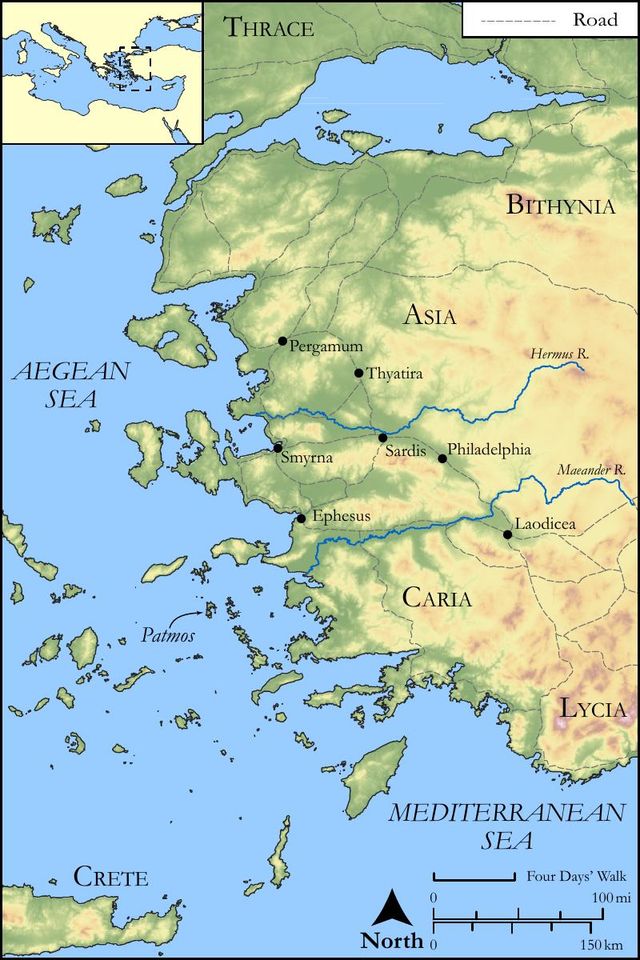
See on the biblical-era map

Study this verse
Public-domain commentary
Matthew Henry
From his Commentary on the Whole Bible. Henry comments on passages, not single verses — this entry covers Revelation 20:11–15.
The utter destruction of the devil's kingdom very properly leads to an account of the day of judgment, which will determine every man's everlasting state; and we may be assured there will be a judgment when we see the prince of this world is judged, Joh 16:11. This will be a great day, the great day, when all shall appear before the judgment-seat of Christ. The Lord help us firmly to believe this doctrine of the judgment to come. It is a doctrine that made Felix tremble. Here we have a description of it, where observe, 1. We behold the throne, and tribunal of judgment, great and white, very glorious and perfectly just and righteous. The throne of iniquity, that establishes wickedness by a law, has no fellowship with this righteous throne and tribunal. 2. The appearance of the Judge, and that is the Lord Jesus Christ, who then puts on such majesty and terror that the earth and the heaven flee from his face, and there is no place found for them; there is a dissolution of the whole frame of nature, Pe2 3:10. 3. The persons to be judged (Rev 20:12): The dead, small and great; that is, young and old, low and high, poor and rich. None are so mean but they have some talents to account for, and none so great as to avoid the jurisdiction of this court; not only those that are found alive at the coming of Christ, but all who have died before; the grave shall surrender the bodies of men, hell shall surrender the souls of the wicked, the sea shall surrender the many who seemed to have been lost in it. 4. The rule of judgment settled: The books were opened. What books? The books of God's omniscience, who is greater than our consciences, and knows all things (there is a book of remembrance with him both for good and bad); and the book of the sinner's conscience, which, though formerly secret, will now be opened. And another book shall be opened - the book of the scriptures, the statute-book of heaven, the rule of life. This book is opened as containing the law, the touchstone by which the hearts and lives of men are to be tried. This book determines matter of right; the other books give evidence of matters of fact. Some, by the other book, called the book of life, understand the book of God's eternal counsels; but that does not seem to belong to the affair of judgment: in eternal election God does not act judicially, but with absolute sovereign freedom. 5. The cause to be tried; and that is, the works of men, what they have done and whether it be good or evil. By their works men shall be justified or condemned; for though God knows their state and their principles, and looks chiefly at these, yet, being to approve himself to angels and men as a righteous God, he will try their principles by their practices, and so will be justified when he speaks and clear when he judges. 6. The issue of the trial and judgment; and this will be according to the evidence of fact, and rule of judgment. All those who have made a covenant with death, and an agreement with hell, shall then be condemned with their infernal confederates, cast with them into the lake of fire, as not being entitled to eternal life, according to the rules of life laid down in the scripture; but those whose names are written in that book (that is, those that are justified and acquitted by the gospel) shall then be justified and acquitted by the Judge, and shall enter into eternal life, having nothing more to fear from death, or hell, or wicked men; for these are all destroyed together. Let it be our great concern to see on what terms we stand with our Bibles, whether they justify us or condemn us now; for the Judge of all will proceed by that rule. Christ shall judge the secrets of all men according to the gospel. Happy are those who have so ordered and stated their cause according to the gospel as to know beforehand that they shall be justified in the great day of the Lord!
Historical interpretation
Eighteen Centuries of Reception
10 surviving comments on this verse. Each one is dated, so this reads as a timeline rather than a list.
Select a marker to jump to its quote. Markers stagger vertically where authors wrote within a few decades of each other.
For after the times of the kingdom, he says, "I saw a great white throne, and Him who sat upon it, from whose face the earth fled away, and the heavens; and there was no more place for them."
"The first heaven and the first earth passed away," "and there was found no place for them," because, of course, that which comes to an end loses locality.
It is enough for us, both that it is certain that all things were made by God and that there is no certainty whatever that they were made out of matter.… The belief that everything was made from nothing will be impressed upon us [also] by that ultimate dispensation of God that will bring back all things to nothing. For “the very heaven shall be rolled together as a scroll”; no, it shall come to nothing along with the earth itself, with which it was made in the beginning. “Heaven and earth shall pass away,” he says. “The first heaven and the first earth passed away,” “and there was found no place for them,” because, of course, that which comes to an end loses locality.
Then shall the righteous answer, astonished at the mighty and wondrous fact that He, whom the hosts of angels cannot look upon openly, addresses them as friends, and shall cry out to Him, Lord, when saw we Thee an hungered, and fed Thee? Master, when saw we Thee thirsty, and gave Thee drink? Thou Terrible One, when saw we Thee naked, and clothed Thee? Immortal, when saw we Thee a stranger, and took Thee in? Thou Friend of man, when saw we Thee sick or in prison, and came unto Thee? Thou art the ever-living One. Thou art without beginning, like the Father, and co-eternal with the Spirit. Thou art He who made all things out of nothing. Thou art the prince of the angels. Thou art He at whom the depths tremble. Thou art He who is covered with light as with a garment. Thou art He who made us, and fashioned us of earth. Thou art He who formed things invisible. From Thy presence the whole earth fleeth away, and how have we received hospitably Thy kingly power and lordship?
John picks up again the theme of the last judgment (which is to accompany the second and bodily resurrection of the dead) and describes the manner of its revelation to him.… Note that he does not say, “One who sat upon it, and from his face earth and heaven fled away,” because this “flight” had not yet taken place, that is, not before the judgment of the living and the dead. What he says is that he beheld One sitting on the throne “from whose face earth and heaven fled away”—not then but subsequently. The fact is that it will be after the judgment is completed that heaven and earth will end with the beginning of the new heaven and earth. For it will be by a transformation rather than by a wholesale destruction that this world of ours will pass away. This explains Paul’s words: “This world as we see it is passing away. I would have you free from care.” It is, to be sure, the visible appearance of the world that is destined to pass away, not its nature.
The image of the “white throne” signifies the divine rest that God will establish among the saints, who are resplendant with virtues and among whom God will be enthroned. The flight of the earth and sky signifies their transformation from what they were into something better. And there will be found no longer any place for change. For if the creation was subjected to corruption because of us, as the apostle says, it will also be transformed with us into the freedom of the glory of the children of God, being made new into that which is more brilliant. [The creation] will not be subjected to complete annihilation, as we learn from Irenaeus, Antipater and other saints. For the blessed Irenaeus writes, “For neither is the substance nor the essence of the creation annihilated (for faithful and true is he who has established it), but the fashion of the world passes away, that is, those things among which transgression has occurred, since humankind has grown old in them. And therefore this fashion has been formed temporary, God foreknowing all things.” Similarly, the great Methodius comments as follows in On the Resurrection: “It is not satisfactory to say that the universe will be utterly destroyed, and sea and air and sky will be no longer. For the whole world will be deluged with fire from heaven and burned for the purpose of purification and renewal; it will not, however, come to complete ruin and corruption.” And a little later he says, “And Paul clearly testifies this, saying, ‘For the creation waits with eager longing for the manifestation of the sons of God; for the creation was subjected to futility, not willingly but through him who subjected it in hope. Therefore, the creation itself will be set free from its bondage to decay’ ” and so on. But before these saints the holy David sang to the Lord, saying, “You sent forth your Spirit, and they are created; and you renew the face of the ground.” And Isaiah says, “There will be a new heaven and a new earth, and the former things will not be remembered or come into mind; but they will find gladness and rejoicing in it.” Certainly in the superabundance of joy and in the greatness of their rewards they will forget the struggles and pains that they endured. In another place Isaiah says, “For as the new heavens and the new earth which I will make shall remain before me, so shall your descendants and your name remain.” It follows, therefore, that the creation, which was made for our sake, receives with us a change for the better, not going into nonexistence, just as we do not go into nonexistence after our death.
And I saw a great white throne, etc. He said he saw someone sitting on the throne from whose presence earth and heaven fled away. This signifies that, after the judgment, there will be no more heaven and earth as they are, because there will be a new heaven and a new earth, meaning a transformation of things, not their complete destruction. For the figure of this world is passing away (1 Cor. 7); it does not say the substance. It is believed that the same substance will be changed for the better.
QUESTION: And I saw a great throne, and one sitting upon it, and before him the books were opened; and another book was opened, which is the book of life. ANSWER: Another edition has “which is the book of the life of each person.” So, by the books opened he means the Testaments, for the world shall be judged according to both Testaments. By the book of the life of each person he means the memory of our actions, not that the Knower of secrets has a book to remind him of things. THERE FOLLOWS: And the dead were judged by those things which are written in the books, according to their works. ANSWER: That is, they were judged by the Testaments, according to what they had done or not done of what is in them. The books may also be understood to mean the acts of the just, by comparison with which the reprobates are damned, and, when this happens, it is as if they read in books exposed the good they themselves had refused to do.
And I saw a great white throne and the one who sat on it, and from before his presence the earth and the heaven fled away, and no place was found for them.
He calls the white throne, bright and flashing. The passage alludes to the passing of the heavens and the alternation and transformation of the earth. "For the heavens will pass away with a great noise," (2 Peter 3:10) according to the divine Peter and according to the prophet who says: "At the beginning you founded the earth, O Lord, and the heavens are the work of your hands.
They themselves will perish, but you remain; and all will wear out like a garment, and you will roll them up like a cloak, and they will be changed," (Ps. 101:26-27) fittingly their passing and destruction. Which the Revelation called flight, signifying their change, so that they might not find a place; for where would the ruin they have rejected be found? Now he has spoken of their change, and going on a little, he says that there will be new ones as well. (see Rev. 21:1,5)
Do not let us deceive ourselves. No possible complexity which we can give to our picture of the universe can hide us from God; there is no copse, no forest, no jungle thick enough to provide cover. We read in Revelation of Him that sat on the throne ‘from whose face the earth and heaven fled away’. (9) It may happen to any of us at any moment, the twinkling of an eye, in a time too small to be measure, and in any place, all that seems to divide us from God can flee away, vanish leaving us naked before Him, like the first man, like the only man, as if nothing but He and I existed. And since that contact cannot be avoided for long, and since it means either bliss or horror, the business of life is to learn to like it. That is the first and great commandment.
Continue studying Revelation 20:11 across the web’s major study libraries — every link below opens this exact verse, chapter, or book on the destination site.
Read & Compare
 BibleGatewayThis verse in more than 200 translations and 70 languages.
 Bible.comThe YouVersion reader — hundreds of translations, reading plans, and highlights.
 ESV.orgCrossway's official English Standard Version reader.
 NET BibleThe NET translation with 60,000+ translators' notes on every rendering decision.
 STEP BibleTyndale House's free study tool — original text, vocabulary, and scholarly resources.
 BibliaLogos Bible Software's free web reader.
 USCCBThe New American Bible (Revised Edition) with the U.S. bishops' study notes.
Commentaries
 BibleHub CommentariesDozens of classic commentaries on this verse, gathered on one page.
 StudyLightMore than 100 commentary sets — the largest collection on the web.
 BibleRefPlain-English commentary on what this verse means, verse by verse.
 Enduring WordDavid Guzik's free commentary on this chapter, widely used by Bible teachers.
 Bible Study ToolsVerse commentary alongside Greek and Hebrew study aids.
Original Language & Research
- BibleHub InterlinearThe verse word by word — original language, transliteration, and English.
- BibleHub LexiconEvery word's original-language definition and Strong's entry.
 Blue Letter BibleDeep-study tools — Strong's numbers, concordance, and word studies.
 CNTR CollationThe earliest Greek manuscripts of this verse, collated letter by letter.
Sermons, Hymns & Audio


TrulyRandomVerse is not affiliated with these sites and doesn’t control their content. They’re linked because they’re genuinely useful.
Summary
Revelation 20:11 unveils a profound and dramatic vision of the Great White Throne Judgment, depicting the ultimate and final divine assize for all humanity. John observes a majestic, pure, and authoritative throne, occupied by a figure of such overwhelming glory and power that the very fabric of the existing cosmos—the earth and the heaven—vanishes from His presence, leaving no trace. This scene marks the decisive end of the old creation and sets the stage for the establishment of God's eternal new order, underscoring His absolute sovereignty and the inescapable reality of His perfect justice.
Context
ShowHideLiterary Context
This verse immediately follows the conclusion of the millennial reign of Christ and the final, decisive defeat of Satan, who is cast into the lake of fire (Revelation 20:7-10). Having dealt with the arch-enemy, the narrative shifts to the judgment of all humanity, particularly the unrighteous dead. Revelation 20:11 serves as the grand prelude to this final judgment, setting the awe-inspiring stage before the books are opened and the dead are judged according to their deeds (Revelation 20:12-15). It marks the transition from the temporal earthly kingdoms and the millennial age to the eternal state.
Historical & Cultural Context
The imagery of a "throne" and a "judgment seat" would have been deeply familiar to John's original audience, drawing from both Old Testament prophetic visions (e.g., Daniel 7:9-10) and the Roman imperial context where emperors sat on thrones to dispense justice. The concept of a final, cosmic judgment is a consistent theme in Jewish apocalyptic literature and early Christian eschatology, reflecting a belief in God's ultimate justice and accountability for human actions. The "fleeing away" of heaven and earth resonates with prophetic expectations of a new creation, where the old order would pass away to make room for God's perfect dwelling (Isaiah 65:17 and 2 Peter 3:10-13).
Key Themes
ShowHideRevelation 20:11 powerfully contributes to several overarching themes in the book of Revelation and biblical theology. Foremost is the theme of Divine Sovereignty and Justice, emphasizing God's absolute authority as the supreme Judge over all creation and humanity. The "great white throne" symbolizes His unimpeachable purity and righteousness in judgment. Another key theme is the Finality of Judgment, as this scene represents the ultimate and inescapable accountability for all who have lived outside of Christ. Furthermore, the dramatic dissolution of the current cosmos highlights the Transience of the Old Creation and foreshadows the Promise of a New Creation, where righteousness will dwell and God will make all things new, as described in Revelation 21:1.
Exposition and Analysis
ShowHideKey Word Analysis
ShowHideThis word (G2362) signifies a stately seat, specifically a royal or judicial seat. By implication, it conveys power and authority, or even concretely, a potentate. In this context, it emphasizes the absolute, regal, and judicial authority of the One seated upon it, indicating a judgment of ultimate and universal scope. The addition of "great" (G3173, mégas') further amplifies its immense power and majesty, while "white" (G3022, leukós') symbolizes purity, holiness, and unimpeachable righteousness.
This verb (G5343) means to run away, to shun, or by analogy, to vanish. It denotes a swift, complete, and irreversible departure or disappearance. The use of this word for the earth and heaven emphasizes the overwhelming power of the Judge's presence, causing the very physical universe to dissolve and disappear, not gradually, but decisively, highlighting the absolute finality of this cosmic event.
This term (G1093) refers to soil, a region, or the solid part or the whole of the terrestrial globe, including its occupants. Paired with "heaven" (G3772, ouranós'), it collectively represents the entire created cosmos as we know it—the physical universe. Their "fleeing away" signifies the complete cessation and removal of the present order, making way for the new heavens and new earth.
Verse Breakdown
ShowHide"And I saw a great white throne,"
John's vision begins with the central object of the judgment scene: a throne. The description "great" emphasizes its immense scale, universal authority, and profound significance. "White" symbolizes the absolute purity, holiness, and righteousness of the judgment about to be rendered. This is not merely a seat of power, but a seat of perfect justice.
"and him that sat on it,"
The focus immediately shifts to the occupant of the throne, the ultimate Judge. While not explicitly named in this verse, the context of divine judgment and the overwhelming effect of His presence clearly identify Him as God Himself, the Alpha and Omega, the sovereign Lord of all creation. His mere presence is so powerful that it causes the universe to react.
"from whose face the earth and the heaven fled away;"
This is a dramatic and awe-inspiring image. The "face" (G4383, prósōpon') of the Judge represents His direct, unmediated presence and power. Before this divine majesty, the entire created order—the "earth" (G1093, gē') and the "heaven" (G3772, ouranós'), signifying the entire cosmos—cannot stand. They "fled away" (G5343, pheúgō'), indicating a swift, complete, and irreversible dissolution, as if unable to bear the purity and power of God's presence.
"and there was found no place for them."
This final clause reinforces the absolute and total disappearance of the old creation. It's not just that they fled, but they ceased to exist in any discernible form or location. This emphasizes the finality of the old order's passing, preparing the way for the new heavens and new earth where righteousness will dwell.
Literary Devices
ShowHideRevelation 20:11 employs several powerful literary devices to convey its profound theological message. Symbolism is central, with the "great white throne" representing God's ultimate authority, purity, and righteous judgment. The color white universally symbolizes holiness and justice. The Anthropomorphism of "from whose face" attributes a human characteristic (a face) to God, emphasizing His personal presence and the direct, overwhelming impact of His being. The phrase "the earth and the heaven fled away" is a form of Hyperbole, an exaggeration used for dramatic effect, underscoring the immense power of the Judge and the complete dissolution of the cosmos. This imagery also functions as Personification, giving the inanimate earth and heaven the ability to "flee," further emphasizing the terrifying majesty of God's presence.
Theological and Thematic Connections
ShowHideRevelation 20:11 stands as a monumental theological statement, affirming God's absolute sovereignty, His unassailable justice, and the ultimate accountability of all creation before Him. The fleeting of the old heavens and earth before the Judge's face underscores the temporary nature of the physical universe in contrast to the eternal, immutable reality of God. This vision assures believers that divine justice will ultimately prevail, and all wrongs will be righted, while simultaneously serving as a solemn warning to those who reject God's grace, highlighting the inescapable reality of a final reckoning. It points to a new cosmic order, where God's presence will be fully manifested without the hindrance of a fallen creation.
Reflection and Application
ShowHideThe vision of the Great White Throne Judgment in Revelation 20:11 calls for profound reverence and sober reflection. For the believer, it offers immense comfort and assurance. Knowing that God is the ultimate Judge, whose purity and power cause the very cosmos to flee, provides confidence that all injustice will eventually be rectified and that God's perfect plan will culminate in righteousness. It reminds us that our hope is not in the fleeting things of this world, but in the eternal God and His coming kingdom. This should motivate us to live lives of holiness, seeking to honor Him in all we do, knowing that our ultimate accountability is to Him. For those who have not yet embraced God's gracious offer of salvation through Jesus Christ, this verse serves as a stark and urgent warning. It underscores the absolute necessity of responding to the Gospel now, before the day when the old order vanishes and only the eternal Judge remains, and judgment is rendered based on one's relationship with Christ. It compels us to consider our eternal destiny with utmost seriousness and to seek the mercy and grace available only in Him.
Questions for Reflection
ShowHideFAQ
ShowHideWho is the "him that sat on it" on the Great White Throne?
ShowHideWhile Revelation 20:11 does not explicitly name the one seated on the throne, the overwhelming evidence from biblical theology and other New Testament passages identifies this Judge as God Himself, specifically God the Son, Jesus Christ. The Father has committed all judgment to the Son (John 5:22). Jesus is also described as the one who will judge the living and the dead (Acts 10:42 and 2 Timothy 4:1). The majesty and power displayed, causing the very cosmos to flee, are attributes fitting for the divine Son.
Christ-Centered Fulfillment
ShowHideRevelation 20:11, though depicting a scene of ultimate judgment, finds its profound Christ-centered fulfillment in the person and work of Jesus Christ. The "him that sat on it" is unequivocally the resurrected and glorified Son of God. While the Old Testament often speaks of God as the ultimate Judge (e.g., Psalm 96:13), the New Testament reveals that the Father has entrusted all judgment to Jesus (John 5:22-27). Thus, the terrifying majesty of the Judge before whom heaven and earth flee is none other than the Lamb who was slain, now enthroned in ultimate authority. This same Jesus, who offered Himself as the perfect sacrifice to take away the sin of the world (John 1:29), is the one before whom all will stand. His sacrifice on the cross provides the only escape from the condemnation of this great white throne (Romans 8:1). Furthermore, His resurrection is the ultimate guarantee of this coming judgment (Acts 17:31). The passing away of the old heavens and earth also foreshadows the new creation brought forth through Christ's redemptive work, where He will reign eternally in righteousness (Revelation 21:1-5).