


Old Testament · Minor Prophets · Book 29 of 66
Joel
A locust plague in Judah becomes the LORD’s call to return, answered with restored harvests, his Spirit poured out on all flesh, and the nations judged.
- 3 chapters
- 73 verses
- About 9 minutes to read
- The Hebrew Prophets, c. 800–400 BC
Joel opens on a land stripped bare. The palmerworm, the locust, the cankerworm and the caterpiller have each eaten what the last one left (Joel 1:4), the rivers are dried up, and the meat offering and the drink offering are “cut off from the house of the LORD” (1:9). Joel names the disaster for what it is: “the day of the LORD is at hand” (1:15). The next chapter shows that day as an army with the LORD at its head, and then, before anything is restored, calls Judah to “rend your heart, and not your garments” (2:13).
The book turns at 2:18: “Then will the LORD be jealous for his land, and pity his people.” What the locusts took is promised back, and then far more: the Spirit poured out “upon all flesh” (2:28), deliverance for “whosoever shall call on the name of the LORD” (2:32), the nations judged in the valley of Jehoshaphat, and the LORD dwelling in Zion. At Pentecost Peter said of the Spirit’s coming, “this is that which was spoken by the prophet Joel” (Acts 2:16).
And it shall come to pass afterward, that I will pour out my spirit upon all flesh; and your sons and your daughters shall prophesy, your old men shall dream dreams, your young men shall see visions:
Joel 2:28 KJV
How Joel is laid out
7 movements · 12 passages · 73 verses
Chapter 1 · 20 verses
The land stripped bare
The word of the LORD comes to Joel the son of Pethuel. Four kinds of locust have eaten the land in turn, and the elders are to tell it to their children’s children. Drunkards, vinedressers and priests are called to howl, for corn, wine and oil have failed and the offerings have ceased. The priests are to sanctify a fast, and Joel cries to the LORD.
2:1–11 · 11 verses
The army of the day
The trumpet sounds in Zion, for the day of the LORD is near, a day of darkness and thick cloud. A people great and strong comes on like horses and chariots, Eden before it and wilderness behind. It climbs the walls and enters the houses; the earth quakes and the sun and moon are dark. The LORD utters his voice before his army: “who can abide it?”
1 passages
2:12–17 · 6 verses
Rend your heart
Even now the LORD calls his people to turn to him with all their heart, with fasting, weeping and mourning, and to rend their hearts and not their garments, for he is gracious and merciful. The trumpet sounds again for a fast. Elders, children, bridegroom and bride are gathered, and the priests weep between the porch and the altar: “Spare thy people, O LORD.”
1 passages
2:18–27 · 10 verses
The years restored
The LORD is jealous for his land and answers his people. He will send corn, wine and oil, and drive the northern army into a barren land. Land, beasts and the children of Zion are told not to fear but to rejoice, for the former and latter rain will come. He will restore the years the locust ate, and they will know he is in the midst of Israel.
1 passages
2:28–32 · 5 verses
The Spirit on all flesh
Afterward the LORD will pour out his spirit on all flesh. Sons and daughters will prophesy, old men dream dreams and young men see visions, and the Spirit will come on servants and handmaids too. Wonders of blood, fire and smoke, with the sun darkened and the moon turned to blood, come before the great and terrible day. Whoever calls on the name of the LORD will be delivered.
1 passages
3:1–16 · 16 verses
The valley of decision
When the LORD brings again the captivity of Judah, he will gather all nations into the valley of Jehoshaphat and plead there for his people. Tyre, Zidon and Philistia, who sold Judah’s children to the Grecians, will be repaid in kind. The heathen are summoned to beat plowshares into swords and come to judgment, for the harvest is ripe. The LORD roars out of Zion, the hope of his people.
3:17–21 · 5 verses
The LORD dwells in Zion
Jerusalem will be holy, and no stranger will pass through her again. The mountains will drop new wine, the hills flow with milk, and a fountain from the house of the LORD will water the valley of Shittim. Egypt and Edom will be desolate for the innocent blood they shed, but Judah will dwell for ever, for the LORD dwells in Zion.
1 passages
The words Joel turns on
The land is dried up as the day draws near; Judah is called to return; then the Spirit is poured out, and whoever calls on the LORD is delivered.
What Joel teaches
yôwm · day
The day of the LORD
The locusts bring the cry, “Alas for the day! for the day of the LORD is at hand” (1:15). The swarm has been read two ways. Jerome recorded the Jewish belief that in Joel’s days such an innumerable multitude of locusts came upon Judea
: the locust named among the covenant’s curses (Deuteronomy 28:38). Theodore of Mopsuestia read invaders: Tiglath-pileser, king of the Assyrians, came like a cutting locust
. Jerome held the two together: when you read about locusts, you think of enemies; when you think of enemies, you return to locusts.
On either reading the LORD sent them, “my great army which I sent among you” (2:25), and leads them: “the LORD shall utter his voice before his army” (2:11). The day reaches the sun and moon (2:31) and the nations in “the valley of decision” (3:14).
shûwb · return
Rend your heart
The call comes in the middle of the threat: “turn ye even to me with all your heart, and with fasting, and with weeping, and with mourning” (2:12). Sackcloth and a fast are commanded (1:13–14), but the tearing the LORD asks for is inward: “rend your heart, and not your garments.” The ground of the appeal is the name proclaimed to Moses, “merciful and gracious, longsuffering” (Exodus 34:6), with one line added: he “repenteth him of the evil” (2:13). That is his own declared rule. When a nation turns from its evil, he will “repent of the evil that I thought to do unto them” (Jeremiah 18:8). Joel does not presume on the answer: “Who knoweth if he will return and repent, and leave a blessing behind him” (2:14).
shâlam · restore
The years the locust hath eaten
The answer begins, “Then will the LORD be jealous for his land, and pity his people” (2:18), and it undoes chapter 1 point by point. The corn, new wine and oil that failed (1:10) are sent again (2:19). The barns broken down (1:17) become floors “full of wheat” (2:24). The beasts that groaned for pasture (1:18) hear “Be not afraid” (2:22), and the husbandmen told “Be ye ashamed” (1:11) hear twice that “my people shall never be ashamed” (2:26–27). The LORD promises, “I will restore to you the years that the locust hath eaten” (2:25), and the restoration ends in knowledge, not plenty: “ye shall know that I am in the midst of Israel.”
shâphak · pour out
All flesh
“Afterward” the LORD promises more than harvests: “I will pour out my spirit upon all flesh” (2:28). Until then the Spirit had come upon chosen men, a judge or a king (Judges 3:10; 1 Samuel 16:13), and Moses had wished that all the people were prophets, “and that the LORD would put his spirit upon them” (Numbers 11:29). Joel answers the wish in the widest terms: sons and daughters, old men and young, and even “upon the servants and upon the handmaids” (2:29). The promise stands beside wonders in heaven and earth before “the great and the terrible day of the LORD” (2:31), and closes on its widest word: “whosoever shall call on the name of the LORD shall be delivered” (2:32).
Christ in Joel
At Pentecost, with the Spirit come upon the disciples, Peter said, “this is that which was spoken by the prophet Joel” (Acts 2:16), and quoted the promise down to “whosoever shall call on the name of the Lord shall be saved” (Acts 2:21). He read Joel’s “afterward” as “in the last days” (Acts 2:17), and named the one who had poured out the Spirit: Jesus, “by the right hand of God exalted, and having received of the Father the promise of the Holy Ghost, he hath shed forth this” (Acts 2:33). The promise was the Father’s; the outpouring was the exalted Son’s.
Peter’s last appeal finishes that verse, the remnant “whom the LORD shall call” (Joel 2:32): the promise is “to all that are afar off, even as many as the Lord our God shall call” (Acts 2:39). The same verse, “whosoever shall call upon the name of the Lord shall be saved” (Romans 10:13), closes Paul’s word on confessing “the Lord Jesus” (Romans 10:9), for “there is no difference between the Jew and the Greek” (10:12). Paul reads the LORD of Joel’s promise as the Lord Jesus.
People
By how many verses name them
Places
10 named
- JerusalemWhere deliverance is promised; to be holy and inhabited for ever6
- ZionWhere the trumpet sounds, and where the LORD roars and dwells6
- JehoshaphatThe valley where the LORD gathers and judges the nations2
- EdenThe land before the swarm: “as the garden of Eden”1
- EdomTo be a desolate wilderness, for violence against Judah1
- EgyptTo be a desolation, with Edom, for violence against Judah1
- ShittimThe valley watered by the fountain from the LORD’s house1
- SidonZidon in this book; with Tyre, sold Judah’s children to the Grecians1
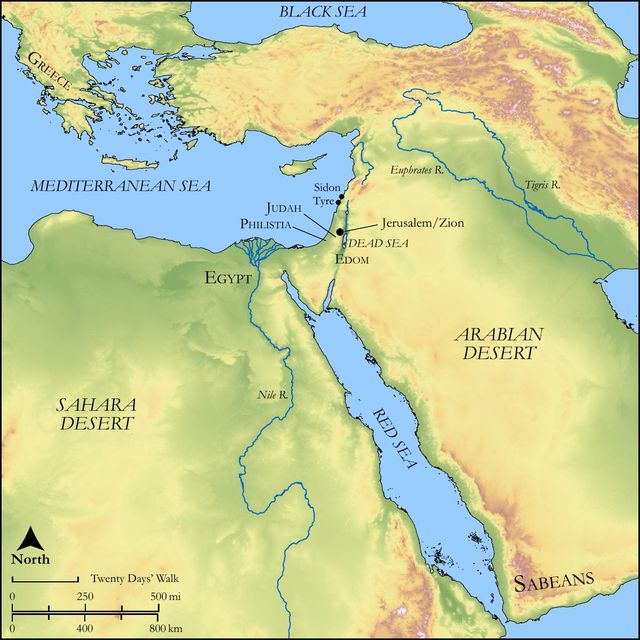
Where Joel reaches
The passages it leans on, and the ones that lean on it
Peter at Pentecost: “this is that which was spoken by the prophet Joel.”
Paul applies the promise to all who call on the Lord Jesus, Jew and Greek alike.
Exodus 34:6 Joel 2:13–14 Jonah 4:2
The name proclaimed to Moses is Joel’s ground for hope, and Jonah’s complaint when Nineveh is spared.
Amos opens with the same words: “The LORD will roar from Zion.”
The same figure, reversed: in Isaiah the nations beat swords into plowshares; in Joel they beat plowshares into swords for judgment.
Books Joel links to most
The Church Fathers on Joel
90 quotations from 31 writers before AD 800 · the ten most quoted, in date order
- Tertullian220
- Origen253
- Basil379
- Cyril386
- Gregory390
- Ambrose397
- Chrysostom407
- Jerome420
- Theodoret458
- Gregory604
Gregory of Nazianzus, newly a priest, counted himself among the ministers of the altar whom Joel summons to lament.
Joel again summons us wailing and will have the ministers of the altar lament under the conditions of famine. He does not allow us to revel in the misfortunes of others. After sanctifying a fast, calling a solemn assembly and gathering the old men, the children, and those of tender age, we ourselves must further haunt the temple in sackcloth and ashes, prostrated humbly on the ground, because the field is wasted and the meat offering and the drink offering is cut off from the house of the Lord, till we draw down mercy by our humiliation.
Cyprian called those who had lapsed under persecution back to Joel’s summons to return.
Let us turn to the Lord with our whole mind, and, expressing repentance for our sin with true grief, let us implore God’s mercy. … He says, “Return to me with all your hearts, in fasting and in weeping, and in mourning, and rend your hearts, not your garments.”
Ambrose argued from “all flesh” that the Holy Spirit is no creature: only God fills all things.
But of what creature can it be said that it fills all things, as is written of the Holy Spirit: "I will pour My Spirit upon all flesh." This cannot be said of an Angel. Lastly, Gabriel himself, when sent to Mary, said: "Hail, full of grace," plainly declaring the grace of the Spirit which was in her, because the Holy Spirit had come upon her, and she was about to have her womb full of grace with the heavenly Word.
Basil read the darkened sun and moon as signs of the end of the world.
The Lord has already foretold that the signs of the dissolution of the universe will appear in the sun and moon and stars: “the sun shall be turned to blood, and the moon will not give its light.” These are the signs of the consummation of the world.
Keep studying
Articles