


Matthew 2:12
Bible text: King James Version (1769 Blayney text) · Public domain
Bible text: King James Version with Strong's numbers · Public domain
Bible text: Berean Standard Bible · Public domain
Bible text: American Standard Version (1901) · Public domain
Bible text: World English Bible, Messianic edition · Public domain
Bible text: Geneva Bible (1599) · Public domain
Bible text: Young's Literal Translation · Public domain
- καὶkaiAndG2532CONJConjunction
- χρηματισθέντεςchrēmatisthenteshaving been divinely warnedG5537V-APP-NPMVerb Aorist Passive Participle Nominative Plural Masculine
- κατ᾽kat᾽inG2596PREPPreposition
- ὄναρonara dreamG3677N-ASNNoun Accusative Singular Neuter
- μὴmēnotG3361PRT-NNegative Particle Negative
- ἀνακάμψαιanakampsaito returnG344V-AANVerb Aorist Active Infinitive
- πρὸςprostoG4314PREPPreposition
- ἩρῴδηνHērōdēnHerodG2264N-ASM-PNoun Accusative Singular Masculine Individual
- δι᾽di᾽throughG1223PREPPreposition
- ἄλληςallēsanotherG243A-GSFAdjective Genitive Singular Feminine
- ὁδοῦhodourouteG3598N-GSFNoun Genitive Singular Feminine
- ἀνεχώρησανanechōrēsanthey withdrewG402V-AAI-3PVerb Aorist Active Indicative 3rd Plural
- εἰςeisintoG1519PREPPreposition
- τὴνtēntheG3588T-ASFDefinite article Accusative Singular Feminine
- χώρανchōrancountryG5561N-ASFNoun Accusative Singular Feminine
- αὐτῶνautōnof themG846P-GPMPersonal pronoun Genitive Plural Masculine
English is a literal word-by-word gloss of the Greek, not the KJV's wording. Why?
This is the original text the KJV's translators worked from — each Greek word with its own literal English meaning in this verse, prepared by scholars at Tyndale House, Cambridge. The KJV translates whole sentences, not word by word, so its wording differs: one Greek word can become several English words, and the KJV may choose “charity” where the gloss reads “love”. Both are faithful — they answer different questions. For the KJV's own rendering, switch to the KJV text.
Details
See on the biblical-era maps
Study this verse
Public-domain commentary
Matthew Henry
From his Commentary on the Whole Bible. Henry comments on passages, not single verses — this entry covers Matthew 2:9–12. His two-level outline is real structure in the source text, so it is rendered as structure.
We have here the wise men's humble attendance upon this new-born King of the Jews, and the honours they paid him. From Jerusalem they went to Bethlehem, resolving to seek till they should find; but it is very strange that they went alone; that not one person of the court, church, or city, should accompany them, if not in conscience, yet in civility to them, or touched with a curiosity to see this young prince. As the queen of the south, so the wise men of the east, will rise up in judgment against the men of that generation, and of this too, and will condemn them; for they came from a far country, to worship Christ; while the Jews, his kinsmen, would not stir a step, would not go to the next town to bid him welcome. It might have been a discouragement to these wise men to find him whom they sought thus neglected at home. Are we come so far to honour the King of the Jews, and do the Jews themselves put such a slight upon him and us? Yet they persist in their resolution. Note, We must continue our attendance upon Christ, though we be alone in it; whatever others do, we must serve the Lord; if they will not go to heaven with us, yet we must not go to hell with them. Now,
I.See how they found out Christ by the same star that they had seen in their own country, Mat 2:9, Mat 2:10. Observe,
1.How graciously God directed them. By the first appearance of the star they were given to understand where they might enquire for this King, and then it disappeared, and they were left to take the usual methods for such an enquiry. Note, Extraordinary helps are not to be expected where ordinary means are to be had. Well, they had traced the matter as far as they could; they were upon their journey to Bethlehem, but that is a populous town, where shall they find him when they come thither? Here they were at a loss, at their wit's end, but not at their faith's end; they believed that God, who had brought them thither by his word, would not leave them there; nor did he; for, behold, the star which they saw in the east went before them. Note, If we go on as far as we can in the way of duty, God will direct and enable us to do that which of ourselves we cannot do; Up, and be doing, and the Lord will be with thee. Vigilantibus, non dormientibus, succurit lex - The law affords its aid, not to the idle, but to the active. The star had left them a great while, yet now returns. They who follow God in the dark shall find that light is sown, is reserved, for them. Israel was led by a pillar of fire to the promised land, the wise men by a star to the promised Seed, who is himself the bright and morning Star, Rev 22:16. God would rather create a new thing than leave those at a loss who diligently and faithfully sought him. This star was the token of God's presence with them; for he is light, and goes before his people as their Guide. Note, If we by faith eye God in all our ways, we may see ourselves under his conduct; he guides with his eye (Psa 32:8), and said to them, This is the way, walk in it: and there is a day-star that arises in the hearts of those that enquire after Christ, Pe2 1:19.
2.Observe how joyfully they followed God's direction (Mat 2:10). When they saw the star, they rejoiced with exceeding great joy. Now they saw they were not deceived, and had not taken this long journey in vain. When the desire cometh, it is a tree of life. Now they were sure that God was with them, and the tokens of his presence and favour cannot but fill with joy unspeakable the souls of those that know how to value them. Now they could laugh at the Jews in Jerusalem, who, probably, had laughed at them as coming on a fool's errand. The watchmen can give the spouse no tidings of her beloved; yet it is but a little that she passes from them, and she finds him, Sol 3:3, Sol 3:4. We cannot expect too little from man, nor too much from God. What a transport of joy these wise men were in upon this sight of the star; none know so well as those who, after a long and melancholy night of temptation and desertion, under the power of a Spirit of bondage, at length receive the spirit of adoption, witnessing with their spirits that they are the children of God; this is light out of darkness; it is life from the dead. Now they had reason to hope for a sight of the Lord's Christ speedily, of the Sun of righteousness, for they see the Morning Star. Note, We should be glad of every thing that will show us the way to Christ. This star was sent to meet the wise men, and to conduct them into the presence chamber of the King; by this master of ceremonies they were introduced, to have their audience. Now God fulfills his promise of meeting those that are disposed to rejoice and work righteousness (Isa 64:5), and they fulfill his precept. Let the hearts of those rejoice that seek the Lord, Psa 105:3. Note, God is pleased sometimes to favour young converts with such tokens of his love as are very encouraging to them, in reference to the difficulties they meet with at their setting out of the ways of God.
II.See how they made their address to him when they had found him, Mat 2:11.
We may well imagine their expectations were raised to find this royal babe, though slighted by the nation, yet honourably attended at home; and what a disappointment it was to them when they found a cottage was his palace, and his own poor mother all the retinue he had! Is this the Saviour of the world? Is this the King of the Jews, nay, and the Prince of the kings of the earth? Yes, this is he, who, though he was rich, yet, for our sakes, became thus poor. However, these wise men were so wise as to see through this veil, and in this despised babe to discern the glory as of the Only-begotten of the Father; they did not think themselves balked or baffled in their enquiry; but, as having found the King they sought, they presented themselves first, and then their gifts, to him.
1.They presented themselves to him: they fell down, and worshipped him. We do not read that they gave such honour to Herod, though he was in the height of his royal grandeur; but to this babe they gave this honour, not only as to a king (then they would have done the same to Herod), but as to a God. Note, All that have found Christ fall down before him; they adore him, and submit themselves to him. He is thy Lord, and worship thou him. It will be the wisdom of the wisest of men, and by this it will appear they know Christ, and understand themselves and their true interests, if they be humble, faithful worshippers of the Lord Jesus.
2.They presented their gifts to him. In the eastern nations, when they did homage to their kings, they made them presents; thus the subjection of the kings of Sheba to Christ is spoken of (Psa 72:10), They shall bring presents, and offer gifts. See Isa 60:6. Note, With ourselves, we must give up all that we have to Jesus Christ; and if we be sincere in the surrender of ourselves to him, we shall not be unwilling to part with what is dearest to us, and most valuable, to him and for him; nor are our gifts accepted, unless we first present ourselves to him living sacrifices. God had respect to Abel, and then to his offering. The gifts they presented were, gold, frankincense, and myrrh, money, and money's-worth. Providence sent this for a seasonable relief to Joseph and Mary in their present poor condition. These were the products of their own country; what God favours us with, we must honour him with. Some think there was a significancy in their gifts; they offered him gold, as a king, paying him tribute, to Caesar, the things that are Caesar's; frankincense, as God, for they honoured God with the smoke of incense; and myrrh, as a Man that should die, for myrrh was used in embalming dead bodies.
III.See how they left him when they had made their address to him, Mat 2:12.
Herod appointed them to bring him word what discoveries they had made, and, it is probable, they would have done so, if they had not been countermanded, not suspecting their being thus made his tools in a wicked design. Those that mean honestly and well themselves are easily made to believe that others do so too, and cannot think the world is as bad as it really is; but the Lord knows how to deliver the godly out of temptation. We do not find that the wise men promised to come back to Herod, and, if they had, it must have been with the usual proviso, If God permit; God did not permit them, and prevented the mischief Herod designed to the Child Jesus, and the trouble it would have been to the wise men to have been made involuntarily accessory to it. They were warned of God, chrēmatisthentes - oraculo vel responso accepto - by an oracular intimation. Some think it intimates that they asked counsel of God, and that this was the answer. Note, Those that act cautiously, and are afraid of sin and snares, if they apply themselves to God for direction, may expect to be led in the right way. They were warned not to return to Herod, nor to Jerusalem; those were unworthy to have reports brought them concerning Christ, that might have seen with their own eyes, and would not. They departed into their own country another way, to bring the tidings to their countrymen; but it is strange that we never hear any more of them, and that they or theirs did not afterwards attend him in the temple, whom they had worshipped in the cradle. However, the direction they had from God in their return would be a further confirmation of their faith in this Child, as the Lord from heaven.
Historical interpretation
Nine Centuries of Reception
11 surviving comments on this verse. Each one is dated, so this reads as a timeline rather than a list.
Select a marker to jump to its quote. Markers stagger vertically where authors wrote within a few decades of each other.
This is an example to us of modesty and faith, that once we have come to know and adore Christ as King, we may abandon the path we were traveling before, which was the path of error. We may now proceed by the other path, on which Christ is our guide. We may return to our place, paradise, from which Adam was driven out. This place is mentioned in the psalm as one where we will please the Lord in the land of the living. Thus it was that the magi, having been advised to follow another road, frustrated the tyrant’s cruel designs in their return. It was in this manner, through the magi, that the boy who was born a king became known, while at the same time the wiles of the tyrant Herod were overcome. It was predicted that our infant Lord and Savior would be triumphant even at the very beginning of his life in the flesh. This was foretold in advance by Isaiah when he said, “For before the child shall have knowledge to cry ‘father’ and ‘mother,’ the riches of Damascus and the spoil of Samaria shall be taken away before the king of Assyria.” By “riches of Damascus” is meant the gold that the boy, born the Son of God, received as offered to him by the magi. The “spoils of Samaria” represent the worship of idols, the superstitious error of Samaria from which he diverted those same magi. Those who previously were the prey of the devil because of their false religion became the plunder of God through their knowledge of Christ. The “king of the Assyrians” refers to Herod, or in fact to the devil, to whom the magi themselves became enemies, reverencing as they did the Son of God, our Lord and Savior.
See from this also their faith, how they were not offended, but are docile, and considerate; neither are they troubled, nor reason with themselves, saying, "And yet, if this Child be great, and hath any might, what need of flight, and of a clandestine retreat? and wherefore can it be, that when we have come openly and with boldness, and have stood against so great a people, and against a king's madness, the angel sends us out of the city as runaways and fugitives?" But none of these things did they either say or think. For this most especially belongs to faith, not to seek an account of what is enjoined, but merely to obey the commandments laid upon us.
(Hom. viii.) See the faith of the Magi; they were not offended, nor said within themselves, What need now of flight? or of secret return, if this Boy be really some great one? Such is true faith; it asks not the reason of any command, but obeys.
They had offered gifts to the Lord, and receive a warning corresponding to it. This warning (in the Greek 'having received a response') is given not by an Angel, but by the Lord Himself, to show the high privilege granted to the merit of Joseph.
Verse 2. "Wherefore the king commanded that the soothsayers, the magi, the charmers, and the Chaldeans show the king his dream. And when they came, they stood in the presence of the king." Those whom we have translated as "soothsayers" (harioli) others have rendered as epaoidoi, that is, "enchanters." Well then, it seems to me that enchanters are people who perform a thing by means of words; magi are those who pursue individual lines of philosophic enquiry; charmers are those who employ blood and animal sacrifices and often have contact with corpses. Furthermore the term "astrologers" among the Chaldeans signifies, I believe, what the common people call mathematicians. But common usage and ordinary conversation understands the term magi as wicked enchanters . Yet they were regarded differently among their own nation, inasmuch as they were the philosophers of the Chaldeans, and even the kings and princes of this same nation do all they can to acquire a knowledge of this science. Wherefore also it was they who first at the nativity of our Lord and Savior learned of his birth, and who came to holy Bethlehem and adored the child, under the guidance of the star which shone above them (Matthew 2:1-12).
(non occ.) The wicked Herod, now made cruel by fear, will needs do a deed of horror. But how could he ensnare him who had come to cut off all fraud? His fraud is escaped as it follows, And being warned.
Had the Magi sought Christ as an earthly King, they would have remained with Him when they had found Him; but they only worship, and go their way. After their return, they continued in the worship of God more stedfast than before, and taught many by their preaching. And when afterwards Thomas reached their country, they joined themselves to him, and were baptized, and did according to his preachingb.
It was impossible that they, who left Herod to go to Christ, should return to Herod. They who have by sin left Christ and passed to the devil, often return to Christ; for the innocent, who knows not what is evil, is easily deceived, but having once tasted the evil he has taken up, and remembering the good he has left, he returns in penitence to God. He who has forsaken the devil and come to Christ, hardly returns to the devil; for rejoicing in the good he has found, and remembering the evil he has escaped, with difficulty returns to that evil.
(Hom. in Ev. i. 10. 7.) We may learn much from this return of the Magi another way. Our country is Paradise, to which, after we have come to the knowledge of Christ we are forbidden to return the way we came. We have left this country by pride, disobedience, following things of sight, tasting forbidden food; and we must return to it by repentance, obedience, by contemning things of sight, and overcoming carnal appetite.
The magi hint at something great for us by the fact that they return to their own country by another way. For in doing what they were warned to do, they surely suggest to us what we should do. Our country is paradise, to which, once we have come to know Jesus, we are forbidden to return by the way we came. For we departed from our country by being proud, by being disobedient, by following visible things, by tasting the forbidden food; but we must return to it by weeping, by obeying, by despising visible things, and by restraining the appetite of the flesh. Therefore we go back to our country by another way, because we who departed from the joys of paradise through pleasures are called back to them through lamentations.
Hence it is necessary, dearest brothers, that we, always fearful and always watchful, set before the eyes of our heart on one side the sins of our deeds, on the other the judgment of final severity. Let us consider how severe the judge comes who threatens judgment yet remains hidden; who holds out terrors to sinners and yet still forbears; and therefore delays coming sooner so that he may find fewer to condemn. Let us punish our sins with weeping, and with the voice of the Psalmist let us come before his face in confession. Therefore let no deceit of pleasures deceive us, let no vain joy seduce us. For near is the judge who said: "Woe to you who laugh now, for you shall mourn and weep." For hence Solomon says: "Laughter shall be mingled with sorrow, and mourning takes hold of the end of joy." Hence he says again: "I counted laughter an error, and to joy I said: Why are you vainly deceived?" Hence again he says: "The heart of the wise is where sadness is, and the heart of fools is where gladness is." Let us therefore fear the precepts of God, if we truly celebrate the solemnity of God. For a sacrifice pleasing to God is affliction against sin, as the Psalmist testifies who says: "A sacrifice to God is a contrite spirit." Our past sins were forgiven in the receiving of baptism, and yet after baptism we have committed many sins, but we cannot be washed again by the water of baptism. Since therefore we have defiled our life even after baptism, let us baptize our conscience with tears, so that, seeking our country again by another way, we who departed from it delighted by good things may return to it embittered by evils, through the grace of our Lord.
Consider the sequence of events. First God guided them to faith by means of the star. Then they came to Jerusalem and He taught them through the prophet Micah that Christ was to be born in Bethlehem. And finally, they were warned by means of the angel. They obeyed the warning, that is, the divine speech. Therefore, having received the warning, that is, having accepted the revelation from God, they deceived Herod. They were not afraid of pursuit, but were bold in the power of Him that had been born. Thus they were true witnesses and confessors.
(Anselm.) The three men who offer, signify the nations who come from the three quarters of the earth. They open their treasures, i. e. manifest the faith of their hearts by confession. Rightly in the house, teaching that we should not vain-gloriously display the treasure of a good conscience. They bring three (vid. sup. note g, p. 18.) gifts, i. e. the faith in the Holy Trinity. Or opening the stores of Scripture, they offer its threefold sense, historical, moral, and allegorical; or Logic, Physic, and Ethics, making them all serve the faith.
(ord.) This warning is given by the Lord Himself; it is none other that now teaches these Magi the way they should return, but He who said, I am the way. (John 14.) Not that the Infant actually speaks to them, that His divinity may not be revealed before the time, and His human nature may be thought real. But he says, having received an answer, for as Moses prayed silently, so they with pious spirit had asked what the Divine will bade. By another way, for they were not to be mixed up with the unbelieving Jews.
Continue studying Matthew 2:12 across the web’s major study libraries — every link below opens this exact verse, chapter, or book on the destination site.
Read & Compare
 BibleGatewayThis verse in more than 200 translations and 70 languages.
 Bible.comThe YouVersion reader — hundreds of translations, reading plans, and highlights.
 ESV.orgCrossway's official English Standard Version reader.
 NET BibleThe NET translation with 60,000+ translators' notes on every rendering decision.
 STEP BibleTyndale House's free study tool — original text, vocabulary, and scholarly resources.
 BibliaLogos Bible Software's free web reader.
 USCCBThe New American Bible (Revised Edition) with the U.S. bishops' study notes.
Commentaries
 BibleHub CommentariesDozens of classic commentaries on this verse, gathered on one page.
 StudyLightMore than 100 commentary sets — the largest collection on the web.
 BibleRefPlain-English commentary on what this verse means, verse by verse.
 Enduring WordDavid Guzik's free commentary on this chapter, widely used by Bible teachers.
 Bible Study ToolsVerse commentary alongside Greek and Hebrew study aids.
Original Language & Research
- BibleHub InterlinearThe verse word by word — original language, transliteration, and English.
- BibleHub LexiconEvery word's original-language definition and Strong's entry.
 Blue Letter BibleDeep-study tools — Strong's numbers, concordance, and word studies.
 CNTR CollationThe earliest Greek manuscripts of this verse, collated letter by letter.
Sermons, Hymns & Audio


TrulyRandomVerse is not affiliated with these sites and doesn’t control their content. They’re linked because they’re genuinely useful.
Summary
Matthew 2:12 narrates the pivotal moment when the Wise Men, having worshipped the newborn King Jesus, received a divine warning in a dream not to return to the treacherous King Herod. In immediate and obedient response to this supernatural instruction, they chose an alternative route for their journey home, thereby circumventing Herod's murderous plot and ensuring the safety of the Christ child. This verse underscores God's active protection of His Son and His sovereign control over human schemes.
Context
ShowHideLiterary Context
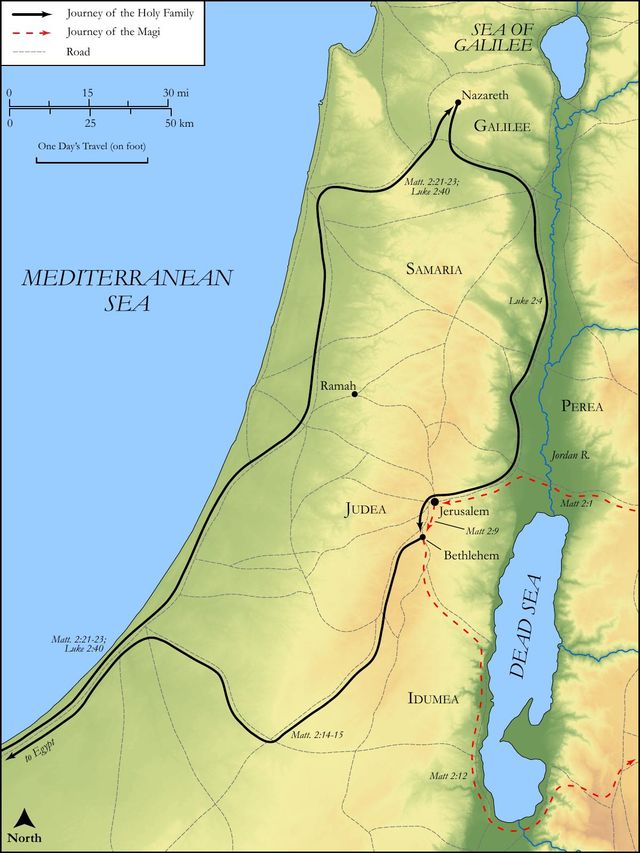
This verse concludes the narrative of the Wise Men's visit to Bethlehem, which begins in Matthew 2:1. Prior to this, the Magi, guided by a star, arrived in Jerusalem, causing a stir and alerting King Herod to the birth of a "King of the Jews." Herod, feigning a desire to worship the child, cunningly instructed the Magi to report back to him after finding Jesus (Matthew 2:8). The Magi then found Jesus in Bethlehem, worshipped Him, and presented Him with gifts (Matthew 2:9-11). Matthew 2:12 serves as the immediate aftermath of their worship, highlighting God's direct intervention to protect Jesus from Herod's malevolent intentions. It sets the stage for Joseph's subsequent dream and the family's flight to Egypt (Matthew 2:13-15).
Historical & Cultural Context
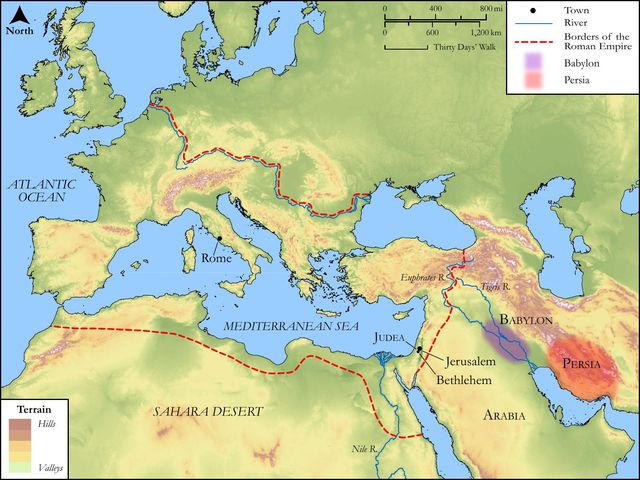
King Herod the Great, ruling Judea under Roman authority, was notoriously paranoid and ruthless, known for eliminating perceived threats to his throne, including members of his own family. The arrival of "wise men from the East" (Magi), likely Persian or Babylonian astrologer-priests, seeking a "King of the Jews," would have immediately triggered his deep-seated insecurities. Dreams were a recognized medium for divine communication among both the Jews and the pagan nations of that day, though the Bible consistently portrays God as the true source of such revelatory dreams for His purposes. The Magi's decision to depart "another way" was not merely a change of travel plans but a direct act of defiance against a powerful, tyrannical ruler, demonstrating their profound trust in the divine warning over earthly authority.
Key Themes
ShowHideMatthew chapter 2 is rich with themes that culminate in this verse. One prominent theme is Divine Guidance and Protection, as God actively intervenes through dreams to direct and safeguard His Son, first with Joseph (Matthew 1:20) and now with the Magi. Another crucial theme is Obedience to God's Word, exemplified by the Magi's immediate compliance with the divine warning, prioritizing God's command over Herod's deceptive request. This obedience directly contributes to the theme of God's Sovereignty Over Evil, demonstrating that no human scheme, however powerful or cunning, can thwart God's ultimate plan for His Messiah. The narrative also subtly highlights the Contrast Between True and False Worship, where the Magi genuinely worship Jesus, while Herod's feigned worship masks murderous intent, foreshadowing the opposition Jesus would face.
Exposition and Analysis
ShowHideKey Word Analysis
ShowHideThis verb signifies a divine communication or instruction, often in the form of an oracle or a direct revelation from God. It implies that the warning was not a mere human intuition or a common dream, but a specific, authoritative message originating from God Himself. The use of this word emphasizes the supernatural and authoritative nature of the message received by the Magi, underscoring that their subsequent actions were a direct response to God's will.
This noun refers to a vision or message received during sleep. In biblical contexts, dreams frequently serve as a medium for divine revelation, particularly in the Old Testament (e.g., Jacob, Joseph, Daniel) and early New Testament narratives (e.g., Joseph in Matthew 1:20 and Matthew 2:13). Its inclusion here specifies the precise mode of God's communication to the Magi, highlighting the supernatural and direct nature of the warning.
This verb means "to retire," "to withdraw oneself," or "to go aside." It describes the action taken by the Magi in response to the divine warning. Their departure "another way" (G1223 állos and G3598 hodós) signifies a deliberate change of course, a strategic withdrawal from Herod's sphere of influence, and an act of obedience that directly thwarts the king's murderous intentions. This word emphasizes their active, decisive, and obedient response to God's instruction.
Verse Breakdown
ShowHide"And being warned of God in a dream"
This opening clause establishes the divine source and supernatural mode of the instruction given to the Magi. The passive voice ("being warned") emphasizes that God was the active agent in communicating this message. The specific mention of a "dream" highlights the direct, personal, and unmistakable nature of this divine intervention, leaving no doubt as to the origin of the warning.
"that they should not return to Herod"
This specifies the content and purpose of the divine warning. It directly countermands Herod's earlier deceptive instruction to the Magi to report back to him. God's explicit prohibition reveals Herod's true, malevolent intent (to kill the child) and underscores God's protective oversight of the newborn King.
"they departed into their own country another way"
This final clause details the Magi's immediate and obedient response to the divine warning. Their action of "departing another way" demonstrates their faithfulness to God's instruction, even if it meant defying a powerful earthly ruler and altering their planned return journey. This act of obedience directly frustrates Herod's plot and ensures the safety of Jesus, fulfilling God's protective purpose.
Literary Devices
ShowHideMatthew 2:12 employs several significant literary devices. Irony is evident in Herod's deceptive request for the Magi to report back to him under the guise of worship, which is entirely subverted by God's direct intervention. Herod's cunning is rendered futile by divine wisdom. Foreshadowing is also present, as this initial attempt on Jesus' life by an earthly king foreshadows the ongoing opposition and rejection Jesus would face throughout His ministry, ultimately leading to His crucifixion at the hands of earthly authorities. The "dream" itself functions as Divine Intervention, a classic literary motif where a supernatural force directly influences the narrative's direction, emphasizing God's active role in protecting His plan and His Messiah. The phrase "another way" serves as a powerful Symbol of obedience and the thwarting of evil, representing a path chosen not by human convenience or design, but by divine command, leading away from danger and towards the fulfillment of God's purposes.
Theological and Thematic Connections
ShowHideMatthew 2:12 profoundly illustrates God's meticulous providence and His active involvement in the unfolding of His redemptive plan. It reveals a God who is not distant or passive, but intimately engaged in protecting His Son from the forces of evil, even from the most powerful earthly rulers. The divine warning to the Magi underscores that God's purposes cannot be thwarted by human malice or deception. This incident serves as an early testament to the truth that God's sovereign will ultimately prevails, ensuring the safety of the Messiah and the continuation of the lineage through which salvation would come. The Magi's immediate obedience to this divine instruction highlights the importance of heeding God's voice, even when it requires defying worldly authority or changing one's plans.
Reflection and Application
ShowHideMatthew 2:12 offers profound lessons for believers today, reminding us of God's ever-present guidance and protection in our lives. Just as the Magi received a clear, divine warning, we are called to cultivate spiritual discernment and attentiveness to God's voice, primarily through His inspired Word, prayer, and the counsel of godly community. In a world often filled with deception and danger, this verse reassures us that God is actively working to safeguard His purposes and His people. We can trust in His sovereign care, knowing that He can deliver us from harm or guide us through challenging circumstances, even when faced with powerful opposition. The Magi's immediate and unquestioning obedience, choosing God's command over Herod's deceptive request, serves as a powerful model for us. It challenges us to prioritize faithfulness to God above worldly pressures, personal convenience, or the expectations of others, trusting that His ways are always ultimately for our good and His glory. Our obedience, like theirs, may require us to take a "different way" than the world expects, but it is always the path of wisdom and true security.
Questions for Reflection
ShowHideFAQ
ShowHideWhy did God warn the Wise Men in a dream instead of some other way?
ShowHideGod often communicated through dreams in the Old Testament and early New Testament narratives, especially when dealing with individuals who might not have had direct access to prophetic revelation or written scripture. For the Wise Men, who were likely Gentile astrologers, a dream was a common and understandable medium for receiving divine instruction. It was a direct, unmistakable, and personal form of communication that left no doubt as to its supernatural origin and divine authority. This method also allowed for a discreet warning, circumventing Herod's surveillance and ensuring the safety of the Christ child without a public confrontation. God chooses the most effective and appropriate means to convey His will, and in this case, a dream served His protective purposes perfectly, as seen also in Joseph's multiple dreams in Matthew 1 and Matthew 2.
Christ-Centered Fulfillment
ShowHideMatthew 2:12, though seemingly a simple narrative detail, is profoundly Christ-centered in its implications, demonstrating God's meticulous protection of His Son from the very beginning of His earthly life. The divine warning to the Magi and their subsequent obedience ensured that the promised Messiah, the true King of Israel, would not be prematurely cut off by the machinations of an earthly tyrant. This act of divine preservation foreshadows the greater salvation that Jesus would accomplish. Just as Jesus was protected from Herod's sword, He would later willingly lay down His life, not as a victim of human evil, but as the Lamb of God who takes away the sin of the world. His survival in infancy was essential for Him to grow, fulfill the prophecies of His ministry, and ultimately offer Himself as the perfect sacrifice for humanity's redemption. The "another way" the Magi took prefigures the "new and living way" that Jesus Himself would inaugurate through His death and resurrection (Hebrews 10:19-20), granting access to God that Herod, in his earthly power, could never comprehend or prevent. Thus, this verse is a foundational testament to God's unwavering commitment to His redemptive plan, ensuring that His Son would live to accomplish the ultimate work of salvation, defeating not just a king's plot, but the power of sin and death itself (Colossians 2:15).