


Matthew 18:28
Bible text: King James Version (1769 Blayney text) · Public domain
Bible text: King James Version with Strong's numbers · Public domain
Bible text: Berean Standard Bible · Public domain
Bible text: American Standard Version (1901) · Public domain
Bible text: World English Bible, Messianic edition · Public domain
Bible text: Geneva Bible (1599) · Public domain
Bible text: Young's Literal Translation · Public domain
- ἐξελθὼνexelthōnHaving gone outG1831V-2AAP-NSMVerb 2nd Aorist Active Participle Nominative Singular Masculine
- δὲdehoweverG1161CONJConjunction
- ὁhotheG3588T-NSMDefinite article Nominative Singular Masculine
- δοῦλοςdoulosservantG1401N-NSMNoun Nominative Singular Masculine
- ἐκεῖνοςekeinossameG1565D-NSMDemonstrative pronoun Nominative Singular Masculine
- εὗρενheurenfoundG2147V-2AAI-3SVerb 2nd Aorist Active Indicative 3rd Singular
- ἕναhenaoneG1520A-ASMAdjective Accusative Singular Masculine
- τῶνtōnof theG3588T-GPMDefinite article Genitive Plural Masculine
- συνδούλωνsundoulōnfellow servantsG4889N-GPMNoun Genitive Plural Masculine
- αὐτοῦautouof himG846P-GSMPersonal pronoun Genitive Singular Masculine
- ὃςhoswhoG3739R-NSMRelative pronoun Nominative Singular Masculine
- ὤφειλενōpheilenwas owingG3784V-IAI-3SVerb Imperfect Active Indicative 3rd Singular
- αὐτῷautōto himG846P-DSMPersonal pronoun Dative Singular Masculine
- ἑκατὸνhekatona hundredG1540A-NUIAdjective
- δηνάριαdēnariadenariiG1220N-APNNoun Accusative Plural Neuter
- καὶkaiandG2532CONJConjunction
- κρατήσαςkratēsashaving seizedG2902V-AAP-NSMVerb Aorist Active Participle Nominative Singular Masculine
- αὐτὸνautonhimG846P-ASMPersonal pronoun Accusative Singular Masculine
- ἔπνιγενepnigenhe was throttling [him]G4155V-IAI-3SVerb Imperfect Active Indicative 3rd Singular
- λέγων·legōnsayingG3004V-PAP-NSMVerb Present Active Participle Nominative Singular Masculine
- ἀπόδοςapodosdo payG591V-2AAM-2SVerb 2nd Aorist Active Imperative 2nd Singular
- μοιmoito meG3165P-1DSPersonal pronoun Dative 1st Singular
- εἴeiifG1487CONDConjunction
- τιtianyG5100X-ASNIndefinite pronoun Accusative Singular Neuter
- ὀφείλειςopheileisyou owe.’G3784V-PAI-2SVerb Present Active Indicative 2nd Singular
English is a literal word-by-word gloss of the Greek, not the KJV's wording. Why?
This is the original text the KJV's translators worked from — each Greek word with its own literal English meaning in this verse, prepared by scholars at Tyndale House, Cambridge. The KJV translates whole sentences, not word by word, so its wording differs: one Greek word can become several English words, and the KJV may choose “charity” where the gloss reads “love”. Both are faithful — they answer different questions. For the KJV's own rendering, switch to the KJV text.
Details
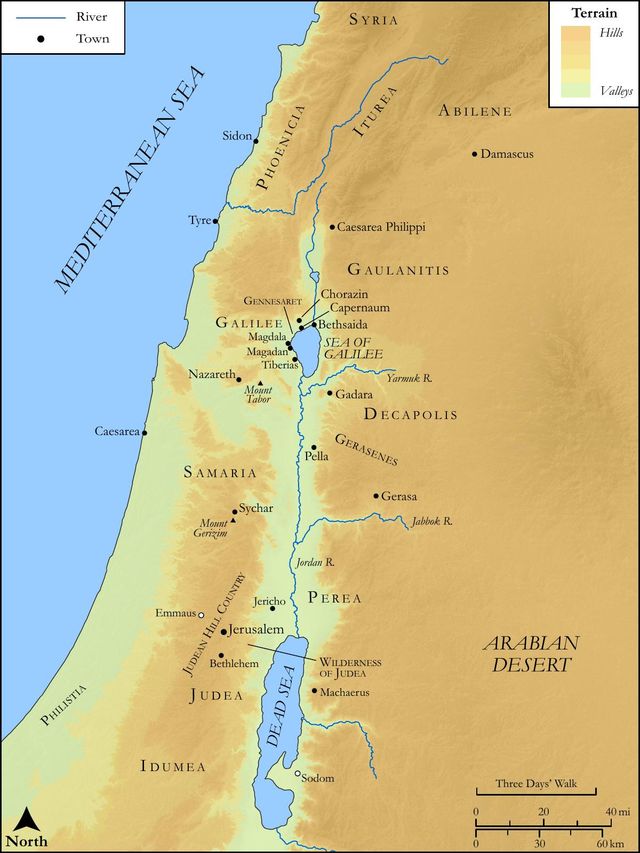
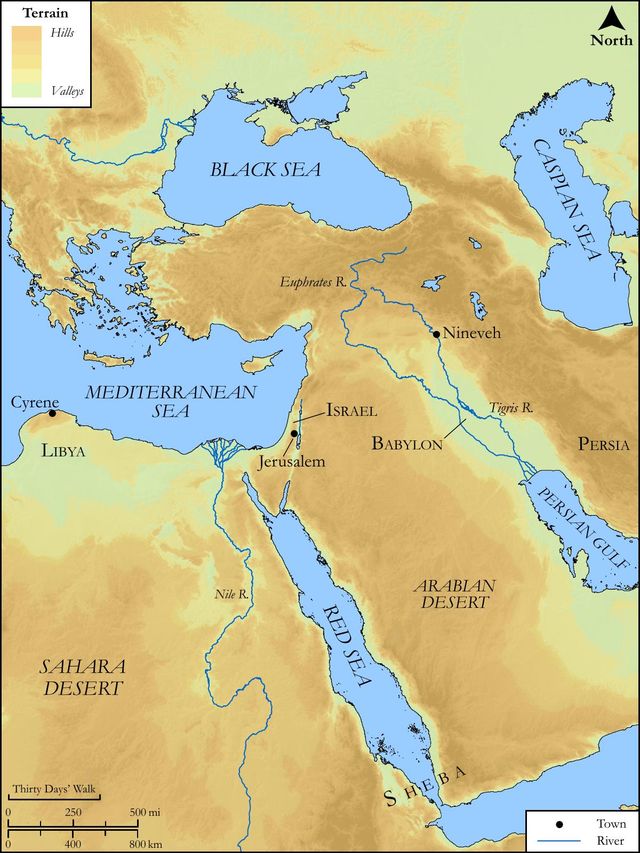
See on the biblical-era maps

Study this verse
Public-domain commentary
Matthew Henry
From his Commentary on the Whole Bible. Henry comments on passages, not single verses — this entry covers Matthew 18:1–35. His four-level outline is real structure in the source text, so it is rendered as structure.
As there never was a greater pattern of humility, so there never was a greater preacher of it, than Christ; he took all occasions to command it, to commend it, to his disciples and followers.
I.The occasion of this discourse concerning humility was an unbecoming contest among the disciples for precedency; they came to him, saying, among themselves (for they were ashamed to ask him, Mar 9:34), Who is the greatest in the kingdom of heaven? They mean not, who by character (then the question had been good, that they might know what graces and duties to excel in), but who by name. They had heard much, and preached much, of the kingdom of heaven, the kingdom of the Messiah, his church in this world; but ass yet they were so far from having any clear notion of it, that they dreamt of a temporal kingdom, and the external pomp and power of it. Christ had lately foretold his sufferings, and the glory that should follow, that he should rise again, from whence they expected his kingdom would commence; and now they thought it was time to put in for their places in it; it is good, in such cases, to speak early. Upon other discourses of Christ to that purport, debates of this kind arose (Mat 20:19, Mat 20:20; Luk 22:22, Luk 22:24); he spoke many words of his sufferings, but only one of his glory; yet they fasten upon that, and overlook the other; and, instead of asking how they might have strength and grace to suffer with him, they ask him, "Who shall be highest in reigning with him." Note, Many love to hear and speak of privileges and glory, who are willing to pass by the thoughts of work and trouble. They look so much at the crown, that they forget the yoke and the cross. So the disciples here did, when they asked, Who is the greatest in the kingdom of heaven?
1.They suppose that all who have a place in that kingdom are great, for it is a kingdom of priests. Note, Those are truly great who are truly good; and they will appear so at last, when Christ shall own them as his, though ever so mean and poor in the world.
2.They suppose that there are degrees in this greatness. All the saints are honourable, but not all alike so; one star differs from another star in glory. All David's officers were not worthies, nor all his worthies of the first three.
3.They suppose it must be some of them, that must be prime ministers of state. To whom should King Jesus delight to do honour, but to them who had left all for him, and were now his companions in patience and tribulation?
4.They strive who it should be, each having some pretence or other to it. Peter was always the chief speaker, and already had the keys given him; he expects to be lord-chancellor, or lord-chamberlain of the household, and so to be the greatest. Judas had the bag, and therefore he expects to be lord-treasurer, which, though now he come last, he hopes, will then denominate him the greatest. Simon and Jude are nearly related to Christ, and they hope to take place of all the great officers of state, as princes of the blood. John is the beloved disciple, the favourite of the Prince, and therefore hopes to be the greatest. Andrew was first called, and why should not he be first preferred? Note, We are very apt to amuse and humour ourselves with foolish fancies of things that will never be.
II.The discourse itself, which is a just rebuke to the question, Who shall be greatest? We have abundant reason to think, that if Christ ever intended that Peter and his successors at Rome should be heads of the church, and his chief vicars on earth, having so fair an occasion given him, he would now have let his disciples know it; but so far is he from this, that his answer disallows and condemns the thing itself. Christ will not lodge such an authority or supremacy any where in his church; whoever pretend to it are usurpers; instead of settling any of the disciples in this dignity, he warns them all not to put in for it.
Christ here teacheth them to be humble,
1.By a sign (Mat 18:2); He called a little child to him, and set him in the midst of them. Christ often taught by signs or sensible representations (comparisons to the eye), as the prophets of old. Note, Humility is a lesson so hardly learned, that we have need by all ways and means to be taught it. When we look upon a little child, we should be put in mind of the use Christ made of this child. Sensible things must be improved to spiritual purposes. He set him in the midst of them; not that they might play with him, but that they might learn by him. Grown men, and great men, should not disdain the company of little children, or think it below them to take notice of them. They may either speak to them, and give instruction to them; or look upon them, and receive instruction from them. Christ himself, when a child, was in the midst of the doctors, Luk 2:46.
2.By as sermon upon this sign; in which he shows them and us,
(1.)The necessity of humility, Mat 18:3. His preface is solemn, and commands both attention and assent; Verily I say unto you, I, the Amen, the faithful Witness, say it, Except ye be converted, and become as little children, ye shall not enter into the kingdom of heaven. Here observe,
[1.]What it is that he requires and insists upon.
First, "You must be converted, you must be of another mind, and in another frame and temper, must have other thoughts, both of yourselves and of the kingdom of heaven, before you be fit for a place in it. The pride, ambition, and affectation of honour and dominion, which appear in you, must be repented of, mortified, and reformed, and you must come to yourselves." Note, Besides the first conversion of a soul from a state of nature to a state of grace, there are after-conversions from particular paths of backsliding, which are equally necessary to salvation. Every step out of the way by sin, must be a step into it again by repentance. When Peter repented of his denying his Master, he was converted. Secondly, You must become as little children. Note, Converting grace makes us like little children, not foolish as children (Co1 14:20), nor fickle (Eph 4:14), nor playful (Mat 11:16); but, as children, we must desire the sincere milk of the word (Pe1 2:2); as children, we must be careful for nothing, but leave it to our heavenly Father to care for us (Mat 6:31); we must, as children, be harmless and inoffensive, and void of malice (Co1 14:20), governable, and under command (Gal 4:2); and (which is here chiefly intended) we must be humble as little children, who do not take state upon them, nor stand upon the punctilios of honour; the child of a gentleman will play with the child of a beggar (Rom 12:16), the child in rags, if it have the breast, is well enough pleased, and envies not the gaiety of the child in silk; little children have no great aims at great places, or projects to raise themselves in the world; they exercise not themselves in things too high for them; and we should in like manner behave, and quiet ourselves, Psa 131:1, Psa 131:2. As children are little in body and low in stature, so we must be little and low in spirit, and in our thoughts of ourselves. This is a temper which leads to other good dispositions; the age of childhood is the learning age.
[2.]What stress he lays upon this; Without this, you shall not enter into the kingdom of heaven. Note, Disciples of Christ have need to be kept in awe by threatenings, that they may fear lest they seem to come short, Heb 4:1. The disciples, when they put that question (Mat 18:1), thought themselves sure of the kingdom of heaven; but Christ awakens them to be jealous of themselves. They were ambitious of being greatest in the kingdom of heaven; Christ tells them, that, except they came to a better temper, they should never come thither. Note, many that set up for great ones in the church, prove not only little, but nothing, and are found to have no part or lot in the matter. Our Lord designs here to show the great danger of pride and ambition; whatever profession men make, if they allow themselves in this sin, they will be rejected both from God's tabernacle and from his holy hill. Pride threw the angels that sinned out of heaven, and will keep us out, if we be not converted from it. They that are lifted up with pride, fall into the condemnation of the devil; to prevent this, we must become as little children, and, in order to do that, must be born again, must put on the new man, must be like the holy child Jesus; so he is called, even after his ascension, Act 4:27.
(2.)He shows the honour and advancement that attend humility (Mat 18:4), thus furnishing a direct but surprising answer to their question. He that humbles himself as a little child, though he may fear that hereby he will render himself contemptible, as men of timid minds, who thereby throw themselves out of the way of preferment, yet the same is greatest in the kingdom of heaven. Note, The humblest Christians are the best Christians, and most like to Christ, and highest in his favour; are best disposed for the communications of divine grace, and fittest to serve God in this world, and enjoy him in another. They are great, for God overlooks heaven and earth, to look on such; and certainly those are to be most respected and honoured in the church that are most humble and self-denying; for, though they least seek it, they best deserve it.
(3.)The special care Christ takes for those that are humble; he espouses their cause, protects them, interests himself in their concerns, and will see that they are not wronged, without being righted.
Those that thus humble themselves will be afraid,
[1.]That nobody will receive them; but (Mat 18:5), Whoso shall receive one such little child in my name, receiveth me. Whatever kindnesses are done to such, Christ takes as done to himself. Whoso entertains a meek and humble Christian, keeps him in countenance, will not let him lose by his modesty, takes him into his love and friendship, and society and care, and studies to do him a kindness; and doth this in Christ's name, for his sake, because he bears the image of Christ, serves Christ, and because Christ has received him; this shall be accepted and recompensed as an acceptable piece of respect to Christ. Observe, Though it be but one such little child that is received in Christ's name, it shall be accepted. Note, The tender regard Christ has to his church extends itself to every particular member, even the meanest; not only to the whole family, but to every child of the family; the less they are in themselves, to whom we show kindness, the more there is of good will in it to Christ; the less it is for their sakes, the more it is for his; and he takes it accordingly. If Christ were personally among us, we think we should never do enough to welcome him; the poor, the poor in spirit, we have always with us, and they are his receivers. See Mat 25:35-40.
[2.]They will be afraid that every body will abuse them; the basest men delight to trample upon the humble; Vexat censura columbas - Censure pounces on doves. This objection he obviates (Mat 18:6), where he warns all people, as they will answer it at their utmost peril, not to offer any injury to one of Christ's little ones. This word makes a wall of fire about them; he that touches them, touches the apple of God's eye.
Observe, First, The crime supposed; offending one of these little ones that believe in Christ. Their believing in Christ, though they be little ones, unites them to him, and interests him in their cause, so that, as they partake of the benefit of his sufferings, he also partakes in the wrong of theirs. Even the little ones that believe have the same privileges with the great ones, for they have all obtained like precious faith. There are those that offend these little ones, by drawing them to sin (Co1 8:10, Co1 8:11), grieving and vexing their righteous souls, discouraging them, taking occasion from their mildness to make a prey of them in their persons, families, goods, or good name. Thus the best men have often met with the worst treatment in this world.
Secondly, The punishment of this crime; intimated in that word, Better for him that he were drowned in the depth of the sea. The sin is so heinous, and the ruin proportionably so great, that he had better undergo the sorest punishments inflicted on the worst of malefactors, which can only kill the body. Note, 1. Hell is worse than the depth of the sea; for it is a bottomless pit, and it is a burning lake. The depth of the sea is only killing, but hell is tormenting. We meet with one that had comfort in the depth of the sea, it was Jonah (Jon 2:2, Jon 2:4, Jon 2:9); but never any had the least grain or glimpse of comfort in hell, nor will have to eternity. 2. The irresistible irrevocable doom of the great Judge will sink sooner and surer, and bind faster, than a mill-stone hanged about the neck. It fixes a great gulf, which can never be broken through, Luk 16:26. Offending Christ's little ones, though by omission, is assigned as the reason of that dreadful sentence, Go ye cursed, which will at last be the doom of proud persecutors.
Historical interpretation
Nine Centuries of Reception
11 surviving comments on this verse. Each one is dated, so this reads as a timeline rather than a list.
Select a marker to jump to its quote. Markers stagger vertically where authors wrote within a few decades of each other.
He therefore, as I suppose, took him by the throat, because he had come forth from the king; for he would not have so handled his fellow servant, if he had not gone forth from the king.
"For there was brought unto Him," it saith, "one which owed ten thousand talents, and when he had not to pay, He commanded him to be sold, and his wife, and his children." Wherefore, I pray thee? Not of cruelty, nor of inhumanity (for the loss came back again upon himself, for she too was a slave), but of unspeakable tenderness.
For it is His purpose to alarm him by this threat, that He might bring him to supplication, not that he should be sold. For if He had done it for this intent, He would not have consented to his request, neither would He have granted the favor.
Wherefore then did He not do this, nor forgive the debt before the account? Desiring to teach him, from how many obligations He is delivering him, that in this way at least he might become more mild towards his fellow servant. For even if when he had learnt the weight of his debt, and the greatness of the forgiveness, he continued taking his fellow-servant by the throat; if He had not disciplined him beforehand with such medicines, to what length of cruelty might he not have gone?
What then saith the other? "Have patience with me, and I will pay thee all. And his Lord was moved with compassion, and loosed him, and forgave him the debt."
Seest thou again surpassing benevolence? The servant asked only for delay and putting off the time, but He gave more than he asked, remission and forgiveness of the entire debt. For it had been his will to give it even from the first, but he did not desire the gift to be his only, but also to come of this man's entreaty, that he might not go away uncrowned. For that the whole was of him, although this other fell down to him and prayed, the motive of the forgiveness showed, for "moved with compassion" he forgave him. But still even so he willed that other also to seem to contribute something, that he might not be exceedingly covered with shame, and that he being schooled in his own calamities, might be indulgent to his fellow-servant.
Up to this point then this man was good and acceptable; for he confessed, and promised to pay the debt, and fell down before him, and entreated, and condemned his own sins, and knew the greatness of the debt. But the sequel is unworthy of his former deeds. For going out straightway, not after a long time but straightway, having the benefit fresh upon him, he abused to wickedness the gift, even the freedom bestowed on him by his master.
For, "he found one of his fellow-servants, which owed him an hundred pence, and took him by the throat, saying, Pay me what thou owest."
Seest thou the master's benevolence? Seest thou the servant's cruelty? Hear, ye who do these things for money. For if for sins we must not do so, much more not for money.
What then saith the other? "Have patience with me, and I will pay thee all." But he did not regard even the words by which he had been saved (for he himself on saying this was delivered from the ten thousand talents), and did not recognize so much as the harbor by which he escaped shipwreck; the gesture of supplication did not remind him of his master's kindness, but he put away from him all these things, from covetousness and cruelty and revenge, and was more fierce than any wild beast, seizing his fellow-servant by the throat.
What doest thou, O man? perceivest thou not, thou art making the demand upon thyself, thou art thrusting the sword into thyself, and revoking the sentence and the gift? But none of these things did he consider, neither did he remember his own state, neither did he yield; although the entreaty was not for equal objects.
For the one besought for ten thousand talents, the other for a hundred pence; the one his fellow-servant, the other his lord; the one received entire forgiveness, the other asked for delay, and not so much as this did he give him, for "he cast him into prison."
"But when his fellow-servants saw it, they accused him to their lord." Not even to men is this well-pleasing, much less to God. They therefore who did not owe, partook of the grief.
What then saith their lord? "O thou wicked servant, I forgave thee all that debt, because thou desiredst me; shouldest not thou also have had compassion, even as I had pity on thee?"
See again the lord's gentleness. He pleads with him, and excuses himself, being on the point of revoking his gift; or rather, it was not he that revoked it, but the one who had received it. Wherefore He saith, "I forgave thee all that debt, because thou desiredst me; shouldest not thou also have had compassion on thy fellow-servant?" For even if the thing doth seem to thee hard; yet shouldest thou have looked to the gain, which hath been, which is to be. Even if the injunction be galling, thou oughtest to consider the reward; neither that he hath grieved thee, but that thou hast provoked God, whom by mere prayer thou hast reconciled. But if even so it be a galling thing to thee to become friends with him who hath grieved thee, to fall into hell is far more grievous; and if thou hadst set this against that, then thou wouldest have known that to forgive is a much lighter thing.
And whereas, when he owed ten thousand talents, he called him not wicked, neither reproached him, but showed mercy on him; when he had become harsh to his fellow-servant, then he saith, "O thou wicked servant."
Let us hearken, the covetous, for even to us is the word spoken. Let us hearken also, the merciless, and the cruel, for not to others are we cruel, but to ourselves. When then thou art minded to be revengeful, consider that against thyself art thou revengeful, not against another; that thou art binding up thine own sins, not thy neighbors. For as to thee, whatsoever thou mayest do to this man, thou doest as a man and in the present life, but God not so, but more mightily will He take vengeance on thee, and with the vengeance hereafter.
"For He delivered him over till he should pay that which was due," that is, for ever; for he will never repay. For since thou art not become better by the kindness shown thee, it remains that by vengeance thou be corrected.
And yet, "The graces and the gifts are without repentance," but wickedness has had such power as to set aside even this law. What then can be a more grievous thing than to be revengeful, when it appears to overthrow such and so great a gift of God.
And he did not merely "deliver" him, but "was wroth." For when he commanded him to be sold, his were not the words of wrath (therefore neither did he do it), but a very great occasion for benevolence; but now the sentence is of much indignation, and vengeance, and punishment.
Wherefore also He went on to say, "The Kingdom of Heaven is likened unto a certain king, which would take account of his servants. And when he had begun to reckon, one was brought unto him, which owed him ten thousand talents. But forasmuch as he had not to pay, he commanded him to be sold, and his wife, and his children, and all that he had."
Then after this man had enjoyed the benefit of mercy, he went out, and "took by the throat his fellow-servant, which owed him an hundred pence;" and having by these doings moved his lord, he caused him to cast him again into prison, until he should pay off the whole.
Seest thou how great the difference between sins against man and against God? As great as between ten thousand talents, and a hundred pence, or rather even much more. And this arises both from the difference of the persons, and the constant succession of our sins. For when a man looks at us, we stand off and shrink from sinning: but when God sees us every day, we do not forbear, but do and speak all things without fear.
But not hereby alone, but also from the benefit and from the honor of which we have partaken, our sins become more grievous.
That none should think that the Lord had enjoined something great and burdensome in saying that we must forgive till seventy times seven, He adds a parable.
This command issued not of cruelty, but of unspeakable tenderness. For he seeks by these terrors to bring him to plead that he be not sold, which fell out, as he shows when he adds, The servant therefore fell down and besought him, saying, Have patience with me, and I will pay thee all.
See the exuberance of heavenly love! The servant asked only a brief respite, but he gives him more than he had asked, a full remittance and cancelling of the whole debt. He was minded to have forgiven him from the very first, but he would not have it to be of his own mere motion, but also of the other's suit, that he might not depart without a gift. But he did not remit the debt till he had taken account, because he would have him know how great debts he set him free of, that by this he should at the least be made more merciful to his fellow servants. And indeed as far as what has gone he was worthy to be accepted; for he made confession, and promised that he would pay the debt, and fell down and begged, and confessed the greatness of his debt. But his after deeds were unworthy of the former, for it follows, But the same servant went out, and found one of his fellow-servants which owed him a hundred denarii.
But there is as great difference between sins committed against men, and sins committed against God, as between ten thousand talents and a hundred denarii; yea rather there is still greater difference. This appears from the difference of the persons, and from the fewness of the offenders. For when we are seen of man we withhold and are loath to sin, but we cease not daily though God see us, but act and speak all things fearlessly. Not by this only are our sins against God shown to be more heinous, but also by reason of the benefits which we have received from Him; He gave us being, and has done all things in our behalf, has breathed into us a rational soul, has sent His Son, has opened heaven to us, and made us His sons. If then we should every day die for Him, could we make Him any worthy return? By no means; it should rather redound again to our advantage. But, on the contrary, we offend against His laws.
By saying, as he went out, He shows that it was not after long time, but immediately, while the favour he had received still sounded in his ears, he abused to wickedness the liberty his lord had accorded him. What the other did is added, And his fellow-servant fell down, and besought him, saying, Have patience with me, and I will pay thee all,
Observe the Lord's tenderness, and the servant's cruelty; the one for ten thousand talents, the other for ten denarii; the one a suitor to his fellow, the other to his lord; the one obtained entire remission, the other sought only respite, but he got it not. They who owed nought grieved with him; his fellow-servants, seeing what was done, were very sorry.
When he owed him ten thousand talents, he did not call him wicked, nor did he at all chide him, but had mercy on him; but now when he had been ungenerous to his fellow-servant, then he says to him, Thou wicked servant; and this is what is said, Oughtest thou not to have had mercy upon thy fellow-servant.
Because kindness had not mended him, it remains that he be corrected by punishment; whence it follows, And the lord of that servant was angry, and delivered him to the torturers until he should pay the whole debt. He said not merely, Delivered him, but was angry, this he had not said before; when his Lord commanded that he should be sold; for that was not in wrath, but in love, for his correction; now this is a sentence of penalty and punishment,
By this is shown that his punishment shall be increasing and eternal, and that he shall never pay. And however irrevocable are the graces and callings of God, yet wickedness has that force, that it seems to break even this law.
(Verse 24 onwards) And when he began to settle accounts, one was brought to him who owed ten thousand talents. But since he could not pay, his master ordered him to be sold, along with his wife and children and all that he had, and payment to be made. So the servant fell on his knees, imploring him, 'Have patience with me, and I will repay you everything.' And out of pity for him, the master of that servant released him and forgave him the debt. But when that same servant went out, he found one of his fellow servants who owed him a hundred denarii, and seizing him, he began to choke him, saying, 'Pay what you owe.' And his fellow servant falling down, besought him, saying: Have patience with me, and I will render thee all. And he would not: but went and cast him into prison, till he should pay the debt. Now his fellow servants seeing what was done, were very much grieved, and they came and told their lord all that was done. Then his lord called him; and said to him: Thou wicked servant, I forgave thee all the debt, because thou besoughtest me. Therefore, should you not also have had mercy on your fellow servant, just as I had mercy on you? And his master, being angry, delivered him to the torturers until he should pay back all the debt. I know certain individuals who owed ten thousand talents, interpreting the devil, whose wife and children they wanted to sell while he persisted in wickedness, to represent foolishness and evil thoughts. For just as the wife of the righteous is said to be wisdom, so the wife of the unjust and sinner is called foolishness. But how will the master forgive him ten thousand talents; and he did not forgive us, his servants, one hundred denarii, neither is it of Ecclesiastical interpretation, nor should it be accepted by prudent men.
For it is customary with the Syrians, especially they of Palestine, to add a parable to what they speak; that what their hearers might not retain simply, and in itself, the instance and similitude may be the means of retaining.
I know that some interpret the man who owed the ten thousand talents to be the devil, and by his wife and children who were to be sold when he persevered in his wickedness, understand foolishness, and hurtful thoughts. For as wisdom is called the wife of the righteous man, so the wife of the unrighteous and the sinner is called foolishness. But how the Lord remits to the devil ten thousand talents, and how he would not remit ten denarii to us his fellow-servants, of this there is no ecclesiastical interpretation, nor is it to be admitted by thoughtful men.
That this may be made plainer, let us speak it in instances. If any one of you shall have committed an adultery, a homicide, or a sacrilege, these greater sins of ton thousand talents shall be remitted when you beg for it, if you also shall remit lesser offences to those that trespass against you.
Also this, from your hearts, is added to take away all feigned reconciliations. Therefore the Lord's command to Peter under this similitude of the king and his servant who owed him ten thousand talents, and was forgiven by his lord upon his entreaty, is, that he also should forgive his fellow-servants their lesser trespasses.
(Serm. 83. 6.) That He says he owed him a hundred denarii is taken from the same number, ten, the number of the Law. For a hundred times a hundred are ten thousand, and ten times ten are a hundred; and those ten thousand talents and these hundred denarii are still keeping to the number of the Law; in both of them you find sins. Both are debtors, both are suitors for remission; so every man is himself a debtor to God, and has his brother his debtor.
(ubi sup.) But this unworthy, unjust servant would not render that which had been rendered to him, for it follows, And he laid hands on him, and held him by the throat, saying, Pay me that thou, owest.
The God of all releases us from the difficulties of our faults, according to the parable. This is what is signified by the ten thousand talents. But this happens on the proviso that we ourselves release our fellow servants from the hundred denarii, that is, from the few minor faults they have committed against us. The angels who stand over us and are under the same yoke of service as we are make accusations before God. They do not speak to God as if God does not know—for God knows everything. Rather, in the interest of justice, they demand the proper punishment for those who choose to despise and dishonor the command that we love one another. When we meet our proper deserts, either we receive punishment in our present life, such as being visited with some pain or trouble or infirmity, or if not, we will certainly be punished in the future life. God punishes the obstinate, intractable person with a view to improving and changing him for the better. This is easy to see. Holy Scripture is pertinent here, in these wisely spoken words: “the Lord disciplines those he loves, and he punishes everyone he accepts as a son,” and again: “Abide instruction.”
Or, by the kingdom of heaven is reasonably understood the holy Church, in which the Lord works what He speaks of in this parable. By the man is sometimes represented the Father, as in that, The kingdom of heaven is like to a king, who made a marriage for his son; and sometimes the Son; but here we may take it for both, the Father and the Son, who are one God. God is called a King, inasmuch as He created and governs all things.
Or, by the servants of this King are signified all mankind whom He has created for His own praise, and to whom He gave the law of nature; He takes account with them, when He would look into each man's manners, life, and deeds, that He may render to each according to that He has done; as it follows, And when He had begun to reckon, one was brought unto Him which owed Him ten, thousand talents.
Man who sinned of his own will and choice, has no power to rise again by his own endeavour, and has not wherewith to pay, because he finds nothing in himself by which he may loose himself from his sins; whence it follows, And when he had not to pay, his lord commanded him to be sold, and his wife and children, and all that he had, and payment to be made. The fool's wife is folly, and the pleasure or lust of the flesh.
That he says, falling down, shows how the sinner humbled himself, and offered amends. Have patience with me, expresses the sinner's prayer, begging respite, and space to correct his error. Abundant is the bounty of God, and His clemency to sinners converted, seeing He is ever ready to forgive sins by baptism or penitence, as it follows, But the lord of that servant had mercy upon him, and loosed him, and forgave him the debt.
So by him who owed ten thousand talents are represented those that commit the greater crimes; by the debtor of a hundred denarii those who commit the lesser.
That is, he pressed him hardly, that he might exact vengeance from him.
That is, his wrath was the rather inflamed, to exact vengeance of him; And he cast him into prison, until he should pay the debt; that is, he seized his brother, and exacted vengeance of him.
Or perhaps they represent the Angels, or the preachers of the holy Church, or any of the faithful, who when they see a brother whose sins are forgiven refusing to forgive his fellow-servant, they are sorrowful over his perdition. And they came, and told their lord, what was done. They came not in body, but in spirit. To tell their Lord, is to show the woe and sorrow of the heart in their carriage. It follows, Then his lord called him. He called him by the sentence of death, and bade him pass out of this world, and said unto him, Thou wicked servant, I forgave thee all that debt, because thou prayedst me.
And it is to be known, that we read no answer made by that servant to his lord; by which it is shown us, that in the day of judgment, and altogether after this life, all excusing of ourselves shall be out off,
For God is said then to be wroth, when he takes vengeance on sinners. Torturers are intended for the dæmons, who are always ready to take up lost souls, and torture them in the pangs of eternal punishment. Will any who is once sunk into everlasting condemnation ever come to find season of repentance, and a way to escape? Never; that until is put for infinity; and the meaning is, He shall be ever paying, and shall never quit the debt, but shall be ever under punishment,
It is one thing to give pardon to a brother when he seeks it, that he may live with us in social charity, as Joseph to his brethren; and another to a hostile foe, that we may wish him good, and if we can do him good, as David mourning for Saul.
Allegorically; The servant here who owed the ten thousand talents, is the Jewish people bound to the Ten Commandments in the Law. These the Lord oft forgave their trespasses, when being in difficulties they besought His mercy; but when they were set free, they exacted the utmost with great severity from all their debtors; and of the gentile people which they hated, they required circumcision and the ceremonies of the Law; yea, the Prophets and Apostles they barbarously put to death. For all this the Lord gave them over into the hands of the Romans as to evil spirits, who should punish them with eternal tortures.
He who had been forgiven went out, departed, and as a consequence, took his fellow servant by the throat: the one who lacks compassion is not he who remains in God, but rather he who departs from God and is a stranger to Him. So great was the servant’s inhumanity that, although he had been forgiven the greater amount (ten thousand talents), he could not at all forgive the smallest amount (a hundred pence), nor even grant a postponement. And this despite the fact that the fellow servant spoke the very same words to him, reminding him of the words by which he himself had been saved: Have patience with me and I will pay thee all.
Continue studying Matthew 18:28 across the web’s major study libraries — every link below opens this exact verse, chapter, or book on the destination site.
Read & Compare
 BibleGatewayThis verse in more than 200 translations and 70 languages.
 Bible.comThe YouVersion reader — hundreds of translations, reading plans, and highlights.
 ESV.orgCrossway's official English Standard Version reader.
 NET BibleThe NET translation with 60,000+ translators' notes on every rendering decision.
 STEP BibleTyndale House's free study tool — original text, vocabulary, and scholarly resources.
 BibliaLogos Bible Software's free web reader.
 USCCBThe New American Bible (Revised Edition) with the U.S. bishops' study notes.
Commentaries
 BibleHub CommentariesDozens of classic commentaries on this verse, gathered on one page.
 StudyLightMore than 100 commentary sets — the largest collection on the web.
 BibleRefPlain-English commentary on what this verse means, verse by verse.
 Enduring WordDavid Guzik's free commentary on this chapter, widely used by Bible teachers.
 Bible Study ToolsVerse commentary alongside Greek and Hebrew study aids.
Original Language & Research
- BibleHub InterlinearThe verse word by word — original language, transliteration, and English.
- BibleHub LexiconEvery word's original-language definition and Strong's entry.
 Blue Letter BibleDeep-study tools — Strong's numbers, concordance, and word studies.
 CNTR CollationThe earliest Greek manuscripts of this verse, collated letter by letter.
Sermons, Hymns & Audio


TrulyRandomVerse is not affiliated with these sites and doesn’t control their content. They’re linked because they’re genuinely useful.
Summary
Matthew 18:28 marks a shocking turn in the Parable of the Unforgiving Servant, immediately following the master's magnanimous cancellation of an astronomical debt. Having just been freed from an impossible burden, the servant exits his master's presence only to encounter a fellow servant who owes him a comparatively minuscule sum. Rather than extending the same grace he had just received, he violently seizes his debtor, demanding immediate repayment, thereby revealing a profound and tragic lack of compassion and an utter failure to grasp the nature of the mercy shown to him.
Context
ShowHideLiterary Context
This verse is a pivotal moment within Jesus' Parable of the Unforgiving Servant, recorded in Matthew 18:23-35. The parable itself is Jesus' direct response to Peter's question in Matthew 18:21, "Lord, how oft shall my brother sin against me, and I forgive him? till seven times?" Jesus' answer, "I say not unto thee, Until seven times: but, Until seventy times seven," sets the stage for the parable, which vividly illustrates the boundless nature of divine forgiveness and the corresponding human obligation to forgive. Immediately prior to this verse, the servant had been forgiven an unpayable debt of "ten thousand talents" by his king (Matthew 18:24-27), a sum so vast it represented many lifetimes of labor, underscoring the king's immense grace. The servant's subsequent actions in Matthew 18:28 directly contradict the mercy he just experienced.
Historical & Cultural Context
The setting of the parable reflects the economic and social realities of Judaea and Galilee. Debt was a common and serious matter, often leading to indentured servitude or imprisonment for those unable to pay. A "denarius" (rendered as "pence" in KJV) was a common silver coin, representing a day's wage for a laborer, making "an hundred pence" a sum equivalent to about three months' work. While not insignificant, it paled in comparison to "ten thousand talents," which was an astronomical, virtually unpayable sum, perhaps representing the annual tribute of an entire region or even a nation's treasury. The act of "taking him by the throat" (Greek: pnígō) was a vivid and aggressive gesture of seizing a debtor, often preceding imprisonment or physical coercion, highlighting the servant's brutal and unyielding demand for justice.
Key Themes
ShowHideMatthew 18:28 powerfully contributes to several overarching themes within the parable and the broader Gospel of Matthew. The most prominent theme is forgiveness, contrasting the boundless mercy of God (represented by the king's forgiveness of the "ten thousand talents" debt in Matthew 18:27) with the severe lack of human compassion. It also highlights the theme of hypocrisy and ingratitude, as the servant, having received immeasurable grace, immediately refuses to extend even a fraction of that grace to another. The disproportionate nature of debts—the "ten thousand talents" owed to the king versus the "hundred pence" owed to the servant—is central, emphasizing the vastness of God's forgiveness toward humanity compared to the relatively minor offenses humans commit against each other. This verse serves as a stark warning against an unforgiving spirit, illustrating how a heart hardened by self-interest can negate the transformative power of received grace, a warning powerfully echoed in the parable's conclusion in Matthew 18:35.
Exposition and Analysis
ShowHideKey Word Analysis
ShowHideThis term refers to a slave, bond-man, or one in subjection or subserviency. In this context, it emphasizes the absolute dependence of the individual on the master. The servant's status as doûlos underscores his complete indebtedness and his master's absolute authority, making his subsequent unforgiving actions all the more egregious given his position of utter dependence and recent experience of profound mercy.
Derived from Latin, this word denotes a denarius, a Roman silver coin equivalent to a day's wage for a common laborer. "An hundred pence" thus represents approximately 100 days' wages, a significant sum for an individual but utterly trivial when compared to the "ten thousand talents" (a talent was roughly 6,000 denarii, making 10,000 talents equal to 60,000,000 denarii). The stark contrast highlights the servant's disproportionate reaction and the vast difference between the debt he owed God and the debt owed to him.
This vivid verb means "to wheeze," "to throttle," or "to strangle." It conveys a violent, suffocating grip, emphasizing the merciless and aggressive nature of the servant's demand for payment. This physical act of aggression stands in stark contrast to the king's compassionate and unconditional release of the servant's immense debt just moments before, underscoring the servant's hardened heart and lack of empathy.
Verse Breakdown
ShowHide"But the same servant went out"
This clause immediately highlights the servant's swift departure from the presence of the king who had just shown him extraordinary mercy. The conjunction "But" (G1161, dé) signals a sharp contrast between the king's action and the servant's subsequent behavior. His "going out" signifies a transition from a place of grace to a place where he must now demonstrate (or fail to demonstrate) that grace to others.
"and found one of his fellowservants, which owed him an hundred pence"
The servant's encounter is not with a stranger, but with a "fellowservant" (G4889, sýndoulos), someone who shares the same master and presumably the same experience of dependence. The debt of "an hundred pence" (G1540, hekatón G1220, dēnárion) is explicitly stated, setting up the crucial contrast with the "ten thousand talents" (G3461, mýrioi G5007, tálanton) he had just been forgiven. This immediate encounter tests the servant's understanding and application of the mercy he received.
"and he laid hands on him, and took [him] by the throat, saying"
This phrase describes the servant's aggressive and violent reaction. "Laid hands on him" (G2902, kratéō) implies seizing or retaining with force, while "took him by the throat" (G4155, pnígō) is a graphic depiction of physical assault and intimidation, suggesting a suffocating grip. This brutal action reveals the servant's merciless and unyielding demand for his due, devoid of any compassion or patience.
"Pay me that thou owest."
This direct command (G591, apodídōmi G3784, opheílō) is a stark, unyielding demand for immediate repayment. It demonstrates the servant's complete focus on his own rights and what is owed to him, rather than on the overwhelming grace he had just received. The contrast between this demand and the king's earlier cancellation of the servant's debt is the core of the parable's message.
Literary Devices
ShowHideMatthew 18:28 employs several powerful literary devices to convey its message. Irony is central, as the servant, having just received an unimaginable act of mercy, immediately turns around to show none to another. This creates a profound sense of moral incongruity. Contrast is also a key device, vividly displayed in the vast disproportion between the "ten thousand talents" owed to the king and the "hundred pence" owed to the servant, highlighting the immeasurable difference between God's grace and human offenses. The phrase "took him by the throat" is a striking piece of Imagery, painting a visceral picture of the servant's aggressive and merciless nature, emphasizing the physical and emotional violence of his demand. This imagery serves to shock the listener and underscore the severity of his unforgiving heart. Finally, the entire passage functions as a Parable, a narrative designed to teach a profound spiritual truth about the nature of forgiveness and the Kingdom of Heaven.
Theological and Thematic Connections
ShowHideThis verse profoundly underscores the theological truth that those who have received great mercy are obligated to extend mercy. The servant's actions reveal a fundamental misunderstanding of the grace he received; he treated the king's forgiveness as a transaction that freed him, rather than a transformative experience that should compel him to forgive others. The parable teaches that divine forgiveness is not merely a legal pardon but a call to embody a new way of life characterized by compassion and generosity. Our capacity and willingness to forgive others become a reflection of our grasp of God's forgiveness towards us. To withhold forgiveness from a fellow human, especially for a comparatively minor offense, demonstrates a heart that has not truly been softened by the immeasurable grace of God, and it places one in a precarious spiritual position, as the parable's conclusion makes clear.
Reflection and Application
ShowHideMatthew 18:28 serves as a potent mirror for self-reflection, challenging believers to honestly assess their own hearts regarding forgiveness. It forces us to confront the hypocrisy that can arise when we readily accept God's boundless grace for our own immense spiritual debt, yet struggle to extend even a fraction of that grace to those who have wronged us in comparatively minor ways. The servant's swift turn from recipient of mercy to dispenser of harsh judgment is a sobering warning against a transactional view of forgiveness, where God's grace is seen as a personal benefit rather than a transformative power that reshapes our character to reflect His own. True forgiveness, modeled by Christ, is not contingent on the other person's worthiness but flows from the overflow of the mercy we have received. This verse calls us to cultivate a heart of compassion, remembering the magnitude of our own pardon and allowing that gratitude to fuel our willingness to release others from their debts, both real and perceived.
Questions for Reflection
ShowHideFAQ
ShowHideWhat is the significance of the "ten thousand talents" versus "an hundred pence" in this parable?
ShowHideThe contrast between "ten thousand talents" and "an hundred pence" is crucial to understanding the parable's message. A talent was an enormous unit of currency, equivalent to about 6,000 denarii (a day's wage). Thus, ten thousand talents represented 60,000,000 denarii, an astronomical, virtually unpayable sum—far more than any individual could ever earn in a lifetime. It symbolizes the immeasurable debt of sin that humanity owes to God. In stark contrast, "an hundred pence" (100 denarii) represented about 100 days' wages, a significant but manageable sum. This smaller debt symbolizes the offenses and wrongs that people commit against each other. The vast disproportion highlights the infinite magnitude of God's forgiveness toward us compared to the relatively minor offenses we are called to forgive in others. It underscores that our capacity to forgive others should be a natural overflow of the boundless forgiveness we have received from God.
Why did the servant act so cruelly immediately after receiving such immense forgiveness?
ShowHideThe servant's cruel actions immediately after being forgiven reveal a profound spiritual blindness and a lack of genuine transformation. His heart remained hardened and self-centered, despite experiencing extraordinary grace. He likely viewed the forgiveness he received as a personal benefit or a lucky break, rather than a transformative act that should change his own character and actions. He failed to internalize the spirit of mercy and compassion demonstrated by the king. His immediate pursuit of his fellow servant for a paltry sum demonstrates that he had not truly grasped the depth of his own indebtedness or the radical nature of the king's grace. This illustrates a critical spiritual principle: true reception of God's forgiveness should lead to a heart that is eager and willing to extend forgiveness to others, as seen in Ephesians 4:32.
Christ-Centered Fulfillment
ShowHideMatthew 18:28, within the Parable of the Unforgiving Servant, finds its ultimate fulfillment and profound meaning in the person and work of Jesus Christ. The "ten thousand talents" debt, an unpayable sum, powerfully prefigures the immeasurable spiritual debt of sin that humanity owes to a holy God. No human effort or good deed could ever repay this debt. It is Christ, the true King and Master, who, through His sacrificial death on the cross, paid this infinite debt in full, as articulated in Colossians 2:13-14. He did not merely defer our debt but utterly canceled it, nailing the certificate of debt to the cross. Therefore, just as the king in the parable forgave the servant out of sheer compassion, so too does God, through Christ, extend boundless mercy to us, not because we earned it, but because of His great love (Romans 5:8). The servant's failure to forgive his fellow servant stands in stark contrast to Christ's own example, who not only forgave His persecutors from the cross (Luke 23:34) but also commands and empowers His followers to extend that same radical, unmerited forgiveness to others, reflecting the very character of God (Matthew 6:14-15). The parable thus calls us to live as those who have been profoundly forgiven by Christ, manifesting His mercy in our daily interactions.