


Matthew 13:48
Bible text: King James Version (1769 Blayney text) · Public domain
Bible text: Berean Standard Bible · Public domain
Bible text: American Standard Version (1901) · Public domain
Bible text: World English Bible, Messianic edition · Public domain
Bible text: Geneva Bible (1599) · Public domain
Bible text: Young's Literal Translation · Public domain
- ἣνhēnwhichG3739R-ASFRelative pronoun Accusative Singular Feminine
- ὅτεhotewhenG3753CONJConjunction
- ἐπληρώθηeplērōthēit was filledG4137V-API-3SVerb Aorist Passive Indicative 3rd Singular
- ἀναβιβάσαντεςanabibasanteshaving drawn upG307V-AAP-NPMVerb Aorist Active Participle Nominative Plural Masculine
- ἐπὶepionG1909PREPPreposition
- τὸνtontheG3588T-ASMDefinite article Accusative Singular Masculine
- αἰγιαλόνaigialonshoreG123N-ASMNoun Accusative Singular Masculine
- καὶkaiandG2532CONJConjunction
- καθίσαντεςkathisanteshaving sat downG2523V-AAP-NPMVerb Aorist Active Participle Nominative Plural Masculine
- συνέλεξανsunelexanthey collectedG4816V-AAI-3PVerb Aorist Active Indicative 3rd Plural
- τὰtatheG3588T-APNDefinite article Accusative Plural Neuter
- καλὰkalagoodG2570A-APNAdjective Accusative Plural Neuter
- εἰςeisintoG1519PREPPreposition
- ἄγγηangēvesselsN-APNNoun Accusative Plural Neuter
- τὰtatheG3588T-APNDefinite article Accusative Plural Neuter
- δὲdeandG1161CONJConjunction
- σαπρὰsaprabadG4550A-APNAdjective Accusative Plural Neuter
- ἔξωexōoutG1854PREPPreposition
- ἔβαλονebalonthey castG906V-2AAI-3PVerb 2nd Aorist Active Indicative 3rd Plural
English is a literal word-by-word gloss of the Greek, not the KJV's wording. Why?
This is the original text the KJV's translators worked from — each Greek word with its own literal English meaning in this verse, prepared by scholars at Tyndale House, Cambridge. The KJV translates whole sentences, not word by word, so its wording differs: one Greek word can become several English words, and the KJV may choose “charity” where the gloss reads “love”. Both are faithful — they answer different questions. For the KJV's own rendering, switch to the KJV text.
Details
See on the biblical-era maps
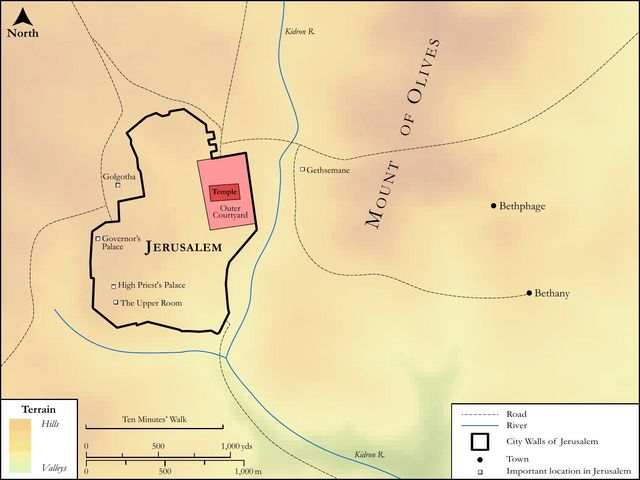
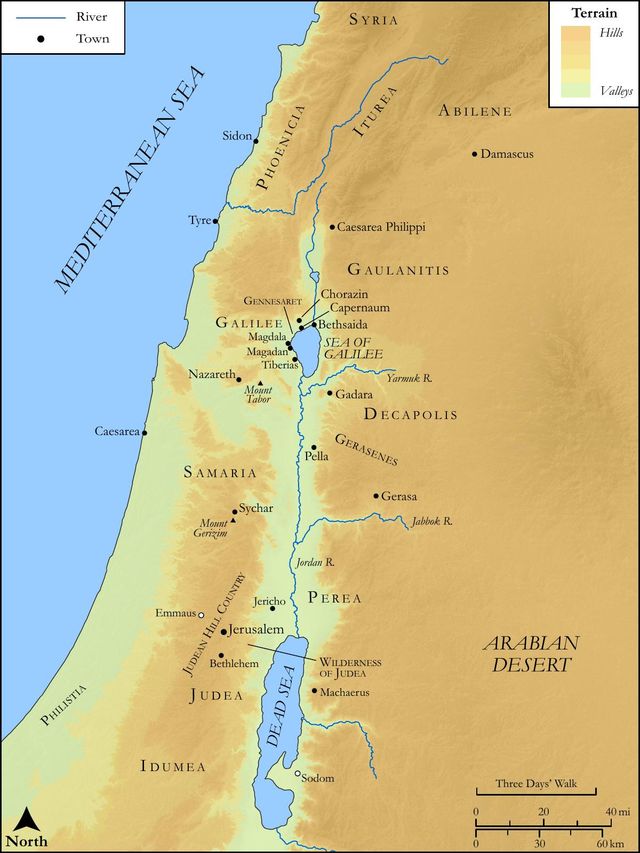
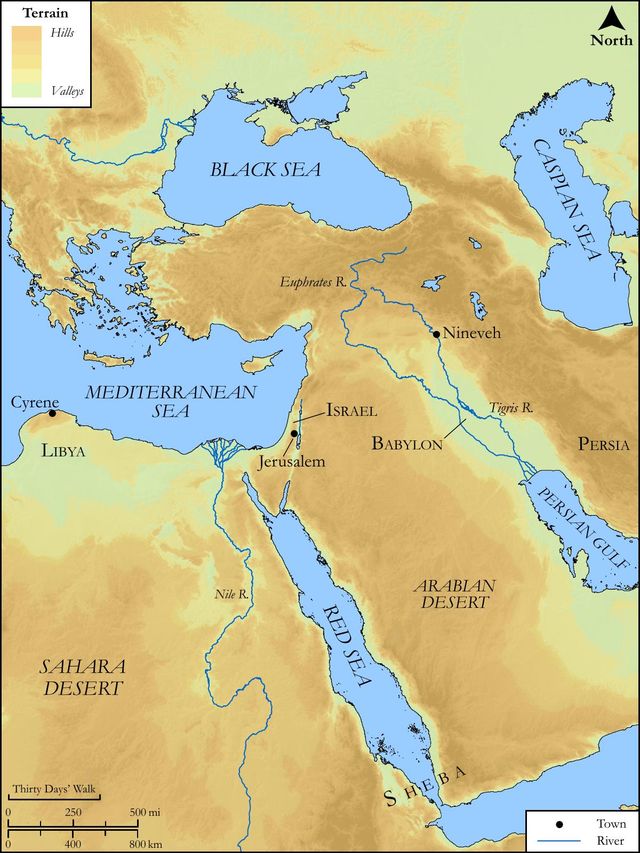
Study this verse
Public-domain commentary
Matthew Henry
From his Commentary on the Whole Bible. Henry comments on passages, not single verses — this entry covers Matthew 13:44–52. His four-level outline is real structure in the source text, so it is rendered as structure.
We have four short parables in these verses.
I.That of the treasure hid in the field.
Hitherto he had compared the kingdom of heaven to small things, because its beginning was small; but, lest any should thence take occasion to think meanly of it, in this parable and the next he represents it as of great value in itself, and of great advantage to those who embrace it, and are willing to come up to its terms; it is here likened to a treasure hid in the field, which, if we will, we may make our own.
1.Jesus Christ is the true Treasure; in him there is an abundance of all that which is rich and useful, and will be a portion for us: all fulness (Col 1:19; Joh 1:16): treasures of wisdom and knowledge (Col 2:3), of righteousness, grace, and peace; these are laid up for us in Christ; and, if we have an interest in him, it is all our own.
2.The gospel is the field in which this treasure is hid: it is hid in the word of the gospel, both the Old Testament and the New Testament gospel. In gospel ordinances it is hid as the milk in the breast, the marrow in the bone, the manna in the dew, the water in the well (Isa 12:3), the honey in the honey-comb. It is hid, not in a garden enclosed, or a spring shut up, but in a field, an open field; whoever will, let him come, and search the scriptures; let him dig in this field (Pro 2:4); and whatever royal mines we find, they are all our own, if we take the right course.
3.It is a great thing to discover the treasure hid in this field, and the unspeakable value of it. The reason why so many slight the gospel, and will not be at the expense, and run the hazard, of entertaining it, is because they look only upon the surface of the field, and judge by that, and so see no excellency in the Christian institutes above those of the philosophers; nay, the richest mines are often in grounds that appear most barren; and therefore they will not so much as bid for the field, much less come up to the price. What is thy beloved more than another beloved? What is the Bible more than other good books? The gospel of Christ more than Plato's philosophy, or Confucius's morals: but those who have searched the scriptures, so as in them to find Christ and eternal life (Joh 5:39), have discovered such a treasure in this field as makes it infinitely more valuable.
4.Those who discern this treasure in the field, and value it aright, will never be easy till they have made it their own upon any terms. He that has found this treasure, hides it, which denotes a holy jealousy, lest we come short (Heb 4:1), looking diligently (Heb 12:15), lest Satan come between us and it. He rejoices in it, though as yet the bargain be not made; he is glad there is such a bargain to be had, and that he is in a fair way to have an interest in Christ; that the matter is in treaty: their hearts may rejoice, who are yet but seeking the Lord, Psa 105:3. He resolves to buy this field: they who embrace gospel offers, upon gospel terms, buy this field; they make it their own, for the sake of the unseen treasure in it. It is Christ in the gospel that we are to have an eye to; we need not go up to heaven, but Christ in the word is nigh us. And so intent he is upon it, that he sells all to buy this field: they who would have saving benefit by Christ, must be willing to part with all, that they may make it sure to themselves; must count every thing but loss, that they may win Christ, and be found in him.
II.That of the pearl of price (Mat 13:45, Mat 13:46), which is to the same purport with the former, of the treasure. The dream is thus doubled, for the thing is certain.
Note, 1. All the children of men are busy, seeking goodly pearls: one would be rich, another would be honourable, another would be learned; but the most are imposed upon, and take up with counterfeits for pearls.
2.Jesus Christ is a Pearl of great price, a Jewel of inestimable value, which will make those who have it rich, truly rich, rich toward God; in having him, we have enough to make us happy here and for ever.
3.A true Christian is a spiritual merchant, that seeks and finds this pearl of price; that does not take up with any thing short of an interest in Christ, and, as one that is resolved to be spiritually rich, trades high: He went and bought that pearl; did not only bid for it, but purchased it. What will it avail us to know Christ, if we do not know him as ours, made to us wisdom? Co1 1:30.
4.Those who would have a saving interest in Christ, must be willing to part with all for him, leave all to follow him. Whatever stands in opposition to Christ, or in competition with him for our love and service, we must cheerfully quit it, though ever so dear to us. A man may buy gold too dear, but not this pearl of price.
III.That of the net cast into the sea, Mat 13:47-49.
1.Here is the parable itself. Where note,
(1.)The world is a vast sea, and the children of men are things creeping innumerable, both small and great, in that sea, Psa 104:25. Men in their natural state are like the fishes of the sea that have no ruler over them, Hab 1:14.
(2.)The preaching of the gospel is the casting of a net into this sea, to catch something out of it, for his glory who has the sovereignty of the sea. Ministers are fishers of men, employed in casting and drawing this net; and then they speed, when at Christ's word they let down the net; otherwise, they toil and catch nothing.
(3.)This net gathers of every kind, as large dragnets do. In the visible church there is a deal of trash and rubbish, dirt and weeds and vermin, as well as fish.
(4.)There is a time coming when this net will be full, and drawn to the shore; a set time when the gospel shall have fulfilled that for which it was sent, and we are sure it shall not return void, Isa 55:10, Isa 55:11. The net is now filling; sometimes it fills faster than at other times, but still it fills, and will be drawn to shore, when the mystery of God shall be finished.
(5.)When the net is full and drawn to the shore, there shall be a separation between the good and bad that were gathered in it. Hypocrites and true Christians shall then be parted; the good shall be gathered into vessels, as valuable, and therefore to be carefully kept, but the bad shall be cast away, as vile and unprofitable; and miserable is the condition of those who are cast away in that day. While the net is in the sea, it is not known what is in it, the fishermen themselves cannot distinguish; but they carefully draw it, and all that is in it, to the shore, for the sake of the good that is in it. Such is God's care for the visible church, and such should ministers' concern be for those under their charge, though they are mixed.
2.Here is the explanation of the latter part of the parable, the former is obvious and plain enough: we see gathered in the visible church, some of every kind: but the latter part refers to that which is yet to come, and is therefore more particularly explained, Mat 13:49, Mat 13:50. So shall it be at the end of the world; then, and not till then, will the dividing, discovering day be. We must not look for the net full of all good fish; the vessels will be so, but in the net they are mixed. See here,
(1.)The distinguishing of the wicked from the righteous. The angels of heaven shall come forth to do that which the angels of the churches could never do; they shall sever the wicked from among the just; and we need not ask how they will distinguish them when they have both their commission and their instructions from him that knows all men, and particularly knows them that are his, and them that are not, and we may be sure there shall be no mistake or blunder either way.
(2.)The doom of the wicked when they are thus severed. They shall be cast into the furnace, Note, Everlasting misery and sorrow will certainly be the portion of those who live among sanctified ones, but themselves die unsanctified. This is the same with what we had before, Mat 13:42. Note, Christ himself preached often of hell-torments, as the everlasting punishment of hypocrites; and it is good for us to be often reminded of this awakening, quickening truth.
IV.Here is the parable of the good householder, which is intended to rivet all the rest.
1.The occasion of it was the good proficiency which the disciples had made in learning, and their profiting by this sermon in particular.
(1.)He asked them, Have ye understood all these things? Intimating, that if they had not, he was ready to explain what they did not understand. Note, It is the will of Christ, that all those who read and hear the word should understand it; for otherwise how should they get good by it? It is therefore good for us, when we have read or heard the word, to examine ourselves, or to be examined, whether we have understood it or not. It is no disparagement to the disciples of Christ to be catechised. Christ invites us to seek to him for instruction, and ministers should proffer their service to those who have any good question to ask concerning what they have heard.
(2.)They answered him, Yea, Lord: and we have reason to believe they said true, because, when they did not understand, they asked for an explication, Mat 13:36. And the exposition of that parable was a key to the rest. Note, The right understanding of one good sermon, will very much help us to understand another; for good truths mutually explain and illustrate one another; and knowledge is easy to him that understandeth.
2.The scope of the parable itself was to give his approbation and commendation of their proficiency. Note, Christ is ready to encourage willing learners in his school, though they are but weak; and to say, Well done, well said.
(1.)He commends them as scribes instructed unto the kingdom of heaven. They were now learning that they might teach, and the teachers among the Jews were the scribes. Ezra, who prepared his heart to teach in Israel, is called a ready scribe, Ezr 7:6, Ezr 7:10. Now a skilful, faithful minister of the gospel is a scribe too; but for distinction, he is called a scribe instructed unto the kingdom of heaven, well versed in the things of the gospel, and well able to teach those things. Note,
[1.]Those who are to instruct others, have need to be well instructed themselves. If the priest's lips must keep knowledge, his head must first have knowledge.
[2.]The instruction of a gospel minister must be in the kingdom of heaven, that is it about which his business lies. A man may be a great philosopher and politician, and yet if not instructed to the kingdom of heaven, he will make but a bad minister.
(2.)He compares them to a good householder, who brings forth out of his treasure things new and old; fruits of last year's growth and this year's gathering, abundance and variety, for the entertainment of his friends, Sol 7:13. See here,
[1.]What should be a minister's furniture, a treasure of things new and old. Those who have so many and various occasions, have need to stock themselves well in their gathering days with truths new and old, out of the Old Testament and out of the new; with ancient and modern improvements, that the man of God may be thoroughly furnished, Ti2 3:16, Ti2 3:17. Old experiences, and new observations, all have their use; and we must not content ourselves with old discoveries, but must be adding new. Live and learn.
[2.]What use he should make of this furniture; he should bring forth: laying up is in order to laying out, for the benefit of others. Sic vox non vobis - You are to lay up, but not for yourselves. Many are full, but they have no vent (Job 32:19); have a talent, but they bury it; such are unprofitable servants; Christ himself received that he might give; so must we, and we shall have more. In bringing forth, things new and old do best together; old truths, but new methods and expressions, especially new affections.
Historical interpretation
Two Centuries of Reception
7 surviving comments on this verse. Each one is dated, so this reads as a timeline rather than a list.
Select a marker to jump to its quote. Markers stagger vertically where authors wrote within a few decades of each other.
After this, that we may not be confident in the gospel merely preached, nor think that faith only suffices us for salvation, He utters also another, an awful parable. Which then is this? That of the net.
"For the kingdom of Heaven is like unto a net, that was cast into the sea, and gathered of every kind; which, when it was full, they drew to shore, and sat down, and gathered the good into vessels, but cast the bad away."
And wherein doth this differ from the parable of the tares? For there too the one are saved the other perish; but there, for choosing of wicked doctrines; and those before this again, for not giving heed to His sayings, but these for wickedness of life; who are the most wretched of all, having attained to His knowledge, and being caught, but not even so capable of being saved.
Yet surely He saith elsewhere, that the shepherd Himself separates them, but here He saith the angels do this; and so with respect to the tares. How then is it? At one time He discourses to them in a way more suited to their dullness, at another time in a higher strain.
And this parable He interprets without so much as being asked, but of His own motion He explained it by one part of it, and increased their awe. For lest, on being told, "They cast the bad away," thou shouldest suppose that ruin to be without danger; by His interpretation He signified the punishment, saying, "They will cast them into the furnace." And He declared the gnashing of teeth, and the anguish, that it is unspeakable.
Seest thou how many are the ways of destruction? By the rock, by the thorns, by the wayside, by the tares, by the net. Not without reason therefore did He say, "Broad is the way that leadeth to destruction, and many there be which go away by it."
In the foregoing parables He has commended the Gospel preaching; now, that we may not trust in preaching only, nor think that faith alone is sufficient for our salvation, He adds another fearful parable, saying, Again, the kingdom of heaven is like unto a net cast into the sea.
Wherein does this parable differ from the parable of the tares? There, as here, some perish and some are saved; but there, because of their heresy of evil dogmas; in the first parable of the sower, because of their not attending to what was spoken; here, because of their evil life, because of which, though drawn by the net, that is, enjoying the knowledge of God, they cannot be saved. And when you hear that the wicked are cast away, that you may not suppose that this punishment may be risked, He adds an exposition showing its severity, saying, Thus shall it be in the end of the world; the angels shall come forth and sever the wicked from among the just, and shall cast them into the furnace of fire, there shall be wailing and gnashing of teeth. Though He elsewhere declares, that He shall separate them as a shepherd separates the sheep from the goats; He here declares, that the Angels shall do it, as also in the parable of the tares.
[Daniel 7:2-3] "And during the night I saw in my vision, and behold, the four winds of heaven strove upon the great sea, and four great beasts were coming up out of the sea, differing from one another." The four winds of heaven I suppose to have been angelic powers to whom the principalities have been committed, in accordance with what we read in Deuteronomy: "When the Most High divided the nations and when He separated the children of Adam, He established the bounds of the peoples according to the number of the angels. For the Lord's portion is His people; Jacob is the line of His inheritance (Deuteronomy 32:8). But the sea signifies this world and the present age, overwhelmed with salty and bitter waves, in accordance with the Lord's own interpretation of the dragnet cast into the sea (Matthew 13:47-50). Hence also the sovereign of all creatures that inhabit the waters is described as a dragon, and his heads, according to David, are smitten in the sea (Psalm 74:13). And in Amos we read: "If he descends to the very depth of the sea, there will I give him over to the dragon and he shall bite him" (Amos 9:3). But as for the four beasts who came up out of the sea and were differentiated from one another, we may identify them from the angel's discourse. "These four great beasts," he says, "are four kingdoms which shall rise up from the earth." And as for the four winds which strove in the great sea, they are called winds of heaven because each one of the angels does for his realm the duty entrusted to him. This too should be noted, that the fierceness and cruelty of the kingdoms concerned are indicated by the term "beasts."
(Verses 47 and following) Again, the kingdom of heaven is like a fishing net that was thrown into the sea and gathered fish of every kind. When it was full, they pulled it ashore, sat down, and sorted the good fish into containers, but threw away the bad ones. This is how it will be at the end of the world: the angels will come and separate the wicked from the righteous and throw them into the fiery furnace, where there will be weeping and gnashing of teeth. This fulfills the prophecy of Jeremiah, who said, 'Behold, I will send many fishermen to you' (Jeremiah 16:16). When Peter, Andrew, James, and John, the sons of Zebedee, heard this, they followed Jesus and became fishers of men (Matthew 4:19). They wove together a net of gospel teachings from the old and new testament and cast it into the sea of this world, which even to this day stretches in the midst of waves, capturing whatever falls into it from the salty and bitter depths, both good and bad people, and the best and worst fish. But when the consummation and end of the world comes, as he explains more clearly below, then the fishing net will be drawn to the shore: then the true judgment of separating the fish will be displayed, and as if in a very calm harbor, the good will be placed in the vessels of celestial mansions: but the wicked will be received to be burned and dried up by the flame of hell.
In fulfilment of that prophecy of Hieremias, who said, I will send unto you many fishers, (Jer. 6:16.) when Peter and Andrew, James and John, heard the words, Follow me, I will make you fishers of men, they put together a net for themselves formed of the Old and New Testaments, and cast it into the sea of this world, and that remains spread until this day, taking up out of the salt and bitter and whirlpools whatever falls into it, that is good men and bad; and this is that He adds, And gathered of every kind.
For when the net shall be drawn to the shore, then shall be shown the true test for separating the fishes.
For when the end of the world shall be come, then shall be shown the true test of separating the fishes, and as in a sheltered harbour the good shall be sent into the vessels of heavenly abodes, but the flame of hell shall seize the wicked to be dried up and withered.
They draw it out and sit beside the shore, because just as the sea signifies the world, so the shore of the sea signifies the end of the world. At which end, namely, good fish are selected into vessels, while the bad are thrown away, because each of the elect is received into eternal tabernacles, and having lost the light of the inner kingdom, the reprobate are dragged away to outer darkness. For now the net of faith holds us together, both good and bad, as if we were fish mixed together, but the shore reveals what the net, that is, the Holy Church, was dragging. And indeed fish that have been caught cannot be changed; but we are caught as evil, yet we are transformed into goodness. Let us therefore think about our capture, lest we be divided at the shore. Behold how pleasing today's solemnity is to you, so that it would be no small loss if anyone happened to be absent from this assembly of yours. What then will he do on that day, who is seized from the sight of the Judge, separated from the company of the elect, who is darkened from the light, tortured by eternal burning?
(Hom. in Ev. xi. 4.) Or otherwise; The Holy Church is likened to a net, because it is given into the hands of fishers, and by it each man is drawn into the heavenly kingdom out of the waves of this present world, that he should not be drowned in the depth of eternal death. This net gathers of every kind of fishes, because the wise and the foolish, the free and the slave, the rich and the poor, the strong and the weak, are called to forgiveness of sin; it is then fully filled when in the end of all things the sum of the human race is completed; as it follows, Which, when it was filled, they drew out, and sitting down on the shore gathered the good into vessels, but the bad they cast away. For as the sea signifies the world, so the sea shore signifies the end of the world; and as the good are gathered into vessels, but the bad cast away, so each man is received into eternal abodes, while the reprobate having lost the light of the inward kingdom are cast forth into outer darkness. But now the net of faith holds good and bad mingled together in one; but the shore shall discover what the net of the Church has brought to land.
(ubi sup.) To fear becomes us here, rather than to expound for the torments of sinners are pronounced in plain terms, that none might plead his ignorance, should eternal punishment be threatened in obscure sayings.
Continue studying Matthew 13:48 across the web’s major study libraries — every link below opens this exact verse, chapter, or book on the destination site.
Read & Compare
 BibleGatewayThis verse in more than 200 translations and 70 languages.
 Bible.comThe YouVersion reader — hundreds of translations, reading plans, and highlights.
 ESV.orgCrossway's official English Standard Version reader.
 NET BibleThe NET translation with 60,000+ translators' notes on every rendering decision.
 STEP BibleTyndale House's free study tool — original text, vocabulary, and scholarly resources.
 BibliaLogos Bible Software's free web reader.
 USCCBThe New American Bible (Revised Edition) with the U.S. bishops' study notes.
Commentaries
 BibleHub CommentariesDozens of classic commentaries on this verse, gathered on one page.
 StudyLightMore than 100 commentary sets — the largest collection on the web.
 BibleRefPlain-English commentary on what this verse means, verse by verse.
 Enduring WordDavid Guzik's free commentary on this chapter, widely used by Bible teachers.
 Bible Study ToolsVerse commentary alongside Greek and Hebrew study aids.
Original Language & Research
- BibleHub InterlinearThe verse word by word — original language, transliteration, and English.
- BibleHub LexiconEvery word's original-language definition and Strong's entry.
 Blue Letter BibleDeep-study tools — Strong's numbers, concordance, and word studies.
 CNTR CollationThe earliest Greek manuscripts of this verse, collated letter by letter.
Sermons, Hymns & Audio


TrulyRandomVerse is not affiliated with these sites and doesn’t control their content. They’re linked because they’re genuinely useful.
Summary
Matthew 13:48 concludes the Parable of the Net, vividly depicting the final stage of the fishing process where the catch is sorted. After the net, filled with all kinds of fish, is drawn to shore, the fishermen carefully separate the "good" fish, gathering them into vessels, while discarding the "bad" or worthless ones. This action serves as a powerful metaphor for the eschatological judgment, illustrating the ultimate separation of the righteous from the wicked at the close of the age, a central theme in Jesus' teachings on the Kingdom of Heaven.
Context
ShowHideLiterary Context
Matthew 13:48 is the penultimate verse of the Parable of the Net, one of seven parables in Matthew 13 that illuminate the nature and progression of the Kingdom of Heaven. It immediately follows the Parable of the Pearl of Great Price (Matthew 13:45-46) and the Parable of the Hidden Treasure (Matthew 13:44), forming a concluding pair with the Parable of the Weeds (Matthew 13:24-30). Like the Parable of the Weeds, the Parable of the Net emphasizes the coexistence of good and evil within the visible "kingdom" until a final, definitive separation at the end of the age, which Jesus explicitly interprets in Matthew 13:49-50.
Historical & Cultural Context
The imagery of casting a net (specifically a dragnet, or sagenē, capable of catching a large variety of fish) and sorting the catch would have been profoundly familiar and relatable to Jesus' audience, many of whom lived in fishing communities around the Sea of Galilee. Fishing was a primary industry and a daily reality for many, including several of Jesus' disciples. Fishermen would regularly sort their catch, keeping the edible, commercially valuable fish and discarding those that were diseased, too small, or considered unclean according to Mosaic law (e.g., shellfish, which were not "fish" with fins and scales, as per Leviticus 11:9-12). This common practice provided a vivid and practical illustration for a profound spiritual truth about divine judgment.
Key Themes
ShowHideThe central action of sorting in Matthew 13:48 underscores several key themes pervasive in the chapter and the broader book of Matthew. Separation and Discernment is paramount, highlighting God's ultimate act of distinguishing between those truly belonging to His kingdom and those who do not. This leads directly to the theme of Final Judgment, where the "good" are preserved and the "bad" are discarded, echoing the eschatological separation described in other parables like the sheep and goats in Matthew 25:31-46. The parable also subtly reinforces Divine Sovereignty, as the sorting is not a human initiative but a divinely ordained process, executed by "angels" at the "end of the age," as explained in Matthew 13:49.
Exposition and Analysis
ShowHideKey Word Analysis
ShowHideMeaning "to make replete, i.e. (literally) to cram (a net), level up (a hollow), or (figuratively) to furnish (or imbue, diffuse, influence), satisfy, execute (an office), finish (a period or task), verify (or coincide with a prediction), etc." In this context, it refers to the net being completely filled with fish, signifying the culmination of the ingathering period, representing the full extent of the "catch" of humanity within the visible sphere of the Kingdom before the final separation.
Meaning "properly, beautiful, but chiefly (figuratively) good (literally or morally), i.e. valuable or virtuous (for appearance or use, and thus distinguished from ἀγαθός, which is properly intrinsic):--X better, fair, good(-ly), honest, meet, well, worthy." Here, "good" denotes fish that are wholesome, edible, and fit for consumption, representing those who are truly righteous and fit for God's eternal kingdom.
Meaning "rotten, i.e. worthless (literally or morally):--bad, corrupt. Compare πονηρός." This term starkly contrasts with "good," describing fish that are putrid, corrupt, or unfit for use. Spiritually, it signifies those who are morally corrupt, unrighteous, and ultimately unfit for eternal life in God's presence.
Verse Breakdown
ShowHide"Which, when it was full, they drew to shore"
This clause signifies the completion of the gathering phase, representing the entire period of the present age during which the gospel is proclaimed and people are drawn into the visible sphere of the Kingdom of Heaven. The act of "drawing to shore" marks the decisive transition from the open sea (the world) to the point of judgment, indicating the end of the age when the final assessment will occur.
"and sat down, and gathered the good into vessels"
The action of "sitting down" implies a deliberate, authoritative, and settled act of judgment, much like a judge taking his seat. The "good" fish, representing the righteous, are carefully selected and preserved "into vessels." These vessels symbolize a secure and permanent place of safekeeping, often interpreted as eternal habitations or the storage of the redeemed in God's kingdom.
"but cast the bad away"
This stark contrast highlights the fate of the "bad" fish, representing the wicked. They are not merely discarded but "cast away," implying a forceful and definitive rejection. The term "away" (Greek, éxō) often denotes being cast outside, banished from the presence of God and His kingdom, leading to destruction or eternal condemnation, as explicitly stated in the parable's interpretation in Matthew 13:50.
Literary Devices
ShowHideMatthew 13:48 employs several powerful literary devices. Symbolism is central, with the net representing the proclamation of the gospel and the visible church gathering all sorts of people, the fish symbolizing humanity, the good fish representing the righteous, and the bad fish representing the wicked. The "vessels" symbolize eternal blessedness, while being "cast away" symbolizes eternal condemnation. The entire passage functions as an Allegory, where each element of the fishing scenario corresponds to a spiritual reality concerning the Kingdom of Heaven and the final judgment. Furthermore, there is a strong Contrast between the "good" and the "bad" fish, emphasizing the absolute and irreconcilable difference between the two categories and their distinct eternal destinies. This contrast heightens the urgency and seriousness of the parable's message.
Theological and Thematic Connections
ShowHideMatthew 13:48 powerfully underscores the biblical truth of eschatological judgment and the ultimate separation of humanity. While God's grace extends broadly during the present age, drawing all kinds of people into the visible church, this verse serves as a sober reminder that this inclusive period will culminate in a divine sifting. The sorting of the fish is not a human endeavor but a sovereign act of God, executed with perfect justice and discernment, revealing that outward association with the Kingdom is insufficient; only those who are truly "good" in God's sight, having responded genuinely to His call and bearing fruit consistent with repentance and faith, will be preserved for eternity. This truth compels believers to live with an eternal perspective, examining their lives to ensure they are indeed among the "good" fish.
Reflection and Application
ShowHideMatthew 13:48 stands as a profound call to introspection and earnest living. It challenges us to move beyond mere outward association with the Christian faith and to seriously consider the quality of our spiritual lives. Are we producing "good fruit" that reflects a genuine transformation by the Spirit, or are we merely "bad fish," outwardly appearing to be part of the catch but inwardly corrupt or worthless in God's sight? This parable reminds us that the present age is a time of grace and opportunity, but it is also a time of preparation for a certain future judgment. It compels us to live with intentionality, seeking to honor God in all we do, knowing that our eternal destiny hinges on our relationship with Him and the fruit of our lives. For those who are truly in Christ, it offers assurance of their secure place in His kingdom, while for others, it serves as a solemn warning to repent and believe before the final, irreversible separation.
Questions for Reflection
ShowHideFAQ
ShowHideWhat does "casting the bad away" signify in this parable?
ShowHide"Casting the bad away" in Matthew 13:48 signifies the ultimate and irreversible rejection of the wicked at the final judgment. As Jesus explains in the interpretation of this parable in Matthew 13:49-50, "the angels will come forth and take out the wicked from among the righteous and throw them into the furnace of fire." This imagery consistently points to eternal condemnation, separation from God's presence, and the just consequences for those who have rejected Him or lived lives of unrepentant wickedness. It is a stark warning that outward religious affiliation or presence within the visible church is not enough; true righteousness and genuine faith are required for eternal salvation.
Christ-Centered Fulfillment
ShowHideWhile Matthew 13:48 speaks of a future judgment and separation, its ultimate fulfillment and meaning are deeply rooted in the person and work of Jesus Christ. He is the one who, through His atoning sacrifice on the cross, provides the means for humanity to be counted among the "good" fish, cleansed from sin and made righteous before God. The "gathering" into the net, representing the ingathering of humanity into the visible kingdom, is made possible by Christ's redemptive mission, as He came to "seek and to save the lost" (Luke 19:10). The very standard by which "good" and "bad" are judged is Christ Himself, for He is the embodiment of perfect righteousness. Our hope of being gathered into the "vessels" of eternal life rests not on our own inherent goodness, but on being found "in Christ" (Philippians 3:9), clothed in His righteousness. Thus, the solemn reality of judgment in this verse ultimately points to the necessity of faith in Jesus as the only way to escape being "cast away" and to inherit eternal life with God (John 3:16-18).