


Luke 13:28
- ἐκεῖekeiThereG1563ADVAdverb
- ἔσταιestaiwill beG1510V-FDI-3SVerb Future Middle Deponent Indicative 3rd Singular
- ὁhotheG3588T-NSMDefinite article Nominative Singular Masculine
- κλαυθμὸςklauthmosweepingG2805N-NSMNoun Nominative Singular Masculine
- καὶkaiandG2532CONJConjunction
- ὁhotheG3588T-NSMDefinite article Nominative Singular Masculine
- βρυγμὸςbrugmosgnashingG1030N-NSMNoun Nominative Singular Masculine
- τῶνtōnof theG3588T-GPMDefinite article Genitive Plural Masculine
- ὀδόντωνodontōnteethG3599N-GPMNoun Genitive Plural Masculine
- ὅτανhotanwhenG3752CONJConjunction
- ὄψησθεopsēstheyou may beholdG3700V-2ADS-2PVerb 2nd Aorist Middle Deponent Subjunctive 2nd Plural
- ἈβραὰμAbraamAbrahamG11N-ASM-PNoun Accusative Singular Masculine Individual
- καὶkaiandG2532CONJConjunction
- ἸσαὰκIsaakIsaacG2464N-ASM-PNoun Accusative Singular Masculine Individual
- καὶkaiandG2532CONJConjunction
- ἸακὼβIakōbJacobG2384N-ASM-PNoun Accusative Singular Masculine Individual
- καὶkaiandG2532CONJConjunction
- πάνταςpantasallG3956A-APMAdjective Accusative Plural Masculine
- τοὺςtoustheG3588T-APMDefinite article Accusative Plural Masculine
- προφήταςprophētasprophetsG4396N-APMNoun Accusative Plural Masculine
- ἐνeninG1722PREPPreposition
- τῇtēatheG3588T-DSFDefinite article Dative Singular Feminine
- βασιλείᾳbasileiakingdomG932N-DSFNoun Dative Singular Feminine
- τοῦtou<the>G3588T-GSMDefinite article Genitive Singular Masculine
- θεοῦtheouof GodG2316N-GSM-TNoun Genitive Singular Masculine Title
- ὑμᾶςhumasyouG4771P-2APPersonal pronoun Accusative 2nd Plural
- δὲdehoweverG1161CONJConjunction
- ἐκβαλλομένουςekballomenousare being castG1544V-PPP-APMVerb Present Passive Participle Accusative Plural Masculine
- ἔξωexōoutG1854PREPPreposition
English is a literal word-by-word gloss of the Greek, not the KJV's wording. Why?
This is the original text the KJV's translators worked from — each Greek word with its own literal English meaning in this verse, prepared by scholars at Tyndale House, Cambridge. The KJV translates whole sentences, not word by word, so its wording differs: one Greek word can become several English words, and the KJV may choose “charity” where the gloss reads “love”. Both are faithful — they answer different questions. For the KJV's own rendering, switch to the KJV text.
Details
See on the biblical-era map
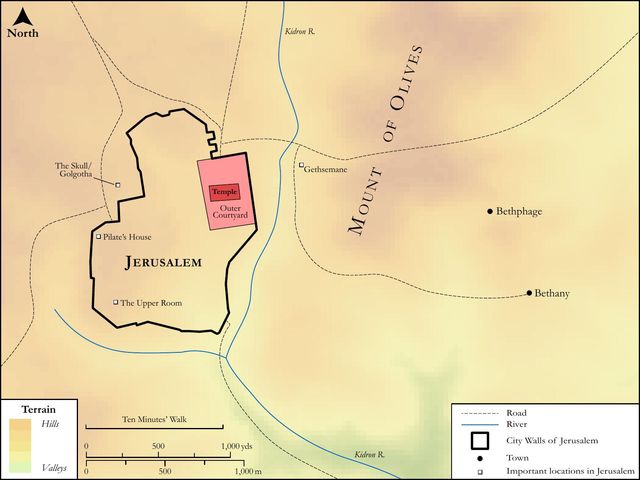
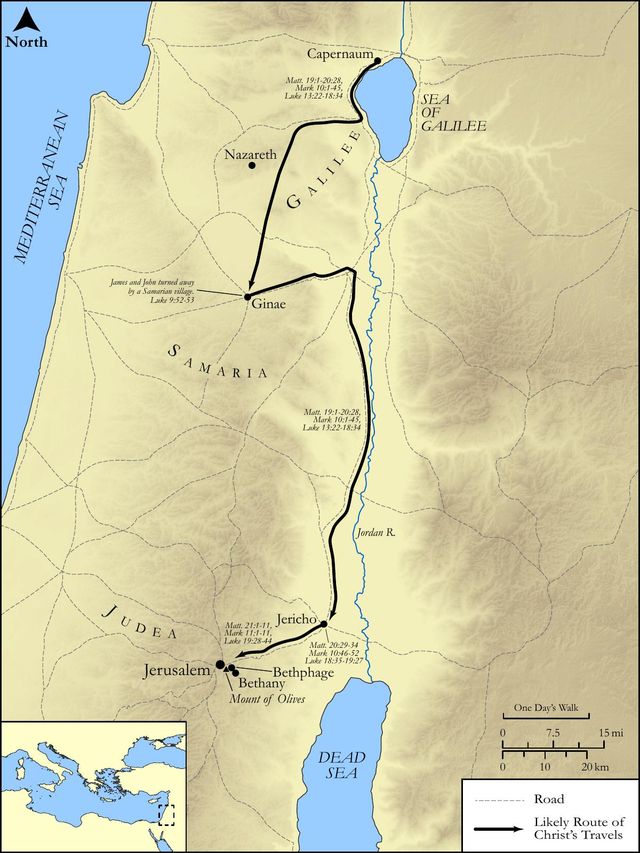
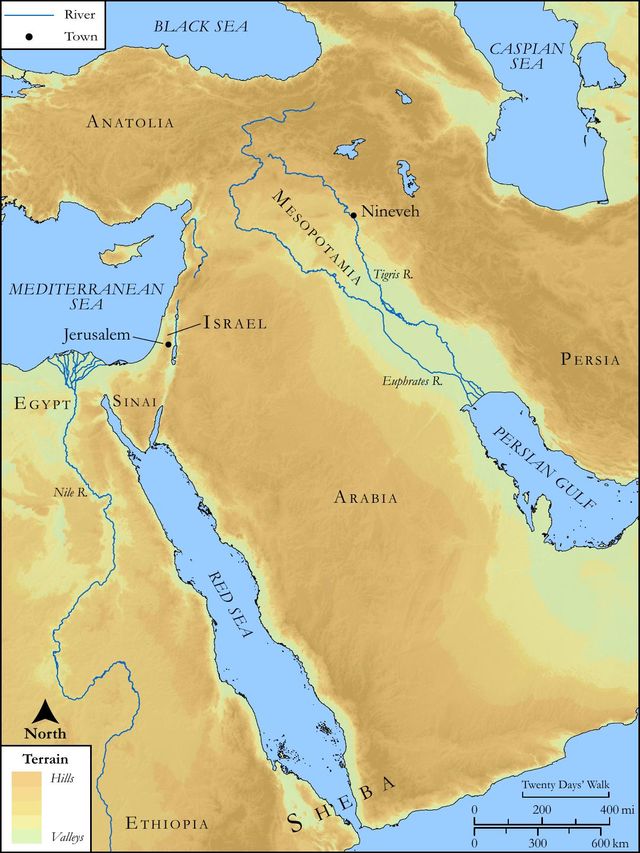
Study this verse
Public-domain commentary
Matthew Henry
From his Commentary on the Whole Bible. Henry comments on passages, not single verses — this entry covers Luke 13:23–30. His four-level outline is real structure in the source text, so it is rendered as structure.
We have here,
I.A question put to our Lord Jesus.
Who it was that put it we are not told, whether a friend or a foe; for he both gave a great liberty of questioning him and returned answers to the thoughts and intents of the heart. The question was, Are there few that are saved? Luk 13:23 : ei oligoi hoi sōzomenoi - "If the saved be few? Master, I have heard thou shouldest say so; is it true?" 1. Perhaps it was a captious question. He put it to him, tempting him, with a design to ensnare him and lessen his reputation. If he should say that many would be saved, they would reproach him as too loose, and making salvation cheap; if few, they would reproach him as precise and strait-laced. The Jewish doctors said that all Israel should have a place in the world to come; and would he dare to contradict that? Those that have sucked in a corrupt nation are ready to make it the standard by which to measure all men's judgments; and in nothing do men more betray their ignorance, presumption, and partiality, than in judging of the salvation of others. 2. Perhaps it was a curious question, a nice speculation, which he had lately been disputing upon with his companions, and they all agreed to refer it to Christ. Note, Many are more inquisitive respecting who shall be saved, and who not, than respecting what they shall do to be saved. It is commonly asked, "May such and such be saved?" But it is well that we may be saved without knowing this. 3. Perhaps it was an admiring question. He had taken notice how strict the law of Christ was, and how bad the world was, and, comparing these together, cries out, "How few are there that will be saved!" Note, We have reason to wonder that of the many to whom the word of salvation is sent there are so few to whom it is indeed a saving word. 4. Perhaps it was an enquiring question: "If there be few that be saved, what then? What influence should this have upon me?" Note, It concerns us all seriously to improve the great truth of the fewness of those that are saved.
II.Christ's answer to this question, which directs us what use to make of this truth.
Our Saviour did not give a direct answer to this enquiry, for he came to guide men's consciences, not to gratify their curiosity. Ask not, "How many shall be saved?" But, be they more or fewer, "Shall I be one of them?" Not, "What shall become of such and such, and what shall this man do?" But, "What shall I do, and what will become of me?" Now in Christ's answer observe,
1.A quickening exhortation and direction: Strive to enter in at the strait gate. This is directed not to him only that asked the question, but to all, to us, it is in the plural number: Strive ye. Note,
(1.)All that will be saved must enter in at the strait gate, must undergo a change of the whole man, such as amounts to no less than being born again, and must submit to a strict discipline.
(2.)Those that would enter in at the strait gate must strive to enter. It is a hard matter to get to heaven, and a point that will not be gained without a great deal of care and pains, of difficulty and diligence. We must strive with God in prayer, wrestle as Jacob, strive against sin and Satan. We must strive in every duty of religion; strive with our own hearts, agōnizesthe - "Be in an agony; strive as those that run for a prize; excite and exert ourselves to the utmost."
2.Divers awakening considerations, to enforce this exhortation. O that we may be all awakened and quickened by them! They are such considerations as will serve to answer the question, Are there few that shall be saved?
(1.)Think how many take some pains for salvation and yet perish because they do not take enough, and you will say that there are few that will be saved and that it highly concerns us to strive: Many will seek to enter in, and shall not be able; they seek, but they do not strive. Note, The reason why many come short of grace and glory is because they rest in a lazy seeking of that which will not be attained without a laborious striving. They have a good mind to happiness, and a good opinion of holiness, and take some good steps towards both. But their convictions are weak; they do not consider what they know and believe, and, consequently, their desires are cold, and their endeavours feeble, and there is no strength or steadiness in their resolutions; and thus they come short, and lose the prize, because they do not press forward. Christ avers this upon his own word: I say unto you; and we may take it upon his word, for he knows both the counsels of God and the hearts of the children of men.
(2.)Think of the distinguishing day that is coming and the decisions of that day, and you will say there are a few that shall be saved and that we are concerned to strive: The Master of the house will rise up, and shut to the door, Luk 13:25. Christ is the Master of the house, that will take cognizance of all that frequent his house and are retainers to it, will examine comers and goers and those that pass and repass. Now he seems as if he left things at large; but the day is coming when he will rise up, and shut to the door. What door?
[1.]A door of distinction. Now, within the temple of the church there are carnal professors who worship in the outer-court, and spiritual professors who worship within the veil; between these the door is now open, and they meet promiscuously in the same external performances. But, when the Master of the house is risen up, the door will be shut between them, that those who are in the outer-court may be kept out, and left to be trodden underfoot by the Gentiles, Rev 11:2. As to those that are filthy, shut the door upon them, and let them be filthy still; that those who are within may be kept within, that those who are holy may be holy still. The door is shut to separate between the precious and the vile, that sinners may no longer stand in the congregation of the righteous. Then you shall return, and discern betwixt them.
[2.]A door of denial and exclusion. The door of mercy and grace has long stood open to them, but they would not come in by it, would not be beholden to the favour of that door; they hoped to climb up some other way, and to get to heaven by their own merits, and therefore when the Master of the house is risen up he will justly shut that door; let them not expect to enter by it, but let them take their own measures. Thus, when Noah was safe in the ark, God shut the door, to exclude all those that depended upon shelters of their own in the approaching flood.
(3.)Think how many who were very confident that they should be saved will be rejected in the day of trial, and their confidences will deceive them, and you will say that there are few that shall be saved and that we are all concerned to strive. Consider,
[1.]What an assurance they had of admission, and how far their hope carried them, even to heaven's gate. There they stand and knock, knock as if they had authority, knock as those that belong to the house, saying, "Lord, Lord, open to us, for we think we have a right to enter; take us in among the saved ones, for we joined ourselves to them." Note, Many are ruined by an ill-grounded hope of heaven, which they never distrusted or called in question, and therefore conclude their state is good because they never doubted it. They call Christ, Lord, as if they were his servants; nay, in token of their importunity, they double it, Lord, Lord; they are desirous now to enter in by that door which they had formerly made light of, and would now gladly come in among those serious Christians whom they had secretly despised.
[2.]What grounds they had for this confidence. Let us see what their plea is, Luk 13:26. First, They had been Christ's guests, had had an intimate converse with him, and had shared in his favours: We have eaten and drunk in thy presence, at thy table. Judas ate bread with Christ, dipped with him in the dish. Hypocrites, under the disguise of their external profession, receive the Lord's supper, and in it partake of the children's bread, as if they were children. Secondly, They had been Christ's hearers, had received instruction from him, and were well acquainted with his doctrine and law: "Thou hast taught in our streets - a distinguishing favour, which few had, and surely it might be taken as a pledge of distinguishing favour now; for wouldest thou teach us, and not save us?"
[3.]How their confidence will fail them, and all their pleas be rejected as frivolous. Christ will say to them, I know you not whence you are, Luk 13:25. And again (Luk 13:27), I tell you, I know you not, depart from me. He does not deny that what they pleaded was true; they had eaten and drunk in his presence, by the same token that they had no sooner eaten of his bread than they lifted up the heel against him. He had taught in their streets, by the same token that they had despised his instruction and would not submit to it. And therefore, First, He disowns them: "I know you not; you do not belong to my family." The Lord knows them that are his, but them that are not he does not know, he has nothing to do with them: "I know you not whence you are. You are not of me, you are not from above, you are not branches of my house, of my vine." Secondly, He discards them: Depart from me. It is the hell of hell to depart from Christ, the principal part of the misery of the damned. "Depart from my door, here is nothing for you, no, not a drop of water." Thirdly, He gives them such a character as is the reason of this doom: You are workers of iniquity. This is their ruin, that, under a pretence of piety, they kept up secret haunts of sin, and did the devil's drudgery in Christ's livery.
[4.]How terrible their punishment will be (Luk 13:28): There shall be weeping and gnashing of teeth, the utmost degree of grief and indignation; and that which is the cause of it, and contributes to it, is a sight of the happiness of those that are saved: You shall see the patriarchs and prophets in the kingdom of God, and yourselves thrust out. Observe here, First, That the Old Testament saints are in the kingdom of God; those had benefit by the Messiah who died before his coming, for they saw his day at a distance and it reflected comfort upon them. Secondly, That New Testament sinners will be thrust out of the kingdom of God. It intimates that they will be thrusting in, and will presume upon admission, but in vain; they shall be thrust out with shame, as having no part or lot in the matter. Thirdly, That the sight of the saint's glory will be a great aggravation of sinner's misery; they shall thus far see the kingdom of God that they shall see the prophets in it, whom they hated and despised, and themselves, though they thought themselves sure of it, thrust out. This is that at which they will gnash their teeth, Psa 112:10.
(4.)Think who are they that shall be saved, notwithstanding: They shall come from the east and the west; and the last shall be first, Luk 13:29, Luk 13:30.
[1.]By what Christ said, it appears that but few shall be saved of those whom we think most likely, and who bid fairest for it. Yet do not say then that the gospel is preached in vain; for, though Israel be not gathered, Christ will be glorious. There shall come many from all parts of the Gentile world that shall be admitted into the kingdom of grace in this world, and of glory in the other. Plainly thus, when we come to heaven, we shall meet a great many there whom we little thought to have met there, and miss a great many thence whom we verily expected to have found there.
[2.]Those who sit down in the kingdom of God are such as had taken pains to get thither, for they came from far - from the east and from the west, from the north and from the south; they had passed through different climates, had broken through many difficulties and discouragements. This shows that they who would enter into that kingdom must strive, as the queen of Sheba, who came from the utmost parts of the earth to hear the wisdom of Solomon. They who travel now in the service of God and religion shall shortly sit down to rest in the kingdom of God.
[3.]Many who stood fair for heaven came short, and others who seemed cast behind, and thrown quite out of the way, will win and wear this prize, and therefore it concerns us to strive to enter. Let us be provoked, as Paul desires the Jews might be, to a holy emulation, by the zest an forwardness of the Gentiles, Rom 11:14. Shall I be outstripped by my juniors? Shall I, who started first, and stood nearest, miss of heaven, when others, less likely, enter into it? If it be got by striving, why should not I strive?
Historical interpretation
Eleven Centuries of Reception
11 surviving comments on this verse. Each one is dated, so this reads as a timeline rather than a list.
Select a marker to jump to its quote. Markers stagger vertically where authors wrote within a few decades of each other.
Vain, too, is the effort of Marcion and his followers when they seek to exclude Abraham from the inheritance, to whom the Spirit through many men, and now by Paul, bears witness, that "he believed God, and it was imputed unto him for righteousness." And the Lord also bears witness to him, in the first place, indeed, by raising up children to him from the stones, and making his seed as the stars of heaven, saying, "They shall come from the east and from the west, from the north and from the south, and shall recline with Abraham, and Isaac, and Jacob in the kingdom of heaven;" and then again by saying to the Jews, "When ye shall see Abraham, and Isaac, and Jacob, and all the prophets in the kingdom of heaven, but you yourselves cast out." This, then, is a clear point, that those who disallow his salvation, and frame the idea of another God besides Him who made the promise to Abraham, are outside the kingdom of God.
For how happens it, if the kingdom belong to the most lenient god, that it is closely followed up by a fervent judgment, the severity of which brings weeping? With regard, indeed, to the following similitude, I have my fears lest it should somehow presage the kingdom of the rival god! For He compared it, not to the unleavened bread which the Creator is more familiar with, but to leaven.
For the Fathers above mentioned, before the times of the Law, forsaking the sins of many gods to follow the Gospel way, received the knowledge of the most high God; to whom many of the Gentiles were conformed through a similar manner of life, but their children suffered estrangement from the Gospel rules; and herein it follows, And behold they are last which shall be first, and they are first which shall be last.
(in reg. ad int. 240.) For as in earthly life the departure from right is exceeding broad, so he who goes out of the path which leads to the kingdom of heaven, finds himself in a vast extent of error. (int. 241.). But the right way is narrow, the slightest turning aside being full of danger, whether to the right or to the left, as on a bridge, where he who slips on either side is thrown into the river.
(Hom. in Psalm 1, 15.) For the soul wavers to and fro, at one time choosing virtue when it considers eternity, at another preferring pleasures when it looks to the present. Here it beholds ease, or the delights of the flesh, there its subjection or captive bondage; here drunkenness, there sobriety; here wanton mirth, there overflowing of tears; here dancing, there praying; here the sound of the pipe, there weeping; here lust, there chastity.
(reg. brev. ad int. 282.) He perhaps speaks to those whom the Apostle describes in his own person, saying, If I speak with the tongues of men and of angels, and have all knowledge, and give all my goods to feed the poor, but have not charity, it profiteth me nothing. For whatever is done not from regard to the love of God, but to gain praise from men, obtains no praise from God.
(24, 40. in Matt.) What then is that which our Lord says elsewhere, My yoke is easy, and my burden is light? (Matt. 11:30.) There is indeed no contradiction, but the one was said because of the nature of temptations, the other with respect to the feeling of those who overcame them. For whatever is troublesome to our nature may be considered easy when we undertake it heartily. Besides also, though the way of salvation is narrow at its entrance, yet through it we come into a large space, but on the contrary the broad way leadeth to destruction.
(Serm. 111.) Or else, our Lord confirmed the words He heard, that is, by saying that there are few who are saved, for few enter by the strait gate, but in another place He says this very thing, Narrow is the way which leadeth unto life, and few there are who enter into it. (Matt. 7:14.) Therefore He adds, For many I say unto you shall seek to enter;
(Serm. 111.) Now our Lord in no wise contradicts Himself when He says, that there are few who enter in at the strait gate, and elsewhere, Many shall come from the east and the west; (Matt. 8:11.) for there are few in comparison with those who are lost, many when united with the angels. Scarcely do they seem a grain when the threshing floor is swept, but so great a mass will come forth from this floor, that it will fill the granary of heaven.
(Mor. 11. c. 50.) Now when He was about to speak of the entrance of the narrow gate, He said first, strive, for unless the mind struggles manfully, the wave of the world is not overcome, by which the soul is ever thrown back again into the deep.
(Moral. 2. c. 5.) For God not to know is for Him to reject, as also a man who speaks the truth is said not to know how to lie, for he disdains to sin by telling a lie, not that if he wished to lie he knew not how, but that from love of truth he scorns to speak what is false. Therefore the light of truth knows not the darkness which it condemns. It follows, Then shall ye begin to say, We have eaten and drunk in thy presence, &c.
There will be weeping and gnashing of teeth. Weeping is usually stirred by heat, gnashing of teeth by cold. Where a double hell is shown: that is, of excessive cold, and of intolerable heat. Blessed Job's sentence agrees with this saying: They pass by violently from the waters of snow to excessive heat (Job. XXIV). Or certainly the gnashing of teeth betrays the feeling of the indignant, because each one repents too late, groans too late, is angry at themselves too late, who have sinned with such obstinate wickedness.
Urged thereto by their love of safety, yet shall not be able, frightened by the roughness of the road.
The master of the house is Christ, who since as very God He is every where, is already said to be within those whom though He is in heaven He gladdens with His visible presence, but is as it were without to those whom while contending in this pilgrimage, He helps in secret. But He will enter in when He shall bring the whole Church to the contemplation of Himself. He will shut the door when He shall take away from the reprobate all room for repentance. Who standing without will knock, that is, separated from the righteous will in vain implore that mercy which they have despised. Therefore it follows, And he will answer and say to you, I know you not whence ye are.
Or mystically, he eats and drinks in the Lord's presence who eagerly receives the food of the word. Hence it is added for explanation, Thou hast taught in our streets. For Scripture in its more obscure places is food, since by being expounded it is as it were broken and swallowed. In the clearer places it is drink, where it is taken down just as it is found. But at a feast the banquet does not delight him whom the piety of faith commends not. The knowledge of the Scriptures does not make him known to God, whom the iniquity of his works proves to be unworthy; as it follows, And he will say unto you, I know not whence ye are; depart from me.
But the twofold punishment of hell is here described, that is, the feeling cold and heat. For weeping is wont to be excited by heat, gnashing of teeth by cold. Or gnashing of teeth betrays the feeling of indignation, that he who repents too late, is too late angry with himself.
Many also at first burning with zeal, afterwards grow cold; many at first cold, on a sudden become warm; many despised in this world, will be glorified in the world to come; others renowned among men, will in the end be condemned.
For he did not visit the small places only, as they do who wish to deceive the simple, nor the cities only, as they who are fond of show, and seek their own glory; but as their common Lord and Father providing for all, He went about every where. Nor again did He visit the country towns only, avoiding Jerusalem, as if He feared the cavils of the lawyers, or death, which might follow therefrom; and hence he adds, And journeying towards Jerusalem. For where there were many sick, there the Physician chiefly showed Himself. It follows, Then said one unto him, Lord, are there few that be saved?
Or it is said to the Israelites, simply because Christ was born of them according to the flesh, and they ate and drank with Him, and heard Him preaching. But these things also apply to Christians. For we eat the body of Christ and drink His blood as often as we approach the mystic table, and He teaches in the streets of our souls, which are open to receive Him.
Observe also that they are objects of wrath in whose street the Lord teaches. If then we have heard Him teaching not in the streets, but in poor and lowly hearts, we shall not be regarded with wrath.
This also refers to the Israelites with whom He was speaking, who receive from this their severest blow, that the Gentiles have rest with the fathers, while they themselves are shut out. Hence He adds, When you shall see Abraham, Isaac, and Jacob, in the kingdom of God, &c.
But we as it seems are the first who have received from our very cradles the rudiments of Christian teaching, and perhaps shall be last in respect of the heathens who have believed at the end of life.
Having spoken in parables concerning the increase of the teaching of the Gospel, He every where endeavours to spread it by preaching. Hence it is said, And he went through the cities and villages.
This question seems to have reference to what had gone before. For in the parable which was given above, He had said, that the birds of the air rested on its branches, by which it might be supposed that there would be many who would obtain the rest of salvation. And because one had asked the question for all, the Lord does not answer him individually, as it follows, And he said unto them, Strive to enter in at the strait gate.
Or the teeth will gnash which here delighted in eating, the eyes will weep which here wandered with desire. By each He represents the real resurrection of the wicked.
Continue studying Luke 13:28 across the web’s major study libraries — every link below opens this exact verse, chapter, or book on the destination site.
Read & Compare
 BibleGatewayThis verse in more than 200 translations and 70 languages.
 Bible.comThe YouVersion reader — hundreds of translations, reading plans, and highlights.
 ESV.orgCrossway's official English Standard Version reader.
 NET BibleThe NET translation with 60,000+ translators' notes on every rendering decision.
 STEP BibleTyndale House's free study tool — original text, vocabulary, and scholarly resources.
 BibliaLogos Bible Software's free web reader.
 USCCBThe New American Bible (Revised Edition) with the U.S. bishops' study notes.
Commentaries
 BibleHub CommentariesDozens of classic commentaries on this verse, gathered on one page.
 StudyLightMore than 100 commentary sets — the largest collection on the web.
 BibleRefPlain-English commentary on what this verse means, verse by verse.
 Enduring WordDavid Guzik's free commentary on this chapter, widely used by Bible teachers.
 Bible Study ToolsVerse commentary alongside Greek and Hebrew study aids.
Original Language & Research
- BibleHub InterlinearThe verse word by word — original language, transliteration, and English.
- BibleHub LexiconEvery word's original-language definition and Strong's entry.
 Blue Letter BibleDeep-study tools — Strong's numbers, concordance, and word studies.
 CNTR CollationThe earliest Greek manuscripts of this verse, collated letter by letter.
Sermons, Hymns & Audio


TrulyRandomVerse is not affiliated with these sites and doesn’t control their content. They’re linked because they’re genuinely useful.
Summary
Luke 13:28 delivers a stark and sobering warning from Jesus, vividly portraying the ultimate and irreversible separation between those who enter God's promised kingdom and those who are excluded. It paints a picture of intense anguish and bitter regret for those on the outside, who witness the revered patriarchs Abraham, Isaac, and Jacob, along with all the prophets, securely within the divine realm, while they themselves are forcefully cast out into despair.
Context
ShowHideLiterary Context
This verse is the climactic and most vivid warning within Jesus' teaching on the "narrow gate," which begins in Luke 13:23. A person asks Jesus if only a few will be saved, prompting Jesus' response that all should "strive to enter through the narrow gate" (Luke 13:24). He warns against complacency, describing a future time when many will attempt to enter but will be unable, as the master of the house has shut the door. The preceding verses (Luke 13:25-27) describe individuals pleading for entry, only to be told, "I do not know where you come from," and to "depart from me, all you workers of iniquity." Luke 13:28 then serves as the painful realization of this exclusion, emphasizing the visual and emotional agony of those shut out. This passage echoes similar warnings about the kingdom found in Matthew 7:13-14 and Matthew 8:11-12, where Jesus speaks of Gentiles from afar joining the patriarchs in the kingdom, while "children of the kingdom" are cast out.
Historical & Cultural Context
In first-century Judaism, there was a widespread assumption among many that their ethnic heritage as descendants of Abraham guaranteed their place in God's kingdom. Membership in the covenant community, marked by circumcision and adherence to the Law, was often perceived as sufficient for salvation. Jesus' teaching in Luke 13 challenges this presumption directly. By mentioning Abraham, Isaac, and Jacob, along with the prophets, Jesus invokes figures central to Jewish identity and their understanding of God's covenant. The imagery of a great feast or banquet was a common metaphor for the messianic age or the kingdom of God, where the righteous would recline with the patriarchs. The "thrusting out" and "weeping and gnashing of teeth" would have been particularly shocking to an audience that largely believed their lineage secured their place at this eschatological banquet. Jesus' words underscore that true entry into the kingdom is not based on mere ancestry or outward religious observance, but on genuine repentance, faith, and transformative obedience, a message that would have been counter-cultural to many of His Jewish listeners.
Key Themes
ShowHideLuke 13:28 significantly contributes to several overarching themes in Luke's Gospel and Jesus' broader teaching. A primary theme is Divine Judgment and Exclusion, highlighting the reality that not all who expect to enter the kingdom will do so, and that there are severe, irreversible consequences for those who neglect God's call. This ties into the theme of Urgency and Personal Responsibility to respond to Jesus' message, as seen in the call to "strive" (Luke 13:24). The verse also powerfully addresses the theme of Redefining God's People, challenging the ethnocentric view of salvation prevalent among some Jews. By stating that Abraham, Isaac, Jacob, and the prophets will be in the kingdom while some "yourselves" are thrust out, Jesus implies that true spiritual lineage, based on faith and obedience, supersedes physical descent. This foreshadows the inclusion of Gentiles and the universal nature of the kingdom, a theme echoed in Matthew 8:11. Finally, the imagery of "weeping and gnashing of teeth" contributes to the theme of Eschatological Consequences, vividly depicting the despair and torment of those who face eternal separation from God.
Exposition and Analysis
ShowHideKey Word Analysis
ShowHideFrom the verb klaiō, meaning "to lament" or "to wail." Klauthmós denotes loud, audible crying or lamentation, expressing deep grief, sorrow, and distress. In this context, it signifies the profound and audible sorrow of those who realize their eternal loss.
From the verb brychō, meaning "to gnash" or "to grind." Brygmós specifically refers to the grinding or clenching of teeth, a physical manifestation of intense pain, extreme frustration, rage, or despair. When combined with "weeping," it conveys an image of utter agony and bitter remorse, often associated with a sense of powerlessness and self-reproach.
From ek ("out") and ballō ("to throw"). This verb means "to eject," "to cast out," "to drive out," or "to expel" with force. It implies a forceful, decisive, and permanent removal. Here, it underscores the involuntary and definitive exclusion from the kingdom, emphasizing the finality of the judgment.
Verse Breakdown
ShowHide"There shall be weeping and gnashing of teeth,"
This clause sets the scene for the profound despair awaiting those who are excluded. The vivid imagery of "weeping" (deep sorrow, lamentation) and "gnashing of teeth" (intense pain, rage, frustration, or remorse) is a recurring motif in Jesus' teachings about judgment (e.g., Matthew 8:12, Matthew 22:13). It describes not just sadness, but a visceral, agonizing despair over a lost opportunity and an irreversible fate.
"when ye shall see Abraham, and Isaac, and Jacob, and all the prophets, in the kingdom of God,"
This clause introduces a critical element of the torment: the visual realization of what has been lost. The excluded will witness the revered patriarchs and prophets—figures representing faithful adherence to God's covenant and promises—securely within the "kingdom of God." This kingdom, God's sovereign rule, is depicted as a place of blessing and fellowship. The sight of these esteemed figures enjoying the kingdom while they are outside intensifies their anguish, highlighting the irony and tragedy of their exclusion, especially for those who presumed their place based on lineage.
"and you [yourselves] thrust out."
This final clause explicitly states the fate of the excluded. The term "thrust out" (Greek: ekbállō) signifies a forceful and permanent expulsion. The emphasis on "you yourselves" highlights the personal and direct nature of this judgment. It underscores that despite their expectations or claims, they are definitively and irreversibly separated from the blessings and presence of God's kingdom. This exclusion is the direct cause of the "weeping and gnashing of teeth," as it represents the ultimate loss of salvation and divine favor.
Literary Devices
ShowHideLuke 13:28 employs several powerful literary devices to convey its solemn message. Imagery is central, particularly with the vivid phrase "weeping and gnashing of teeth." This sensory description immediately evokes a strong emotional response, painting a picture of profound physical and emotional torment, despair, and bitter remorse. The verse also utilizes stark Contrast, juxtaposing the joyous inclusion of Abraham, Isaac, Jacob, and all the prophets "in the kingdom of God" with the painful reality of "you yourselves thrust out." This sharp dichotomy emphasizes the absolute nature of the division and amplifies the tragedy of exclusion. Furthermore, the passage functions as a Prophetic Warning, speaking of a future, definitive judgment. Jesus' words are not merely descriptive but serve as an urgent call to action, urging listeners to avoid this terrible fate. The use of direct address ("ye," "you yourselves") makes the warning intensely personal and immediate for the audience.
Theological and Thematic Connections
ShowHideLuke 13:28 is a profound theological statement on the nature of salvation, judgment, and the true identity of God's people. It shatters any presumption of automatic inclusion in God's kingdom based on ethnic heritage, religious affiliation, or mere outward observance. Instead, it forcefully asserts that entry requires a genuine, transformative response to God's call, emphasizing personal accountability and the critical importance of actively striving to enter through the narrow gate. The vision of the patriarchs and prophets within the kingdom underscores that true faith has always been the criterion for divine favor, and that those who merely claim a relationship with God without living in obedience will face a painful and irreversible exclusion. This passage serves as a sobering reminder of the reality of eternal consequences and the necessity of a living, active faith in Christ.
Reflection and Application
ShowHideLuke 13:28 serves as a powerful and urgent call to introspection for every believer and seeker. It challenges any passive assumption of salvation or spiritual complacency, urging us to examine the authenticity of our faith and the direction of our lives. The stark imagery of "weeping and gnashing of teeth" and being "thrust out" is not meant to instill fear for fear's sake, but to awaken a deep sense of urgency regarding our eternal destiny. It compels us to ask if our lives genuinely reflect a striving for the "narrow gate," characterized by repentance, obedience, and a true commitment to Christ, or if we are relying on external associations or mere intellectual assent. This verse reminds us that the Kingdom of God is not a given for everyone, but a gracious invitation that demands a wholehearted and active response. It calls us to live with intentionality, pursuing righteousness and cultivating a genuine relationship with God, so that we may not face the agonizing realization of having missed the ultimate opportunity for eternal life and fellowship with Him.
Questions for Reflection
ShowHideFAQ
ShowHideWhat does "weeping and gnashing of teeth" mean in this context?
ShowHide"Weeping and gnashing of teeth" is a vivid and recurring phrase used by Jesus throughout the Gospels (e.g., Matthew 8:12, Matthew 13:42, Matthew 22:13). It describes the profound anguish, bitter remorse, and hopeless despair of those who are excluded from the Kingdom of God. "Weeping" signifies deep sorrow and lamentation, while "gnashing of teeth" conveys intense pain, frustration, and perhaps even rage or self-reproach at the realization of an irreversible loss. It's a powerful depiction of eternal torment and regret.
Why are Abraham, Isaac, Jacob, and the prophets mentioned as being "in the kingdom of God"?
ShowHideThe mention of Abraham, Isaac, Jacob, and all the prophets is significant because they represent the revered patriarchs and foundational figures of Israel's faith. In Jesus' time, many Jews presumed that their physical descent from these figures guaranteed their place in God's kingdom. By stating that these figures are securely within the kingdom while others (who might have expected to be there based on lineage) are "thrust out," Jesus challenges this presumption. He emphasizes that true entry into God's kingdom is not based on ethnic heritage or outward religious association, but on genuine faith and obedience, aligning with the spiritual legacy of these faithful ancestors. This also foreshadows the inclusion of Gentiles (as seen in Matthew 8:11), indicating that the kingdom is open to all who respond in faith, regardless of their background.
Christ-Centered Fulfillment
ShowHideLuke 13:28, while a stern warning, finds its ultimate fulfillment and resolution in the person and work of Jesus Christ. The "narrow gate" through which one must strive to enter is ultimately Jesus Himself, who declares, "I am the door; if anyone enters through Me, he will be saved" (John 10:9). The "weeping and gnashing of teeth" and the painful exclusion are the consequences for those who reject or neglect the salvation offered uniquely through Him. Jesus, as the Lamb of God (John 1:29), bore the judgment and suffering that would otherwise be the fate of humanity, opening a new and living way into the very presence of God (Hebrews 10:19-20). The patriarchs and prophets are seen in the kingdom because their faith pointed forward to the coming Messiah, and their righteousness was accounted to them by God's grace, anticipating the perfect righteousness of Christ. Thus, the warning of Luke 13:28 serves to underscore the profound necessity of responding to Jesus' invitation, for He is the one who will ultimately sit on His glorious throne and separate the sheep from the goats (Matthew 25:31-33), determining who enters the kingdom and who is "thrust out." True fulfillment of the promise of the kingdom, and escape from the anguish of exclusion, is found solely in a personal, transformative relationship with Christ, who is the Way, the Truth, and the Life (John 14:6).