


2 Thessalonians 1:5
Bible text: King James Version (1769 Blayney text) · Public domain
Bible text: King James Version with Strong's numbers · Public domain
Bible text: Berean Standard Bible · Public domain
Bible text: American Standard Version (1901) · Public domain
Bible text: World English Bible, Messianic edition · Public domain
Bible text: Geneva Bible (1599) · Public domain
Bible text: Young's Literal Translation · Public domain
- ἔνδειγμαendeigma[This is] a plain tokenG1730N-NSNNoun Nominative Singular Neuter
- τῆςtēsof theG3588T-GSFDefinite article Genitive Singular Feminine
- δικαίαςdikaiasrighteousG1342A-GSFAdjective Genitive Singular Feminine
- κρίσεωςkriseōsjudgmentG2920N-GSFNoun Genitive Singular Feminine
- τοῦtou<the>G3588T-GSMDefinite article Genitive Singular Masculine
- θεοῦtheouof GodG2316N-GSM-TNoun Genitive Singular Masculine Title
- εἰςeisuntoG1519PREPPreposition
- τὸto<the>G3588T-ASNDefinite article Accusative Singular Neuter
- καταξιωθῆναιkataxiōthēnaito be accounted worthyG2661V-APNVerb Aorist Passive Infinitive
- ὑμᾶςhumasyouG4771P-2APPersonal pronoun Accusative 2nd Plural
- τῆςtēsof theG3588T-GSFDefinite article Genitive Singular Feminine
- βασιλείαςbasileiaskingdomG932N-GSFNoun Genitive Singular Feminine
- τοῦtou<the>G3588T-GSMDefinite article Genitive Singular Masculine
- θεοῦtheouof GodG2316N-GSM-TNoun Genitive Singular Masculine Title
- ὑπὲρhuperforG5228PREPPreposition
- ἧςhēswhichG3739R-GSFRelative pronoun Genitive Singular Feminine
- καὶkaialsoG2532CONJConjunction
- πάσχετε·pascheteyou sufferG3958V-PAI-2PVerb Present Active Indicative 2nd Plural
English is a literal word-by-word gloss of the Greek, not the KJV's wording. Why?
This is the original text the KJV's translators worked from — each Greek word with its own literal English meaning in this verse, prepared by scholars at Tyndale House, Cambridge. The KJV translates whole sentences, not word by word, so its wording differs: one Greek word can become several English words, and the KJV may choose “charity” where the gloss reads “love”. Both are faithful — they answer different questions. For the KJV's own rendering, switch to the KJV text.
Details
See on the biblical-era maps

Study this verse
Public-domain commentary
Matthew Henry
From his Commentary on the Whole Bible. Henry comments on passages, not single verses — this entry covers 2 Thessalonians 1:5–10. His four-level outline is real structure in the source text, so it is rendered as structure.
Having mentioned their persecutions and tribulations, which they endured principally for the cause of Christ, the apostle proceeds to offer several things for their comfort under them; as,
I.He tells them of the present happiness and advantage of their sufferings, Th2 1:5.
Their faith being thus tried, and patience exercised, they were improved by their sufferings, insomuch that they were counted worthy of the kingdom of God. Their sufferings were a manifest token of this, that they were worthy or meet to be accounted Christians indeed, seeing they could suffer for Christianity. And the truth is, Religion, if it is worth any thing, is worth every thing; and those either have no religion at all, or none that is worth having, or know not how to value it, that cannot find in their hearts to suffer for it. Besides, from their patient suffering, it appeared that, according to the righteous judgment of God, they should be counted worthy of the heavenly glory: not by worthiness of condignity, but of congruity only; not that they could merit heaven, but they were made meet for heaven. We cannot by all our sufferings, any more than by our services, merit heaven as a debt; but by our patience under our sufferings we are qualified for the joy that is promised to patient sufferers in the cause of God.
II.He tells them next of the future recompence that shall be given to persecutor and persecuted.
1.In this future recompence there will be,
(1.)A punishment inflicted on persecutors: God will recompense tribulation to those that trouble you, Th2 1:6. And there is nothing that more infallibly marks a man for eternal ruin than a spirit of persecution, and enmity to the name and people of God: as the faith, patience, and constancy of the saints are to them an earnest of everlasting rest and joy, so the pride, malice, and wickedness of their persecutors are to them an earnest of everlasting misery; for every man carries about with him, and carries out of the world with him, either his heaven or his hell. God will render a recompence, and will trouble those that trouble his people. This he has done sometimes in this world, witness the dreadful end of many persecutors; but especially this he will do in the other world, where the portion of the wicked must be weeping, and wailing, and gnashing of teeth.
(2.)A reward for those that are persecuted: God will recompense their trouble with rest, Th2 1:7. There is a rest that remains for the people of God, a rest from sin and sorrow. Though many may be the troubles of the righteous now, yet God will deliver them out of them all. The future rest will abundantly recompense all their present troubles. The sufferings of this present time are not worthy to be compared with the glory that shall be revealed. There is enough in heaven to countervail all that we may lose or suffer for the name of Christ in this world. The apostle says, To you who are troubled rest with us. In heaven, ministers and people shall rest together, and rejoice together, who suffer together here; and the meanest Christian shall rest with the greatest apostle: nay, what is far more, if we suffer for Christ, we shall also reign with him, Ti2 2:12.
2.Concerning this future recompence we are further to observe,
(1.)The certainty of it, proved by the righteousness and justice of God: It is a righteous thing with God (Th2 1:6) to render to every man according to his works. The thoughts of this should be terrible to wicked men and persecutors, and the great support of the righteous and such as are persecuted; for, seeing there is a righteous God, there will be a righteous recompence. God's suffering people will lose nothing by their sufferings, and their enemies will gain nothing by their advantages against them.
(2.)The time when this righteous recompence shall be made: When the Lord Jesus shall be revealed from heaven, Th2 1:7. That will be the day of the revelation of the righteous judgment of God; for then will God judge the world in righteousness by that man whom he hath appointed, even Jesus Christ the righteous Judge. The righteousness of God does not so visibly appear to all men in the procedure of his providence as it will in the process of the great judgment-day. The scripture has made known to us the judgment to come, and we are bound to receive the revelation here given concerning Christ. As,
[1.]That the Lord Jesus will in that day appear from heaven. Now the heavens retain him, they conceal him; but then he will be revealed and made manifest. He will come in all the pomp and power of the upper world, whence we look for the Saviour.
[2.]He will be revealed with his mighty angels (Th2 1:7), or the angels of his power: these will attend upon him, to grace the solemnity of that great day of his appearance; they will be the ministers of his justice and mercy in that day; they will summon the criminals to his tribunal, and gather in the elect, and be employed in executing his sentence.
[3.]He will come in flaming fire, Th2 1:8. A fire goeth before him, which shall consume his enemies. The earth, and all the works that are therein, shall be burnt up, and the elements shall melt with fervent heat. This will be a trying fire, to try every man's work, - a refining fire, to purify the saints, who shall share in the purity, and partake of the felicity, of the new heaven and the new earth, - a consuming fire to the wicked. His light will be piercing, and his power consuming, to all those who in that day shall be found as chaff.
[4.]The effects of this appearance will be terrible to some and joyful to others.
First, They will be terrible to some; for he will then take vengeance on the wicked. 1. On those that sinned against the principles of natural religion, and rebelled against the light of nature, that knew not God (Th2 1:8), though the invisible things of him are manifested in the things that are seen. 2. On those that rebel against the light of revelation, that obey not the gospel of our Lord Jesus Christ. And this is the condemnation, that light is come into the world, and men love darkness rather than light. This is the great crime of multitudes - the gospel is revealed to them, and they will not believe it; or, if they pretend to believe it, they will not obey it. Note, Believing the truths of the gospel is in order to our obeying the precepts of the gospel: there must be the obedience of faith. To such persons as are here mentioned the revelation of our Lord Jesus Christ will be terrible, because of their doom, which is mentioned, Th2 1:9. Here observe, (1.) They will then be punished. Though sinners may be long reprieved, yet they will be punished at last. Their misery will be a proper punishment for their crimes, and only what they have deserved. They did sin's work, and must receive sin's wages. (2.) Their punishment will be no less than destruction, not of their being, but of their bliss; not that of the body alone, but both as to body and soul. (3.) This destruction will be everlasting. They shall be always dying, and yet never die. Their misery will run parallel with the line of eternity. The chains of darkness are everlasting chains, and the fire is everlasting fire. It must needs be so, since the punishment is inflicted by an eternal God, fastening upon an immortal soul, set out of the reach of divine mercy and grace. (4.) This destruction shall come from the presence of the Lord, that is, immediately from God himself. Here God punishes sinners by creatures, by instruments; but then he will take the work into his own hands. It will be destruction from the Almighty, more terrible than the consuming fire which consumed Nadab and Abihu, which came from before the Lord. (5.) It shall come from the glory of his power, or from his glorious power. Not only the justice of God, but this almighty power, will be glorified in the destruction of sinners; and who knows the power of his anger? He is able to cast into hell.
Secondly, It will be a joyful day to some, even to the saints, unto those that believe and obey the gospel. And then the apostle's testimony concerning this day will be confirmed and believed (Th2 1:10); in that bright and blessed day, 1. Christ Jesus will be glorified and admired by his saints. They will behold his glory, and admire it with pleasure; they will glorify his grace, and admire the wonders of his power and goodness towards them, and sing hallelujahs to him in that day of his triumph, for their complete victory and happiness. 2. Christ will be glorified and admired in them. His grace and power will then be manifested and magnified, when it shall appear what he has purchased for, and wrought in, and bestowed upon, all those who believe in him. As his wrath and power will be made known in and by the destruction of his enemies, so his grace and power will be magnified in the salvation of his saints. Note, Christ's dealings with those who believe will be what the world one day shall wonder at. Now, they are a wonder to many; but how will they be wondered at in this great and glorious day; or, rather, how will Christ, whose name is Wonderful, be admired, when the mystery of God shall be finished! Christ will not be so much admired in the glorious esteem of angels that he will bring from heaven with him as in the many saints, the many sons, that he will bring to glory.
Historical interpretation
Five Centuries of Reception
4 surviving comments on this verse. Each one is dated, so this reads as a timeline rather than a list.
Select a marker to jump to its quote. Markers stagger vertically where authors wrote within a few decades of each other.
"Which is a manifest token of the righteous judgment of God."
See how he gathers comfort for them. He had said, We give thanks to God, he had said, We glory among men: these things indeed are honorable. But that which he most seeks for, who is in suffering, is, deliverance from evils, and vengeance upon those who are evil entreating them. For when the soul is weak, it most seeks for these things, for the philosophic soul does not even seek these things. Why then does he say, "a token of the righteous Judgment of God"? Here he has glanced at the retribution on either side, both of those who do the ill, and of those who suffer it, as if he had said, that the justice of God may be shown when He crowns you indeed, but punishes them. At the same time also he comforts them, showing that from their own labors and toils they are crowned, and according to the proportion of righteousness. But he puts their part first. For although a person even vehemently desires revenge, yet he first longs for reward. For this reason he says,
"That ye may be counted worthy of the kingdom of God, for which ye also suffer."
This then does not come to pass from the circumstance that those who injure them are more powerful than they, but because it is so that they must enter into the kingdom. "For through many tribulations," he says, "we must enter into the kingdom of God."
Lastly, there is the matter of Faustus’ crafty insinuation, that the Old Testament misrepresents God as threatening to come with a sword which will spare neither the righteous nor the wicked. If the words were explained to the pagan, he would perhaps disagree neither with the Old Testament nor with the New; and he might see the beauty of the parable in the Gospel, which people who pretend to be Christians either misunderstand from their blindness or reject from their perversity. The vine’s great farmer uses his pruning hook differently on the fruitful and in the unfruitful branches. Yet he spares neither good nor bad, pruning one and cutting off the other. No one is so just that he does not need to be tried by affliction to advance or to establish or prove his virtue. Do the Manichaeans not reckon Paul as righteous, who, while confessing humbly and honestly his past sins, still gives thanks for being justified by faith in Jesus Christ? Was Paul himself then spared of suffering by God whom fools misunderstand? He says, “I will spare neither the righteous nor the sinner.” Hear the apostle himself, “Lest I should be exalted above measure by the abundance of the revelation, there was given to me a thorn in the flesh, a messenger of Satan to buffet me. For this I asked the Lord three times, that he would remove it from me; and he said to me, My grace is sufficient for you, for strength is perfected in weakness.” … Paul also, besides recording his own experience, says that the afflictions and persecutions of the righteous exhibit the judgment of God.
He calls the judgment of God "just" because then God will judge the world equally.
so that you may be held worthy of the kingdom of God, for which you also suffer
The persecutions and tribulation did not make them worthy, but rather the grace of God that bestows to them the power of enduring those things patiently.
Continue studying 2 Thessalonians 1:5 across the web’s major study libraries — every link below opens this exact verse, chapter, or book on the destination site.
Read & Compare
 BibleGatewayThis verse in more than 200 translations and 70 languages.
 Bible.comThe YouVersion reader — hundreds of translations, reading plans, and highlights.
 ESV.orgCrossway's official English Standard Version reader.
 NET BibleThe NET translation with 60,000+ translators' notes on every rendering decision.
 STEP BibleTyndale House's free study tool — original text, vocabulary, and scholarly resources.
 BibliaLogos Bible Software's free web reader.
 USCCBThe New American Bible (Revised Edition) with the U.S. bishops' study notes.
Commentaries
 BibleHub CommentariesDozens of classic commentaries on this verse, gathered on one page.
 StudyLightMore than 100 commentary sets — the largest collection on the web.
 BibleRefPlain-English commentary on what this verse means, verse by verse.
 Enduring WordDavid Guzik's free commentary on this chapter, widely used by Bible teachers.
 Bible Study ToolsVerse commentary alongside Greek and Hebrew study aids.
Original Language & Research
- BibleHub InterlinearThe verse word by word — original language, transliteration, and English.
- BibleHub LexiconEvery word's original-language definition and Strong's entry.
 Blue Letter BibleDeep-study tools — Strong's numbers, concordance, and word studies.
 CNTR CollationThe earliest Greek manuscripts of this verse, collated letter by letter.
Sermons, Hymns & Audio


TrulyRandomVerse is not affiliated with these sites and doesn’t control their content. They’re linked because they’re genuinely useful.
Summary
Second Thessalonians 1:5 provides profound theological insight into the purpose of suffering for believers, asserting that the persecutions endured by the Thessalonian church are a clear demonstration of God's righteous judgment. This divine action ensures that those who faithfully suffer for their belief are deemed worthy of participating in and inheriting the eternal kingdom of God, thereby validating their faith and God's ultimate justice.
Context
ShowHideLiterary Context
This verse is strategically placed within the opening salutation and thanksgiving of Paul's second letter to the Thessalonians. In the preceding verses, 2 Thessalonians 1:3-4, Paul commends the Thessalonian believers for their exceptional growth in faith and love, and their steadfast endurance amidst severe persecutions and tribulations. Verse 5 then serves as the theological explanation for these very sufferings, linking their present hardship directly to God's just character and His future kingdom. It sets the stage for Paul's subsequent discussion of God's righteous recompense, where rest will be given to the afflicted and retribution to their oppressors, as detailed in 2 Thessalonians 1:6-10.
Historical & Cultural Context
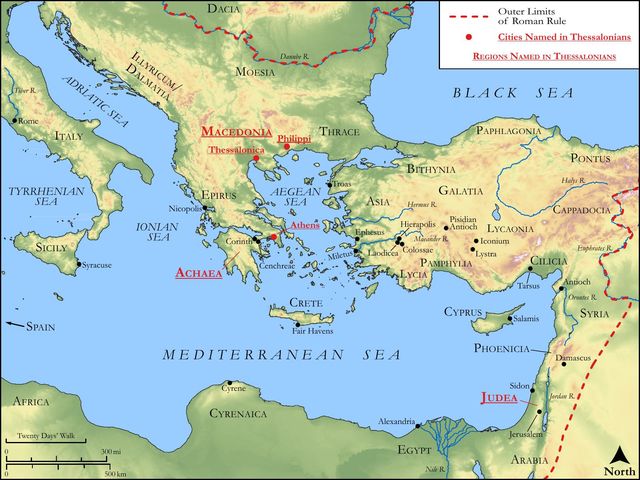
The Thessalonian church, established during Paul's second missionary journey, faced significant opposition from both Jewish and Gentile communities, as recorded in Acts 17:5-9. This persecution was ongoing and intense, causing distress among the believers. In the Roman Empire, professing Christ often meant social ostracism, economic hardship, and even physical violence, as Christians refused to participate in emperor worship or pagan rituals. Paul's letters to the Thessalonians, therefore, served not only to correct misunderstandings about the Lord's return but also to provide pastoral comfort, encouragement, and a robust theological framework for enduring suffering with hope and perseverance in a hostile environment.
Key Themes
ShowHideThe verse contributes significantly to several major themes present in 2 Thessalonians and the broader Pauline corpus. Firstly, it highlights the Purpose of Suffering, transforming what might seem like divine abandonment into a sign of God's active work and a preparation for glory. Secondly, it underscores God's Righteous Judgment, emphasizing that God is not indifferent to the suffering of His people or the actions of their oppressors, and that He will ultimately set all things right. Thirdly, the concept of Worthiness for the Kingdom is central, clarifying that this worthiness is not earned by suffering but demonstrated through faithful endurance, which God graciously recognizes as fitting for those who will inherit His eternal reign. This theme is echoed elsewhere, such as in Romans 8:17 where believers are heirs with Christ if they suffer with Him. Finally, it reinforces the Sovereignty of God over all circumstances, including adversity, demonstrating that even hardships are integrated into His divine plan for His people and His ultimate purposes.
Exposition and Analysis
ShowHideKey Word Analysis
ShowHideThis term (G1730) denotes an "indication" or "concrete proof." In the context of 2 Thessalonians 1:5, it signifies that the suffering endured by the Thessalonian believers was not random or meaningless, but a clear, undeniable sign or demonstration of God's active involvement and His righteous judgment at work. It served as visible evidence of a deeper divine reality.
This adjective (G1342) describes something as "equitable in character or act," implying innocence, holiness, and moral correctness. When applied to God's judgment, it emphasizes that His decisions and actions are always just, fair, and morally unimpeachable. The suffering of the Thessalonians, therefore, was tied to a judgment that was perfectly aligned with God's holy and just nature.
This verb (G2661) means "to deem entirely deserving" or "to account worthy." It implies a divine assessment and recognition. The suffering of the Thessalonians was not earning their worthiness for the kingdom, but rather, their steadfast endurance in faith, enabled by God's grace, was recognized by God as fitting or appropriate for those who would inherit His kingdom. It speaks to a divine approval and enablement, rather than a merit-based achievement.
Verse Breakdown
ShowHide"Which is a manifest token of the righteous judgment of God"
The suffering and persecution endured by the Thessalonian believers served as a clear, undeniable sign or demonstration of God's just and equitable judgment. This phrase indicates that their trials were not arbitrary, but rather a purposeful part of God's divine plan, revealing His active involvement in their circumstances and His commitment to justice. It implies that God is observing both the fidelity of His saints and the actions of their persecutors.
"that ye may be counted worthy of the kingdom of God"
The ultimate purpose or result of this "manifest token" and righteous judgment is that the believers, through their perseverance in suffering, would be recognized or deemed fitting for the kingdom of God. This "worthiness" is not an earned merit but a divine acknowledgment of their genuine faith and steadfastness under pressure, which demonstrates their true belonging to God's eternal reign and their suitability to inherit its blessings. Their endurance serves as evidence of their transformed character and their rightful place as heirs.
"for which ye also suffer"
This final clause directly connects their suffering to the kingdom of God, emphasizing that their present afflictions are precisely for the sake of or on account of their association with and pursuit of God's kingdom. Their suffering is not incidental but directly related to their identity as citizens of God's kingdom, highlighting the cost of discipleship and the reality of opposition from a world hostile to God's reign.
Literary Devices
ShowHide2 Thessalonians 1:5 employs several significant literary devices. The phrase "manifest token" functions as Symbolism, where the suffering itself becomes a visible sign or emblem of an invisible, divine reality—God's righteous judgment. This transforms what might appear to be a negative experience into a positive indicator of divine purpose. There is also an element of Paradox or Irony present: what seems like a cause for despair (suffering) is actually presented as a cause for assurance and hope, proving their worthiness for the kingdom. The verse is fundamentally a Theological Statement, a declarative assertion of divine truth that reinterprets human experience through a theological lens, providing comfort and meaning to the persecuted. It frames their trials not as a punishment, but as a refining process and a validating mark of their identity as God's people.
Theological and Thematic Connections
ShowHideThis verse profoundly connects the present reality of suffering with the future hope of God's kingdom and His ultimate justice. It assures believers that their trials are not meaningless but are integrated into God's sovereign plan, serving as a divine validation of their faith and a preparatory process for their inheritance. This perspective transforms suffering from a sign of abandonment into a badge of honor, confirming their status as genuine citizens of God's kingdom who are being refined for eternal glory. It underscores the active, just nature of God, who sees and responds to both the fidelity of His saints and the actions of their oppressors, promising a future where all wrongs will be righted and all suffering will find its ultimate purpose in His glorious reign.
Reflection and Application
ShowHideFor contemporary believers, 2 Thessalonians 1:5 offers immense comfort, profound perspective, and a powerful call to endurance. In a world where suffering often feels random, unjust, or indicative of divine absence, this verse reassures us that our trials, particularly those endured for the sake of Christ and His kingdom, are deeply meaningful in God's eyes. They are not signs of His displeasure but rather clear indicators of His ongoing work within us, refining our faith and preparing us for eternal glory. This truth empowers us to face adversity with hope, knowing that God's righteous judgment is active, discerning between those who faithfully endure and those who cause suffering. Our steadfastness in tribulation serves as a tangible demonstration of the genuineness of our faith, affirming our rightful place as heirs of God's kingdom and reminding us that our ultimate reward transcends any present hardship.
Questions for Reflection
ShowHideFAQ
ShowHideDoes "counted worthy" mean we earn our way into heaven through suffering?
ShowHideNo, "counted worthy" (Greek: kataxióō) in this context does not imply earning salvation or merit through suffering. Rather, it signifies a divine recognition or assessment. The suffering endured by the Thessalonians, and by believers today, for the sake of Christ and His kingdom, serves as evidence of genuine faith and steadfastness. It demonstrates that they are indeed fitting recipients of God's kingdom, not because their suffering earns it, but because their perseverance under trial reveals the authenticity of the faith that God has already graciously given them. Salvation is always by grace through faith, as articulated in Ephesians 2:8-9. Their suffering is a sign that they belong to the kingdom, not a means of entry.
Christ-Centered Fulfillment
ShowHideSecond Thessalonians 1:5 finds its ultimate Christ-centered fulfillment in the person and work of Jesus Christ, who perfectly embodied suffering for the kingdom and was uniquely "counted worthy." Christ Himself endured immense suffering, even death on a cross, not for His own sin but for the sins of humanity, thereby demonstrating the ultimate righteous judgment of God against sin and simultaneously paving the way for the kingdom of God. His suffering was the supreme "manifest token" of God's redemptive plan and justice, as seen in Isaiah 53:5. Through His perfect obedience and sacrificial death, Christ was "counted worthy" to receive all glory, honor, and power, and to inaugurate the kingdom of God, as proclaimed in Revelation 5:12. Believers are counted worthy of this same kingdom not by their own merits or suffering, but by being united with Christ through faith. Our suffering for the kingdom, therefore, is a participation in Christ's own suffering (Philippians 3:10), a confirmation of our union with Him, and a demonstration that we are indeed heirs with Him, destined to share in His glory (Romans 8:17). Thus, our trials point us to the One who suffered perfectly, establishing the kingdom for which we now endure.