


Matthew 13:46
Bible text: King James Version (1769 Blayney text) · Public domain
Bible text: Berean Standard Bible · Public domain
Bible text: American Standard Version (1901) · Public domain
Bible text: World English Bible, Messianic edition · Public domain
Bible text: Geneva Bible (1599) · Public domain
Bible text: Young's Literal Translation · Public domain
- ὃςhoswhoG3739R-NSMRelative pronoun Nominative Singular Masculine
- εὑρὼνheurōnhaving foundG2147V-2AAP-NSMVerb 2nd Aorist Active Participle Nominative Singular Masculine
- ἕναhenaoneG1520A-ASMAdjective Accusative Singular Masculine
- πολύτιμονpolutimonvery preciousG4186A-ASMAdjective Accusative Singular Masculine
- μαργαρίτηνmargaritēnpearlG3135N-ASMNoun Accusative Singular Masculine
- ἀπελθὼνapelthōnhaving gone awayG565V-2AAP-NSMVerb 2nd Aorist Active Participle Nominative Singular Masculine
- πέπρακενpeprakenhe has soldG4097V-RAI-3SVerb Perfect Active Indicative 3rd Singular
- πάνταpantaall thingsG3956A-APNAdjective Accusative Plural Neuter
- ὅσαhosaas much asG3745K-APNCorrelative pronoun Accusative Plural Neuter
- εἶχενeichenhe was havingG2192V-IAI-3SVerb Imperfect Active Indicative 3rd Singular
- καὶkaiandG2532CONJConjunction
- ἠγόρασενēgorasenhe boughtG59V-AAI-3SVerb Aorist Active Indicative 3rd Singular
- αὐτόνautonitG846P-ASMPersonal pronoun Accusative Singular Masculine
English is a literal word-by-word gloss of the Greek, not the KJV's wording. Why?
This is the original text the KJV's translators worked from — each Greek word with its own literal English meaning in this verse, prepared by scholars at Tyndale House, Cambridge. The KJV translates whole sentences, not word by word, so its wording differs: one Greek word can become several English words, and the KJV may choose “charity” where the gloss reads “love”. Both are faithful — they answer different questions. For the KJV's own rendering, switch to the KJV text.
Details
See on the biblical-era maps
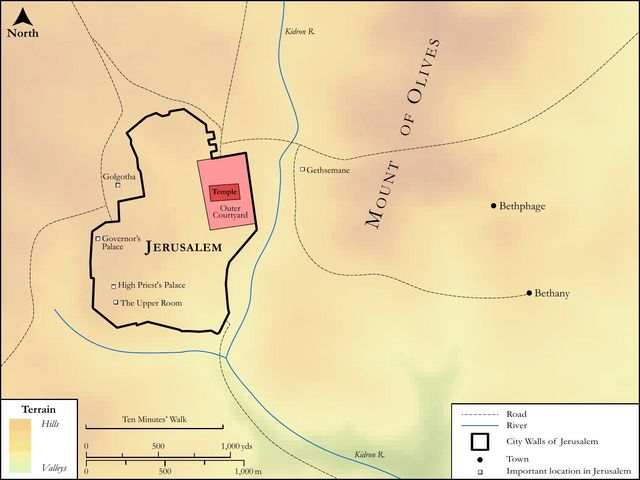
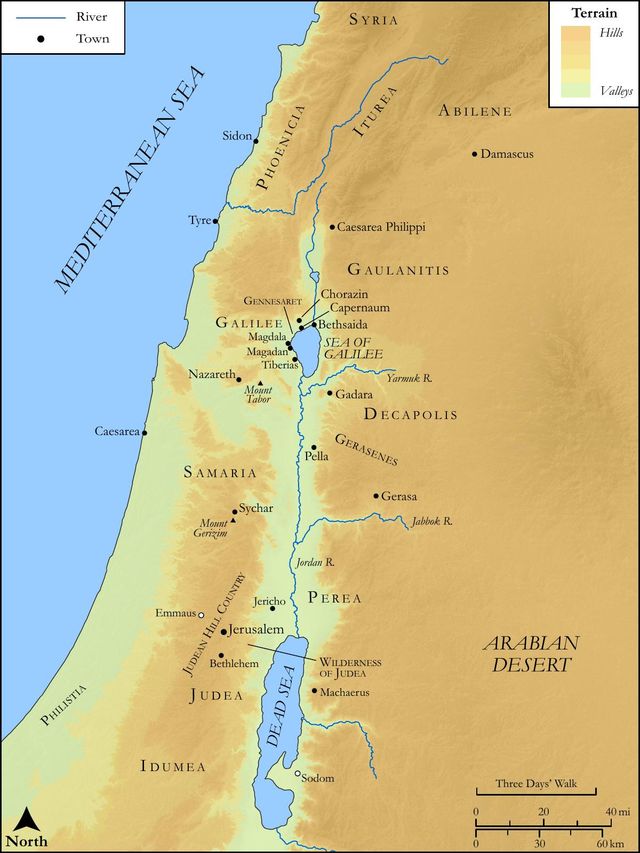
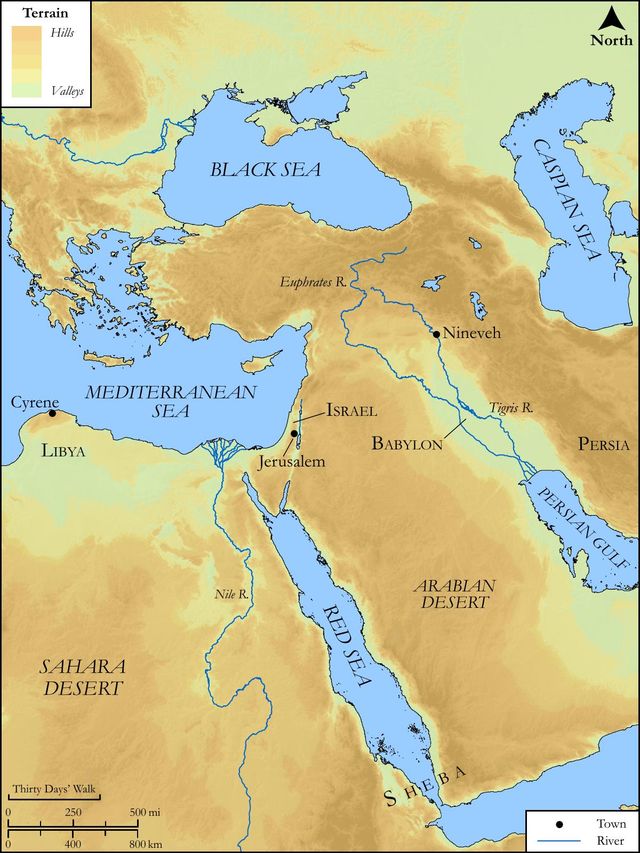
Study this verse
Public-domain commentary
Matthew Henry
From his Commentary on the Whole Bible. Henry comments on passages, not single verses — this entry covers Matthew 13:44–52. His four-level outline is real structure in the source text, so it is rendered as structure.
We have four short parables in these verses.
I.That of the treasure hid in the field.
Hitherto he had compared the kingdom of heaven to small things, because its beginning was small; but, lest any should thence take occasion to think meanly of it, in this parable and the next he represents it as of great value in itself, and of great advantage to those who embrace it, and are willing to come up to its terms; it is here likened to a treasure hid in the field, which, if we will, we may make our own.
1.Jesus Christ is the true Treasure; in him there is an abundance of all that which is rich and useful, and will be a portion for us: all fulness (Col 1:19; Joh 1:16): treasures of wisdom and knowledge (Col 2:3), of righteousness, grace, and peace; these are laid up for us in Christ; and, if we have an interest in him, it is all our own.
2.The gospel is the field in which this treasure is hid: it is hid in the word of the gospel, both the Old Testament and the New Testament gospel. In gospel ordinances it is hid as the milk in the breast, the marrow in the bone, the manna in the dew, the water in the well (Isa 12:3), the honey in the honey-comb. It is hid, not in a garden enclosed, or a spring shut up, but in a field, an open field; whoever will, let him come, and search the scriptures; let him dig in this field (Pro 2:4); and whatever royal mines we find, they are all our own, if we take the right course.
3.It is a great thing to discover the treasure hid in this field, and the unspeakable value of it. The reason why so many slight the gospel, and will not be at the expense, and run the hazard, of entertaining it, is because they look only upon the surface of the field, and judge by that, and so see no excellency in the Christian institutes above those of the philosophers; nay, the richest mines are often in grounds that appear most barren; and therefore they will not so much as bid for the field, much less come up to the price. What is thy beloved more than another beloved? What is the Bible more than other good books? The gospel of Christ more than Plato's philosophy, or Confucius's morals: but those who have searched the scriptures, so as in them to find Christ and eternal life (Joh 5:39), have discovered such a treasure in this field as makes it infinitely more valuable.
4.Those who discern this treasure in the field, and value it aright, will never be easy till they have made it their own upon any terms. He that has found this treasure, hides it, which denotes a holy jealousy, lest we come short (Heb 4:1), looking diligently (Heb 12:15), lest Satan come between us and it. He rejoices in it, though as yet the bargain be not made; he is glad there is such a bargain to be had, and that he is in a fair way to have an interest in Christ; that the matter is in treaty: their hearts may rejoice, who are yet but seeking the Lord, Psa 105:3. He resolves to buy this field: they who embrace gospel offers, upon gospel terms, buy this field; they make it their own, for the sake of the unseen treasure in it. It is Christ in the gospel that we are to have an eye to; we need not go up to heaven, but Christ in the word is nigh us. And so intent he is upon it, that he sells all to buy this field: they who would have saving benefit by Christ, must be willing to part with all, that they may make it sure to themselves; must count every thing but loss, that they may win Christ, and be found in him.
II.That of the pearl of price (Mat 13:45, Mat 13:46), which is to the same purport with the former, of the treasure. The dream is thus doubled, for the thing is certain.
Note, 1. All the children of men are busy, seeking goodly pearls: one would be rich, another would be honourable, another would be learned; but the most are imposed upon, and take up with counterfeits for pearls.
2.Jesus Christ is a Pearl of great price, a Jewel of inestimable value, which will make those who have it rich, truly rich, rich toward God; in having him, we have enough to make us happy here and for ever.
3.A true Christian is a spiritual merchant, that seeks and finds this pearl of price; that does not take up with any thing short of an interest in Christ, and, as one that is resolved to be spiritually rich, trades high: He went and bought that pearl; did not only bid for it, but purchased it. What will it avail us to know Christ, if we do not know him as ours, made to us wisdom? Co1 1:30.
4.Those who would have a saving interest in Christ, must be willing to part with all for him, leave all to follow him. Whatever stands in opposition to Christ, or in competition with him for our love and service, we must cheerfully quit it, though ever so dear to us. A man may buy gold too dear, but not this pearl of price.
III.That of the net cast into the sea, Mat 13:47-49.
1.Here is the parable itself. Where note,
(1.)The world is a vast sea, and the children of men are things creeping innumerable, both small and great, in that sea, Psa 104:25. Men in their natural state are like the fishes of the sea that have no ruler over them, Hab 1:14.
(2.)The preaching of the gospel is the casting of a net into this sea, to catch something out of it, for his glory who has the sovereignty of the sea. Ministers are fishers of men, employed in casting and drawing this net; and then they speed, when at Christ's word they let down the net; otherwise, they toil and catch nothing.
(3.)This net gathers of every kind, as large dragnets do. In the visible church there is a deal of trash and rubbish, dirt and weeds and vermin, as well as fish.
(4.)There is a time coming when this net will be full, and drawn to the shore; a set time when the gospel shall have fulfilled that for which it was sent, and we are sure it shall not return void, Isa 55:10, Isa 55:11. The net is now filling; sometimes it fills faster than at other times, but still it fills, and will be drawn to shore, when the mystery of God shall be finished.
(5.)When the net is full and drawn to the shore, there shall be a separation between the good and bad that were gathered in it. Hypocrites and true Christians shall then be parted; the good shall be gathered into vessels, as valuable, and therefore to be carefully kept, but the bad shall be cast away, as vile and unprofitable; and miserable is the condition of those who are cast away in that day. While the net is in the sea, it is not known what is in it, the fishermen themselves cannot distinguish; but they carefully draw it, and all that is in it, to the shore, for the sake of the good that is in it. Such is God's care for the visible church, and such should ministers' concern be for those under their charge, though they are mixed.
2.Here is the explanation of the latter part of the parable, the former is obvious and plain enough: we see gathered in the visible church, some of every kind: but the latter part refers to that which is yet to come, and is therefore more particularly explained, Mat 13:49, Mat 13:50. So shall it be at the end of the world; then, and not till then, will the dividing, discovering day be. We must not look for the net full of all good fish; the vessels will be so, but in the net they are mixed. See here,
(1.)The distinguishing of the wicked from the righteous. The angels of heaven shall come forth to do that which the angels of the churches could never do; they shall sever the wicked from among the just; and we need not ask how they will distinguish them when they have both their commission and their instructions from him that knows all men, and particularly knows them that are his, and them that are not, and we may be sure there shall be no mistake or blunder either way.
(2.)The doom of the wicked when they are thus severed. They shall be cast into the furnace, Note, Everlasting misery and sorrow will certainly be the portion of those who live among sanctified ones, but themselves die unsanctified. This is the same with what we had before, Mat 13:42. Note, Christ himself preached often of hell-torments, as the everlasting punishment of hypocrites; and it is good for us to be often reminded of this awakening, quickening truth.
IV.Here is the parable of the good householder, which is intended to rivet all the rest.
1.The occasion of it was the good proficiency which the disciples had made in learning, and their profiting by this sermon in particular.
(1.)He asked them, Have ye understood all these things? Intimating, that if they had not, he was ready to explain what they did not understand. Note, It is the will of Christ, that all those who read and hear the word should understand it; for otherwise how should they get good by it? It is therefore good for us, when we have read or heard the word, to examine ourselves, or to be examined, whether we have understood it or not. It is no disparagement to the disciples of Christ to be catechised. Christ invites us to seek to him for instruction, and ministers should proffer their service to those who have any good question to ask concerning what they have heard.
(2.)They answered him, Yea, Lord: and we have reason to believe they said true, because, when they did not understand, they asked for an explication, Mat 13:36. And the exposition of that parable was a key to the rest. Note, The right understanding of one good sermon, will very much help us to understand another; for good truths mutually explain and illustrate one another; and knowledge is easy to him that understandeth.
2.The scope of the parable itself was to give his approbation and commendation of their proficiency. Note, Christ is ready to encourage willing learners in his school, though they are but weak; and to say, Well done, well said.
(1.)He commends them as scribes instructed unto the kingdom of heaven. They were now learning that they might teach, and the teachers among the Jews were the scribes. Ezra, who prepared his heart to teach in Israel, is called a ready scribe, Ezr 7:6, Ezr 7:10. Now a skilful, faithful minister of the gospel is a scribe too; but for distinction, he is called a scribe instructed unto the kingdom of heaven, well versed in the things of the gospel, and well able to teach those things. Note,
[1.]Those who are to instruct others, have need to be well instructed themselves. If the priest's lips must keep knowledge, his head must first have knowledge.
[2.]The instruction of a gospel minister must be in the kingdom of heaven, that is it about which his business lies. A man may be a great philosopher and politician, and yet if not instructed to the kingdom of heaven, he will make but a bad minister.
(2.)He compares them to a good householder, who brings forth out of his treasure things new and old; fruits of last year's growth and this year's gathering, abundance and variety, for the entertainment of his friends, Sol 7:13. See here,
[1.]What should be a minister's furniture, a treasure of things new and old. Those who have so many and various occasions, have need to stock themselves well in their gathering days with truths new and old, out of the Old Testament and out of the new; with ancient and modern improvements, that the man of God may be thoroughly furnished, Ti2 3:16, Ti2 3:17. Old experiences, and new observations, all have their use; and we must not content ourselves with old discoveries, but must be adding new. Live and learn.
[2.]What use he should make of this furniture; he should bring forth: laying up is in order to laying out, for the benefit of others. Sic vox non vobis - You are to lay up, but not for yourselves. Many are full, but they have no vent (Job 32:19); have a talent, but they bury it; such are unprofitable servants; Christ himself received that he might give; so must we, and we shall have more. In bringing forth, things new and old do best together; old truths, but new methods and expressions, especially new affections.
Historical interpretation
Nine Centuries of Reception
12 surviving comments on this verse. Each one is dated, so this reads as a timeline rather than a list.
Select a marker to jump to its quote. Markers stagger vertically where authors wrote within a few decades of each other.
A pearl, and that pellucid and of purest ray, is Jesus, whom of the lightning flash of Divinity the Virgin bore. For as the pearl, produced in flesh and the oyster-shell and moisture, appears to be a body moist and transparent, full of light and spirit; so also God the Word, incarnate, is intellectual light, sending His rays, through a body luminous and moist.
Now among the words of all kinds that profess to announce truth, and among those who report them, he seeks pearls. Think of the prophets as, so to speak, the pearls that receive the dew of heaven and become pregnant with the word of truth from heaven. They are goodly pearls that, according to the phrase here set forth, the merchant seeks. And the chief of the pearls, on the finding of which the rest are found with it, is the very costly pearl, the Christ of God, the Word that is superior to the precious letters and thoughts in the law and the prophets. When one finds this pearl all the rest are easily released.Suppose, then, that one is not a disciple of Christ. He possesses no pearls at all, much less the very costly pearl, as distinguished from those that are cloudy or darkened.… The muddy words and the heresies that are bound up with works of the flesh are like the darkened pearls and those that are produced in the marshes. They are not beautiful.
As regards the pearl, the reasoning is the same. But this passage is of value for the merchant who has long been steeped in the law. After lengthy labors, he finds out about this pearl and abandons those things that he obtained under the yoke of the law. For he carried on business for a long time and found the pearl that his heart was set on. He must pay the price of this one pearl he desired at the expense of all his other work.
"The Kingdom of Heaven is like unto treasure hid in a field, the which when a man hath found, he hideth, and for joy thereof selleth all that he hath, and buyeth that field. Again, the Kingdom of Heaven is like unto a merchant man seeking goodly pearls, who, when he had found one pearl of great price, went and sold all that he had, and bought it."
Much as in the other place, the mustard seed and the leaven have but some little difference from each other, so here also these two parables, that of the treasure and that of the pearl. This being of course signified by both, that we ought to value the gospel above all things. And the former indeed, of the leaven and of the mustard seed, was spoken with a view to the power of the gospel, and to its surely prevailing over the world; but these declare its value, and great price. For as it extends itself like mustard seed, and prevails like leaven, so it is precious like a pearl, and affords full abundance like a treasure. We are then to learn not this only, that we ought to strip ourselves of everything else, and cling to the gospel, but also that we are to do so with joy; and when a man is dispossessing himself of his goods, he is to know that the transaction is gain, and not loss.
Seest thou how both the gospel is hid in the world, and the good things in the gospel?
Except thou sell all, thou buyest not; except thou have such a soul, anxious and inquiring, thou findest not. Two things therefore are requisite, abstinence from worldly matters, and watchfulness. For He saith "One seeking goodly pearls, who when he had found one of great price, sold all and bought it." For the truth is one, and not in many divisions.
And much as he that hath the pearl knows indeed himself that he is rich, but others know not, many times, that he is holding it in his hand (for there is no corporeal bulk); just so also with the gospel, they that have hold of it know that they are rich, but the unbelievers, not knowing of this treasure, are in ignorance also of our wealth.
The Gospel preaching not only offers manifold gain as a treasure, but is precious as a pearl; wherefore after the parable concerning the treasure, He gives that concerning the pearl. And in preaching, two things are required, namely, to be detached from the business of this life, and to be watchful, which are denoted by this merchantman. Truth moreover is one, and not manifold, and for this reason it is one pearl that is said to be found. And as one who is possessed of a pearl, himself indeed knows of his wealth, but is not known to others, ofttimes concealing it in his hand because of its small bulk, so it is in the preaching of the Gospel; they who possess it know that they are rich, the unbelievers, not knowing of this treasure, know not of our wealth. Jerome; By the goodly pearls may be understood the Law and the Prophets. Hear then Marcion and Manichæus; the good pearls are the Law and the Prophets. One pearl, the most precious of all, is the knowledge of the Saviour and the sacrament of His passion and resurrection, which when the merchantman has found, like Paul the Apostle, he straightway despises all the mysteries of the Law and the Prophets and the old observances in which he had lived blameless, counting them as dung that he may win Christ. (Phil. 3:8.) Not that the finding of a new pearl is the condemnation of the old pearls, but that in omparison of that, all other pearls are worthless.
By the goodly pearls may be understood the Law and the Prophets. Hear thenMarcion and Manichaeus; the good pearls are the Law and the Prophets. One pearl, the most precious of all, is the knowledge of the Saviour and the sacrament of His passion and resurrection, which when the merchantman has found, like Paul the Apostle, he straightway despises all the mysteries of the Law and the Prophets and the old observances in which he had lived blameless, counting them as dung that he may win Christ. Not that the finding of a new pearl is the condemnation of the old pearls, but that in comparison of that, all other pearls are worthless.
(Verse 45, 46.) Again, the kingdom of heaven is like a merchant in search of fine pearls. Upon finding one exceedingly precious pearl, he went and sold all that he had and bought it. In other words, the same thing as was said above. The good pearls that the merchant seeks are the Law and the Prophets. Listen, Marcion; listen, Manichaeus: the good pearls are the Law and the Prophets, and the knowledge of the Old Testament. But there is one most precious pearl, the knowledge of the Savior, and the sacrament of his passion, and the mystery of his resurrection. When a person, like the apostle Paul, discovers it, they despise all the mysteries of the law and the prophets, and the practices of their former life, in which they were blameless, as worthless filth and rubbish, in order to gain Christ (Philippians III). Not that the discovery of a new pearl condemns the old pearls, but by comparison, every other gem is worthless.
Many who were entirely foreign to religion immediately recognized, by divine grace, the greatness of Christ, in that they despised all their former things and looked to this thing alone, recognizing that the one who is salvation is for them. Then he adds, again, that many people, even of those who have been exceedingly zealous about religion, when they recognize the greatness of the preaching, shall turn aside from old things. Such, for instance, was Paul, who had displayed a great deal of zeal for the law, but who, when he came to see the greatness of the gospel, disdained everything having to do with the law. He himself says, “but what things were gain to me, those I counted as loss for the sake of Christ”; and again, “I count all things but loss, and count them as dung, that I may win Christ.” He seems to have said this both on account of those Greeks who were devoted to religion and, again, on account of the Jews.
(Quæst. in Matt. q. 13.) Or, A man seeking goodly pearls has found one pearl of great price; that is, he who is seeking good men with whom he may live profitably, finds one alone, Christ Jesus, without sin; or, seeking precepts of life, by aid of which he may dwell righteously among men, finds love of his neighbour, in which one rule, the Apostle says, (Rom. 13:9.) are comprehended all things; or, seeking good thoughts, he finds that Word in which all things are contained, In the beginning was the Word. (John 1:1.) which is lustrous with the light of truth, stedfast with the strength of eternity, and throughout like to itself with the beauty of divinity, and when we have penetrated the shell of the flesh, will be confessed as God. But whichever of these three it may be, or if there be any thing else that can occur to us, that can be signified under the figure of the one precious pearl, its preciousness is the possession of ourselves, who are not free to possess it unless we despise all things that can be possessed in this world. For having sold our possessions, we receive no other return greater than ourselves, (for while we were involved in such things we were not our own,) that we may again give ourselves for that pearl, not because we are of equal value to that, but because we cannot give any thing more.
Let no one who hears this take offense at the name merchant. Here Christ is speaking of a merchant who shows mercy, not of one who is always usuriously investing his profits from capital. This merchant is the one who provides for the adornment of virtues, not the incentive of vices. He weighs the dignity of morals, not the weight of jewels. He wears necklaces of integrity, not of luxury. He flaunts not a display of sensual pleasure but the earmarks of discipline. Therefore this merchant exhibits pearls of heart and body, not in human trading but in heavenly commerce. He displays them not to trade for a present advantage but for a future one. He trades in order to gain not earthly but heavenly glory. He seeks to procure the kingdom of heaven as the reward of his virtues and to buy, at the price of innumerable other goods, the one pearl of everlasting life.
(Hom. in Ev. xi. 2.) Or by the pearl of price is to be understood the sweetness of the heavenly kingdom, which, he that hath found it, selleth all and buyeth. For he that, as far as is permitted, has had perfect knowledge of the sweetness of the heavenly life, readily leaves all things that he has loved on earth; all that once pleased him among earthly possessions now appears to have lost its beauty, for the splendour of that precious pearl is alone seen in his mind.
The sea is the present life. The merchants are those who traverse it in search of some knowledge. Many think that the pearls are the opinions of the multitude of philosophers. But one is of great price. For there is One Truth, which is Christ. It is like the story that is told of how the pearl comes into being within the oyster: the oyster opens its folds and a bolt of lightning strikes within; the folds are again shut and the pearl is conceived from the lightning and a droplet of moisture, giving it its pure whiteness. So Christ also was conceived from the lightning from above, the Holy Spirit. And as a man who has a pearl turns it over and over in his hands, and he knows what great wealth he possesses, while others are ignorant, so too the preaching is hidden among the unnoticed and the simple. To obtain this pearl one must give all.
Continue studying Matthew 13:46 across the web’s major study libraries — every link below opens this exact verse, chapter, or book on the destination site.
Read & Compare
 BibleGatewayThis verse in more than 200 translations and 70 languages.
 Bible.comThe YouVersion reader — hundreds of translations, reading plans, and highlights.
 ESV.orgCrossway's official English Standard Version reader.
 NET BibleThe NET translation with 60,000+ translators' notes on every rendering decision.
 STEP BibleTyndale House's free study tool — original text, vocabulary, and scholarly resources.
 BibliaLogos Bible Software's free web reader.
 USCCBThe New American Bible (Revised Edition) with the U.S. bishops' study notes.
Commentaries
 BibleHub CommentariesDozens of classic commentaries on this verse, gathered on one page.
 StudyLightMore than 100 commentary sets — the largest collection on the web.
 BibleRefPlain-English commentary on what this verse means, verse by verse.
 Enduring WordDavid Guzik's free commentary on this chapter, widely used by Bible teachers.
 Bible Study ToolsVerse commentary alongside Greek and Hebrew study aids.
Original Language & Research
- BibleHub InterlinearThe verse word by word — original language, transliteration, and English.
- BibleHub LexiconEvery word's original-language definition and Strong's entry.
 Blue Letter BibleDeep-study tools — Strong's numbers, concordance, and word studies.
 CNTR CollationThe earliest Greek manuscripts of this verse, collated letter by letter.
Sermons, Hymns & Audio


TrulyRandomVerse is not affiliated with these sites and doesn’t control their content. They’re linked because they’re genuinely useful.
Summary
The Parable of the Pearl of Great Price reveals the incomparable and supreme value of the Kingdom of Heaven. It portrays a discerning merchant who, upon discovering a single pearl of extraordinary worth, joyfully sacrifices everything he possesses to acquire it, illustrating the radical commitment and total surrender required to fully embrace God's reign and its transformative blessings in one's life.
Context
ShowHideLiterary Context
This parable is one of seven "parables of the kingdom" presented consecutively by Jesus in Matthew 13, immediately following the Parable of the Hidden Treasure. Both parables are brief, focus on a singular, immensely valuable discovery, and emphasize a radical, all-encompassing response to acquire it. They form a pair, highlighting the intrinsic worth of the Kingdom and the decisive action it demands. Unlike some other parables in the chapter, these two focus on the individual's response to the Kingdom's value rather than its growth or judgment.
Historical & Cultural Context
In that day, pearls were among the most prized and valuable commodities, often considered more precious than gold or silver. Unlike today's cultivated pearls, natural pearls were incredibly rare, found only through arduous and dangerous diving. A large, perfectly formed pearl was a true marvel, a testament to immense wealth, beauty, and status. Merchants specialized in trading these gems, often dedicating their lives to traveling far and wide in search of such treasures. Jesus' audience, familiar with this high-stakes trade and the immense value placed on such a rare discovery, would immediately grasp the profound significance of a "pearl of great price" and the merchant's extreme, yet logical, response.
Key Themes
ShowHideThe central theme is the supreme value of the Kingdom of Heaven. The pearl symbolizes the incomparable worth of God's redemptive reign, encompassing salvation, eternal life, and a transformative relationship with God. This value is so great that it justifies and even necessitates radical commitment and joyful sacrifice. The merchant's willingness to "sell all that he had" underscores the idea that embracing the Kingdom requires a reordering of priorities, placing God's will and presence above all earthly possessions, ambitions, and comforts. This theme is echoed in Jesus' broader teachings about the cost of discipleship, such as the call to seek first the Kingdom of God and to forsake all to follow Him. The parable also subtly highlights discovery and recognition, as the merchant found the pearl, implying a discerning eye that recognized its inherent, unparalleled worth, leading to immediate and decisive action.
Exposition and Analysis
ShowHideKey Word Analysis
ShowHideThis verb signifies to "find" or "discover," often implying an unexpected or fortunate discovery. In the context of the parable, it suggests that the merchant did not create or earn the pearl, but rather recognized its pre-existing, immense value. This aligns with the understanding that the Kingdom of God is a gift to be received, not a reward to be achieved through human effort.
Directly referring to a "pearl," this word highlights the specific object of immense value. In antiquity, pearls were highly coveted and represented ultimate beauty, rarity, and wealth. The singular "one pearl" emphasizes its uniqueness and unparalleled quality, distinguishing it from a mere collection of valuable items.
A compound word meaning "very costly" or "extremely valuable." This adjective underscores the extraordinary and incomparable worth of the pearl. It is not merely expensive, but of such supreme value that it transcends all other earthly commodities, justifying the merchant's radical action to acquire it.
This verb means "to traffic," "dispose of as merchandise," or "sell." The act of selling implies a deliberate and complete divestment of all other assets. Coupled with "all that he had," it emphasizes the totality of the sacrifice made to obtain the singular, supremely valuable object.
Verse Breakdown
ShowHide"Who, when he had found one pearl of great price,"
This opening clause introduces the central character, a merchant specializing in fine pearls, and the pivotal moment of discovery. The emphasis is on the finding of a singular, exceptionally valuable pearl, implying that the merchant, with his expert eye, recognized its unparalleled worth. This discovery is the catalyst for all subsequent action, highlighting the inherent, pre-existing value of the Kingdom of Heaven.
"went and sold all that he had,"
This phrase describes the merchant's immediate and radical response to his discovery. The act of "going" suggests a decisive, unhesitating movement, while "sold all that he had" conveys a total and complete divestment of every other possession. This is not a partial sacrifice but an absolute reordering of his entire life and resources, demonstrating the supreme priority he placed on acquiring this one pearl.
"and bought it."
This concluding action signifies the successful acquisition of the pearl. Despite the immense cost, the merchant willingly and joyfully paid the full price, indicating that the value of the pearl far outweighed the sacrifice. The "it" refers back to the "one pearl of great price," solidifying the idea that this singular treasure was the ultimate object of his desire and the culmination of his life's pursuit.
Literary Devices
ShowHideThe Parable of the Pearl of Great Price employs several powerful literary devices. Central to its structure is Parable itself, a short, illustrative story teaching a moral or spiritual lesson. The Symbolism is profound, with the "pearl of great price" representing the Kingdom of Heaven—its inherent worth, its transformative power, and the salvation it offers. The merchant, in turn, symbolizes anyone who discerns the Kingdom's ultimate value. The phrase "sold all that he had" functions as Hyperbole, emphasizing the extreme and total commitment required, rather than prescribing literal destitution. It highlights the reordering of one's entire life and priorities. There is also an implicit Contrast between the vastness of "all that he had" and the singularity of "one pearl," underscoring the incomparable value of the spiritual over the material.
Theological and Thematic Connections
ShowHideThe Parable of the Pearl of Great Price profoundly illuminates the nature of the Kingdom of Heaven and the appropriate human response to it. Theologically, it asserts the absolute sovereignty and incomparable worth of God's redemptive reign, which is embodied in Christ and experienced through salvation. It is a treasure so magnificent that it demands an all-encompassing, joyful surrender of everything else. This is not a reluctant sacrifice, but a willing exchange, recognizing that in gaining the Kingdom, one gains everything of true, eternal value. The merchant's immediate and total divestment underscores the biblical call to wholehearted devotion, where allegiance to Christ supersedes all earthly attachments and ambitions. It speaks to the radical reorientation of life that occurs when one truly apprehends the glory and goodness of God's Kingdom.
Reflection and Application
ShowHideThe Parable of the Pearl of Great Price challenges us to deeply examine our own values and priorities. What is the "pearl of great price" in our lives? Is it truly the Kingdom of God, or are there other treasures—whether wealth, status, comfort, or even relationships—that we prioritize above it? The merchant's joyful and immediate action serves as a powerful call to radical discipleship, urging us to surrender anything that hinders our full embrace of God's reign. This doesn't necessarily mean literal poverty, but a willingness to reorder our affections, ambitions, and resources so that Christ and His Kingdom are undeniably supreme. It invites us to consider if we are truly living as if the Kingdom is the most valuable thing, willing to "sell all" (our pride, self-will, comfort zones, or worldly attachments) to gain the immeasurable richness of a life lived fully in God's presence and purpose.
Questions for Reflection
ShowHideFAQ
ShowHideDoes "selling all that he had" imply that Christians must become literally poor to enter the Kingdom?
ShowHideNo, the parable's emphasis is not on literal destitution but on the radical reordering of one's priorities and affections. The phrase "sold all that he had" is a hyperbole to illustrate the incomparable value of the Kingdom and the total commitment it demands. It signifies a willingness to surrender anything that competes with God's supreme authority and worth in our lives. For some, this might involve significant material sacrifice, but for all, it means placing Christ and His Kingdom above all earthly possessions, ambitions, and comforts, recognizing that true wealth is found in Him. The focus is on the heart's allegiance and the willingness to give up anything that hinders a full embrace of God's will and presence, as Jesus taught in Matthew 6:19-21.
What does the "pearl of great price" symbolize? Is it Jesus, salvation, or the Kingdom of Heaven?
ShowHideThe "pearl of great price" primarily symbolizes the Kingdom of Heaven in its entirety – its inherent, incomparable worth and the profound blessings it offers. This includes salvation, eternal life, and a transformative relationship with God. Since Jesus Christ is the embodiment and inaugurator of the Kingdom, the pearl can also be understood as ultimately pointing to Jesus Himself, for in finding Him, one finds the fullness of God's reign. The parable teaches that whatever aspect of the Kingdom one encounters, its value is so immense that it warrants the most radical and joyful commitment, as seen in the merchant's decisive action to acquire it. It represents the ultimate good that satisfies the deepest longings of the human heart.
Christ-Centered Fulfillment
ShowHideWhile the Parable of the Pearl of Great Price speaks to the supreme value of the Kingdom of Heaven and the radical response it demands, its ultimate Christ-centered fulfillment lies in Jesus Himself. He is the very embodiment of that "pearl of great price," the ultimate treasure for which all else is counted as loss. The merchant's joyful sacrifice mirrors Christ's own willingness to "sell all" – to empty Himself of divine prerogatives, take on human form, and endure the cross – to acquire His bride, the Church, and establish His Kingdom (as seen in Philippians 2:6-8). For the believer, "finding" this pearl means encountering Jesus, recognizing His unparalleled worth, and responding with wholehearted devotion. To gain Christ is to gain everything, as Paul eloquently states in Philippians 3:7-9, counting all former gains as rubbish for the surpassing worth of knowing Him. Thus, the parable is not just about our pursuit of the Kingdom, but about Christ's own pursuit of us, and the glorious reality that in Him, the Kingdom of God has come, making Him the most precious treasure imaginable, worthy of our complete and joyful surrender.