


Matthew 1:3
- ἸούδαςIoudasJudahG2455N-NSM-PNoun Nominative Singular Masculine Individual
- δὲdethenG1161CONJConjunction
- ἐγέννησενegennēsenbegatG1080V-AAI-3SVerb Aorist Active Indicative 3rd Singular
- τὸνton<the>G3588T-ASMDefinite article Accusative Singular Masculine
- ΦάρεςPharesPerezG5329N-ASM-PNoun Accusative Singular Masculine Individual
- καὶkaiandG2532CONJConjunction
- τὸνton<the>G3588T-ASMDefinite article Accusative Singular Masculine
- ΖάραZaraZerahG2196N-ASM-PNoun Accusative Singular Masculine Individual
- ἐκekout ofG1537PREPPreposition
- τῆςtēs<the>G3588T-GSFDefinite article Genitive Singular Feminine
- Θαμάρ·ThamarTamarG2283N-GSF-PNoun Genitive Singular Feminine Individual
- ΦάρεςPharesPerezG5329N-NSM-PNoun Nominative Singular Masculine Individual
- δὲdethenG1161CONJConjunction
- ἐγέννησενegennēsenbegatG1080V-AAI-3SVerb Aorist Active Indicative 3rd Singular
- τὸνton<the>G3588T-ASMDefinite article Accusative Singular Masculine
- Ἑσρώμ·HesrōmHezronG2074N-ASM-PNoun Accusative Singular Masculine Individual
- ἙσρὼμHesrōmHezronG2074N-NSM-PNoun Nominative Singular Masculine Individual
- δὲdethenG1161CONJConjunction
- ἐγέννησενegennēsenbegatG1080V-AAI-3SVerb Aorist Active Indicative 3rd Singular
- τὸνton<the>G3588T-ASMDefinite article Accusative Singular Masculine
- Ἀράμ·AramRamG689N-ASM-PNoun Accusative Singular Masculine Individual
English is a literal word-by-word gloss of the Greek, not the KJV's wording. Why?
This is the original text the KJV's translators worked from — each Greek word with its own literal English meaning in this verse, prepared by scholars at Tyndale House, Cambridge. The KJV translates whole sentences, not word by word, so its wording differs: one Greek word can become several English words, and the KJV may choose “charity” where the gloss reads “love”. Both are faithful — they answer different questions. For the KJV's own rendering, switch to the KJV text.
Details
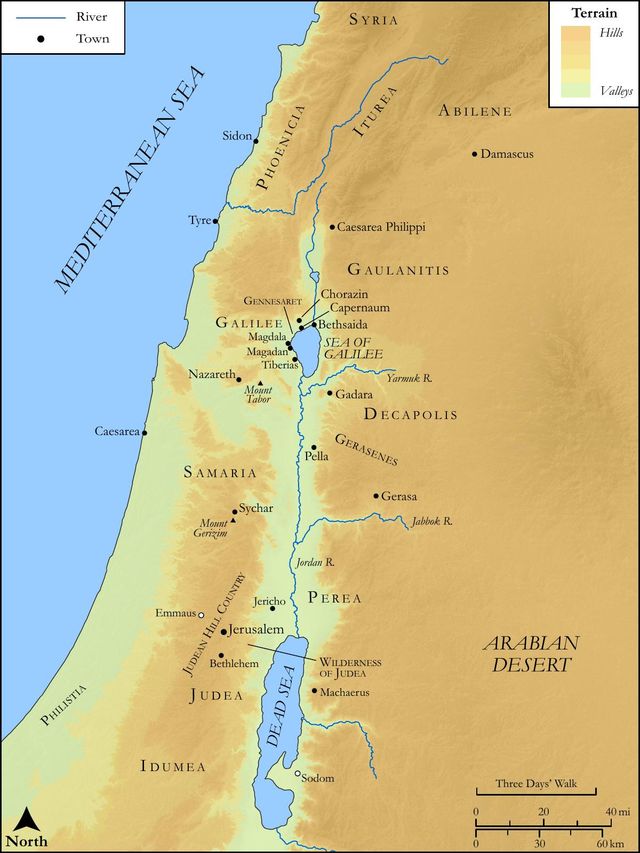
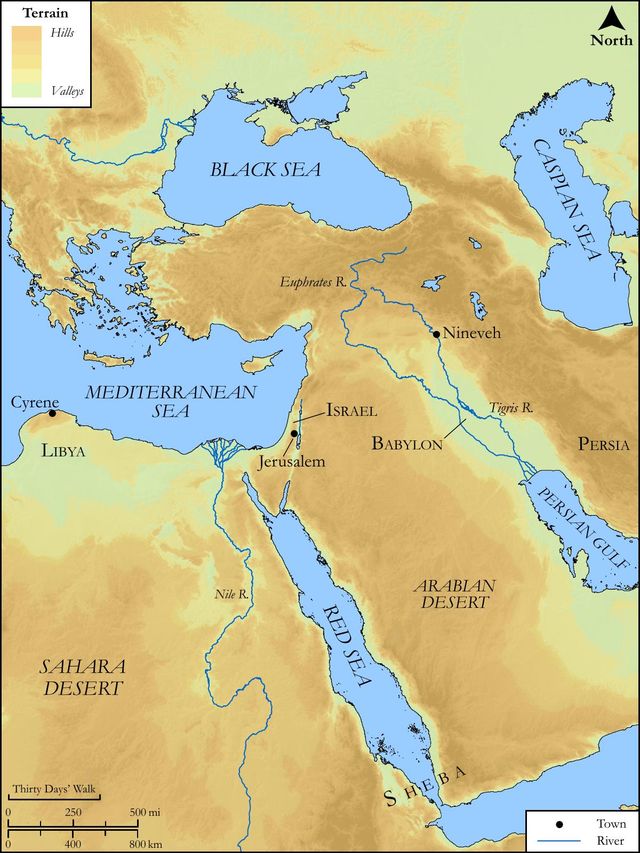
See on the biblical-era map

Study this verse
Public-domain commentary
Matthew Henry
From his Commentary on the Whole Bible. Henry comments on passages, not single verses — this entry covers Matthew 1:1–17. His two-level outline is real structure in the source text, so it is rendered as structure.
Concerning this genealogy of our Saviour, observe,
I.The title of it.
It is the book (or the account, as the Hebrew word sepher, a book, sometimes signifies) of the generation of Jesus Christ, of his ancestors according to the flesh; or, It is the narrative of his birth. It is Biblos Geneseōs - a book of Genesis. The Old Testament begins with the book of the generation of the world, and it is its glory that it does so; but the glory of the New Testament herein excelleth, that it begins with the book of the generation of him that made the world. As God, his outgoings were of old, from everlasting (Mic 5:2), and none can declare that generation; but, as man, he was sent forth in the fulness of time, born of a woman, and it is that generation which is here declared.
II.The principal intention of it.
It is not an endless or needless genealogy; it is not a vain-glorious one, as those of great men commonly are. Stemmata, quid faciunt? - Of what avail are ancient pedigrees? It is like a pedigree given in evidence, to prove a title, and make out a claim; the design is to prove that our Lord Jesus is the son of David, and the son of Abraham, and therefore of that nation and family out of which the Messiah was to arise. Abraham and David were, in their day, the great trustees of the promise relating to the Messiah. The promise of the blessing was made to Abraham and his seed, of the dominion to David and his seed; and they who would have an interest in Christ, as the son of Abraham, in whom all the families of the earth are to be blessed, must be faithful, loyal subjects to him as the son of David, by whom all the families of the earth are to be ruled. It was promised to Abraham that Christ should descend from him (Gen 12:3; Gen 22:18), and to David that he should descend from him (Sa2 7:12; Psa 89:3, etc.; Psa 132:11); and therefore, unless it can be proved that Jesus is a son of David, and a son of Abraham, we cannot admit him to be the Messiah. Now this is here proved from the authentic records of the heralds' offices. The Jews were very exact in preserving their pedigrees, and there was a providence in it, for the clearing up of the descent of the Messiah from the fathers; and since his coming that nation is so dispersed and confounded that it is a question whether any person in the world can legally prove himself to be a son of Abraham; however, it is certain that none can prove himself to either a son of Aaron or a son of David, so that the priestly and kingly office must either be given up, as lost for ever, or be lodged in the hands of our Lord Jesus. Christ is here first called the son of David, because under that title he was commonly spoken of, and expected, among the Jews. They who owned him to be the Christ, called him the son of David, Mat 15:22; Mat 20:31; Mat 21:15. Thus, therefore, the evangelist undertakes to make out, that he is not only a son of David, but that son of David on whose shoulders the government was to be; not only a son of Abraham, but that son of Abraham who was to be the father of many nations.
In calling Christ the son of David, and the son of Abraham, he shows that God is faithful to his promise, and will make good every word that he has spoken; and this. 1. Though the performance be long deferred. When God promised Abraham a son, who should be the great blessing of the world, perhaps he expected it should be his immediate son; but it proved to be one at the distance of forty-two generations, and about 2000 years: so long before can God foretel what shall be done, and so long after, sometimes, does God fulfil what has been promised. Note, Delays of promised mercies, though they exercise our patience, do not weaken God's promise. 2. Though it begin to be despaired of. This son of David, and son of Abraham, who was to be the glory of his Father's house, was born when the seed of Abraham was a despised people, recently become tributary to the Roman yoke, and when the house of David was buried in obscurity; for Christ was to be a root out of a dry ground. Note, God's time for the performance of his promises is when it labours under the greatest improbabilities.
III.The particular series of it, drawn in the direct line from Abraham downward, according to the genealogies recorded in the beginning of the books of Chronicles (as far as those go), and which here we see the use of.
Some particulars we may observe in the genealogy.
1.Among the ancestors of Christ who had brethren, generally he descended from a younger brother; such Abraham himself was, and Jacob, and Judah, and David, and Nathan, and Rhesa; to show that the pre-eminence of Christ came not, as that of earthly princes, from the primogeniture of his ancestors, but from the will of God, who, according to the method of his providence, exalteth them of low degree, and puts more abundant honour upon that part which lacked.
2.Among the sons of Jacob, besides Judah, from whom Shiloh came, notice is here taken of his brethren: Judas and his brethren. No mention is made of Ishmael the son of Abraham, or of Esau the son of Isaac, because they were shut out of the church; whereas all the children of Jacob were taken in, and, though not fathers of Christ, were yet patriarchs of the church (Act 7:8), and therefore are mentioned in the genealogy, for the encouragement of the twelve tribes that were scattered abroad, intimating to them that they have an interest in Christ, and stand in relation to him as well as Judah.
3.Phares and Zara, the twin-sons of Judah, are likewise both named, though Phares only was Christ's ancestor, for the same reason that the brethren of Judah are taken notice of; and some think because the birth of Phares and Zara had something of an allegory in it. Zara put out his hand first, as the first-born, but, drawing it in, Phares got the birth-right. The Jewish church, like Zara, reached first at the birthright, but through unbelief, withdrawing the hand, the Gentile church, like Phares, broke forth and went away with the birthright; and thus blindness is in part happened unto Israel, till the fulness of the Gentiles become in, and then Zara shall be born - all Israel shall be saved, Rom 11:25, Rom 11:26.
4.There are four women, and but four, named in this genealogy; two of them were originally strangers to the commonwealth of Israel, Rachab a Canaanitess, and a harlot besides, and Ruth the Moabitess; for in Jesus Christ there is neither Greek, nor Jew; those that are strangers and foreigners are welcome, in Christ, to the citizenship of the saints. The other two were adulteresses, Tamar and Bathsheba; which was a further mark of humiliation put upon our Lord Jesus, that not only he descended from such, but that is decent from them is particularly remarked in his genealogy, and no veil drawn over it. He took upon him the likeness of sinful flesh (Rom 8:3), and takes even great sinners, upon their repentance, into the nearest relation to himself. Note, We ought not to upbraid people with the scandals of their ancestors; it is what they cannot help, and has been the lot of the best, even of our Master himself. David's begetting Solomon of her that had been the wife of Urias is taken notice of (says Dr. Whitby) to show that the crime of David, being repented to, was so far from hindering the promise made to him, that it pleased God by this very woman to fulfil it.
5.Though divers kings are here named, yet none is expressly called a king but David (Mat 1:6), David the king; because with him the covenant of royalty was made, and to him the promise of the kingdom of the Messiah was given, who is therefore said to inherit the throne of his father David, Luk 1:32.
6.In the pedigree of the kings of Judah, between Joram and Ozias (Mat 1:8), there are three left out, namely, Ahaziah, Joash, and Amaziah; and therefore when it is said, Joram begat Ozias, it is meant, according to the usage of the Hebrew tongue, that Ozias was lineally descended from him, as it is said to Hezekiah that the sons which he should beget should be carried to Babylon, whereas they were removed several generations from him. It was not through mistake or forgetfulness that these three were omitted, but, probably, they were omitted in the genealogical tables that the evangelist consulted, which yet were admitted as authentic. Some give this reason for it: - It being Matthew's design, for the sake of memory, to reduce the number of Christ's ancestors to three fourteens, it was requisite that in this period three should be left out, and none more fit than they who were the immediate progeny of cursed Athaliah, who introduced the idolatry of Ahab into the house of David, for which this brand is set upon the family and the iniquity thus visited to the third and fourth generation. Two of these three were apostates; and such God commonly sets a mark of his displeasure upon in this world: they all three had their heads brought to the grave with blood.
7.Some observe what a mixture there was of good and bad in the succession of these kings; as for instance (Mat 1:7, Mat 1:8), wicked Roboam begat wicked Abia; wicked Abia begat good Asa; good Asa begat good Josaphat; good Josaphat begat wicked Joram. Grace does not run in the blood, neither does reigning sin. God's grace is his own, and he gives or withholds it as he pleases.
8.The captivity of Babylon is mentioned as a remarkable period in this line, Mat 1:11, Mat 1:12. All things considered, it was a wonder that the Jews were not lost in that captivity, as other nations have been; but this intimates the reason why the streams of that people were kept to run pure through that dead sea, because from them, as concerning the flesh, Christ was to come. Destroy it not, for a blessing is in it, even that blessing of blessings, Christ himself, Isa 65:8, Isa 65:9. It was with an eye to him that they were restored, and the desolations of the sanctuary were looked upon with favour for the Lord's sake, Dan 9:17.
9.Josias is said to beget Jechonias and his brethren (Mat 1:11); by Jechonias here is meant Jehoiakim, who was the first-born of Josias; but, when it is said (Mat 1:12) that Jechonias begat Salathiel, that Jechonias was the son of that Jehoiakim who was carried into Babylon, and there begat Salathiel (as Dr. Whitby shows), and, when Jechonias is said to have been written childless (Jer 22:30), it is explained thus: No man of his seed shall prosper. Salathiel is here said to beget Zorobabel, whereas Salathiel begat Pedaiah, and he begat Zorobabel (Ch1 3:19): but, as before, the grandson is often called the son; Pedaiah, it is likely, died in his father's lifetime, and so his son Zorobabel was called the son of Salathiel.
10.The line is brought down, not to Mary the mother of our Lord, but to Joseph the husband of Mary (Mat 1:16); for the Jews always reckoned their genealogies by the males: yet Mary was of the same tribe and family with Joseph, so that, both by his mother and by his supposed father, he was of the house of David; yet his interest in that dignity is derived by Joseph, to whom really according to the flesh he had no relation, to show that the kingdom of the Messiah is not founded in a natural descent from David.
11.The centre in whom all these lines meet is Jesus, who is called Christ, Mat 1:16. This is he that was so importunately desired, so impatiently expected, and to whom the patriarchs had an eye when they were so desirous of children, that they might have the honour of coming into the sacred line. Blessed be God, we are not now in such a dark and cloudy state of expectation as they were then in, but see clearly what these prophets and kings saw as through a glass darkly. And we may have, if it be not our own fault, a greater honour than that of which they were so ambitious: for they who do the will of God are in a more honourable relation to Christ than those who were akin to him according to the flesh, Mat 12:50. Jesus is called Christ, that is, the Anointed, the same with the Hebrew name Messiah. He is called Messiah the Prince (Dan 9:25), and often God's Anointed (Psa 2:2). Under this character he was expected: Art thou the Christ - the anointed one? David, the king, was anointed (Sa1 16:13); so was Aaron, the priest (Lev 8:12), and Elisha, the prophet (Kg1 19:16), and Isaiah, the prophet (Isa 61:1). Christ, being appointed to, and qualified for, all these offices, is therefore called the Anointed - anointed with the oil of gladness above his fellows; and from this name of his, which is as ointment poured forth, all his followers are called Christians, for they also have received the anointing.
Lastly. The general summary of all this genealogy we have, Mat 1:17, where it is summed up in three fourteens, signalized by remarkable periods. In the first fourteen, we have the family of David rising, and looking forth as the morning; in the second, we have it flourishing in its meridian lustre; in the third, we have it declining and growing less and less, dwindling into the family of a poor carpenter, and then Christ shines forth out of it, the glory of his people Israel.
Historical interpretation
Nine Centuries of Reception
14 surviving comments on this verse. Each one is dated, so this reads as a timeline rather than a list.
Select a marker to jump to its quote. Markers stagger vertically where authors wrote within a few decades of each other.
(in Luc. c. 3.) But Luke has avoided the mention of these, that he might set forth the series of the priestly race immaculate. But the plan of St. Matthew did not exclude the righteousness of natural reason; for when he wrote in his Gospel, that He who should take on Him the sins of all, was born in the flesh, was subject to wrongs and pain, he did not think it any detraction from His holiness that He did not refuse the further humiliation of a sinful parentage. Nor, again, would it shame the Church to be gathered from among sinners, when the Lord Himself was born of sinners; and, lastly, that the benefits of redemption might have their beginning with His own forefathers: and that none might imagine that a stain in their blood was any hindrance to virtue, nor again any pride themselves insolently on nobility of birth.
(ubi sup.) Observe that Matthew does not name both without a meaning; for though the object of his writing only required the mention of Phares, yet in the twins a mystery is signified; namely, the double life of the nations, one by the Law, the other by Faith.
(ubi sup.) But how did Ruth who was an alien marry a man that was a Jew? and wherefore in Christ's genealogy did His Evangelist so much as mention a union, which in the eye of the law was bastard? Thus the Saviour's birth of a parentage not admitted by the law appears to us monstrous, until we attend to that declaration of the Apostle, The Law was not given for the righteous, but for the unrighteous. (1 Tim. 1:9.) For this woman who was an alien, a Moabitess, a nation with whom the Mosaic Law forbad all intermarriage, and shut them totally out of the Church, how did she enter into the Church, unless that she were holy and unstained in her life above the Law? Therefore she was exempt from this restriction of the Law, and deserved to be numbered in the Lord's lineage, chosen from the kindred of her mind, not of her body. To us she is a great example, for that in her was prefigured the entrance into the Lord's Church of all of us who are gathered out of the Gentiles.
"And Judas begat Phares and Zara of Thamar." What doest thou, O man, putting us in remembrance of a history that contains an unlawful intercourse? But why is this said? Since, if we were recounting the race of a mere man, one might naturally have been silent touching these things; but if of God Incarnate, so far from being silent, one ought to make a glory of them, showing forth His tender care, and His power. Yea, it was for this cause He came, not to escape our disgraces, but to bear them away. Therefore as He is the more admired, in that He not only died, but was even crucified (though the thing be opprobrious, yet the more opprobrious the more doth it show Him full of love to man), so likewise may we speak touching His birth; it is not only because He took flesh upon Him, and became man, that we justly stand amazed at Him, but because He vouchsafed to have also such kinsfolk, being in no respect ashamed of our evils. And this He was proclaiming from the very beginnings of His birth, that He is ashamed of none of those things that belong to us; while He teaches us also hereby, never to hide our face at our forefathers' wickedness, but to seek after one thing alone, even virtue. For such a man, though he have an alien for his ancestor, though he have a mother who is a prostitute, or what you will, can take no hurt thereby. For if the whoremonger himself, being changed, is nothing disgraced by his former life, much more will the wickedness of his ancestry have no power to bring to shame him that is sprung of an harlot or an adulteress, if he be virtuous.
But he did these things not only to instruct us, but also to bring down the haughtiness of the Jews. For since they, negligent about virtue in their own souls, were parading the name of Abraham, thinking they had for a plea their forefathers' virtue; he shows from the very beginning that it is not in these things men ought to glory, but in their own good deeds.
Besides this, he is establishing another point also, to show that all are under sin, even their forefathers themselves. At least their patriarch and namesake is shown to have committed no small sin, for Thamar stands against him, to accuse his whoredom. And David too had Solomon by the wife whom he corrupted. But if by the great ones the law was not fulfilled, much more by the less. And if it was not fulfilled, all have sinned, and Christ's coming is become necessary.
Besides this, it shows that all are equally liable to sin; for here is Thamar accusing Judah of incest, and David begat Solomon with a woman with whom he had committed adultery. But if the Law was not fulfilled by these great ones, neither could it be by their less great posterity, and so all have sinned, and the presence of Christ is become necessary.
But besides what we have said, there is another cause also, wherefore he hath mentioned even this history; for to be sure, Zara's name was not cast at random on that of Phares. (For indeed it was irrelevant, and superfluous, when he had mentioned Phares, from whom he was to trace Christ's genealogy, to mention Zara also.) Wherefore then did he mention him? When Thamar was on the point of giving birth to them, the pangs having come upon her, Zara put forth his hand first. Then the midwife, when she saw this, in order that the first should be known, bound his hand with scarlet; but the child, when he was bound, drew in his hand, and when he had drawn it in, Phares came forth first, and then Zara. The midwife when she saw this said, "Why was the hedge broken up for thee?"
Seest thou the dark expression of mysteries? For it was not without purpose that these things were recorded for us: since neither was it worth our study to learn, what it might be that the midwife said; nor worth a narrative to know, that he who came out second, put forth his hand first. What then is the mysterious lesson? First, from the name of the child we learn what is inquired, for Phares is "a division," and "a breach." And moreover from the thing itself, which took place; for it was not in the order of nature that, having thrust out his hand, he should draw it in again when bound; these things neither belonged to a movement directed by reason, nor did they take place in the way of natural consequence. For after the hand had found its way out, that another child should come forth before was perhaps not unnatural; but that he should draw it back, and give a passage for another, was no longer after the manner of children at the birth, but the grace of God was present with the children, ordering these things, and sketching out for us by them a sort of image of the things that were to come.
What then? Some of those who have examined these things accurately say, that these children are a type of the two nations. And so in order that thou mightest learn that the polity of the latter people shone forth previously to the origin of the former, the child that hath the hand stretched forth doth not show itself entire, but draws even it in again; and after his brother had glided forth whole, then he too appears entire. And this took place also with regard to the two nations. I mean, that after the polity of the Church had been manifested in the times of Abraham, and then had been withdrawn in the midst of its course, the Jewish people came, and the legal polity, and then the new people appeared entire with their own laws. Wherefore also the midwife saith, "Why was the hedge broken up for thee?" because the law coming in had broken in upon the freedom of the polity. For indeed the Scripture is ever wont to call the law a hedge; as the prophet saith: "Thou hast broken down her hedge, so that all they which pass by the way do pluck off her grapes:" and, "I have set a hedge about it:" and Paul, "Having broken down the middle wall of the hedge." But others say, that the saying, "Why was the hedge broken up for thee?" was spoken touching the new people: for this at its coming put down the law.
Seest thou that it was not for few nor small causes that he brought to our remembrance the whole history concerning Judah? For this end he hath mentioned Ruth also and Rahab, the one an alien, the other an harlot, that thou mayest learn that He came to do away with all our ills. For He hath come as a Physician, not as a Judge. Therefore in like manner as those of old took harlots for wives, even so God too espoused unto Himself the nature which had played the harlot: and this also prophets from the beginning declare to have taken place with respect to the Synagogue. But that spouse was ungrateful towards Him who had been an husband to her, whereas, the Church, when once delivered from the evils received from our fathers, continued to embrace the Bridegroom.
See, for instance, what befell Ruth, how like it is to the things which belong to us. For she was both of a strange race, and reduced to the utmost poverty, yet Boaz when he saw her neither despised her poverty nor abhorred her mean birth, as Christ having received the Church, being both an alien and in much poverty, took her to be partaker of the great blessings. But even as Ruth, if she had not before left her father, and renounced household and race, country and kindred, would not have attained unto this alliance; so the Church too, having forsaken the customs which men had received from their fathers, then, and not before, became lovely to the Bridegroom. Of this therefore the prophet discourses unto her, and saith, "Forget thy people, and thy father's house, so shall the king have pleasure in thy beauty." This Ruth did too, and because of this she became a mother of kings, even as the Church did likewise. For of her David himself sprung. So then to shame them by all these things, and to prevail on them not to be high-minded, he hath both composed the genealogy, and brought forward these women. Yes, for this last, through those who intervened, was parent to the great king, and of these David is not ashamed. For it cannot, nay, it cannot be that a man should be good or bad, obscure or glorious, either by the virtue or by the vice of his forefathers; but if one must say somewhat even paradoxical, he shines forth the more, who not being of worthy ancestors, has yet become excellent.
(Verse 3.) But Judas begot Phares and Zaram of Thamar. Phares begot Esron. Esron begot Aram. Aram begot Aminadab. Aminadab begot Naasson. It should be noted in the genealogy of the Savior that no holy women are included; only those whom Scripture reproaches, since He came for sinners, being born of sinners, in order to erase the sins of all. Therefore, even in the following generations, Ruth the Moabitess and Bathsheba the wife of Uriah are mentioned.
It should be noted, that none of the holy women are taken into the Saviour's genealogy, but rather such as Scripture has condemned, that He who came for sinners being born of sinners might so put away the sins of all; thus Ruth the Moabitess follows among the rest.
Ruth the Moabitess fulfils the prophecy of Isaiah, Send forth, O Lord, the Lamb that shall rule over the earth, out of the rock of the desert to the mount of the daughter of Sion. (Is. 16:1.)
(de Civ. Dei, xv. 15.) Neither was Judah himself a first-born, nor of these two sons was either his first-born; he had already had three before them. So that he keeps in that line of descent, by which he shall arrive at David, and from him whither he purposed.
By Zarah is denoted the people of the Jews, which first appeared in the light of faith, coming out of the dark womb of the world, and was therefore marked with the scarlet thread of the circumciser, for all supposed that they were to be God's people; but the Law was set before their face as it had been a wall or hedge. Thus the Jews were hindered by the Law, but in the times of Christ's coming the hedge of the Law was broken down that was between Jews and Gentiles, as the Apostle speaks, Breaking down the middle wall of partition; (Eph. 2:14.) and thus it fell out that the Gentiles, who were signified by Phares, as soon as the Law was broken through by Christ's commandments, first entered into the faith, and after followed the Jews.
But as we believe that the names of these Fathers were given for some special reason under the providence of God, it follows, but Naasson begat Salmon. This Salmon after his father's death entered the promised land with Joshua as prince of the tribe of Judah. He took a wife of the name of Rahab. This Rahab is said to have been that Rahab the harlot of Jericho who entertained the spies of the children of Israel, and hid them safely. For Salmon being noble among the children of Israel, inasmuch as he was of the tribe of Judah, and son of the prince thereof, beheld Rahab so ennobled through her great faith, that she was worthy whom he should take to wife. Salmon is interpreted 'receive a vesselk,' perhaps as if invited in God's providence by his very name to receive Rahab a vessel of election.
How Booz took to wife a Moabitess whose name was Ruth, I thought it needless to tell, seeing the Scripture concerning them is open to all. We need but say thus much, that Ruth married Booz for the reward of her faith, for that she had cast off the gods of her forefathers, and had chosen the living God. And Booz received her to wife for reward of his faith, that from such sanctified wedlock might be descended a kingly race.
This brave one is the son of Rahab, that is, of the Church; for Rahab signifies 'breadth' or 'spread out,' for because the Church of the Gentiles was called from all quarters of the earth, it is called 'breadth.'
They who look to wealth and not temper, to beauty and not faith, and require in a wife such endowments as are required in harlots, will not beget sons obedient to their parents or to God, but rebellious to both; that their children may be punishment of their ungodly wedlock. Obeth begat Jesse, that is 'refreshment,' for whoever is subject to God and his parents, begets such children as prove his 'refreshment.'
It is asked, why this epithet King is thus given by the holy Evangelist to David alone? Because he was the first king in the tribe of Judah. Christ Himself is Phares 'the divider,' as it is written, Thou shalt divide the sheep from the goats; (Mat. 25:33.) He is Zaraml, 'the east,' Lo the man, the east is His name; (Zech. 6:12.) He is Esromm, 'an arrow,' He hath set me as a polished shaft. (Is. 49:2.)
Christ is also Boozt, because He is strength, for, When I am lifted up, I will draw all men unto Me. (John 12:32.) He is Obeth. 'a servantu,' for, the Son of man came not to be ministered unto, but to minister. (Mat. 20:28.) He is Jesse, or 'burntx,' for, I am come to send fire on earth. (Luke 12:49.) He is Davidy, 'mighty in arm,' for, the Lord is great and powerful; (Ps. 24:8.) 'desirable,' for, He shall come, the Desire of all nations; (Hag. 2:7.) 'beautiful to behold,' according to that, Beautiful in form before the sons of men. (Ps. 45:3.)
It is for this reason [to show Christ’s true humanity] that in this genealogy the Evangelist mentioned in his list even those who had shocking carnal relations that were inappropriate and outside the law. For Matthew wrote with due deliberation, “And Judah became the father of Perez and Zerah by Tamar” and even more plainly “And David became the father of Solomon by Uriah’s wife.” These were women with whom they became united by fornication and adultery. By this means the genealogy revealed that it is our very sinful nature that Christ himself came to heal. It is that very nature which had fallen, revolted and plunged into inordinate desires. When our nature fled [from God], he took hold of it. When it dashed out and ran away in revolt, he stopped it, held onto it, enabled it to return and blocked its downward spiral. This is what the words of the apostle say in this regard: “For surely it is not with angels that he is concerned but with the descendants of Abraham. Therefore he had to be made like his brothers in every respect.”Christ therefore took upon himself a blood relationship to that nature which fornicated, in order to purify it. He took on that very nature that was sick, in order to heal it. He took on that nature which fell, in order to lift it up. All this occurred in a charitable, beneficial manner wholly appropriate to God.
Although sinless, he became united to the flesh that is of the same essence as ours, which possesses an intelligent soul. It is with this premise that the gestation and conception from the Holy Spirit was spoken and the virgin birth occurred, the birth that knew not marriage or carnal union and that respected in an unspeakable manner the seal of virginal purity.
Or following another interpretation, according to the abundance of grace, and the width of love. He isn Aram the chosen, according to that, Behold my Servant whom I have chosen. (Is. 42:1.) He is Aminadab, that is 'willingo,' in that He says, I will freely sacrifice to Thee. (Is. 54:6.) Also He is Naassonp, i. e. 'augury,' as He knows the past, the present, and the future; or, 'like a serpent,' according to that, Moses lifted up the serpent in the wilderness. (John 3:14.) He isq Salmon, i. e. 'that feeleth,'as He said, I feel that power is gone forth out of me. (Luke 8:46.)
Tamar was the daughter-in-law of Judah, the wife of his son Er (Gen. 38:6-30). When Er died childless, Judah married her to another of his sons, Onan. But when he, too, was cut down from among the living on account of his wickedness, Judah did not marry her to any other of his sons. But she desired to have a child of the seed of Abraham, and so she put off the garments of a widow, dressed as a harlot, came together with her father-in-law, and from him conceived twin boys. As she was giving birth to them, the first child reached its hand out from her womb, as if it would be born first, and at once the mid-wife marked the extended hand of the child with a scarlet thread so as to distinguish the firstborn. But the child drew its hand back into the womb and the other one was born first, followed by the one who had reached out its hand. So the one who was born first was named "Pharez" which means "interruption," for it had interrupted the natural order; and the child which withdrew its hand was named "Zarah." This account indicates a certain mystery. For just as Zarah first showed his hand and then withdrew it, so, too, the life in Christ appeared in those holy ones who lived before the law and circumcision. For all these were not counted as righteous by the observances of the law and the commandments, but by living the evangelic life of the Gospel. Consider Abraham who left his father and his home for God’s sake and even denied the order of nature by his willingness to sacrifice Isaac. Consider Job, and Melchizedek. But when the law came, this manner of life receded. Just as in the story, Pharez was born and then Zarah came forth again, so too, when the law had been given, the evangelic life later shone forth again, marked with the scarlet thread, that is, sealed with the blood of Christ. The reason why the evangelist mentioned these two children, therefore, is that their birth revealed something mysterious. But there is another reason why he mentions Tamar, who does not appear to be praiseworthy on account of her physical relations with her father-in-law; and that was to show that Christ Who accepted all things for our sake, accepted even to have such forbears as these. It was moreover for this very reason that He was born from them, that He might sanctify them; for He came not to call the righteous, but the sinners.
Morally; Abraham signifies to us the virtue of faith in Christ, as an example himself, as it is said of him, Abraham believed God, and it was accounted unto Him for righteousness. Isaac may represent hope; for Isaac is interpreted 'laughter,' as he was the joy of his parents; and hope is our joy, making ns to hope for eternal blessings and to joy in them. Abraham begat Isaac, and faith begets hope. Jacob signifies 'love,' for love embraces two lives; active in the love of our neighbour, contemplative in the love of God; the active is signified by Leah, the contemplative by Rachel. For Leah is interpreted. 'labouringh,' for she is active in labour; Racheli 'having seen the beginning,' because by the contemplative, the beginning, that is God, is seen. Jacob is born of two parents, as love is born of faith and hope; for what we believe, we both hope for and love.
3-6. And Judas begat Phares and Zara of Thamar; and Phares begat Esrom; and Esrom begat Aram; and Aram begat Aminadab; and Aminadab begat Naasson; and Naasson begat Salmon; and Salmon begat Booz of Rachab; and Booz begat Obed of Ruth; and Obed begat Jesse; and Jesse begat David the king.
Passing over the other sons of Jacob, the Evangelist follows the family of Judah, saying, But Judah begat Phares and Zara of Thamar.
Judah begat Phares and Zarah before he went into Egypt, whither they both accompanied their father. In Egypt, Phares begat Esrom; and Esrom begat Aram; Aram begat Aminadab; Aminadab begat Naasson; and then Moses led them out of Egypt. Naasson was head of the tribe of Judah under Moses in the desert, where he begat Salmon; and this Salmon it was who, as prince of the tribe of Judah, entered the land of promise with Joshua.
This Salmon in the promised land begat Booz of this Rahab. Booz begat Obeth of Ruth.
Jesse, the father of David, has two names, being more frequently called Isai. But the Prophet says, There shall come a rod from the stem of Jesse; (Is. 11:1.) therefore to show that this prophecy was fulfilled in Mary and Christ, the Evangelist puts Jesse.
Christ Himself espouses Rahab, i. e. the Gentile Church; for Rahabr is interpreted either 'hunger,' or 'breadth,' or 'might;' for the Church of the Gentiles hungers and thirsts after righteousness, and converts philosophers and kings by the might of her doctrine. Ruth is interpreted either 'seeing' or 'hastenings' and denotes the Church which in purity of heart sees God, and hastens to the prize of the heavenly call.
Let us now see what virtues they be which these fathers edify in us; for faith, hope, and charity are the foundation of all virtues; those that follow are like additions over and above them. Judah is interpreted 'confession,' of which there are two kinds, confession of faith, and of sin. If then, after we be endowed with the three forementioned virtues, we sin, confession not of faith only but of sin is needful for us. Phares is interpreted 'division,' Zamar 'the east,' and Thamar 'bitternessz.' Thus confession begets separation from vice, the rise of virtue, and the bitterness of repentance. After Phares follows Esron, 'an arrow,' for when one is separated from vice and secular pursuits, he should become a dart wherewith to slay by preaching the vices of others. Aram is interpreted 'elect' or 'loftya,' for as soon as one is detached from this world, and profiteth for another, he must needs be held to be elect of God, famous amongst men, high in virtue. Naasson is 'augury,' but this augury is of heaven, not of earth. It is that of which Joseph boasted when he said, Ye have taken away the cup of my Lord, where with He is wont to divine. (Gen. 44:5.) The cup is the divine Scripture wherein is the draught of wisdom; by this the wise man divines, since in it he sees things future, that is, heavenly things. Next is Salomonb, 'that perceiveth,' for he who studies divine Scripture becomes perceiving, that is, he discerns by the taste of reason, good from bad, sweet from bitter. Next is Booz, that is 'brave,' for who is well taught in Scripture becomes brave to endure all adversity.
Then follows Obeth, i. e. 'servitude,' for which none is fit but he who is strong; and this servitude is begotten of Ruth, that is 'haste,' for it behoves a slave to be quick, not slow.
Or Jesse may be interpreted 'incensec.' For it we serve God in love and fear, there will be a devotion in the heart, which in the heat and desire of the heart offers the sweetest incense to God. But when one is become a fit servant, and a sacrifice of incense to God, it follows that he becomes David, (i. e. 'of a strong hand,') who fought mightily against his enemies, and made the Idumeans tributary. In like manner ought he to subdue carnal men to God by teaching and example.
Continue studying Matthew 1:3 across the web’s major study libraries — every link below opens this exact verse, chapter, or book on the destination site.
Read & Compare
 BibleGatewayThis verse in more than 200 translations and 70 languages.
 Bible.comThe YouVersion reader — hundreds of translations, reading plans, and highlights.
 ESV.orgCrossway's official English Standard Version reader.
 NET BibleThe NET translation with 60,000+ translators' notes on every rendering decision.
 STEP BibleTyndale House's free study tool — original text, vocabulary, and scholarly resources.
 BibliaLogos Bible Software's free web reader.
 USCCBThe New American Bible (Revised Edition) with the U.S. bishops' study notes.
Commentaries
 BibleHub CommentariesDozens of classic commentaries on this verse, gathered on one page.
 StudyLightMore than 100 commentary sets — the largest collection on the web.
 BibleRefPlain-English commentary on what this verse means, verse by verse.
 Enduring WordDavid Guzik's free commentary on this chapter, widely used by Bible teachers.
 Bible Study ToolsVerse commentary alongside Greek and Hebrew study aids.
Original Language & Research
- BibleHub InterlinearThe verse word by word — original language, transliteration, and English.
- BibleHub LexiconEvery word's original-language definition and Strong's entry.
 Blue Letter BibleDeep-study tools — Strong's numbers, concordance, and word studies.
 CNTR CollationThe earliest Greek manuscripts of this verse, collated letter by letter.
Sermons, Hymns & Audio


TrulyRandomVerse is not affiliated with these sites and doesn’t control their content. They’re linked because they’re genuinely useful.
Summary
Matthew 1:3 continues the foundational genealogy of Jesus Christ, meticulously tracing the lineage from Judah, son of Jacob, through his twin sons Phares (Perez) and Zara (Zerah), born to Thamar (Tamar), and then through Phares's son Esrom (Hezron), and Esrom's son Aram (Ram). This verse, embedded within the opening verses of Matthew's Gospel, underscores the meticulous divine orchestration of human history, highlighting the unexpected and inclusive nature of God's redemptive plan that culminates in the birth of the Messiah.
Context
ShowHideLiterary Context
Matthew 1:3 is an integral part of the opening genealogy of Jesus Christ, which begins in Matthew 1:1 and extends through Matthew 1:17. This verse specifically details the third generation after Abraham, following the initial mention of Abraham, Isaac, and Jacob, and then Judah. The repetitive, almost liturgical, structure of "begat" (Greek: egennesen) emphasizes the unbroken, divinely ordained succession of generations leading directly to Jesus. The inclusion of Tamar in this verse, alongside other women like Rahab, Ruth, and the wife of Uriah (Bathsheba) later in the genealogy, is a notable literary feature, breaking from typical patriarchal genealogical conventions and signaling a deeper theological message about God's inclusive grace.
Historical & Cultural Context
Genealogies held immense significance in ancient Jewish culture, serving as vital records for establishing identity, tribal affiliation, inheritance rights, and claims to leadership, particularly the Davidic throne. For Matthew's Jewish audience, presenting Jesus' lineage was paramount to demonstrating His legitimacy as the promised Messiah, the Son of David and the Son of Abraham, fulfilling Old Testament prophecies. The mention of Judah, Phares, Zara, Esrom, and Aram connects directly to the historical records found in the Old Testament, such as Genesis 38 for Tamar, Perez, and Zerah, and Ruth 4:18-22 for Perez, Hezron, and Ram, solidifying the historical accuracy and continuity of the Messianic line within Israel's history.
Key Themes
ShowHideThis verse contributes to several overarching themes in Matthew's Gospel and the broader biblical narrative. Firstly, it highlights Divine Sovereignty, demonstrating God's meticulous and unwavering plan unfolding through generations, even amidst human imperfections and unexpected circumstances. The precise tracing of the lineage underscores that the Messiah's arrival was not accidental but divinely orchestrated. Secondly, the inclusion of Thamar (Tamar), whose story involves unconventional actions, points to God's Grace to Sinners and the Redemptive Power of God, foreshadowing the universal reach of the Gospel message that extends salvation to all, regardless of their past or origin, Jew and Gentile alike. This theme is further developed throughout Matthew, culminating in the Great Commission in Matthew 28:19-20. Finally, the verse reinforces the Messianic Lineage of Jesus, establishing His legitimate claim as the Christ, the promised King from the line of David, a central tenet of Matthew's argument for Jesus' identity.
Exposition and Analysis
ShowHideKey Word Analysis
ShowHideThis verb, G1080, means "to procreate," primarily referring to the father, but by extension, also the mother. Figuratively, it can mean "to regenerate." In this genealogical context, it emphasizes the direct, unbroken line of physical descent, signifying the act of fathering or giving birth. Its repetitive use throughout the genealogy underscores the continuity and divine preservation of the Messianic line.
This particle, G1161, is primarily adversative or continuative. While often unexpressed in English, it serves here as a simple conjunction, linking successive generations in a straightforward, chronological manner. Its presence maintains the flow and rhythm of the genealogical record, indicating a direct progression from one individual to the next.
This preposition, G1537, denotes origin, meaning "from" or "out of." In the phrase "of Thamar," it specifies the maternal origin of Phares and Zara, indicating that they were born from or out of Tamar. This seemingly simple preposition is significant in highlighting the specific women included in Matthew's genealogy, drawing attention to their roles in the Messianic lineage.
Verse Breakdown
ShowHide"And Judas begat Phares and Zara of Thamar;"
This clause establishes the immediate descendants of Judah, one of Jacob's twelve sons. It highlights the birth of twin sons, Phares (Perez) and Zara (Zerah), and notably names their mother, Thamar (Tamar). The inclusion of Tamar is highly significant, as her story in Genesis 38 involves deception and unconventional means to secure her lineage within Judah's family, yet God sovereignly uses her to continue the Messianic line.
"and Phares begat Esrom;"
This clause continues the direct lineage through Phares, indicating that he fathered Esrom (Hezron). This demonstrates the specific branch of Judah's family through which the Messianic line is traced, bypassing Zara. This choice aligns with the Old Testament records that trace the line of David through Perez.
"and Esrom begat Aram;"
The final clause in this verse further extends the lineage, stating that Esrom fathered Aram (Ram). This continues the progression of generations, meticulously recording the ancestors of Jesus Christ, reinforcing the historical and genealogical accuracy that Matthew aims to establish for his Jewish audience.
Literary Devices
ShowHideMatthew 1:3, like the entire genealogy, employs several key literary devices. The most prominent is Repetition, specifically the anaphoric repetition of the phrase "begat" (Greek: egennesen). This repetitive structure creates a rhythmic, almost chant-like quality, emphasizing the unbroken chain of generations and the continuity of God's covenant promises. It also serves to underscore the divine sovereignty at work, as each successive generation is presented as part of a preordained plan. Furthermore, the inclusion of Thamar (Tamar) introduces an element of Symbolism or Typology. Her story, marked by unconventional and even scandalous circumstances, foreshadows the broader theme of God's inclusive grace and His ability to work through imperfect people and unexpected situations to accomplish His perfect will. The genealogy itself functions as a List or Catalogue, a common ancient literary form used to establish authority, legitimacy, and historical continuity, which Matthew masterfully employs to present Jesus' credentials as the Messiah.
Theological and Thematic Connections
ShowHideMatthew 1:3 profoundly illustrates God's sovereign hand in human history, demonstrating that His redemptive plan unfolds meticulously through generations, even those marked by human frailty and unconventional circumstances. The inclusion of Tamar, a figure whose story in Genesis 38 involves deception and a struggle for lineage, serves as a powerful theological statement. It signals that God's grace is not limited by human perfection or societal norms, but extends to the unexpected, the lowly, and the flawed. This foreshadows the universal reach of the Gospel, where salvation is offered to all, regardless of their past or background, underscoring that God's plan for redemption transcends human expectations and moralistic boundaries.
Reflection and Application
ShowHideMatthew 1:3, though seemingly a dry list of names, offers profound insights for our spiritual journey. It reminds us that God's grand narrative of redemption is meticulously woven through the fabric of human history, often utilizing individuals and situations that appear ordinary, flawed, or even scandalous from a human perspective. The inclusion of Tamar in Jesus' lineage is a powerful testament to God's unwavering commitment to His promises, demonstrating that His purposes are not thwarted by human sin or societal conventions. This should inspire immense comfort and hope: our own imperfections, our past mistakes, or the unconventional paths of our lives do not disqualify us from being part of God's ongoing, redemptive work. Instead, they highlight the depth of His grace and His ability to redeem and transform any circumstance for His glory. We are called to trust in His sovereign plan, knowing that He is faithfully working all things together for good, ultimately culminating in Christ.
Questions for Reflection
ShowHideFAQ
ShowHideWhy is Tamar, a woman with a controversial story, included in the Messiah's genealogy?
ShowHideTamar's inclusion is highly significant and intentional. Her story in Genesis 38 reveals her desperate, albeit deceptive, actions to secure her rightful place and lineage within Judah's family after being denied her due by Judah himself. Matthew's decision to include her, along with other women like Rahab, Ruth, and Bathsheba, who also had unusual or Gentile backgrounds, serves several theological purposes. It underscores God's sovereign ability to work through imperfect human choices and unconventional circumstances to fulfill His promises. It also highlights the theme of God's inclusive grace, foreshadowing that the Messiah's salvation would extend beyond the strict boundaries of Israel, welcoming Gentiles and those with complex pasts into His redemptive plan. Her presence signals that God's grace triumphs over human weakness and societal judgment.
Christ-Centered Fulfillment
ShowHideMatthew 1:3, as a vital link in the Messianic genealogy, finds its ultimate fulfillment in Jesus Christ. The meticulous tracing of lineage through Judah, Phares, Esrom, and Aram underscores the historical reality and divine intentionality behind the incarnation of the Son of God. The very act of God entering human history through a specific, traceable lineage, including figures like Tamar, demonstrates His profound commitment to His covenant promises made to Abraham and David, as seen in Genesis 12:3 and 2 Samuel 7:12-16. Jesus, as the culmination of this lineage, embodies the perfect fulfillment of all these promises. His birth, as detailed in Matthew 1:18-25, is the divine intervention that transforms a mere human genealogy into the story of God's redemptive work. The inclusion of Tamar, a woman whose story highlights God's grace working through unconventional means, powerfully foreshadows Jesus' mission to extend salvation to all, regardless of their background or past, breaking down the dividing wall between Jew and Gentile, as proclaimed in Ephesians 2:14. Thus, this seemingly simple genealogical verse points directly to Jesus as the promised Messiah, the sovereign Lord who redeems and includes all who come to Him by grace through faith, echoing the universal call of the Gospel found in John 3:16.