


Joel 3:5
- אֲשֶׁר'a·SherthatH834RelParticle Relative
- כַּסְפִּיkas·Pimy silverH3701N-msc ¦ 1csNoun Singular Masculine Constructכַּסְפִּsilverיmy
- וּזְהָבִיu·ze·ha·Viand my goldH2091Conj-w ¦ N-msc ¦ 1csNoun Singular Masculine Constructוּandזְהָבִgoldיmy
- לְקַחְתֶּםle·kach·Temyou tookH3947V-Qal-Perf-2mpVerb Qal Perfect 2nd Plural Masculine
- וּמַחֲמַדַּיu·ma·cha·ma·Daiand my desirable thingsH4261Conj-w ¦ N-mpc ¦ 1csNoun Plural Masculine Constructוּandמַחֲמַדַּdesirable thingsיmy
- הַטֹּבִיםha·to·Vim<the> goodH2896Art ¦ Adj-mpAdjective Plural Masculine Absoluteהַ<the>טֹּבִיםgood
- הֲבֵאתֶםha·ve·Temyou tookH935V-Hiphil-Perf-2mpVerb Hiphil Perfect 2nd Plural Masculine
- לְהֵיכְלֵיכֶםle·hei·khe·lei·Khemto your own templesH1964Prep-l ¦ N-mpc ¦ 2mpNoun Plural Masculine Constructלְtoהֵיכְלֵיown templesכֶםyour
English is a literal word-by-word gloss of the Hebrew, not the KJV's wording. Why?
This is the original text the KJV's translators worked from — each Hebrew word with its own literal English meaning in this verse, prepared by scholars at Tyndale House, Cambridge. The KJV translates whole sentences, not word by word, so its wording differs: one Hebrew word can become several English words, and the KJV may choose “the LORD” where the gloss reads “Yahweh”. Both are faithful — they answer different questions. For the KJV's own rendering, switch to the KJV text.
Details
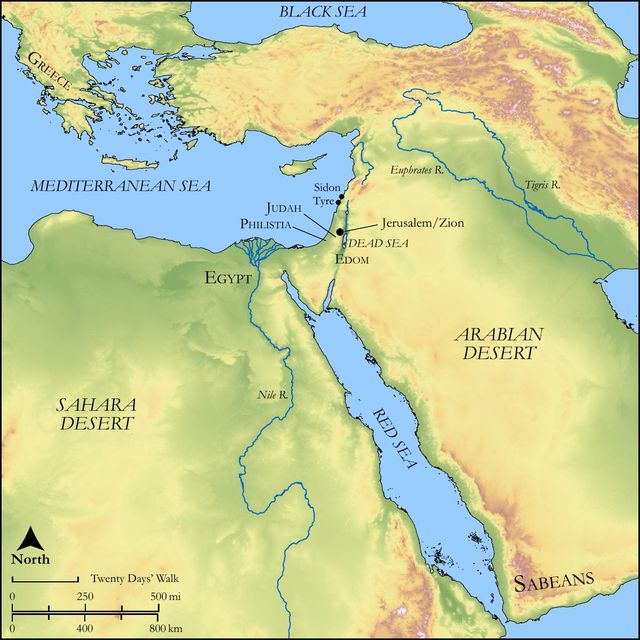
See on the biblical-era map
Study this verse
Public-domain commentary
Matthew Henry
From his Commentary on the Whole Bible. Henry comments on passages, not single verses — this entry covers Joel 3:1–8. His four-level outline is real structure in the source text, so it is rendered as structure.
We have often heard of the year of the redeemed, and the year of recompences for the controversy of Zion; now here we have a description of the transactions of that year, and a prophecy of what shall be done when it comes, whenever it comes, for it comes often, and at the end of time it will come once for all.
I.It shall be the year of the redeemed, for God will bring again the captivity of Judah and Jerusalem, Joe 3:1.
Though the bondage of God's people may be grievous and very long, yet it shall not be everlasting. That in Egypt ended at length in their deliverance into the glorious liberty of the children of God. Let my son go, the he may serve me. That in Babylon shall likewise end well. And the Lord Jesus will provide for the effectual redemption of poor enslaved souls from under the dominion of sin and Satan, and will proclaim that acceptable year, the year of jubilee, the release of debts and servants, and the opening of the prison to those that were bound. There is a day, there is a time, fixed for the bringing again of the captivity of God's children, for the redeeming of them from the power of the grave; and it shall be the last day and the end of all time.
II.It shall be the year of recompences for the controversy of Zion.
Though God may suffer the enemies of his people to prevail against them very far and for a long time, yet he will call them to an account for it, and will lead captivity captive (Psa 68:18), will lead those captive that led his people captive, Rev 13:10. Observe,
1.Who those are that shall be reckoned with - all nations, Joe 3:2. This intimates,
(1.)That all the nations had made themselves liable to the judgment of God for wrong done to his people. Persecution is the reigning crying sin of the world; that lying in wickedness itself is set against godliness. The enmity that is in the old serpent, the god of this world, against the seed of the woman, appears more or less in the children of this world. Marvel not if the world hate you.
(2.)That, whatsoever nation injured God's nation, they should not go unpunished; for he that touches the Israel of God shall be made to know that he touches the apple of his eye. Jerusalem will be a burdensome stone to all people, Zac 12:3. But the neighboring nations shall be particularly reckoned with - Tyre, and Sidon, and all the coasts of Palestine, or the Philistines, who have been troublesome neighbours to the Israel of God, Joe 3:4. When the more remote and potent nations that laid Israel wastes are reckoned with the impotent malice of those that lay near them, and helped forward the affliction, (Zac 1:15), and made a hand of it (Eze 26:2), shall not be passed by. Note, Little persecutors shall be called to an account as well as great ones; and, though they could not do much mischief, shall be reckoned with according to the wickedness of their endeavors and the mischief they would have done.
2.The sitting of this court for judgment. They shall all be gathered (Joe 3:2), that those who have combined together against God's people, with one consent (Psa 83:5), may together receive their doom. They shall be brought down into the valley of Jehoshaphat, which lay near Jerusalem, and there God will plead with them,
(1.)Because it is fit that criminals should be tried in the same country where they did the fact.
(2.)For their greater confusion, when they shall see that Jerusalem which they have so long endeavored and hoped for the ruin of, in spite of all their rage, made a praise in the earth.
(3.)For the greater comfort and honor of God's Jerusalem, which shall see God pleading their cause.
(4.)Then shall be re-acted what God did for Jehoshaphat when he gave him victory over those that invaded him, and furnished him and his people with matter of joy and praise, in the valley of Berachah. See Ch2 20:26.
(5.)It was in this valley of Jehoshaphat (as Dr. Lightfoot suggests) that Sennacherib's army, or part of it, lay, when it was destroyed by an angel. They came together to ruin Jerusalem, but God brought them together for their own ruin, as sheaves into the floor, Mic 4:12.
3.The plaintiff called, on whose behalf this prosecution is set on foot; it is for my people, and for my heritage Israel. It is their cause that God will now plead with jealousy. Note, God's people are his heritage, his peculiar, his portion, his treasure, above all people, Exo 19:5; Deu 32:9. They are his demesne, and therefore he has a good action against those that trespass upon them.
4.The charge exhibited against them, which is very particular. Many affronts they had put upon God by their idolatries, but that for which God has a quarrel with them is the affront they have put upon his people and upon the vessels of his sanctuary.
(1.)They had been very abusive to the people of Israel, had scattered them among the nations and forced them to seek for shelter where they could find a place, or carried them captive into their respective countries and there industriously dispersed them, for fear of their incorporating for their common safety. They parted their land, and took every one his share of it as their own; nay, they have cast lots for my people, and sold them. When they had taken them prisoners,
[1.]They made a jest of them, made a scorn of them as of no value. They would not release them and yet thought them not worth the keeping; they made nothing of playing them away at dice. Or they made a dividend of the prisoners by lot, as the soldiers did of Christ's garments.
[2.]They made a gain of them. When they had them they sold them, yet with so much contempt that they did not increase their wealth by their price, but sold them for their pleasure rather than their profit; they gave a boy taken in war for the hire of a harlot, and a girl for so many bottles of wine as would serve them for one sitting, a goodly price at which they valued them, and goodly preferment for a son and daughter of Israel to be a slave and a drudge in a tavern or a brothel. Observe, here, how that which is got by sin is commonly spent upon another. The spoil which these enemies of the Jews gathered by injustice and violence they scattered and threw away in drinking and whoring; such is frequently the character, and such the conversation, of the enemies and persecutors of the people of God. The Tyrians and Philistines, when they seized any of the children of Judah and Jerusalem, either took them prisoners in war or kidnapped them, they sold them to the Grecians (with whom the men of Tyre traded in the persons of men, Eze 27:13), that they might remove them far from their own border, Joe 3:6. It was a great reproach to Israel, God's first-born, his free-born, to be thus bought and sold among the heathen.
(2.)They had unjustly seized God's silver and gold (Joe 3:5), by which some understand the wealth of Israel. The silver and gold which God's people had he calls his, because they had received it from him and devoted it to him; and whosoever robbed them God took it as if they had robbed him and would make reprisals accordingly. Those who take away the estates of good men for well-doing will be found guilty of sacrilege; they take God's silver and gold. But it seems rather to be meant of the vessels and treasures of the temple, which God here calls his goodly pleasant things, precious and desirable to him and all that are his. These they carried into their temples as trophies of their victory over God's Israel, thinking that therein they triumphed over Israel's God, nay, and that their idols triumphed over him. Thus the ark was put in Dagon's temple. Thus they did unjustly. "What have you to do with me (Joe 3:4), with my people; what wrong have they done you? What provocation have they given you? You had nothing to do with them, and yet you do all this against them. Devices are devised against the quiet in the land, and those offended and harmed that are harmless and inoffensive: Will you render me a recompence?" Can they pretend that either God or his people have done them any injury, for which they may justify themselves by the law of retaliation in doing them these mischiefs? No; they have no colour for it. Note, It is no new thing for those who have been very civil and obliging to their neighbours to find them very unkind and unneighbourly and for those who do no injuries to suffer many.
5.The sentence passed upon them. In general (Joe 3:4), "If you recompense me, if you pretend a quarrel with me, if you provoke me thus to jealousy, if you touch the apple of my eye, I will swiftly and speedily return your recompence upon your own head." Those that contend with God will find themselves unable to make their part good with him. He will recompense them suddenly, when they little think of it, and have not time to prevent it; if he take them to task, he will soon effect their ruin. Particularly, it is threatened,
(1.)That they should not gain their end in the mischief they designed against God's people. They thought to remove them so far from their border that they should never return to it again, Joe 3:6. But (says God) "I will raise them out of the place whither you have sold them, and they shall not, as you intended, be buried alive there." Men's selling the people of God will not deprive him of his property in them.
(2.)That they shall be paid in their own coin, as Adonibezek was (Joe 3:8): "I will sell your sons and your daughters into the hands of the children of Judah; you shall lie as much at their mercy as they have been at yours," Isa 60:14. Thus the Jews had rule over those that hated them, Est 9:1. And then they shall justly be sold to the Sabeans, to a people far off. This (some think) had its accomplishment in the victories obtained by the Maccabees over the enemies of the Jews; others think it looks as far forward as the last day, when the upright shall have dominion (Psa 49:14) and the saints shall judge the world. It is certain that none ever hardened his heart against God, or his church, and prospered long; no, not Pharaoh himself, for the Lord has spoken it, for the comfort of all his suffering servants, that vengeance is his and he will repay.
Historical interpretation
Historical reception
1 surviving comment on this verse from the historical church.
(Verse 4-6.) But what do you want with me, O Tyre and Sidon, and all the regions of Philistia? Will you retaliate against me? If you retaliate against me, I will quickly repay you for your actions upon your own heads. For you have taken my silver and my gold, and have carried off my precious treasures into your temples. You have sold the people of Judah and Jerusalem to the Greeks, in order to remove them far from their own land. LXX: What have I to do with you, Tyre and Sidon, and all the Galilee of the Gentiles? Are you rendering retribution to me, or do you hold anger against me in your heart (for this is what μνησικακείτε means in Greek)? Quickly and swiftly I will repay your retribution upon your heads, because you have taken my silver and my gold, and have carried off my precious treasures into your temples. And you have sold the sons of Judah and the sons of Jerusalem to the Greeks, in order to remove them far from their borders. And the Jews consider these places, Tyre, Sidon, and the borders of Palestine, or Galilee, to be inhabited by foreigners: because during the Jewish captivity, when they were conquered by the Romans, they persecuted the people of God; in fact, they persecuted the very God who presided over the people, according to what is written: 'He who receives you, receives me' (Matt. 10:40). Therefore, on the contrary, whoever persecutes the people of God, persecutes the very God to whom the people belong. I will restore, he says, to you what you have done to my people: for you have taken my silver and gold, that is, the vessels of the temple, and whatever was most precious and beautiful in it, the golden candlestick and the golden table of proposition, and the two golden Cherubim, and the mercy-seat, and the golden bowls and censers, and you have consecrated them to your idols (2 Kings 25). However, the Chaldeans are said to have done these things more, who placed the vessels of the Lord's temple in the temple of Bel: from which afterwards Belshazzar drinks in the vessels, and immediately his kingdom is transferred to the Medes and Persians (Daniel 5). But because after the Great and Horrible Day of the Lord, these things are said to happen, which the apostles interpret in the resurrection of the Lord, and the Hebrews differ in the future time of judgment, it is more to be understood about the Romans: that Vespasian and Titus, after the Temple of Peace was built in Rome, consecrated the vessels of the Temple and all its offerings in its sanctuary: which Greek and Roman history narrates. At that time, the sons of Judah and Jerusalem (not Israel, and the ten tribes, which until today live in the cities and mountains of the Medes) were sold to the sons of the Greeks, so that they would exterminate them from their borders, and the whole Jewish world was filled with captivity. They interpret this as referring to the vengeance of the blood of Christ and the destruction of Jerusalem, which happened by the judgment of God, confirming that it happened against Tyre and Sidon. But according to the intended allegory, we interpret Tyre and Sidon and the Palestinians as those who oppress, afflict, and persecute God's people (for Tyre resonates with our language) and hunt him down (or rather, for them to be hunted down) unto death, which the name Sidon indicates, and they drink blood and fall in the mud, which signifies the Philistines and Galilee. The Lord will quickly and swiftly restore to them what they deserve, because they have persecuted him. And their silver and gold, namely the words of the Scriptures, and their meanings, that is, their ideas and theses, and everything that was beautiful in the Church, they have delivered into the bondage of their errors. Whoever deceives heretics and causes them to worship idols, sells the sons of Judah and the sons of Jerusalem to the Greeks, or to the pagans, and makes them become heathens among the Christians, in order to exterminate them from their borders, in which they were born in Christ, and not in Judea, and in the confession of the truth, but they wander in the error of the nations. All of these things, we can refer to the Day of Judgment, without a differing punishment: although they may seem to differ in time from what the superiors say. For in Hebrew it is written 'Galilaea', which Aquila translated as 'Θῖνας', and Symmachus as 'Terminos'. And 'Θῖνας', which means 'Tumulos Arenarum', let us refer to the shores of Palestine, not to Galilee of the Philistines, which is nothing at all.
Continue studying Joel 3:5 across the web’s major study libraries — every link below opens this exact verse, chapter, or book on the destination site.
Read & Compare
 BibleGatewayThis verse in more than 200 translations and 70 languages.
 Bible.comThe YouVersion reader — hundreds of translations, reading plans, and highlights.
 ESV.orgCrossway's official English Standard Version reader.
 NET BibleThe NET translation with 60,000+ translators' notes on every rendering decision.
 STEP BibleTyndale House's free study tool — original text, vocabulary, and scholarly resources.
 BibliaLogos Bible Software's free web reader.
 USCCBThe New American Bible (Revised Edition) with the U.S. bishops' study notes.
Commentaries
 BibleHub CommentariesDozens of classic commentaries on this verse, gathered on one page.
 StudyLightMore than 100 commentary sets — the largest collection on the web.
 BibleRefPlain-English commentary on what this verse means, verse by verse.
 Enduring WordDavid Guzik's free commentary on this chapter, widely used by Bible teachers.
 Bible Study ToolsVerse commentary alongside Greek and Hebrew study aids.
Original Language & Research
- BibleHub InterlinearThe verse word by word — original language, transliteration, and English.
- BibleHub LexiconEvery word's original-language definition and Strong's entry.
 Blue Letter BibleDeep-study tools — Strong's numbers, concordance, and word studies.
 SefariaThe Hebrew text with Rashi and centuries of Jewish commentary.
Sermons, Hymns & Audio


TrulyRandomVerse is not affiliated with these sites and doesn’t control their content. They’re linked because they’re genuinely useful.
Summary
Joel 3:5 delivers a stern indictment against nations that have plundered God's people, specifically highlighting their egregious act of seizing divine treasures—"my silver and my gold" and "my goodly pleasant things"—and desecrating them by carrying them into pagan temples. This verse serves as a foundational charge in God's declaration of judgment, underscoring the profound sacrilege and direct affront to His sovereignty that provoked His righteous retribution upon these nations.
Context
ShowHideLiterary Context
Joel 3:5 is situated within the prophetic oracle of Joel, specifically in chapter 3, which shifts focus from the "Day of the Lord" as a judgment upon Judah (chapters 1-2) to a global judgment upon the nations. Following the promise of restoration for Judah in Joel 2:28-32, Joel 3 opens with God gathering the nations in the Valley of Jehoshaphat, a symbolic location meaning "The Lord judges." Verses Joel 3:4-8 specifically enumerate the charges against Tyre, Sidon, and the Philistine coasts, laying out the precise reasons for the impending divine wrath. Joel 3:5 pinpoints a particularly egregious offense: the theft and sacrilegious dedication of God's possessions to false gods, which is a direct challenge to Yahweh's supremacy and a justification for the severe judgment that follows.
Historical & Cultural Context
The nations mentioned, such as Tyre, Sidon (Phoenicia), and Philistia, were coastal peoples known for their maritime trade, slave markets, and polytheistic worship. Historically, these nations often engaged in raids and warfare against Judah, taking captives and plundering resources. The act of "carrying into your temples" reflects the common ancient Near Eastern practice of dedicating war spoils to a nation's gods as a sign of their deity's superiority and power over the defeated enemy's god. By taking the silver, gold, and "goodly pleasant things" (likely valuable artifacts, wealth, or even sacred items from the Jerusalem Temple or the homes of God's people) and placing them in their own pagan temples, these nations were not merely committing theft; they were performing a profound act of religious defiance, asserting the supremacy of their false gods over Yahweh and publicly desecrating what belonged to Him.
Key Themes
ShowHideThis verse powerfully contributes to several overarching themes in Joel and the broader prophetic literature. First, it emphasizes Divine Ownership and Sovereignty, asserting that all wealth and valuable possessions, whether belonging to His people or the earth itself, ultimately belong to Yahweh. The phrase "my silver and my gold" emphatically declares God's proprietary rights, echoing sentiments found in Haggai 2:8. Second, it highlights the theme of Blatant Desecration and Idolatry. The act of transferring God's precious items into pagan temples was not just theft but a deliberate act of sacrilege, a direct affront to God's holiness and a challenge to His exclusive claim to worship, a theme central to the covenant relationship established in Exodus 20:3-5. Finally, Joel 3:5 provides a clear Justification for Judgment, demonstrating that the nations' actions were not merely against Israel but directly against God Himself, thus warranting the severe divine recompense described throughout Joel 3.
Exposition and Analysis
ShowHideKey Word Analysis
ShowHideA primitive root meaning "to take (in the widest variety of applications); accept, bring, buy, carry away, drawn, fetch, get, infold, [idiom] many, mingle, place, receive(-ing), reserve, seize, send for, take (away, -ing, up), use, win." Here, it denotes a forceful seizure or plunder, emphasizing the aggressive and unauthorized nature of the nations' actions against God's possessions. It highlights the violation of divine ownership.
From an unused root meaning "to shimmer; gold, figuratively, something gold-colored (i.e. yellow), as oil, a clear sky; gold(-en), fair weather." This word, paired with "silver," represents valuable material wealth. Its inclusion underscores the preciousness of what was stolen, making the act of desecration even more grievous in God's eyes.
Probably from יָכֹל (in the sense of capacity); "a large public building, such as a palace or temple; palace, temple." In this context, "your temples" specifically refers to the pagan sanctuaries of the nations. The act of bringing God's "goodly pleasant things" into these idolatrous spaces constitutes the ultimate act of sacrilege, defiling what is holy by associating it with false gods.
From חָמַד; "delightful; hence, a delight, i.e. object of affection or desire; beloved, desire, goodly, lovely, pleasant (thing)." Paired with "goodly" (H2896, ṭôwb), this phrase denotes items that are highly desirable, precious, or beautiful. It emphasizes the value and significance of what was stolen, indicating that the nations deliberately chose and desecrated items of great worth, further compounding their offense.
Verse Breakdown
ShowHide"Because ye have taken my silver and my gold"
This clause lays the primary charge against the nations. The possessive pronoun "my" is crucial, asserting God's direct ownership over these precious metals. This was not merely theft from Judah, but a direct affront to Yahweh, who claims ultimate dominion over all wealth and resources. The act of "taking" implies a forceful seizure, characteristic of plundering during conquest or raids.
"and have carried into your temples"
This phrase describes the specific act of desecration. The stolen "silver and gold" and "goodly pleasant things" were not merely kept for personal gain but were deliberately transported into the pagan temples of the offending nations. This action transformed theft into sacrilege, as it implied an offering to false gods, attributing the "victory" or the wealth to idols rather than acknowledging Yahweh's sovereignty.
"my goodly pleasant things"
This final phrase broadens the scope of the stolen items beyond just silver and gold, encompassing other valuable, desirable, or beautiful possessions that belonged to God or were associated with His people. The repetition of "my" reinforces God's personal claim and the profound offense taken at the desecration of His cherished possessions. This highlights the deliberate nature of the insult and the depth of the nations' contempt for Yahweh.
Literary Devices
ShowHideJoel 3:5 employs several literary devices to convey its powerful message of divine judgment. The most prominent is Personification, where God speaks of "my silver and my gold" and "my goodly pleasant things," treating these material possessions as if they are personally owned and therefore personally violated. This amplifies the offense, transforming a crime against Judah into a direct affront against God Himself. There is also a strong element of Contrast evident in the juxtaposition of "my" (God's holy possessions) and "your temples" (pagan, idolatrous spaces). This highlights the profound sacrilege involved in bringing that which belongs to the Holy God into defiled, false worship settings. The verse also uses Repetition through the possessive "my," which appears three times in this short verse ("my silver," "my gold," "my goodly pleasant things"), serving as a powerful Anaphora that emphasizes God's unwavering claim of ownership and the personal nature of the offense committed against Him. This rhetorical emphasis underscores the gravity of the nations' actions and the justification for divine retribution.
Theological and Thematic Connections
ShowHideJoel 3:5 profoundly illustrates God's unwavering justice and His zealous defense of His people and His own honor. It reveals that God is not a distant, passive deity but one who actively observes, judges, and responds to the actions of nations, especially when His sovereignty is challenged and His possessions or people are desecrated. The theological principle of divine ownership—that all wealth and resources ultimately belong to God—is central here, making the plunder not just a material loss but a spiritual transgression. The nations' act of carrying God's "goodly pleasant things" into their pagan temples was a direct act of idolatry and defiance, provoking God's righteous anger and ensuring their just recompense. This verse serves as a stark reminder that actions against God's people are interpreted as actions against God Himself, and that His glory will not be shared with idols.
Reflection and Application
ShowHideJoel 3:5 offers timeless lessons for believers today, reminding us of God's active involvement in human affairs and His ultimate sovereignty over all things. We are called to recognize that everything we possess—our talents, resources, and material wealth—is ultimately "His silver and His gold," entrusted to us for His purposes. This verse challenges us to consider how we use our resources: are we dedicating them to God's glory, or are we, in essence, carrying them into "our temples" of self-interest, worldly pursuits, or even subtle forms of idolatry? It also serves as a powerful encouragement for those who feel oppressed or overlooked, affirming that God sees every injustice, every act of plunder against His people, and He will indeed bring righteous judgment. Our call is to live in light of His ultimate authority, trusting in His justice and seeking to honor Him with all that we have, knowing that He will defend His own and bring about His perfect will.
Questions for Reflection
ShowHideFAQ
ShowHideWhat does "my silver and my gold" refer to in Joel 3:5?
ShowHideThe phrase "my silver and my gold" emphatically declares God's ownership over these precious metals. While it could literally refer to the wealth plundered from the Jerusalem Temple or from the homes of the people of Judah, it also carries a broader theological meaning. It underscores the principle that all material wealth, whether belonging to His people or existing in the world, ultimately belongs to the Lord. This is a recurring theme in Scripture, as seen in Haggai 2:8, where God states, "The silver is mine, and the gold is mine, saith the Lord of hosts." Thus, the nations were not merely stealing from Judah, but directly from God Himself, making their crime a profound act of sacrilege.
Why was carrying these items into "your temples" so offensive to God?
ShowHideCarrying God's "silver and gold" and "goodly pleasant things" into pagan temples was not merely an act of theft but a profound act of desecration and idolatry. In the ancient Near East, victorious nations often dedicated spoils of war to their gods as a way of demonstrating their deity's superiority over the defeated enemy's god. By taking items that God claimed as His own and placing them in the temples of false gods, these nations were publicly challenging Yahweh's supremacy, attributing the "victory" or the wealth to their idols. This was a direct affront to God's holiness, His exclusive claim to worship, and His covenant with Israel, which strictly forbade idolatry (e.g., Exodus 20:3-5). It was an act of contempt that directly provoked God's righteous judgment.
Christ-Centered Fulfillment
ShowHideJoel 3:5, with its declaration of divine ownership and impending judgment for desecration, finds its ultimate fulfillment and deeper meaning in the person and work of Jesus Christ. The "silver and gold" and "goodly pleasant things" are ultimately God's, and in Christ, we see the very embodiment of God's ultimate possession and delight: His Son, through whom all things were created, in heaven and on earth. The nations' act of plundering and desecrating God's possessions foreshadows humanity's greater sin of rejecting and crucifying God's most precious "possession"—His Son, who was indeed "carried away" and unjustly treated. However, unlike the pagan temples, Christ's body became the true temple, destroyed and raised in three days (John 2:19-21), signifying the end of physical temple worship and the establishment of a new covenant where God dwells among His people through the Spirit. Furthermore, Joel's prophecy of God gathering the nations for judgment in the "Valley of Jehoshaphat" finds its eschatological echo in Christ's return, when He will sit on His glorious throne and judge all nations, separating the sheep from the goats based on their treatment of "the least of these," His brethren. Ultimately, the judgment against those who desecrate God's honor and harm His people culminates in the establishment of Christ's eternal kingdom, where the kingdoms of this world become the kingdoms of our Lord and of His Christ, and His sovereignty is universally acknowledged and celebrated.