


Esther 9:1
Bible text: King James Version (1769 Blayney text) · Public domain
Bible text: King James Version with Strong's numbers · Public domain
Bible text: Berean Standard Bible · Public domain
Bible text: American Standard Version (1901) · Public domain
Bible text: World English Bible, Messianic edition · Public domain
Bible text: Geneva Bible (1599) · Public domain
Bible text: Young's Literal Translation · Public domain
- וּבִשְׁנֵיםu·vish·Neimand in two [plus]H8147Conj-w ¦ Prep-b ¦ Adj-cdAdjective Numerical Dual common gender Absoluteוּandבִinשְׁנֵיםtwo [plus]
- עָשָׂר'a·SartenH6240Adj-csAdjective Numerical Singular common gender Absolute
- חֹדֶשׁCho·deshmonthH2320N-msNoun Singular Masculine Absolute
- הוּאhu'thatH1931Pro-3msPronoun Personal 3rd Singular Masculine
- חֹדֶשׁCho·desh[is] [the] month ofH2320N-mscNoun Singular Masculine Construct
- אֲדָר'a·DarAdarH143N-properNoun Proper Title
- בִּשְׁלוֹשָׁהbish·lo·Shahon thir-H7969Prep-b ¦ Adj-csAdjective Numerical Singular common gender Absoluteבִּonשְׁלוֹשָׁהthir-
- עָשָׂר'a·SarteenH6240Adj-csAdjective Numerical Singular common gender Absolute
- יוֹםyOmdayH3117N-msNoun Singular Masculine Absolute
- בּוֹboin itPrep-b ¦ 3msSuffix Personal 3rd Singular Masculineבּinוֹit
- אֲשֶׁר'a·SherwhenH834RelParticle Relative
- הִגִּיעַhi·Gi·a'it approachedH5060V-Hiphil-Perf-3msVerb Hiphil Perfect 3rd Singular Masculine
- דְּבַרde·var[the] word ofH1697N-mscNoun Singular Masculine Construct
- הַמֶּלֶךְha·Me·lekhthe kingH4428Art ¦ N-msNoun Singular Masculine Absoluteהַtheמֶּלֶךְking
- וְדָתוֹve·da·Toand his lawH1881Conj-w ¦ N-fsc ¦ 3msNoun Singular Feminine Constructוְandדָתlawוֹhis
- לְהֵעָשׂוֹתle·he·'a·Sotto be doneH6213Prep-l ¦ V-Niphal-InfVerb Niphal Infinitive Constructלְtoהֵעָשׂוֹתbe done
- בַּיּוֹםbai·Yomon the dayH3117Prep-b ¦ N-msNoun Singular Masculine Absoluteבַּon theיּוֹםday
- אֲשֶׁר'a·SherwhenH834RelParticle Relative
- שִׂבְּרוּsi·be·Ruthey had hopedH7663V-Piel-Perf-3cpVerb Piel Perfect 3rd Plural common gender
- אֹיְבֵי'o·ye·Vei[the] enemies ofH341V-Qal-Prtcpl-mpVerb Qal Participle Plural Masculine Construct
- הַיְּהוּדִיםhai·ye·hu·Dimthe JewsH3064Art ¦ N-mpNoun Gentilic Plural Masculine AbsoluteהַtheיְּהוּדִיםJews
- לִשְׁלוֹטlish·Lotto domineerH7980Prep-l ¦ V-Qal-InfVerb Qal Infinitive Constructלִtoשְׁלוֹטdomineer
- בָּהֶםba·Hemover themPrep-b ¦ 3mpSuffix Personal 3rd Plural Masculineבָּoverהֶםthem
- וְנַהֲפוֹךְve·na·ha·Fokhand it was reversedH2015Conj-w ¦ V-Niphal-InfAbsVerb Niphal Infinitive Absoluteוְandנַהֲפוֹךְit was reversed
- הוּאHu'itH1931Pro-3msPronoun Personal 3rd Singular Masculine
- אֲשֶׁר'a·SherthatH834RelParticle Relative
- יִשְׁלְטוּyish·le·Tuthey domineeredH7980V-Qal-Imperf-3mpVerb Qal Imperfect 3rd Plural Masculine
- הַיְּהוּדִיםhai·ye·hu·Dimthe JewsH3064Art ¦ N-mpNoun Gentilic Plural Masculine AbsoluteהַtheיְּהוּדִיםJews
- הֵמָּהHe·mahtheyH1992Pro-3mpPronoun Personal 3rd Plural Masculine
- בְּשֹׂנְאֵיהֶםbe·so·ne·'ei·Hemover [those who] hated themH8130Prep-b ¦ V-Qal-Prtcpl-mp ¦ 3mpVerb Qal Participle Plural Masculine Constructבְּoverשֹׂנְאֵי[those who] hatedהֶםthem
English is a literal word-by-word gloss of the Hebrew, not the KJV's wording. Why?
This is the original text the KJV's translators worked from — each Hebrew word with its own literal English meaning in this verse, prepared by scholars at Tyndale House, Cambridge. The KJV translates whole sentences, not word by word, so its wording differs: one Hebrew word can become several English words, and the KJV may choose “the LORD” where the gloss reads “Yahweh”. Both are faithful — they answer different questions. For the KJV's own rendering, switch to the KJV text.
Details
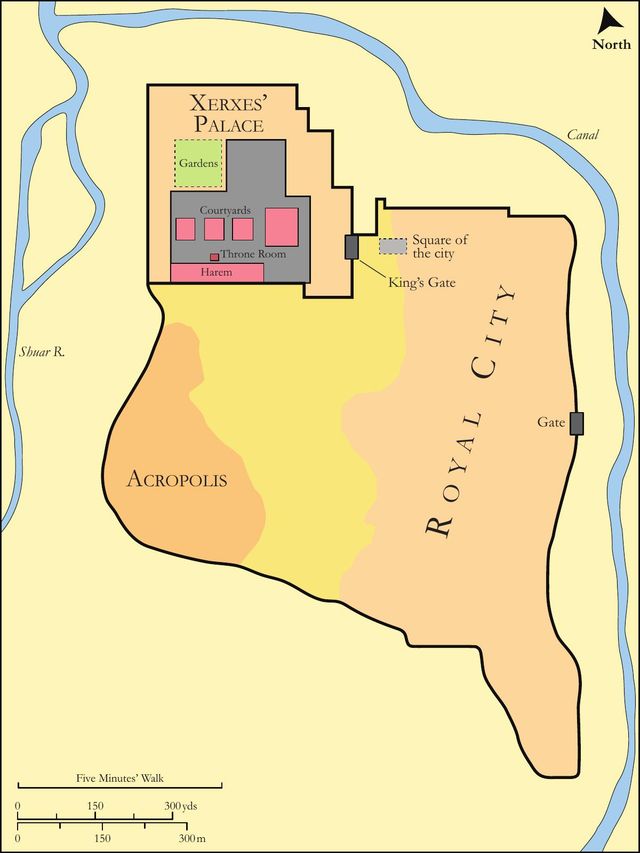
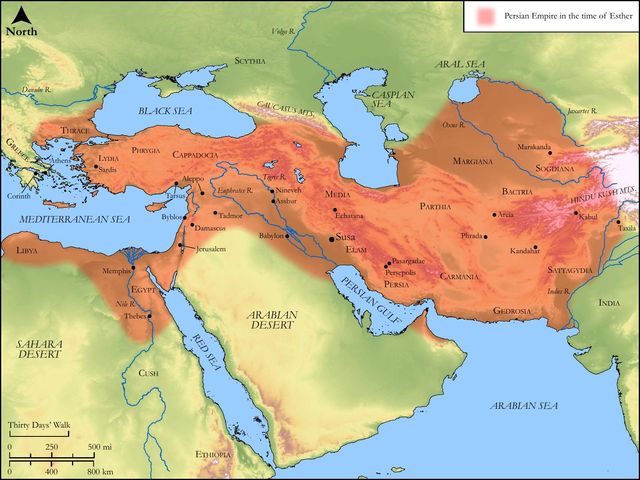
See on the biblical-era maps
Study this verse
Public-domain commentary
Matthew Henry
From his Commentary on the Whole Bible. Henry comments on passages, not single verses — this entry covers Esther 9:1–19. His four-level outline is real structure in the source text, so it is rendered as structure.
We have here a decisive battle fought between the Jews and their enemies, in which the Jews were victorious. Neither side was surprised; for both had notice of it long enough before, so that it was a fair trial of skill between them. Nor could either side call the other rebels, for they were both supported by the royal authority.
I.The enemies of the Jews were the aggressors.
They hoped, notwithstanding the latter edict, to have power over them, by virtue of the former (Est 9:1), and made assaults upon them accordingly; they formed themselves into bodies, and joined in confederacy against them, to seek their hurt, Est 9:2. The Chaldee paraphrase says that none appeared against the Jews but Amalekites only, who were infatuated, and had their hearts hardened, as Pharaoh's against Israel, to take up arms to their own destruction. Some had such an inveterate implacable malice against the Jews that Haman's fall and Mordecai's advancement, instead of convincing them, did but exasperate them, and make them the more outrageous and resolute to cut all their throats. The sons of Haman, particularly, vowed to avenge their father's death, and pursue his designs, which they call noble and brave, whatever hazards they run; and a strong party they had formed both in Shushan and in the provinces in order hereunto. Fight they would, though they plainly saw Providence fight against them; and thus they were infatuated to their own destruction. If they would have sat still, and attempted nothing against the people of God, not a hair of their head would have fallen to the ground: but they cannot persuade themselves to do that; they must be meddling, though it prove to their own ruin, and roll a burdensome stone, which will return upon them.
II.But the Jews were the conquerors.
That very day when the king's decree for their destruction was to be put in execution, and which the enemies thought would have been their day, proved God's day, Psa 37:13. It was turned to the contrary of what was expected, and the Jews had rule over those that hated them, Est 9:1. We are here told,
1.What the Jews did for themselves (Est 9:2): They gathered themselves together in their cities, embodied, and stood upon their defence, offering violence to none, but bidding defiance to all. If they had not had an edict to warrant them, they durst not have done it, but, being so supported, they strove lawfully. Had they acted separately, each family apart, they would have been an easy prey to their enemies; but acting in concert, and gathering together in their cities, they strengthened one another, and durst face their enemies. Vis unita fortior - forces act most powerfully when combined. Those that write of the state of the Jews at this day give this as a reason why, though they are very numerous in many parts, and very rich, they are yet so despicable, because they are generally so selfish that they cannot incorporate, and, being under the curse of dispersion, they cannot unite, nor (as here) gather together, for, if they could, they might with their numbers and wealth threaten the most potent states.
2.What the rulers of the provinces did for them, under the influence of Mordecai. All the officers of the king, who, by the bloody edict, were ordered to help forward their destruction (Est 3:12, Est 3:13), conformed to the latter edict (which, being an estopel against an estopel, had set the matter at large, and left them at liberty to observe which they pleased) and helped the Jews, which turned the scale on their side, Est 9:3. The provinces would generally do as the rulers of the provinces inclined, and therefore their favouring the Jews would greatly further them. But why did they help them? Not because they had any kindness for them, but because the fear of Mordecai fell upon them, he having manifestly the countenance both of God and the king. They all saw it their interest to help Mordecai's friends because he was not only great in the king's house, and caressed by the courtiers (as many are who have no intrinsic worth to support their reputation), but his fame for wisdom and virtue went out thence throughout all the provinces: in all places he was extolled as a great man. He was looked upon also as a thriving man, and one that waxed greater and greater (Est 9:4), and therefore for fear of him all the king's officers helped the Jews. Great men may, by their influence, do a great deal of good; many that fear not God will stand in awe of them.
3.What God did for them: he struck all people with a fear of them (Est 9:2), as the Canaanites were made afraid of Israel (Jos 2:9, Jos 5:1), so that, though they had so much hardiness as to assault them, yet they had not courage to prosecute the assault. Their hearts failed them when they came to engage, and none of the men of might could find their hands.
4.What execution they did hereupon: No man could withstand them (Est 9:2), but they did what they would to those that hated them, Est 9:5. So strangely were the Jews strengthened and animated, and their enemies weakened and dispirited, that none of those who had marked themselves for their destruction escaped, but they smote them with the stroke of the sword. Particularly,
(1.)On the thirteenth day of the month Adar they slew in the city Shushan 500 men (Est 9:6) and the ten sons of Haman, Est 9:10. The Jews, when on the feast of Purim they read this book of Esther, oblige themselves to read the names of Haman's ten sons all in one breath, without any pause, because they say that they were all killed together, and all gave up the ghost just in the same moment. - Buxt. Synag. Jud. c. 24. The Chaldee paraphrase says that, when these ten were slain, Zeresh, with seventy more of his children, escaped, and afterwards begged their bread from door to door.
(2.)On the fourteenth day they slew in Shushan 300 more, who had escaped the sword on the former day of execution, Est 9:15. This Esther obtained leave of the king for them to do, for the greater terror of their enemies, and the utter crushing of that malignant party of men. The king had taken account of the numbers that were put to the sword the first day (Est 9:11), and told Esther (Est 9:12), and asked her what more she desired. "Nothing," says she, "but commission to do such another day's work." Esther surely was none of the blood-thirsty, none of those that delight in slaughter, but she had some very good reasons that moved her to make this request. She also desired that the dead bodies of Haman's ten sons might be hanged up on the gallows on which their father was hanged, for the greater disgrace of the family and terror of the party (Est 9:13), and it was done accordingly, Est 9:14. It is supposed that they were hanged in chains and left hanging for some time.
(3.)The Jews in the country kept to their orders, and slew no more of their enemies than what were slain the thirteenth day, which were in all, among all the provinces, 75,000, Est 9:16. If all these were Amalekites (as the Jews say), surely now it was that the remembrance of Amalek was utterly put out, Exo 17:14. However, that which justifies them in the execution of so many is that they did it in their own just and necessary defence; they stood for their lives, authorized to do so by the law of self-preservation, as well as by the king's decree.
(4.)In these several executions it is taken notice of that on the prey they laid not their hand, Est 9:10, Est 9:15, Est 9:16. The king's commission had warranted them to take the spoil of their enemies for a prey (Est 8:11), and a fair opportunity they had of enriching themselves with it; if Haman's party had prevailed, no doubt, they would have made use of their authority to seize the goods and estates of the Jews, Est 3:13. But the Jews would not do so by them,
[1.]That they might, to the honour of their religion, evidence a holy and generous contempt of worldly wealth, in imitation of their father Abraham, who scorned to enrich himself with the spoils of Sodom.
[2.]That they might make it appear that they aimed at nothing but their own preservation, and used their interest at court for the saving of their lives, not for the raising of their estates.
[3.]Their commission empowered them to destroy the families of their enemies, even the little ones and the women, Est 8:11. But their humanity forbade them to do that, though that was designed against them. They slew none but those they found in arms; and therefore they did not take the spoil, but left it to the women and little ones, whom they spared, for their subsistence; otherwise as good slay them as starve them, take away their lives as take away their livelihoods. Herein they acted with a consideration and compassion well worthy of imitation.
5.What a satisfaction they had in their deliverance. The Jews in the country cleared themselves of their enemies on the thirteenth day of the month, and they rested on the fourteenth day (Est 9:17), and made that a thanksgiving day, Est 9:19. The Jews in Shushan, the royal city, took two days for their military execution, so that they rested on the fifteenth day, and made that their thanksgiving-day, Est 9:18. Both of them celebrated their festival the very day after they had finished their work and gained their point. When we have received signal mercies from God we ought to be quick and speedy in making our thankful returns to him, while the mercy is fresh and the impressions of it are most sensible.
Historical interpretation
Nine Centuries of Reception
3 surviving comments on this verse. Each one is dated, so this reads as a timeline rather than a list.
Select a marker to jump to its quote. Markers stagger vertically where authors wrote within a few decades of each other.
The twelfth month, as we said before, symbolizes the last era of our world when the Redeemer has been made incarnate and the preaching of the Gospel itself has spread throughout the entire world. And in the same way, the thirteenth day declares the light of faith and of good works, which—as the Gospels predict—is fulfilled every day by the faithful. For in the twelfth month, “on the thirteenth day of the month, when the slaughter of all the Jews was being readied and their enemies were eager for blood, the tables were turned and the Jews began to gain the upper hand, and to avenge themselves on their opponents.” This means that even though the enemies and persecutors of the name of Christ are constantly stirring up attacks against the community of the faithful—which maintains the true expression of the correct faith— and making every effort to oppress them, the latter have been helped by the grace of God and strengthened with the shield of faith and the arms of justice so that they might defeat their adversaries and carry back from them the spoils of glory. This they do by converting them to the light of faith and making them partners in the grace of Christ, after repelling their spiritual wickedness and the disseminators of error who were seducing them through various vices. “And no one dared to resist them.” That is, the fear of God’s majesty, which in the Church is made known by the gleam of miracles, thrashes soundly the hearts of fleshly creatures and compels them to yield to the word of God, which is naturally described in what follows...
The twelfth month, as we have said above, signifies the last age of the world when our Redeemer became incarnate and the preaching of the gospel spread over the entire world. In a similar way, the thirteenth day proclaims the light of faith and good works which is produced by the preaching of the gospel in the church through the faithful. Indeed, in the twelfth month on the thirteenth day when the destruction of all the Jews was being prepared and their enemies longed for their blood, the Jews, on the contrary, began to triumph and started taking revenge on their adversaries because they [represent] the assembly of the faithful where the true confession of the right faith resides who are helped by the grace of God and comforted by the shield of faith and the weapons of justice in the face of the enemies and persecutors of the name of Christ who persecute and oppress them wherever they are. The assembly of the faithful is thus able to defeat its enemies and to gain the triumph of glory over them.
To revenge: The Jews on this occasion, by authority from the king, were made executioners of the public justice, for punishing by death a crime worthy of death, viz., a malicious conspiracy for extirpating their whole nation.
Continue studying Esther 9:1 across the web’s major study libraries — every link below opens this exact verse, chapter, or book on the destination site.
Read & Compare
 BibleGatewayThis verse in more than 200 translations and 70 languages.
 Bible.comThe YouVersion reader — hundreds of translations, reading plans, and highlights.
 ESV.orgCrossway's official English Standard Version reader.
 NET BibleThe NET translation with 60,000+ translators' notes on every rendering decision.
 STEP BibleTyndale House's free study tool — original text, vocabulary, and scholarly resources.
 BibliaLogos Bible Software's free web reader.
 USCCBThe New American Bible (Revised Edition) with the U.S. bishops' study notes.
Commentaries
 BibleHub CommentariesDozens of classic commentaries on this verse, gathered on one page.
 StudyLightMore than 100 commentary sets — the largest collection on the web.
 BibleRefPlain-English commentary on what this verse means, verse by verse.
 Enduring WordDavid Guzik's free commentary on this chapter, widely used by Bible teachers.
 Bible Study ToolsVerse commentary alongside Greek and Hebrew study aids.
Original Language & Research
- BibleHub InterlinearThe verse word by word — original language, transliteration, and English.
- BibleHub LexiconEvery word's original-language definition and Strong's entry.
 Blue Letter BibleDeep-study tools — Strong's numbers, concordance, and word studies.
 SefariaThe Hebrew text with Rashi and centuries of Jewish commentary.
Sermons, Hymns & Audio


TrulyRandomVerse is not affiliated with these sites and doesn’t control their content. They’re linked because they’re genuinely useful.
Summary
Esther 9:1 powerfully introduces the dramatic climax of the book, detailing the profound and miraculous reversal of fortune for the Jewish people. On the thirteenth day of the twelfth month, Adar—the very date originally decreed by Haman for their annihilation—the enemies of the Jews, who had eagerly anticipated their demise, instead found themselves utterly defeated. This verse reveals that, contrary to all expectations, the Jews gained ascendancy and exercised authority over those who hated them, setting the stage for a day of unexpected triumph and vividly showcasing the powerful, though unseen, hand of divine providence at work in human history.
Context
ShowHideLiterary Context
Esther 9:1 serves as the climactic culmination of the entire narrative arc of the book of Esther. It marks the long-anticipated "day" (first specified in Esther 3:13) when Haman's genocidal decree was to be executed. The tension has been meticulously built throughout the preceding chapters, detailing Haman's casting of lots (Pur) to determine this date, Esther's courageous intercession before the king (Esther 4), Mordecai's strategic counsel, and the subsequent issuing of the counter-decree (Esther 8:11-12). This pivotal verse resolves the central conflict, demonstrating the triumph of God's people over their adversaries, not through overt divine miracles, but through meticulously orchestrated human actions that undeniably reflect divine sovereignty. It immediately precedes the detailed account of the Jews defending themselves throughout the empire and the subsequent establishment of the joyous Feast of Purim.
Historical & Cultural Context
The events of Esther are set within the vast Persian Empire during the reign of Ahasuerus, widely identified with Xerxes I (486-465 BCE), whose dominion stretched from India to Ethiopia. A critical aspect of Persian law was its immutability: once a royal decree was issued and sealed with the king's signet ring, it could not be revoked (Esther 1:19). This legal rigidity is paramount to understanding the complex dilemma faced by Esther and Mordecai; they could not nullify Haman's original decree but could only issue a new decree granting the Jews the right to self-defense. The "thirteenth day of Adar" was chosen by Haman through divination (casting lots, or "pur"), a common practice among the nations for determining propitious or fateful days for significant undertakings. The historical backdrop also includes the inherent vulnerability of diaspora communities, such as the Jews living in Persia, to the whims of powerful officials and the pervasive threat of popular prejudice, making their empire-wide deliverance all the more extraordinary and a testament to their resilience.
Key Themes
ShowHideThe most striking theme in Esther 9:1 is Divine Reversal and Providence. What was meticulously planned by the enemies of the Jews as a day of slaughter was utterly "turned to the contrary" by an unseen, yet undeniably active, divine hand. This echoes the profound biblical principle that God can transform evil intentions into good outcomes, as powerfully articulated by Joseph in Genesis 50:20. Closely intertwined is the theme of Justice and Retribution, where the wicked, who meticulously planned harm for others, ultimately fall into their own snare—a concept frequently found in wisdom literature (e.g., Psalm 7:15-16). Finally, the verse powerfully illustrates God's Protection and Deliverance of His covenant people. Despite facing an empire-wide decree and overwhelming odds, the Jewish community was miraculously preserved, demonstrating God's unwavering faithfulness to His promises, even when His name is not explicitly mentioned in the narrative.
Exposition and Analysis
ShowHideKey Word Analysis
ShowHideThe twelfth and final month of the Babylonian calendar, corresponding approximately to February-March in the Gregorian calendar. Its specific mention here emphasizes the precise chronological setting and highlights the year-long period of suspense and anticipation that preceded this fateful day. The naming of the month underscores the historical specificity of the events and the meticulous planning of both the intended destruction and the divinely orchestrated deliverance.
This primitive root, from which the phrase "turned to the contrary" is derived, signifies a complete reversal, an overturning, or a radical change of direction. It implies not merely a slight alteration but a fundamental inversion of circumstances. In Esther 9:1, it dramatically conveys that the expected outcome—the enemies having power over the Jews—was completely inverted, with the Jews gaining ascendancy instead. This emphatic declaration captures the essence of divine irony and the dramatic shift in power dynamics central to the book's message of deliverance.
This primitive root means "to dominate, to govern, or to have power." It is used twice in the verse, first in the enemies' "hope to have power over them" and then in the declaration that the Jews "had rule over them that hated them." The repetition highlights the direct and complete reversal of authority. The enemies sought to dominate, but it was the Jews who ultimately exercised dominion, demonstrating a profound shift in control and authority orchestrated by divine providence.
Verse Breakdown
ShowHide"Now in the twelfth month, that [is], the month Adar, on the thirteenth day of the same"
This precise chronological marker immediately sets the scene, emphasizing the exact date that Haman's original decree was scheduled for execution. The year-long wait since the decree was issued (Esther 3:12-13) builds immense tension, making the events of this particular day profoundly significant and keenly anticipated by all parties.
"when the king's commandment and his decree drew near to be put in execution"
This clause underscores the imminent and unavoidable danger. The original, irrevocable decree, sealed by the king's signet ring, was now at the precipice of its fulfillment. The rigid legal system of Persia meant that this day was fixed and unalterable, amplifying the perceived hopelessness of the Jews' situation and the magnitude of the impending threat.
"in the day that the enemies of the Jews hoped to have power over them"
This phrase vividly reveals the malicious intent and eager anticipation of the adversaries. They were not merely passive observers but active participants, fully expecting to dominate, plunder, and destroy the Jewish people. Their "hope" was rooted in deep-seated hatred and a genocidal agenda, making the subsequent divine intervention all the more striking.
"(though it was turned to the contrary, that the Jews had rule over them that hated them;)"
This parenthetical clause delivers the dramatic punchline and the central message of the verse. It immediately and emphatically subverts the expectation set by the preceding clauses. The word "though" (וְנַהֲפוֹךְ, wĕnahăpōkh) introduces the profound and complete reversal. Instead of being victims, the Jews became victors, exercising authority and successfully defending themselves against their aggressors. This is the ultimate demonstration of divine providence, where God turns the tables on the wicked.
Literary Devices
ShowHideEsther 9:1 is replete with powerful literary devices, with Irony being the most prominent. The very day chosen by Haman for the annihilation of the Jews is transformed into a day of their triumph and the destruction of their enemies. This dramatic reversal is a supreme example of situational irony, where the outcome is the complete opposite of what was intended and expected. The explicit phrase "turned to the contrary" directly highlights this profound irony. Furthermore, the verse employs Antithesis, presenting a stark contrast between the enemies' "hope to have power over them" and the reality that "the Jews had rule over them that hated them." This direct opposition underscores the completeness and radical nature of the reversal. The narrative also skillfully utilizes Suspense, as the reader has been anticipating this fateful day since Haman's decree in chapter 3, making the climactic resolution in chapter 9 all the more impactful and satisfying. While God is not explicitly named within the text, the entire narrative, and especially this verse, stands as a profound demonstration of Divine Providence, where an unseen hand orchestrates events to protect His people, turning human plans on their head for His ultimate purposes.
Theological and Thematic Connections
ShowHideEsther 9:1 stands as a powerful testament to the unwavering sovereignty of God, even in a biblical book where His name is conspicuously absent. The dramatic reversal of fortune on the thirteenth of Adar is a profound demonstration that human plans, no matter how meticulously laid or powerfully enforced, are ultimately subject to the overarching will of the Almighty. It illustrates that God is actively involved in the affairs of His people, orchestrating events behind the scenes to fulfill His covenant promises and bring about His righteous justice. This divine providence ensures that evil schemes, though they may seem unstoppable and meticulously planned, will ultimately collapse under their own weight, often turning back upon their originators. The preservation of the Jewish people in Persia is a microcosm of God's faithfulness to His chosen nation throughout history, ensuring the lineage through which the Messiah would eventually come and demonstrating His commitment to His redemptive plan.
Reflection and Application
ShowHideThe profound reversal depicted in Esther 9:1 offers immense encouragement and a vital lesson for believers today. It reminds us that even when faced with seemingly insurmountable obstacles, dire decrees, or the malicious intentions of adversaries, God remains sovereign and supremely capable of orchestrating a complete turnaround. This narrative calls us to cultivate a deep and unwavering trust in God's unseen hand, believing that He can transform our darkest days into opportunities for His glory and our deliverance. When our circumstances appear hopeless, or when we feel overwhelmed by forces beyond our control, Esther 9:1 provides a powerful reminder that God's ultimate plan cannot be thwarted. It inspires us to pray with persistent faith, act with courageous obedience, and persevere with steadfast hope, knowing that the Lord can "turn to the contrary" any situation for the ultimate good of those who love Him and are called according to His divine purpose.
Questions for Reflection
ShowHideFAQ
ShowHideWhy is God not explicitly mentioned in the book of Esther, yet His presence is so evident in Esther 9:1?
ShowHideThe absence of God's explicit name in the book of Esther is unique among biblical books, yet His active presence, often referred to as "divine providence," is undeniably the driving force behind the entire narrative. Esther 9:1 is a prime example of this. The "turn to the contrary" is too precise, too complete, and too perfectly timed to be mere coincidence or the result of human ingenuity alone. It demonstrates that God works powerfully and precisely, even when He chooses to remain hidden or when His people are in a land where His explicit worship might be suppressed. His sovereignty is not diminished by His silence; rather, it is highlighted by the miraculous orchestration of events through human agents like Esther and Mordecai. This teaches us that God is actively at work in the mundane, the political, and the seemingly secular aspects of life, fulfilling His purposes and protecting His people, just as Romans 8:28 assures us that "in all things God works for the good of those who love him."
What is the significance of the "thirteenth day of Adar" in the context of Jewish tradition?
ShowHideThe "thirteenth day of Adar" holds immense significance because it was the very day Haman had chosen by lot (Pur) for the annihilation of the Jewish people throughout the vast Persian Empire (Esther 3:7). Esther 9:1 dramatically reveals that this day, intended for their destruction, was miraculously transformed into a day of triumph and victorious self-defense. Following the events of this day and the subsequent day of rest and feasting on the fourteenth of Adar, Mordecai and Esther established the annual Feast of Purim (Esther 9:20-22), which commemorates this great deliverance. Thus, the thirteenth of Adar is remembered not as a day of mourning, but as the eve of a joyous celebration, a permanent reminder of God's faithful reversal of evil and His protection of His covenant people.
Christ-Centered Fulfillment
ShowHideThe dramatic reversal witnessed in Esther 9:1 finds its ultimate and most profound fulfillment in the person and redemptive work of Jesus Christ. Just as the day intended for the Jewish people's destruction was transformed into a day of their triumph, so too was the cross, intended by the powers of darkness for Jesus' defeat and the eradication of God's redemptive plan, miraculously "turned to the contrary" by God Himself. What appeared to be the ultimate victory of sin, death, and the devil became the very means of their decisive overthrow. On the cross, where the "enemies" of humanity—sin, death, and the spiritual forces of evil—hoped to have power over the Lamb of God, who takes away the sin of the world!, God's divine strategy turned their malice into mankind's salvation. Through Christ's atoning sacrifice, those who were once enemies of God (Romans 5:10) are now reconciled and given "rule" and authority over the spiritual forces that once enslaved them (Colossians 2:13-15). The resurrection of Jesus on the third day is the ultimate "turn to the contrary," definitively conquering death and securing eternal victory for all who believe, fulfilling the prophetic echoes of deliverance found in Esther's narrative (1 Corinthians 15:54-57).