


Esther 3:13
- וְנִשְׁלוֹחַve·nish·Lo·achand they were sentH7971Conj-w ¦ V-Niphal-InfAbsVerb Niphal Infinitive Absoluteוְandנִשְׁלוֹחַthey were sent
- סְפָרִיםse·fa·RimdocumentsH5612N-mpNoun Plural Masculine Absolute
- בְּיַדbe·Yadby [the] hand ofH3027Prep-b ¦ N-cscNoun Singular common gender Constructבְּbyיַד[the] hand of
- הָרָצִיםha·ra·Tzimthe runnersH7323Art ¦ V-Qal-Prtcpl-mpVerb Qal Participle Plural Masculine Absoluteהָtheרָצִיםrunners
- אֶל'eltoH413PrepPreposition
- כָּלkolallH3605N-mscNoun Singular Masculine Construct
- מְדִינוֹתme·di·Not[the] provinces ofH4082N-fpcNoun Plural Feminine Construct
- הַמֶּלֶךְha·me·leKhthe kingH4428Art ¦ N-msNoun Singular Masculine Absoluteהַtheמֶּלֶךְking
- לְהַשְׁמִידle·hash·Midto annihilateH8045Prep-l ¦ V-Hiphil-InfVerb Hiphil Infinitive Constructלְtoהַשְׁמִידannihilate
- לַהֲרֹגla·ha·Rogto killH2026Prep-l ¦ V-Qal-InfVerb Qal Infinitive Constructלַtoהֲרֹגkill
- וּלְאַבֵּדu·le·'a·Bedand to destroyH6Conj-w ¦ Prep-l ¦ V-Piel-InfVerb Piel Infinitive Constructוּandלְtoאַבֵּדdestroy
- אֶת'et<obj.>H853DirObjMParticle Object Indicator
- כָּלkolallH3605N-mscNoun Singular Masculine Construct
- הַיְּהוּדִיםHai·ye·hu·dimthe JewsH3064Art ¦ N-mpNoun Gentilic Plural Masculine AbsoluteהַtheיְּהוּדִיםJews
- מִנַּעַרmi·Na·'arfrom young manH5288Prep-m ¦ N-msNoun Singular Masculine Absoluteמִfromנַּעַרyoung man
- וְעַדve·'adand untoH5704Conj-w ¦ PrepPrepositionוְandעַדunto
- זָקֵןza·Kenold [man]H2205Adj-msAdjective Singular Masculine Absolute
- טַףtaflittle one[s]H2945N-msNoun Singular Masculine Absolute
- וְנָשִׁיםve·na·Shimand womenH802Conj-w ¦ N-mpNoun Plural Masculine Absoluteוְandנָשִׁיםwomen
- בְּיוֹםbe·Yomon a dayH3117Prep-b ¦ N-msNoun Singular Masculine Absoluteבְּonיוֹםa day
- אֶחָד'e·ChadoneH259Adj-fsAdjective Numerical Singular Feminine Absolute
- בִּשְׁלוֹשָׁהbish·lo·Shahon [day] thir-H7969Prep-b ¦ Adj-csAdjective Numerical Singular common gender Absoluteבִּonשְׁלוֹשָׁה[day] thir-
- עָשָׂר'a·SarteenH6240Adj-csAdjective Numerical Singular common gender Absolute
- לְחֹדֶשׁle·Cho·deshof monthH2320Prep-l ¦ N-msNoun Singular Masculine Absoluteלְofחֹדֶשׁmonth
- שְׁנֵיםshe·neimtwo [plus]H8147Adj-cdAdjective Numerical Dual common gender Absolute
- עָשָׂר'a·SartenH6240Adj-csAdjective Numerical Singular common gender Absolute
- הוּאhu'thatH1931Pro-3msPronoun Personal 3rd Singular Masculine
- חֹדֶשׁCho·desh[is] [the] month ofH2320N-mscNoun Singular Masculine Construct
- אֲדָר'a·DarAdarH143N-properNoun Proper Title
- וּשְׁלָלָםu·she·la·Lamand their spoilH7998Conj-w ¦ N-msc ¦ 3mpNoun Singular Masculine Constructוּandשְׁלָלָspoilםtheir
- לָבוֹזla·Vozto take as plunderH962Prep-l ¦ V-Qal-InfVerb Qal Infinitive Constructלָtoבוֹזtake as plunder
English is a literal word-by-word gloss of the Hebrew, not the KJV's wording. Why?
This is the original text the KJV's translators worked from — each Hebrew word with its own literal English meaning in this verse, prepared by scholars at Tyndale House, Cambridge. The KJV translates whole sentences, not word by word, so its wording differs: one Hebrew word can become several English words, and the KJV may choose “the LORD” where the gloss reads “Yahweh”. Both are faithful — they answer different questions. For the KJV's own rendering, switch to the KJV text.
Details
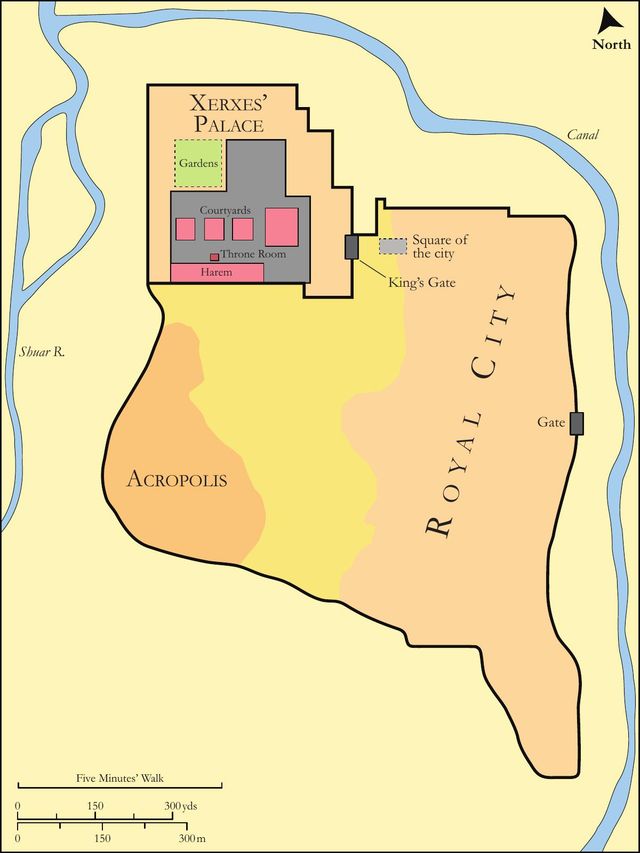
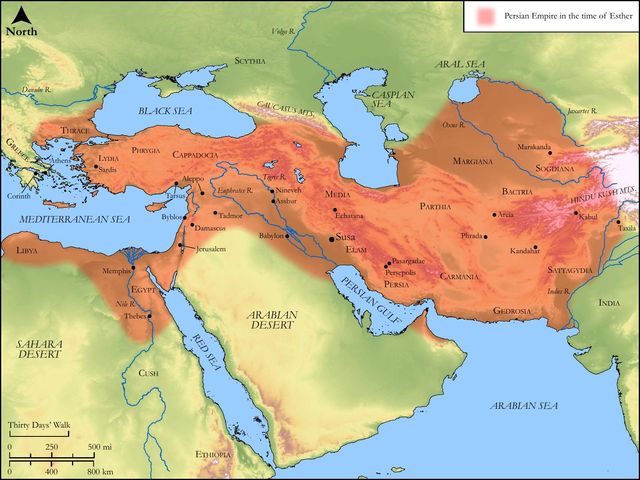
See on the biblical-era map
Study this verse
Public-domain commentary
Matthew Henry
From his Commentary on the Whole Bible. Henry comments on passages, not single verses — this entry covers Esther 3:7–15. His two-level outline is real structure in the source text, so it is rendered as structure.
Haman values himself upon that bold and daring thought, which he fancied well became his great spirit, of destroying all the Jews - an undertaking worthy of its author, and which he promised himself would perpetuate his memory. He doubts not but to find desperate and bloody hands enough to cut all their throats if the king will but give him leave. How he obtained leave, and commission to do it, we are here told. He had the king's ear, let him alone to manage him.
I.He makes a false and malicious representation of Jews, and their character, to the king, Est 3:8.
The enemies of God's people could not give them such bad treatment as they do if they did not first give them a bad name. He would have the king believe, 1. That the Jews were a despicable people, and that it was not for his credit to harbour them:"A certain people there is," without name, as if nobody knew whence they came and what they were; "they are not incorporated, but scattered abroad and dispersed in all the provinces as fugitives and vagabonds on the earth, and inmates in all countries, the burden and scandal of the places where they live." 2. That they were a dangerous people, and that it was not safe to harbour them. "They have laws and usages of their own, and conform not to the statutes of the kingdom and the customs of the country; and therefore they may be looked upon as disaffected to the government and likely to infect others with their singularities, which may end in a rebellion." It is no new thing for the best of men to have such invidious characters as these given of them; if it be no sin to kill them, it is no sin to belie them.
II.He bids high for leave to destroy them all, Est 3:9.
He knew there were many that hated the Jews, and would willingly fall upon them if they might but have a commission: Let it be written therefore that they may be destroyed. Give but orders for a general massacre of all the Jews, and Haman will undertake it shall be easily done. If the king will gratify him in this matter, he will make him a present of ten thousand talents, which shall be paid into the king's treasuries. This, he thought, would be a powerful inducement to the king to consent, and would obviate the strongest objection against him, which was that the government must needs sustain loss in its revenues by the destruction of so many of its subjects; so great a sum, he hoped, would be equivalent for that. Proud and malicious men will not stick at the expenses of their revenge, nor spare any cost to gratify it. Yet no doubt Haman knew how to re-imburse himself out of the spoil of the Jews, which his janizaries were to seize for him (Est 3:13), and so to make them bear the charges of their own ruin; while he himself hoped to be not only a saver but a gainer by the bargain.
III.He obtains what he desired, a full commission to do what he would with the Jews, Est 3:10, Est 3:11.
The king was so inattentive to business, and so bewitched with Haman, that he took no time to examine the truth of his allegations, but was as willing as Haman could wish to believe the worst concerning the Jews, and therefore he gave them up into his hands, as lambs to the lion: The people are thine, do with them as it seemeth good unto thee. He does not say, "Kill them, slay them" (hoping Haman's own cooler thoughts would abate the rigour of that sentence and induce him to sell them for slaves); but "Do what thou wilt with them." And so little did he consider how much he should lose in his tribute, and how much Haman would gain in the spoil, that he gave him withal the ten thousand talents: The silver is thine. Such an implicit confidence likewise he had in Haman, and so perfectly had he abandoned all care of his kingdom, that he gave Haman his ring, his privy-seal, or sign-manual, wherewith to confirm whatever edict he pleased to draw up for this purpose. Miserable is the kingdom that is at the disposal of such a head as this, which has one ear only, and a nose to be led by, but neither eyes nor brains, nor scarcely a tongue of its own.
IV.He then consults with his soothsayers to find out a lucky day for the designed massacre, Est 3:7.
The resolve was taken up in the first month, in the twelfth year of the king, when Esther had been his wife about five years. Some day or other in that year must be pitched upon; and, as if he doubted not but that Heaven would favour his design and further it, he refers it to the lot, that is, to the divine Providence, to choose the day for him; but that, in the decision, proved a better friend to the Jews than to him, for the lot fell upon the twelfth month, so that Mordecai and Esther had eleven months to turn themselves in for the defeating of the design, or, if they could not defeat it, space would be left for the Jews to make their escape and shift for their safety. Haman, though eager to have the Jews cut off, yet will submit to the laws of his superstition, and not anticipate the supposed fortunate day, no, not to gratify his impatient revenge. Probably he was in some fear lest the Jews should prove too hard for their enemies, and therefore durst not venture on such a hazardous enterprise but under the smiles of a good omen. This may shame us, who often acquiesce not in the directions and disposals of Providence when they cross our desires and intentions. He that believeth the lot, much more that believeth the promise, will not make haste. But see how God's wisdom serves its own purposes by men's folly. Haman has appealed to the lot, and to the lot he shall go, which, by adjourning the execution, gives judgment against him and breaks the neck of the plot.
V.The bloody edict is hereupon drawn up, signed, and published, giving orders to the militia of every province to be ready against the thirteenth day of the twelfth month, and, on that day, to murder all the Jews, men, women, and children, and seize their effects, Est 3:12-14. Had the decree been to banish all the Jews and expel them out of the king's dominions, it would have been severe enough; but surely never any act of cruelty appeared so barefaced as this, to destroy, to kill, and to cause to perish, all the Jews, appointing them as sheep for the slaughter without showing any cause for so doing. No crime is laid to their charge; it is not pretended that they were obnoxious to the public justice, nor is any condition offered, upon performance of which they might have their lives spared; but die they must, without mercy. Thus have the church's enemies thirsted after blood, the blood of the saints and the martyrs of Jesus, and drunk of it till they have been perfectly intoxicated (Rev 17:6); yet still, like the horse-leech, they cry, Give, give. This cruel offer is ratified with the king's seal, directed to the king's lieutenants, and drawn up in the king's name, and yet the king knows not what he does. Posts are sent out, with all expedition, to carry copies of the decree to the respective provinces, Est 3:15. See how restless the malice of the church's enemies is: it will spare no pains; it will lose no time.
VI.The different temper of the court and city hereupon.
1.The court was very merry upon it: The king and Haman sat down to drink, perhaps to drink "Confusion to all the Jews." Haman was afraid lest the king's conscience should smite him for what he had done and he should begin to wish it undone again, to prevent which he engrossed him to himself, and kept him drinking. This cursed method many take to drown their convictions, and harden their own hearts and the hearts of others in sin.
2.The city was very sad upon it (and the other cities of the kingdom, no doubt, when they had notice of it): The city Shushan was perplexed, not only the Jews themselves, but all their neighbours that had any principles of justice and compassion. It grieved them to see their king so abused, to see wickedness in the place of judgment (Ecc 3:16), to see men that lived peaceably treated so barbarously; and what would be the consequences of it to themselves they knew not. But the king and Haman cared for none of these things. Note, It is an absurd and impious thing to indulge ourselves in mirth and pleasure when the church is in distress and the public are perplexed.
Historical interpretation
Four Centuries of Reception
3 surviving comments on this verse. Each one is dated, so this reads as a timeline rather than a list.
Select a marker to jump to its quote. Markers stagger vertically where authors wrote within a few decades of each other.
[Daniel 7:5] "And behold another beast like a bear stood up on one side; and there were three rows in his mouth and in his teeth; and they said to him: 'Arise up and devour flesh in abundance.'" The second beast resembling a bear is the same as that of which we read in the vision of the statue (2:32): "His chest and arms were of silver." In the former case the comparison was based on the hardness of the metal, in this case on the ferocity of the bear. For the Persian kingdom followed a rigorous and frugal manner of life after the manner of the Spartans, and that too to such an extent that they used to use salt and nasturtium-cress in their relish. Let us consult the record of the childhood of Cyrus the Great (i.e., "The Education or Training" of Cyrus). And as for the fact that the bear is said to have "stood up on one side," the Hebrews interpret it by saying that the Persians never perpetrated any cruelty against Israel. Hence they are described in the Prophecy of Zechariah also as white horses (Zechariah 1:7-11). But as for the three rows or ranks that were in his mouth and between his teeth, one authority has interpreted this to mean that allusion was made to the fact that the Persian kingdom was divided up among three princes, just as we read in the sections dealing with Belshazzar and with Darius that there were three princes who were in charge of the one hundred and twenty satraps. But other commentators affirm that these were three kings of the Persians who were subsequent to Cyrus, and yet they fail to mention them by name. But we know that after Cyrus's reign of thirty years his son Cambyses ruled among the Persians, and his brothers the magi, and then Darius, in the second year of whose reign the rebuilding of the Temple was commenced at Jerusalem. The fifth king was Xerxes, the son of Darius; the sixth was Artabanus; the seventh, Artaxerxes who was surnamed Makrokheir, that is Longimanus ("Long-handed"); the eighth, Xerxes; the ninth, Sogdianus; the tenth, Darius surnamed Nothos ("Bastard"); the eleventh, the Artaxerxes called Mnemon, that is, "The Rememberer"; the twelfth, the other Artaxerxes, who himself received the surname of Ochus; the thirteenth, Arses, the son of Ochus; and the fourteenth, Darius the son of Arsamus, who was conquered by Alexander, the king of the Macedonians. How then can we say that these were three kings of the Persians? Of course we could select some who were especially cruel, but we cannot ascertain them on the basis of the historical accounts. Therefore the three rows in the mouth of the Persian kingdom and between its teeth we must take to be the three kingdoms of the Babylonians, the Medes, and the Persians, all of which were reduced to a single realm. And as for the information, "And thus they spake to him: 'Devour flesh in abundance,'" this refers to the time when in the reign of the Ahasuerus whom the Septuagint calls Artaxerxes, the order was given, at the suggestion of Haman the Agagite, that all the Jews be slaughtered on a single day (Esther 3:13). And very properly, instead of saying, "He was devouring them" the account specifies, "Thus they spake unto him..." This shows that the matter was only attempted, and was by no means ever carried out.
Nor is it merely a straightforward fact that it was the twelfth month of the year, which is called Adar, that was set aside by lot for the murder of Israel; it signifies rather that the grace of Christ, which has been entrusted to the faithful in the fullness of time, is going to experience a harsh persecution in this world in the last days, carried out upon the faithful. This is what the teacher of the nations is also writing about when he says to Timothy: “And let it be known that in the last days we will face dangerous times; and men will be lovers of themselves, greedy, arrogant, proud, blasphemers, disobedient to their parents, ungrateful, wicked, emotionless, implacable, slanderers, unrestrained, harsh, without kindness, treacherous, reckless, bombastic, loving their pleasures more than they do God; and though they will have the appearance of righteousness, they will deny its power.” Hence the Lord also says in the Gospel: “This evangel of the kingdom will be preached throughout the whole world as a testimony to all the nations, and then the end will arrive” (Matthew 24). And a bit after that: “Then there will be great tribulation, of a sort there has not been since the beginning of the world till now; but it will not happen unless those days have been cut short” (ibid.).
The fact that the twelfth month, which is called Adar, was chosen for the destruction of Israel after casting lots is not with its own spiritual meaning. It is referring, in fact, to the grace of Christ which has been prepared for the faithful in the fullness of time when the faithful will undergo a fierce persecution in the world in the last days. And writing about this to Timothy, the teacher of the Gentiles says, “You must understand this, that in the last days distressing times will come. For people will be lovers of themselves, lovers of money, boasters, arrogant, abusive, disobedient to their parents, ungrateful, unholy, inhuman, implacable, slanderers, profligates, brutes, haters of good, treacherous, reckless, swollen with conceit, lovers of pleasure rather than lovers of God, holding the outward form of godliness but denying its power.” And the Lord himself says in the Gospel, “And this gospel of the kingdom will be proclaimed throughout the world, as a testimony to all the nations; and then the end will come.” And a bit further: “For at that time there will be great suffering, such as has not been from the beginning of the world until now, and never will be.”
Continue studying Esther 3:13 across the web’s major study libraries — every link below opens this exact verse, chapter, or book on the destination site.
Read & Compare
 BibleGatewayThis verse in more than 200 translations and 70 languages.
 Bible.comThe YouVersion reader — hundreds of translations, reading plans, and highlights.
 ESV.orgCrossway's official English Standard Version reader.
 NET BibleThe NET translation with 60,000+ translators' notes on every rendering decision.
 STEP BibleTyndale House's free study tool — original text, vocabulary, and scholarly resources.
 BibliaLogos Bible Software's free web reader.
 USCCBThe New American Bible (Revised Edition) with the U.S. bishops' study notes.
Commentaries
 BibleHub CommentariesDozens of classic commentaries on this verse, gathered on one page.
 StudyLightMore than 100 commentary sets — the largest collection on the web.
 BibleRefPlain-English commentary on what this verse means, verse by verse.
 Enduring WordDavid Guzik's free commentary on this chapter, widely used by Bible teachers.
 Bible Study ToolsVerse commentary alongside Greek and Hebrew study aids.
Original Language & Research
- BibleHub InterlinearThe verse word by word — original language, transliteration, and English.
- BibleHub LexiconEvery word's original-language definition and Strong's entry.
 Blue Letter BibleDeep-study tools — Strong's numbers, concordance, and word studies.
 SefariaThe Hebrew text with Rashi and centuries of Jewish commentary.
Sermons, Hymns & Audio


TrulyRandomVerse is not affiliated with these sites and doesn’t control their content. They’re linked because they’re genuinely useful.
Summary
Esther 3:13 vividly articulates the chilling decree orchestrated by Haman, the primary antagonist, for the comprehensive annihilation of the Jewish people throughout the vast Persian Empire. This verse meticulously outlines the horrifying scope of the intended genocide—targeting all Jews irrespective of age or gender—specifies the precise date chosen for the massacre, and reveals the sinister incentive of plunder offered to those who would participate. This edict marks a profoundly dark and pivotal moment in the narrative, setting the stage for the dramatic intervention of Esther and Mordecai and underscoring the existential threat faced by God's covenant people.
Context
ShowHideLiterary Context
Esther 3:13 functions as the horrifying culmination of Haman's escalating rage, initially directed at Mordecai and then extended to all Jews. Immediately preceding this verse, Haman, incensed by Mordecai's steadfast refusal to bow, has cunningly secured King Ahasuerus's unwitting approval for his genocidal plot. He had already cast lots, known as Pur, to determine an "auspicious" date for the massacre, a detail recorded in Esther 3:7. The king, by entrusting Haman with his royal signet ring, effectively granted him absolute authority to implement his nefarious plan. Therefore, this verse describes the immediate and chilling execution of Haman's genocidal design, transforming a personal vendetta into a widespread royal decree dispatched throughout the 127 provinces of the empire, thereby establishing the urgent crisis that Esther must courageously confront.
Historical & Cultural Context
The Persian Empire, particularly at its zenith under kings like Ahasuerus (commonly identified with Xerxes I), was renowned for its sophisticated administrative infrastructure, which included an exceptionally efficient network of royal messengers or "posts." These couriers, often traveling on horseback, were capable of rapidly delivering official decrees across the empire's extensive road system, ensuring that royal edicts reached even the most distant provinces with remarkable speed. The practice of issuing decrees with the king's seal rendered them irrevocable, a crucial legal detail that later significantly complicates Esther's efforts to save her people (as seen in Esther 8:8). Furthermore, the incentive of "spoil" or plunder was a common and effective tactic in ancient warfare and acts of suppression, designed to encourage widespread public participation by appealing to base human greed. This historical backdrop profoundly underscores the terrifying efficacy and legal weight of Haman's decree, making the Jewish people's plight appear utterly hopeless from a human perspective.
Key Themes
ShowHideEsther 3:13 powerfully contributes to several foundational themes within the book of Esther. Foremost among these is the theme of anti-Semitism and the existential threat to God's people, presenting one of the earliest and most vivid accounts of organized, state-sanctioned hatred aimed at the complete annihilation of the Jewish nation. It starkly highlights the vulnerability of minorities within powerful empires and the profound dangers of unchecked prejudice and political manipulation, as Haman skillfully slanders the Jews to the king in Esther 3:8. The verse also subtly introduces the pervasive theme of divine providence, despite the conspicuous absence of God's name from the book. The specific date chosen for the massacre—the thirteenth day of the twelfth month, Adar—becomes profoundly significant later as the very day of the Jews' miraculous deliverance and the establishment of the Feast of Purim, hinting at a hidden hand at work behind the scenes, orchestrating events for the ultimate protection of His covenant people, much like the principle articulated in Proverbs 16:9.
Exposition and Analysis
ShowHideKey Word Analysis
ShowHideThis verb (H8045) signifies desolation, bringing to nought, overthrowing, or utterly perishing. It conveys a sense of absolute and comprehensive annihilation, implying the complete eradication of a group, leaving no remnant. In this context, it underscores Haman's intent to wipe the Jewish people from existence.
From the root (H2026), this word specifically denotes smiting with deadly intent, to slaughter or slay. While "destroy" speaks to the ultimate outcome of eradication, "kill" focuses on the direct, violent, and physical means by which that annihilation would be achieved. Its inclusion alongside "destroy" emphasizes the brutal and murderous nature of the decree.
Derived from the root (H6), this verb means to wander away, lose oneself, or by implication, to perish or cause to be destroyed. It can imply not just physical death but also disappearance, ruin, or being utterly undone. Together with "destroy" and "kill," it forms a powerful and terrifying triad, leaving no doubt about the comprehensive, merciless, and total extermination Haman envisioned for every single Jew.
Verse Breakdown
ShowHide"And the letters were sent by posts into all the king's provinces"
This clause highlights the remarkable efficiency and vast administrative reach of the Persian Empire. The "posts," referring to the royal couriers, ensured the rapid dissemination of the decree across the empire's extensive network of provinces, emphasizing the immediate and widespread nature of the existential threat. This was not a localized danger but an imperial one, impacting every corner of the vast domain.
"to destroy, to kill, and to cause to perish, all Jews, both young and old, little children and women"
This is the chilling core of the decree, explicitly revealing its genocidal intent. The triple verb construction ("destroy, kill, perish") powerfully underscores the absolute and comprehensive nature of the annihilation. The explicit inclusion of "all Jews, both young and old, little children and women" emphasizes the ruthless targeting of every demographic, leaving no one exempt and highlighting the utter brutality and inhumanity of Haman's meticulously planned atrocity.
"in one day, [even] upon the thirteenth [day] of the twelfth month, which is the month Adar"
This specifies the precise date for the planned massacre, adding a terrifying element of premeditation and coordination to the decree. The selection of a single day for such a vast undertaking across 127 provinces speaks to Haman's meticulous, albeit evil, planning. This specific date becomes critically important later in the narrative as the day of the Jews' unexpected and miraculous deliverance.
"and [to take] the spoil of them for a prey"
This clause reveals the sinister incentive Haman offered to the non-Jewish populace. By explicitly allowing them to plunder the possessions of their Jewish victims, he sought to motivate widespread participation in the massacre, appealing directly to human greed and effectively making the local populations complicit in the atrocity.
Literary Devices
ShowHideThe language of Esther 3:13 employs several potent literary devices to convey the horror and comprehensive scope of Haman's decree. The most prominent is Tricolon or Triple Repetition in the phrase "to destroy, to kill, and to cause to perish," which not only intensifies the sense of complete and utter annihilation but also functions as a form of Emphasis, underscoring the absolute and ruthless nature of the intended genocide. The detailed enumeration of victims—"all Jews, both young and old, little children and women"—is a stark example of Merism, where two contrasting parts (young/old, children/women) are used to represent the entire population, effectively encompassing every single person within the Jewish community. This serves to amplify the ruthlessness and comprehensiveness of the decree. Furthermore, the inclusion of "to take the spoil of them for a prey" functions as a subtle form of Irony, as this very incentive, designed to ensure the Jews' destruction and complicity, will later be famously refused by the Jews themselves when they defend their lives, demonstrating their moral superiority and adherence to a higher principle (as recorded in Esther 9:10).
Theological and Thematic Connections
ShowHideEsther 3:13 serves as a profound theological statement on the nature of evil and the persistent, often existential, threat against God's covenant people. Haman's decree, driven by personal pride and deep-seated animosity, transcends mere political ambition to become a stark manifestation of anti-God forces seeking to thwart divine promises and the very lineage through which the Messiah would come. The detailed plan for total annihilation, from "young and old, little children and women," underscores the demonic ruthlessness of such hatred, which targets not just individuals but the entire community. While God's name is conspicuously absent from the book, the meticulous detailing of the threat highlights the desperate need for divine intervention, implicitly affirming His hidden sovereignty even in the darkest moments. The very existence of such a decree, and its eventual reversal, points to the ongoing spiritual warfare between the forces of good and evil, and God's unwavering commitment to preserve His people for His greater redemptive purposes.
Reflection and Application
ShowHideEsther 3:13 is a chilling and sobering reminder of humanity's profound capacity for hatred and the devastating consequences of unchecked prejudice. It compels us to reflect deeply on the dangers of allowing personal grievances to morph into widespread animosity, and how easily power can be abused to orchestrate horrific acts against innocent populations. For believers, this verse underscores the enduring reality of spiritual warfare: just as Haman sought to eradicate the Jewish people, forces of evil continue to target God's church and His redemptive purposes in the world. It calls us to vigilance, to courageously speak out against injustice, and to stand in solidarity with the vulnerable and overlooked. Furthermore, while the decree seems utterly hopeless from a human perspective, the unfolding narrative of Esther ultimately reveals God's hidden hand at work, turning what was intended for evil into a powerful testament to His unwavering faithfulness and the miraculous preservation of His people. This instills in us a profound and enduring hope that even in the face of overwhelming adversity, God remains sovereign, working all things for the good of those who love Him and are called according to His divine purpose.
Questions for Reflection
ShowHideFAQ
ShowHideWhat does "posts" refer to in Esther 3:13?
ShowHideIn Esther 3:13, "posts" refers to the highly efficient and extensive royal messenger system of the Persian Empire. These were official couriers, often mounted on horses, who were responsible for rapidly delivering royal decrees and communications across the vast network of roads and provinces that stretched from India to Ethiopia (as mentioned in Esther 1:1). This sophisticated system ensured that Haman's genocidal edict would reach every corner of the king's 127 provinces with remarkable speed, making the threat immediate and widespread across the entire empire.
Why was the "spoil" or "prey" included in Haman's decree?
ShowHideThe inclusion of "and to take the spoil of them for a prey" in Haman's decree was a calculated and deeply sinister incentive. By explicitly promising the general populace the right to plunder the possessions of the Jews they were ordered to kill, Haman aimed to encourage widespread participation in the massacre. This tactic appealed directly to human greed, transforming a royal command into a profitable venture for ordinary citizens. It effectively made the local populations complicit in the atrocity, ensuring that the decree would be carried out with zeal. However, it's notable that when the Jews later defended themselves, they famously refused to take any spoil, as recorded in Esther 9:10, demonstrating a moral integrity that contrasted sharply with Haman's corrupting influence and the common practice of the time.
Christ-Centered Fulfillment
ShowHideEsther 3:13, though set centuries before the advent of Christ, profoundly foreshadows the ongoing spiritual battle against the "seed of the serpent," as prophesied in Genesis 3:15, and the relentless forces of darkness that continually seek to destroy God's people and thwart His redemptive plan. Haman's genocidal decree against the Jewish people is a chilling prefigurement of Satan's persistent attempts throughout history to eradicate the lineage through which the Messiah would come, and later, to persecute the Church, which is Christ's very body. Just as Haman's hatred was ultimately overcome by the hidden hand of God working through Esther and Mordecai, so too is the ultimate victory secured in Christ. His sacrificial death on the cross, the ultimate act of self-giving love, disarmed the powers of darkness (Colossians 2:15), nullifying the "decree" of sin and death that held all humanity captive. The "one day" appointed for destruction in Esther 3:13 finds its ultimate reversal and fulfillment in the "one day" of Christ's resurrection, which guarantees life and victory for all who believe (1 Corinthians 15:20-22). Thus, Haman's plot, designed for complete annihilation, ultimately serves to highlight God's unwavering faithfulness to His covenant promises, culminating in the preservation of the line of David and the eventual coming of the Lamb of God who takes away the sin of the world, who defeats death and offers eternal life to all who trust in Him.