


Joel 3:8
- וּמָכַרְתִּיu·ma·khar·Tiand I will sellH4376Conj-w ¦ V-Qal-ConsecPerf-1csVerb Qal Consecutive Perfect 1st Singular common genderוּandמָכַרְתִּיI will sell
- אֶת'et<obj.>H853DirObjMParticle Object Indicator
- בְּנֵיכֶםbe·nei·Khemyour sonsH1121N-mpc ¦ 2mpNoun Plural Masculine Constructבְּנֵיsonsכֶםyour
- וְאֶתve·'Etand <obj.>H853Conj-w ¦ DirObjMParticle Object Indicatorוְandאֶת<obj.>
- בְּנוֹתֵיכֶםbe·no·tei·Khemyour daughtersH1323N-fpc ¦ 2mpNoun Plural Feminine Constructבְּנוֹתֵיdaughtersכֶםyour
- בְּיַדbe·Yadin [the] hand ofH3027Prep-b ¦ N-cscNoun Singular common gender Constructבְּinיַד[the] hand of
- בְּנֵיbe·Nei[the] people ofH1121N-mpcNoun Plural Masculine Construct
- יְהוּדָהye·hu·DahJudahH3063N-properNoun Proper Location
- וּמְכָרוּםu·me·kha·Rumand they will sell themH4376Conj-w ¦ V-Qal-ConsecPerf-3cp ¦ 3mpVerb Qal Consecutive Perfect 3rd Plural common genderוּandמְכָרוּthey will sellםthem
- לִשְׁבָאיִםlish·va·Yimto [the] SabeansH7615Prep-l ¦ N-proper-mNoun Proper Masculineלִtoשְׁבָאיִם[the] Sabeans
- אֶל'eltoH413PrepPreposition
- גּוֹיGoya nationH1471N-msNoun Singular Masculine Absolute
- רָחוֹקra·ChokdistantH7350Adj-msAdjective Singular Masculine Absolute
- כִּיkiforH3588PrtParticle Conditional
- יְהוָהYah·wehYahwehH3068N-properNoun Proper Title
- דִּבֵּרdi·Berhe has spokenH1696V-Piel-Perf-3msVerb Piel Perfect 3rd Singular Masculine
English is a literal word-by-word gloss of the Hebrew, not the KJV's wording. Why?
This is the original text the KJV's translators worked from — each Hebrew word with its own literal English meaning in this verse, prepared by scholars at Tyndale House, Cambridge. The KJV translates whole sentences, not word by word, so its wording differs: one Hebrew word can become several English words, and the KJV may choose “the LORD” where the gloss reads “Yahweh”. Both are faithful — they answer different questions. For the KJV's own rendering, switch to the KJV text.
Details
See on the biblical-era map
Study this verse
Public-domain commentary
Matthew Henry
From his Commentary on the Whole Bible. Henry comments on passages, not single verses — this entry covers Joel 3:1–8. His four-level outline is real structure in the source text, so it is rendered as structure.
We have often heard of the year of the redeemed, and the year of recompences for the controversy of Zion; now here we have a description of the transactions of that year, and a prophecy of what shall be done when it comes, whenever it comes, for it comes often, and at the end of time it will come once for all.
I.It shall be the year of the redeemed, for God will bring again the captivity of Judah and Jerusalem, Joe 3:1.
Though the bondage of God's people may be grievous and very long, yet it shall not be everlasting. That in Egypt ended at length in their deliverance into the glorious liberty of the children of God. Let my son go, the he may serve me. That in Babylon shall likewise end well. And the Lord Jesus will provide for the effectual redemption of poor enslaved souls from under the dominion of sin and Satan, and will proclaim that acceptable year, the year of jubilee, the release of debts and servants, and the opening of the prison to those that were bound. There is a day, there is a time, fixed for the bringing again of the captivity of God's children, for the redeeming of them from the power of the grave; and it shall be the last day and the end of all time.
II.It shall be the year of recompences for the controversy of Zion.
Though God may suffer the enemies of his people to prevail against them very far and for a long time, yet he will call them to an account for it, and will lead captivity captive (Psa 68:18), will lead those captive that led his people captive, Rev 13:10. Observe,
1.Who those are that shall be reckoned with - all nations, Joe 3:2. This intimates,
(1.)That all the nations had made themselves liable to the judgment of God for wrong done to his people. Persecution is the reigning crying sin of the world; that lying in wickedness itself is set against godliness. The enmity that is in the old serpent, the god of this world, against the seed of the woman, appears more or less in the children of this world. Marvel not if the world hate you.
(2.)That, whatsoever nation injured God's nation, they should not go unpunished; for he that touches the Israel of God shall be made to know that he touches the apple of his eye. Jerusalem will be a burdensome stone to all people, Zac 12:3. But the neighboring nations shall be particularly reckoned with - Tyre, and Sidon, and all the coasts of Palestine, or the Philistines, who have been troublesome neighbours to the Israel of God, Joe 3:4. When the more remote and potent nations that laid Israel wastes are reckoned with the impotent malice of those that lay near them, and helped forward the affliction, (Zac 1:15), and made a hand of it (Eze 26:2), shall not be passed by. Note, Little persecutors shall be called to an account as well as great ones; and, though they could not do much mischief, shall be reckoned with according to the wickedness of their endeavors and the mischief they would have done.
2.The sitting of this court for judgment. They shall all be gathered (Joe 3:2), that those who have combined together against God's people, with one consent (Psa 83:5), may together receive their doom. They shall be brought down into the valley of Jehoshaphat, which lay near Jerusalem, and there God will plead with them,
(1.)Because it is fit that criminals should be tried in the same country where they did the fact.
(2.)For their greater confusion, when they shall see that Jerusalem which they have so long endeavored and hoped for the ruin of, in spite of all their rage, made a praise in the earth.
(3.)For the greater comfort and honor of God's Jerusalem, which shall see God pleading their cause.
(4.)Then shall be re-acted what God did for Jehoshaphat when he gave him victory over those that invaded him, and furnished him and his people with matter of joy and praise, in the valley of Berachah. See Ch2 20:26.
(5.)It was in this valley of Jehoshaphat (as Dr. Lightfoot suggests) that Sennacherib's army, or part of it, lay, when it was destroyed by an angel. They came together to ruin Jerusalem, but God brought them together for their own ruin, as sheaves into the floor, Mic 4:12.
3.The plaintiff called, on whose behalf this prosecution is set on foot; it is for my people, and for my heritage Israel. It is their cause that God will now plead with jealousy. Note, God's people are his heritage, his peculiar, his portion, his treasure, above all people, Exo 19:5; Deu 32:9. They are his demesne, and therefore he has a good action against those that trespass upon them.
4.The charge exhibited against them, which is very particular. Many affronts they had put upon God by their idolatries, but that for which God has a quarrel with them is the affront they have put upon his people and upon the vessels of his sanctuary.
(1.)They had been very abusive to the people of Israel, had scattered them among the nations and forced them to seek for shelter where they could find a place, or carried them captive into their respective countries and there industriously dispersed them, for fear of their incorporating for their common safety. They parted their land, and took every one his share of it as their own; nay, they have cast lots for my people, and sold them. When they had taken them prisoners,
[1.]They made a jest of them, made a scorn of them as of no value. They would not release them and yet thought them not worth the keeping; they made nothing of playing them away at dice. Or they made a dividend of the prisoners by lot, as the soldiers did of Christ's garments.
[2.]They made a gain of them. When they had them they sold them, yet with so much contempt that they did not increase their wealth by their price, but sold them for their pleasure rather than their profit; they gave a boy taken in war for the hire of a harlot, and a girl for so many bottles of wine as would serve them for one sitting, a goodly price at which they valued them, and goodly preferment for a son and daughter of Israel to be a slave and a drudge in a tavern or a brothel. Observe, here, how that which is got by sin is commonly spent upon another. The spoil which these enemies of the Jews gathered by injustice and violence they scattered and threw away in drinking and whoring; such is frequently the character, and such the conversation, of the enemies and persecutors of the people of God. The Tyrians and Philistines, when they seized any of the children of Judah and Jerusalem, either took them prisoners in war or kidnapped them, they sold them to the Grecians (with whom the men of Tyre traded in the persons of men, Eze 27:13), that they might remove them far from their own border, Joe 3:6. It was a great reproach to Israel, God's first-born, his free-born, to be thus bought and sold among the heathen.
(2.)They had unjustly seized God's silver and gold (Joe 3:5), by which some understand the wealth of Israel. The silver and gold which God's people had he calls his, because they had received it from him and devoted it to him; and whosoever robbed them God took it as if they had robbed him and would make reprisals accordingly. Those who take away the estates of good men for well-doing will be found guilty of sacrilege; they take God's silver and gold. But it seems rather to be meant of the vessels and treasures of the temple, which God here calls his goodly pleasant things, precious and desirable to him and all that are his. These they carried into their temples as trophies of their victory over God's Israel, thinking that therein they triumphed over Israel's God, nay, and that their idols triumphed over him. Thus the ark was put in Dagon's temple. Thus they did unjustly. "What have you to do with me (Joe 3:4), with my people; what wrong have they done you? What provocation have they given you? You had nothing to do with them, and yet you do all this against them. Devices are devised against the quiet in the land, and those offended and harmed that are harmless and inoffensive: Will you render me a recompence?" Can they pretend that either God or his people have done them any injury, for which they may justify themselves by the law of retaliation in doing them these mischiefs? No; they have no colour for it. Note, It is no new thing for those who have been very civil and obliging to their neighbours to find them very unkind and unneighbourly and for those who do no injuries to suffer many.
5.The sentence passed upon them. In general (Joe 3:4), "If you recompense me, if you pretend a quarrel with me, if you provoke me thus to jealousy, if you touch the apple of my eye, I will swiftly and speedily return your recompence upon your own head." Those that contend with God will find themselves unable to make their part good with him. He will recompense them suddenly, when they little think of it, and have not time to prevent it; if he take them to task, he will soon effect their ruin. Particularly, it is threatened,
(1.)That they should not gain their end in the mischief they designed against God's people. They thought to remove them so far from their border that they should never return to it again, Joe 3:6. But (says God) "I will raise them out of the place whither you have sold them, and they shall not, as you intended, be buried alive there." Men's selling the people of God will not deprive him of his property in them.
(2.)That they shall be paid in their own coin, as Adonibezek was (Joe 3:8): "I will sell your sons and your daughters into the hands of the children of Judah; you shall lie as much at their mercy as they have been at yours," Isa 60:14. Thus the Jews had rule over those that hated them, Est 9:1. And then they shall justly be sold to the Sabeans, to a people far off. This (some think) had its accomplishment in the victories obtained by the Maccabees over the enemies of the Jews; others think it looks as far forward as the last day, when the upright shall have dominion (Psa 49:14) and the saints shall judge the world. It is certain that none ever hardened his heart against God, or his church, and prospered long; no, not Pharaoh himself, for the Lord has spoken it, for the comfort of all his suffering servants, that vengeance is his and he will repay.
Historical interpretation
Historical reception
1 surviving comment on this verse from the historical church.
(Verse 7, 8) Behold, I will raise them up from the place where you sold them, and I will turn your retribution upon your own heads. I will sell your sons and daughters into the hands of the sons of Judah, and they will sell them to the Sabeans, a distant nation. For the Lord has spoken. LXX: Behold, I will raise them up from the place where you sold them, and I will return your retribution upon your heads. I will sell your sons and daughters into the hands of the sons of Judah, and they will sell them into captivity to a distant nation, for the Lord has spoken. The Hebrew word Sabaim (), which Aquila and Symmachus translated as 'captives' according to the written text, was interpreted as 'captivity' in the Septuagint, which better signifies captives. However, the Sabaim people are said to come from India, from which the queen of Sheba also came to hear the wisdom of Solomon (3 Kings 10), about whom Isaiah also speaks: 'And the Sabaim, men of high rank, will come to you' (Isaiah 43:14). Hence, it is also said that incense (thus) comes from there, as Virgil says: 'From Sabaim, a wealthy kingdom, come the gift of frankincense' (Aeneid, Book I).
. . . And a hundred altars burn with Sabean incense: though some suspect that they are Arabian. Therefore, the Jews promise to themselves, or rather dream, that in the last days they will be gathered by the Lord and brought back to Jerusalem. Not content with this happiness, they assert that God himself will deliver into their hands the sons and daughters of the Romans, so that the Jews may sell them, not to the Persians, Ethiopians, and other neighboring nations, but to the Sabaeans, a very distant people: because the Lord has spoken and will avenge the injury to his people. And to them and to our Jewish followers who promise for themselves a thousand-year kingdom in the borders of Judea, and a golden Jerusalem, and the blood of sacrifices, and sons and grandsons, and incredible delights, and gates adorned with a variety of gems. But we say that the Lord raised them up after his coming, and continues to raise them up daily, and will raise up those whom various errors led astray from their borders. 'I will raise them up beautifully,' he says, 'as if they were lying and falling, so that those who were lying in heresy may stand in the Church, giving to heretics what they did: That he may deliver their sons and daughters, whom they had instructed in the mysteries and in the fleshly things, into the hands of the sons of Judah, into the hands of those who became rulers of the Churches; and they are instructed in the armor of the Apostle, and they have the shield and spear of the Old and New Testament.' So when they capture them, they sell their sons and daughters to the Sabaeans, and make them slaves, so that they are far away from their borders; and when they are converted to better things, they begin to be subject to Ecclesiastical teachings.
Continue studying Joel 3:8 across the web’s major study libraries — every link below opens this exact verse, chapter, or book on the destination site.
Read & Compare
 BibleGatewayThis verse in more than 200 translations and 70 languages.
 Bible.comThe YouVersion reader — hundreds of translations, reading plans, and highlights.
 ESV.orgCrossway's official English Standard Version reader.
 NET BibleThe NET translation with 60,000+ translators' notes on every rendering decision.
 STEP BibleTyndale House's free study tool — original text, vocabulary, and scholarly resources.
 BibliaLogos Bible Software's free web reader.
 USCCBThe New American Bible (Revised Edition) with the U.S. bishops' study notes.
Commentaries
 BibleHub CommentariesDozens of classic commentaries on this verse, gathered on one page.
 StudyLightMore than 100 commentary sets — the largest collection on the web.
 BibleRefPlain-English commentary on what this verse means, verse by verse.
 Enduring WordDavid Guzik's free commentary on this chapter, widely used by Bible teachers.
 Bible Study ToolsVerse commentary alongside Greek and Hebrew study aids.
Original Language & Research
- BibleHub InterlinearThe verse word by word — original language, transliteration, and English.
- BibleHub LexiconEvery word's original-language definition and Strong's entry.
 Blue Letter BibleDeep-study tools — Strong's numbers, concordance, and word studies.
 SefariaThe Hebrew text with Rashi and centuries of Jewish commentary.
Sermons, Hymns & Audio


TrulyRandomVerse is not affiliated with these sites and doesn’t control their content. They’re linked because they’re genuinely useful.
Summary
Joel 3:8 serves as a potent declaration of divine retribution against the nations that had exploited and enslaved the people of Judah and Jerusalem. It pronounces God's sovereign intent to reverse the injustice, decreeing that the children of these oppressor nations will be sold into slavery, first into the hands of the very people they wronged, and then further into distant lands, thereby enacting a precise and powerful measure of recompense for their transgressions.
Context
ShowHideLiterary Context
Joel 3:8 is situated within the latter part of Joel's prophecy, specifically within the "Day of the Lord" discourse that dominates chapters 2 and 3. While Joel 2 focuses on a locust plague as a metaphor for divine judgment and a call to repentance, chapter 3 shifts its focus to the judgment of the nations. Verses Joel 3:1-3 establish the premise for this judgment, declaring that God will gather all nations into the Valley of Jehoshaphat to contend with them for scattering His people and dividing His land. Immediately preceding Joel 3:8, verses Joel 3:4-7 specifically call out Tyre, Sidon, and the Philistine territories for their egregious acts: plundering Judah's wealth, stealing their precious possessions, and, most critically, selling the people of Judah and Jerusalem to the Greeks. Joel 3:8 functions as the direct, divinely ordained consequence and specific punishment for these actions, particularly the slave trade, demonstrating a direct, "eye for an eye" form of justice.
Historical & Cultural Context
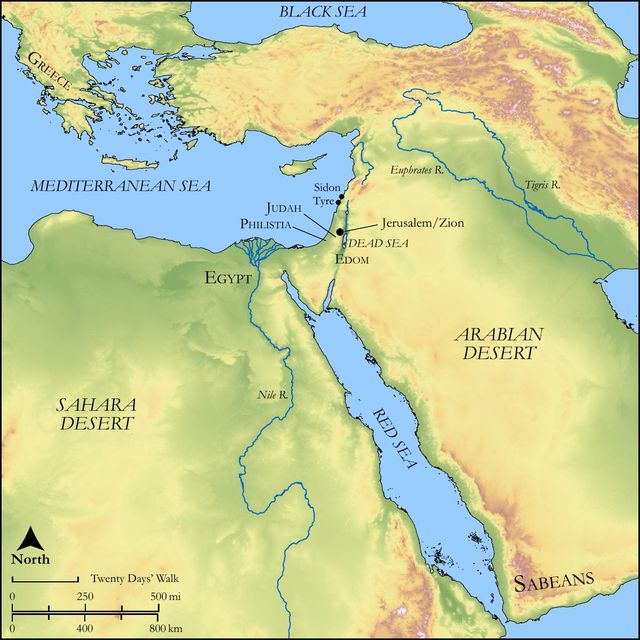
The historical backdrop for Joel's prophecy is debated, but many scholars place it after the Babylonian exile, during a period when Judah was vulnerable to surrounding nations. The mention of "Grecians" (or "Javanites" in some translations) in Joel 3:6 indicates a broader trade network that included distant slave markets. Slavery was a pervasive institution in the ancient Near East, often a consequence of war, debt, or punitive measures. Nations frequently raided or traded for captives to serve as laborers or sell for profit. The Sabeans, mentioned in Joel 3:8, were inhabitants of Sheba (likely modern-day Yemen), renowned for their extensive trade routes that stretched across the Arabian Peninsula, into Africa, and possibly beyond. Their inclusion signifies a distant, comprehensive, and inescapable exile, mirroring the far-reaching displacement experienced by the enslaved people of Judah. This context highlights the profound violation of covenant and human dignity that God is addressing.
Key Themes
ShowHideJoel 3:8 powerfully contributes to several overarching themes within the book of Joel and broader biblical theology. Foremost is the theme of Divine Retribution and Justice, underscoring God's unwavering commitment to righting wrongs and holding nations accountable for their treatment of His covenant people. This verse vividly illustrates the principle of lex talionis (law of retaliation) or "measure for measure," where the punishment precisely fits the crime, as seen in Obadiah 1:15. Another prominent theme is the Reversal of Fortunes, where the oppressors are brought low and the oppressed are vindicated. The very act of selling people into slavery is turned back upon the perpetrators, highlighting God's power to humble the proud and elevate the downtrodden, a common motif preceding the Day of the Lord. Finally, the verse strongly emphasizes God's Sovereignty and Authority over all nations and history. The declaration "I will sell your sons and your daughters" underscores that this judgment is not an accident of history but a direct, intentional, and certain decree from the Almighty, ensuring that His divine will for justice is executed.
Exposition and Analysis
ShowHideKey Word Analysis
ShowHideThis term, derived from a root meaning "to build," refers to offspring, particularly male children, but can encompass descendants, subjects, or even members of a group. In this context, it highlights the generational impact of the judgment, targeting the future and lineage of the offending nations, mirroring their actions against Judah's "sons" and "daughters."
The feminine counterpart to "sons," this word similarly refers to female offspring or descendants. Its inclusion alongside "sons" emphasizes the comprehensive nature of the judgment, indicating that no segment of the population will be exempt from the divine recompense, just as no segment of Judah's population was spared from the slave trade.
This primitive root means "to sell," literally referring to the transaction of merchandise, but also metaphorically to surrendering or giving over. Here, it is used twice, emphasizing the direct parallel between the nations' act of selling Judah's people and God's act of selling their children. It highlights the commercial nature of the injustice and the precise, reciprocal nature of the divine judgment.
More than just a physical appendage, "hand" frequently denotes power, authority, or agency. To be sold "into the hand of the children of Judah" signifies being placed under their control and authority, underscoring the complete reversal of power dynamics and the punitive aspect of the judgment, where the formerly oppressed gain dominion over their oppressors' descendants.
This term typically refers to a "foreign nation" or "Gentile," distinct from Israel. Its use here for the Sabeans emphasizes their foreignness and distance, reinforcing the idea of a complete and utter displacement, far from their homeland and familiar culture, mirroring the experience of those they had enslaved.
This primitive root means "to speak," "declare," or "command." The phrase "for the LORD hath spoken it" acts as a divine seal, affirming the absolute certainty and authority of the prophecy. It is not a mere prediction but a decree from the sovereign God, guaranteeing its fulfillment and underscoring the reliability of His word.
Verse Breakdown
ShowHide"And I will sell your sons and your daughters into the hand of the children of Judah,"
This opening clause establishes the divine agent ("I," referring to the LORD) and the direct, reciprocal nature of the judgment. The very act of selling Judah's children into slavery will be reversed, with the children of the oppressor nations being sold into the power and possession of the descendants of Judah. This is a powerful demonstration of God's justice, ensuring that those who inflicted suffering will experience a similar fate, albeit by divine decree.
"and they shall sell them to the Sabeans, to a people far off:"
This second clause details the further fate of the enslaved children of the oppressor nations. The children of Judah, having received them, will then sell them even further away to the Sabeans. The Sabeans, known for their distant trade routes, symbolize the utter displacement and remote exile that awaits these captives. This emphasizes the complete and far-reaching nature of the judgment, ensuring a comprehensive loss of freedom and connection to their homeland, mirroring the experience of those they had enslaved.
"for the LORD hath spoken [it]."
This concluding phrase serves as a powerful divine affirmation. It acts as a solemn oath, guaranteeing the certainty and inevitability of the preceding judgment. It underscores that this is not a human prediction or a mere possibility, but a divine decree, a word from the sovereign God that will assuredly come to pass. This declaration reinforces God's faithfulness to His word and His unwavering commitment to justice.
Literary Devices
ShowHideJoel 3:8 employs several potent literary devices to convey its message of divine judgment. Inversion or Reversal is central, as the oppressors who sold Judah's children into slavery will see their own children sold into the hands of Judah. This "measure for measure" justice is a stark demonstration of God's righteous retribution. The mention of the "Sabeans, to a people far off" functions as Symbolism, representing the complete and distant nature of the judgment, mirroring the far-reaching exile and loss of freedom experienced by those they had enslaved. The phrase "for the LORD hath spoken [it]" serves as a powerful Divine Fiat or Authoritative Declaration, lending an undeniable weight of certainty and inevitability to the prophecy. It is a pronouncement that seals the decree, emphasizing God's absolute sovereignty and the unchangeable nature of His word.
Theological and Thematic Connections
ShowHideJoel 3:8 is a profound testament to God's unwavering commitment to justice, particularly for the oppressed. It reveals a God who not only sees the injustices perpetrated against His people but actively intervenes to bring about a righteous recompense. This verse underscores the biblical principle that actions have consequences, and divine judgment, while sometimes delayed, is ultimately certain. It highlights God's sovereignty over nations, demonstrating His power to orchestrate historical events to fulfill His purposes of justice and vindication for His covenant people. The reversal of fortunes depicted here serves as a warning to all who would exploit or oppress, and a powerful message of hope and assurance for those who suffer injustice, knowing that their God is a God who avenges wrongs.
Reflection and Application
ShowHideJoel 3:8, while rooted in a specific historical context of ancient nations and their treatment of Judah, offers timeless principles for reflection and application in our contemporary world. It serves as a stark reminder that God is a God of justice who holds individuals and nations accountable for their actions, especially those involving oppression, exploitation, and the violation of human dignity. For us today, this means recognizing that pervasive injustices, whether economic, social, or political, do not escape God's notice. We are called to examine our own lives and societies for complicity in or perpetuation of such wrongs. The principle of sowing and reaping is powerfully illustrated here: the very evil perpetrated can, by divine decree, return upon the perpetrators. This should compel us to act justly, love mercy, and walk humbly with our God, knowing that our actions have eternal consequences. Furthermore, for those who feel oppressed or witness great injustice, this verse offers profound comfort and hope. It assures us that God sees, God cares, and God will ultimately intervene to right every wrong, bringing about His perfect justice in His perfect timing. This should fuel our prayers for justice, our defense of the vulnerable, and our unwavering trust in God's sovereign plan.
Questions for Reflection
ShowHideFAQ
ShowHideWhat is the significance of the "Sabeans" in Joel 3:8?
ShowHideThe Sabeans (from Sheba) were a people known for their extensive and far-reaching trade networks, often associated with distant lands (likely modern-day Yemen or Ethiopia). In Joel 3:8, their mention is highly significant because it symbolizes the complete and utter displacement and loss of freedom that will befall the children of the oppressor nations. Just as Judah's children were sold to distant lands, so too will their captors' children be sent to a "people far off," emphasizing the comprehensive and inescapable nature of God's judgment and the reversal of fortunes. It highlights the severity of the judgment, ensuring that the punishment precisely mirrors the crime.
Does this verse promote a vengeful attitude among believers?
ShowHideNo, Joel 3:8 does not promote personal vengeance among believers. Instead, it reveals God's divine prerogative and commitment to justice. While the Old Testament often details God's direct intervention in national affairs, the New Testament calls believers to a different response to personal wrongs. For instance, Romans 12:19 explicitly states, "Beloved, never avenge yourselves, but leave it to the wrath of God, for it is written, 'Vengeance is mine, I will repay, says the Lord.'" This verse in Joel demonstrates that God will execute justice, but it is His role, not ours, to exact retribution. It assures us that ultimate justice will prevail, even if we do not see it immediately in our lifetime, providing comfort and a basis for trust in God's righteous governance of the world.
Christ-Centered Fulfillment
ShowHideWhile Joel 3:8 speaks of a direct, historical judgment upon nations for their treatment of Israel, its ultimate fulfillment and deeper theological resonance point to the person and work of Jesus Christ. The principle of divine justice and recompense, so vividly displayed here, finds its most profound and redemptive expression in the cross. Humanity, enslaved by sin and separated from God, faced a righteous judgment. Yet, instead of selling us into further bondage, God, in His infinite mercy, "sold" His own Son, Jesus, into the "hand" of humanity, allowing Him to be crucified, to pay the ultimate price for our freedom. As Isaiah 53:5 prophesied, "He was pierced for our transgressions, he was crushed for our iniquities; the punishment that brought us peace was on him, and by his wounds we are healed." Through Christ, the divine principle of "measure for measure" is transformed: the just wrath due to us was poured out on Him, allowing us to receive grace and reconciliation. The "reversal of fortunes" in Joel 3:8, where the oppressed are vindicated, is ultimately fulfilled in Christ's triumph over sin and death, offering true freedom and adoption into God's family for all who believe, regardless of their past bondage (Galatians 3:28). Moreover, the certainty of "the LORD hath spoken [it]" regarding judgment finds its counterpoint in the New Covenant promises, also spoken by the Lord, guaranteeing salvation and eternal life through faith in the Lamb of God (John 1:29). Thus, Joel 3:8, though a word of judgment, ultimately foreshadows the perfect justice and redemptive love revealed in Christ, who bore the judgment so that we might receive mercy.