


Psalms 83:5
- כִּיkiforH3588PrtParticle Conditional
- נוֹעֲצוּno·'a·Tzuthey have consultedH3289V-Niphal-Perf-3cpVerb Niphal Perfect 3rd Plural common gender
- לֵבlevheartH3820N-msNoun Singular Masculine Absolute
- יַחְדָּוyach·DavtogetherH3162AdvAdverb
- עָלֶיךָ'a·Lei·khaon youH5921Prep ¦ 2msPrepositionעָלֶיonךָyou
- בְּרִיתbe·Rita covenantH1285N-fsNoun Singular Feminine Absolute
- יִכְרֹתוּyikh·Ro·tuthey are makingH3772V-Qal-Imperf-3mpVerb Qal Imperfect 3rd Plural Masculine
English is a literal word-by-word gloss of the Hebrew, not the KJV's wording. Why?
This is the original text the KJV's translators worked from — each Hebrew word with its own literal English meaning in this verse, prepared by scholars at Tyndale House, Cambridge. The KJV translates whole sentences, not word by word, so its wording differs: one Hebrew word can become several English words, and the KJV may choose “the LORD” where the gloss reads “Yahweh”. Both are faithful — they answer different questions. For the KJV's own rendering, switch to the KJV text.
Details
See on the biblical-era map
Study this verse
Public-domain commentary
Matthew Henry
From his Commentary on the Whole Bible. Henry comments on passages, not single verses — this entry covers Psalms 83:1–8. His three-level outline is real structure in the source text, so it is rendered as structure.
The Israel of God were now in danger, and fear, and great distress, and yet their prayer is called, A song or psalm; for singing psalms is not unseasonable, no, not when the harps are hung upon the willow-trees.
I.The psalmist here begs of God to appear on the behalf of his injured threatened people (Psa 83:1):
"Keep not thou silence, O God! but give judgment for us against those that do us an apparent wrong." Thus Jehoshaphat prayed upon occasion of that invasion (Ch2 20:11), Behold, how they reward us, to come to cast us out of thy possession. Sometimes God seems to connive at the unjust treatment which is given to his people; he keeps silence, as one that either did not observe it or did not concern himself in it; he holds his peace, as if he would observe an exact neutrality, and let them fight it out; he is still, and gives not the enemies of his people any disturbance or opposition, but seems to sit by as a man astonished, or as a mighty man that cannot save. Then he gives us leave to call upon him, as here, "Keep not thou silence, O God! Lord, speak to us by the prophets for our encouragement against our fears" (as he did in reference to that invasion, Ch2 20:14, etc.); "Lord, speak for us by the providence and speak against our enemies; speak deliverance to us and disappointment to them." God's speaking is his acting; for with him saying and doing are the same thing.
II.He here gives an account of the grand alliance of the neighbouring nations against Israel, which he begs of God to break, and blast the projects of. Now observe here,
1.Against whom this confederacy is formed; it is against the Israel of God, and so, in effect, against the God of Israel. Thus the psalmist takes care to interest God in their cause, not doubting but that, if it appeared that they were for God, God would make it to appear that he was for them, and then they might set all their enemies at defiance; for whom then could be against them? "Lord," says he, "they are thy enemies, and they hate thee." All wicked people are God's enemies (the carnal mind is enmity against God), but especially wicked persecutors; they hated the religious worshippers of God, because they hated God's holy religion and the worship of him. This was that which made God's people so zealous against them - that they fought against God: They are confederate against thee, Psa 83:5. Were our interest only concerned, we could the better bear it; but, when God himself is struck at, it is time to cry, Help, Lord. Keep not thou silence, O God! He proves that they are confederate against God, for they are so against the people of God, who are near and dear to him, his son, his first-born, his portion, and the lot of his inheritance; he may truly be said to fight against me that endeavours to destroy my children, to root out my family, and to ruin my estate. "Lord," says the psalmist, "they are thy enemies, for they consult against thy hidden ones." Note, God's people are his hidden ones, hidden,
(1.)In respect of secresy. Their life is hid with Christ in God; the world knows them not; if they knew them, they would not hate them as they do.
(2.)In respect of safety. God takes them under his special protection, hides them in the hollow of his hand; and yet, in defiance of God and his power and promise to secure his people, they will consult to ruin them and cast them down from their excellency (Psa 62:4), and to make a prey of those whom the Lord has set apart for himself, Psa 4:3. They resolve to destroy those whom God resolves to preserve.
2.How this confederacy is managed. The devil is at the bottom of it, and therefore it is carried on,
(1.)With a great deal of heat and violence: Thy enemies make a tumult, Psa 83:2. The heathen rage, Psa 2:1. The nations are angry, Rev 11:18. They are noisy in their clamours against the people whom they hope to run down with their loud calumnies. This comes in as a reason why God should not keep silence: "The enemies talk big and talk much; Lord, let them not talk all, but do thou speak to them in thy wrath," Psa 2:5.
(2.)With a great deal of pride and insolence: They have lifted up the head. In confidence of their success, they are so elevated as if they could over-top the Most High and overpower the Almighty.
(3.)With a great deal of art and policy: They have taken crafty counsel, Psa 83:3. The subtlety of the old serpent appears in their management, and they contrive by all possible means, though ever so base, ever so bad, to gain their point. They areprofound to make slaughter (Hos 5:2), as if they could outwit Infinite Wisdom.
(4.)With a great deal of unanimity. Whatever separate clashing interest they have among themselves, against the people of God they consult with one consent (Psa 83:5), nor is Satan's kingdom divided against itself. To push on this unholy war, they lay their heads together, and their horns, and their hearts too. Fas est et ab hoste doceri - Even an enemy may instruct. Do the enemies of the church act with one consent to destroy it? Are the kings of the earth of one mind to give their power and honour to the beast? And shall not the church's friends be unanimous in serving her interests? If Herod and Pilate are made friends, that they may join in crucifying Christ, surely Paul and Barnabas, Paul and Peter, will soon be made friends, that they may join in preaching Christ.
3.What it is that is aimed at in this confederacy. They consult not like the Gibeonites to make a league with Israel, that they might strengthen themselves by such a desirable alliance, which would have been their wisdom. They consult, not only to clip the wings of Israel, to recover their new conquests, and check the progress of their victorious arms, not only to keep the balance even between them and Israel, and to prevent their power from growing exorbitant; this will not serve. It is no less than the utter ruin and extirpation of Israel that they design (Psa 83:4): "Come, let us cut them off from being a nation, as they cut off the seven nations of Canaan; let us leave them neither root nor branch, but lay their country so perfectly waste that the name of Israel may be no more in remembrance, no, not in history;" for with them they would destroy their Bibles and burn all their records. Such is the enmity of the serpent's seed against the seed of the woman. It is the secret wish of many wicked men that the church of God might not have a being in the world, that there might be no such thing as religion among mankind. Having banished the sense of it out of their own hearts, they would gladly see the whole earth as well rid of it, all its laws and ordinances abolished, all its restraints and obligations shaken off, and all that preach, profess, or practise it cut off. This they would bring it to if it were in their power; but he that sits in heaven shall laugh at them.
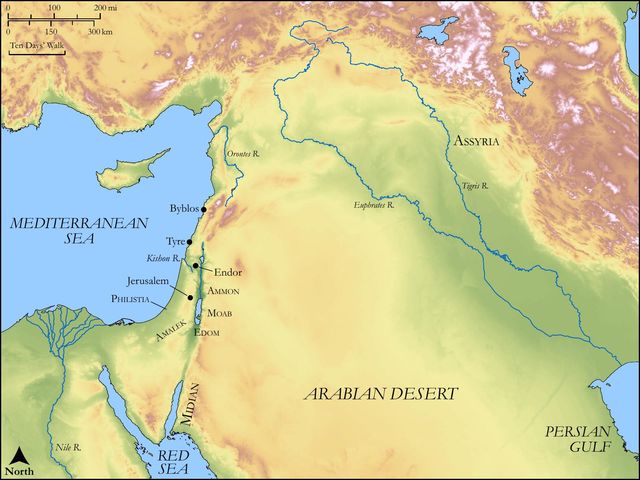
4.Who they are that are drawn into this confederacy. The nations that entered into this alliance are here mentioned (Psa 83:6-8); the Edomites and Ishmaelites, both descendants from Abraham, lead the van; for apostates from the church have been its most bitter and spiteful enemies, witness Julian. These were allied to Israel in blood and yet in alliance against Israel. There are no bonds of nature so strong but the spirit of persecution has broken through them. The brother shall betray the brother to death. Moab and Ammon were the children of righteous Lot; but, as an incestuous, so a degenerate race. The Philistines were long a thorn in Israel's side, and very vexatious. How the inhabitants of Tyre, who in David's time were Israel's firm allies, come in among their enemies, I know not; but that Assur (that is, the Assyrian) also is joined with them is not strange, or that (as the word is) they were an arm to the children of Lot. See how numerous the enemies of God's church have always been. Lord, how are those increased that trouble it! God's heritage was as a speckled bird; all the birds round about were against her (Jer 12:9), which highly magnifies the power of God in preserving to himself a church in the world, in spite of the combined force of earth and hell.
Historical interpretation
Historical reception
1 surviving comment on this verse from the historical church.
"Since they have imagined with one consent; together against You have they disposed a testament" [Psalm 83:5]: as though they could be the stronger. In fact, "a testament" is a name given in the Scriptures not only to that which is of no avail till the death of the testators, but every covenant and decree they used to call a testament. For Laban and Jacob made a testament, [Genesis 31:44] which was certainly to have force between the living; and such cases without number are read in the words of God. Then he begins to make mention of the enemies of Christ, under certain proper names of nations; the interpretation of which names sufficiently indicates what he would have to be understood. For by such names are most suitably figured the enemies of the truth. "Idumæans," for instance, are interpreted either "men of blood," or "of earth." "Ismaelites," are "obedient to themselves," and therefore not to God, but to themselves. "Moab," "from the father;" which in a bad sense has no better explanation, than by considering it so connected with the actual history, that Lot, a father, by the illicit intercourse procured by his daughter, begot him; since it was from that very circumstance he was so named. [Genesis 19:36-37] Good, however, was his father, but as "the Law is good if one use it lawfully," [1 Timothy 1:8] not impurely and unlawfully. "Hagarens," proselytes, that is strangers, by which name also are signified, among the enemies of God's people, not those who become citizens, but those who persevere in a foreign and alien mind, and when an opportunity of doing harm occurs, show themselves. "Gebal," "a vain valley," that is, humble in pretence. "Amon," "an unquiet people," or "a people of sadness." "Amalech," "a people licking;" whence elsewhere it is said, "and his enemies shall lick the earth." The "alien race," though by their very name in Latin, they sufficiently show themselves to be aliens, and for this cause of course enemies, yet in the Hebrew are called "Philistines," which is explained, "falling from drink," as of persons made drunken by worldly luxury. "Tyre" in Hebrew is called Sor; which whether it be interpreted straitness or tribulation, must be taken in the case of these enemies of God's people in that sense, of which the Apostle speaks, "Tribulation and straitness on every soul of man that does evil." [Romans 2:9] All these are thus enumerated in the Psalms: "The tabernacles of the Edomites, Ishmaelites, Moab and the Hagarenes, Gebal, and Amon, and Amalech, and the Philistines with those who inhabit Tyre."
Continue studying Psalms 83:5 across the web’s major study libraries — every link below opens this exact verse, chapter, or book on the destination site.
Read & Compare
 BibleGatewayThis verse in more than 200 translations and 70 languages.
 Bible.comThe YouVersion reader — hundreds of translations, reading plans, and highlights.
 ESV.orgCrossway's official English Standard Version reader.
 NET BibleThe NET translation with 60,000+ translators' notes on every rendering decision.
 STEP BibleTyndale House's free study tool — original text, vocabulary, and scholarly resources.
 BibliaLogos Bible Software's free web reader.
 USCCBThe New American Bible (Revised Edition) with the U.S. bishops' study notes.
Commentaries
 BibleHub CommentariesDozens of classic commentaries on this verse, gathered on one page.
 StudyLightMore than 100 commentary sets — the largest collection on the web.
 BibleRefPlain-English commentary on what this verse means, verse by verse.
 Enduring WordDavid Guzik's free commentary on this chapter, widely used by Bible teachers.
 Bible Study ToolsVerse commentary alongside Greek and Hebrew study aids.
Original Language & Research
- BibleHub InterlinearThe verse word by word — original language, transliteration, and English.
- BibleHub LexiconEvery word's original-language definition and Strong's entry.
 Blue Letter BibleDeep-study tools — Strong's numbers, concordance, and word studies.
 SefariaThe Hebrew text with Rashi and centuries of Jewish commentary.
Sermons, Hymns & Audio


TrulyRandomVerse is not affiliated with these sites and doesn’t control their content. They’re linked because they’re genuinely useful.
Summary
Psalms 83:5 profoundly illuminates the deliberate and unified nature of the enemies arrayed against God's people, Israel. It unveils a sophisticated and deeply committed conspiracy, emphasizing that diverse nations have not merely stumbled into conflict but have actively "consulted together with one consent" and formed a binding "confederacy." Crucially, this alliance is explicitly directed "against thee," signifying that their ultimate target is not just Israel, but God Himself. This verse sets the urgent tone for the Psalmist's fervent plea for divine intervention against a threat perceived as both existential for Israel and a direct affront to the Lord's honor and sovereignty.
Context
ShowHideLiterary Context
Psalm 83 is a communal lament, a fervent prayer from the Levitical musician Asaph (or a guild descendant) for God's intervention against a formidable coalition of nations threatening Israel. The Psalm adheres to a classic lament structure, commencing with an urgent cry for God to act (vv. 1-2), meticulously detailing the enemies' malicious intent (vv. 3-8), and culminating in a passionate petition for divine judgment and vindication (vv. 9-18). Verse 5, strategically positioned within the "complaint" or "description of the enemy" section, serves as a pivotal bridge. It transitions from the general declaration of the enemies' plotting in verse 3 to the specific enumeration of the confederate nations in Psalm 83:6-8. This verse precisely defines the nature of their opposition—its unity and deliberate malice—before identifying the actors involved, thereby intensifying the perceived threat.
Historical & Cultural Context
The precise historical setting for Psalm 83 remains a subject of scholarly debate, with suggestions ranging from the time of King Jehoshaphat (as recorded in 2 Chronicles 20) to later periods of post-exilic threats. Regardless of the specific historical moment, the Psalm vividly reflects a recurring geopolitical reality for ancient Israel: being surrounded by hostile nations, frequently forming alliances to challenge Israel's very existence and, by extension, the sovereignty of Yahweh. The concept of "confederacy" (Hebrew: berit) was profoundly significant, denoting a solemn and binding covenant or alliance. While covenants could be for peace, here it unequivocally signifies a hostile, formal agreement. The cultural understanding deeply embedded in Israelite thought was that an attack on God's chosen people was, in essence, an attack on God Himself, as powerfully illustrated by the imagery in Zechariah 2:8, where those who touch Israel touch the "apple of His eye." This underscores the profound spiritual dimension inherent in what might otherwise appear to be purely political or military conflicts.
Key Themes
ShowHidePsalms 83:5 contributes significantly to several overarching themes within the Psalm and the broader biblical narrative. Firstly, it powerfully underscores the theme of Unified Opposition, portraying the enemies not as disparate threats but as a cohesive, single-minded force. This formidable unity makes their plot particularly menacing and seemingly insurmountable. Secondly, it highlights the Spiritual Dimension of Conflict, revealing that the ultimate target of the confederacy is not merely Israel's land or people, but God's very name and honor. The explicit phrase "against thee" (referring to God) elevates the conflict from a geopolitical struggle to a cosmic battle for divine supremacy, a theme echoed in Psalm 2:1-2. Lastly, it implicitly introduces the theme of Divine Justice and Vindication, as the Psalmist's subsequent appeal is for God to rise and demonstrate His sovereignty over these unified, rebellious forces, thereby upholding His own glory and ensuring that all may "know that thou, whose name alone is JEHOVAH, art the most high over all the earth" (Psalm 83:18).
Exposition and Analysis
ShowHideKey Word Analysis
ShowHideThis verb (H3289) signifies more than casual discussion; it implies deep deliberation, strategic planning, and the formation of a concerted plan or plot. It suggests a calculated and intentional decision-making process, indicating that the enemies' actions are not spontaneous or accidental but the result of careful, perhaps clandestine, counsel and a determined purpose to "devise" a harmful scheme.
While the KJV translates "one consent," the underlying Hebrew (H3820, combined with 'echad, "one") literally means "one heart." This powerful idiom conveys a profound unity of mind, purpose, and intention. It emphasizes the complete agreement and shared resolve among the confederates. Their opposition is not fragmented or hesitant but proceeds from a singular, unified will, making their threat particularly potent and terrifying, as their "heart" is fully engaged in this malicious endeavor.
The verb translated "confederate" (H3772) literally means "to cut." This refers to the ancient practice of "cutting a covenant" (כָּרַת בְּרִית, kârath bᵉrîyth), which was a solemn and binding agreement, often involving the cutting of animals as a ritualistic pledge to seal the pact. Here, it denotes the formation of a formal, binding alliance or league. The use of this term underscores the gravity and permanence of the enemies' hostile alliance; they have entered into a sacred, albeit wicked, commitment to act together.
Verse Breakdown
ShowHide"For they have consulted together with one consent:"
This initial clause powerfully establishes the deliberate and unified nature of the enemies' plot. It reveals that the various hostile nations have not merely acted in parallel or by coincidence but have actively convened, meticulously planned, and reached a complete, unwavering consensus regarding their malicious intentions. The phrase "with one consent" (literally "with one heart") emphasizes the singular, unwavering resolve and shared purpose that binds them in their conspiracy, highlighting a deep-seated, collective animosity.
"they are confederate against thee:"
This second clause clarifies both the outcome and the ultimate target of their unified consultation. It states that they have formed a formal, binding alliance (a "confederacy"), sealed by a solemn commitment. Crucially, this alliance is directed not merely against Israel, but explicitly "against thee"—against God Himself. This elevates the conflict from a geopolitical struggle to a profound theological one, implying that the enemies' ultimate aim is to undermine God's sovereignty, invalidate His covenant with Israel, and erase His name from the earth.
Literary Devices
ShowHidePsalms 83:5 employs several potent literary devices to convey the gravity and insidious nature of the threat. Personification is evident in the portrayal of diverse nations acting with a single "heart" and purpose, as if they are one unified, malevolent entity plotting against God. This collective agency amplifies their perceived power and menace. Hyperbole is used to emphasize the overwhelming unity and resolve of the enemies; while unlikely to be literally "one heart," the phrase powerfully conveys their complete agreement and coordinated effort, underscoring the formidable challenge they present. Furthermore, an implicit Antithesis is present: the formidable, unified conspiracy of human nations stands in stark contrast to the singular, unchallengeable power of God, to whom the Psalmist appeals. This stark contrast highlights the desperate need for divine intervention against such a seemingly overwhelming human force, emphasizing God's unique ability to scatter such determined alliances.
Theological and Thematic Connections
ShowHidePsalms 83:5 offers profound theological insights into the nature of opposition against God and His people. It reveals that human conspiracies, even those seemingly directed at earthly kingdoms or specific groups, often possess a deeper, spiritual dimension, ultimately arrayed against the divine will and sovereignty. The unity of the enemies, far from being a sign of their invincibility, serves as a dramatic backdrop against which God's singular power and ability to scatter such alliances will be magnified. This verse reminds us that God's honor and reputation are intrinsically linked to the fate of His people, compelling Him to act decisively against those who seek to obliterate His name from the earth. It affirms that God is not a passive observer but an active defender of His covenant and His people, demonstrating His ultimate authority over all earthly powers.
Reflection and Application
ShowHidePsalms 83:5 provides a timeless lens through which believers can understand and respond to opposition in their own lives and in the world. It reminds us that forces arrayed against truth, justice, and the advancement of God's kingdom are often deliberate, unified, and rooted in an underlying animosity towards God Himself. This discernment is crucial, preventing us from viewing all challenges as random or merely personal, and instead recognizing the spiritual dimension of many conflicts. In the face of such formidable, unified opposition, the verse calls us to emulate the Psalmist: not to despair, but to turn to God in fervent prayer, trusting in His ultimate sovereignty and His unwavering commitment to vindicate His name and protect His people. It encourages us to find our security not in human alliances or strategies, but in the God who can scatter the most determined conspiracies with a single word, reminding us that "if God is for us, who can be against us?" (Romans 8:31). Our confidence rests not in the weakness of our enemies, but in the omnipotence of our God.
Questions for Reflection
ShowHideFAQ
ShowHideWho are the specific nations mentioned as "confederate" in this Psalm?
ShowHideWhile Psalms 83:5 describes the nature of their unity, the subsequent verses, Psalm 83:6-8, explicitly list the confederate nations. These include the tents of Edom, the Ishmaelites, Moab, the Hagarenes, Gebal, Ammon, Amalek, the Philistines with the inhabitants of Tyre, and even Assyria (which is often identified with the historical Assyrian empire or a broader northern power). This comprehensive list indicates a widespread, formidable alliance from all directions surrounding Israel, highlighting the existential threat they posed.
Does this Psalm describe a specific historical event, or is it a general prayer for protection?
ShowHideBiblical scholars debate the precise historical context of Psalm 83. Some suggest it refers to specific historical events, such as the invasion during the reign of King Jehoshaphat (as recounted in 2 Chronicles 20) or other periods of intense regional conflict. Others view it as a more generalized communal lament, reflecting the perennial threats faced by Israel throughout its history from various hostile neighbors. Regardless of a single definitive historical event, the Psalm powerfully captures the recurring reality of God's people facing unified opposition, making its message applicable across different eras. The core theological truth remains: God's people are often targeted by unified forces, and their ultimate appeal is to God's sovereign power to intervene, as the Psalmist urgently pleads throughout Psalm 83.
Christ-Centered Fulfillment
ShowHidePsalms 83:5, with its vivid depiction of a unified confederacy against God and His people, finds its ultimate fulfillment and deepest meaning in the person and work of Jesus Christ. The earthly powers, both political and religious, "consulted together with one consent" to oppose God's ultimate Anointed One, the Messiah. From the plotting of the Jewish religious leaders to the collaboration of Herod and Pilate, as powerfully recounted in Acts 4:27-28, we witness the very essence of this verse played out: "For truly in this city there were gathered together against your holy servant Jesus, whom you anointed, both Herod and Pontius Pilate, along with the Gentiles and the peoples of Israel, to do whatever your hand and your plan had predestined to take place." This unified opposition, though seemingly overwhelming, was ultimately part of God's sovereign plan to bring about salvation. The cross, the very instrument of their confederacy's apparent triumph, became the means by which Christ disarmed and triumphed over all spiritual principalities and powers, making a public spectacle of them (Colossians 2:15). Thus, the ultimate "confederacy against thee" was decisively defeated by the Lamb of God, who, through His resurrection, established His eternal reign, ensuring that no human or demonic alliance can ever thwart God's ultimate purposes or overcome His Church, the new Israel (Matthew 16:18).