


Revelation 19:19
- ΚαὶKaiAndG2532CONJConjunction
- εἶδονeidonI sawG1492V-2AAI-1SVerb 2nd Aorist Active Indicative 1st Singular
- τὸtotheG3588T-ASNDefinite article Accusative Singular Neuter
- θηρίονthērionbeastG2342N-ASNNoun Accusative Singular Neuter
- καὶkaiandG2532CONJConjunction
- τοὺςtoustheG3588T-APMDefinite article Accusative Plural Masculine
- βασιλεῖςbasileiskingsG935N-APMNoun Accusative Plural Masculine
- τῆςtēsof theG3588T-GSFDefinite article Genitive Singular Feminine
- γῆςgēsearthG1093N-GSFNoun Genitive Singular Feminine
- καὶkaiandG2532CONJConjunction
- τὰtatheG3588T-APNDefinite article Accusative Plural Neuter
- στρατεύματαstrateumataarmiesG4753N-APNNoun Accusative Plural Neuter
- αὐτῶνautōnof themG846P-GPMPersonal pronoun Genitive Plural Masculine
- συνηγμέναsunēgmenagathered togetherG4863V-RPP-APNVerb Perfect Passive Participle Accusative Plural Neuter
- ποιῆσαιpoiēsaito makeG4160V-AANVerb Aorist Active Infinitive
- πόλεμονpolemonwarG4171N-ASMNoun Accusative Singular Masculine
- μετὰmetawithG3326PREPPreposition
- τοῦtouthe [One]G3588T-GSMDefinite article Genitive Singular Masculine
- καθημένουkathēmenousittingG2521V-PNP-GSMVerb Present Middle Or Passive Deponent Participle Genitive Singular Masculine
- ἐπὶepionG1909PREPPreposition
- τοῦtoutheG3588T-GSMDefinite article Genitive Singular Masculine
- ἵππουippouhorseG2462N-GSMNoun Genitive Singular Masculine
- καὶkaiandG2532CONJConjunction
- μετὰmetawithG3326PREPPreposition
- τοῦtoutheG3588T-GSNDefinite article Genitive Singular Neuter
- στρατεύματοςstrateumatosarmyG4753N-GSNNoun Genitive Singular Neuter
- αὐτοῦautouof HimG846P-GSMPersonal pronoun Genitive Singular Masculine
English is a literal word-by-word gloss of the Greek, not the KJV's wording. Why?
This is the original text the KJV's translators worked from — each Greek word with its own literal English meaning in this verse, prepared by scholars at Tyndale House, Cambridge. The KJV translates whole sentences, not word by word, so its wording differs: one Greek word can become several English words, and the KJV may choose “charity” where the gloss reads “love”. Both are faithful — they answer different questions. For the KJV's own rendering, switch to the KJV text.
Details
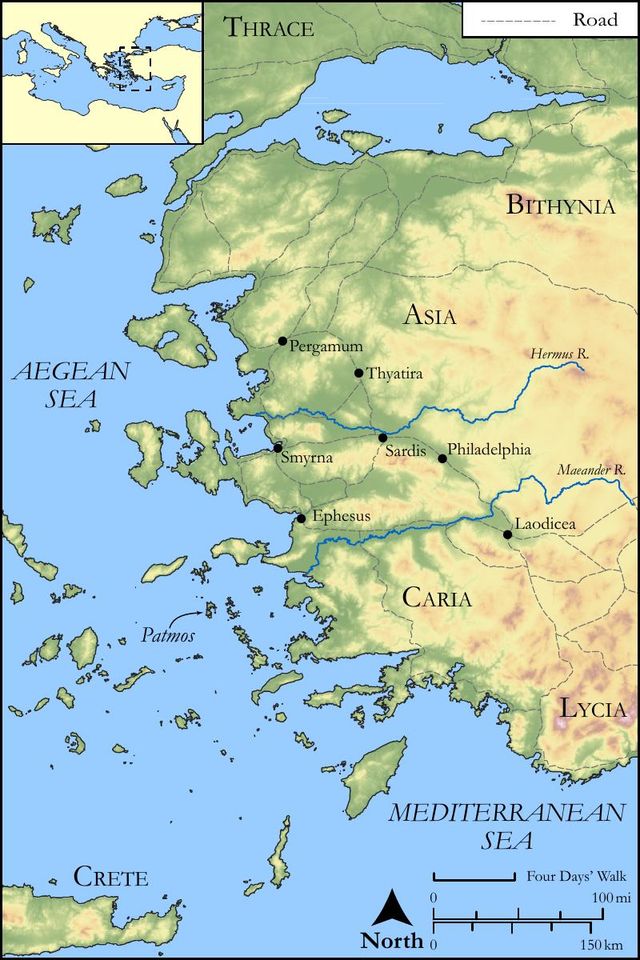
See on the biblical-era map

Study this verse
Public-domain commentary
Matthew Henry
From his Commentary on the Whole Bible. Henry comments on passages, not single verses — this entry covers Revelation 19:11–21. His two-level outline is real structure in the source text, so it is rendered as structure.
No sooner was the marriage solemnized between Christ and his church by the conversion of the Jews than the glorious head and husband of the church is called out to a new expedition, which seems to be the great battle that was to be fought at Armageddon, foretold Rev 16:16. And here observe,
I.The description of the great Commander,
1.By the seat of his empire; and that is heaven; his throne is there, and his power and authority are heavenly and divine.
2.His equipage: he is again described as sitting on a white horse, to show the equity of the cause, and certainty of success.
3.His attributes: he is faithful and true to his covenant and promise, he is righteous in all his judicial and military proceedings, he has a penetrating insight into all the strength and stratagems of his enemies, he has a large and extensive dominion, many crowns, for he is King of kings, and Lord of lords.
4.His armour; and that is a vesture dipped in blood, either his own blood, by which he purchased this mediatorial power, or the blood of his enemies, over whom he has always prevailed.
5.His name: The Word of God, a name that none fully knows but himself, only this we know, that this Word was God manifest in the flesh; but his perfections are incomprehensible by any creature.
II.The army which he commands (Rev 19:14), a very large one, made up of many armies; angels and saints followed his conduct, and resembled him in their equipage, and in their armour of purity and righteousness - chosen, and called, and faithful.
III.The weapons of his warfare - A sharp sword proceeding from his mouth (Rev 19:15), with which he smites the nations, either the threatenings of the written word, which now he is going to execute, or rather his word of command calling on his followers to take a just revenge on his and their enemies, who are now put into the wine-press of the wrath of God, to be trodden under foot by him.
IV.The ensigns of his authority, his coat of arms - a name written on his vesture and thigh, King of kings, and Lord of lords, asserting his authority and power, and the cause of the quarrel, Rev 19:16.
V.An invitation given to the fowls of heaven, that they should come and see the battle, and share in the spoil and pillage of the field (Rev 19:17, Rev 19:18), intimating that this great decisive engagement should leave the enemies of the church a feast for the birds of prey, and that all the world should have cause to rejoice in the issue of it.
VI.The battle joined.
The enemy falls on with great fury, headed by the beast, and the kings of the earth; the powers of earth and hell gathered, to make their utmost effort, Rev 19:19.
VII.The victory gained by the great and glorious head of the church:
The beast and the false prophet, the leaders of the army, are taken prisoners, both he who led them by power and he who led them by policy and falsehood; these are taken and cast into the burning lake, made incapable of molesting the church of God any more; and their followers, whether officers or common soldiers, are given up to military execution, and made a feast for the fowls of heaven. Though the divine vengeance will chiefly fall upon the beast, and the false prophet, yet it will be no excuse to those who fight under their banner that they only followed their leaders and obeyed their command; since they would fight for them, they must fall and perish with them. Be wise now therefore, O you kings, be instructed, you rulers of the earth; kiss the Son, lest he be angry, and you perish from the way, Psa 2:10, Psa 2:12.
Historical interpretation
Four Centuries of Reception
4 surviving comments on this verse. Each one is dated, so this reads as a timeline rather than a list.
Select a marker to jump to its quote. Markers stagger vertically where authors wrote within a few decades of each other.
If you compare the words of the blessed Daniel, you will find one and the same thing. “He will come with a great multitude so that he might exterminate and destroy many.” However, in the Revelation it is said that, when the kings of the earth and their armies are gathered together, they will war against him who sits on the horse, that is, against Jesus Christ, and against his army, that is, against all saints who follow him.
It speaks of the armies allied with the devil in the plural, because of the many forms of their sin and their divisions and various opinions. [By contrast], it speaks of the angelic powers and of those persons like the angels who follow Christ in the singular as an army, because of the unity of their mind and their will which is well-pleasing to the divine Word.
And I saw the beast, and the kings of the earth ... to make war, etc. He explains how that supper of God is prepared, namely by the devil attacking the Church but being defeated.
The war with the Lord and the divine angels was waged by both the Devil and the Antichrist, for he calls him a false prophet of the beastly Devil, and kings who band together with them; but they were defeated sooner than speech.
What do the divine Scriptures say about them? Isaiah says, "Let the impious be taken away, so that he may not see the glory of the Lord," (Isa. 26:10) the sudden annihilation; but the apostle, "whom the Lord will consume by the breath of his mouth." (2 Thess. 2:8) What is swifter than to breathe upon and blow the enemies away?
Continue studying Revelation 19:19 across the web’s major study libraries — every link below opens this exact verse, chapter, or book on the destination site.
Read & Compare
 BibleGatewayThis verse in more than 200 translations and 70 languages.
 Bible.comThe YouVersion reader — hundreds of translations, reading plans, and highlights.
 ESV.orgCrossway's official English Standard Version reader.
 NET BibleThe NET translation with 60,000+ translators' notes on every rendering decision.
 STEP BibleTyndale House's free study tool — original text, vocabulary, and scholarly resources.
 BibliaLogos Bible Software's free web reader.
 USCCBThe New American Bible (Revised Edition) with the U.S. bishops' study notes.
Commentaries
 BibleHub CommentariesDozens of classic commentaries on this verse, gathered on one page.
 StudyLightMore than 100 commentary sets — the largest collection on the web.
 BibleRefPlain-English commentary on what this verse means, verse by verse.
 Enduring WordDavid Guzik's free commentary on this chapter, widely used by Bible teachers.
 Bible Study ToolsVerse commentary alongside Greek and Hebrew study aids.
Original Language & Research
- BibleHub InterlinearThe verse word by word — original language, transliteration, and English.
- BibleHub LexiconEvery word's original-language definition and Strong's entry.
 Blue Letter BibleDeep-study tools — Strong's numbers, concordance, and word studies.
 CNTR CollationThe earliest Greek manuscripts of this verse, collated letter by letter.
Sermons, Hymns & Audio


TrulyRandomVerse is not affiliated with these sites and doesn’t control their content. They’re linked because they’re genuinely useful.
Summary
Revelation 19:19 dramatically captures the final, desperate act of global rebellion against the returning Christ. It depicts the Beast, the kings of the earth, and their assembled armies uniting in a futile attempt to wage war against the majestic Rider on the white horse and His heavenly forces. This pivotal verse sets the stage for the swift and decisive triumph of the Lamb, underscoring His ultimate sovereignty and the inevitable defeat of all who oppose Him.
Context
ShowHideLiterary Context
This verse is strategically placed within the climactic section of the Book of Revelation, immediately following the awe-inspiring description of Christ's glorious return as the "Faithful and True" Rider on a white horse, adorned with many crowns and coming to judge and make war (Revelation 19:11-16). It precedes the swift and overwhelming defeat of the Beast and the False Prophet, who are cast into the lake of fire (Revelation 19:20), and the subsequent judgment of Satan himself (Revelation 20:1-3). Thus, Revelation 19:19 serves as the immediate prelude to the final, decisive battle that concludes the period of God's wrath and ushers in Christ's millennial reign.
Historical & Cultural Context
The imagery of kings gathering their armies for battle was a familiar concept in the ancient world, often signifying a major conflict or a desperate last stand. For John's original audience, living under the oppressive shadow of the Roman Empire, the idea of earthly rulers aligning against divine authority would resonate deeply with their experiences of persecution and the imperial cult. The "kings of the earth" represent not just literal monarchs but the totality of worldly political and military power, often depicted in biblical prophecy as inherently hostile to God's reign. This imagery draws on Old Testament prophecies of nations conspiring against the Lord and His Anointed One, such as those found in Psalm 2. The gathering "to make war" against the divine Rider echoes the ultimate rebellion of humanity, instigated by demonic forces, against the rightful King of creation.
Key Themes
ShowHideRevelation 19:19 powerfully contributes to several overarching themes in Revelation and biblical prophecy. Firstly, it highlights the Global Rebellion Against God, demonstrating the ultimate defiance of humanity, orchestrated by the Beast, against the rightful King of kings. This underscores the spiritual blindness and hardened hearts of those who choose to oppose God, a theme woven throughout the book, particularly in descriptions of those who refuse to repent (Revelation 9:20-21). Secondly, it points to the Final Confrontation, often referred to as Armageddon, though the term itself is mentioned earlier in Revelation 16:16. This verse describes the actual assembly and intent for this decisive conflict, marking the culmination of the Tribulation period. Finally, it implicitly emphasizes the Futility of Opposition to Christ. Despite the formidable array of earthly forces, the narrative unequivocally portrays their attempt to wage war against the Almighty as destined for immediate and overwhelming defeat, showcasing Christ's invincible power and ultimate sovereignty over all creation.
Exposition and Analysis
ShowHideKey Word Analysis
ShowHideThis term, a diminutive form, refers to a dangerous or wild animal. In Revelation, it is consistently used to denote the Antichrist, a figure of immense political and spiritual power who rises from the sea (Revelation 13:1) and embodies satanic authority, deceiving and dominating the world. The choice of "beast" underscores his savage, ungodly, and destructive nature, contrasting sharply with the divine order.
Derived from a root suggesting a "foundation of power," this word denotes a sovereign ruler or king. In this context, "the kings of the earth" represent the collective political and military leadership of the world, who have aligned themselves with the Beast and his agenda. Their gathering signifies a unified, global opposition to Christ's rightful claim to universal dominion, highlighting the widespread nature of the rebellion.
This term signifies warfare, battle, or a fight, whether a single encounter or a series of conflicts. Here, it explicitly states the hostile purpose of the Beast and the kings: to engage in direct, armed conflict against the returning Christ. It emphasizes the active and aggressive nature of their rebellion, a deliberate challenge to divine authority, rather than a mere defensive posture.
Verse Breakdown
ShowHide"And I saw the beast,"
John, the visionary, is given a direct revelation of the primary antagonist in this final conflict. The "beast" is the Antichrist, a figure previously introduced and described as wielding immense power and receiving worship from the world (Revelation 13). His appearance here signifies the culmination of his earthly reign and his ultimate confrontation with Christ.
"and the kings of the earth, and their armies,"
This phrase expands the scope of the opposition. The "kings of the earth" represent the political leaders and governmental powers of the world, who have aligned themselves with the Beast. "Their armies" signifies the combined military might of these global forces, indicating a vast and formidable human coalition. This highlights the widespread nature of the rebellion, encompassing both spiritual deception (the Beast) and worldly power structures.
"gathered together to make war"
The Greek word synagō (G4863) implies a deliberate and purposeful assembly. This is not a random skirmish but a pre-meditated, organized, and united effort. Their explicit intention is "to make war" (poiéō pólemos), signifying an aggressive, hostile, and direct challenge to the authority of the one they oppose. This gathering is the final, desperate act of defiance by humanity and its demonic leadership against God.
"against him that sat on the horse,"
This refers unequivocally to Jesus Christ, who has just been described as the "Faithful and True" Rider on the white horse (Revelation 19:11-16). He is the divine Warrior, King of kings, and Lord of lords, returning in glory and power to execute judgment. The opposition is directly aimed at Him, the rightful sovereign.
"and against his army."
This refers to the heavenly host that accompanies Christ in His return. Revelation 19:14 describes them as "the armies which were in heaven, followed him upon white horses, clothed in fine linen, white and clean." This indicates that the earthly forces are not merely fighting against Christ alone, but against the full might of God's heavenly forces, emphasizing the cosmic scale of this final conflict.
Literary Devices
ShowHideRevelation 19:19 is rich with Symbolism, a hallmark of apocalyptic literature. The "beast" symbolizes the Antichrist, representing the epitome of human rebellion and satanic power. The "kings of the earth" symbolize the totality of worldly political and military authority aligned against God. The "horse" and its "rider" are potent symbols of power, conquest, and judgment, with the white horse specifically denoting Christ's purity, righteousness, and ultimate victory. The scene also employs Antithesis, sharply contrasting the seemingly formidable but ultimately futile earthly forces with the invincible, divine power of Christ and His heavenly army. This creates a dramatic tension that is swiftly resolved in the subsequent verses. Furthermore, there is an element of Dramatic Irony, as the reader knows the certain outcome of this "war" even as the earthly forces gather with their misguided intent, highlighting the absolute futility of their rebellion against the Almighty.
Theological and Thematic Connections
ShowHideRevelation 19:19 stands as a profound theological statement on the nature of divine sovereignty and human rebellion. It underscores the biblical truth that all earthly powers, no matter how great or unified, are ultimately subject to the authority of God. The gathering of the Beast, kings, and their armies represents the culmination of humanity's long history of defiance against its Creator, a final, desperate attempt to assert autonomy against the rightful King. Yet, this act of rebellion serves only to highlight the absolute futility of opposing the Almighty. The scene is a powerful reminder that God's plan will prevail, His kingdom will come, and His Christ will reign supreme, bringing justice and righteousness to the earth. It reaffirms the eschatological hope of believers: that evil will not have the last word, but Christ's victory is assured and total.
Reflection and Application
ShowHideRevelation 19:19 offers a sobering yet ultimately hopeful reflection for believers today. It serves as a stark reminder that throughout history, and especially in the end times, there will be a unified, global opposition to Christ and His kingdom. This verse calls us to discern the spirit of the age, recognizing when worldly systems and ideologies align themselves against God's truth and authority. It challenges us to examine our own allegiances: are we aligning with the temporary, rebellious powers of this earth, or are we wholeheartedly devoted to the eternal, victorious King? For those who face persecution or feel overwhelmed by the forces of evil in the world, this passage provides immense comfort. It assures us that no matter how formidable the opposition appears, Christ's victory is not merely anticipated but is a certain, overwhelming reality. Our hope is not in earthly powers or political solutions, but in the triumphant return of our Lord, who will decisively put an end to all rebellion and establish His righteous reign. This truth should embolden us to stand firm in our faith, to proclaim the gospel without fear, and to live in anticipation of His glorious appearing, knowing that our King will indeed conquer all His foes.
Questions for Reflection
ShowHideFAQ
ShowHideWhat is the significance of "the beast" in this verse?
ShowHide"The beast" in Revelation 19:19 refers to the Antichrist, a central figure in end-times prophecy who is also introduced in Revelation 13. He is a powerful political and spiritual leader who embodies satanic authority, deceives the world, and leads the global rebellion against God. His presence here signifies the culmination of his earthly reign and his direct confrontation with Jesus Christ at the Second Coming. He represents the ultimate manifestation of human and demonic opposition to God's sovereignty.
Is this "war" the Battle of Armageddon?
ShowHideWhile the term "Armageddon" is specifically mentioned in Revelation 16:16 as the place where the kings of the earth gather, Revelation 19:19 describes the actual assembly and intent of these forces "to make war against him that sat on the horse, and against his army." Therefore, Revelation 19:19 depicts the climactic event that the gathering at Armageddon was preparing for—the final, decisive battle between the forces of evil and Jesus Christ at His glorious return. It is the fulfillment of the prophetic gathering.
Christ-Centered Fulfillment
ShowHideRevelation 19:19 finds its profound Christ-centered fulfillment in the ultimate triumph of Jesus Christ as the sovereign King and Judge. The "him that sat on the horse" is none other than the Lamb who was slain but is now revealed as the Lion of the tribe of Judah, returning in unparalleled glory and power. This verse vividly portrays the moment when all earthly authority, represented by the Beast and the kings of the earth, finally confronts the one to whom all authority in heaven and on earth has been given. It is the dramatic culmination of the divine plan for redemption and judgment, where the One who emptied himself, taking the form of a servant and became obedient to the point of death, even death on a cross, is now exalted to the highest place, so that at the name of Jesus every knee should bow, in heaven and on earth and under the earth, and every tongue confess that Jesus Christ is Lord. This final, futile rebellion serves only to magnify Christ's invincible power and His absolute dominion, demonstrating that He is truly the Alpha and the Omega, the beginning and the end, who will reign forever and ever.