


Deuteronomy 32:9
Bible text: King James Version (1769 Blayney text) · Public domain
Bible text: Berean Standard Bible · Public domain
Bible text: American Standard Version (1901) · Public domain
Bible text: World English Bible, Messianic edition · Public domain
Bible text: Geneva Bible (1599) · Public domain
Bible text: Young's Literal Translation · Public domain
- כִּיkiforH3588PrtParticle Conditional
- חֵלֶקChe·lek[the] portion ofH2506N-mscNoun Singular Masculine Construct
- יְהֹוָהYah·wehYahwehH3068N-properNoun Proper Title
- עַמּוֹa·Mo[is] his peopleH5971N-msc ¦ 3msNoun Singular Masculine Constructעַמּ[is] peopleוֹhis
- יַעֲקֹבya·'a·KoJacobH3290N-proper-mNoun Proper Masculine
- חֶבֶלChe·vel[is] [the] measured portion ofH2256N-cscNoun Singular common gender Construct
- נַחֲלָתוֹna·cha·la·Tohis inheritanceH5159N-fsc ¦ 3msNoun Singular Feminine Constructנַחֲלָתinheritanceוֹhis
English is a literal word-by-word gloss of the Hebrew, not the KJV's wording. Why?
This is the original text the KJV's translators worked from — each Hebrew word with its own literal English meaning in this verse, prepared by scholars at Tyndale House, Cambridge. The KJV translates whole sentences, not word by word, so its wording differs: one Hebrew word can become several English words, and the KJV may choose “the LORD” where the gloss reads “Yahweh”. Both are faithful — they answer different questions. For the KJV's own rendering, switch to the KJV text.
Details
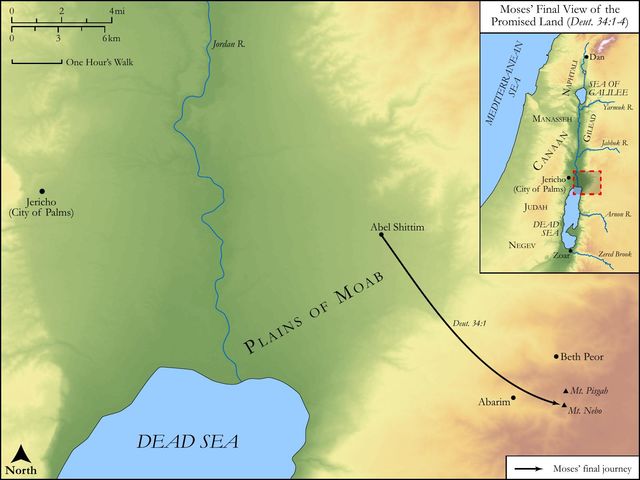
See on the biblical-era map
Study this verse
Public-domain commentary
Matthew Henry
From his Commentary on the Whole Bible. Henry comments on passages, not single verses — this entry covers Deuteronomy 32:7–14. His three-level outline is real structure in the source text, so it is rendered as structure.
Moses, having in general represented God to them as their great benefactor, whom they were bound in gratitude to observe and obey, in these verses gives particular instances of God's kindness to them and concern for them. 1. Some instances were ancient, and for proof of them he appeals to the records (Deu 32:7): Remember the days of old; that is, "Keep in remembrance the history of those days, and of the wonderful providences of God concerning the old world, and concerning your ancestors Abraham, Isaac, and Jacob; you will find a constant series of mercies attending them, and how long since things were working towards that which has now come to pass." Note, The authentic histories of ancient times are of singular use, and especially the history of the church in its infancy, both the Old Testament and the New Testament church. 2. Others were more modern, and for proof of them he appeals to their fathers and elders that were now alive and with them. Parents must diligently teach their children, not only the word of God, his laws (Deu 6:7), and the meaning of his ordinances (Exo 12:26, Exo 12:27), but his works also, and the methods of his providence. See Psa 78:3, Psa 78:4, Psa 78:6, Psa 78:7. And children should desire the knowledge of those things which will be of use to engage them to their duty and to direct them in it.
Three things are here enlarged upon as instances of God's kindness to his people Israel, and strong obligations upon them never to forsake him: -
I.The early designation of the land of Canaan for their inheritance; for herein it was a type and figure of our heavenly inheritance, that it was of old ordained and prepared in the divine counsels, Deu 32:8. Observe,
1.When the earth was divided among the sons of men, in the days of Peleg, after the flood, and each family had its lot, in which it must settle, and by degrees grow up into a nation, then God had Israel in his thoughts and in his eye; for, designing this good land into which they were now going to be in due time an inheritance for them, he ordered that the posterity of Canaan, rather than any other of the families then in being, should be planted there in the mean time, to keep possession, as it were, till Israel was ready for it, because those families were under the curse of Noah, by which they were condemned to servitude and ruin (Gen 9:25), and therefore would be the more justly, honourably, easily, and effectually, rooted out, when the fulness of time should come that Israel should take possession. Thus he set the bounds of that people with an eye to the designed number of the children of Israel, that they might have just as much as would serve their turn. And some observe that Canaan himself, and his eleven sons (Gen 10:15, etc.), make up just the number of the twelve tribes of Israel. Note,
(1.)The wisdom of God has appointed the bounds of men's habitation, and determined both the place and time of our living in the world, Act 17:26. When he gave the earth to the children of men (Psa 115:16), it was not that every man might catch as he could; no, he divides to nations their inheritance, and will have every one to know his own, and not to invade another's property.
(2.)Infinite wisdom has a vast reach, and designs beforehand what is brought to pass long after. Known unto God are all his works from the beginning to the end (Act 15:18), but they are not so to us, Ecc 3:11.
(3.)The great God, in governing the world, and ordering the affairs of states and kingdoms, has a special regard to his church and people, and consults their good in all. See Ch2 16:9, and Isa 45:4. The Canaanites thought they had as good and sure a title to their land as any of their neighbours had to theirs; but God intended that they should only be tenants, till the Israelites, their landlords, came. Thus God serves his own purposes of kindness to his people, by those that neither know him nor love him, who mean not so, neither doth their heart think so, Isa 10:7; Mic 4:12.
2.The reason given for the particular care God took for this people, so long before they were either born or thought of (as I may say), in our world, does yet more magnify the kindness, and make it obliging beyond expression (Deu 32:9): For the Lord's portion is his people. All the world is his. He is owner and possessor of heaven and earth, but his church is his in a peculiar manner. It is his demesne, his vineyard, his garden enclosed. He has a particular delight in it: it is the beloved of his soul, in it he walks, he dwells, it is his rest for ever. He has a particular concern for it, keeps it as the apple of his eye. He has particular expectations from it, as a man has from his portion, has a much greater rent of honour, glory, and worship, from that distinguished remnant, than from all the world besides. That God should be his people's portion is easy to be accounted for, for he is their joy and felicity; but how they should be his portion, who neither needs them nor can be benefited by them, must be resolved into the wondrous condescensions of free grace. Even so, Father, because it seemed good in thy eyes so to call and to account them.
II.The forming of them into a people, that they might be fit to enter upon this inheritance, like an heir of age, at the time appointed of the Father. And herein also Canaan was a figure of the heavenly inheritance; for, as it was from eternity proposed and designed for all God's spiritual Israel, so they are, in time (and it is a work of time), fitted and made meet for it, Col 1:12. The deliverance of Israel out of slavery, by the destruction of their oppressors, was attended with so many wonders obvious to sense, and had been so often spoken of, that it needed not to be mentioned in this song; but the gracious works God wrought upon them would be less taken notice of than the glorious works he had wrought for them, and therefore he chooses rather to advert to them. A great deal was done to model this people, to cast them into some shape, and to fit them for the great things designed for them in the land of promise; and it is here most elegantly described.
1.He found him in a desert land, Deu 32:10. This refers, no doubt, to the wilderness through which God brought them to Canaan, and in which he took so much pains with them; it is called the church in the wilderness, Act 7:38. There it was born, and nursed, and educated, that all might appear to be divine and from heaven, since they had there no communication with any part of this earth either for food or learning. But, because he is said to find them there, it seems designed also to represent both the bad state and the bad character of that people when God began first to appear for them.
(1.)Their condition was forlorn. Egypt was to them a desert land, and a waste howling wilderness, for they were bond-slaves in it, and cried by reason of their oppression, and were perfectly bewildered and at a loss for relief; there God found them, and thence he fetched them. And,
(2.)Their disposition was very unpromising. So ignorant were the generality of them in divine things, so stupid and unapt to receive the impressions of them, so peevish and humoursome, so froward and quarrelsome, and withal so strangely addicted to the idolatries of Egypt, that they might well be said to be found in a desert land; for one might as reasonably expect a crop of corn from a barren wilderness as any good fruit of service to God from a people of such a character. Those that are renewed and sanctified by grace should often remember what they were by nature.
2.He led him about and instructed him. When God had them in the wilderness he did not bring them directly to Canaan, but made them go a great way about, and so he instructed them; that is, (1.) by this means he took time to instruct them, and gave them commandments as they were able to receive them. Those whose business it is to instruct others must not expect it will be done of a sudden; learners must have time to learn. (2.) By this means he tried their faith, and patience, and dependence upon God, and inured them to the hardships of the wilderness, and so instructed them. Every stage had something in it that was instructive; even when he chastened them, he thereby taught them out of his law. It is said (Psa 107:7) that he led them forth by the right way;. and yet here that he led them about; for God always leads his people the right way, however to us it may seem circuitous: so that the furthest way about proves, if not the nearest way, yet the best way home to Canaan. How God instructed them is explained long after (Neh 9:13), Thou gavest them right judgments and true laws, good statutes, and commandments; and especially (Deu 32:20), Thou gavest them also thy good Spirit to instruct them; and he instructs effectually. We may well imagine how unfit that people would have been for Canaan had they not first gone through the discipline of the wilderness.
3.He kept him as the apple of his eye, with all the care and tenderness that could be, from the malignant influences of an open sky and air, and all the perils of an inhospitable desert. The pillar of cloud and fire was both a guide and a guard to them.
4.He did that for them which the eagle does for her nest of young ones, Deu 32:11, Deu 32:12. The similitude was touched, Exo 19:4, I bore you on eagles' wings; here it is enlarged upon. The eagle is observed to have a strong affection for her young, and to show it, not only as other creatures by protecting them and making provision for them, but by educating them and teaching them to fly. For this purpose she stirs them out of the nest where they lie dozing, flutters over them, to show them how they must use their wings, and then accustoms them to fly upon her wings till they have learnt to fly upon their own. This, by the way, is an example to parents to train up their children to business, and not to indulge them in idleness and the love of ease. God did thus by Israel; when they were in love with their slavery, and loth to leave it, God, by Moses, stirred them up to aspire after liberty, and many a time kept them from returning to the house of bondage. He carried them out of Egypt, led them into the wilderness, and now at length had led them through it. The Lord alone did lead him, he needed not any assistance, nor did he take any to be partner with him in the achievement, which was a good reason why they should serve the Lord only and no other, so much as in partnership, much less in rivalship with him. There was no strange god with him to contribute to Israel's salvation, and therefore there should be none to share in Israel's homage and adoration, Psa 81:9.
III.The settling of them in a good land.
This was done in part already, in the happy planting of the two tribes and a half, an earnest of what would speedily and certainly be done for the rest of the tribes.
1.They were blessed with glorious victories over their enemies (Deu 32:13): He made him ride on the high places of the earth, that is, he brought him on with conquest, and brought him home with triumph. he rode over the high places or strong holds that were kept against him, sat in ease and honour upon the fruitful hills of Canaan. In Egypt they looked mean, and were so, in poverty and disgrace; but in Canaan they looked great, and were so, advanced and enriched; they rode in state, as a people whom the King of kings delighted to honour.
2.With great plenty of all good things. Not only the ordinary increase of the field, but, which was uncommon, Honey out of the rock, and oil out of the flinty rock, which may refer either,
(1.)To their miraculous supply of fresh water out of the rock that followed them in the wilderness, which is called honey and oil, because the necessity they were reduced to made it as sweet and acceptable as honey and oil at another time. Or,
(2.)To the great abundance of honey and oil they should find in Canaan, even in those parts that were least fertile. The rocks in Canaan should yield a better increase than the fields and meadows of other countries. Other productions of Canaan are mentioned, Deu 32:14. Such abundance and such variety of wholesome food (and every thing the best in its kind) that every meal might be a feast if they pleased: excellent bread made of the best corn, here called the kidneys of the wheat (for a grain of wheat is not unlike a kidney), butter and milk in abundance, the flesh of cattle well fed, and for their drink, no worse than the pure blood of the grape; so indulgent a Father was God to them, and so kind a benefactor. Ainsworth makes the plenty of good things in Canaan to be a figure of the fruitfulness of Christ's kingdom, and the heavenly comforts of his word and Spirit: for the children of his kingdom he has butter and milk, the sincere milk of the word; and strong meat for strong men, with the wine that makes glad the heart.
Continue studying Deuteronomy 32:9 across the web’s major study libraries — every link below opens this exact verse, chapter, or book on the destination site.
Read & Compare
 BibleGatewayThis verse in more than 200 translations and 70 languages.
 Bible.comThe YouVersion reader — hundreds of translations, reading plans, and highlights.
 ESV.orgCrossway's official English Standard Version reader.
 NET BibleThe NET translation with 60,000+ translators' notes on every rendering decision.
 STEP BibleTyndale House's free study tool — original text, vocabulary, and scholarly resources.
 BibliaLogos Bible Software's free web reader.
 USCCBThe New American Bible (Revised Edition) with the U.S. bishops' study notes.
Commentaries
 BibleHub CommentariesDozens of classic commentaries on this verse, gathered on one page.
 StudyLightMore than 100 commentary sets — the largest collection on the web.
 BibleRefPlain-English commentary on what this verse means, verse by verse.
 Enduring WordDavid Guzik's free commentary on this chapter, widely used by Bible teachers.
 Bible Study ToolsVerse commentary alongside Greek and Hebrew study aids.
Original Language & Research
- BibleHub InterlinearThe verse word by word — original language, transliteration, and English.
- BibleHub LexiconEvery word's original-language definition and Strong's entry.
 Blue Letter BibleDeep-study tools — Strong's numbers, concordance, and word studies.
 SefariaThe Hebrew text with Rashi and centuries of Jewish commentary.
Sermons, Hymns & Audio


TrulyRandomVerse is not affiliated with these sites and doesn’t control their content. They’re linked because they’re genuinely useful.
Summary
Deuteronomy 32:9, a profound declaration within the "Song of Moses," articulates the unique and intimate relationship between the LORD and the nation of Israel. While other nations were allotted territories and boundaries by the Most High, this verse declares that God's own distinct "portion" and "inheritance" was not a land, but His people, Jacob, underscoring Israel's divinely elected status as God's cherished, personal possession.
Context
ShowHideLiterary Context
This verse is a pivotal statement within the "Song of Moses" Deuteronomy 32, a grand poetic and prophetic declaration delivered by Moses just before his death and Israel's entry into the Promised Land. The song serves as a covenant lawsuit, recounting God's faithfulness to Israel, anticipating their future rebellion, and promising ultimate restoration. Specifically, Deuteronomy 32:9 follows the declaration in Deuteronomy 32:8, which speaks of the Most High dividing the nations and setting their boundaries according to the number of the sons of Israel. Against this backdrop of global distribution and divine ordering of the world's peoples, verse 9 highlights a distinct and unparalleled reality: while other nations received geographical allotments, God's own "portion" was not a territory but a people—Israel. This contrast immediately elevates Israel's status above all other nations, emphasizing their unique relationship with the Creator of all.
Historical & Cultural Context
The "Song of Moses" is delivered as the Israelites stand on the plains of Moab, poised to enter Canaan after forty years of wilderness wandering. They are transitioning from a nomadic existence to a settled life in a land promised to their ancestors. In Israel, the concept of "inheritance" (Hebrew: naḥălāh) primarily referred to land, property, or a share received from an estate. Rulers and deities were often associated with specific territories or peoples. However, Deuteronomy 32:9 subverts this common understanding by asserting that God's inheritance is not merely a piece of land, but a chosen people. This cultural context makes God's choice of Israel as His "portion" all the more striking, emphasizing a personal, relational claim rather than solely a territorial one. It also reinforces the idea of God's absolute sovereignty over all nations, even as He singles out one for a unique covenant relationship.
Key Themes
ShowHideDeuteronomy 32:9 is foundational to several major theological themes woven throughout Deuteronomy and the broader Old Testament. Firstly, it powerfully asserts Divine Election and Sovereignty, emphasizing God's deliberate and sovereign choice of Israel. This relationship was not accidental but divinely initiated, demonstrating God's supreme authority over all peoples and His intentionality in forming a covenant people. Secondly, the verse highlights Israel's status as God's Special Possession. The terms "the LORD'S portion" and "the lot of his inheritance" underscore that Israel was God's exclusive possession, His treasured people (Exodus 19:5). This concept portrays God's deep commitment and investment in His covenant people. Lastly, it solidifies the theme of Covenant Relationship, establishing a unique and intimate bond between God and Israel that set them apart from all other nations. Despite Israel's future unfaithfulness, God's original choice and commitment remained steadfast, a truth echoed in later biblical texts concerning God's irrevocable gifts and calling (e.g., Romans 11:29).
Exposition and Analysis
ShowHideKey Word Analysis
ShowHideThis word properly refers to "smoothness (of the tongue)," but more commonly denotes an "allotment," "part," or "inheritance." In this context, its metaphorical use to describe Israel as God's personal share is profound, emphasizing His claim, investment, and exclusive ownership. It suggests that out of all the nations, God specifically chose Israel as His designated lot, highlighting His unique relationship with them.
This term primarily signifies a "rope (as twisted)," especially a "measuring line." By implication, it refers to a "district or inheritance (as measured)." When used in conjunction with "inheritance," it implies a specifically designated, carefully chosen, and precisely measured-out possession. This imagery vividly portrays Israel as God's own carefully selected and highly valued property, as if He used a measuring line to mark them out for Himself from among the nations.
This word properly means "something inherited," referring to "occupancy" or, concretely, an "heirloom." Generally, it signifies an "estate, patrimony or portion." Here, it signifies that Israel is not merely a temporary acquisition for God, but an enduring, cherished possession, akin to a family's most valuable heirloom. It speaks to the permanence and depth of God's relationship with His chosen people, an eternal legacy.
Verse Breakdown
ShowHide"For the LORD'S portion [is] his people"
This clause declares that Yahweh's designated share or allotment, unlike the territories assigned to other nations, is uniquely His people, Israel. It underscores a profound, personal connection, asserting that God's ultimate treasure and focus is not land or material wealth, but a living, breathing community with whom He desires a relationship. This highlights God's intentionality and the singular nature of His bond with Israel, setting them apart as His unique possession.
"Jacob [is] the lot of his inheritance"
This second clause functions as a synonymous parallel, reinforcing and clarifying the first. "Jacob" here stands as a metonymy for the entire nation of Israel, emphasizing its patriarchal roots and the continuity of God's covenant promises. The phrase "lot of his inheritance" reiterates the idea of Israel as God's specially chosen, measured-out, and eternally valued possession, solidifying their unique status as His treasured heritage among all peoples, a possession acquired with deliberate purpose.
Literary Devices
ShowHideDeuteronomy 32:9 employs several powerful literary devices to convey its profound theological message. The most prominent is Synonymous Parallelism, where the second clause ("Jacob [is] the lot of his inheritance") reiterates and amplifies the meaning of the first clause ("For the LORD'S portion [is] his people"). This repetition serves to emphasize the central idea of Israel's unique status as God's chosen possession, driving the truth home with double force and reinforcing its significance. Metaphor is also central, as Israel is described using terms typically applied to material possessions or land ("portion," "lot," "inheritance"). This anthropomorphic language helps the human audience grasp the depth of God's claim and affection for His people, portraying Israel as something intensely valued and personally owned by the Divine. Furthermore, the use of "Jacob" as a Metonymy for the entire nation of Israel grounds the theological concept in the historical lineage of the patriarchs, connecting the present generation to the foundational covenant promises and underscoring the continuity of God's redemptive plan.
Theological and Thematic Connections
ShowHideDeuteronomy 32:9 is a cornerstone text for understanding the doctrine of divine election and God's sovereign choice of a people for Himself. It establishes that Israel's identity as God's unique possession is not a result of their merit or size, but solely of God's gracious and deliberate selection. This divine act of choosing formed the basis of the covenant relationship, setting Israel apart to be a holy nation, a kingdom of priests, and a light to the nations. This verse profoundly shapes the Old Testament narrative, explaining God's persistent faithfulness to Israel despite their recurrent unfaithfulness, because His initial choice of them as His "portion" was irrevocable. It speaks to God's deep commitment to His people and His unwavering purpose to work through them for the redemption of the world, demonstrating His steadfast love and covenant fidelity.
Reflection and Application
ShowHideWhile Deuteronomy 32:9 specifically refers to ancient Israel, its underlying principles resonate deeply for believers today, forming a powerful foundation for our identity in Christ. Just as God sovereignly chose Israel as His unique portion, so too does He choose and claim those who place their faith in Him through Jesus. The New Testament speaks of believers as a "chosen race, a royal priesthood, a holy nation, a people for his own possession" (1 Peter 2:9), echoing the language of Israel's special status and applying it to the Church, the spiritual Israel. This verse reminds us of God's incredible love, intentionality, and unwavering commitment in choosing a people for Himself. It offers profound assurance of His steadfast presence and calls us to live in a manner worthy of being His cherished inheritance, reflecting His character, pursuing His purposes, and bearing witness to His redemptive plan in a world that desperately needs to know Him. Our identity as God's "portion" should inspire humility, gratitude, and a passionate devotion to the One who has called us out of darkness into His marvelous light, empowering us to live lives that honor His divine election.
Questions for Reflection
ShowHideFAQ
ShowHideWhat is the significance of "Jacob" in this verse?
ShowHideIn Deuteronomy 32:9, "Jacob" serves as a metonymy for the entire nation of Israel. This usage is highly significant because it connects the people standing on the plains of Moab directly to their patriarchal roots. Jacob, whose name was changed to Israel (meaning "struggles with God" or "God strives" in Genesis 32:28), represents the continuity of God's covenant promises made to Abraham and Isaac. By referring to the nation as "Jacob," the verse emphasizes the personal nature of God's relationship with His people, highlighting that His choice was not merely of an abstract entity, but of the descendants of a specific, divinely chosen individual. It underscores the historical and familial bond between God and His people, reinforcing the idea that Israel's election is deeply rooted in God's faithfulness to His covenant with their ancestors, and that their identity is tied to God's ongoing work through this lineage.
Christ-Centered Fulfillment
ShowHideDeuteronomy 32:9, while specifically declaring Israel as God's unique "portion," finds its ultimate Christ-centered fulfillment in the person and work of Jesus and the new covenant community He establishes. Jesus himself is the quintessential "portion" and "inheritance" of the Father, the beloved Son in whom God is well pleased (Matthew 3:17). Through His atoning sacrifice and resurrection, Christ becomes the means by which a new people, comprised of both Jew and Gentile, are brought into God's family and become His spiritual inheritance. The New Testament teaches that believers are "heirs according to the promise" through Christ (Galatians 3:29), and that we have "obtained an inheritance" in Him (Ephesians 1:11). Thus, the Church, the body of Christ, becomes the "chosen race, a royal priesthood, a holy nation, a people for God's own possession" (1 Peter 2:9), fulfilling and expanding the concept of Israel as God's special portion. In Christ, God's desire for a people to be His own, to reflect His glory and purposes, is fully realized, demonstrating that His ultimate inheritance is a redeemed humanity united to His Son, who is Himself the ultimate heir of all things (Hebrews 1:2).