


1 Kings 8:53
- כִּיkiforH3588PrtParticle Conditional
- אַתָּה'a·TahyouH859Pro-2msPronoun Personal 2nd Singular Masculine
- הִבְדַּלְתָּםhiv·dal·Tamyou have separated themH914V-Hiphil-Perf-2ms ¦ 3mpVerb Hiphil Perfect 2nd Singular Masculineהִבְדַּלְתָּyou have separatedםthem
- לְךָle·Khafor yourselfPrep-l ¦ 2msSuffix Personal 2nd Singular Masculineלְforךָyourself
- לְנַחֲלָהle·na·cha·Lahto an inheritanceH5159Prep-l ¦ N-fsNoun Singular Feminine Absoluteלְtoנַחֲלָהan inheritance
- מִכֹּלmi·Kolfrom allH3605Prep-m ¦ N-mscNoun Singular Masculine Constructמִfromכֹּלall
- עַמֵּי'a·Mei[the] peoples ofH5971N-mpcNoun Plural Masculine Construct
- הָאָרֶץha·'A·retzthe earthH776Art ¦ N-fsNoun Singular Feminine Absoluteהָtheאָרֶץearth
- כַּאֲשֶׁרka·'a·Sherjust asH834Prep-k ¦ RelParticle Relativeכַּjustאֲשֶׁרas
- דִּבַּרְתָּdi·Bar·tayou spokeH1696V-Piel-Perf-2msVerb Piel Perfect 2nd Singular Masculine
- בְּיַדbe·Yadby [the] hand ofH3027Prep-b ¦ N-cscNoun Singular common gender Constructבְּbyיַד[the] hand of
- מֹשֶׁהmo·ShehMosesH4872N-proper-mNoun Proper Masculine
- עַבְדֶּךָ'av·De·khayour servantH5650N-msc ¦ 2msNoun Singular Masculine Constructעַבְדֶּservantךָyour
- בְּהוֹצִיאֲךָbe·ho·tzi·'a·Khawhen bringing out youH3318Prep-b ¦ V-Hiphil-Inf ¦ 2msVerb Hiphil Infinitive Constructבְּwhenהוֹצִיאֲbringing outךָyou
- אֶת'et<obj.>H853DirObjMParticle Object Indicator
- אֲבֹתֵינוּ'a·vo·Tei·nuour ancestorsH1N-fpc ¦ 1cpNoun Plural Feminine Constructאֲבֹתֵיancestorsנוּour
- מִמִּצְרַיִםmi·mitz·Ra·yimfrom EgyptH4714Prep-m ¦ N-properNoun Proper LocationמִfromמִּצְרַיִםEgypt
- אֲדֹנָי'a·do·NaiO LordH136N-properNoun Proper Title
- יְהוִהYah·wehYahwehH3069N-properNoun Proper Title
English is a literal word-by-word gloss of the Hebrew, not the KJV's wording. Why?
This is the original text the KJV's translators worked from — each Hebrew word with its own literal English meaning in this verse, prepared by scholars at Tyndale House, Cambridge. The KJV translates whole sentences, not word by word, so its wording differs: one Hebrew word can become several English words, and the KJV may choose “the LORD” where the gloss reads “Yahweh”. Both are faithful — they answer different questions. For the KJV's own rendering, switch to the KJV text.
Details
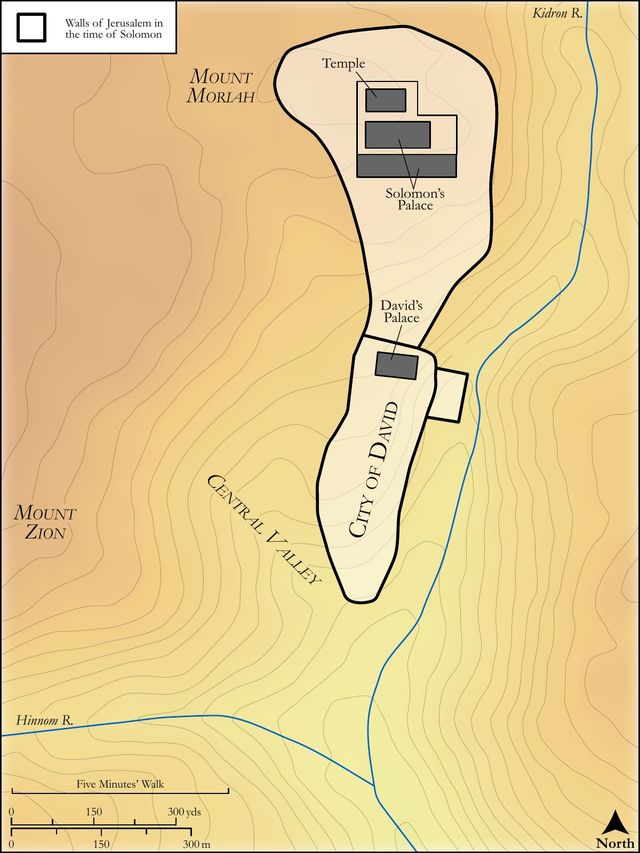
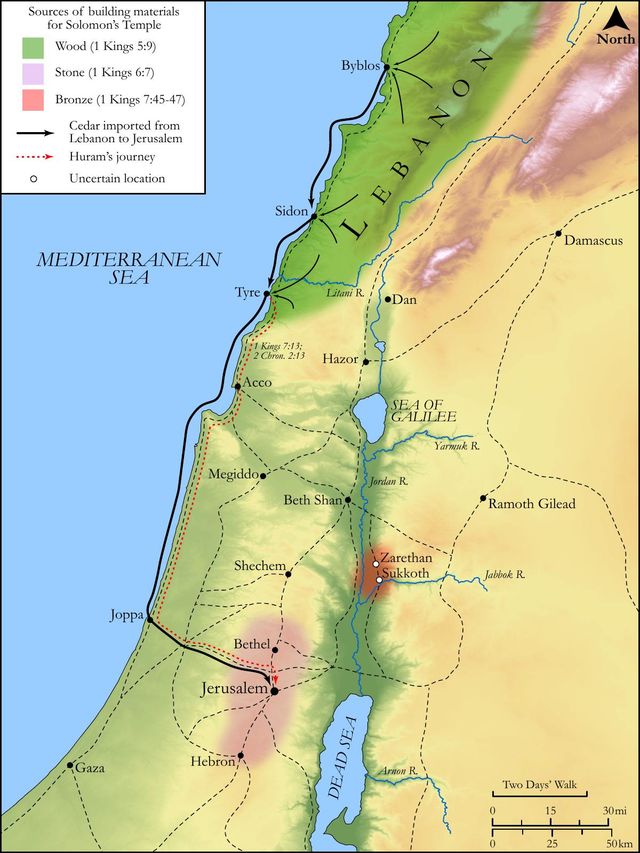
See on the biblical-era map
Study this verse
Public-domain commentary
Matthew Henry
From his Commentary on the Whole Bible. Henry comments on passages, not single verses — this entry covers 1 Kings 8:22–53. His four-level outline is real structure in the source text, so it is rendered as structure.
Solomon having made a general surrender of this house to God, which God had signified his acceptance of by taking possession, next follows Solomon's prayer, in which he makes a more particular declaration of the uses of that surrender, with all humility and reverence, desiring that God would agree thereto. In short, it is his request that this temple may be deemed and taken, not only for a house of sacrifice (no mention is made of that in all this prayer, that was taken for granted), but a house of prayer for all people; and herein it was a type of the gospel church; see Isa 56:7, compared with Mat 21:13. Therefore Solomon opened this house, not only with an extraordinary sacrifice, but with an extraordinary prayer.
I.The person that prayed this prayer was great.
Solomon did not appoint one of the priests to do it, nor one of the prophets, but did it himself, in the presence of all the congregation of Israel, Kg1 8:22.
1.It was well that he was able to do it, a sign that he had made a good improvement of the pious education which his parents gave him. With all his learning, it seems, he learnt to pray well, and knew how to express himself to God in a suitable manner, pro re nata - on the spur of the occasion, without a prescribed form. In the crowd of his philosophical transactions, his proverbs, and songs, he did not forget his devotions. He was a gainer by prayer (Kg1 3:11, etc.), and, we may suppose, gave himself much to it, so that he excelled, as we find here, in praying gifts.
2.It was well that he was willing to do it, and not shy of performing divine service before so great a congregation. He was far from thinking it any disparagement to him to be his own chaplain and the mouth of the assembly to God; and shall any think themselves too great to do this office for their own families? Solomon, in all his other glory, even on his ivory throne, looked not so great as he did now. Great men should thus support the reputation of religious exercises and so honour God with their greatness. Solomon was herein a type of Christ, the great intercessor for all over whom he rules.
II.The posture in which he prayed was very reverent, and expressive of humility, seriousness, and fervency in prayer.
He stood before the altar of the Lord, intimating that he expected the success of his prayer in virtue of that sacrifice which should be offered up in the fulness of time, typified by the sacrifices offered at that altar. But when he addressed himself to prayer, 1. He kneeled down, as appears, Kg1 8:54, where he is said to rise from his knees; compare Ch2 6:13. Kneeling is the most proper posture for prayer, Eph 3:14. The greatest of men must not think it below them to kneel before the Lord their Maker. Mr. Herbert says, "Kneeling never spoiled silk stocking." 2. He spread forth his hands towards heaven, and (as it should seem by Kg1 8:54) continued so to the end of the prayer, hereby expressing his desire towards, and expectations from, God, as a Father in heaven. He spread forth his hands, as it were to offer up the prayer from an open enlarged heart and to present it to heaven, and also to receive thence, with both arms, the mercy which he prayed for. Such outward expressions of the fixedness and fervour of devotion ought not to be despised or ridiculed.
III.The prayer itself was very long, and perhaps much longer than is here recorded.
At the throne of grace we have liberty of speech, and should use our liberty. It is not making long prayers, but making them for a pretence, that Christ condemns. In this excellent prayer Solomon does, as we should in every prayer,
1.Give glory to God. This he begins with, as the most proper act of adoration. He addresses himself to God as the Lord God of Israel, a God in covenant with them And, (1.) He gives him the praise of what he is, in general, the best of beings in himself ("There is no God like thee, none of the powers in heaven or earth to be compared with thee"), and the best of masters to his people: "Who keepest covenant and mercy with thy servants; not only as good as thy word in keeping covenant, but better than thy word in keeping mercy, doing that for them of which thou hast not given them an express promise, provided they walk before thee with all their heart, are zealous for thee, with an eye to thee." (2.) He gives him thanks for what he had done, in particular, for his family (Kg1 8:24): "Thou hast kept with thy servant David, as with thy other servants, that which thou promisedst him." The promise was a great favour to him, his support and joy, and now performance is the crown of it: Thou hast fulfilled it, as it is this day. Fresh experiences of the truth of God's promises call for enlarged praises.
2.He sues for grace and favour from God.
(1.)That God would perform to him and his the mercy which he had promised, Kg1 8:25, Kg1 8:26. Observe how this comes in. He thankfully acknowledges the performance of the promise in part; hitherto God had been faithful to his word: "Thou hast kept with thy servant David that which thou promisedst him, so far that his son fills his throne and has built the intended temple; therefore now keep with thy servant David that which thou hast further promised him, and which yet remains to be fulfilled in its season." Note, The experiences we have had of God's performing his promises should encourage us to depend upon them and plead them with God: and those who expect further mercies must be thankful for former mercies. Hitherto God has helped, Co2 1:10. Solomon repeats the promise (Kg1 8:25): There shall not fail thee a man to sit on the throne, not omitting the condition, so that thy children take heed to their way; for we cannot expect God's performance of the promise but upon our performance of the condition. And then he humbly begs this entail (Kg1 8:26): Now, O God of Israel! let thy word be verified. God's promises (as we have often observed) must be both the guide of our desires and the ground of our hopes and expectations in prayer. David had prayed (Sa2 7:25): Lord, do as thou hast said. Note, Children should learn of their godly parents how to pray, and plead in prayer.
(2.)That God would have respect to this temple which he had now taken possession of, and that his eyes might be continually open towards it (Kg1 8:29), that he would graciously own it, and so put an honour upon it. To this purpose,
[1.]He premises, First, A humble admiration of God's gracious condescension (Kg1 8:27): "But will God indeed dwell on the earth? Can we imagine that a Being infinitely high, and holy, and happy, will stoop so low as to let it be said of him that he dwells upon the earth and blesses the worms of the earth with his presence - the earth, that is corrupt, and overspread with sin - cursed, and reserved to fire? Lord, how is it?" Secondly, A humble acknowledgment of the incapacity of the house he had built, though very capacious, to contain God: "The heaven of heavens cannot contain thee, for no place can include him who is present in all places; even this house is too little, too mean to be the residence of him that is infinite in being and glory." Note, When we have done the most we can for God we must acknowledge the infinite distance and disproportion between us and him, between our services and his perfections.
[2.]This premised, he prays in general, First, That God would graciously hear and answer the prayer he was now praying, Kg1 8:28. It was a humble prayer (the prayer of thy servant), an earnest prayer (such a prayer as is a cry), a prayer made in faith (before thee, as the Lord, and my God): "Lord, hearken to it, have respect to it, not as the prayer of Israel's king (no man's dignity in the world, or titles of honour, will recommend him to God), but as the prayer of thy servant." Secondly, That God would in like manner hear and answer all the prayers that should, at any time hereafter, be made in or towards this house which he had now built, and of which God had said, My name shall be there (Kg1 8:29), his own prayers (Hearken to the prayers which thy servant shall make), and the prayers of all Israel, and of every particular Israelite (Kg1 8:30): "Hear it in heaven, that is indeed thy dwelling-place, of which this is but a figure; and, when thou hearest, forgive the sin that separates between them and God, even the iniquity of their holy things." a. He supposes that God's people will ever be a prayer people; he resolves to adhere to that duty himself. b. He directs them to have an eye, in their prayers, to that place where God was pleased to manifest his glory as he did not any where else on earth. None but priests might come into that place; but, when they worshipped in the courts of the temple, it must be with an eye towards it, not as the object of their worship (that were idolatry), but as an instituted medium of their worship, helping the weakness of their faith, and typifying the mediation of Jesus Christ, who is the true temple, to whom we must have an eye in every thing wherein we have to do with God. Those that were at a distance looked towards Jerusalem, for the sake of the temple, even when it was in ruins, Dan 6:10. c. He begs that God will hear the prayers, and forgive the sins, of all that look this way in their prayers. Not as if he thought all the devout prayers offered up to God by those who had no knowledge of this house, or regard to it, were therefore rejected; but he desired that the sensible tokens of the divine presence with which this house was blessed might always give sensible encouragement and comfort to believing petitioners.
[3.]More particularly, he here puts divers cases in which he supposed application would be made to God by prayer in or towards this house of prayer.
First, If God were appealed to by an oath for the determining of any controverted right between man and man, and the oath were taken before this altar, he prayed that God would, in some way or other, discover the truth, and judge between the contending parties, Kg1 8:31, Kg1 8:32. He prayed that, in difficult matters, this throne of grace might be a throne of judgment, from which God would right the injured that believingly appealed to it, and punish the injurious that presumptuously appealed to it. It was usual to swear by the temple and altar (Mat 23:16, Mat 23:18), which corruption perhaps took its rise from this supposition of an oath taken, not by the temple or altar, but at or near them, for the greater solemnity.
Secondly, If the people of Israel were groaning under any national calamity, or any particular Israelite under any personal calamity, he desired that the prayers they should make in or towards this house might be heard and answered.
a.In case of public judgments, war (Kg1 8:33), want of rain (Kg1 8:35), famine, or pestilence (Kg1 8:37), and he ends with an et cetera - any plague or sickness; for no calamity befals other people which may not befal God's Israel. Now he supposes, (a.) That the cause of the judgment would be sin, and nothing else. "If they be smitten before the enemy, if there be no rain, it is because they have sinned against thee." It is sin that makes all the mischief. (b.) That the consequence of the judgment would be that they would cry to God, and make supplication to him in or towards that house. Those that slighted him before would solicit him then. Lord, in trouble have they visited thee. In their afflictions they will seek me early and earnestly. (c.) That the condition of the removal of the judgment was something more than barely praying for it. He could not, he would not, ask that their prayer might be answered unless they did also turn from their sin (Kg1 8:35) and turn again to God (Kg1 8:33), that is, unless they did truly repent and reform. On no other terms may we look for salvation in this world or the other. But, if they did thus qualify themselves for mercy, he prays, [a.] That God would hear from heaven, his holy temple above, to which they must look, through this temple. [b.] That he would forgive their sin; for then only are judgments removed in mercy when sin is pardoned. [c.] That he would teach them the good way wherein they should walk, by his Spirit, with his word and prophets; and thus they might be both profited by their trouble (for blessed is the man whom God chastens and teaches), and prepared for deliverance, which then comes in love when it finds us brought back to the good way of God and duty. [d.] That he would then remove the judgment, and redress the grievance, whatever it might be - not only accept the prayer, but give in the mercy prayed for.
b.In case of personal afflictions, Kg1 8:38-40. "If any man of Israel has an errand to thee, here let him find thee, here let him find favour with thee." He does not mention particulars, so numerous, so various, are the grievances of the children of men. (a.) He supposes that the complainants themselves would very sensibly feel their own burden, and would open that case to God which otherwise they kept to themselves and did not make any man acquainted with: They shall know every man the plague of his own heart, what it is that pains him, and (as we say) where the shoe pinches, and shall spread their hands, that is, spread their case, as Hezekiah spread the letter, in prayer, towards this house; whether the trouble be of body or mind, they shall represent it before God. Inward burdens seem especially meant. Sin is the plague of our own heart; our indwelling corruptions are our spiritual diseases. Every Israelite indeed endeavours to know these, that he may mortify them and watch against the risings of them. These he complains of. This is the burden he groans under: O wretched man that I am! These drive him to his knees, drive him to the sanctuary. Lamenting these, he spreads forth his hands in prayer. (b.) He refers all cases of this kind, that should be brought hither, to God. [a.] To his omniscience: "Thou, even thou only, knowest the hearts of all the children of men, not only the plagues of their hearts, their several wants and burdens" (these he knows, but he will know them from us), "but the desire and intent of the heart, the sincerity or hypocrisy of it. Thou knowest which prayer comes from the heart, and which from the lips only." The hearts of kings are not unsearchable to God. [b.] To his justice: Give to every man according to his ways; and he will not fail to do so, by the rules of grace, not the law, for then we should all be undone. [c.] To his mercy: Hear, and forgive, and do (Kg1 8:39), that they may fear thee all their days, Kg1 8:40. This use we should make of the mercy of God to us in hearing our prayers and forgiving our sins, we should thereby he engaged to fear him while we live. Fear the Lord and his goodness. There is forgiveness with him, that he may be feared.
c.The case of the stranger that is not an Israelite is next mentioned, a proselyte that comes to the temple to pray to the God of Israel, being convinced of the folly and wickedness of worshipping the gods of his country. (a.) He supposed that there would be many such (Kg1 8:41, Kg1 8:42), that the fame of God's great works which he had wrought for Israel, by which he proved himself to be above all gods, nay, to be God alone, would reach to distant countries: "Those that live remote shall hear of thy strong hand, and thy stretched-out arm; and this will bring all thinking considerate people to pray towards this house, that they may obtain the favour of a God that is able to do them a real kindness." (b.) He begged that God would accept and answer the proselyte's prayer (Kg1 8:43): Do according to all that the stranger calleth to thee for. Thus early, thus ancient, were the indications of favour towards the sinners of the Gentiles: as there was then one law for the native and for the stranger (Exo 12:49), so there was one gospel for both. (c.) Herein he aimed at the glory of God and the propagating of the knowledge of him: "O let the stranger, in a special manner, speed well in his addresses, that he may carry away with him to his own country a good report of the God of Israel, that all people may know thee and fear thee (and, if they know thee aright, they will fear thee) as do thy people Israel." So far was Solomon from monopolizing the knowledge and service of God, and wishing to have them confined to Israel only (which was the envious desire of the Jews in the days of Christ and his apostles), that he prayed that all people might fear God as Israel did. Would to God that all the children of men might receive the adoption, and be made God's children! Father, thus glorify thy name.
d.The case of an army going forth to battle is next recommended by Solomon to the divine favour. It is supposed that the army is encamped at a distance, somewhere a great way off, sent by divine order against the enemy, Kg1 8:44. "When they are ready to engage, and consider the perils and doubtful issues of battle, and put up a prayer to God for protection and success, with their eye towards this city and temple, then hear their prayer, encourage their hearts, strengthen their hands, cover their heads, and so maintain their cause and give them victory." Soldiers in the field must not think it enough that those who tarry at home pray for them, but must pray for themselves, and they are here encouraged to hope fore a gracious answer. Praying should always go along with fighting.
e.The case of poor captives is the last that is here mentioned as a proper object of divine compassion. (a.) He supposes that Israel will sin. He knew them, and himself, and the nature of man, too well to think this a foreign supposition; for there is no man that sinneth not, that does not enough to justify God in the severest rebukes of his providence, no man but what is in danger of falling into gross sin, and will if God leave him to himself. (b.) He supposes, what may well be expected, that, if Israel revolt from God, God will be angry with them, and deliver them into the hand of their enemies, to be carried captive into a strange country, Kg1 8:46. (c.) He then supposes that they will bethink themselves, will consider their ways (for afflictions put men upon consideration), and, when once they are brought to consider, they will repent and pray, will confess their sins, and humble themselves, saying, We have sinned and have done perversely (Kg1 8:47), and in the land of their enemies will return to God, whom they had forsaken in their own land. (d.) He supposes that in their prayers they will look towards their own land, the holy land, Jerusalem, the holy city, and the temple, the holy house, and directs them so to do (Kg1 8:48), for his sake who gave them that land, chose that city, and to whose honour that house was built. (e.) He prays that then God would hear their prayers, forgive their sins, plead their cause, and incline their enemies to have compassion on them, Kg1 8:49. 50. God has all hearts in his hand, and can, when he pleases, turn the strongest stream the contrary way, and make those to pity his people who have been their most cruel persecutors. See this prayer answered, Psa 106:46. He made them to be pitied of those that carried them captive, which, if it did not release them, yet eased their captivity. (f.) He pleads their relation to God, and his interest in them: "They are thy people, whom thou hast taken into thy covenant and under thy care and conduct, thy inheritance, from which, more than from any other nation, thy rent and tribute of glory issue and arise (Kg1 8:51), separated from among all people to be so and by distinguishing favours appropriated to thee," Kg1 8:53.
Lastly, After all these particulars, he concludes with this general request, that God would hearken to all his praying people in all that they call unto him for, Kg1 8:52. No place now, under the gospel, can be imagined to add any acceptableness to the prayers made in or towards it, as the temple then did. That was a shadow: the substance is Christ; whatever we ask in his name, it shall be given us.
Continue studying 1 Kings 8:53 across the web’s major study libraries — every link below opens this exact verse, chapter, or book on the destination site.
Read & Compare
 BibleGatewayThis verse in more than 200 translations and 70 languages.
 Bible.comThe YouVersion reader — hundreds of translations, reading plans, and highlights.
 ESV.orgCrossway's official English Standard Version reader.
 NET BibleThe NET translation with 60,000+ translators' notes on every rendering decision.
 STEP BibleTyndale House's free study tool — original text, vocabulary, and scholarly resources.
 BibliaLogos Bible Software's free web reader.
 USCCBThe New American Bible (Revised Edition) with the U.S. bishops' study notes.
Commentaries
 BibleHub CommentariesDozens of classic commentaries on this verse, gathered on one page.
 StudyLightMore than 100 commentary sets — the largest collection on the web.
 BibleRefPlain-English commentary on what this verse means, verse by verse.
 Enduring WordDavid Guzik's free commentary on this chapter, widely used by Bible teachers.
 Bible Study ToolsVerse commentary alongside Greek and Hebrew study aids.
Original Language & Research
- BibleHub InterlinearThe verse word by word — original language, transliteration, and English.
- BibleHub LexiconEvery word's original-language definition and Strong's entry.
 Blue Letter BibleDeep-study tools — Strong's numbers, concordance, and word studies.
 SefariaThe Hebrew text with Rashi and centuries of Jewish commentary.
Sermons, Hymns & Audio


TrulyRandomVerse is not affiliated with these sites and doesn’t control their content. They’re linked because they’re genuinely useful.
Summary
King Solomon's dedicatory prayer at the consecration of the First Temple culminates in a profound declaration of God's unique and enduring relationship with Israel. In this verse, Solomon articulates the foundational truth that God sovereignly chose and set apart Israel from all other nations, establishing them as His cherished inheritance. This divine election, he reminds God, was not a new concept but a fulfillment of promises made through Moses, powerfully demonstrated in the miraculous deliverance of their ancestors from Egyptian bondage, affirming God's unwavering covenant faithfulness.
Context
ShowHideLiterary Context
This verse serves as the theological climax and concluding rationale of King Solomon's extensive dedicatory prayer, spanning 1 Kings 8:22-53. The prayer itself is delivered after the magnificent ceremony of bringing the Ark of the Covenant into the newly completed Temple's Most Holy Place (1 Kings 8:1-11). Solomon stands before the altar, acknowledging God's faithfulness to His promises to David and earnestly pleading for God's continued presence and blessing upon Israel. The prayer covers a wide range of scenarios, from national repentance and justice to divine intervention in times of drought, famine, or war. Verse 53 acts as the ultimate theological grounding for God's special relationship with Israel, rooting all the prayer's petitions in God's prior covenantal faithfulness and redemptive acts. It underscores that Israel's unique status is not self-derived but divinely ordained through a history of divine initiative.
Historical & Cultural Context
The dedication of the First Temple was arguably the most significant national and religious event in ancient Israelite history since the Exodus itself. It marked the establishment of a permanent dwelling place for Yahweh in Jerusalem and solidified the city's role as the religious and political center of the united monarchy under Solomon. In the broader ancient Near Eastern context, deities were often associated with specific lands or peoples, but Yahweh's relationship with Israel was distinct. Unlike other nations who might claim divine patronage through birth or conquest, Israel's identity was uniquely forged by a direct, covenantal act of divine election and liberation from slavery in Egypt. The Exodus, explicitly referenced by Solomon, was the defining historical event that established Israel's national identity and their exclusive relationship with Yahweh. The concept of "inheritance" (Hebrew: naḥălāh) was common in the ancient world, referring to a possession or patrimony, but its application to a people being God's "inheritance" highlighted an unparalleled intimacy and proprietary claim, signifying a unique, cherished bond.
Key Themes
ShowHide1 Kings 8:53 powerfully encapsulates several core theological themes central to Israel's identity and relationship with God. Firstly, Divine Election and Separation is paramount; Solomon emphasizes that God Himself initiated the act to "separate them from among all the people of the earth." This highlights Israel's unique status as a result of God's sovereign choice and grace, not their own merit, reflecting God's plan to create a distinct people for His purposes, as first articulated in the covenant at Sinai, where Israel was called to be a "kingdom of priests and a holy nation" (Exodus 19:5-6). Secondly, the phrase "to be thine inheritance" underscores Israel as God's Cherished Possession. They are not merely His subjects but His special treasure, a concept deeply rooted in the Mosaic Covenant, where God promised Israel would be a "peculiar treasure" among all peoples (Exodus 19:5). Thirdly, the explicit link to God's promises made "by the hand of Moses thy servant" affirms Covenant Faithfulness and Continuity. This acknowledges the enduring nature of God's plan and His unwavering commitment to the covenant established at Sinai, validating the Law and foundational principles given through Moses. Finally, the reference to "when thou broughtest our fathers out of Egypt" highlights The Exodus as the Defining Act of Redemption. This miraculous deliverance is presented as the pivotal event that solidified Israel's identity and their unique relationship with God, demonstrating His power and intention to claim Israel as His own, setting them apart from idolatrous nations. This act of redemption is foundational to Israel's self-understanding and their relationship with Yahweh, echoing themes found in Deuteronomy 4:20.
Exposition and Analysis
ShowHideKey Word Analysis
ShowHideThis verb (H914) signifies to divide, distinguish, or set apart. It conveys a strong sense of active, intentional distinction and uniqueness. In this context, it emphasizes God's sovereign initiative in creating a clear boundary between Israel and all other nations, marking them as distinct for His divine purposes. It's not a passive separation but an active, purposeful act of divine election, highlighting God's deliberate choice to make Israel unique among the peoples of the earth.
This noun (H5159) typically refers to a possession, heritage, or property passed down, often land or a patrimony. When applied to God and Israel, it denotes a deep, cherished, and proprietary bond. Israel is not merely a people God rules over, but His treasured possession, His special portion among all the peoples of the earth, signifying a relationship of profound intimacy, value, and divine ownership.
This primitive word (H3027) refers to the open hand, indicating power, means, or direction. In the idiomatic phrase "by the hand of Moses" (referencing H4872, Moses), it signifies agency, instrumentality, or the authority by which something is accomplished. Here, it emphasizes that God's covenant promises, the means of Israel's separation, and their establishment as His inheritance were revealed and mediated through Moses, God's chosen servant. It underscores the divine origin and authority of the Mosaic Law and the covenant.
Verse Breakdown
ShowHide"For thou didst separate them from among all the people of the earth"
This clause highlights God's sovereign and deliberate act of choosing Israel. It emphasizes that Israel's unique status was not earned or achieved by their own merit, but was a direct result of God's initiative to set them apart from the diverse nations of the world, marking them for a special relationship and purpose. This separation implies a distinct identity and a unique calling.
"[to be] thine inheritance"
This phrase clarifies the purpose of God's separation. Israel was set apart not merely for distinction, but to become God's own special possession, His treasured people. This implies a deep, intimate, and cherished relationship, where Israel is seen as a valuable and beloved patrimony belonging exclusively to Yahweh, reflecting His profound love and commitment.
"as thou spakest by the hand of Moses thy servant"
This clause affirms the continuity and faithfulness of God's plan. Solomon reminds God, and implicitly the assembled people, that this unique relationship was not a new development but a fulfillment of promises and declarations made centuries earlier through Moses. It validates the foundational covenants and laws given at Sinai, demonstrating God's unwavering commitment to His word and His chosen mediator.
"when thou broughtest our fathers out of Egypt, O Lord GOD"
This final clause points to the specific historical event that actualized God's promise and established Israel as His separated inheritance. The Exodus, the miraculous deliverance from slavery in Egypt, served as the definitive act of redemption and power through which God claimed Israel as His own, demonstrating His might and establishing the covenant relationship. The reverent address "O Lord GOD" (Hebrew: ʼĂdônây Yᵉhôvih, H136, H3069) is a powerful invocation, acknowledging God's supreme authority, covenant faithfulness, and redemptive power.
Literary Devices
ShowHideSolomon's prayer in 1 Kings 8:53 employs several potent literary devices to convey its profound theological message. There is a strong element of Historical Allusion, as the verse directly references the Exodus, the foundational redemptive act in Israel's history. This grounds the theological statement in a concrete, undeniable event, reminding both God (in prayer) and the people of God's past faithfulness and power. The language also exhibits significant Covenant Language, utilizing terms like "separate," "inheritance," and the explicit reference to "Moses thy servant," which are deeply embedded in the Mosaic Covenant and the Deuteronomic tradition. This reinforces the continuity and binding nature of God's relationship with Israel. Furthermore, the phrase "by the hand of Moses" functions as a Metonymy, where "hand" stands for the agency or authority of Moses, emphasizing that God's word and actions were mediated through His chosen servant. The entire verse serves as a powerful Summary Statement of Israel's unique identity, encapsulating their divine election, their status as God's possession, and the historical basis for their covenant relationship, all within the context of a solemn prayer.
Theological and Thematic Connections
ShowHide1 Kings 8:53 serves as a profound theological anchor, reminding both God and His people of the unique, divinely initiated covenant that defines Israel's existence. It underscores God's sovereign choice, demonstrating that Israel's identity as a distinct nation is rooted not in their own merit or accomplishments, but entirely in God's electing love and redemptive power. This concept of being "separated" and "an inheritance" highlights God's deep affection and proprietary claim over His people, emphasizing His faithfulness to promises made centuries earlier. It sets a precedent for understanding God's character as one who chooses, delivers, and cherishes His chosen ones, a theme that reverberates throughout salvation history.
Reflection and Application
ShowHideSolomon's prayer in 1 Kings 8:53 offers timeless insights for believers today, inviting us to reflect on our own identity and relationship with God. Just as ancient Israel was set apart by God's sovereign choice and redemptive act, so too are Christians called to be a distinct people, chosen and redeemed not by our own works but by God's grace through faith in Christ. This truth fosters profound humility and gratitude, reminding us that our ultimate value and purpose derive solely from God's decision to call us into His family. Recognizing ourselves as God's "inheritance" means embracing our immense worth in His eyes, understanding that we are His treasured possession, purchased at the infinite cost of Christ's sacrifice. This identity compels us to live lives that reflect His character and purposes in a world often at odds with His ways, demonstrating His love, righteousness, and truth. Furthermore, like Solomon recalling the Exodus, we are called to remember God's redemptive acts in our own lives and in history, particularly the ultimate act of salvation through Jesus Christ. This remembrance strengthens our faith, cultivates trust in His continued faithfulness, and inspires us to live out our separated calling with joy and conviction, serving as His ambassadors in the world.
Questions for Reflection
ShowHideFAQ
ShowHideWhy does Solomon remind God of something God already knows?
ShowHideSolomon's prayer is not intended to inform God, but rather to serve multiple vital purposes. Firstly, it is an act of worship and adoration, acknowledging God's character, faithfulness, and past deeds. By recounting God's redemptive history, Solomon is praising God for who He is and what He has done, affirming His attributes and covenant promises. Secondly, it serves as a public declaration for the people of Israel, reminding them of their unique identity and the foundational covenant upon which their nation was built. This reinforces their understanding of God's special relationship with them and their obligations under the Law. Thirdly, it forms the theological basis for Solomon's subsequent petitions for God's continued presence and blessing in the Temple. By appealing to God's past faithfulness in separating Israel and making them His inheritance, Solomon builds a strong case for God's continued intervention and care for His people. It's a plea rooted in God's own character and consistent promises, demonstrating faith and reliance on His unchanging nature.
What does "inheritance" mean in this context when applied to Israel?
ShowHideWhen Israel is called God's "inheritance" (1 Kings 8:53), it signifies a profound and intimate relationship where Israel is God's special, cherished possession. The Hebrew word naḥălāh (נחלה) typically refers to a possession, heritage, or property, often land, that is passed down or owned within a family. In this divine context, it means that God has chosen Israel out of all nations to be exclusively His own, a people He values above all others. It implies a deep, proprietary bond, not merely one of ownership or rule, but of affection, commitment, and protective care. Just as a person cherishes their most valuable inheritance, God cherishes Israel, having redeemed them and set them apart for His unique purposes. This concept emphasizes Israel's immense value in God's eyes and the depth of His covenantal love for them, as seen in passages like Deuteronomy 7:6.
Christ-Centered Fulfillment
ShowHideThe profound truth of God's sovereign election and the establishment of Israel as His "inheritance" in 1 Kings 8:53 finds its ultimate and most glorious fulfillment in Jesus Christ and His church. While ancient Israel was God's chosen people under the Old Covenant, Christ is the true and perfect "inheritance" of God, the beloved Son in whom God is well pleased (Matthew 3:17). Through His atoning work on the cross, believers are now "separated" from the world and brought into a new covenant relationship, becoming God's spiritual inheritance, sealed with the Holy Spirit (Ephesians 1:11-14). Just as God brought Israel out of Egypt to be His own, Christ delivers us from the domain of darkness and transfers us into His kingdom of light (Colossians 1:13). The Exodus, the defining act of redemption for Israel, powerfully foreshadows the greater spiritual Exodus accomplished by Christ through His death and resurrection, freeing humanity from the bondage of sin and death once for all (Hebrews 9:12). The church, composed of both Jew and Gentile, now stands as God's "chosen race, a royal priesthood, a holy nation, a people for his own possession" (1 Peter 2:9), fulfilling the ancient promises and embodying the reality of being God's treasured inheritance through union with Christ, the ultimate and perfect Son.