


1 Kings 8:62
Bible text: King James Version (1769 Blayney text) · Public domain
Bible text: Berean Standard Bible · Public domain
Bible text: American Standard Version (1901) · Public domain
Bible text: World English Bible, Messianic edition · Public domain
Bible text: Geneva Bible (1599) · Public domain
Bible text: Young's Literal Translation · Public domain
- וְהַמֶּלֶךְve·ha·Me·lekhand the kingH4428Conj-w ¦ Art ¦ N-msNoun Singular Masculine Absoluteוְandהַtheמֶּלֶךְking
- וְכָלve·kholand allH3605Conj-w ¦ N-mscNoun Singular Masculine Constructוְandכָלall
- יִשְׂרָאֵלYis·ra·'ElIsraelH3478N-properNoun Proper Location
- עִמּוֹi·Mowith himH5973Prep ¦ 3msPreposition Definiteעִמּwithוֹhim
- זֹבְחִיםzoe·Chim[were] sacrificingH2076V-Qal-Prtcpl-mpVerb Qal Participle Plural Masculine Absolute
- זֶבַחZe·vacha sacrificeH2077N-msNoun Singular Masculine Absolute
- לִפְנֵיlif·Nei<to> beforeH6440Prep-l ¦ N-mpcNoun Plural Masculine Constructלִ<to>פְנֵיbefore
- יְהוָהYah·wehYahwehH3068N-properNoun Proper Title
English is a literal word-by-word gloss of the Hebrew, not the KJV's wording. Why?
This is the original text the KJV's translators worked from — each Hebrew word with its own literal English meaning in this verse, prepared by scholars at Tyndale House, Cambridge. The KJV translates whole sentences, not word by word, so its wording differs: one Hebrew word can become several English words, and the KJV may choose “the LORD” where the gloss reads “Yahweh”. Both are faithful — they answer different questions. For the KJV's own rendering, switch to the KJV text.
Details
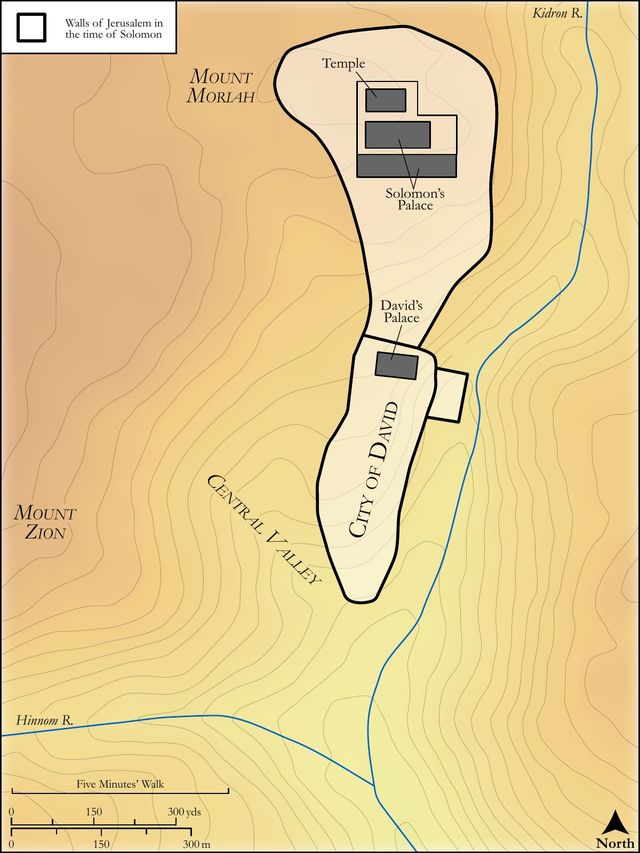
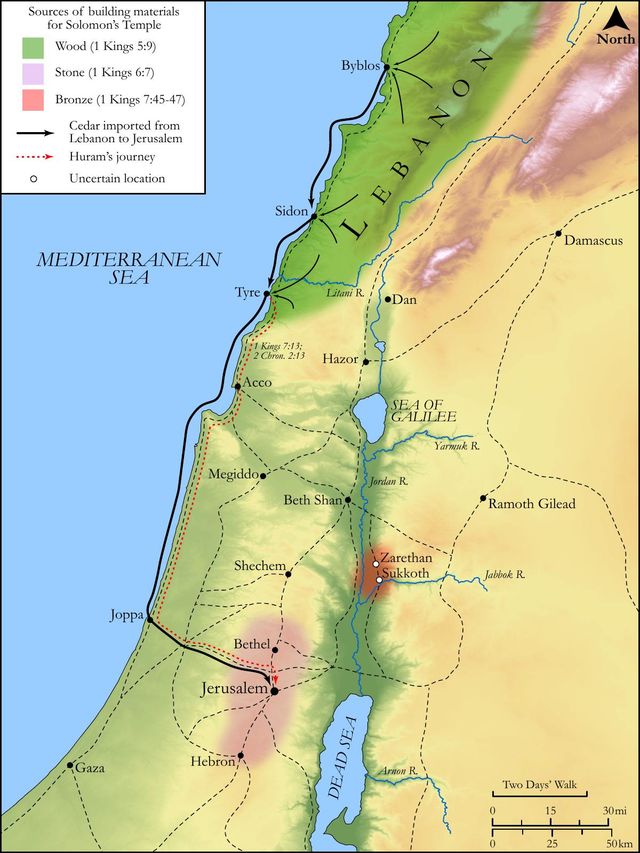
See on the biblical-era maps
Study this verse
Public-domain commentary
Matthew Henry
From his Commentary on the Whole Bible. Henry comments on passages, not single verses — this entry covers 1 Kings 8:62–66. His two-level outline is real structure in the source text, so it is rendered as structure.
We read before that Judah and Israel were eating and drinking, and very cheerful under their own vines and fig-trees; here we have them so in God's courts. Now they found Solomon's words true concerning Wisdom's ways, that they are ways of pleasantness.
I.They had abundant joy and satisfaction while they attended at God's house, for there,
1.Solomon offered a great sacrifice, 22,000 oxen and 120,000 sheep, enough to have drained the country of cattle if it had not been a very fruitful land. The heathen thought themselves very generous when they offered sacrifices by hundreds (hecatombs they called them), but Solomon out-did them: he offered them by thousands. When Moses dedicated his altar, the peace-offerings were twenty-four bullocks, and of rams, goats, and lambs, 180 (Num 7:88); then the people were poor, but now that they had increased in wealth more was expected from them. Where God sows plentifully he must reap accordingly. All these sacrifices could not be offered in one day, but in the several days of the feast. Thirty oxen a day served Solomon's table, but thousands shall go to God's altar. Few are thus minded, to spend more on their souls than on their bodies. The flesh of the peace-offerings, which belonged to the offerer, it is likely, Solomon treated the people with. Christ fed those who attended him. The brazen altar was not large enough to receive all these sacrifices, so that, to serve the present occasion, they were forced to offer many of them in the middle of the court, (Kg1 8:64), some think on altars, altars of earth or stone, erected for the purpose and taken down when the solemnity was over, others think on the bare ground. Those that will be generous in serving God need not stint themselves for want of room and occasion to be so.
2.He kept a feast, the feast of tabernacles, as it should seem, after the feast of dedication, and both together lasted fourteen days (Kg1 8:65), yet they said not, Behold, what a weariness is this!
II.They carried this joy and satisfaction with them to their own houses.
When they were dismissed they blessed the king (Kg1 8:66), applauded him, admired him, and returned him the thanks of the congregation, and then went to their tents joyful and glad of heart, all easy and pleased. God's goodness was the matter of their joy, so it should be of ours at all times. They rejoiced in God's blessing both on the royal family and on the kingdom; thus should we go home rejoicing from holy ordinances, and go on our way rejoicing for God's goodness to our Lord Jesus (of whom David his servant was a type, in the advancement and establishment of his throne, pursuant to the covenant of redemption), and to all believers, his spiritual Israel, in their sanctification and consolation, pursuant to the covenant of grace. If we rejoice not herein always it is our own fault.
Continue studying 1 Kings 8:62 across the web’s major study libraries — every link below opens this exact verse, chapter, or book on the destination site.
Read & Compare
 BibleGatewayThis verse in more than 200 translations and 70 languages.
 Bible.comThe YouVersion reader — hundreds of translations, reading plans, and highlights.
 ESV.orgCrossway's official English Standard Version reader.
 NET BibleThe NET translation with 60,000+ translators' notes on every rendering decision.
 STEP BibleTyndale House's free study tool — original text, vocabulary, and scholarly resources.
 BibliaLogos Bible Software's free web reader.
 USCCBThe New American Bible (Revised Edition) with the U.S. bishops' study notes.
Commentaries
 BibleHub CommentariesDozens of classic commentaries on this verse, gathered on one page.
 StudyLightMore than 100 commentary sets — the largest collection on the web.
 BibleRefPlain-English commentary on what this verse means, verse by verse.
 Enduring WordDavid Guzik's free commentary on this chapter, widely used by Bible teachers.
 Bible Study ToolsVerse commentary alongside Greek and Hebrew study aids.
Original Language & Research
- BibleHub InterlinearThe verse word by word — original language, transliteration, and English.
- BibleHub LexiconEvery word's original-language definition and Strong's entry.
 Blue Letter BibleDeep-study tools — Strong's numbers, concordance, and word studies.
 SefariaThe Hebrew text with Rashi and centuries of Jewish commentary.
Sermons, Hymns & Audio


TrulyRandomVerse is not affiliated with these sites and doesn’t control their content. They’re linked because they’re genuinely useful.
Summary
1 Kings 8:62 vividly portrays a monumental act of corporate worship and national dedication following the completion and consecration of Solomon's Temple in Jerusalem. With the manifest glory of the LORD having filled the newly built sanctuary, King Solomon, in unified action with the entire nation of Israel, offered an immense volume of sacrifices before the LORD. This grand offering served as a profound expression of thanksgiving, covenant affirmation, and joyous celebration, marking the culmination of a significant period in Israel's history where the physical dwelling place for God's presence was established and acknowledged by both the monarch and his people.
Context
ShowHideLiterary Context
This verse immediately follows the climactic dedication of the Temple, a pivotal event in Israel's history. Solomon has just concluded a lengthy and fervent prayer of dedication in 1 Kings 8:22-53, acknowledging God's faithfulness and pleading for His continued presence and blessing upon Israel. Prior to this, the glory of the LORD had dramatically filled the Temple, signifying divine acceptance and indwelling, causing the priests to be unable to minister (1 Kings 8:10-11). The offering of sacrifices in verse 62, and the immense scale detailed in the subsequent verse (1 Kings 8:63), represents the people's collective response of worship, gratitude, and renewed covenant commitment in light of God's manifest presence and the fulfillment of His promises regarding a dwelling place among them. It transitions from the theological declaration of the Temple's purpose to the practical, communal act of worship, solidifying the spiritual significance of the physical structure.
Historical & Cultural Context
The construction and dedication of the Temple were the zenith of Solomon's reign, fulfilling David's desire to build a permanent dwelling for the Ark of the Covenant. In ancient Israelite culture, sacrifice was the primary means of approaching God, expressing devotion, seeking atonement, and celebrating fellowship. The scale of the sacrifices described here (implied by "all Israel" and explicitly detailed in 1 Kings 8:63) would have been unprecedented, reflecting the national significance of the Temple's completion and the immense prosperity of Solomon's kingdom. The king, as the representative head of the nation, played a crucial role in leading this corporate worship, symbolizing the unity of the people under God's sovereignty. This event also solidified Jerusalem's status as the central place of worship, a concept emphasized in Deuteronomy 12, thereby centralizing Israelite religious life around the Temple and reinforcing the unique relationship between Yahweh and His chosen people.
Key Themes
ShowHideSeveral major themes converge in this verse, highlighting its theological richness. Corporate Worship is paramount, emphasizing the unity of the king and "all Israel" in a shared act of devotion. This communal participation underscores the idea that faith is not merely individual but a collective covenant relationship with God, where the entire nation engages in a unified expression of reverence. Covenant Affirmation is also central; by offering these sacrifices, the people were reaffirming their commitment to the covenant established at Sinai, much like the original covenant ceremony involving sacrifices in Exodus 24:5-8. The act of sacrifice itself embodies Thanksgiving and Dedication, expressing profound gratitude for God's faithfulness in enabling the Temple's completion and for His willingness to dwell among His people. Finally, the verse subtly reinforces the theme of Divine Presence, as the sacrifices are offered "before the LORD," who has just filled the Temple with His glory, confirming His acceptance of their worship and His dwelling among them as promised.
Exposition and Analysis
ShowHideKey Word Analysis
ShowHideRefers to Solomon, the reigning monarch. In ancient Israel, the king served as both political and religious head, often leading the nation in acts of worship and covenant renewal. His participation here signifies the national, divinely ordained leadership in this sacred act of dedication.
This term, derived from Jacob's symbolic name, signifies "he will rule as God" and refers to the collective posterity of Jacob, the nation chosen by God. The phrase "all Israel" emphasizes the comprehensive and unified participation of the entire nation. While likely a hyperbole for the vast numbers present, it signifies that this was not a private royal ceremony but a national event, representing the collective faith and dedication of God's chosen people.
A primitive root meaning "to slaughter an animal (usually in sacrifice)." This verb specifically denotes the act of preparing and presenting a sacrificial offering. It implies a costly, tangible act of worship involving the shedding of blood, central to the Old Testament sacrificial system. In this context, given the dedication of the Temple, these were primarily peace offerings (fellowship offerings) and burnt offerings (whole dedication), symbolizing communion with God and total surrender.
Verse Breakdown
ShowHide"And the king, and all Israel with him"
This opening clause immediately establishes the scope and nature of the event. It was a joint endeavor, led by the supreme human authority (the king) but participated in by the entire community. This highlights the unity of purpose and the collective nature of their worship and covenant relationship with God. The king's leadership legitimized and organized the national act, while the presence of "all Israel" underscored its popular, communal significance, demonstrating a unified national response to God's presence.
"offered sacrifice"
This is the central action of the verse. The act of offering sacrifice was the prescribed means of approaching God in the Old Covenant. In this context, it was primarily an act of joyous thanksgiving and dedication following the successful completion and divine acceptance of the Temple. The sheer volume of sacrifices, elaborated in the subsequent verse, speaks to the immense gratitude and devotion of the king and the people. It was a tangible, costly expression of their worship and commitment, a physical manifestation of their spiritual posture.
"before the LORD"
This phrase emphasizes the direct object and recipient of the worship. The sacrifices were not offered to idols or mere human leaders, but to Yahweh (H3068), the self-Existent or Eternal God of Israel, who had just manifested His glorious presence in the Temple. It underscores the sacredness of the act and the reality of God's immanent presence among His people, making the Temple the focal point of their encounter with the divine and confirming His acceptance of their worship.
Literary Devices
ShowHideThe verse employs several literary devices to convey its profound meaning and the grandeur of the event. Synecdoche is present in "all Israel," where a part (the representatives or a vast multitude) stands for the whole nation, emphasizing the comprehensive and unified nature of the communal worship. The act of "offered sacrifice" is rich in Symbolism, representing not only atonement and fellowship but, in this specific context, profound thanksgiving, dedication, and the renewal of the covenant relationship between God and His people. The entire scene is imbued with a sense of Grandeur and Magnificence, underscored by the preceding narrative of the Temple's awe-inspiring construction and dedication, and the implied scale of the offerings. This pervasive sense of awe and solemnity contributes significantly to the verse's impact, highlighting the unparalleled significance of this moment in Israel's religious and national history.
Theological and Thematic Connections
ShowHide1 Kings 8:62 serves as a powerful theological statement about the nature of worship and the covenant relationship between God and His people. It demonstrates that true worship is a corporate act, involving both leadership and the entire community, offered in gratitude for God's faithfulness and presence. The sacrifices, though physical, symbolized the people's spiritual dedication and their ongoing commitment to the covenant. This act of national worship affirmed God's unique sovereignty over Israel and their unique status as His chosen people, now with a central dwelling place for His name. It foreshadows the ultimate, perfect sacrifice that would fully reconcile humanity to God, transcending the temporary nature of these animal offerings.
Reflection and Application
ShowHideThe scene in 1 Kings 8:62 invites contemporary believers to reflect on the nature of our own worship and dedication to God. Just as "all Israel" gathered to offer sacrifices, there is profound value in corporate worship, where the community of faith comes together to acknowledge God's greatness, express gratitude, and dedicate themselves anew to His purposes. This verse challenges us to consider the "cost" of our worship – not in terms of animal sacrifice, but in the offering of our time, talents, resources, and indeed, our very lives, as "living sacrifices" in response to God's immense grace. It reminds us that true worship is a holistic response to God's presence and faithfulness, marked by both individual devotion and communal expression, fostering unity and a shared commitment to God's kingdom. It calls us to participate actively and wholeheartedly in the worship of the Lord, recognizing that our collective adoration brings glory to His name and strengthens the bonds of fellowship.
Questions for Reflection
ShowHideFAQ
ShowHideWhat was the primary purpose of these sacrifices at the Temple dedication?
ShowHideWhile Old Testament sacrifices served various purposes (atonement, fellowship, burnt offerings for dedication), the primary purpose of the immense sacrifices at the Temple dedication was an outpouring of thanksgiving and joyous dedication. Having witnessed the glory of the LORD fill the Temple and hearing Solomon's fervent prayer of dedication, the king and all Israel were responding with profound gratitude for God's faithfulness in providing a dwelling place for His name and for His presence among them. It was a national celebration and a reaffirmation of their covenant relationship with Yahweh. The sheer scale of the offerings, explicitly elaborated in 1 Kings 8:63, speaks to the magnitude of their thanksgiving and commitment, signifying a national act of devotion and celebration.
Christ-Centered Fulfillment
ShowHideThe grand scene of sacrifice in 1 Kings 8:62, while a magnificent display of Old Covenant worship, ultimately points forward to its perfect fulfillment in Jesus Christ. The myriad of animal sacrifices, offered "before the LORD" as a costly expression of dedication and thanksgiving, served as a foreshadowing of the singular, once-for-all sacrifice of the Lamb of God who takes away the sin of the world. Unlike the repeated offerings of the Old Covenant, which could never fully atone for sin or perfect those who drew near (Hebrews 10:1-4), Christ's sacrifice on the cross perfectly and eternally accomplished reconciliation between God and humanity (Hebrews 10:10-14). Through His shed blood, a new and living way was opened into the very presence of God, no longer confined to a physical temple but accessible to all who believe (Hebrews 10:19-22). Thus, the lavish dedication in 1 Kings 8:62 finds its ultimate meaning in the infinitely more precious dedication of Christ, who offered Himself as the supreme act of worship and the perfect covenant sacrifice, enabling believers to now offer themselves as "living sacrifices" in response to His grace, which is our spiritual act of worship (Romans 12:1).