


Job 5:10
Bible text: King James Version (1769 Blayney text) · Public domain
Bible text: Berean Standard Bible · Public domain
Bible text: American Standard Version (1901) · Public domain
Bible text: World English Bible, Messianic edition · Public domain
Bible text: Geneva Bible (1599) · Public domain
Bible text: Young's Literal Translation · Public domain
- הַנֹּתֵןha·no·Tenwho givesH5414Art ¦ V-Qal-Prtcpl-msVerb Qal Participle Singular Masculine Absoluteהַwhoנֹּתֵןgives
- מָטָרMa·torrainH4306N-msNoun Singular Masculine Absolute
- עַל'alonH5921PrepPreposition
- פְּנֵיpe·nei[the] surface ofH6440N-mpcNoun Plural Masculine Construct
- אָרֶץ'A·retz[the] earthH776N-fsNoun Singular Feminine Absolute
- וְשֹׁלֵחַve·Sho·le·achand [who] sendsH7971Conj-w ¦ V-Qal-Prtcpl-msVerb Qal Participle Singular Masculine Absoluteוְandשֹׁלֵחַ[who] sends
- מַיִםMa·yimwaterH4325N-mpNoun Plural Masculine Absolute
- עַל'alonH5921PrepPreposition
- פְּנֵיpe·Nei[the] surface ofH6440N-mpcNoun Plural Masculine Construct
- חוּצוֹתchu·Tzot[the] open placesH2351N-fpNoun Plural Feminine Absolute
English is a literal word-by-word gloss of the Hebrew, not the KJV's wording. Why?
This is the original text the KJV's translators worked from — each Hebrew word with its own literal English meaning in this verse, prepared by scholars at Tyndale House, Cambridge. The KJV translates whole sentences, not word by word, so its wording differs: one Hebrew word can become several English words, and the KJV may choose “the LORD” where the gloss reads “Yahweh”. Both are faithful — they answer different questions. For the KJV's own rendering, switch to the KJV text.
Details
See on the biblical-era map
Study this verse
Public-domain commentary
Matthew Henry
From his Commentary on the Whole Bible. Henry comments on passages, not single verses — this entry covers Job 5:6–16. His four-level outline is real structure in the source text, so it is rendered as structure.
Eliphaz, having touched Job in a very tender part, in mentioning both the loss of his estate and the death of his children as the just punishment of his sin, that he might not drive him to despair, here begins to encourage him, and puts him in a way to make himself easy. Now he very much changes his voice (Gal 4:20), and speaks in the accents of kindness, as if he would atone for the hard words he had given him.
I.He reminds him that no affliction comes by chance, nor is to be attributed to second causes:
It doth not come forth of the dust, nor spring out of the ground, as the grass doth, Job 5:6. It doth not come of course, at certain seasons of the year, as natural productions do, by a chain of second causes. The proportion between prosperity and adversity is not so exactly observed by Providence as that between day and night, summer and winter, but according to the will and counsel of God, when and as he thinks fit. Some read it, Sin comes not forth out of the dust, nor iniquity of the ground. If men be bad, they must not lay the blame upon the soil, the climate, or the stars, but on themselves. If thou scornest, thou alone shalt bear it. We must not attribute our afflictions to fortune, for they are from God, nor our sins to fate, for they are from ourselves; so that, whatever trouble we are in, we must own that God sends it upon us and we procure it to ourselves: the former is a reason why we should be very patient, the latter why we should be very penitent, when we are afflicted.
II.He reminds him that trouble and affliction are what we have all reason to expect in this world:
Man is brought to trouble (Job 5:7), not as man (had he kept his innocency he would have been born to pleasure), but as sinful man, as born of a woman (Job 14:1), who was in the transgression. Man is born in sin, and therefore born to trouble. Even those that are born to honour and estate are yet born to trouble in the flesh. In our fallen state it has become natural to us to sin, and the natural consequence of that is affliction, Rom 5:12. There is nothing in this world we are born to, and can truly call our own, but sin and trouble; both are as the sparks that fly upwards. Actual transgressions are the sparks that fly out of the furnace of original corruption; and, being called transgressors from the womb, no wonder that we deal very treacherously, Isa 48:8. Such too is the frailty of our bodies, and the vanity of all our enjoyments, that our troubles also thence arise as naturally as the sparks fly upwards - so many are they, so thick and so fast does one follow another. Why then should we be surprised at our afflictions as strange, or quarrel with them as hard, when they are but what we are born to? Man is born to labour (so it is in the margin), is sentenced to eat his bread in the sweat of his face, which should inure him to hardness, and make him bear his afflictions the better.
III.He directs him how to behave himself under his affliction (Job 5:8): I would seek unto God; surely I would: so it is in the original. Here is,
1.A tacit reproof to Job for not seeking to God, but quarrelling with him: "Job, if I had been in thy case, I would not have been so peevish and passionate as thou art. I would have acquiesced in the will of God." It is easy to say what we would do if we were in such a one's case; but when it comes to the trial, perhaps it will be found not so easy to do as we say.
2.Very good and seasonable advice to him, which Eliphaz transfers to himself in a figure: "For my part, the best way I should think I could take, if I were in thy condition, would be to apply to God." Note, We should give our friends no other counsel than what we would take ourselves if we were in their case, that we may be easy under our afflictions, may get good by them, and may see a good issue of them.
(1.)We must by prayer fetch in mercy and grace from God, seek to him as a Father and friend, though he contend with us, as one who is alone able to support and succour us. His favour we must seek when we have lost all we have in the world; to him we must address ourselves as the fountain and Father of all good, all consolation. Is any afflicted? let him pray. It is heart's-ease, a salve for every sore.
(2.)We must by patience refer ourselves and our cause to him: To God would I commit my cause; having spread it before him, I would leave it with him; having laid it at his feet, I would lodge it in his hand. "Here I am, let the Lord do with me as seemeth him good." If our cause be indeed a good cause, we need not fear committing it to God, for he is both just and kind. Those that would seek so as to speed must refer themselves to God.
IV.He encourages him thus to seek to God, and commit his cause to him.
It will not be in vain to do so, for he is one in whom we shall find effectual help.
1.He recommends to his consideration God's almighty power and sovereign dominion. In general, he doeth great things (Job 5:9), great indeed, for he can do any thing, he doth do every thing, and all according to the counsel of his own will - great indeed, for the operations of his power are,
(1.)Unsearchable, and such as can never be fathomed, can never be found out from the beginning to the end, Ecc 3:11. The works of nature are mysterious; the most curious searches come far short of full discoveries and the wisest philosophers have owned themselves at a loss. The designs of Providence ar much more deep and unaccountable, Rom 11:33.
(2.)Numerous, and such as can never be reckoned up. He doeth great things without number; his power is never exhausted, nor will all his purposes ever be fulfilled till the end of time.
(3.)They are marvellous, and such as never can be sufficiently admired; eternity itself will be short enough to be spent in the admiration of them. Now, by the consideration of this, Eliphaz intends,
[1.]To convince Job of his fault and folly in quarrelling with God. We must not pretend to pass a judgment upon his works, for they are unsearchable and above our enquiries; nor must we strive with our Maker, for he will certainly be too hard for us, and is able to crush us in a moment.
[2.]To encourage Job to seek unto God, and to refer his cause to him. What more encouraging than to see that he is one to whom power belongs? He can do great things and marvellous for our relief, when we are brought ever so low.
2.He gives some instances of God's dominion and power.
(1.)God doeth great things in the kingdom of nature: He gives rain upon the earth (Job 5:10), put here for all the gifts of common providence, all the fruitful seasons by which he filleth our hearts with food and gladness, Act 14:17. Observe, When he would show what great things God does he speaks of his giving rain, which, because it is a common thing, we are apt to look upon as a little thing, but, if we duly consider both how it is produced and what is produced by it, we shall see it to be a great work both of power and goodness.
(2.)He doeth great things in the affairs of the children of men, not only enriches the poor and comforts the needy, by the rain he sends (Job 5:10), but, in order to the advancing of those that are low, he disappoints the devices of the crafty; for Job 5:11 is to be joined to Job 5:12. Compare with Luk 1:51-53. He hath scattered the proud in the imagination of their hearts, and so hath exalted those of low degree, and filled the heart with good things. See,
[1.]How he frustrates the counsels of the proud and politic, Job 5:12-14. There is a supreme power that manages and overrules men who think themselves free and absolute, and fulfils its own purposes in spite of their projects. Observe, First, The froward, that walk contrary to God and the interests of his kingdom, are often very crafty; for they are the seed of the old serpent that was noted for his subtlety. They think themselves wise, but, at the end, will be fools. Secondly, The Froward enemies of God's kingdom have their devices, their enterprises, and their counsels, against it, and against the loyal faithful subjects of it. They are restless and unwearied in their designs, close in their consultations, high in their hopes, deep in their politics, and fast-linked in their confederacies, Psa 2:1, Psa 2:2. Thirdly, God easily can, and (as far as is for his glory) certainly will, blast and defeat all the designs of his and his people's enemies. How were the plots of Ahithophel, Sanballat, and Haman baffled! How were the confederacies of Syria and Ephraim against Judah, of Gebal, and Ammon, and Amalek, against God's Israel, the kings of the earth and the princes against the Lord and against his anointed, broken! The hands that have been stretched out against God and his church have not performed their enterprise, nor have the weapons formed against Sion prospered. Fourthly, That which enemies have designed for the ruin of the church has often turned to their own ruin (Job 5:13): He takes the wise in their own craftiness, and snares them in the work of their own hands, Psa 7:15, Psa 7:16; Psa 9:15, Psa 9:16. This is quoted by the apostle (Co1 3:19) to show how the learned men of the heathen were befooled by their own vain philosophy. Fifthly, When God infatuates men they are perplexed, and at a loss, even in those things that seem most plain and easy (Job 5:14): They meet with darkness even in the day-time: nay (as in the margin), They run themselves into darkness by the violence and precipitation of their own counsels. See Job 12:20, Job 12:24, Job 12:25.
[2.]How he favours the cause of the poor and humble, and espouses that. First, He exalts the humble, Job 5:11. Those whom proud men contrive to crush he raises from under their feet, and sets them in safety, Psa 12:5. The lowly in heart, and those that mourn, he advances, comforts, and makes to dwell on high, in the munitions of rocks, Isa 33:16. Sion's mourners are the sealed ones, marked for safety, Eze 9:4. Secondly, He delivers the oppressed, Job 5:15. The designs of the crafty are to ruin the poor. Tongue, and hand, and sword, and all, are at work in order to this; but God takes under his special protection those who, being poor and unable to help themselves, being his poor and devoted to his praise, have committed themselves to him. He saves them from the mouth that speaks hard things against them and the hand that does hard things against them; for he can, when he pleases, tie the tongue and wither the hand. The effect of this is (Job 5:16), 1. That weak and timorous saints are comforted: So the poor, who began to despair, has hope. The experiences of some are encouragement to others to hope the best in the worst of times; for it is the glory of God to send help to the helpless and hope to the hopeless. 2. That daring threatening sinners are confounded: Iniquity stops her mouth, being surprised at the strangeness of the deliverance, ashamed of its enmity against those who appear to be the favourites of Heaven, mortified at the disappointment, and compelled to acknowledge the justice of God's proceedings, having nothing to object against them. Those that domineered over God's poor, that frightened them, menaced them, and falsely accused them, will not have a word to say against them when God appears for them. See Psa 76:8, Psa 76:9; Isa 26:11; Mic 7:16.
Historical interpretation
Two Centuries of Reception
3 surviving comments on this verse. Each one is dated, so this reads as a timeline rather than a list.
Select a marker to jump to its quote. Markers stagger vertically where authors wrote within a few decades of each other.
Eliphaz acknowledges that God is the ruler and creator of all things. It is likely that he has these convictions. He is a man who possesses wisdom in human things. Eliphaz also has an understanding of the invisible and visible, since he speaks of the inexplorable, the great, the honorable, and of water and rain. If he distinguishes that water from rain, he must have in mind water from wells, from creeks and from cracks in stone. One can find very wise thoughts of this kind in many places in Scripture, not least of all in Paul, who writes, “In him all things in heaven and on earth were created, things visible and invisible.” One has to imagine that Eliphaz became afraid in a human way because of the things that had happened to holy Job. He therefore admired the works of providence. Regarding the “things without number,” one has to think that Eliphaz speaks from a human perspective. For God knows everything. That is no miracle. Doesn’t Solomon say, “For it is he who gave me unerring knowledge of what exists, to know the structure of the world and the activity of the elements; the beginning and end and middle of times; the alternations of the solstices” and so on? For even what can’t be counted due to its character is not uncountable for God, of whom it is said, “He determines the number of the stars,” and “even the hairs of your head are all counted.” That knowledge is also given to those who are worthy of this benefit, as it is said about Solomon.
“He does great and unsearchable things.” Eliphaz enumerates the riches of divine providence that God properly bestows on each and every human being in common through each generation. “He gives rain on the earth.” From the greatness of his power and the effusion of his liberality God gathers what is safe for humans. The defendant must place his hope of salvation not in his own merits but in the Lord’s clemency.
20. Forasmuch as we believe that the friends of blessed Job were enlightened by their intercourse with him, we must needs handle these words of Eliphaz in a mystical manner. Thus Almighty God ‘gives rain upon the earth,’ when He waters the withered hearts of the Gentiles with the grace of heavenly preaching, and He ‘sendeth waters upon all things,’ in that by the fulness of the Spirit He fashions the barrenness of lost man to fruitfulness; as ‘Truth’ says by His own lips, Whosoever drinketh of the water that I shall give him, shall never thirst. But by the title of the universe man is denoted, in that in him there is set forth a true likeness and a large participation in common with the universe. For every thing that is either is, yet does not live; or is and lives, yet does not feel; or is and lives and feels, yet neither understands nor discriminates; or is and lives and feels and understands and discriminates. For stones are, yet do not live. Trees both are and live, yet do not feel. For their verdure is called the life of herbs and of trees, as is declared by Paul concerning seeds, Thou fool! that which thou sowest is not quickened except it die. [1 Cor. 15, 36] Brute creatures both are and live and feel, yet do not understand. Angels both are and live and feel, and by understanding they exercise discernment. Man, then, in that he has it in common with stones to be, with trees to live, with animals to feel, with angels to discern, is rightly represented by the title of the ‘universe,’ in whom after some sort the ‘universe’ itself is contained. And hence ‘the Truth’ saith to His disciples, Go ye into all the world, and preach the Gospel to every creature. That is, He would have every creature to be taken for man only, in whom He created something common with all things.
21. Though in this place, ‘all things’ may be understood in another sense also. For the grace of the Holy Spirit in bringing the rich under its influence, does not keep back the poor; while it abases the strong, it does not forbid the weak to come to it; while it gathers together the noble, at the same time it lays hold of the base-born; while it takes up the wise, it disdains not the foolishness of the unskilful. God, then, ‘sendeth waters upon all things,’ Who by the gift of the Holy Spirit calleth to the knowledge of Himself from every class of men.
22. Again it may be that by the designation of ‘all things,’ the mere diversities of characters are set before us. For one is lifted up by pride, another is bent down by the weight of fear, one burns with lust, another pants with avarice, one lets himself sink from listlessness, another is fired with rage. But while, by the teaching of Holy Writ, humility is given to the proud man, confidence bestowed upon the fearful, the lustful cleansed from impurity by devotedness to chastity, the avaricious by moderation cooled from the heat of his covetous desires, the careless liver made erect by the uprightness of an earnest mind, the passionate man restrained from the hastiness of his headlong disposition, God ‘sendeth water upon all things,’ for He adapts the power of His Word in each severally according to the diversity of their characters, that each may find in His revelation that, whereby he may yield the produce of the virtue that he needs. Hence it is said by a wise man of the sweetness of manna, Thou didst send them from heaven bread prepared without their labour, having in itself all delight, and the sweetness of every taste. [Wisd. 16, 20] For the manna contained in itself all manner of delight and the sweetness of every taste, for this reason, that in the mouth of the spiritual sort it yielded a taste, according to the eater's will, in that the Divine Word, being at the same time suited to all minds, yet never at variance with itself, condescends to the kind and character of its hearers; and whereas every elect person understands it with profit according to his own fashion, he as it were turns the manna he received into a taste at will. And forasmuch as after the toils of good practice comes the glory of compensation, it is rightly subjoined after the sending of water, Who setteth up on high those that be low, and those which mourn He exalteth with safety.
23. ‘Those that be low are set on high,’ in that they, who are now despised for the love of God, shall then come as judges along with God, as ‘Truth’ pledges this which we have just named to the same humble ones, saying, Ye which have followed Me, in the Regeneration, when the Son of Man shall sit on the throne of His glory, ye also shall sit upon twelve thrones, judging the twelve tribes of Israel. [Matt. 19, 28] Then ‘those that mourn the Lord exalts with safety,’ in that they who, being inflamed with desire of Him, flee prosperity, endure crosses, undergo tortures at the hands of persecutors, chasten their own selves with grieving, are then vouchsafed a safety so much the more exalted, as they now from devout affection kill themselves to all the joys of the world. Hence it is that it is said by Solomon, The heart knoweth his own soul's bitterness, and a stranger doth not intermeddle with his joy. [Prov. 14, 10] For the human mind ‘knoweth its own soul's bitterness,’ when inflamed with aspirations after the eternal land, it learns by weeping the sorrowfulness of its pilgrimage. But the ‘stranger doth not intermeddle with his joy,’ in that he, that is now a stranger to the grief of compunction, is not then a partaker in the joy of consolation. Hence it is that ‘Truth’ saith in the Gospel, Verily, verily I say unto you, that ye shall weep and lament, but the world shall rejoice; and ye shall be sorrowful, but your sorrow shall be turned into joy. [John 16, 20] And again, And ye therefore now have sorrow, but I will see you again, and your heart shall rejoice, and your joy no man taketh from you. [ver. 21. 22] The Lord, then, is said ‘to exalt with safety those which mourn,’ in that to all, who for His sake are stricken with grief in time, He vouchsafes true salvation for their comfort. But at the same time nothing hinders but that this may be understood of God's Elect even in this life.
24. For those that be ‘low are set on high,’ in that when they abase themselves in humility, they mount above all sublunary things in the discernment of a lofty mind. And, while they reckon themselves to be worthless in all things, by the discriminating view of a right mind, they surmount and trample upon the glory of this world. Let us look at lowly Paul. Mark how he says to his disciples, For we preach not ourselves, but Christ Jesus the Lord, and ourselves your servants for Christ's sake. [2 Cor. 4, 5] Let us see this ‘humble man set up on high.’ He says, Know ye not that we shall judge Angels? [1 Cor. 6, 3] and again, And hath raised us together, and made us sit together in heavenly places. [Eph. 2, 6] Perchance at that moment the chain was holding him outwardly fast bound. Yet he had been ‘set on high’ within, who, by the certainty of his hope, was already sitting in heavenly places. Holy men then are objects of scorn without, and as unworthy persons have every indignity put upon them, yet in sure confidence that they are meet for the heavenly realms, they look with certainty for the glory of the Eternal world. And when they are hard pressed without in the assaults of persecution, they fall back within into the fortified stronghold of their mind; and thence they look down upon all things passing far below them, and amongst them they see passing even themselves as in the body. They dread no threats, for even tortures they so endure as to set them at nought. For it is hence that it is said by Solomon, But the righteous shall be bold as a lion. [Prov. 28, 1] Hence it is written again by the same, The righteous man shall not be grieved by any thing that shall happen to him. Prov. 12, 21] For because all the righteous are seated on the lofty height of their purposed mind, whereas in dying they are not sensible of death, it is so in a marvellous manner, that the missiles of the reprobate at the same time both strike them, and do not reach them. Those then that are ‘low are set up on high,’ in that from the very circumstance that they despise themselves in all things, they are rendered the more secure against them all.
25. Contrary to which it is rightly delivered by the Prophet to the lost soul under the likeness of Babylon, Come down and sit in the dust, O virgin daughter of Babylon, sit on the ground; there is no throne for the daughter of the Chaldeans. [Is. 47, 1] For here I think the human mind is called a virgin, not as undefiled, but as unproductive. And forasmuch as Babylon is rendered ‘confusion,’ the barren soul is rightly named the daughter of Babylon, who, in that she never puts forth good works, whilst she is framed on no method of a right life, is as it were engendered of the parentage of confusion. But if she is called a virgin not as being barren but undefiled, after that she is fallen from the state of saving health, it is only to the increase of her ‘confusion’ that she is called that which she once was. And it is fitly that the Divine voice, in rebuking her, saith to her, Come down; for the human mind is stationed on high, when it covets the rewards above; but it ‘comes down’ from this station, when being overcome it yields itself cowardly to decaying worldly desires. And it is immediately subjoined to her with justice, And sit in the dust. For ‘coming down she sits in the dust,’ in that quitting heavenly scenes, she grovels in the very lowest [b], being stained with earthly imaginations. And here it is yet further added by way of repetition, Sit on the ground. As if in uttering reproaches he said in plain words, ‘Because thou refusedst to lift thyself by a heavenly conversation, laid prostrate beneath thyself, be degraded in earthly courses.’ And hence it is forthwith added by a necessary consequence, There is no throne for the daughter of the Chaldeans. For the Chaldeans are translated ‘fierce.’ And they are very fierce, who, pursuing their own wills, refuse to spare even their own lives. Earthly desires are ‘fierce,’ which render the mind hard and insensible not only to the precepts of the Creator, but also to the blows of stripes. But the ‘daughter of the fierce ones has no throne,’ in that the mind that is born to the love of the world by bad desires, and is by those same desires rendered obdurate, herein that she yields herself to earthly concupiscence, parts with the seat of judgment, and she sits as mistress upon no throne within her, in that she lacks the balance of discernment, and is withheld from the sitting of her judgment, because she ranges abroad among external lusts. For it is clear that that mind, which has lost the seat of counsel within, in a thousand ways dissipates itself without in desires. And because it shut the eyes to doing what it understands, it is deservedly blinded, so as not even to know what it does; and oftentimes by a deserved visitation it is left in its own will, and is set loose under those very toilsome services of the world, which it pants after with solicitude. Hence it is fitly added in that place, For thou shall no more be called tender and delicate. Take the millstones, and grind meal. [Is. 27, 2] It is well known that parents spare their tender daughter, nor charge her with hard and servile employments. So Almighty God as it were calls a daughter tender when He recalls the well-beloved soul of each person from the wearisome services of this world, that, whilst it is charged with external works, it be not hardened to internal desires. But the ‘daughter of the Chaldeans’ is not called ‘soft and tender,’ in that the mind, which is abandoned to evil inclinations, is left in this world's travail, the thing which it most anxiously desires. So that like a handmaid she drudges in the service of the world without, who refuses as a daughter to love God within. Hence she is bidden to ‘take the millstone, and grind meal.’ A millstone is whirled round in a circle, and the meal is thrown out. Now each separate course of this world's action is a mill, which, while it heaps up a multitude of cares, as it were whirls the minds of men in a circle, and she as it were throws forth the meal from herself, in that, when the heart is turned wrong, she is ever producing infinitely little thoughts. But it sometimes happens that he, who while at rest is accounted of some worth, on being placed in any scene of action is stripped bare. Hence we have it forthwith subjoined in that place, Uncover thy baseness, make bare the shoulder, uncover the thighs, pass over the rivers. For in the execution of a work ‘baseness is uncovered,’ in that the base and abject soul is made known in the manifestation of working, whereas before while at rest, it was accounted great. The mind ‘makes bare the shoulder,’ when it brings to light its practice, which was kept from view. It ‘uncovers the thighs,’ in that it plainly discovers, by what strides of desire it reaches after the advantages of the world. Furthermore ‘it passes over the rivers,’ in that it unceasingly pursues the courses of this present life, which are daily running out to their end. And, whilst it gives over one set, and follows after another, it is as it were ever going on from river to river. These things we have delivered by way of discussion in few words, in order to show where that mind lies grovelling, which has been unseated from the throne of a holy purpose. For if it ever cease to pant after the things which are above it, it plunges even unceasingly below itself. But it is fixed on high, if, abandoning the love of temporal things, it is bound fast to the hope of a changeless eternity.
Continue studying Job 5:10 across the web’s major study libraries — every link below opens this exact verse, chapter, or book on the destination site.
Read & Compare
 BibleGatewayThis verse in more than 200 translations and 70 languages.
 Bible.comThe YouVersion reader — hundreds of translations, reading plans, and highlights.
 ESV.orgCrossway's official English Standard Version reader.
 NET BibleThe NET translation with 60,000+ translators' notes on every rendering decision.
 STEP BibleTyndale House's free study tool — original text, vocabulary, and scholarly resources.
 BibliaLogos Bible Software's free web reader.
 USCCBThe New American Bible (Revised Edition) with the U.S. bishops' study notes.
Commentaries
 BibleHub CommentariesDozens of classic commentaries on this verse, gathered on one page.
 StudyLightMore than 100 commentary sets — the largest collection on the web.
 BibleRefPlain-English commentary on what this verse means, verse by verse.
 Enduring WordDavid Guzik's free commentary on this chapter, widely used by Bible teachers.
 Bible Study ToolsVerse commentary alongside Greek and Hebrew study aids.
Original Language & Research
- BibleHub InterlinearThe verse word by word — original language, transliteration, and English.
- BibleHub LexiconEvery word's original-language definition and Strong's entry.
 Blue Letter BibleDeep-study tools — Strong's numbers, concordance, and word studies.
 SefariaThe Hebrew text with Rashi and centuries of Jewish commentary.
Sermons, Hymns & Audio


TrulyRandomVerse is not affiliated with these sites and doesn’t control their content. They’re linked because they’re genuinely useful.
Summary
Job 5:10, a declaration by Eliphaz the Temanite, serves as a profound poetic affirmation of God's absolute control, benevolent provision, and active sovereignty over the natural world. Within the broader context of Eliphaz's counsel to Job, this verse highlights a foundational truth: God is the singular source of life-sustaining rain and water, demonstrating His meticulous care and indispensable role in sustaining all creation, even amidst human suffering and theological debate.
Context
ShowHideLiterary Context
Job 5:10 is strategically placed within Eliphaz's first discourse to Job, specifically within a section (Job 5:8-16) where he elaborates on God's mighty and just works. Eliphaz, one of Job's three friends, attempts to explain Job's profound suffering through the lens of conventional retribution theology: God punishes the wicked and blesses the righteous. In chapters 4 and 5, Eliphaz recounts a revelatory vision (Job 4:12-21) to underscore his assertion that no mortal can be truly righteous before God, and thus, suffering is inevitably a consequence of sin. Verse 10, therefore, functions as a powerful illustration of God's immense power and benevolent care, particularly as it contrasts with His judgment on the proud and wicked. Eliphaz implicitly suggests that Job's plight is due to unconfessed sin, and this verse, by highlighting God's undeniable power over nature, is part of his rhetorical strategy to persuade Job to confess and seek restoration from this all-powerful, yet just, deity.
Historical & Cultural Context
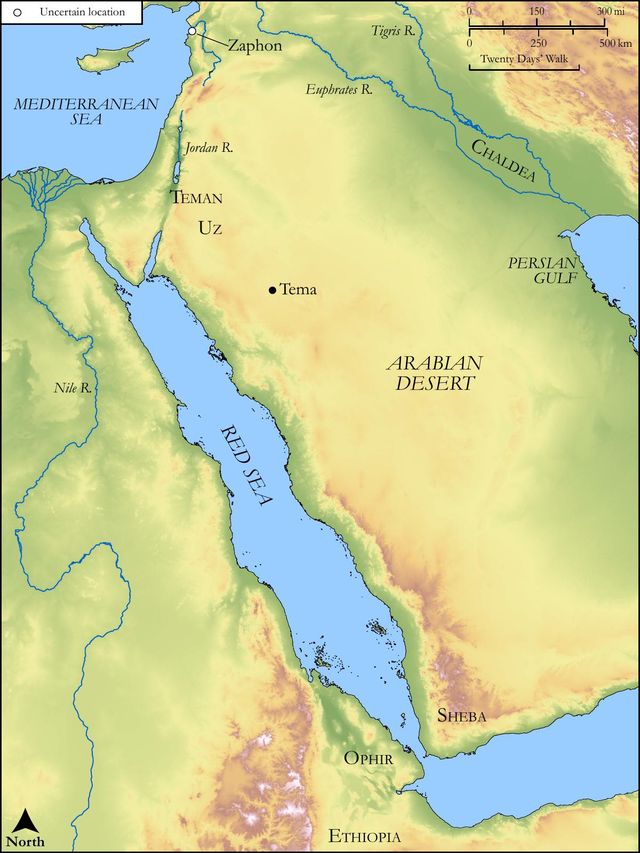
Especially in the arid and semi-arid regions characteristic of the land of Uz (likely encompassing parts of Edom or northern Arabia), rain was not merely a meteorological event but the very essence of life, sustenance, and economic stability. Agricultural cycles and the survival of both humans and livestock were entirely dependent on the timely arrival of seasonal rains. Drought was synonymous with famine, widespread death, and national catastrophe. Consequently, the control over rain was universally attributed to the supreme deity, making it the most tangible and undeniable demonstration of divine power and provision. For Eliphaz and his contemporaries, God's ability to "give rain" and "send waters" was the ultimate evidence of His sovereignty, His active involvement in the created order, and His capacity to bless or curse. This deep, existential dependency on meteorological patterns profoundly shaped their worldview, religious practices, and understanding of divine justice and the order of creation.
Key Themes
ShowHideJob 5:10 contributes significantly to several overarching themes within the book of Job and broader biblical theology. Firstly, it emphatically underscores Divine Providence and Sovereignty, unequivocally declaring God as the sole giver of rain and water. This highlights His ultimate authority and control over all natural processes essential for life and agriculture, emphasizing humanity's utter dependence on His gracious provision for daily sustenance. Secondly, it touches upon God's Universal Care, as the statement itself points to God's general benevolence in sustaining the earth. While Eliphaz's immediate application might be limited to God blessing the righteous, the provision of rain falls universally, nourishing all life, a concept echoed later in the New Testament where Jesus speaks of God sending rain on both the just and the unjust in Matthew 5:45. Lastly, the imagery vividly illustrates Humanity's Dependence on God, fostering a sense of humility and gratitude for the Creator's ongoing sustenance, reminding us that our most basic needs are met by a power greater than ourselves, as also seen in Psalm 147:8.
Exposition and Analysis
ShowHideKey Word Analysis
ShowHideThis is derived from the Hebrew root H5414, meaning "to give," "to put," or "to place." In this context, the verb emphasizes an ongoing, continuous action, portraying God not as a distant creator who merely initiated the natural order, but as an active, present, and perpetual provider. This highlights His sustained involvement and benevolent disposition towards His creation, constantly dispensing life-sustaining resources.
This noun (H4306) specifically refers to "rain," particularly the "early" or "latter" rains that were critically important for agriculture in the land of Israel. It is distinct from other general terms for water, emphasizing the specific meteorological phenomenon that brings life to the land. Its mention here underscores the direct and indispensable nature of God's provision for societies heavily reliant on farming.
This is derived from the Hebrew root H7971, meaning "to send away, for, or out," "to dispatch," or "to stretch out." Similar to "giveth," the form used here denotes a continuous and intentional act. It conveys the idea of God actively dispatching or directing the waters to specific locations, implying precision, purpose, and sovereign control over the elements, rather than a passive or random occurrence.
Verse Breakdown
ShowHide"Who giveth rain upon the earth"
This initial clause unequivocally establishes God as the ultimate and sole source of rain. The act of "giving" implies a deliberate, generous, and sovereign dispensing of this vital resource, underscoring divine intentionality. "Upon the earth" signifies the universal scope of this provision, covering the broad expanse of the world, not limited to a specific region or people. This highlights God's comprehensive care for all creation and His foundational role in sustaining life on a global scale.
"and sendeth waters upon the fields"
This second clause reiterates and specifies the provision introduced in the first. "Sendeth" emphasizes God's active direction and precise control, ensuring that the water reaches where it is most needed for cultivation. "Upon the fields" narrows the focus from the general "earth" to the specific agricultural lands, highlighting the direct impact of God's provision on human sustenance and livelihood. The use of "waters" (plural) can refer to various forms of moisture, including rain, dew, or even the general life-giving moisture that nourishes the land, underscoring the abundance and varied nature of God's provision.
Literary Devices
ShowHideJob 5:10 masterfully employs several literary devices to enhance its poetic and theological impact. Parallelism is prominently featured, specifically synonymous parallelism, where the second line ("and sendeth waters upon the fields") echoes and reinforces the meaning of the first line ("Who giveth rain upon the earth"). This repetition serves to intensify the declaration of God's singular role as provider and to emphasize the comprehensiveness of His control over life-sustaining moisture. The verse also utilizes Merism, a figure of speech in which two contrasting or complementary parts represent a complete whole. While "earth" and "fields" are not strictly contrasting, they work together to encompass the entirety of the land that benefits from God's provision, from the wild, uncultivated earth to the cultivated fields essential for human survival. Finally, the verse attributes active, intentional verbs ("giveth," "sendeth") to God, effectively personifying Him as the diligent and benevolent farmer or provider, intimately involved in the daily sustenance of His creation.
Theological and Thematic Connections
ShowHideJob 5:10, though spoken by Eliphaz with a flawed theological premise regarding Job's suffering, powerfully articulates a core biblical truth about God's active sovereignty and meticulous providence over creation. It aligns perfectly with the broader biblical witness that God is not merely a distant creator but an immanent sustainer, whose ongoing work ensures the very conditions for life. This verse highlights the fundamental dependence of all life, particularly human life and its agricultural endeavors, on God's gracious and consistent provision. It underscores that the natural cycles, often taken for granted, are direct manifestations of divine activity and care, reminding humanity of its humble place before the Creator and the need for gratitude for His sustaining hand.
Reflection and Application
ShowHideJob 5:10 serves as a timeless reminder of God's constant and essential role in sustaining not only the grand order of creation but also the minute details of our daily existence. In a world increasingly reliant on technology and human ingenuity, it is easy to overlook the foundational dependence we have on the Creator for our most basic needs, such as food and water. This verse calls us to cultivate a profound sense of gratitude for every drop of rain, every harvest, and every breath, recognizing them as direct gifts from God's benevolent hand. It invites us to trust in His unwavering providence, knowing that the God who faithfully provides for the earth's needs will also provide for our deeper spiritual and physical needs, even amidst trials and uncertainties. Such recognition fosters humility and encourages us to live in alignment with the One who sustains all things, appreciating the intricate beauty and generosity of His creation.
Questions for Reflection
ShowHideFAQ
ShowHideHow does Eliphaz's statement about God's provision of rain relate to his overall argument to Job?
ShowHideEliphaz uses God's control over rain and nature in Job 5:10 as a powerful illustration of God's omnipotence and His meticulous involvement in the world. Within his argument, this demonstration of divine power is meant to support his underlying premise that God is just and punishes the wicked while rewarding the righteous. He implies that if God is so precise and powerful in providing for the earth, He is equally precise in His moral governance of humanity. Therefore, Job's suffering, in Eliphaz's view, must be a direct consequence of some hidden sin, and Job should humble himself before this powerful and just God to receive restoration. While Eliphaz's application of this truth to Job's situation is flawed and insensitive, the theological statement about God's provision itself is accurate and aligns with broader biblical teachings, such as those found in Psalm 147:8 and Matthew 5:45.
Christ-Centered Fulfillment
ShowHideWhile Job 5:10 speaks of God's general providence in sustaining creation, its truth finds its ultimate and most profound fulfillment in Jesus Christ. The New Testament reveals that it is through Christ that "all things were created, in heaven and on earth, visible and invisible... all things were created through him and for him. And he is before all things, and in him all things hold together" (Colossians 1:16-17). Thus, the very rain that falls and the waters that nourish the fields are sustained and orchestrated by the Son, the living Word of God. Beyond physical sustenance, Christ offers a deeper, spiritual provision. He declared, "If anyone thirsts, let him come to me and drink" (John 7:37), identifying Himself as the source of "living water" that quenches spiritual thirst eternally (John 4:10). Just as God provides physical water for the earth, Christ provides the spiritual water of salvation and the Holy Spirit, nourishing our souls and bringing forth spiritual fruit. He is the ultimate fulfillment of God's benevolent provision, sustaining both creation and the redeemed with His life-giving presence and grace.