


Matthew 5:45
- ὅπωςhopōsso thatG3704CONJConjunction
- γένησθεgenēstheyou may beG1096V-2ADS-2PVerb 2nd Aorist Middle Deponent Subjunctive 2nd Plural
- υἱοὶhuioisonsG5207N-NPMNoun Nominative Plural Masculine
- τοῦtouof theG3588T-GSMDefinite article Genitive Singular Masculine
- πατρὸςpatrosFatherG3962N-GSM-TNoun Genitive Singular Masculine Title
- ὑμῶνhumōnof youG4771P-2GPPersonal pronoun Genitive 2nd Plural
- τοῦtouwho isG3588T-GSMDefinite article Genitive Singular Masculine
- ἐνeninG1722PREPPreposition
- οὐρανοῖςouranoisheavensG3772N-DPMNoun Dative Plural Masculine
- ὅτιhotiForG3754CONJConjunction
- τὸνtontheG3588T-ASMDefinite article Accusative Singular Masculine
- ἥλιονhēlionsunG2246N-ASMNoun Accusative Singular Masculine
- αὐτοῦautouof HimG846P-GSMPersonal pronoun Genitive Singular Masculine
- ἀνατέλλειanatelleiHe makes riseG393V-PAI-3SVerb Present Active Indicative 3rd Singular
- ἐπὶepionG1909PREPPreposition
- πονηροὺςponērousevilG4190A-APMAdjective Accusative Plural Masculine
- καὶkaiandG2532CONJConjunction
- ἀγαθοὺςagathousgoodG18A-APMAdjective Accusative Plural Masculine
- καὶkaiandG2532CONJConjunction
- βρέχειbrecheiHe sends rainG1026V-PAI-3SVerb Present Active Indicative 3rd Singular
- ἐπὶepionG1909PREPPreposition
- δικαίουςdikaiousrighteousG1342A-APMAdjective Accusative Plural Masculine
- καὶkaiandG2532CONJConjunction
- ἀδίκουςadikousunrighteousG94A-APMAdjective Accusative Plural Masculine
English is a literal word-by-word gloss of the Greek, not the KJV's wording. Why?
This is the original text the KJV's translators worked from — each Greek word with its own literal English meaning in this verse, prepared by scholars at Tyndale House, Cambridge. The KJV translates whole sentences, not word by word, so its wording differs: one Greek word can become several English words, and the KJV may choose “charity” where the gloss reads “love”. Both are faithful — they answer different questions. For the KJV's own rendering, switch to the KJV text.
Details
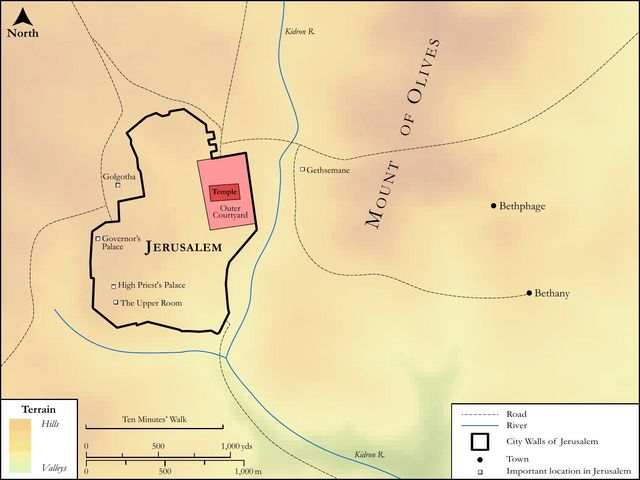
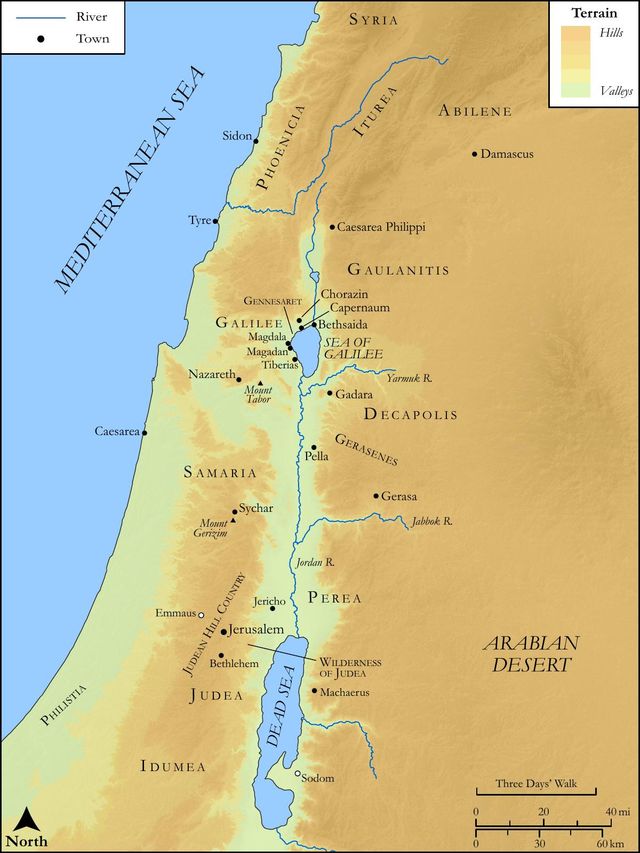
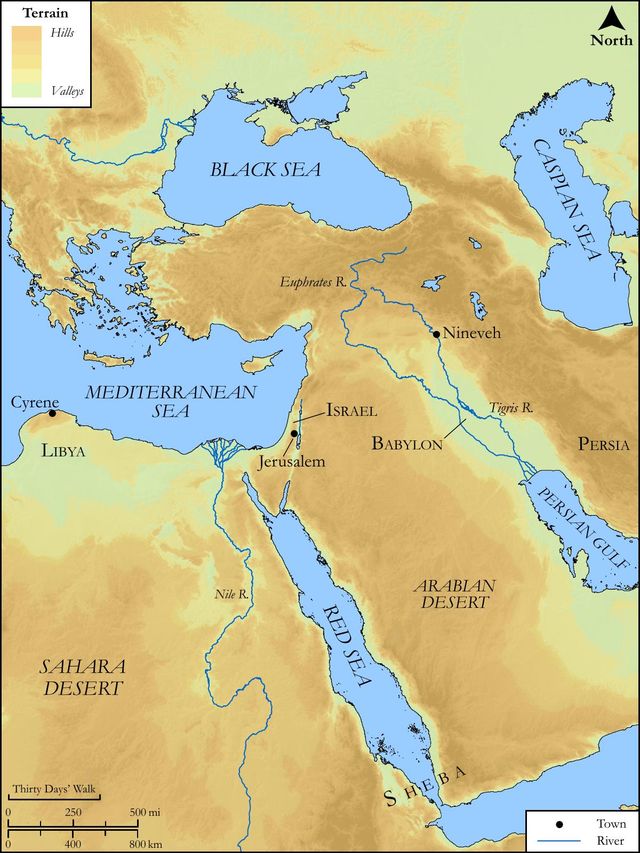
See on the biblical-era maps
Study this verse
Public-domain commentary
Matthew Henry
From his Commentary on the Whole Bible. Henry comments on passages, not single verses — this entry covers Matthew 5:43–48. His four-level outline is real structure in the source text, so it is rendered as structure.
We have here, lastly, an exposition of that great fundamental law of the second table, Thou shalt love thy neighbour, which was the fulfilling of the law.
I.See here how this law was corrupted by the comments of the Jewish teachers, Mat 5:43.
God said, Thou shalt love thy neighbour; and by neighbour they understood those only of their own country, nation, and religion; and those only that they were pleased to look upon as their friends: yet this was not the worst; from this command, Thou shalt love thy neighbour, they were willing to infer what God never designed; Thou shalt hate thine enemy; and they looked upon whom they pleased as their enemies, thus making void the great command of God by their traditions, though there were express laws to the contrary, Exo 23:4, Exo 23:5; Deu 23:7. Thou shalt not abhor an Edomite, nor an Egyptian, though these nations had been as much enemies to Israel as any whatsoever. It was true, God appointed them to destroy the seven devoted nations of Canaan, and not to make leagues with them; but there was a particular reason for it - to make room for Israel, and that they might not be snares to them; but it was very ill-natured from hence to infer, that they must hate all their enemies; yet the moral philosophy of the heathen then allowed this. It is Cicero's rule, Nemini nocere nisi prius lacessitum injuri - To injure no one, unless previously injured. De Offic. See how willing corrupt passions are to fetch countenance from the word of God, and to take occasion by the commandment to justify themselves.
II.See how it is cleared by the command of the Lord Jesus, who teaches us another lesson:
"But I say unto you, I, who come to be the great Peace-Maker, the general Reconciler, who loved you when you were strangers and enemies, I say, Love your enemies," Mat 5:44. Though men are ever so bad themselves, and carry it ever so basely towards us, yet that does not discharge us from the great debt we owe them, of love to our kind, love to our kin. We cannot but find ourselves very prone to wish the hurt, or at least very coldly to desire the good, of those that hate us, and have been abusive to us; but that which is at the bottom hereof is a root of bitterness, which must be plucked up, and a remnant of corrupt nature which grace must conquer. Note, it is the great duty of Christians to love their enemies; we cannot have complacency in one that is openly wicked and profane, nor put a confidence in one that we know to be deceitful; nor are we to love all alike; but we must pay respect to the human nature, and so far honour all men: we must take notice, with pleasure, of that even in our enemies which is amiable and commendable; ingenuousness, good temper, learning, and moral virtue, kindness to others, profession of religion, etc., and love that, though they are our enemies. We must have a compassion for them, and a good will toward them. We are here told,
1.That we must speak well of them: Bless them that curse you. When we speak to them, we must answer their revilings with courteous and friendly words, and not render railing for railing; behind their backs we must commend that in them which is commendable, and when we have said all the good we can of them, not be forward to say any thing more. See Pe1 3:9. They, in whose tongues is the law of kindness, can give good words to those who give bad words to them.
2.That we must do well to them: "Do good to them that hate you, and that will be a better proof of love than good words. Be ready to do them all the real kindness that you can, and glad of an opportunity to do it, in their bodies, estates, names, families; and especially to do good to their souls." It was said of Archbishop Cranmer, that the way to make him a friend was to do him an ill turn; so many did he serve who had disobliged him.
3.We must pray for them: Pray for them that despitefully use you, and persecute you. Note,
(1.)It is no new thing for the most excellent saints to be hated, and cursed, and persecuted, and despitefully used, by wicked people; Christ himself was so treated.
(2.)That when at any time we meet with such usage, we have an opportunity of showing our conformity both to the precept and to the example of Christ, by praying for them who thus abuse us. If we cannot otherwise testify our love to them, yet this way we may without ostentation, and it is such a way as surely we durst not dissemble in. We must pray that God will forgive them, that they may never fare the worse for any thing they have done against us, and that he would make them to be at peace with us; and this is one way of making them so. Plutarch, in his Laconic Apophthegms, has this of Aristo; when one commended Cleomenes's saying, who, being asked what a good king should do, replied, Tous men philous euergetein̂ tous de echthrous kakōs poiein - Good turns to his friends, and evil to his enemies; he said, How much better is it tous men philous euergetein̂ tous de echthrous philous poiein - to do good to our friends, and make friends of our enemies. This is heaping coals of fire on their heads.
Two reasons are here given to enforce this command (which sounds so harsh) of loving our enemies. We must do it,
[1.]That we may be like God our Father; "that ye may be, may approve yourselves to be, the children of your Father which is in heaven." Can we write a better copy? It is a copy in which love to the worst of enemies is reconciled to, and consistent with, infinite purity and holiness. God maketh his sun to rise, and sendeth rain, on the just and the unjust, Mat 5:45. Note, First, Sunshine and rain are great blessings to the world, and they come from God. It is his sun that shines, and the rain is sent by him. They do not come of course, or by chance, but from God. Secondly, Common mercies must be valued as instances and proofs of the goodness of God, who in them shows himself a bountiful Benefactor to the world of mankind, who would be very miserable without these favours, and are utterly unworthy of the least of them. Thirdly, These gifts of common providence are dispensed indifferently to good and evil, just and unjust; so that we cannot know love and hatred by what is before us, but by what is within us; not by the shining of the sun on our heads, but by the rising of the Sun of Righteousness in our hearts. Fourthly, The worst of men partake of the comforts of this life in common with others, though they abuse them, and fight against God with his own weapons; which is an amazing instance of God's patience and bounty. It was but once that God forbade his sun to shine on the Egyptians, when the Israelites had light in their dwellings; God could make such a distinction every day. Fifthly, The gifts of God's bounty to wicked men that are in rebellion against him, teach us to do good to those that hate us; especially considering, that though there is in us a carnal mind which is enmity to God, yet we share in his bounty. Sixthly, Those only will be accepted as the children of God, who study to resemble him, particularly in his goodness.
[2.]That we may herein do more than others, Mat 5:46, Mat 5:47. First, Publicans love their friends. Nature inclines them to it; interest directs them to it. To do good to them who do good to us, is a common piece of humanity, which even those whom the Jews hated and despised could give as good proofs as of the best of them. The publicans were men of no good fame, yet they were grateful to such as had helped them to their places, and courteous to those they had a dependence upon; and shall we be no better than they? In doing this we serve ourselves and consult our own advantage; and what reward can we expect for that, unless a regard to God, and a sense of duty, carrying us further than our natural inclination and worldly interest? Secondly, We must therefore love our enemies, that we may exceed them. If we must go beyond scribes and Pharisees, much more beyond publicans. Note, Christianity is something more than humanity. It is a serious question, and which we should frequently put to ourselves, "What do we more than others? What excelling thing do we do? We know more than others; we talk more of the things of God than others; we profess, and have promised, more than others; God has done more for us, and therefore justly expects more from us than from others; the glory of God is more concerned in us than in others; but what do we more than others? Wherein do we live above the rate of the children of this world? Are we not carnal, and do we not walk as men, below the character of Christians? In this especially we must do more than others, that while every one will render good for good, we must render good for evil; and this will speak a nobler principle, and is consonant to a higher rule, than the most of men act by. Others salute their brethren, they embrace those of their own party, and way, and opinion; but we must not so confine our respect, but love our enemies, otherwise what reward have we? We cannot expect the reward of Christians, if we rise no higher than the virtue of publicans." Note, Those who promise themselves a reward above others must study to do more than others.
Lastly, Our Saviour concludes this subject with this exhortation (Mat 5:48), Be ye therefore perfect, as your Father which is in heaven is perfect. Which may be understood, 1. In general, including all those things wherein we must be followers of God as dear children. Note, It is the duty of Christians to desire, and aim at, and press toward a perfection in grace and holiness, Phi 3:12-14. And therein we must study to conform ourselves to the example of our heavenly Father, Pe1 1:15, Pe1 1:16. Or, 2. In this particular before mentioned, of doing good to our enemies; see Luk 6:36. It is God's perfection to forgive injuries and to entertain strangers, and to do good to the evil and unthankful, and it will be ours to be like him. We that owe so much, that owe our all, to the divine bounty, ought to copy it out as well as we can.
Historical interpretation
Eleven Centuries of Reception
24 surviving comments on this verse. Each one is dated, so this reads as a timeline rather than a list.
Select a marker to jump to its quote. Markers stagger vertically where authors wrote within a few decades of each other.
(Hil. Quæst. V. and N. Test. q. 68.) And the souls of them that are slain cry out to be avenged; as the blood of Abel cried out of the ground not with a voice, but in spirit. As the work is said to laud the workman, when he delights himself in the view thereof; for the saints are not so impatient as to urge on what they know will come to pass at the appointed time.
But from God-who has promised, indeed, "to pour out the grace of the Holy Spirit upon all flesh, and has ordained that His servants and His handmaids should see visions as well as utter prophecies" -must all those visions be regarded as emanating, which may be compared to the actual grace of God, as being honest, holy, prophetic, inspired, instructive, inviting to virtue, the bountiful nature of which causes them to overflow even to the profane, since God, with grand impartiality, "sends His showers and sunshine on the just and on the unjust." It was, indeed by an inspiration from God that Nebuchadnezzar dreamt his dreams; and almost the greater part of mankind get their knowledge of God from dreams.
These considerations show that the entire order of God as Judge is an operative one, and (that I may express myself in worthier words) protective of His Catholic and supreme goodness, which, removed as it is from judiciary emotions, and pure in its own condition, the Marcionites refuse to acknowledge to be in one and the same Deity, "raining on the just and on the unjust, and making His sun to rise on the evil and on the good," -a bounty which no other god at all exercises.
Otherwise, how vain that God should invite men to obedience by the fruits of the field and the elements of this life, when He dispenses these to even irreligious men and blasphemers; on a general condition once for all made to man, "sending rain on the good and on the evil, and making His sun to shine on the just and on the unjust!" Happy, no doubt, is faith, if it is to obtain gifts which the enemies of God and Christ not only use, but even abuse, "worshipping the creature itself in opposition to the Creator!" You will reckon, (I suppose) onions and truffles among earth's bounties, since the Lord declares that "man shall not live on bread alone!" In this way the Jews lose heavenly blessings, by confining their hopes to earthly ones, being ignorant of the promise of heavenly bread, and of the oil of God's unction, and the wine of the Spirit, and of that water of life which has its vigour from the vine of Christ.
Now, undoubtedly, He is the good God who "sendeth rain on the just and on the unjust, and maketh His sun to rise on the evil and on the good; " sustaining and nourishing and assisting even Marcionites themselves! When afterwards "a certain man asked him, `Good Master, what shall I do to inherit eternal life? '" (Jesus) inquired whether he knew (that is, in other words, whether he kept) the commandments of the Creator, in order to testify that it was by the Creator's precepts that eternal life is acquired.
The imitator of God and Christ makes the sun of his word and the brightness of his righteousness to shine on both evil and good people, and the rain from his mouth falls upon both the righteous and the sinful.
Or, the sun and rain have reference to the baptism with water and Spirit.
Note through what steps we have now ascended hither, and how He has set us on the very pinnacle of virtue. The first step is, not to begin to do wrong to any; the second, that in avenging a wrong done to us we be content with retaliating equal; the third, to return nothing of what we have suffered; the fourth, to offer one's self to the endurance of evil; the fifth, to be ready to suffer even more evil than the oppressor desires to inflict; the sixth, not to hate him of whom we suffer such things; the seventh, to love him; the eighth, to do him good; the ninth, to pray for him. And because the command is great, the reward proposed is also great, namely, to be made like unto God, Ye shall be the sons of your Father which is in heaven.
"Ye have heard that it hath been said, Thou shalt love thy neighbor, and hate thine enemy. But I say unto you, love your enemies, and pray for them which despitefully use you: bless them that curse you, do good to them that hate you. That ye may become like your Father which is in Heaven; for He maketh His sun to rise on the evil and on the good, and sendeth rain on the just and on the unjust."
See how He hath set the highest pinnacle on our good deeds. For this is why He teaches not only to endure a blow, but to offer the right cheek also; not only to add the cloak to the coat, but to travel also two miles with him who compels thee to go one; in order that thou mightest receive with all facility that which is much more than these. "But what," one may say, "is more than these?" Not even to count as an enemy him who is doing these things: or rather even somewhat else more than this. For He said not, "do not hate," but "love;" He said not, "do not injure," but "do good."
And if any one should examine accurately, he will see that even to these things somewhat is added, much greater than they are. For neither did He simply command to love, but to pray.
Seest thou how many steps He hath ascended, and how He hath set us on the very summit of virtue? Nay, mark it, numbering from the beginning. A first step is, not to begin with injustice: a second, after he hath begun, to vindicate one's self by equal retaliation; a third, not to do unto him that is vexing us the same that one hath suffered, but to be quiet; a fourth, even to give one's self up to suffer wrongfully; a fifth, to give up yet more than the other, who did the wrong, wishes; a sixth, not to hate him who hath done so; a seventh, even to love him; an eighth, to do him good also; a ninth, to entreat God Himself on his behalf. Seest thou, what height of self-command? Wherefore glorious too, as we see, is the reward which it hath. That is, because the thing enjoined was great, and needed a fervent soul, and much earnestness, He appoints for it also such a reward, as for none of the former. For He makes not mention here of earth, as with respect to the meek; nor of comfort and mercy, as with regard to the mourners and the merciful; nor of the kingdom of Heaven; but of that which was more thrilling than all; our becoming like God, in such wise as men might become so. For He saith, "That ye may become like unto your Father which is in Heaven."
And observe, I pray thee, how neither in this place, nor in the preceding parts, doth He call Him His own Father, but in that instance, "God," and "a great King," when he was discoursing about oaths, and here, "their Father." And this He doth, as reserving for the proper season what He had to say touching these points.
Because we are savage as wild beasts in disposition, and would not otherwise endure to love our enemy, unless we expected some revenge, he offers this as a cake, so to say, to a wild beast. For to the Apostles the Lord says not this, but what says He? That ye may be like to your Father which is in heaven. And besides, it is not possible that the benefactor and the benefited should remain in enmity. This is why Paul has put it in this way.
"That ye may become like your Father which is in Heaven; for He maketh His sun to rise on the evil and on the good, and sendeth rain on the just and on the unjust."
And observe, I pray thee, how neither in this place, nor in the preceding parts, doth He call Him His own Father, but in that instance, "God," and "a great King," when he was discoursing about oaths, and here, "their Father." And this He doth, as reserving for the proper season what He had to say touching these points.
Then, bringing the likeness yet closer, He saith, "Because He maketh His sun to rise on the evil and on the good, and sendeth rain upon just and unjust."
"For He too, so far from hating," so He speaks, "even pours benefits on those that insult Him." Yet surely in no respect is the case parallel, not only because of the surpassing nature of His benefits, but also by reason of the excellence of His dignity. For thou indeed art despised by thy fellow-slave, but He by His slave, who hath also received ten thousand benefits from Him: and thou indeed givest words, in praying for him, but He, deeds, very great and marvellous, kindling the sun, and giving the annual showers. "Nevertheless, even so I grant thee to be mine equal, in such wise as it is possible for a man so to be."
Hate not then the man that doeth thee wrong, who is procuring thee such good things, and bringing thee to so great honor. Curse not him that uses thee despitefully; for so hast thou undergone the labor, but art deprived of the fruit; thou wilt bear the loss, but lose the reward; which is of the utmost folly, having borne the more grievous, not to bear what is less than it. "But how," saith one, "is it possible for this to take place?" Having seen God become man, and descend so far, and suffer so much for thy sake, dost thou still inquire and doubt, how it is possible to forgive thy fellow-servants their injuriousness? Hearest thou not Him on the cross, saying, "Forgive them, for they know not what they do?" Hearest thou not Paul, when he saith, "He who is gone up on high, and is sitting on the right hand intercedeth for us?" Seest thou not that even after the cross, and after He had been received up, He sent the apostles unto the Jews that had slain Him, to bring them His ten thousand blessings, and this, though they were to suffer ten thousand terrors at their hands?
But hast thou been greatly wronged? Nay, what hast thou endured like thy Lord, bound, beaten with whips, with rods, spit upon by servants, enduring death, and that death, which is of all deaths the most shameful, after ten thousand favors shown? And even if thou hast been greatly wronged, for this very cause most of all do thou do him good, that thou mayest both make thine own crown more glorious, and set thy brother free from the worst infirmity. For so too the physicians, when they are kicked, and shamefully handled by the insane, then most of all pity them, and take measures for their perfect cure, knowing that the insult comes of the extremity of their disease. Now I bid thee too have the same mind touching them that are plotting against thee, and do thou so treat them that are injuring thee. For it is they above all that are diseased, it is they who are undergoing all the violence. Deliver him then from this grievous contumely, and grant him to let go his anger, and set him free from that grievous demon, wrath. Yea, for if we see persons possessed by devils, we weep for them; we do not seek to be ourselves also possessed.
Now let us do this too likewise with respect to them that are angry; for in truth the enraged are like the possessed; yea rather, are more wretched than they, being mad with consciousness of it. Wherefore also their frenzy is without excuse. Trample not then on the fallen, but rather pity him. For so, should we see any one troubled with bile, blinded and giddy, and straining to cast up this evil humor, we stretch forth a hand, and continue to support him through his struggles, and though we stain our garments, we regard it not, but seek one thing only, how we may set him free from this grievous distress. This then let us do with respect to the angry also, and continue to bear them up when vomiting and struggling; nor let him go, until he put from him all the bitterness. And then shall he feel toward thee the greatest thankfulness; when he is at rest, then he will know clearly from how great trouble thou hast released him.
But why do I speak of the thanks from him? for God will straightway crown thee, and will requite thee with ten thousand honors, because thou hast freed thy brother from a grievous disease; and that brother too will honor thee as a master, ever reverencing thy forbearance.
[Daniel 2:29] "Thou, O king, didst begin to meditate upon thy bed as to what should come to pass hereafter." Instead of the true reading the Septuagint alone inserts the translation "in the last days" after the "hereafter." But if it be read thus, we must inquire quite carefully as to where "last days" have been written; and we would refute those who think the world will never be destroyed. For never would any days be called "the last days" if the world were everlasting. And as for the statement, "Thou, O king, didst begin to meditate," this would indicate the motives behind the dream; for it was for this reason that God revealed to him the secrets of the future, because the king himself wished to know what was going to happen. Also, in order that Nebuchadnezzar might marvel at the gracious gift of divine inspiration, he sets forth not only what the king had beheld in the dream, but also what he had thought to himself (beforehand).
"...and He who reveals secrets has shown thee what is to come to pass." The statement which we read in the Gospel, "Who maketh His sun to rise upon the wicked and the good" (Matthew 5:45), we realize to have been fulfilled in the case of Nebuchadnezzar also. For so great was God's mercy that He even revealed to Nebuchadnezzar secrets as to His own mode of government whereby he rules the world. Let us ask those who assert that men's characters belong to one extreme or the other, which character do they understand Nebuchadnezzar to have possessed, the good or the evil? If the good, why is he called an impious man? If the evil (which was certainly the case), why did God show forth His holy secrets to one who was evil and earthly, that is to say, earthen?
Many measuring the commandments of God by their own weakness, not by the strength of the saints, hold these commands for impossible, and say that it is virtue enough not to hate our enemies; but to love them is a command beyond human nature to obey. But it must be understood that Christ enjoins not impossibilities but perfection. Such was the temper of David towards Saul and Absalom; the Martyr Stephen also prayed for his enemies while they stoned him, and Paul wished himself anathema for the sake of his persecutors. (Rom. 9:3.) Jesus both taught and did the same, saying, Father, forgive them, for they know not what they do. (Luke 23:34.)
For whoso keeps the commandments of God is thereby made the son of God; he then of whom he here speaks is not by nature His son, but by his own will.
(Verse 45) So that you may be sons of your Father who is in heaven; for He causes His sun to rise on the evil and the good, and sends rain on the righteous and the unrighteous. If you love those who love you, what reward do you have? Do not even the tax collectors do the same? And if you greet only your brothers, what more are you doing than others? Do not even the Gentiles do the same? Therefore you are to be perfect, as your heavenly Father is perfect. If someone keeps the commandments of God, they become a child of God. Therefore, being a child is not by nature, but by his own choice.
(Epist. 138. 2.) Some object that this command of Christ is altogether inconsistent with civil life in Commonwealths; Who, say they, would suffer, when he could hinder it, the pillage of his estate by an enemy; or would not repay the evil suffered by a plundered province of Rome on the plunderers according to the rights of war? But these precepts of patience are to be observed in readiness of the heart, and that mercy, not to return evil for evil, must be always fulfilled by the will. Yet must we often use a merciful sharpness in dealing with the headstrong. And in this way, if the earthly commonwealth will keep the Christian commandments, even war will not be waged without good charities, to the establishing among the vanquished peaceful harmony of godliness and righteousness. For that victory is beneficial to him from whom it snatches licence to sin; since nothing is more unfortunate for sinners, than the good fortune of their sins, which nourishes an impunity that brings punishment after it, and an evil will is strengthened, as it were some internal enemy.
(de Doctr. Christ. i. 30.) That by the command, Thou shalt love thy neighbour, all mankind were intended, the Lord showed in the parable of the man who was left half dead, which teaches us that our neighbour is every one who may happen at any time to stand in need of our offices of mercy; and this who does not see must be denied to none, when the Lord says, Do good to them that hate you.
(Serm. in Mont. i. 21.) That there were degrees in the righteousness of the Pharisees which was under the old Law is seen herein, that many hated even those by whom they were loved. He therefore who loves his neighbour, has ascended one degree, though as yet he hate his enemy; which is expressed in that, and shalt hate his enemy; which is not to be understood as a command to the justified, but a concession to the weak.
(cont. Faust. xix. 24.) I ask the Manichæans why they would have this peculiar to the Mosaic Law, that was said by them of old time, thou shall hate thy enemy? Has not Paul said of certain men that they were hateful to God? We must enquire then how we may understand that, after the example of God, to whom the Apostle here affirms some men to be hateful, our enemies are to be hated; and again after the same pattern of Him who maketh his sun to rise on the evil and the good, our enemies are to be loved. Here then is the rule by which we may at once hate our enemy for the evil's sake that is in him, that is, his iniquity, and love him for the good's sake that is in him, that is, his rational part. This then, thus uttered by them of old, being heard, but not understood, hurried men on to the hatred of man, when they should have hated nothing but vice. Such the Lord corrects as He proceeds, saying, I say unto you, Love your enemies. Lie who had just declared that He came not to subvert the Law, bat to fulfil it, by bidding us love our enemies, brought us to the understanding of how we may at once hate the same man for his sins whom we love for his human nature.
(Enchir. 73.) These indeed are examples of the perfect sons of God; yet to this should every believer aim, and seek by prayer to God, and struggles with himself to raise his human spirit to this temper. Yet this so great blessing is not given to all those multitudes which we believe are heard when they pray, Forgive us our debts, as we forgive our debtors.
(Serm. in Mont. i. 21.) Here arises a question, that this commandment of the Lord, by which He bids us pray for our enemies, seems opposed by many other parts of Scripture. In the Prophets are found many imprecations upon enemies; such as that in the 108th Psalm, Let his children be orphans. (Ps. 109:9.) But it should be known, that the Prophets are wont to foretel things to come in the form of a prayer or wish. This has more weight as a difficulty that John says, There is a sin unto death, I sag not that he shall pray for it; (1 John 5:16.) plainly showing, that there are some brethren for whom he docs not bid us pray; for what went before was, If any know his brother sin a sin, &c. Yet the Lord bids us pray for our persecutors. This question can only be resolved, if we admit that there are some sins in brethren more grievous than the sin of persecution in our enemies. For thus Stephen prays for those that stoned him, because they had not yet believed on Christ; but the Apostle Paul (2 Tim. 4:14.) does not pray for Alexander though he was a brother, but had sinned by attacking the brotherhood through jealousy. But for whom you pray not, you do not therein pray against him. What must we say then of those against whom we know that the saints have prayed, and that not that they should be corrected, (for that would be rather to have prayed for them), but for their eternal damnation; not as that prayer of the Prophet against the Lord's betrayer, for that is a prophecy of the future, not an imprecation of punishment; but as when we read in the Apocalypse the Martyrs' prayer that they may be avenged. (Rev. 6:10.) But we ought not to let this affect us. For who may dare to affirm that they prayed against those persons themselves, and not against the kingdom of sin? For that would be both a just and a merciful avenging of the Martyrs, to overthrow that kingdom of sin, under the continuance of which they endured all those evils. And it is overthrown by correction of some, and damnation of such as abide in sin. Does not Paul seem to you to have avenged Stephen on his own body, as he speaks, (1 Cor. 9:27.) I chastise my body, and bring it into subjection.
(Serm. in Mont. i. 23.) After that rule we must here understand of which John speaks, He gave them power to be made the sons of God. One is His Son by nature; we are made sons by the power which we have received; that is, so far as we fulfil those things that we are commanded. So He says not, Do these things because ye are sons; but, do these things that ye may become sons. In calling us to this then, He calls us to His likeness, for He saith, He maketh His sun to rise on the righteous and the unrighteous. By the sun we may understand not this visible, but that of which it is said, To you that fear the name of the Lord, the Sun of righteousness shall arise; (Mal. 4:2.) and by the rain, the water of the doctrine of truth; for Christ was seen, and was preached to good as well as bad.
(ubi sup.) Or we may take it of this visible sun, and of the rain by which the fruits are nourished, as the wicked mourn in the book of Wisdom, The Sun has not risen for us. (Wisd. 5:6.) And of the rain it is said, I will command the clouds that they rain not on it. (Is. 5:6.) But whether it be this or that, it is of the great goodness of God, which is set forth for our imitation. lie says not, 'the sun,' but, His sun, that is, the sun which Himself has made, that hence we may be admonished with how great liberality we ought to supply those things that we have not created, but have received as a boon from Him.
(Epist. 93. 2.) But as we laud Him for His gifts, let us also consider how He chastises those whom He loves. For not every one who spares is a friend, nor every one who chastises an enemy; it is better to love with severity, than to use lenity wherewith to deceive. (vid. Prov. 27:6.)
(De Civ. Dei, i. 8.) For the good man is not puffed up by worldly goods, nor broken by worldly calamity. But the bad man is punished in temporal losses, because he is corrupted by temporal gains. Or for another reason He would have good and evil common to both sorts of men, that good things might not be sought with vehement desire, when they were enjoyed even by the wicked; nor the evil things shamefully avoided, when even the righteous are afflicted by them.
Since he calls us to the adoption as sons through the only begotten Son himself, he calls us to his own likeness. For, as the Lord at once adds, “He makes his sun to rise on the good and the evil and sends rain on the just and the unjust.” Now, if you would understand the expression “his sun” to mean not the sun that is visible to bodily eyes but his wisdom, to which the following expressions refer—“he is the brightness of eternal light” and also “The sun of justice is risen upon me,” as well as “But to you that fear the name of the Lord, the sun of justice shall arise”—then you must also understand the rain as a watering by the teaching of truth, because that teaching has become manifest to the good and to the evil. But you may prefer to understand it as the sun that is manifest to the bodily eyes of beasts as well as people and to understand the rain as the showers that produce the fruits that God has given us for the perfection of the body. I believe this to be surely the more probable meaning, since the other “sun” does not rise except on the good and the holy, for this is the very thing that the unjust bewail in the book that is called the Wisdom of Solomon: “And the sun [of understanding] has not risen upon us.” And the spiritual rain refreshes only the good, for the vine signifies the bad of whom it is said, “I will command my clouds not to rain upon it.”
With regard to what immediately follows, namely, “That you may be children of your Father who is in heaven,” it is to be understood in the sense in which John also speaks when he says, “He gave them the power of becoming children of God.” For there is One who is the Son by nature, and he absolutely knows no sin. But since we have received the power to become sons, we are made sons insofar as we fulfill the precepts that have been given by the Son. “Adoption” is the term used by the apostle to denote the character of our vocation to the eternal inheritance, in order to be joint heirs with Christ. By spiritual regeneration we therefore become sons and are adopted into the kingdom of God, not as aliens but as his creatures and offspring.
it is to be understood according to that rule in virtue of which John also says, He gave them power to become the sons of God. For one is a Son by nature, who knows nothing at all of sin; but we, by receiving power, are made sons, in as far as we perform those things which are commanded us by Him. And hence the apostolic teaching gives the name of adoption to that by which we are called to an eternal inheritance, that we may be joint-heirs with Christ. We are therefore made sons by a spiritual regeneration, and we are adopted into the kingdom of God, not as aliens, but as being made and created by Him: so that it is one benefit, His having brought us into being through His omnipotence, when before we were nothing; another, His having adopted us, so that, as being sons, we might enjoy along with Him eternal life for our participation. Therefore He does not say, Do those things, because you are sons; but, Do those things, that you may be sons.
As that, Thou shalt not lust, was not spoken to the flesh, but to the spirit, so in this the flesh indeed is not able to love its enemy, but the spirit is able; for the love and hate of the flesh is in the sense, but of the spirit is in the understanding. If then we feel hate to one who has wronged us, and yet will not to act upon that feeling, know that our flesh hates our enemy, but our soul loves him.
He was careful to say, On the righteous and the unrighteous, and not 'on the unrighteous as on the righteous;' for God gives all good gifts not for men's sake, but for the saints' sake, as likewise chastisements for the sake of sinners. In bestowing His good gifts, He does not separate the sinners from the righteous, that they should not despair; so in His inflictions, not the righteous from sinners that they should be made proud; and that the more, since the wicked are not profited by the good things they receive, but turn them to their hurt by their evil lives; nor are the good hurt by the evil things, but rather profit to increase of righteousness.
For as our sons after the flesh resemble their fathers in some part of their bodily shape, so do spiritual sons resemble their father God, in holiness.
Because the utmost perfection of love cannot go beyond the love of enemies, therefore as soon as the Lord has bid us love our enemies, He proceeds, Be ye then perfect, as your Father which is in heaven is perfect. He indeed is perfect, as being omnipotent; man, as being aided by the Omnipotent. For the word 'as' is used in Scripture, sometimes for identity, and equality, as in that, As I was with Moses, so will I be with thee; (Josh. 1:5.) sometimes to express likeness only as here.
(Mor. xxii. 11.) Love to an enemy is then observed when we are not sorrowful at his success, or rejoice in his fall. We hate him whom we wish not to be bettered, and pursue with ill-wishes the prosperity of the man in whose fall we rejoice. Yet it may often happen that without any sacrifice of charity, the fall of an enemy may gladden us, and again his exaltation make us sorrowful without any suspicion of envy; when, namely, by his fall any deserving man is raised up, or by his success any undeservedly depressed. But herein a strict measure of discernment must be observed, lest in following out our own hates, we hide it from ourselves under the specious pretence of others' benefit. We should balance how much we owe to the fall of the sinner, how much to the justice of the Judge. For when the Almighty has struck any hardened sinner, we must at once magnify His justice as Judge, and feel with the other's suffering who perishes.
If then sinners be led by nature to show kindness to those that love them, with how much greater show of affection ought you not to embrace even those that do not love you? For it follows, Do not even the publicans so? The publicans are those who collect the public imposts; or perhaps those who pursue the public business or the gain of this world.
Ethnici, that is, the Gentiles, for the Greek word ἔθνος is translated 'gens' in Latin; those, that is, who abide such as they were born, to wit, under sin.
Do you see how good a gift is given to you by him who hates and abuses you, if only you will endure it with patience? By rain and sun, understand knowledge and teaching, for God enlightens and teaches all.14**
(non occ.) The Lord has taught above that we must not resist one who offers any injury, but must be ready even to suffer more; He now further requires us to show to them that do us wrong both love and its effects. And as the things that have gone before pertain to the completion of the righteousness of the Law, in like manner this last precept is to be referred to the completion of the law of love, which, according to the Apostle, is the fulfilling of the Law.
(ord.) But it should be known, that in the whole body of the Law it is no where written, Thou shalt hate thy enemy. But it is to be referred to the tradition of the Scribes, who thought good to add this to the Law, because the Lord bade the children of Israel pursue their enemies, and destroy Amalek from under heaven.
(ord.) They who stand against the Church oppose her in three ways; with hate, with words, and with bodily tortures. The Church on the other hand loves them, as it is here, Love your enemies; does good to them, as it is, Do good to them that hate you; and prays for them, as it is, Pray for them that persecute you and accuse you falsely.
(non occ.) To love one that loves us is of nature, but to love our enemy of charity. If ye love them who love you, what reward have ye? to wit, in heaven. None truly, for of such it is said, Ye have received your reward. But these things we ought to do, and not leave the other undone.
(non occ.) But if you only pray for them that are your kinsfolk, what more has your benevolence than that of the unbelieving? Salutation is a kind of prayer.
Continue studying Matthew 5:45 across the web’s major study libraries — every link below opens this exact verse, chapter, or book on the destination site.
Read & Compare
 BibleGatewayThis verse in more than 200 translations and 70 languages.
 Bible.comThe YouVersion reader — hundreds of translations, reading plans, and highlights.
 ESV.orgCrossway's official English Standard Version reader.
 NET BibleThe NET translation with 60,000+ translators' notes on every rendering decision.
 STEP BibleTyndale House's free study tool — original text, vocabulary, and scholarly resources.
 BibliaLogos Bible Software's free web reader.
 USCCBThe New American Bible (Revised Edition) with the U.S. bishops' study notes.
Commentaries
 BibleHub CommentariesDozens of classic commentaries on this verse, gathered on one page.
 StudyLightMore than 100 commentary sets — the largest collection on the web.
 BibleRefPlain-English commentary on what this verse means, verse by verse.
 Enduring WordDavid Guzik's free commentary on this chapter, widely used by Bible teachers.
 Bible Study ToolsVerse commentary alongside Greek and Hebrew study aids.
Original Language & Research
- BibleHub InterlinearThe verse word by word — original language, transliteration, and English.
- BibleHub LexiconEvery word's original-language definition and Strong's entry.
 Blue Letter BibleDeep-study tools — Strong's numbers, concordance, and word studies.
 CNTR CollationThe earliest Greek manuscripts of this verse, collated letter by letter.
Sermons, Hymns & Audio


TrulyRandomVerse is not affiliated with these sites and doesn’t control their content. They’re linked because they’re genuinely useful.
Summary
Matthew 5:45, a pivotal verse within Jesus' Sermon on the Mount, provides the divine rationale and model for the radical command to love one's enemies. It asserts that by extending impartial kindness and benevolence to all people, including those who are hostile, believers demonstrate their true identity as children of their heavenly Father, who Himself bestows His universal blessings of sun and rain upon both the wicked and the righteous without discrimination. This verse calls disciples to embody God's expansive, unconditional goodness in their interactions with the world.
Context
ShowHideLiterary Context
This verse is the climactic justification for Jesus' revolutionary command in Matthew 5:44 to "Love your enemies, bless them that curse you, do good to them that hate you, and pray for them which despitefully use you, and persecute you." It directly counters the prevailing "eye for an eye" mentality and the limited love for "neighbor only" that Jesus addresses earlier in the Sermon on the Mount. Following this, Matthew 5:46-47 further emphasizes the distinction between conventional human love and the divine standard, asking what reward there is for loving only those who love you, and noting that even tax collectors do the same. Verse 48 then culminates with the profound exhortation, "Be ye therefore perfect, even as your Father which is in heaven is perfect," directly linking perfection to the impartial love demonstrated in verse 45.
Historical & Cultural Context
Jesus' teachings here directly challenged the prevailing social norms and religious interpretations of His day. First-century Jewish society, while valuing love for one's neighbor, often interpreted "neighbor" narrowly, excluding enemies or Gentiles. The concept of "hate your enemy" (though not explicitly found in the Old Testament, it was a common rabbinic interpretation derived from passages like Deuteronomy 23:6) was widespread. Jesus' audience included disciples, Pharisees, and common people, all of whom would have understood the profound counter-cultural nature of His command. The imagery of the sun and rain was universally understood as essential for life and prosperity, making God's impartial provision a powerful and undeniable example of His character, especially in an agrarian society dependent on these elements.
Key Themes
ShowHideMatthew 5:45 contributes to several major themes within the Sermon on the Mount and the broader Gospel of Matthew. Firstly, it highlights God's Universal Grace, often termed "common grace," which refers to His benevolent provision of essential elements like sun and rain that sustain all life, regardless of a person's moral or spiritual standing. This demonstrates His inherent goodness extended to both the righteous and the unrighteous. Secondly, a central theme is the Imitation of God, calling believers to mirror the character of their heavenly Father. By loving and doing good impartially, they demonstrate that they are truly His children, embodying His nature, as further emphasized in Matthew 5:48. Thirdly, the verse underscores Divine Impartiality, showing that God does not discriminate in providing basic necessities for life based on human merit or wickedness, serving as a powerful contrast to typical human tendencies towards favoritism or retribution. Finally, it provides the ultimate Motivation for Loving Enemies, grounding this difficult command in the very character of God, who is good even to the evil.
Exposition and Analysis
ShowHideKey Word Analysis
ShowHideThis verb, G1096, signifies "to become," "come into being," or "to be." In this context, it's not merely about bearing the title "children of God" but about actively demonstrating that relationship through actions that reflect the Father's character. It implies a process of transformation and a visible manifestation of one's spiritual lineage. To "be" the children of God means to act like God.
This word describes those who are "hurtful," "malicious," or "wicked." It refers to those whose character or actions are morally culpable and have a harmful effect. Jesus' use of this term emphasizes the radical nature of God's grace and the call for His followers to extend love even to those who are fundamentally opposed to goodness or who actively seek to do harm.
A primary verb meaning "to moisten," especially by a shower, or "to send rain." This word, alongside "maketh his sun to rise," highlights God's active, ongoing, and universal provision of life-sustaining elements. It underscores the tangible and undeniable nature of God's common grace, which is given freely and indiscriminately to all humanity.
Verse Breakdown
ShowHide"That ye may be the children of your Father which is in heaven:"
This clause presents the ultimate purpose and identity for the disciples' radical love. It's not merely a command to obey, but an invitation to live out their true spiritual heritage. By imitating God's impartial love, they authenticate their relationship as His children, reflecting His divine nature to the world.
"for he maketh his sun to rise on the evil and on the good,"
This provides the divine example and justification. God Himself, as the heavenly Father, demonstrates universal benevolence. The rising sun, a daily, undeniable, and essential source of life and warmth, is given to all, without regard for moral standing. "Evil" refers to the wicked, while "good" refers to the morally upright, illustrating God's non-discriminatory provision.
"and sendeth rain on the just and on the unjust."
This further reinforces God's impartial provision with another vital life-sustaining element. Rain, crucial for agriculture and survival, is also bestowed upon everyone. "Just" refers to the righteous, those who live in accordance with God's law, while "unjust" refers to the unrighteous, those who violate it. Together, the sun and rain encapsulate God's comprehensive and unbiased care for all humanity, serving as the perfect model for His children.
Literary Devices
ShowHideMatthew 5:45 employs several significant literary devices. Symbolism is prominent, with the sun and rain serving as powerful symbols of God's universal and indiscriminate common grace. These natural phenomena, essential for all life, represent God's fundamental goodness and provision extended to every person, regardless of their moral standing. There is also an element of Paradox in the underlying command of Matthew 5:44 (to love enemies), which this verse justifies. It challenges human intuition and societal norms that typically reserve kindness for friends and retribution for foes. The verse also functions as a powerful example of Didacticism, using God's observable actions in creation as a direct teaching model for human behavior. Jesus points to a self-evident truth about God's character to instruct His disciples on how they ought to live. Finally, the verse implicitly uses Imitation as a rhetorical strategy, urging believers to mirror the divine character, thereby validating their identity as God's children.
Theological and Thematic Connections
ShowHideMatthew 5:45 is a profound statement on the nature of God and the call to Christian discipleship. It reveals God's character as one of expansive, indiscriminate love and generosity, often termed "common grace." This grace is not salvific but is a demonstration of His goodness that sustains all humanity, providing the conditions necessary for life and even for repentance (Romans 2:4). The verse challenges believers to reflect this divine attribute, moving beyond reciprocal love to a radical, impartial benevolence that transcends human categories of deservingness. This imitation of God is central to Jesus' teaching on perfection in Matthew 5:48, where the call to be "perfect" is understood not as sinless flawlessness, but as completeness in love, mirroring the Father's comprehensive goodness.
Reflection and Application
ShowHideMatthew 5:45 calls believers to a transformative and counter-cultural way of living. It challenges us to move beyond the natural human inclination to love only those who love us, or to be kind only to those who are kind to us. Instead, it urges us to embrace a divine standard of universal kindness and impartial benevolence. Practically, this means intentionally seeking the good of others, even those we disagree with, those who have wronged us, or those who hold different beliefs. It compels us to show respect, fairness, and even tangible help to those who might be considered "enemies" or "unjust" in our eyes. This radical, impartial love is not born of sentimentality but is a conscious act of obedience and a powerful witness to the world, demonstrating the transformative power of Christ within us. It invites us to participate in God's ongoing work of sustaining and blessing His entire creation, reflecting His generous heart in every interaction.
Questions for Reflection
ShowHideFAQ
ShowHideDoes "children of your Father" in this verse imply that all people are children of God?
ShowHideNo, this verse does not imply that all people are children of God in a salvific sense. In the New Testament, "children of God" (or "sons of God") typically refers to those who have been spiritually reborn through faith in Jesus Christ (John 1:12). Here, in Matthew 5:45, the phrase "that ye may be the children of your Father" is a call for believers—those who have already entered into a relationship with God through faith—to act like their Father. It's about demonstrating their spiritual lineage through imitation of His character, specifically His impartial benevolence. God is the Creator and Sustainer of all humanity, so in a broad sense, all are His creatures. However, only those who believe in Christ are His adopted children, heirs to His promises, and called to reflect His nature in the way described in this verse.
Christ-Centered Fulfillment
ShowHideMatthew 5:45 finds its ultimate fulfillment and most profound expression in the person and work of Jesus Christ. He is the perfect embodiment of the heavenly Father's impartial love, demonstrating it not just through words, but through His entire life, ministry, and sacrificial death. Jesus consistently extended grace to the lowly, the outcast, and even those who opposed Him, dining with tax collectors and sinners (Matthew 9:10-13), healing the sick regardless of their social standing, and teaching even those who sought to trap Him. His ultimate act of impartial love was His death on the cross, where He, "while we were yet sinners, Christ died for us" (Romans 5:8). On the cross, He prayed for His persecutors, "Father, forgive them; for they know not what they do" (Luke 23:34), perfectly mirroring the Father's indiscriminate blessing upon the "evil" and "unjust." Through His resurrection, Jesus made it possible for humanity to truly "become the children of your Father which is in heaven," not merely by imitation, but by spiritual adoption and transformation (Galatians 4:4-7). Thus, Matthew 5:45 is not just a command to imitate God, but a call to live out the new nature given through Christ, who perfectly revealed and enacted the Father's boundless love.