


Job 25:3
- הֲיֵשׁha·Yesh¿ [is] thereH3426Interrog ¦ Adj-csAdjective Numerical Singular common gender Absoluteהֲ¿יֵשׁ[is] there
- מִסְפָּרMis·pora numberH4557N-msNoun Singular Masculine Absolute
- לִגְדוּדָיוlig·du·Davto his troopsH1416Prep-l ¦ N-mpc ¦ 3msNoun Plural Masculine Constructלִtoגְדוּדָיtroopsוhis
- וְעַלve·'aland onH5921Conj-w ¦ PrepPrepositionוְandעַלon
- מִיMiwhom?H4310InterrogPronoun Interrogative
- לֹאlo'notH3808NegParticle Negative
- יָקוּםya·Kumdoes it riseH6965V-Qal-Imperf-3msVerb Qal Imperfect 3rd Singular Masculine
- אוֹרֵהוּ'o·Re·huhis lightH216N-fsc ¦ 3msNoun Singular Feminine Constructאוֹרֵlightהוּhis
English is a literal word-by-word gloss of the Hebrew, not the KJV's wording. Why?
This is the original text the KJV's translators worked from — each Hebrew word with its own literal English meaning in this verse, prepared by scholars at Tyndale House, Cambridge. The KJV translates whole sentences, not word by word, so its wording differs: one Hebrew word can become several English words, and the KJV may choose “the LORD” where the gloss reads “Yahweh”. Both are faithful — they answer different questions. For the KJV's own rendering, switch to the KJV text.
Details
See on the biblical-era map
Study this verse
Public-domain commentary
Matthew Henry
From his Commentary on the Whole Bible. Henry comments on passages, not single verses — this entry covers Job 25:1–6. His four-level outline is real structure in the source text, so it is rendered as structure.
Bildad is to be commended here for two things: - 1. For speaking no more on the subject about which Job and he differed. Perhaps he began to think Job was in the right, and then it was justice to say no more concerning it, as one that contended for truth, not for victory, and therefore, for the finding of truth, would be content to lose the victory; or, if he still thought himself in the right, yet he knew when he had said enough, and would not wrangle endlessly for the last word. Perhaps indeed one reason why he and the rest of them let fall this debate was because they perceived that Job and they did not differ so much in opinion as they thought: they owned that wicked people might prosper a while, and Job owned they would be destroyed at last; how little then was the difference! If disputants would understand one another better, perhaps they would find themselves nearer one another than they imagined. 2. For speaking so well on the matter about which Job and he were agreed. If we would all get our hearts filled with awful thoughts of God and humble thoughts of ourselves, we should not be so apt as we are to fall out about matters of doubtful disputation, which are trifling or intricate.
Two ways Bildad takes here to exalt God and abase man: -
I.He shows how glorious God is, and thence infers how guilty and impure man is before him, Job 25:2-4. Let us see then,
1.What great things are here said of God, designed to possess Job with a reverence of him, and to check his reflections upon him and upon his dealings with him:
(1.)God is the sovereign Lord of all, and with him is terrible majesty. Dominion and fear are with him, Job 25:2. He that gave being has an incontestable authority to give laws, and can enforce the laws he gives. He that made all has a right to dispose of all according to his own will, with an absolute sovereignty. Whatever he will do he does, and may do; and none can say unto him, What doest thou? or Why doest thou so? Dan 4:35. His having dominion (or being Dominus - Lord) bespeaks him both owner and ruler of all the creatures. They are all his, and they are all under his direction and at his disposal. Hence it follows that he is to be feared (that is, reverenced and obeyed), that he is feared by all that know him (the seraphim cover their faces before him), and that, first or last, all will be made to fear him. Men's dominion is often despicable, often despised, but God is always terrible.
(2.)The glorious inhabitants of the upper world are all perfectly observant of him and entirely acquiesce in his will: He maketh peace in his high places. He enjoys himself in a perfect tranquillity. The holy angels never quarrel with him, nor with one another, but entirely acquiesce in his will, and unanimously execute it without murmuring or disputing. Thus the will of God is done in heaven; and thus we pray that it may be done by us and others on earth. The sun, moon, and stars, keep their courses, and never clash with one another: nay, even in this lower region, which is often disturbed with storms and tempests, yet when God pleases he commands peace, by making the storm a calm, Psa 107:29; Psa 65:7. Observe, The high places are his high places; for the heaven, even the heavens, are the Lord's (Psa 115:16) in a peculiar manner. Peace is God's work; where it is made it is he that makes it, Isa 57:19. In heaven there is perfect peace; for there is perfect holiness, and there is God, who is love.
(3.)He is a God of irresistible power: Is there any number of his armies? Job 25:3. The greatness and power of princes are judged of by their armies. God is not only himself almighty, but he has numberless numbers of armies at his beck and disposal, - standing armies that are never disbanded, - regular troops, and well disciplined, that are never to seek, never at a loss, that never mutiny, - veteran troops, that have been long in his service, - victorious troops, that never failed of success nor were ever foiled. All the creatures are his hosts, angels especially. He is Lord of all, Lord of hosts. He has numberless armies, and yet makes peace. He could make war upon us, but is willing to be at peace with us; and even the heavenly hosts were sent to proclaim peace on earth and good will towards men, Luk 2:14.
(4.)His providence extends itself to all: Upon whom does not his light arise? The light of the sun is communicated to all parts of the world, and, take the year round, to all equally. See Psa 19:6. That is a faint resemblance of the universal cognizance and care God takes of the whole creation, Mat 5:45. All are under the light of his knowledge and are naked and open before him. All partake of the light of his goodness: it seems especially to be meant of that. He is good to all; the earth is full of his goodness. He is Deus optimus - God, the best of beings, as well as maximus - the greatest: he has power to destroy; but his pleasure is to show mercy. All the creatures live upon his bounty.
2.What low things are here said of man, and very truly and justly (Job 25:4): How then can man be justified with God? Or how can he be clean? Man is not only mean, but vile, not only earthly, but filthy; he cannot be justified, he cannot be clean,
(1.)In comparison with God. Man's righteousness and holiness, at the best, are nothing to God's, Psa 89:6.
(2.)In debate with God. He that will quarrel with the word and providence of God must unavoidably go by the worst. God will be justified, and then man will be condemned, Psa 51:4; Rom 3:4. There is no error in God's judgment, and therefore there lies no exception against it, nor appeal from it.
(3.)In the sight of God. If God is so great and glorious, how can man, who is guilty and impure, appear before him? Note,
[1.]Man, by reason of his actual transgressions, is obnoxious to God's justice and cannot in himself be justified before him: he can neither plead Not guilty, nor plead any merit of his own to balance or extenuate his guilt. The scripture has concluded all under sin.
[2.]Man, by reason of his original corruption, as he is born of a woman, is odious to God's holiness, and cannot be clean in his sight. God sees his impurity, and it is certain that by it he is rendered utterly unfit for communion and fellowship with God in grace here and for the vision and fruition of him in glory hereafter. We have need therefore to be born again of water and of the Holy Ghost, and to be bathed again and again in the blood of Christ, that fountain opened.
II.He shows how dark and defective even the heavenly bodies are in the sight of God, and in comparison with him, and thence infers how little, and mean, and worthless, man is.
1.The lights of heaven, though beauteous creatures, are before God as clods of earth (Job 25:5): Behold even to the moon, walking in brightness, and the stars, those glorious lamps of heaven, which the heathen were so charmed with the lustre of that they worshipped them - yet, in God's sight, in comparison with him, they shine not, they are not pure; they have no glory, by reason of the glory which excelleth, as a candle, though it burn, yet does not shine when it is set in the clear light of the sun. The glory of God, shining in his providences, eclipses the glory of the brightest creatures, Isa 24:23. The moon shall be confounded, and the sun ashamed, when the Lord of hosts shall reign in Mount Sion. The heavenly bodies are often clouded; we plainly see spots in the moon, and, with the help of glasses, may sometimes discern spots upon the sun too: but God sees spots in them that we do not see. How durst Job then so confidently appeal to God, who would discover that amiss in him which he was not aware of in himself?
2.The children of men, though noble creatures, are before God but as worms of the earth (Job 25:6): How much less does man shine in honour, how much less is he pure in righteousness that is a worm, and the son of man, whoever he be, that is a worm! - a vermin (so some), not only mean and despicable, but noxious and detestable; a mite (so others), the smallest animal, which cannot be discerned with the naked eye, but through a magnifying glass. Such a thing is man.
(1.)So mean, and little, and inconsiderable, in comparison with God and with the holy angels: so worthless and despicable, having his original in corruption, and hastening to corruption. What little reason has man to be proud, and what great reason to be humble!
(2.)So weak and impotent, and so easily crushed, and therefore a very unequal match for Almighty God. Shall man be such a fool as to contend with his Maker, who can tread him to pieces more easily than we can a worm?
(3.)So sordid and filthy. Man is not pure for he is a worm, hatched in putrefaction, and therefore odious to God. Let us therefore wonder at God's condescension in taking such worms as we are into covenant and communion with himself, especially at the condescension of the Son of God, in emptying himself so far as to say, I am a worm, and no man, Psa 22:6.
Historical interpretation
Two Centuries of Reception
2 surviving comments on this verse. Each one is dated, so this reads as a timeline rather than a list.
Select a marker to jump to its quote. Markers stagger vertically where authors wrote within a few decades of each other.
Since he said, “You have not visited these yet,” truly Bildad answers, “There is no respite for robbers.” Therefore, he says the opposite of what happens, because there is respite. But in order to play a trick on Job, he speaks in this way. “How then can a mortal be righteous before God?” Indeed, he is necessarily punished. Since Job, in fact, said, I wanted to be judged, and, even though I have not sinned, I am chastised. Bildad replied there is none that is righteous among humankind. How is it possible, he says, that any righteous person will ever exist? Therefore you desire in vain to be judged and examined.
18. In the cognizance of human reason there is not any number of the spirits above, in that it cannot tell how great is that concourse of the Invisible Host, whereof it is said by Daniel, Thousand thousands ministered unto Him, and ten thousand times ten thousand stood before Him. [Dan. 7, 10] The number of the citizens above is represented as infinite and definite, in order that that which relatively to God is capable of being numbered may be shown relatively to man to be incapable of being numbered. Though it is one thing ‘to stand before,’ and another thing to ‘minister to.’ For those Powers stand before Him without a doubt, which never go forth for the communicating things to men. But those ‘minister to’ Him, who come for discharging the offices of bearers of tidings; yet these same beings also, by the act of contemplation, are not withdrawn from the interior world. And because they are more in number that ‘minister’ than those that preeminently ‘stand before Him,’ the number of those so ‘standing in presence’ is represented as being definite, but of those that ‘minister’ as indefinite.
19. Now the Angelical spirits we rightly call ‘the soldiers’ of God, because we are not unaware that those war against the powers of the air, which same conflicts however they carry on not by labour but by authority; for whatsoever thing, in acting against impure spirits, they desire for, by the aid of Him Who ruleth all things, they are equal to. So of this army when our King was born it is written, And suddenly there was with the angel a multitude of the heavenly host. [Luke 2, 13] Unto which same heavenly host the number of the Elect of men too is joined, who by the lofty aspirations of the mind are set free from the bondage of an earthly conversation. Concerning whom it is said by Paul, No man that warreth entangleth himself with the affairs of this life. Which same though now they be shown few in number, yet in the invisible country they reign innumerably many, in that though by comparison with the evil-minded they are few, yet in the concourse of their assemblage they cannot be any way measured. But because the goodness of those soldiers is set firm not by their own powers, but by the inspiration of grace from Above, it is rightly added,
And upon whom doth not His light arise?
20. For ‘the light’ of God is preventing grace, which if it never arose of free gift in our heart, assuredly our mind would remain dim in the darkness of its sins.
Continue studying Job 25:3 across the web’s major study libraries — every link below opens this exact verse, chapter, or book on the destination site.
Read & Compare
 BibleGatewayThis verse in more than 200 translations and 70 languages.
 Bible.comThe YouVersion reader — hundreds of translations, reading plans, and highlights.
 ESV.orgCrossway's official English Standard Version reader.
 NET BibleThe NET translation with 60,000+ translators' notes on every rendering decision.
 STEP BibleTyndale House's free study tool — original text, vocabulary, and scholarly resources.
 BibliaLogos Bible Software's free web reader.
 USCCBThe New American Bible (Revised Edition) with the U.S. bishops' study notes.
Commentaries
 BibleHub CommentariesDozens of classic commentaries on this verse, gathered on one page.
 StudyLightMore than 100 commentary sets — the largest collection on the web.
 BibleRefPlain-English commentary on what this verse means, verse by verse.
 Enduring WordDavid Guzik's free commentary on this chapter, widely used by Bible teachers.
 Bible Study ToolsVerse commentary alongside Greek and Hebrew study aids.
Original Language & Research
- BibleHub InterlinearThe verse word by word — original language, transliteration, and English.
- BibleHub LexiconEvery word's original-language definition and Strong's entry.
 Blue Letter BibleDeep-study tools — Strong's numbers, concordance, and word studies.
 SefariaThe Hebrew text with Rashi and centuries of Jewish commentary.
Sermons, Hymns & Audio


TrulyRandomVerse is not affiliated with these sites and doesn’t control their content. They’re linked because they’re genuinely useful.
Summary
Job 25:3, a pivotal part of Bildad's final, concise speech, employs two profound rhetorical questions to underscore God's immeasurable power and universal influence. It asserts that God's celestial armies are beyond human enumeration, signifying His absolute sovereignty over all creation, and that His divine light, symbolizing His pervasive knowledge, presence, and moral authority, illuminates every corner of existence, leaving no one outside His purview. This declaration highlights the vast chasm between the Almighty Creator and finite humanity, implicitly challenging Job's claims of righteousness by contrasting divine transcendence with human limitation.
Context
ShowHideLiterary Context
Job 25:3 stands at the core of Bildad the Shuhite's third and shortest speech in the Book of Job, comprising a mere six verses. This speech serves as the culmination of the friends' formal arguments, with Zophar offering no further response. Bildad's contribution here is a final, albeit truncated, reiteration of the friends' fundamental theological premise: God is infinitely powerful and righteous, and therefore, human beings are inherently impure and cannot stand justified before Him. This verse immediately follows Bildad's declaration of God's dominion and awe-inspiring nature in Job 25:2 and precedes his explicit statement on humanity's impurity in Job 25:4-6. The notable brevity of this speech, following the lengthy and often repetitive exchanges, may suggest the friends' increasing frustration or a growing realization of their inability to persuade Job, thereby setting the stage for Job's powerful concluding defense in Job 26-31 and ultimately, God's direct intervention.
Historical & Cultural Context
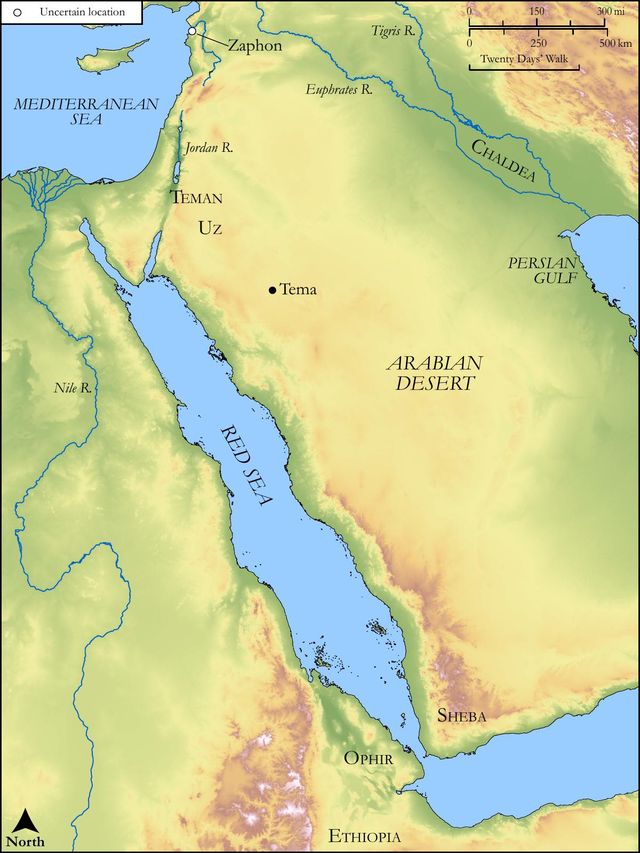
The Book of Job is set in the land of Uz, a region likely situated east of ancient Israel, and reflects the rich wisdom traditions prevalent throughout the ancient Near East. The arguments put forth by Job's friends, including Bildad, are deeply rooted in a common understanding of retribution theology, which posited a direct and causal correlation between righteousness and prosperity, and between sin and suffering. Within this worldview, God was perceived as a meticulously just ruler who unfailingly rewarded the good and punished the wicked. The concept of "armies" or "hosts" of God was a familiar motif, referring not only to angelic beings but also, significantly, to the celestial bodies (sun, moon, stars), which were often viewed as divine servants or manifestations of divine power in ancient cosmologies. Similarly, the idea of divine "light" carried profound significance, symbolizing not merely physical illumination but also truth, knowledge, revelation, and the very presence of the divine, as evidenced by various ancient cultures' reverence for solar deities or light as a metaphor for ultimate reality. Bildad's rhetorical questions skillfully leverage these pervasive cultural understandings to underscore God's unchallengeable might and pervasive presence.
Key Themes
ShowHideJob 25:3 powerfully contributes to several overarching themes within the Book of Job and broader biblical theology. Firstly, it emphatically highlights God's Absolute Sovereignty and Omnipotence. The rhetorical question concerning the number of His armies underscores His limitless power and His complete control over all cosmic forces and beings, an idea consistently echoed throughout scripture, such as in Psalm 147:4. Secondly, the verse speaks profoundly to Divine Omnipresence and Universal Knowledge. The question regarding His light arising upon all signifies God's inescapable presence, His all-seeing eye, and His pervasive influence that leaves no creature or place hidden from His awareness or judgment. This resonates deeply with the psalmist's declaration of God's inescapable presence in Psalm 139:7-12. Finally, and most critically for Bildad's immediate argument, the verse implicitly reinforces the Insignificance and Impurity of Humanity in comparison to God's immense glory and purity. By magnifying God's transcendence, Bildad aims to diminish Job's self-perception of righteousness, thereby justifying the friends' unwavering belief that Job's suffering must be a direct consequence of sin, as no mortal could possibly be pure enough to stand before such a magnificent and all-encompassing God.
Exposition and Analysis
ShowHideKey Word Analysis
ShowHideThis word (H1416), derived from a root meaning "to cut, to penetrate," refers to "a crowd (especially of soldiers)." In biblical usage, it encompasses military forces, but more frequently in a cosmic sense, it denotes the "host of heaven"—the stars and celestial bodies, which are seen as God's innumerable servants (Isaiah 40:26). It also encompasses angelic beings, the spiritual armies that carry out God's will (Psalm 103:21). Bildad's rhetorical question, "Is there any number of his armies?", underscores the immeasurable vastness and unconquerable power of God's dominion, implying that His forces are beyond human comprehension or resistance.
The word (H216) signifies "illumination or (concrete) luminary (in every sense, including lightning, happiness, etc.)." In ancient Near Eastern and biblical thought, light is a rich metaphor for divine presence, knowledge, truth, revelation, favor, blessing, and even judgment. It represents God's pervasive glory and His inescapable awareness. The question, "upon whom doth not his light arise?", suggests that God's influence, knowledge, and moral scrutiny are universal and inescapable. No person or place is hidden from His all-seeing eye or beyond the reach of His divine presence. This "light" can bring comfort to the righteous and expose the unrighteous.
This primitive root (H6965) means "to rise (in various applications, literal, figurative, intensive and causative)." In this context, it speaks of the active, pervasive, and undeniable manifestation of God's light. It's not a passive presence but an active "arising" or "shining forth" that impacts all. The question implies that God's light is not confined or limited; it actively extends to and illuminates every single entity, leaving no one untouched by His presence and scrutiny.
Verse Breakdown
ShowHide"Is there any number of his armies?"
This is a potent rhetorical question, anticipating a resounding "No!" The profound implication is that God's celestial hosts—encompassing both the innumerable stars and the vast legions of angels—are beyond human enumeration or comprehension. This clause emphatically emphasizes God's infinite power, His absolute command over all creation, and the overwhelming might at His disposal. It serves to humble the listener by highlighting the sheer, incomprehensible scale of divine power in stark contrast to human finitude and limitation.
"and upon whom doth not his light arise?"
This second rhetorical question also demands a definitive "No one!" as an answer. It asserts God's universal presence, His pervasive knowledge, and His inescapable influence. "His light" symbolizes His divine truth, revelation, and moral scrutiny. The question conveys that God's awareness and authority extend to every individual and every corner of the cosmos. No one can hide from Him, and no one is beyond His reach or His judgment. This reinforces the profound biblical truth of God's omnipresence and omniscience, further diminishing any human claim to independent righteousness or hidden sin.
Literary Devices
ShowHideJob 25:3 is profoundly rich in Rhetorical Question, a device where questions are posed not to elicit an answer but to make a point more forcefully and undeniably. Bildad masterfully employs two such questions to emphasize God's unchallengeable power and pervasive presence, implying that the answer is self-evident and overwhelmingly in God's favor. The verse also utilizes powerful Metaphor, where "armies" serves as a metaphor for God's vast, innumerable forces, encompassing both celestial bodies and angelic hosts, all utterly under His divine command. Similarly, "light" is a profound metaphor for God's pervasive knowledge, truth, presence, and moral authority, illuminating all things and leaving nothing hidden from His sight. The use of Hyperbole is also evident, as the questions exaggerate the boundlessness of God's power and reach to impress upon Job the utter futility of his arguments against divine justice and the inherent limitations of human understanding.
Theological and Thematic Connections
ShowHideJob 25:3, though articulated by Bildad with a flawed theological premise concerning the direct cause of Job's suffering, nonetheless articulates profound and enduring truths about God's nature that resonate throughout the entire biblical narrative. It underscores the Creator's absolute transcendence, His infinite power, and His omnipresent knowledge. This portrayal of God as the sovereign Lord of all hosts and the source of universal light establishes a foundational understanding of divine majesty and unassailable authority. It powerfully reminds us that God's dominion is not limited by earthly boundaries or human understanding, and His scrutiny penetrates every aspect of existence, leaving no sin hidden and no righteous act unseen. This profound truth calls for a posture of deep reverence and profound humility before the One who holds all things in His hands and whose light illuminates every corner of the cosmos.
Reflection and Application
ShowHideJob 25:3 challenges us to confront the incomprehensible vastness of God's being and our own finite, dependent place within His magnificent creation. In a world often consumed by self-importance, human achievement, and the illusion of control, this verse serves as a powerful and necessary corrective, calling us to a posture of profound humility and awe. Recognizing that God commands innumerable "armies" and that His "light" arises upon everyone should instill both a deep sense of reverence for His majesty and a comforting assurance of His unwavering presence. It reminds us that no situation, no matter how chaotic, overwhelming, or seemingly hopeless, is ever beyond His sovereign control. His omnipresent light means that our deepest struggles, our most profound joys, our hidden fears, and our most intimate longings are all known to Him. This understanding can radically transform our perspective on suffering, encouraging unwavering trust in His divine plan even when it seems inscrutable, and fostering a deeper reliance on His infinite wisdom and power rather than our own limited understanding. Ultimately, it compels us to live transparently, knowing that we are always in His light, and to worship Him as the truly incomparable God, whose greatness is beyond measure.
Questions for Reflection
ShowHideFAQ
ShowHideWhat are God's "armies" in this context?
ShowHideIn Job 25:3, God's "armies" (Hebrew: gᵉdûwd, H1416) refer to His vast and innumerable forces that are utterly under His command. This imagery primarily encompasses the celestial bodies—the stars and planets—often called the "host of heaven" (Isaiah 40:26)—which God meticulously numbers and controls. It also extends to the angelic beings, the spiritual hosts who carry out His will and serve as His messengers and warriors (Psalm 103:21). Bildad uses this powerful imagery to emphasize God's overwhelming power and absolute sovereignty over all creation, both visible and invisible, implying that His might is beyond human comprehension or challenge.
Why does Bildad use rhetorical questions here?
ShowHideBildad uses rhetorical questions ("Is there any number of his armies? and upon whom doth not his light arise?") not to seek information, but to make a forceful and undeniable point. These questions are skillfully designed to elicit an obvious "No one!" or "No, there is no number!" as an answer, thereby highlighting the self-evident and overwhelming truth of God's boundless power and universal presence. By framing his assertions as questions, Bildad aims to engage Job and the audience, compelling them to acknowledge God's incomparable greatness and, by extension, the inherent impurity and insignificance of humanity in comparison. This serves his overall argument that Job, as a mere mortal, cannot possibly be righteous enough to stand before such an awesome God and must therefore be suffering due to some hidden sin.
Christ-Centered Fulfillment
ShowHideWhile Bildad's words in Job 25:3 are spoken from a limited understanding of God's justice and humanity's righteousness, they powerfully foreshadow the ultimate revelation of God's power and pervasive light in the person and work of Jesus Christ. The "armies" of God, beyond numbering and utterly subject to His command, find their ultimate Captain and Commander in Christ. He is the one through whom all things were created, visible and invisible, whether thrones or dominions or rulers or authorities, and in whom all things hold together (Colossians 1:16-17). He is the Lord of hosts, before whom even angels bow, and who declared His authority to call down "more than twelve legions of angels" if He so chose (Matthew 26:53). Furthermore, the "light" that arises upon all, signifying God's universal knowledge and presence, is perfectly embodied in Jesus. He is the "true light, which enlightens everyone" (John 1:9), the "light of the world" who dispels spiritual darkness and reveals the Father (John 8:12). Through Him, the light of the knowledge of the glory of God shines in our hearts (2 Corinthians 4:6). Thus, the very power and pervasive presence that Bildad attributes to God, and uses to condemn Job, are precisely what Christ perfectly manifests, not to condemn, but to bring salvation and righteousness to those who believe, fulfilling the deepest need for a mediator between a holy God and impure humanity (1 Timothy 2:5).