


Matthew 5:44
Bible text: King James Version (1769 Blayney text) · Public domain
Bible text: King James Version with Strong's numbers · Public domain
Bible text: Berean Standard Bible · Public domain
Bible text: American Standard Version (1901) · Public domain
Bible text: World English Bible, Messianic edition · Public domain
Bible text: Geneva Bible (1599) · Public domain
Bible text: Young's Literal Translation · Public domain
- ἐγὼegōI myselfG1473P-1NSPersonal pronoun Nominative 1st Singular
- δὲdehoweverG1161CONJConjunction
- λέγωlegōsayG3004V-PAI-1SVerb Present Active Indicative 1st Singular
- ὑμῖν·huminto youG4771P-2DPPersonal pronoun Dative 2nd Plural
- ἀγαπᾶτεagapatedo loveG25V-PAM-2PVerb Present Active Imperative 2nd Plural
- τοὺςtoustheG3588T-APMDefinite article Accusative Plural Masculine
- ἐχθροὺςechthrousenemiesG2190N-APMNoun Accusative Plural Masculine
- ὑμῶνhumōnof youG4771P-2GPPersonal pronoun Genitive 2nd Plural
- εὐλογεῖτεeulogeitedo blessG2127V-PAM-2PVerb Present Active Imperative 2nd Plural
- τοὺςtousthoseG3588T-APMDefinite article Accusative Plural Masculine
- καταρωμένουςkatarōmenouscursingG2672V-PNP-APMVerb Present Middle Or Passive Deponent Participle Accusative Plural Masculine
- ὑμᾶςhumasyouG4771P-2APPersonal pronoun Accusative 2nd Plural
- καλῶςkalōswellG2573ADVAdverb
- ποιεῖτεpoieitedoG4160V-PAM-2PVerb Present Active Imperative 2nd Plural
- τοὺςtousto thoseG3588T-APMDefinite article Accusative Plural Masculine
- μισοῦνταςmisountashatingG3404V-PAP-APMVerb Present Active Participle Accusative Plural Masculine
- ὑμᾶςhumasyouG4771P-2APPersonal pronoun Accusative 2nd Plural
- καὶkaiandG2532CONJConjunction
- προσεύχεσθεproseuchesthedo prayG4336V-PNM-2PVerb Present Middle Or Passive Deponent Imperative 2nd Plural
- ὑπὲρhuperforG5228PREPPreposition
- τῶνtōnthoseG3588T-GPMDefinite article Genitive Plural Masculine
- ἐπηρεαζόντωνepēreazontōnmistreatingG1908V-PAP-GPMVerb Present Active Participle Genitive Plural Masculine
- ὑμᾶςhumasyouG4771P-2APPersonal pronoun Accusative 2nd Plural
- καὶkaiandG2532CONJConjunction
- διωκόντωνdiōkontōnpersecutingG1377V-PAP-GPMVerb Present Active Participle Genitive Plural Masculine
- ὑμᾶςhumasyouG4771P-2APPersonal pronoun Accusative 2nd Plural
English is a literal word-by-word gloss of the Greek, not the KJV's wording. Why?
This is the original text the KJV's translators worked from — each Greek word with its own literal English meaning in this verse, prepared by scholars at Tyndale House, Cambridge. The KJV translates whole sentences, not word by word, so its wording differs: one Greek word can become several English words, and the KJV may choose “charity” where the gloss reads “love”. Both are faithful — they answer different questions. For the KJV's own rendering, switch to the KJV text.
Details
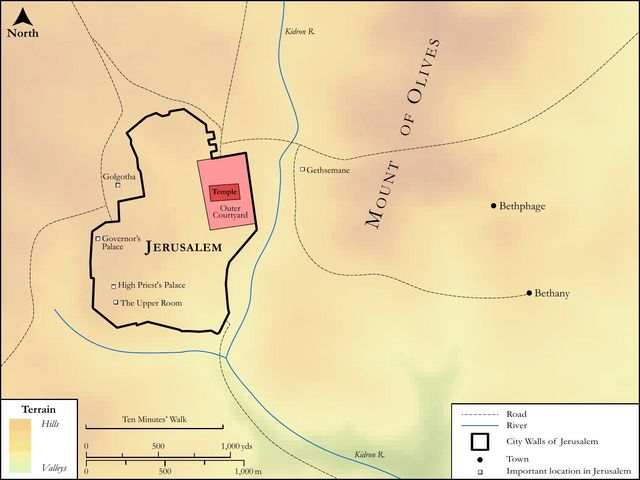
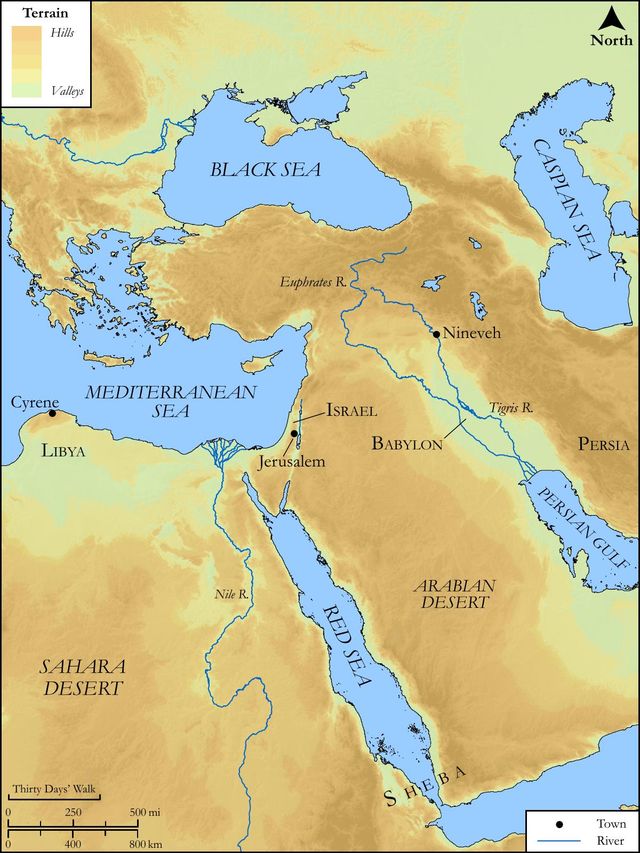
See on the biblical-era maps

Study this verse
Public-domain commentary
Matthew Henry
From his Commentary on the Whole Bible. Henry comments on passages, not single verses — this entry covers Matthew 5:43–48. His four-level outline is real structure in the source text, so it is rendered as structure.
We have here, lastly, an exposition of that great fundamental law of the second table, Thou shalt love thy neighbour, which was the fulfilling of the law.
I.See here how this law was corrupted by the comments of the Jewish teachers, Mat 5:43.
God said, Thou shalt love thy neighbour; and by neighbour they understood those only of their own country, nation, and religion; and those only that they were pleased to look upon as their friends: yet this was not the worst; from this command, Thou shalt love thy neighbour, they were willing to infer what God never designed; Thou shalt hate thine enemy; and they looked upon whom they pleased as their enemies, thus making void the great command of God by their traditions, though there were express laws to the contrary, Exo 23:4, Exo 23:5; Deu 23:7. Thou shalt not abhor an Edomite, nor an Egyptian, though these nations had been as much enemies to Israel as any whatsoever. It was true, God appointed them to destroy the seven devoted nations of Canaan, and not to make leagues with them; but there was a particular reason for it - to make room for Israel, and that they might not be snares to them; but it was very ill-natured from hence to infer, that they must hate all their enemies; yet the moral philosophy of the heathen then allowed this. It is Cicero's rule, Nemini nocere nisi prius lacessitum injuri - To injure no one, unless previously injured. De Offic. See how willing corrupt passions are to fetch countenance from the word of God, and to take occasion by the commandment to justify themselves.
II.See how it is cleared by the command of the Lord Jesus, who teaches us another lesson:
"But I say unto you, I, who come to be the great Peace-Maker, the general Reconciler, who loved you when you were strangers and enemies, I say, Love your enemies," Mat 5:44. Though men are ever so bad themselves, and carry it ever so basely towards us, yet that does not discharge us from the great debt we owe them, of love to our kind, love to our kin. We cannot but find ourselves very prone to wish the hurt, or at least very coldly to desire the good, of those that hate us, and have been abusive to us; but that which is at the bottom hereof is a root of bitterness, which must be plucked up, and a remnant of corrupt nature which grace must conquer. Note, it is the great duty of Christians to love their enemies; we cannot have complacency in one that is openly wicked and profane, nor put a confidence in one that we know to be deceitful; nor are we to love all alike; but we must pay respect to the human nature, and so far honour all men: we must take notice, with pleasure, of that even in our enemies which is amiable and commendable; ingenuousness, good temper, learning, and moral virtue, kindness to others, profession of religion, etc., and love that, though they are our enemies. We must have a compassion for them, and a good will toward them. We are here told,
1.That we must speak well of them: Bless them that curse you. When we speak to them, we must answer their revilings with courteous and friendly words, and not render railing for railing; behind their backs we must commend that in them which is commendable, and when we have said all the good we can of them, not be forward to say any thing more. See Pe1 3:9. They, in whose tongues is the law of kindness, can give good words to those who give bad words to them.
2.That we must do well to them: "Do good to them that hate you, and that will be a better proof of love than good words. Be ready to do them all the real kindness that you can, and glad of an opportunity to do it, in their bodies, estates, names, families; and especially to do good to their souls." It was said of Archbishop Cranmer, that the way to make him a friend was to do him an ill turn; so many did he serve who had disobliged him.
3.We must pray for them: Pray for them that despitefully use you, and persecute you. Note,
(1.)It is no new thing for the most excellent saints to be hated, and cursed, and persecuted, and despitefully used, by wicked people; Christ himself was so treated.
(2.)That when at any time we meet with such usage, we have an opportunity of showing our conformity both to the precept and to the example of Christ, by praying for them who thus abuse us. If we cannot otherwise testify our love to them, yet this way we may without ostentation, and it is such a way as surely we durst not dissemble in. We must pray that God will forgive them, that they may never fare the worse for any thing they have done against us, and that he would make them to be at peace with us; and this is one way of making them so. Plutarch, in his Laconic Apophthegms, has this of Aristo; when one commended Cleomenes's saying, who, being asked what a good king should do, replied, Tous men philous euergetein̂ tous de echthrous kakōs poiein - Good turns to his friends, and evil to his enemies; he said, How much better is it tous men philous euergetein̂ tous de echthrous philous poiein - to do good to our friends, and make friends of our enemies. This is heaping coals of fire on their heads.
Two reasons are here given to enforce this command (which sounds so harsh) of loving our enemies. We must do it,
[1.]That we may be like God our Father; "that ye may be, may approve yourselves to be, the children of your Father which is in heaven." Can we write a better copy? It is a copy in which love to the worst of enemies is reconciled to, and consistent with, infinite purity and holiness. God maketh his sun to rise, and sendeth rain, on the just and the unjust, Mat 5:45. Note, First, Sunshine and rain are great blessings to the world, and they come from God. It is his sun that shines, and the rain is sent by him. They do not come of course, or by chance, but from God. Secondly, Common mercies must be valued as instances and proofs of the goodness of God, who in them shows himself a bountiful Benefactor to the world of mankind, who would be very miserable without these favours, and are utterly unworthy of the least of them. Thirdly, These gifts of common providence are dispensed indifferently to good and evil, just and unjust; so that we cannot know love and hatred by what is before us, but by what is within us; not by the shining of the sun on our heads, but by the rising of the Sun of Righteousness in our hearts. Fourthly, The worst of men partake of the comforts of this life in common with others, though they abuse them, and fight against God with his own weapons; which is an amazing instance of God's patience and bounty. It was but once that God forbade his sun to shine on the Egyptians, when the Israelites had light in their dwellings; God could make such a distinction every day. Fifthly, The gifts of God's bounty to wicked men that are in rebellion against him, teach us to do good to those that hate us; especially considering, that though there is in us a carnal mind which is enmity to God, yet we share in his bounty. Sixthly, Those only will be accepted as the children of God, who study to resemble him, particularly in his goodness.
[2.]That we may herein do more than others, Mat 5:46, Mat 5:47. First, Publicans love their friends. Nature inclines them to it; interest directs them to it. To do good to them who do good to us, is a common piece of humanity, which even those whom the Jews hated and despised could give as good proofs as of the best of them. The publicans were men of no good fame, yet they were grateful to such as had helped them to their places, and courteous to those they had a dependence upon; and shall we be no better than they? In doing this we serve ourselves and consult our own advantage; and what reward can we expect for that, unless a regard to God, and a sense of duty, carrying us further than our natural inclination and worldly interest? Secondly, We must therefore love our enemies, that we may exceed them. If we must go beyond scribes and Pharisees, much more beyond publicans. Note, Christianity is something more than humanity. It is a serious question, and which we should frequently put to ourselves, "What do we more than others? What excelling thing do we do? We know more than others; we talk more of the things of God than others; we profess, and have promised, more than others; God has done more for us, and therefore justly expects more from us than from others; the glory of God is more concerned in us than in others; but what do we more than others? Wherein do we live above the rate of the children of this world? Are we not carnal, and do we not walk as men, below the character of Christians? In this especially we must do more than others, that while every one will render good for good, we must render good for evil; and this will speak a nobler principle, and is consonant to a higher rule, than the most of men act by. Others salute their brethren, they embrace those of their own party, and way, and opinion; but we must not so confine our respect, but love our enemies, otherwise what reward have we? We cannot expect the reward of Christians, if we rise no higher than the virtue of publicans." Note, Those who promise themselves a reward above others must study to do more than others.
Lastly, Our Saviour concludes this subject with this exhortation (Mat 5:48), Be ye therefore perfect, as your Father which is in heaven is perfect. Which may be understood, 1. In general, including all those things wherein we must be followers of God as dear children. Note, It is the duty of Christians to desire, and aim at, and press toward a perfection in grace and holiness, Phi 3:12-14. And therein we must study to conform ourselves to the example of our heavenly Father, Pe1 1:15, Pe1 1:16. Or, 2. In this particular before mentioned, of doing good to our enemies; see Luk 6:36. It is God's perfection to forgive injuries and to entertain strangers, and to do good to the evil and unthankful, and it will be ours to be like him. We that owe so much, that owe our all, to the divine bounty, ought to copy it out as well as we can.
Historical interpretation
Seventeen Centuries of Reception
25 surviving comments on this verse. Each one is dated, so this reads as a timeline rather than a list.
Select a marker to jump to its quote. Markers stagger vertically where authors wrote within a few decades of each other.
(Hil. Quæst. V. and N. Test. q. 68.) And the souls of them that are slain cry out to be avenged; as the blood of Abel cried out of the ground not with a voice, but in spirit. As the work is said to laud the workman, when he delights himself in the view thereof; for the saints are not so impatient as to urge on what they know will come to pass at the appointed time.
On the other hand, for our own petition, when we say, "Hallowed be Thy name," we pray this; that it may be hallowed in us who are in Him, as well in all others for whom the grace of God is still waiting; that we may obey this precept, too, in "praying for all," even for our personal enemies. And therefore with suspended utterance, not saying, "Hallowed be it in us, "we say,-"in all.
The law has found more than it has lost, while Christ says, "Love your personal enemies, and bless your cursers, and pray for your persecutors, that ye may be sons of your heavenly Father." Do you see whom patience gains for us as a Father? In this principal precept the universal discipline of patience is succinctly comprised, since evil-doing is not conceded even when it is deserved.
Learn from them that a large benevolence is enjoined upon us, even so far as to supplicate God for our enemies, and to beseech blessings on our persecutors. Who, then, are greater enemies and persecutors of Christians, than the very parties with treason against whom we are charged? Nay, even in terms, and most clearly, the Scripture says, "Pray for kings, and rulers, and powers, that all may be peace with you.
How much more, while you are returning the malediction in the name of Jupiter himself, are you doing honour to Jupiter in the same way as he who provoked you! But a believer ought to laugh in such cases, not to rave; nay, according to the precept, not to return a curse in the name of God even, but dearly to bless in the name of God, that you may both demolish idols and preach God, and fulfil discipline.
The law of the Lord transcends both the law of nature and the law revealed to Moses. For the things that are impossible with humans are possible with God. But Christ does not legislate impossibilities, as Stephen showed at the time of his passion, when he bent his knees and prayed for those who were stoning him. Similarly Paul, who had suffered so many things at the hands of the Jews, also prays for them. Therefore the infrequency of these things shows that they are not impossible. For most people, though, they are difficult to accomplish owing to their unwillingness to strive to reach the summit of virtue.
Or, the sun and rain have reference to the baptism with water and Spirit.
Note through what steps we have now ascended hither, and how He has set us on the very pinnacle of virtue. The first step is, not to begin to do wrong to any; the second, that in avenging a wrong done to us we be content with retaliating equal; the third, to return nothing of what we have suffered; the fourth, to offer one's self to the endurance of evil; the fifth, to be ready to suffer even more evil than the oppressor desires to inflict; the sixth, not to hate him of whom we suffer such things; the seventh, to love him; the eighth, to do him good; the ninth, to pray for him. And because the command is great, the reward proposed is also great, namely, to be made like unto God, Ye shall be the sons of your Father which is in heaven.
"Ye have heard that it hath been said, Thou shalt love thy neighbor, and hate thine enemy. But I say unto you, love your enemies, and pray for them which despitefully use you: bless them that curse you, do good to them that hate you. That ye may become like your Father which is in Heaven; for He maketh His sun to rise on the evil and on the good, and sendeth rain on the just and on the unjust."
See how He hath set the highest pinnacle on our good deeds. For this is why He teaches not only to endure a blow, but to offer the right cheek also; not only to add the cloak to the coat, but to travel also two miles with him who compels thee to go one; in order that thou mightest receive with all facility that which is much more than these. "But what," one may say, "is more than these?" Not even to count as an enemy him who is doing these things: or rather even somewhat else more than this. For He said not, "do not hate," but "love;" He said not, "do not injure," but "do good."
And if any one should examine accurately, he will see that even to these things somewhat is added, much greater than they are. For neither did He simply command to love, but to pray.
Seest thou how many steps He hath ascended, and how He hath set us on the very summit of virtue? Nay, mark it, numbering from the beginning. A first step is, not to begin with injustice: a second, after he hath begun, to vindicate one's self by equal retaliation; a third, not to do unto him that is vexing us the same that one hath suffered, but to be quiet; a fourth, even to give one's self up to suffer wrongfully; a fifth, to give up yet more than the other, who did the wrong, wishes; a sixth, not to hate him who hath done so; a seventh, even to love him; an eighth, to do him good also; a ninth, to entreat God Himself on his behalf. Seest thou, what height of self-command? Wherefore glorious too, as we see, is the reward which it hath. That is, because the thing enjoined was great, and needed a fervent soul, and much earnestness, He appoints for it also such a reward, as for none of the former. For He makes not mention here of earth, as with respect to the meek; nor of comfort and mercy, as with regard to the mourners and the merciful; nor of the kingdom of Heaven; but of that which was more thrilling than all; our becoming like God, in such wise as men might become so. For He saith, "That ye may become like unto your Father which is in Heaven."
And observe, I pray thee, how neither in this place, nor in the preceding parts, doth He call Him His own Father, but in that instance, "God," and "a great King," when he was discoursing about oaths, and here, "their Father." And this He doth, as reserving for the proper season what He had to say touching these points.
Many measuring the commandments of God by their own weakness, not by the strength of the saints, hold these commands for impossible, and say that it is virtue enough not to hate our enemies; but to love them is a command beyond human nature to obey. But it must be understood that Christ enjoins not impossibilities but perfection. Such was the temper of David towards Saul and Absalom; the Martyr Stephen also prayed for his enemies while they stoned him, and Paul wished himself anathema for the sake of his persecutors. (Rom. 9:3.) Jesus both taught and did the same, saying, Father, forgive them, for they know not what they do. (Luke 23:34.)
For whoso keeps the commandments of God is thereby made the son of God; he then of whom he here speaks is not by nature His son, but by his own will.
(Verse 44.) But I say to you, love your enemies, do good to those who hate you, and pray for those who persecute and slander you. Many, considering the weakness of their own abilities and not the power of the saints, think that the commandments of God are impossible and say that it is enough to have virtues and not to hate enemies. However, they command to love more than human nature can endure. Therefore, it should be understood that Christ does not command the impossible, but the perfect: what David did to Saul and Absalom (1 Samuel 24 and 26, and 2 Samuel 18). Stephanus also, the martyr, prayed for those who were stoning him as enemies (Acts 7). And Paul desires to be accursed for his persecutors (Romans 9). Moreover, Jesus both taught and did these things, saying: Father, forgive them, for they do not know what they are doing (Luke 23:34).
But the question before us is rendered more urgent by what the Apostle John says: If any man see his brother sin a sin which is not unto death, he shall ask, and the Lord shall give him life for him who sins not unto death. There is a sin unto death: I do not say that he shall pray for it. For he manifestly shows that there are certain brethren for whom we are not commanded to pray, although the Lord bids us pray even for our persecutors. Nor can the question in hand be solved, unless we acknowledge that there are certain sins in brethren which are more heinous than the persecution of enemies. Moreover, that brethren mean Christians can be proved by many examples from the divine Scriptures. Yet that one is plainest which the apostle thus states: For the unbelieving husband is sanctified in the wife, and the unbelieving wife is sanctified in the brother. For he has not added the word our; but has thought it plain, as he wished a Christian who had an unbelieving wife to be understood by the expression brother. And therefore he says a little after, But if the unbelieving depart, let him depart: a brother or a sister is not under bondage in such cases. Hence I am of opinion that the sin of a brother is unto death, when any one, after coming to the knowledge of God through the grace of our Lord Jesus Christ, makes an assault on the brotherhood, and is impelled by the fires of envy to oppose that grace itself by which he is reconciled to God. But the sin is not unto death, if any one has not withdrawn his love from a brother, but through some infirmity of disposition has failed to perform the incumbent duties of brotherhood. And on this account our Lord also on the cross says, Father, forgive them; for they know not what they do: for, not yet having become partakers of the grace of the Holy Spirit, they had not yet entered the fellowship of the holy brotherhood. And the blessed Stephen in the Acts of the Apostles prays for those by whom he is being stoned, because they had not yet believed on Christ, and were not fighting against that common grace. And the Apostle Paul on this account, I believe, does not pray for Alexander, because he was already a brother, and had sinned unto death, viz. by making an assault on the brotherhood through envy. But for those who had not broken off their love, but had given way through fear, he prays that they may be pardoned. For thus he expresses it: Alexander the coppersmith did me much evil: the Lord will reward him according to his works. Of whom also beware; for he has greatly withstood our words. Then he adds for whom he prays, thus expressing it: At my first defence no man stood with me, but all men forsook me: I pray God that it may not be laid to their charge.
It is this difference in their sins which separates Judas the betrayer from Peter the denier: not that a penitent is not to be pardoned, for we must not come into collision with that declaration of our Lord, where He enjoins that a brother is to be pardoned, when he asks his brother to pardon him; but that the ruin connected with that sin is so great, that he cannot endure the humiliation of asking for it, even if he should be compelled by a bad conscience both to acknowledge and divulge his sin. For when Judas had said, I have sinned, in that I have betrayed the innocent blood, yet it was easier for him in despair to run and hang himself, than in humility to ask for pardon. And therefore it is of much consequence to know what sort of repentance God pardons. For many much more readily confess that they have sinned, and are so angry with themselves that they vehemently wish they had not sinned; but yet they do not condescend to humble the heart and to make it contrite, and to implore pardon: and this disposition of mind we must suppose them to have, as feeling themselves already condemned because of the greatness of their sin.
And this is perhaps the sin against the Holy Ghost, i.e. through malice and envy to act in opposition to brotherly love after receiving the grace of the Holy Ghost—a sin which our Lord says is not forgiven either in this world or in the world to come. And hence it may be asked whether the Jews sinned against the Holy Ghost, when they said that our Lord was casting out devils by Beelzebub, the prince of the devils: whether we are to understand this as said against our Lord Himself, because He says of Himself in another passage, If they have called the Master of the house Beelzebub, how much more shall they call them of His household! or whether, inasmuch as they had spoken from great envy, being ungrateful for so manifest benefits, although they were not yet Christians, they are, from the very greatness of their envy, to be supposed to have sinned against the Holy Ghost? This latter is certainly not to be gathered from our Lord's words. For although He has said in the same passage, And whosoever speaks a word against the Son of man, it shall be forgiven him; but whosoever speaks a word against the Holy Ghost, it shall not be forgiven him, neither in this world, neither in the world to come; yet it may seem that He admonished them for this purpose, that they should come to His grace, and after accepting of it should not so sin as they have now sinned. For now they have spoken a word against the Son of man, and it may be forgiven them, if they be converted, and believe in Him, and receive the Holy Ghost; but if, after receiving Him, they should choose to envy the brotherhood, and to assail the grace they have received, it cannot be forgiven them, neither in this world nor in the world to come. For if He reckoned them so condemned, that there was no hope left for them, He would not judge that they ought still to be admonished, as He did by adding the statement, Either make the tree good, and his fruit good; or else make the tree corrupt, and his fruit corrupt.
Let it be understood, therefore, that we are to love our enemies, and to do good to those who hate us, and to pray for those who persecute us, in such a way, that it is at the same time understood that there are certain sins of brethren for which we are not commanded to pray; lest, through unskilfulness on our part, divine Scripture should seem to contradict itself (a thing which cannot happen). But whether, as we are not to pray for certain parties, so we are also to pray against some, has not yet become sufficiently evident. For it is said in general, Bless, and curse not; and again, Recompense to no man evil for evil. Moreover, while you do not pray for one, you do not therefore pray against him: for you may see that his punishment is certain, and his salvation altogether hopeless; and you do not pray for him, not because you hate him, but because you feel you can profit him nothing, and you do not wish your prayer to be rejected by the most righteous Judge. But what are we to think respecting those parties against whom we have it revealed that prayers were offered by the saints, not that they might be turned from their error (for in this way prayer is offered rather for them), but that final condemnation might come upon them: not as it was offered against the betrayer of our Lord by the prophet; for that, as has been said, was a prediction of things to come, not a wish for punishment: nor as it was offered by the apostle against Alexander; for respecting that also enough has been already said: but as we read in the Apocalypse of John of the martyrs praying that they may be avenged; while the well-known first martyr prayed that those who stoned him should be pardoned.
But we need not be moved by this circumstance. For who would venture to affirm, in regard to those white-robed saints, when they pleaded that they should be avenged, whether they pleaded against the men themselves or against the dominion of sin? For of itself it is a genuine avenging of the martyrs, and one full of righteousness and mercy, that the dominion of sin should be overthrown, under which dominion they were subjected to so great sufferings. And for its overthrow the apostle strives, saying, Let not sin therefore reign in your mortal body. But the dominion of sin is destroyed and overthrown, partly by the amendment of men, so that the flesh is brought under subjection to the spirit; partly by the condemnation of those who persevere in sin, so that they are righteously disposed of in such a way that they cannot be troublesome to the righteous who reign with Christ. Look at the Apostle Paul; does it not seem to you that he avenges the martyr Stephen in his own person, when he says: So fight I, not as one that beats the air: but I keep under my body, and bring it into subjection? For he was certainly laying prostrate, and weakening, and bringing into subjection, and regulating that principle in himself whence he had persecuted Stephen and the other Christians. Who then can demonstrate that the holy martyrs were not asking from the Lord such an avenging of themselves, when at the same time, in order to their being avenged, they might lawfully wish for the end of this world, in which they had endured such martyrdoms? And they who pray for this, on the one hand pray for their enemies who are curable, and on the other hand do not pray against those who have chosen to be incurable: because God also, in punishing them, is not a malevolent Torturer, but a most righteous Disposer. Without any hesitation, therefore, let us love our enemies, let us do good to those that hate us, and let us pray for those who persecute us.
That there is, however, a certain step [in advance] in the righteousness of the Pharisees, which belongs to the old law, is perceived from this consideration, that many men hate even those by whom they are loved; as, for instance, luxurious children hate their parents for restraining them in their luxury. That man therefore rises a certain step, who loves his neighbour, although as yet he hates his enemy. But in the kingdom of Him who came to fulfil the law, not to destroy it, he will bring benevolence and kindness to perfection, when he has carried it out so far as to love an enemy. For the former stage, although it is something, is yet so little that it may be reached even by the publicans as well. And as to what is said in the law, You shall hate your enemy, it is not to be understood as the voice of command addressed to a righteous man, but rather as the voice of permission to a weak man.
Here indeed arises a question in no way to be blinked, that to this precept of the Lord, wherein He exhorts us to love our enemies, and to do good to those who hate us, and to pray for those who persecute us, many other parts of Scripture seem to those who consider them less diligently and soberly to stand opposed; for in the prophets there are found many imprecations against enemies, which are thought to be curses: as, for instance, that one, Let their table become a snare, and the other things which are said there; and that one, Let his children be fatherless, and his wife a widow, and the other statements which are made either before or afterwards in the same Psalm by the prophet, as bearing on the case of Judas. Many other statements are found in all parts of Scripture, which may seem contrary both to this precept of the Lord, and to that apostolic one, where it is said, Bless; and curse not; while it is both written of the Lord, that He cursed the cities which received not His word; and the above-mentioned apostle thus spoke respecting a certain man, The Lord will reward him according to his works.
But these difficulties are easily solved, for the prophet predicted by means of imprecation what was about to happen, not as praying for what he wished, but in the spirit of one who saw it beforehand. So also the Lord, so also the apostle; although even in the words of these we do not find what they have wished, but what they have foretold. For when the Lord says, Woe unto you, Capernaum, He does not utter anything else than that some evil will happen to her as a punishment of her unbelief; and that this would happen the Lord did not malevolently wish, but saw by means of His divinity. And the apostle does not say, May [the Lord] reward; but, The Lord will reward him according to his work; which is the word of one who foretells, not of one uttering an imprecation. Just as also, in regard to that hypocrisy of the Jews of which we have already spoken, whose destruction he saw to be impending, he said, God shall smite you, you whited wall. But the prophets especially are accustomed to predict future events under the figure of one uttering an imprecation, just as they have often foretold those things which were to come under the figure of past time: as is the case, for example, in that passage, Why have the nations raged, and the peoples imagined vain things? For he has not said, Why will the heathen rage, and the people imagine vain things? Although he was not mentioning those things as if they were already past, but was looking forward to them as yet to come. Such also is that passage, They have parted my garments among them, and have cast lots upon my vesture: for here also he has not said, They will part my garments among them, and will cast lots upon my vesture. And yet no one finds fault with these words, except the man who does not perceive that variety of figures in speaking in no degree lessens the truth of facts, and adds very much to the impressions on our minds.
(Epist. 138. 2.) Some object that this command of Christ is altogether inconsistent with civil life in Commonwealths; Who, say they, would suffer, when he could hinder it, the pillage of his estate by an enemy; or would not repay the evil suffered by a plundered province of Rome on the plunderers according to the rights of war? But these precepts of patience are to be observed in readiness of the heart, and that mercy, not to return evil for evil, must be always fulfilled by the will. Yet must we often use a merciful sharpness in dealing with the headstrong. And in this way, if the earthly commonwealth will keep the Christian commandments, even war will not be waged without good charities, to the establishing among the vanquished peaceful harmony of godliness and righteousness. For that victory is beneficial to him from whom it snatches licence to sin; since nothing is more unfortunate for sinners, than the good fortune of their sins, which nourishes an impunity that brings punishment after it, and an evil will is strengthened, as it were some internal enemy.
(de Doctr. Christ. i. 30.) That by the command, Thou shalt love thy neighbour, all mankind were intended, the Lord showed in the parable of the man who was left half dead, which teaches us that our neighbour is every one who may happen at any time to stand in need of our offices of mercy; and this who does not see must be denied to none, when the Lord says, Do good to them that hate you.
(Serm. in Mont. i. 21.) That there were degrees in the righteousness of the Pharisees which was under the old Law is seen herein, that many hated even those by whom they were loved. He therefore who loves his neighbour, has ascended one degree, though as yet he hate his enemy; which is expressed in that, and shalt hate his enemy; which is not to be understood as a command to the justified, but a concession to the weak.
(cont. Faust. xix. 24.) I ask the Manichæans why they would have this peculiar to the Mosaic Law, that was said by them of old time, thou shall hate thy enemy? Has not Paul said of certain men that they were hateful to God? We must enquire then how we may understand that, after the example of God, to whom the Apostle here affirms some men to be hateful, our enemies are to be hated; and again after the same pattern of Him who maketh his sun to rise on the evil and the good, our enemies are to be loved. Here then is the rule by which we may at once hate our enemy for the evil's sake that is in him, that is, his iniquity, and love him for the good's sake that is in him, that is, his rational part. This then, thus uttered by them of old, being heard, but not understood, hurried men on to the hatred of man, when they should have hated nothing but vice. Such the Lord corrects as He proceeds, saying, I say unto you, Love your enemies. Lie who had just declared that He came not to subvert the Law, bat to fulfil it, by bidding us love our enemies, brought us to the understanding of how we may at once hate the same man for his sins whom we love for his human nature.
(Enchir. 73.) These indeed are examples of the perfect sons of God; yet to this should every believer aim, and seek by prayer to God, and struggles with himself to raise his human spirit to this temper. Yet this so great blessing is not given to all those multitudes which we believe are heard when they pray, Forgive us our debts, as we forgive our debtors.
(Serm. in Mont. i. 21.) Here arises a question, that this commandment of the Lord, by which He bids us pray for our enemies, seems opposed by many other parts of Scripture. In the Prophets are found many imprecations upon enemies; such as that in the 108th Psalm, Let his children be orphans. (Ps. 109:9.) But it should be known, that the Prophets are wont to foretel things to come in the form of a prayer or wish. This has more weight as a difficulty that John says, There is a sin unto death, I sag not that he shall pray for it; (1 John 5:16.) plainly showing, that there are some brethren for whom he docs not bid us pray; for what went before was, If any know his brother sin a sin, &c. Yet the Lord bids us pray for our persecutors. This question can only be resolved, if we admit that there are some sins in brethren more grievous than the sin of persecution in our enemies. For thus Stephen prays for those that stoned him, because they had not yet believed on Christ; but the Apostle Paul (2 Tim. 4:14.) does not pray for Alexander though he was a brother, but had sinned by attacking the brotherhood through jealousy. But for whom you pray not, you do not therein pray against him. What must we say then of those against whom we know that the saints have prayed, and that not that they should be corrected, (for that would be rather to have prayed for them), but for their eternal damnation; not as that prayer of the Prophet against the Lord's betrayer, for that is a prophecy of the future, not an imprecation of punishment; but as when we read in the Apocalypse the Martyrs' prayer that they may be avenged. (Rev. 6:10.) But we ought not to let this affect us. For who may dare to affirm that they prayed against those persons themselves, and not against the kingdom of sin? For that would be both a just and a merciful avenging of the Martyrs, to overthrow that kingdom of sin, under the continuance of which they endured all those evils. And it is overthrown by correction of some, and damnation of such as abide in sin. Does not Paul seem to you to have avenged Stephen on his own body, as he speaks, (1 Cor. 9:27.) I chastise my body, and bring it into subjection.
(Serm. in Mont. i. 23.) After that rule we must here understand of which John speaks, He gave them power to be made the sons of God. One is His Son by nature; we are made sons by the power which we have received; that is, so far as we fulfil those things that we are commanded. So He says not, Do these things because ye are sons; but, do these things that ye may become sons. In calling us to this then, He calls us to His likeness, for He saith, He maketh His sun to rise on the righteous and the unrighteous. By the sun we may understand not this visible, but that of which it is said, To you that fear the name of the Lord, the Sun of righteousness shall arise; (Mal. 4:2.) and by the rain, the water of the doctrine of truth; for Christ was seen, and was preached to good as well as bad.
(ubi sup.) Or we may take it of this visible sun, and of the rain by which the fruits are nourished, as the wicked mourn in the book of Wisdom, The Sun has not risen for us. (Wisd. 5:6.) And of the rain it is said, I will command the clouds that they rain not on it. (Is. 5:6.) But whether it be this or that, it is of the great goodness of God, which is set forth for our imitation. lie says not, 'the sun,' but, His sun, that is, the sun which Himself has made, that hence we may be admonished with how great liberality we ought to supply those things that we have not created, but have received as a boon from Him.
(Epist. 93. 2.) But as we laud Him for His gifts, let us also consider how He chastises those whom He loves. For not every one who spares is a friend, nor every one who chastises an enemy; it is better to love with severity, than to use lenity wherewith to deceive. (vid. Prov. 27:6.)
(De Civ. Dei, i. 8.) For the good man is not puffed up by worldly goods, nor broken by worldly calamity. But the bad man is punished in temporal losses, because he is corrupted by temporal gains. Or for another reason He would have good and evil common to both sorts of men, that good things might not be sought with vehement desire, when they were enjoyed even by the wicked; nor the evil things shamefully avoided, when even the righteous are afflicted by them.
He also said, ‘Evil cannot drive out evil. If anyone hurts you, do good to him and your good will destroy his evil.’
A brother asked a hermit, ‘What is humility?’ He answered, ‘To do good to them that do evil to you.’ The brother said, ‘Suppose a man cannot attain that standard, what is he to do?’ The hermit answered, ‘He should run away, and choose silence.’
A hermit said to a brother, ‘When a proud or vain thought enters your mind, examine your conscience to see if you are keeping God’s commandments; ask yourself if you love your enemies; if you rejoice in your enemy’s triumph, and if you are sad at his downfall; do you know yourself to be an unprofitable servant and a sinner beyond all others? But not even then must you think that you have corrected all your faults; to entertain such a thought as that would undo all the other good you have done.’
A brother asked Poemen about the words, ‘Do not render evil for evil’ (1 Thess. 5:15). He said to him, ‘The passions work in four stages: first in the heart, then in the face, third in words, fourth in deeds – and it is in deeds that it is essential not to render evil for evil. If you purify your heart, passion will not show in your expression, but if it does, take care not to speak about it; if you do speak, cut the conversation short in case you render evil for evil.’
As that, Thou shalt not lust, was not spoken to the flesh, but to the spirit, so in this the flesh indeed is not able to love its enemy, but the spirit is able; for the love and hate of the flesh is in the sense, but of the spirit is in the understanding. If then we feel hate to one who has wronged us, and yet will not to act upon that feeling, know that our flesh hates our enemy, but our soul loves him.
He was careful to say, On the righteous and the unrighteous, and not 'on the unrighteous as on the righteous;' for God gives all good gifts not for men's sake, but for the saints' sake, as likewise chastisements for the sake of sinners. In bestowing His good gifts, He does not separate the sinners from the righteous, that they should not despair; so in His inflictions, not the righteous from sinners that they should be made proud; and that the more, since the wicked are not profited by the good things they receive, but turn them to their hurt by their evil lives; nor are the good hurt by the evil things, but rather profit to increase of righteousness.
For as our sons after the flesh resemble their fathers in some part of their bodily shape, so do spiritual sons resemble their father God, in holiness.
Because the utmost perfection of love cannot go beyond the love of enemies, therefore as soon as the Lord has bid us love our enemies, He proceeds, Be ye then perfect, as your Father which is in heaven is perfect. He indeed is perfect, as being omnipotent; man, as being aided by the Omnipotent. For the word 'as' is used in Scripture, sometimes for identity, and equality, as in that, As I was with Moses, so will I be with thee; (Josh. 1:5.) sometimes to express likeness only as here.
(Mor. xxii. 11.) Love to an enemy is then observed when we are not sorrowful at his success, or rejoice in his fall. We hate him whom we wish not to be bettered, and pursue with ill-wishes the prosperity of the man in whose fall we rejoice. Yet it may often happen that without any sacrifice of charity, the fall of an enemy may gladden us, and again his exaltation make us sorrowful without any suspicion of envy; when, namely, by his fall any deserving man is raised up, or by his success any undeservedly depressed. But herein a strict measure of discernment must be observed, lest in following out our own hates, we hide it from ourselves under the specious pretence of others' benefit. We should balance how much we owe to the fall of the sinner, how much to the justice of the Judge. For when the Almighty has struck any hardened sinner, we must at once magnify His justice as Judge, and feel with the other's suffering who perishes.
If then sinners be led by nature to show kindness to those that love them, with how much greater show of affection ought you not to embrace even those that do not love you? For it follows, Do not even the publicans so? The publicans are those who collect the public imposts; or perhaps those who pursue the public business or the gain of this world.
Ethnici, that is, the Gentiles, for the Greek word ἔθνος is translated 'gens' in Latin; those, that is, who abide such as they were born, to wit, under sin.
. But I say unto you, Love your enemies. Here the Lord has reached the very pinnacle of the virtues. For what is greater than to love one’s enemies? But it is not impossible to accomplish. For Moses and Paul loved the Jews who were raging against them more than they loved themselves, and all the saints have loved their enemies.
. We bless them because we must consider them our benefactors. For anyone who persecutes us and puts us to the test, lightens the punishment that we will suffer for our own sins. We will also bless them when God gives us the great crown of the contest. For hear what He says:
(non occ.) The Lord has taught above that we must not resist one who offers any injury, but must be ready even to suffer more; He now further requires us to show to them that do us wrong both love and its effects. And as the things that have gone before pertain to the completion of the righteousness of the Law, in like manner this last precept is to be referred to the completion of the law of love, which, according to the Apostle, is the fulfilling of the Law.
(ord.) But it should be known, that in the whole body of the Law it is no where written, Thou shalt hate thy enemy. But it is to be referred to the tradition of the Scribes, who thought good to add this to the Law, because the Lord bade the children of Israel pursue their enemies, and destroy Amalek from under heaven.
(ord.) They who stand against the Church oppose her in three ways; with hate, with words, and with bodily tortures. The Church on the other hand loves them, as it is here, Love your enemies; does good to them, as it is, Do good to them that hate you; and prays for them, as it is, Pray for them that persecute you and accuse you falsely.
(non occ.) To love one that loves us is of nature, but to love our enemy of charity. If ye love them who love you, what reward have ye? to wit, in heaven. None truly, for of such it is said, Ye have received your reward. But these things we ought to do, and not leave the other undone.
(non occ.) But if you only pray for them that are your kinsfolk, what more has your benevolence than that of the unbelieving? Salutation is a kind of prayer.
I said in a previous chapter that chastity was the most unpopular of the Christian virtues. But I am not sure I was right. I believe there is one even more unpopular. It is laid down in the Christian rule, 'Thou shalt love thy neighbour as theyself.' Because in Christian morals 'thy neighbor' includes 'thy enemy', and so we come up against this terrible duty of forgiving our enemies...
We might try to understand exactly what loving your neighbor as yourself means. I have to love him as I love myself. Well, how exactly do I love myself?
Now that I come to think of it, I have no exactly got a feeling of fondness or affection for myself, and I do not even always enjoy my own society. So apparently 'Love your neighbour' does not mean 'feel fond of him' or 'find him attractive'. I ought to have seen that before, because, of course, you cannot feel fond of a person by trying. Do I think well of myself, think myself a nice chap? Well, I am afraid I sometimes do (and those are, no doubt, my worst moments) but that is not why I love myself. In fact it is the other way round: my self-love makes me think myself nice, but thinking myself nice is not why I love myself. So loving my enemies does not apparently mean thinking them nice either. That is an enormous relief. For a good many people imagine that forgiving your enemies means making out that they are really not such bad fellows after all, when it is quite plain that they are. Go a step further. In my most clear-sighted moments not only do I not think myself a nice man, but I know that I am a very nasty one. I can look at some of the things I have done with horror and loathing. So apparently I am allowed to loathe and hate some of the things my enemies do...
Does loving your enemy mean not punishing him? No, for loving myself does not mean that I ought not to subject myself to punishment - even to death. If you had committed a murder, the right Christian thing to do would be to give yourself up to the police and be hanged...
I imagine somebody will say, 'Well, if one is allowed to condemn the enemy's acts, and punish him, and kill him, what difference is left between Christian morality and the ordinary view?' All the difference in the world. Remember, we Christians think man lives for ever. Therefore, what really matters is those little marks or twists on the central, inside part of the soul which are going to turn it, in the long run, into a heavenly or hellish creature. We may kill if necessary, but we must not hate and enjoy hating. We may punish if necessary, but we must not enjoy it. In other words, something insude us, the feeling of resentment, the feeling that wants to get one own's back, must be simply killed... Even while we kill and punish we must try to feel about the enemy as we feel about ourselves - to wish that he were not bad, to hope that he may, in this world or another, be cured: in fact, to wish his good. That is what is meant in the Bible by loving him: wishing his good, not feeling fond of him nor saying he is nice when he is not.
I admit that this means loving people who have nothing lovable about them. But then, has oneself anything lovable about it? You love it simply because it is yourself. God intends us to love all selves in the same way and for the same reason: but He has given us the sum ready worked out in our own case to show us how it works. We have then to go on and apply the rule to all the other selves. Perhaps it makes it easier if we remember that that is how He loves us. Not for any nice, attractive qualities we think we have, but just because we are the things called selves.
Continue studying Matthew 5:44 across the web’s major study libraries — every link below opens this exact verse, chapter, or book on the destination site.
Read & Compare
 BibleGatewayThis verse in more than 200 translations and 70 languages.
 Bible.comThe YouVersion reader — hundreds of translations, reading plans, and highlights.
 ESV.orgCrossway's official English Standard Version reader.
 NET BibleThe NET translation with 60,000+ translators' notes on every rendering decision.
 STEP BibleTyndale House's free study tool — original text, vocabulary, and scholarly resources.
 BibliaLogos Bible Software's free web reader.
 USCCBThe New American Bible (Revised Edition) with the U.S. bishops' study notes.
Commentaries
 BibleHub CommentariesDozens of classic commentaries on this verse, gathered on one page.
 StudyLightMore than 100 commentary sets — the largest collection on the web.
 BibleRefPlain-English commentary on what this verse means, verse by verse.
 Enduring WordDavid Guzik's free commentary on this chapter, widely used by Bible teachers.
 Bible Study ToolsVerse commentary alongside Greek and Hebrew study aids.
Original Language & Research
- BibleHub InterlinearThe verse word by word — original language, transliteration, and English.
- BibleHub LexiconEvery word's original-language definition and Strong's entry.
 Blue Letter BibleDeep-study tools — Strong's numbers, concordance, and word studies.
 CNTR CollationThe earliest Greek manuscripts of this verse, collated letter by letter.
Sermons, Hymns & Audio


TrulyRandomVerse is not affiliated with these sites and doesn’t control their content. They’re linked because they’re genuinely useful.
Summary
Matthew 5:44 stands as a cornerstone of Christ's ethical teaching within the Sermon on the Mount, radically challenging conventional human responses to hostility. It commands believers to extend an unconditional, self-sacrificial love not only to those who are agreeable but specifically to adversaries, those who curse, hate, maliciously use, and persecute them. This divine imperative calls for proactive benevolence and intercessory prayer, reflecting the very character of God and setting a transformative standard for discipleship that transcends mere non-retaliation.
Context
ShowHideLiterary Context
Matthew 5:44 is situated within the heart of Jesus' Sermon on the Mount, specifically within the "antitheses" (Matthew 5:21-48), where Jesus reinterprets and deepens the understanding of the Mosaic Law. Following His pronouncements on the Beatitudes and the call for His disciples to be salt and light, Jesus addresses six specific traditional interpretations of the Law, contrasting them with His own profound and challenging teachings, often prefacing with "You have heard that it was said... but I say to you." This particular teaching on loving enemies directly follows His instruction on non-retaliation and turning the other cheek (Matthew 5:38-42), culminating in the call to imitate God's perfection in Matthew 5:48. It represents the apex of Jesus' ethical demands, pushing His followers beyond external conformity to internal transformation.
Historical & Cultural Context
In first-century Jewish society, the concept of "love your neighbor" (as found in Leviticus 19:18) was generally understood to apply to fellow Israelites or those within one's community. There was no explicit command in the Old Testament to love one's enemies, and in fact, some psalms and prophetic passages express imprecations against them. The prevailing cultural norm, often influenced by Roman justice, was "an eye for an eye" (lex talionis), ensuring proportional retribution. Jesus' teaching directly confronts this deeply ingrained cultural and religious understanding. His command to love, bless, do good to, and pray for enemies was revolutionary and counter-cultural, challenging the natural human inclination towards revenge or selective affection. It was a call to a higher righteousness that transcended the legalistic interpretations and societal expectations of the day.
Key Themes
ShowHideThis verse powerfully contributes to several overarching themes within the Sermon on the Mount and the broader Gospel of Matthew. It underscores the theme of Radical Righteousness, demonstrating that true righteousness goes beyond outward observance of the Law to encompass the heart and intentions, demanding a standard that surpasses that of the Pharisees and scribes (as seen in Matthew 5:20). It is central to the theme of Divine Imitation, calling believers to reflect the impartial, generous love of God, who "makes his sun rise on the evil and on the good, and sends rain on the just and on the unjust" (as articulated in Matthew 5:45). Furthermore, it highlights the theme of Transformative Discipleship, emphasizing that following Jesus involves a fundamental reorientation of one's worldview and actions, moving from reactive retaliation to proactive, self-giving love, thereby breaking cycles of hatred and demonstrating the kingdom of God.
Exposition and Analysis
ShowHideKey Word Analysis
ShowHideFrom the provided Strong's data, this word signifies a love that is "in a social or moral sense," a deliberate, volitional love that seeks the highest good of the other, regardless of their worthiness or the recipient's actions. It is not primarily an emotional affection (like phileo) but a principled, self-sacrificial commitment.
Derived from a primary verb meaning "to hate," this term refers to someone who is "hateful (passively, odious, or actively, hostile)." It denotes an adversary or foe, highlighting that the command to love is directed precisely at those who are actively hostile or antagonistic towards the believer.
This word means "to pursue (literally or figuratively); by implication, to persecute." It suggests active, persistent harassment or ill-treatment, indicating that the command to love and pray applies even in the face of sustained opposition and suffering for one's faith.
Verse Breakdown
ShowHide"But I say unto you"
This introductory phrase marks a significant shift, signaling Jesus' authoritative reinterpretation of traditional understanding. It contrasts His teaching with what "you have heard that it was said" (Matthew 5:43), asserting His divine authority to unveil the deeper spiritual intent of God's law.
"Love your enemies"
This is the central, radical command. It calls for an agape love—a selfless, intentional act of will—directed towards those who are hostile or antagonistic, transcending natural human inclination and societal norms.
"bless them that curse you"
This clause specifies a proactive, verbal response. To "bless" (Greek, eulogéō) means to "speak well of" or "invoke a benediction upon." Instead of reciprocating curses with curses, believers are to speak words of goodwill and pray for divine favor upon those who wish them ill.
"do good to them that hate you"
This moves beyond words to actions. To "do good" (Greek, poiéō kalōs) means to perform "well" or "noble" acts. It is a call to actively seek the welfare and benefit of those who harbor animosity, demonstrating tangible kindness despite their hatred.
"and pray for them which despitefully use you, and persecute you;"
This final, comprehensive command encompasses both malicious verbal abuse ("despitefully use," Greek, epēreázō, meaning to insult or slander) and active, sustained oppression ("persecute," Greek, diṓkō). Prayer is presented as a powerful, spiritual weapon, transforming the heart of the one praying and potentially impacting the situation of the adversary. It is the ultimate expression of agape love for an enemy.
Literary Devices
ShowHideMatthew 5:44 employs several powerful literary devices to convey its profound message. The most prominent is Antithesis, as Jesus directly contrasts His teaching ("But I say unto you") with the prevailing understanding ("You have heard that it was said, 'You shall love your neighbor and hate your enemy'" in the preceding verse). This stark contrast highlights the revolutionary nature of His command. The verse also utilizes Parallelism and Repetition through its series of four imperative commands—"Love your enemies, bless them that curse you, do good to them that hate you, and pray for them which despitefully use you, and persecute you." This cumulative structure emphasizes the multifaceted and comprehensive nature of the required response, building from a general attitude of love to specific actions and culminating in spiritual intercession. The use of strong, active verbs in the Imperative Mood underscores the non-negotiable and demanding nature of this divine expectation for His followers.
Theological and Thematic Connections
ShowHideThis radical command to love one's enemies is deeply rooted in the very nature and character of God. It calls believers to imitate the divine impartiality and boundless grace that God extends to all humanity, regardless of their righteousness or rebellion. God's love (agape) is not contingent on human merit but flows from His inherent goodness, a love that allows the sun to shine and rain to fall on both the just and the unjust. Therefore, for believers to truly be "children of your Father in heaven" (Matthew 5:45), they must embody this same expansive, unconditional love, demonstrating a righteousness that surpasses mere human reciprocity and reflects the transformative power of the Gospel. This love is not a natural human impulse but a supernatural empowerment, a hallmark of true discipleship that distinguishes Christ's followers from the world.
Reflection and Application
ShowHideMatthew 5:44 presents one of the most challenging yet transformative commands in all of Scripture, calling believers to a counter-cultural ethic that redefines strength not as retaliation, but as radical, self-giving love. To truly live out this verse requires a profound shift in perspective, moving beyond natural human inclinations toward revenge, resentment, or avoidance. It demands a spiritual discipline that actively chooses to seek the well-being of those who wish us harm, recognizing that such love is a powerful testimony to the transforming power of Christ within us. This command is not merely about emotional sentiment but about intentional actions: speaking kindly, performing good deeds, and, most profoundly, interceding in prayer for those who mistreat us. It is in this act of loving our enemies that we most clearly reflect the character of God and participate in breaking cycles of hatred, demonstrating the redemptive power of the Kingdom of Heaven.
Questions for Reflection
ShowHideFAQ
ShowHideIs it truly possible to "love" someone who actively seeks to harm you?
ShowHideYes, but it's crucial to understand the nature of the love Jesus commands. The Greek word used, agapáō, refers to a volitional, principled love, not necessarily an emotional affection or fondness (phileo). It is a deliberate choice to seek the highest good of another, even an adversary, and to act with benevolence towards them. This does not mean condoning their actions, allowing oneself to be abused, or neglecting self-protection. Instead, it means refusing to harbor resentment, seeking revenge, or wishing them ill. It involves praying for them, desiring their repentance and salvation, and being open to reconciliation if they change. This kind of love is supernatural, empowered by the Holy Spirit, and reflects the character of God who loves even the unrighteous (as seen in Romans 5:8).
Christ-Centered Fulfillment
ShowHideMatthew 5:44 finds its ultimate fulfillment and perfect embodiment in the person and work of Jesus Christ Himself. He did not merely teach this radical command; He lived it out perfectly. On the cross, while being "despitefully used" and "persecuted" by those who hated Him, Jesus prayed, "Father, forgive them, for they know not what they do". His entire ministry was an act of "doing good" to a world that largely rejected Him, culminating in His sacrificial death as the Lamb of God who takes away the sin of the world. He "loved us and gave himself up for us" (as described in Ephesians 5:2), even while we were His "enemies" in our sin (a truth powerfully articulated in Romans 5:10). Therefore, Jesus is not just the authoritative teacher of this command but also its living demonstration and the ultimate source of empowerment for believers to obey it, enabling us to love with His divine, transforming agape.