


Luke 6:36
- ΓίνεσθεGinesthedo be youG1096V-PNM-2PVerb Present Middle Or Passive Deponent Imperative 2nd Plural
- οὖνounthereforeG3767CONJConjunction
- οἰκτίρμονεςoiktirmonesmercifulG3629A-NPMAdjective Nominative Plural Masculine
- καθὼςkathōseven asG2531CONJConjunction
- καὶkaialsoG2532CONJConjunction
- ὁhotheG3588T-NSMDefinite article Nominative Singular Masculine
- πατὴρpatērFatherG3962N-NSM-TNoun Nominative Singular Masculine Title
- ὑμῶνhumōnof youG4771P-2GPPersonal pronoun Genitive 2nd Plural
- οἰκτίρμωνoiktirmōnmercifulG3629A-NSMAdjective Nominative Singular Masculine
- ἐστίνestinisG1510V-PAI-3SVerb Present Active Indicative 3rd Singular
English is a literal word-by-word gloss of the Greek, not the KJV's wording. Why?
This is the original text the KJV's translators worked from — each Greek word with its own literal English meaning in this verse, prepared by scholars at Tyndale House, Cambridge. The KJV translates whole sentences, not word by word, so its wording differs: one Greek word can become several English words, and the KJV may choose “charity” where the gloss reads “love”. Both are faithful — they answer different questions. For the KJV's own rendering, switch to the KJV text.
Details
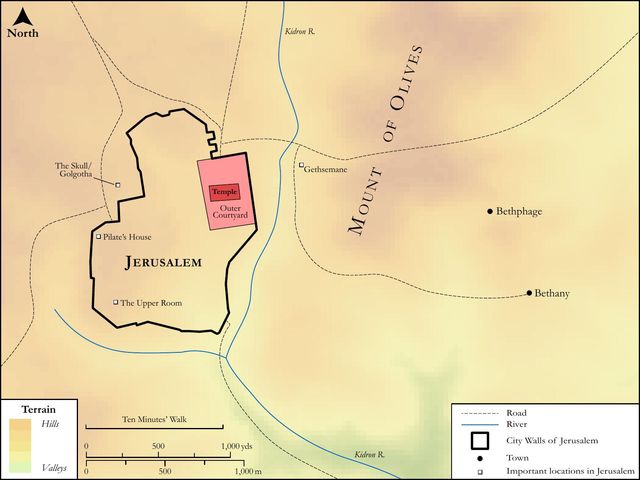
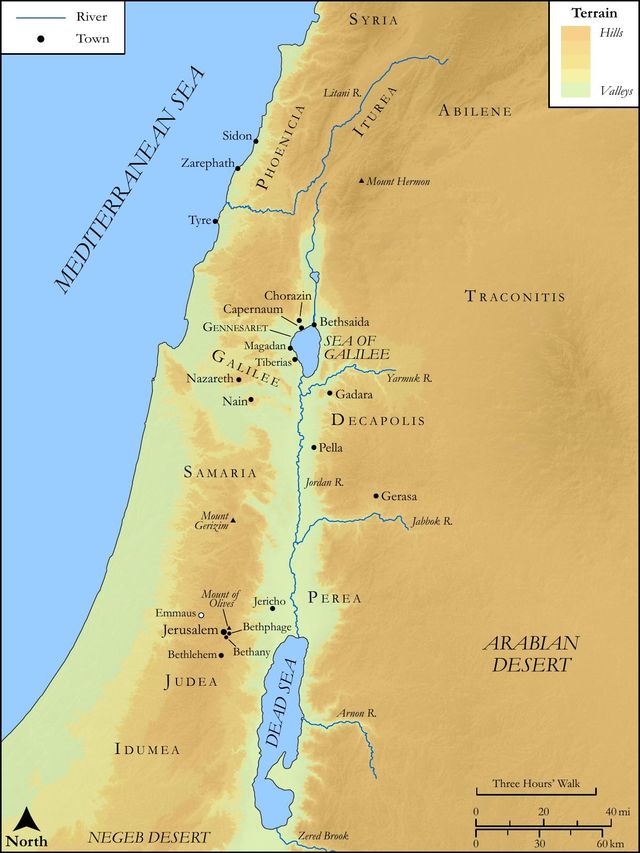
See on the biblical-era map

Study this verse
Public-domain commentary
Matthew Henry
From his Commentary on the Whole Bible. Henry comments on passages, not single verses — this entry covers Luke 6:27–36. His four-level outline is real structure in the source text, so it is rendered as structure.
These verses agree with Mat 5:38, to the end of that chapter: I say unto you that hear (Luk 6:27), to all you that hear, and not to disciples only, for these are lessons of universal concern. He that has an ear, let him hear. Those that diligently hearken to Christ shall find he has something to say to them well worth their hearing. Now the lessons Christ here teacheth us are,
I.That we must render to all their due, and be honest and just in all our dealings (Luk 6:31):
As ye would that men should do to you, do ye also to them likewise; for this is loving your neighbour as yourselves. What we should expect, in reason, to be done to us, either in justice or charity, by others, if they were in our condition and we in theirs, that, as the matter stands, we must do to them. We must put our souls into their souls' stead, and then pity and succour them, as we should desire and justly expect to be ourselves pitied and succoured.
II.That we must be free in giving to them that need (Luk 6:30):
"Give to every man that asketh of thee, to every one that is a proper object of charity, that wants necessaries, which thou hast wherewithal to supply out of thy superfluities. Give to those that are not able to help themselves, to those that have not relations in a capacity to help them." Christ would have his disciples ready to distribute, and willing to communicate, to their power in ordinary cases, and beyond their power in extraordinary.
III.That we must be generous in forgiving those that have been any way injurious to us.
1.We must not be extreme in demanding our right, when it is denied us: "Him that taketh away thy cloak, either forcibly or fraudulently, forbid him not by any violent means to take thy coat also, Luk 6:29. Let him have that too, rather than fight for it. And (Luk 6:30) of him that taketh thy goods" (so Dr. Hammond thinks it should be read), "that borrows them, or that takes them up from thee upon trust, of such do not exact them; if Providence have made such insolvent, do not take the advantage of the law against them, but rather lose it than take them by the throat, Mat 18:28. If a man run away in thy debt, and take away thy goods with him, do not perplex thyself, nor be incensed against him."
2.We must not be rigorous in revenging a wrong when it is done us: "Unto him that smiteth thee on the one cheek, instead of bringing an action against him, or sending for a writ for him, or bringing him before a justice, offer also the other;" that is, "pass it by, though thereby thou shouldest be in danger of bringing upon thyself another like in dignity, which is commonly pretended in excuse of taking the advantage of the law in such a case. If any one smite thee on the cheek, rather than give another blow to him, be ready to receive another from him;" that is, "leave it to God to plead thy cause, and do thou sit down silent under the affront." When we do thus, God will smite our enemies, as far as they are his, upon the cheek bone, so as to break the teeth of the ungodly (Psa 3:7); for he hath said, Vengeance is mine, and he will make it appear that it is so when we leave it to him to take vengeance.
3.Nay, we must do good to them that do evil to us. This is that which our Saviour, in these verses, chiefly designs to teach us, as a law peculiar to his religion, and a branch of the perfection of it.
(1.)We must be kind to those from whom we have received injuries. We must not only love our enemies, and bear a good will to them, but we must do good to them, be as ready to do any good office to them as to any other person, if their case call for it, and it be in the power of our hands to do it. We must study to make it appear, by positive acts, if there be an opportunity for them, that we bear them no malice, nor see revenge. Do they curse us, speak ill of us, and wish ill to us? Do they despitefully use us, in word or deed? Do they endeavour to make us contemptible or odious? Let us bless them, and pray for them, speak well of them, the best we can, wish well to them, especially to their souls, and be intercessors with God for them. This is repeated, Luk 6:35 : love your enemies, and do them good. To recommend this difficult duty to us, it is represented as a generous thing, and an attainment few arrive at. To love those that love us has nothing uncommon in it, nothing peculiar to Christ's disciples, for sinners will love those that love them. There is nothing self-denying in that; it is but following nature, even in its corrupt state, and puts no force at all upon it (Luk 6:32): it is no thanks to us to love those that say and do just as we would have them. "And (Luk 6:33) if you do good to them that do good to you, and return their kindnesses, it is from a common principle of custom, honour, and gratitude; and therefore what thanks have you? What credit are you to the name of Christ, or what reputation do you bring to it? for sinners also, that know nothing of Christ and his doctrine, do even the same. But it becomes you to do something more excellent and eminent, herein to out-do your neighbours, to do that which sinners will not do, and which no principle of theirs can pretend to reach to: you must render good for evil;" not that any thanks are due to us, but then we are to our God for a name and a praise and he will have the thanks.
(2.)We must be kind to those from whom we expect no manner of advantage (Luk 6:35): Lend, hoping for nothing again. It is meant of the rich lending to the poor a little money for their necessity, to buy daily bread for themselves and their families, or to keep them out of prison. In such a case, we must lend, with a resolution not to demand interest for what we lend, as we may most justly from those that borrow money to make purchases withal, or to trade with. But that is not all; we must lend though we have reason to suspect that what we lend we lose, lend to those who are so poor that it is not probable they will be able to pay us again. This precept will be best illustrated by that law of Moses (Deu 15:7-10), which obliges them to lend to a poor brother as much as he needed, though the year of release was at hand. Here are two motives to this generous charity.
[1.]It will redound to our profit; for our reward shall be great, Luk 6:35. What is given, or laid out, or lent and lost on earth, from a true principle of charity, will be made up to us in the other world, unspeakably to our advantage. "You shall not only be repaid, but rewarded, greatly rewarded; it will be said to you, Come, ye blessed, inherit the kingdom."
[2.]It will redound to our honour; for herein we shall resemble God in his goodness, which is the greatest glory: "Ye shall be the children of the Highest, shall be owned by him as his children, being like him." It is the glory of God that he is kind to the unthankful and to the evil, bestows the gifts of common providence even upon the worst of men, who are every day provoking him, and rebelling against him, and using those very gifts to his dishonour. Hence he infers (Luk 6:36), Be merciful, as your Father is merciful; this explains Mat 5:48, "Be perfect, as our Father is perfect. Imitate your Father in those things that are his brightest perfections." Those that are merciful as God is merciful, even to the evil and the unthankful, are perfect as God is perfect; so he is pleased graciously to accept it, though infinitely falling short. Charity is called the bond of perfectness, Col 3:14. This should strongly engage us to be merciful to our brethren, even such as have been injurious to us, not only that God is so to others, but that he is so to us, though we have been, and are, evil and unthankful; it is of his mercies that we are not consumed.
Historical interpretation
Six Centuries of Reception
20 surviving comments on this verse. Each one is dated, so this reads as a timeline rather than a list.
Select a marker to jump to its quote. Markers stagger vertically where authors wrote within a few decades of each other.
Let us therefore, brethren, be of humble mind, laying aside all haughtiness, and pride, and foolishness, and angry feelings; and let us act according to that which is written (for the Holy Spirit says, "Let not the wise man glory in his wisdom, neither let the mighty man glory in his might, neither let the rich man glory in his riches; but let him that glories glory in the Lord, in diligently seeking Him, and doing judgment and righteousness" ), being especially mindful of the words of the Lord Jesus which He spoke teaching us meekness and long-suffering. For thus He spoke: "Be merciful, that you may obtain mercy; forgive, that it may be forgiven to you; as you do, so shall it be done unto you; as you judge, so shall you be judged; as you are kind, so shall kindness be shown to you; with what measure you measure, with the same it shall be measured to you." By this precept and by these rules let us establish ourselves, that we walk with all humility in obedience to His holy words. For the holy word says, "On whom shall I look, but on him that is meek and peaceable, and that trembles at my words?" [Isaiah 66:2]
There are two ways, one of life and one of death; but a great difference between the two ways. The way of life, then, is this: First, thou shalt love God who made thee; second, thy neighbour as thyself; and all things whatsoever thou wouldst should not occur to thee, thou also to another do not do. And of these sayings the teaching is this: Bless them that curse you, and pray for your enemies, and fast for them that persecute you. For what thank is there, if ye love them that love you? Do not also the Gentiles do the same? But do ye love them that hate you; and ye shall not have an enemy. Abstain thou from fleshly and worldly lusts. If one give thee a blow upon thy right cheek, turn to him the other also; and thou shalt be perfect. If one impress thee for one mile, go with him two. If one take away thy cloak, give him also thy coat. If one take from thee thine own, ask it not back for indeed thou art not able. Give to every one that asketh thee, and ask it not back; for the Father willeth that to all should be given of our own blessings (free gifts).
"Wherefore, girding up your loins," "serve the Lord in fear" and truth, as those who have forsaken the vain, empty talk and error of the multitude, and "believed in Him who raised up our Lord Jesus Christ from the dead, and gave Him glory," and a throne at His right hand. To Him all things in heaven and on earth are subject. Him every spirit serves. He comes as the Judge of the living and the dead. His blood will God require of those who do not believe in Him. But He who raised Him up from the dead will raise up us also, if we do His will, and walk in His commandments, and love what He loved, keeping ourselves from all unrighteousness, covetousness, love of money, evil speaking, false witness; "not rendering evil for evil, or railing for railing," or blow for blow, or cursing for cursing, but being mindful of what the Lord said in His teaching: "Judge not, that ye be not judged; forgive, and it shall be forgiven unto you; be merciful, that ye may obtain mercy; with what measure ye mete, it shall be measured to you again;" and once more, "Blessed are the poor, and those that are persecuted for righteousness' sake, for theirs is the kingdom of God."
And in addition to all this we pray for you, that Christ may have mercy upon you. For He taught us to pray for our enemies also, saying, 'Love your enemies; be kind and merciful, as your heavenly Father is.' For we see that the Almighty God is kind and merciful, causing His sun to rise on the unthankful and on the righteous, and sending rain on the holy and on the wicked; all of whom He has taught us He will judge.
And, "Be ye kind and merciful, as your Father also is kind and merciful, and maketh His sun to rise on sinners, and the righteous, and the wicked. Take no thought what ye shall eat, or what ye shall put on: are ye not better than the birds and the beasts? And God feedeth them. Take no thought, therefore, what ye shall eat, or what ye shall put on; for your heavenly Father knoweth that ye have need of these things. But seek ye the kingdom of heaven, and all these things shall be added unto you. For where his treasure is, there also is the mind of a man."
For the law calls assimilation following; and such a following to the utmost of its power assimilates. "Be "says the Lord, "merciful and pitiful, as your heavenly Father is pitiful."
Compassion also does He teach: "Be ye merciful," says He, "as your Father also that had mercy upon you." This injunction will be of a piece with, "Deal thy bread to the hungry; and if he be houseless, bring him into thine house; and if thou seest the naked, cover him; " also with, "Judge the fatherless, plead with the widow.
"But," say they, "God is `good, 'and `most good, ' and `pitiful-hearted, 'and `a pitier, 'and `abundant in pitiful-heartedness, ' which He holds `dearer than all sacrifice, ' `not thinking the sinner's death of so much worth as his repentance', `a Saviour of all men, most of all of believers.' And so it will be becoming for `the sons of God' too to be `pitiful-hearted' and `peacemakers; ' `giving in their turn just as Christ withal hath given to us; ' `not judging, that we be not judged.' For `to his own lord a man standeth or falleth; who art thou, to judge another's servant? ' `Remit, and remission shall be made to thee.'"
The traces of the divine image are clearly recognized not through the likeness of the body, which undergoes corruption, but through the intelligence of the soul. We see the divine image in its righteousness, temperance, courage, wisdom, discipline, and through the entire chorus of virtues that are present essentially in God. These can be in people through effort and the imitation of God, as also the Lord points out in the Gospel when he says, "Be merciful, even as your Father is merciful" and "Be perfect, as your Father is perfect."
The principle of the philosophers and stoics is different, dearest brother, who say that all sins are equal, and that a grave man ought not easily to be moved. But there is a wide difference between Christians and philosophers. And when the apostle says, "Beware, lest any man spoil you through philosophy and vain deceit," we are to avoid those things which do not come from God's clemency, but are begotten of the presumption of a too rigid philosophy. Concerning Moses, moreover, we find it said in the Scriptures, "Now the man Moses was very meek; " and the Lord in His Gospel says, "Be ye merciful, as your Father also had mercy upon you; " and again, "They that be whole need not a physician, but they that are sick." What medical skill can he exercise who says, "I cure the sound only, who have no need of a physician? "We ought to give our assistance, our healing art, to those who are wounded; neither let us think them dead, but rather let us regard them as lying half alive, whom we see to have been wounded in the fatal persecution, and who, if they had been altogether dead, would never from the same men become afterwards both confessors and martyrs.
(Orat. 3. cont. Arian.) That is to say, that we beholding His mercies, what good things we do should do them not with regard to men, but to Him, that we may obtain our rewards from God, not from men.
(Hom. in Ps. 14.) Now this mode of avarice is rightly called in the Greek τόκος, from producing, because of the fruitfulness of the evil. Animals in course of time grow up and produce, but interest as soon as it is born begins to bring forth. Animals which bring forth most rapidly cease soonest from breeding, but the money of the avaricious goes on increasing with time. Animals when they transfer their bringing forth to their own young, themselves cease to breed, but the money of the covetous both produces an increase, and renews the capital. Touch not then the destructive monster. For what advantage that the poverty of to-day is escaped, if it falls upon us repeatedly, and is increased? Reflect then how canst thou restore thyself? Whence shall thy money be so multiplied as that it will partly relieve thy want, partly refresh thy capital, and besides bring forth interest? But thou sayest, How shall I get my living? I answer, work, serve, last of all, beg; any thing is more tolerable than borrowing upon interest. But thou sayest, what is that lending to which the hope of repayment is not attached? Consider the excellence of the words, and thou wilt admire the mercifulness of the author. When thou art about to give to a poor man from regard to divine charity, it is both a lending and a gift; a gift indeed, because no return is hoped for; lending, because of the beneficence of God, who restores it in its turn. Hence it follows, And great shall be your reward. Dost thou not wish the Almighty to be bound to restore to thee? Or, should He make some rich citizen thy security, dost thou accept him, but reject God standing as security for the poor?
(Orat. cont. usurar.) But man ought to shun that baneful anxiety with which he seeks from the poor man increase of his money and gold, exacting a profit of barren metals. Hence he adds, And lend, hoping for nothing again, &c. If a man should call the harsh calculation of interest, theft, or homicide, he will not err. For what is the difference, whether a man by digging under a wall become possessed of property, or possess it unlawfully by the compulsory rate of interest?
Now philosophy seems to divide justice into three parts; one towards God, which is called piety; another towards our parents, or the rest of mankind; a third to the dead, that the proper rites may be performed. But the Lord Jesus passing beyond the oracle of the law, and the heights of prophecy, extended the duties of piety to those also who have injured us, adding, But love your enemies.
How great the reward of mercy which is received into the privilege of divine adoption! For it follows, And ye shall be the sons of the Highest (Ps. 82:6.). Follow then mercy, that ye may obtain grace. Widely spread is the mercy of God; He pours His rain upon the unthankful, the fruitful earth refuses not its increase to the evil. Hence it follows, For he is kind to the unthankful, and to the evil.
Wherefore awake, and take to yourselves our Lord and God, even that Lord who is Lord both of heaven and earth, and conform yourselves to His image and likeness, as the true Prophet Himself teaches, saying, 'Be merciful, as also your heavenly Father is merciful, who makes His sun to rise upon the good and the evil, and rains upon the just and the unjust.'
(Hom. 13. ad Pop. Ant.) Now we have a natural law implanted in us, by which we distinguish between what is virtue, and what is vice. Hence it follows, And as ye would that men should do unto you, do ye also to them. He does not say, Whatever ye would not that men should do unto you, do not ye. For since there are two ways which lead to virtue, namely, abstaining from evil, and doing good, he names one, signifying by it the other also. And if indeed He had said, That ye may be men, love the beasts, the command would be a difficult one. But if they are commanded to love men, which is a natural admonition, wherein lies the difficulty, since even the wolves and lions observe it, whom a natural relation compels to love one another. It is manifest then that Christ has ordained nothing surpassing our nature, but what He had long before implanted in our conscience, so that thy own will is the law to thee. And if thou wilt have good done unto thee, thou must do good to others; if thou wilt that another should show mercy to thee, thou must show mercy to thy neighbour.
(Hom. i. in Col.) The Lord had said that we must love our enemies, but that you might not think this an exaggerated expression, regarding it solely as spoken to alarm them, he adds the reason, saying, For if you love them which love you, what thank have ye? There are indeed several causes which produce love; but spiritual love exceeds them all. For nothing earthly engenders it, neither gain, nor kindness, nor nature, nor time, but it descends from heaven. But why wonder that it needs not kindness to excite it, when it is not even overcome of malice? A father indeed suffering wrong bursts the bands of love. A wife after a quarrel leaves her husband. A son, if he sees his father come to a great age, is troubled. But Paul went to those who stoned him to do them good. (Acts 14:17) Moses is stoned by the Jews, and prays for them. (Exod. 17:4) Let us then reverence spiritual love, for it is indissoluble. Reproving therefore those who were inclined to wax cold, he adds, For sinners even love those which love them. As if he said, Because I wish you to possess more than these, I do not advise you only to love your friends, but also your enemies. It is common to all to do good to those who do good to them. But he shows that he seeks something more than is the custom of sinners, who do good to their friends. Hence it follows, And if you do good to those who do good to you, what thank have ye?
(Hom. 58. in Gen.) Whereby thou wilt confer more upon thyself than him. For he is beloved by a fellow servant, but thou art made like unto God. But it is a mark of the greatest virtue when we embrace with kindness those who wish to do us harm. Hence it follows, And do good. For as water, when cast upon a lighted furnace, extinguishes it, so also reason joined with gentleness. But what water is to fire, such is lowliness and meekness to wrath; and as fire is not extinguished by fire, so neither is anger soothed by anger.
(Hom. 3. in. Gen.) Observe the wonderful nature of lending, one receives and another binds himself for his debts, giving a hundred fold at the present time, and in the future eternal life.
And as of artisans every one hath his peculiar skill, even so the rich man, as he knows not how to work in brass, nor to frame ships, nor to weave, nor to build houses, nor any such thing;-let him learn then to use his wealth aright, and to pity the poor; so shall he know a better art than all those.
For indeed this is above all those arts. Its workshop is builded in Heaven. It hath its tools not of iron and brass, but of goodness and of a right will. Of this art Christ is the Teacher, and His Father. For "be ye merciful," saith He, "as your Father which is in Heaven."
And what is indeed marvellous, being so much superior to the rest, it needs no labor, no time for its perfection; it is enough to have willed, and the whole is accomplished.
But let us see also the end thereof, what it is. What then is the end of it? Heaven, the good things in the heavens, that unspeakable glory, the spiritual bride-chambers, the bright lamps, the abiding with the Bridegroom; the other things, which no speech, nor even understanding, is able to set forth.
So that herein likewise great is its difference from all others. For most of the arts profit us for the present life, but this for the life to come also.
Closely neighboring, so to speak, upon the virtues which we have just mentioned is compassion, of which he next makes mention. For it is a most excelling thing, and very pleasing to God, and in the highest degree proper for pious souls. It may suffice for us to imprint upon our mind that compassion is an attribute of the divine nature. "Be merciful," he says, "as your heavenly Father is merciful."
Great then is the praise of mercy. For this virtue makes us like unto God, and imprints upon our souls certain signs as it were of a heavenly nature. Hence it follows, Be ye then merciful, as your heavenly Father also is merciful.
But he not only condemns as unprofitable the love and kindness of sinners, but also the lending. As it follows, And if ye lend to those from whom ye hope to receive, what thank have ye? for sinners also lend to sinners, to receive as much again.
Either by giving them temporal gifts, or by inspiring His heavenly gifts with a wonderful grace.
Continue studying Luke 6:36 across the web’s major study libraries — every link below opens this exact verse, chapter, or book on the destination site.
Read & Compare
 BibleGatewayThis verse in more than 200 translations and 70 languages.
 Bible.comThe YouVersion reader — hundreds of translations, reading plans, and highlights.
 ESV.orgCrossway's official English Standard Version reader.
 NET BibleThe NET translation with 60,000+ translators' notes on every rendering decision.
 STEP BibleTyndale House's free study tool — original text, vocabulary, and scholarly resources.
 BibliaLogos Bible Software's free web reader.
 USCCBThe New American Bible (Revised Edition) with the U.S. bishops' study notes.
Commentaries
 BibleHub CommentariesDozens of classic commentaries on this verse, gathered on one page.
 StudyLightMore than 100 commentary sets — the largest collection on the web.
 BibleRefPlain-English commentary on what this verse means, verse by verse.
 Enduring WordDavid Guzik's free commentary on this chapter, widely used by Bible teachers.
 Bible Study ToolsVerse commentary alongside Greek and Hebrew study aids.
Original Language & Research
- BibleHub InterlinearThe verse word by word — original language, transliteration, and English.
- BibleHub LexiconEvery word's original-language definition and Strong's entry.
 Blue Letter BibleDeep-study tools — Strong's numbers, concordance, and word studies.
 CNTR CollationThe earliest Greek manuscripts of this verse, collated letter by letter.
Sermons, Hymns & Audio


TrulyRandomVerse is not affiliated with these sites and doesn’t control their content. They’re linked because they’re genuinely useful.
Summary
Luke 6:36 delivers a profound ethical imperative from Jesus, calling His followers to mirror the very character of God. This verse challenges believers to embody boundless compassion, forgiveness, and active benevolence, extending mercy not merely to those who are deserving, but universally, thereby reflecting the divine nature of their Heavenly Father in all their interactions and relationships.
Context
ShowHideLiterary Context
This verse is situated within Jesus' extensive teaching often referred to as the "Sermon on the Plain" Luke 6:17-49, which serves as Luke's parallel to Matthew's Sermon on the Mount. Specifically, Luke 6:36 acts as the climactic summary and theological foundation for the radical ethical commands that precede it. Jesus has just instructed His disciples to love their enemies, bless those who curse them, turn the other cheek, and give without expecting repayment. The command to "be merciful" provides the ultimate motivation and enabling power for these otherwise humanly impossible demands, grounding them in the very character of God. It sets a divine standard for human conduct that transcends mere reciprocity, leading into further instructions on non-judgment and generous giving in Luke 6:37-38.
Historical & Cultural Context
In the Greco-Roman world, ethical behavior was often predicated on reciprocity, honor, and shame. One extended kindness to those who could reciprocate or to uphold one's social standing. The concept of loving enemies or showing unconditional mercy was largely alien to prevailing philosophical thought. Within Jewish thought, mercy (often expressed by terms like hesed or rachamim) was a foundational attribute of God, frequently invoked in the Old Testament. However, even within Judaism, the application of mercy could be limited by communal boundaries or the concept of justice for offenses. Jesus' teaching in Luke 6 radically redefines mercy, pushing it beyond tribal or reciprocal boundaries to embrace even enemies and the undeserving. This call to imitate God's universal, unmerited mercy would have been profoundly counter-cultural, challenging the prevailing norms of both Jewish and Gentile societies.
Key Themes
ShowHideThis verse profoundly contributes to several key themes within Luke's Gospel and the broader New Testament. First, it underscores the theme of Divine Imitation, asserting that discipleship involves actively reflecting God's character. Just as a child bears the likeness of their parent, believers are called to embody the mercy of their Heavenly Father, paralleling the call in Matthew 5:48 to be perfect. Second, it highlights Mercy as Active Compassion, defining it not as passive pity but as an active, benevolent disposition that manifests in practical kindness, forgiveness, and generosity, even towards those who have wronged us. This active mercy is the outworking of the Golden Rule. Third, the verse establishes a stark Contrast to Worldly Standards. Jesus explicitly contrasts this divine standard with the world's typical approach of loving only those who love them or lending only to those who can repay (Luke 6:32-34). The call to be merciful to all, including enemies and sinners, elevates the standard of Christian conduct to a supernatural level, empowered by God's own nature.
Exposition and Analysis
ShowHideKey Word Analysis
ShowHideThis term conveys a deep, visceral compassion, a feeling of pity or tenderness that moves one to action. It describes an active benevolence, a profound empathy that leads to a desire to alleviate suffering or extend grace. It is frequently used in the Septuagint (the Greek Old Testament) to characterize God's tender and active compassion, highlighting that the mercy believers are called to emulate is not merely passive pity but a dynamic, self-giving disposition.
Here, "Father" refers to God, emphasizing the intimate, familial relationship between God and His children. The call to be merciful "as your Father" implies that this attribute is inherent to God's nature and that, as His children, believers are expected to bear His family likeness. This relationship provides both the model and the motivation for their merciful conduct.
This verb is in the imperative mood, indicating a direct command. It signifies "to become," "to come into being," or "to happen." In this context, it is not merely a passive state but an active call to become merciful, implying a transformation of character and a continuous process of growth into the likeness of God. It's a call to actively embody and manifest mercy in one's life.
Verse Breakdown
ShowHide"Be ye therefore merciful"
This is a direct command (imperative mood) to Jesus' disciples. The word "therefore" (G3767, oûn') links this command directly to the preceding radical teachings on loving enemies and giving without expectation. It signifies that because of these prior instructions, and in light of the divine standard, disciples are to actively cultivate and express mercy. This is not a suggestion but a fundamental ethical requirement for those who follow Jesus.
"as your Father also is merciful"
This clause provides the standard, the model, and the motivation for the command. The "as" (G2531, kathṓs') indicates a comparison and an imitation. Believers are to be merciful in the same way or to the same extent that God the Father is merciful. This establishes a divine benchmark, suggesting that God's boundless, unconditional, and active mercy is the pattern for human conduct. The phrase "your Father" (G5216, hymōn' and G3962, patḗr') reinforces the familial relationship and the expectation that children will reflect their parent's character. The "is" (G2076, estí') emphasizes God's enduring and inherent nature of mercy.
Literary Devices
ShowHideThe verse employs several significant literary devices. The most prominent is Simile, explicitly stated in the phrase "as your Father also is merciful." This comparison sets God's boundless mercy as the ultimate standard and pattern for human behavior, inviting imitation rather than mere emulation. The verse is also an Imperative, a direct command ("Be ye..."), highlighting the non-negotiable nature of this ethical call for disciples. Furthermore, it functions as a form of Mimesis or imitation, urging believers to imitate the divine character. This is not a superficial copying but a deep transformation of one's disposition to reflect God's very nature. The underlying Contrast between worldly standards of reciprocity and God's unconditional mercy, though not explicitly stated within this single verse, is powerfully implied by its context within Luke 6, emphasizing the radical nature of Christian ethics.
Theological and Thematic Connections
ShowHideLuke 6:36 encapsulates a foundational theological truth: human mercy is not merely a moral virtue but a direct reflection of God's character. The command to be merciful "as your Father is merciful" reveals that mercy is an inherent attribute of God, central to His being and His dealings with humanity. Our capacity for mercy, therefore, flows directly from recognizing and receiving God's own boundless mercy towards us. This divine mercy is not earned but freely given, providing the template for how believers are to extend it to others—unconditionally, generously, and actively. It transforms mercy from a transactional exchange into a relational outpouring, rooted in the very nature of the God we worship and serve.
Reflection and Application
ShowHideLuke 6:36 challenges believers to live a life characterized by profound compassion and radical forgiveness, moving beyond superficial kindness to a deep, transformative mercy that mirrors God's own heart. This means actively choosing to forgive those who wrong us, releasing grudges, and refusing to seek revenge, even when justified by worldly standards. It calls for practical kindness and generosity, especially towards those in need or those who cannot repay us, embodying the selfless giving that God demonstrates. Cultivating a non-judgmental spirit, understanding that we too are in constant need of divine mercy, is crucial. Our capacity to extend such costly mercy flows not from our own strength or inherent goodness, but from the overwhelming reality of God's immense mercy towards us in Christ. Recognizing our own dependence on this divine mercy empowers and compels us to extend it to others, transforming our hearts and actions to align with the very nature of our merciful Heavenly Father.
Questions for Reflection
ShowHideFAQ
ShowHideWhat is the difference between "mercy" and "justice" in this context?
ShowHideWhile justice involves giving people what they are due, whether reward or punishment, mercy involves withholding deserved punishment or extending unmerited favor. In Luke 6:36, Jesus calls us to go beyond strict justice. God is both just and merciful, but His mercy often triumphs over judgment (James 2:13). When we are merciful, we are not denying that someone may have done wrong (justice), but we are choosing to respond with compassion and forgiveness, reflecting God's character, who, though just, extends grace to sinners. This doesn't mean ignoring wrongdoing, but approaching it with a heart of compassion and a desire for restoration, rather than retribution.
Does being merciful mean I should never hold anyone accountable for their actions?
ShowHideNo, being merciful does not negate accountability. Rather, it shapes how accountability is pursued. The call to be merciful is primarily about our disposition and response, particularly in our hearts and attitudes. It means approaching situations with compassion, seeking reconciliation and restoration where possible, and being willing to forgive. It does not mean condoning sin or avoiding necessary consequences, especially in roles of leadership or authority. However, even when consequences are necessary, a merciful heart will seek to administer them with grace, humility, and a desire for the other person's good, rather than with vindictiveness or self-righteousness, as seen in Luke 6:37.
Christ-Centered Fulfillment
ShowHideLuke 6:36 finds its ultimate fulfillment and perfect embodiment in the person and work of Jesus Christ. He is the living demonstration of God's perfect mercy, the very image of the merciful Father. Throughout His earthly ministry, Jesus consistently modeled boundless compassion, healing the sick (Luke 7:21), forgiving sinners (Luke 7:47-50), and extending grace to the lowly and outcast. His parables, such as the Good Samaritan and the Prodigal Son, vividly illustrate the Father's overflowing mercy and our call to emulate it. Ultimately, the cross is the supreme act of divine mercy, where God, in Christ, absorbed the just penalty for humanity's sin, offering forgiveness and reconciliation to a rebellious world (Romans 5:8). Through His sacrificial death, Jesus not only reveals the Father's mercy but also enables us, through the indwelling Holy Spirit, to become truly merciful, transforming our hearts to reflect the very character of God, who is rich in mercy (Ephesians 2:4).