


Matthew 22:39
- δευτέραdeutera[The] secondG1208A-NSFAdjective Nominative Singular Feminine
- δὲdealsoG1161CONJConjunction
- ὁμοίαhomoia[is] likeG3664A-NSFAdjective Nominative Singular Feminine
- αὐτῇ·autēato itG846P-DSFPersonal pronoun Dative Singular Feminine
- ἀγαπήσειςagapēseisYou will loveG25V-FAI-2SVerb Future Active Indicative 2nd Singular
- τὸνtontheG3588T-ASMDefinite article Accusative Singular Masculine
- πλησίονplēsionneighbourG4139ADVAdverb
- σουsouof youG4771P-2GSPersonal pronoun Genitive 2nd Singular
- ὡςhōsasG5613PRTParticle or Disjunctive
- σεαυτόνseautonyourself.’G4771F-2ASMReflexive pronoun Accusative 2nd Singular Masculine
English is a literal word-by-word gloss of the Greek, not the KJV's wording. Why?
This is the original text the KJV's translators worked from — each Greek word with its own literal English meaning in this verse, prepared by scholars at Tyndale House, Cambridge. The KJV translates whole sentences, not word by word, so its wording differs: one Greek word can become several English words, and the KJV may choose “charity” where the gloss reads “love”. Both are faithful — they answer different questions. For the KJV's own rendering, switch to the KJV text.
Details
See on the biblical-era map


Study this verse
Historical interpretation
Seventeen Centuries of Reception
18 surviving comments on this verse. Each one is dated, so this reads as a timeline rather than a list.
Select a marker to jump to its quote. Markers stagger vertically where authors wrote within a few decades of each other.
Are we to paint ourselves out that our neighbours may perish? Where, then, is (the command), "Thou shall love thy neighbour as thyself? " "Care not merely about your own (things), but (about your) neighbour's? " No enunciation of the Holy Spirit ought to be (confined) to the subject immediately in hand merely, and not applied and carried out with a view to every occasion to which its application is useful.
This he adds since the Pharisees have asked truly “What is the greatest commandment in the law?” The Lord himself responds to them and teaches us. Not only is the greatest commandment to love the Lord, but as well it is the first commandment. It is first, however, not in the order of the Scriptures but in the order of virtue. And as this comes from such a source, it must be adhered to, since as with many established commands, Christ says that it is the first and greatest command that “you love the Lord your God with your whole heart and your whole mind and your whole soul,” and the second, however, “is like unto” the first; and accordingly, this similitude is also great, “that you love your neighbor as you love yourself.” This is how we understand the second one, while another may be third in magnitude and order, or a fourth, and so in order we number the commands of the law, accepting this as wisdom from God, who orders them even to the least. Such is the task of no one else but Christ alone, since he is “the power of God and the wisdom of God.”
Or otherwise; With all thy heart, that is, in all recollection, act, thought; with all thy soul, to be ready, that is, to lay it down for God's religion; with all thy mind, bringing forth nothing but what is of God. And consider whether you cannot thus take the heart of the understanding, by which we contemplate things intellectual, and the mind of that by which we utter thoughts, walking as it were with the mind through each expression, and uttering it. If the Lord had given no answer to the Pharisee who thus tempted Him, we should have judged that there was no commandment greater than the rest. But when the Lord adds, This is the first and great commandment, we learn how we ought to think of the commandments, that there is a great one, and that there are less down to the least. And the Lord says not only that it is a great, but that it is the first commandment, not in order of Scripture, but in supremacy of value. They only take upon them the greatness and supremacy of this precept, who not only love the Lord their God, but add these three conditions. Nor did He only teach the first and great commandment, but added that there was a second like unto the first, Thou shall love thy neighbour as thyself. But if Whoso loveth iniquity hath hated his own soul, (Ps. 11:5.) it is manifest that he does not love his neighbour as himself, when he does not love himself.
Or, because he that has fulfilled the things that are written concerning the love of God and our neighbour, is worthy to receive from God the great reward, that he should be enabled to understand the Law and the Prophets.
Or otherwise; That the second command is like the first signifies that the obligation and merit of both are alike; for no love of God without Christ, or of Christ without God, can profit to salvation.
It follows, On these two commandments hang all the Law and the Prophets.
What then saith Christ? Indicating from what they were led to this; from having no charity, from pining with envy, from being seized by jealousy, He saith, "Thou shalt love the Lord thy God. This is the first and great commandment. And the second is like unto this, Thou shalt love thy neighbor as thyself."
But wherefore "like unto this?" Because this makes the way for that, and by it is again established; "For every one that doeth evil hateth the light, neither cometh to the light;" and again, "The fool hath said in his heart, There is no God." And what in consequence of this? "They are corrupt, and become abominable in their ways." And again, "The love of money is the root of all evils; which while some coveted after they have erred from the faith;" and, "He that loveth me, will keep my commandment."
But His commandments, and the sum of them, are, "Thou shalt love the Lord thy God, and thy neighbor as thyself." If therefore to love God is to love one's neighbor, "For if thou lovest me," He saith, "O Peter, feed my sheep," but to love one's neighbor worketh a keeping of the commandments, with reason doth He say, "On these hang all the law and the prophets."
(Verse 34 and following) But when the Pharisees heard that he had silenced the Sadducees, they gathered together. And one of them, a lawyer, asked him a question to test him: "Teacher, which is the great commandment in the Law?" And he said to him, "You shall love the Lord your God with all your heart and with all your soul and with all your mind. This is the great and first commandment. And a second is like it: You shall love your neighbor as yourself. In his two commands, the whole law and the prophets hang. What we read about Herod and Pontius Pilate, that they conspired in the death of the Lord, we also see now concerning the Pharisees and the Sadducees, who are opposed to each other, but agree with the same mind in testing Jesus. Therefore, those who had already been confuted in the display of the coin and had seen the faction of the opposing party undermined, should have been warned by example not to plot further snares: but malice and envy nourish audacity. One of the legal experts, not desiring to not know but attempting, asks whether the one being questioned knew what was being asked, what the greater commandment is: not asking about the commandments, but what the first and great commandment is; so that when all that God has commanded is great: whatever he may answer, he may have an opportunity to slander, asserting that something else is great among many. Therefore, whoever knows and asks not by desire to learn, but by the desire to know, whether the one who is going to respond knows, approaches in the likeness of the Pharisees, not as a disciple, but as a tempter.
The Pharisees having been themselves already confuted (in the matter of the denarius), and now seeing their adversaries also overthrown, should have taken warning to attempt no further deceit against Him; but hate and jealousy are the parents of impudence.
The Pharisees and Sadducees, thus foes to one another, unite in one common purpose to tempt Jesus.
Or he enquires not for the sake of the commands, but which is the first and great commandment, that seeing all that God commands is great, he may have occasion to cavil whatever the answer be.
(De Doctr. Christ. i. 30. et 26.) But since the Divine substance is more excellent and higher than our nature, the command to love God is distinct from that to love our neighbour. But if by yourself, you understand your whole self, that is both your soul and your body, and in like manner of your neighbour, there is no sort of things to be loved omitted in these commands. The love of God goes first, and the rule thereof is so set out to us as to make all other loves center in that, so that nothing seems said of loving yourself. But then follows, Thou shall love thy neighbour as thyself, so that love of yourself is not omitted.
(de Doctr. Christ, i. 22.) But if even yourself you ought not to love for your own sake, but because of Him in whom is the rightful end of your love, let not another man be displeased that you love even him for God's sake. Whoso then rightly loves his neighbour, ought to endeavour with him that he also with his whole heart love God.
(de Trin. viii. 6.) He that loves men ought to love them either because they are righteous, or that they may be righteous; and so also ought he to love himself either for that he is, or that he may be righteous. And thus without peril he may love his neighbour as himself.
(de Doctr. Christ. i. 30.) It is clear that every man is to be regarded as a neighbour, because evil is to be done to no man. Further, if every one to whom we are bound to show service of mercy, (vid. Rom. 13:10.) or who is bound to show it to us, be rightly called our neighbour, it is manifest that in this precept are comprehended the holy Angels who perform for us those services of which we may read in Scripture. Whence also our Lord Himself would be called our neighbour; for it was Himself whom He represents as the good Samaritan, who gave succour to the man who was left half-dead by the way.
Or the Pharisees meet together, that their numbers may silence Him whom their reasonings could not confute; thus, while they array numbers against Him, showing that truth failed them; they said among themselves, Let one speak for all, and all speak, through one, so if He prevail, the victory may seem to belong to all; if He be overthrown, the defeat may rest with Him alone; so it follows, Then one of them, a teacher of the Law, asked him a question, tempting him.
He who now enquires for the greatest commandment had not observed the least. He only ought to seek for a higher righteousness who has fulfilled the lower.
But the Lord so answers him, as at once to lay bare the dissimulation of his enquiry, Jesus saith unto him, Thou shalt love the Lord thy God with all thy heart, with all thy soul, and with all thy mind. Thou shalt love, not 'fear,' for to love is more than to fear; to fear belongs to slaves, to love to sons; fear is in compulsion, love in freedom. Whoso serves God in fear escapes punishment, but has not the reward of righteousness because he did well unwillingly through fear. God does not desire to be served servilely by men as a master, but to be loved as a father, for that He has given the spirit of adoption to men. But to love God with the whole heart, is to have the heart inclined to the love of no one thing more than of God. To love God again with the whole soul is to have the mind stayed upon the truth, and to be firm in the faith. For the love of the heart and the love of the soul are different. The first is in a sort carnal, that we should love God even with our flesh, which we cannot do unless we first depart from the love of the things of this world. The love of the heart is felt in the heart, but the love of the soul is not felt, but is perceived because it consists in a judgment of the soul. For he who believes that all good is in God, and that without Him is no good, he loves God with his whole soul. But to love God with the whole mind, is to have all the faculties open and unoccupied for Him. He only loves God with his whole mind, whose intellect ministers to God, whose wisdom is employed about God, whose thoughts travail in the things of God, and whose memory holds the things which are good.
But who loves man is as who loves God; for man is God's image, wherein God is loved, as a King is honoured in his statue. For this cause this commandment is said to be like the first.
Not the Sadducees but the multitudes were astonished. This is daily done in the Church; when by Divine inspiration the adversaries of the Church are overcome, the multitude of the faithful rejoice.
For to these two commandments belongs the whole decalogue; the commandments of the first table to the love of God, those of the second to the love of our neighbour.
Or, with all thy heart, i. e. understanding; with all thy soul, i.e. thy will; with all thy mind, i.e. memory; so you shall think, will, remember nothing contrary to Him.
You are told to love your neighbors as yourself. How do you love yourself? When I look into my own mind, I find that I do not love myself by thinking myself a dear old chap or having affectionate feelings. I do not think that I love myself because I am particularly good, but just because I am myself and quite apart from my character. I might detest something which I have done. Nevertheless, I do not cease to love myself. In other words, that definite distinction that Christians make between hating sin and loving the sinner is one that you have been making in your own case since you were born. You dislike what you have done, but you don't cease to love yourself. You may even think that you ought to be hanged. You may even think that you ought to go to the police and own up and be hanged. Love is not affectionate feeling, but a steady wish for the loved person's ultimate good as far as it can be obtained. It seems to me, therefore, that when the worst comes to the worst, if you cannot restrain a man by any method except by trying to kill him, then a Christian must do that. That is my answer. But I may be wrong. It is very difficult to answer, of course.
Here is the paradox of Christianity. As practical imperatives for here and now the two great commandments have to be translated "Behave as if you loved God and man." For no man can love because he is told to. Yet obedience on this practical level is not really obedience at all. And if a man really loved God and man, once again this would hardly be obedience; for if he did, he would be unable to help it. Thus the command really says to us, "Ye must be born again." Till then, we have duty, morality, the Law. A schoolmaster, as St. Paul says, to bring us to Christ. We must expect no more of it than of a schoolmaster; we must allow it no less. I must say my prayers today whether I feel devout or not; but that is only as I must learn my grammar if I am ever to read the poets.
I said in a previous chapter that chastity was the most unpopular of the Christian virtues. But I am not sure I was right. I believe there is one even more unpopular. It is laid down in the Christian rule, 'Thou shalt love thy neighbour as theyself.' Because in Christian morals 'thy neighbor' includes 'thy enemy', and so we come up against this terrible duty of forgiving our enemies...
We might try to understand exactly what loving your neighbor as yourself means. I have to love him as I love myself. Well, how exactly do I love myself?
Now that I come to think of it, I have no exactly got a feeling of fondness or affection for myself, and I do not even always enjoy my own society. So apparently 'Love your neighbour' does not mean 'feel fond of him' or 'find him attractive'. I ought to have seen that before, because, of course, you cannot feel fond of a person by trying. Do I think well of myself, think myself a nice chap? Well, I am afraid I sometimes do (and those are, no doubt, my worst moments) but that is not why I love myself. In fact it is the other way round: my self-love makes me think myself nice, but thinking myself nice is not why I love myself. So loving my enemies does not apparently mean thinking them nice either. That is an enormous relief. For a good many people imagine that forgiving your enemies means making out that they are really not such bad fellows after all, when it is quite plain that they are. Go a step further. In my most clear-sighted moments not only do I not think myself a nice man, but I know that I am a very nasty one. I can look at some of the things I have done with horror and loathing. So apparently I am allowed to loathe and hate some of the things my enemies do...
Does loving your enemy mean not punishing him? No, for loving myself does not mean that I ought not to subject myself to punishment - even to death. If you had committed a murder, the right Christian thing to do would be to give yourself up to the police and be hanged...
I imagine somebody will say, 'Well, if one is allowed to condemn the enemy's acts, and punish him, and kill him, what difference is left between Christian morality and the ordinary view?' All the difference in the world. Remember, we Christians think man lives for ever. Therefore, what really matters is those little marks or twists on the central, inside part of the soul which are going to turn it, in the long run, into a heavenly or hellish creature. We may kill if necessary, but we must not hate and enjoy hating. We may punish if necessary, but we must not enjoy it. In other words, something insude us, the feeling of resentment, the feeling that wants to get one own's back, must be simply killed... Even while we kill and punish we must try to feel about the enemy as we feel about ourselves - to wish that he were not bad, to hope that he may, in this world or another, be cured: in fact, to wish his good. That is what is meant in the Bible by loving him: wishing his good, not feeling fond of him nor saying he is nice when he is not.
I admit that this means loving people who have nothing lovable about them. But then, has oneself anything lovable about it? You love it simply because it is yourself. God intends us to love all selves in the same way and for the same reason: but He has given us the sum ready worked out in our own case to show us how it works. We have then to go on and apply the rule to all the other selves. Perhaps it makes it easier if we remember that that is how He loves us. Not for any nice, attractive qualities we think we have, but just because we are the things called selves.
Continue studying Matthew 22:39 across the web’s major study libraries — every link below opens this exact verse, chapter, or book on the destination site.
Read & Compare
 BibleGatewayThis verse in more than 200 translations and 70 languages.
 Bible.comThe YouVersion reader — hundreds of translations, reading plans, and highlights.
 ESV.orgCrossway's official English Standard Version reader.
 NET BibleThe NET translation with 60,000+ translators' notes on every rendering decision.
 STEP BibleTyndale House's free study tool — original text, vocabulary, and scholarly resources.
 BibliaLogos Bible Software's free web reader.
 USCCBThe New American Bible (Revised Edition) with the U.S. bishops' study notes.
Commentaries
 BibleHub CommentariesDozens of classic commentaries on this verse, gathered on one page.
 StudyLightMore than 100 commentary sets — the largest collection on the web.
 BibleRefPlain-English commentary on what this verse means, verse by verse.
 Enduring WordDavid Guzik's free commentary on this chapter, widely used by Bible teachers.
 Bible Study ToolsVerse commentary alongside Greek and Hebrew study aids.
Original Language & Research
- BibleHub InterlinearThe verse word by word — original language, transliteration, and English.
- BibleHub LexiconEvery word's original-language definition and Strong's entry.
 Blue Letter BibleDeep-study tools — Strong's numbers, concordance, and word studies.
 CNTR CollationThe earliest Greek manuscripts of this verse, collated letter by letter.
Sermons, Hymns & Audio


TrulyRandomVerse is not affiliated with these sites and doesn’t control their content. They’re linked because they’re genuinely useful.
Summary
Matthew 22:39 presents the second of Jesus' two greatest commandments, declaring that one must "love thy neighbour as thyself." This profound statement, delivered in the temple courts amidst challenges from religious leaders, immediately follows the command to love God supremely. It serves as a foundational principle, revealing that genuine devotion to God is inextricably linked to compassionate and active love for fellow human beings, providing a practical measure for ethical conduct and summarizing the essence of the Mosaic Law and the Prophets.
Context
ShowHideLiterary Context
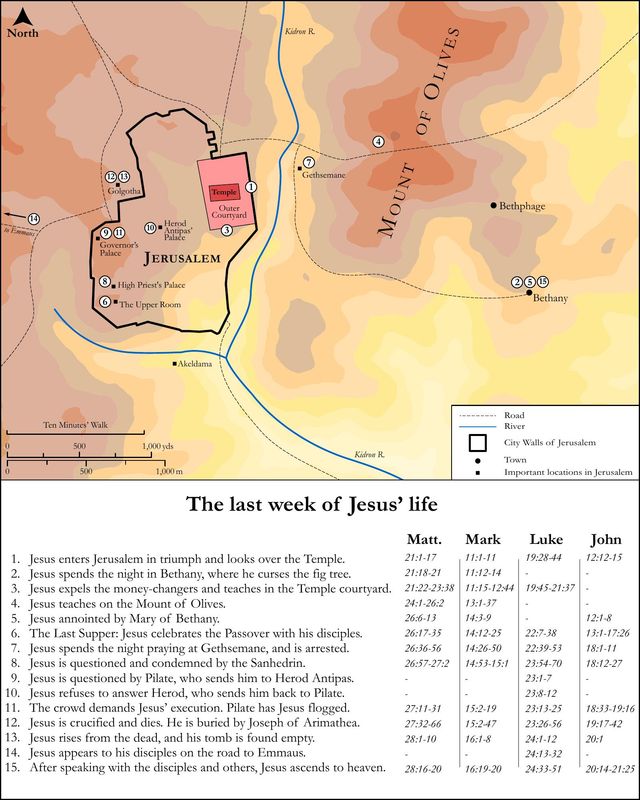
This verse is the crucial second half of Jesus' response to a lawyer's question, "Which is the great commandment in the law?" Matthew 22:36. Jesus first declares that the greatest commandment is to love God with all one's heart, soul, and mind Matthew 22:37-38, drawing from Deuteronomy 6:5. Immediately, He adds this second commandment, emphasizing its likeness and equal importance. This exchange occurs during a period of intense questioning and opposition from the Pharisees and Sadducees in the Jerusalem temple, just days before His crucifixion, showcasing His divine wisdom and authority in distilling the entirety of the Law.
Historical & Cultural Context
The setting is the Temple courts in Jerusalem during Passover week, a time of heightened religious and political tension. Jewish society at the time was deeply rooted in the Mosaic Law, with various schools of thought debating the relative importance of its 613 commandments. The question posed to Jesus was a common rabbinic debate, designed to test His theological acumen. Jesus' answer, by linking the love of God with the love of neighbor, draws from both Deuteronomy and Leviticus, demonstrating a profound understanding that transcends the mere letter of the Law, emphasizing its spiritual intent and holistic application.
Key Themes
ShowHideThis verse contributes significantly to several key themes within Matthew's Gospel and broader biblical theology. It highlights the summation of the Law, as Jesus explicitly states that "on these two commandments hang all the Law and the Prophets" Matthew 22:40. It underscores the holistic nature of true piety, demonstrating that love for God is incomplete without corresponding love for humanity. Furthermore, it establishes love as the supreme ethic, presenting it not merely as an emotion but as an active, volitional commitment that defines the believer's relationship with God and neighbor. This principle is foundational to Christian discipleship and ethical living, echoing themes found throughout the Sermon on the Mount and Jesus' teachings on righteousness.
Exposition and Analysis
ShowHideKey Word Analysis
ShowHideThis verb refers to a volitional, self-sacrificial, and unconditional love that seeks the highest good of the other, distinct from mere affection or emotional desire (phileo). It is a love that reflects God's own character and is expressed through deliberate action and commitment, prioritizing the well-being of the beloved.
This noun literally means "one near" or "close by." While in the Old Testament context it often referred to fellow Israelites, Jesus famously expanded its scope in the parable of the Good Samaritan Luke 10:29-37, indicating that one's neighbor is anyone in need whom one encounters, regardless of ethnicity, social status, or religious affiliation.
This adjective signifies similarity in appearance or character. When Jesus states the second commandment is "like unto it," He is not suggesting it is merely similar in kind, but that it holds an equivalent, foundational importance to the first commandment. The two are inseparable, forming a dual pillar for all righteous living.
Verse Breakdown
ShowHide"And the second is like unto it"
This phrase immediately connects the command to love one's neighbor with the preceding command to love God. The word "second" (G1208, deúteros) indicates its ordinal position, while "like unto it" (G3664, hómoios and G3778, hoûtos) emphasizes its profound equivalence in importance and foundational nature. It is not a lesser command, but one intrinsically linked to and flowing from the first, demonstrating that genuine love for God is expressed through love for His creation.
"Thou shalt love thy neighbour as thyself"
This is a direct quotation from Leviticus 19:18. The imperative "Thou shalt love" (G25, agapáō) demands an active, intentional, and sacrificial love. The object of this love is "thy neighbour" (G4139, plēsíon), encompassing all humanity. The crucial qualifier "as thyself" (G5613, hōs and G4572, seautoû) provides the standard for this love. It does not command selfish self-love, but rather uses the natural human instinct for self-preservation, care, and well-being as the benchmark for how one should extend compassion, justice, and kindness to others. It implies treating others with the same dignity and concern one naturally desires for oneself.
Literary Devices
ShowHideMatthew 22:39 employs several literary devices to convey its profound message. The most prominent is Summation/Synthesis, as Jesus masterfully condenses the vastness of the Mosaic Law and the Prophets into two core principles, demonstrating their interconnectedness and ultimate purpose. The phrase "as thyself" functions as a form of Analogy or Simile, providing a relatable and practical measure for the abstract concept of love, grounding it in the universal human experience of self-care. Furthermore, the very structure of Jesus' dual commandment acts as a Didactic Parallelism, where the second command mirrors and complements the first, reinforcing the idea that vertical love for God and horizontal love for humanity are inseparable expressions of true righteousness.
Theological and Thematic Connections
ShowHideThe command to love one's neighbor as oneself is not merely an ethical guideline but a profound theological statement on the nature of God and humanity. It reveals that God's character, which is love, is to be reflected in the relationships among His people. This command underscores the inherent dignity and value of every individual, created in God's image, and establishes the foundation for all righteous social interaction. It teaches that true worship of God is demonstrated not only in devotion but also in compassionate action towards others, making love the ultimate fulfillment of the Law and the prophetic vision for a just and harmonious society.
Reflection and Application
ShowHideMatthew 22:39 challenges believers to move beyond superficial acts of kindness to a deep, empathetic, and active love for all people. To "love thy neighbour as thyself" means to genuinely seek their well-being, to advocate for their justice, to extend forgiveness, to offer practical help, and to treat them with the same dignity and respect we inherently desire for ourselves. This principle calls us to dismantle prejudices, overcome apathy, and actively engage in building communities marked by compassion and mutual care. It transforms our understanding of Christian duty from mere adherence to rules to a proactive embodiment of God's love in every interaction, reminding us that our faith is not only personal but profoundly relational and societal.
Questions for Reflection
ShowHideFAQ
ShowHideWhat does "as thyself" truly mean in this context?
ShowHideThe phrase "as thyself" does not command self-love in a narcissistic or selfish sense. Rather, it uses the natural human instinct for self-preservation, care, and desire for one's own well-being as the standard or measure for how we should treat others. It implies that the care, compassion, and justice we naturally afford ourselves should be extended outwards to our neighbor. It's about empathy and reciprocity: treating others with the same dignity, respect, and concern that we desire for ourselves. It highlights that genuine love for others is rooted in a healthy understanding of our own worth and needs, which then becomes the benchmark for how we value and treat those around us.
How does this second commandment relate to the first commandment to love God?
ShowHideJesus explicitly states that the second commandment is "like unto it," meaning it is of similar and inseparable importance to the first commandment to love God with all one's heart, soul, and mind Matthew 22:37-38. Theologically, these two commandments are two sides of the same coin. One cannot truly love God, who is unseen, without demonstrating that love through concrete actions towards one's visible neighbor. As 1 John 4:20 states, "If someone says, 'I love God,' and hates his brother, he is a liar; for he who does not love his brother whom he has seen, how can he love God whom he has not seen?" They are the two foundational pillars upon which "all the Law and the Prophets hang" Matthew 22:40, summarizing the entirety of God's moral will.
Who is my "neighbor" according to Jesus?
ShowHideWhile the Old Testament context of Leviticus 19:18 primarily referred to fellow Israelites, Jesus radically expanded the definition of "neighbor." In the Parable of the Good Samaritan Luke 10:29-37, Jesus illustrates that one's neighbor is anyone in need whom we encounter, regardless of their ethnicity, social status, religious background, or even if they are considered an enemy. It is a proactive, compassionate stance towards anyone whose path crosses ours and who is in need of our love and assistance.
Christ-Centered Fulfillment
ShowHideMatthew 22:39 finds its ultimate fulfillment and perfect embodiment in the person and work of Jesus Christ. Jesus not only taught this commandment but lived it out flawlessly. His entire ministry was an active demonstration of loving God supremely and loving His neighbor perfectly. He healed the sick, fed the hungry, associated with outcasts, and ultimately laid down His life for His "neighbors"—humanity—while we were still His enemies Romans 5:8. His "new commandment" in John 13:34 to "love one another, as I have loved you" elevates the standard of love beyond "as thyself" to the divine, self-sacrificial love that He exemplified on the cross. Through His Spirit, Christ empowers believers to live out this impossible command, transforming our natural self-interest into Christ-like compassion, making us agents of His love in a broken world, thus fulfilling the Law's deepest intent in and through His followers Galatians 5:14.