


Matthew 22:38
Bible text: King James Version (1769 Blayney text) · Public domain
Bible text: Berean Standard Bible · Public domain
Bible text: American Standard Version (1901) · Public domain
Bible text: World English Bible, Messianic edition · Public domain
Bible text: Geneva Bible (1599) · Public domain
Bible text: Young's Literal Translation · Public domain
- αὕτηhautēThisG3778D-NSFDemonstrative pronoun Nominative Singular Feminine
- ἐστὶνestinisG1510V-PAI-3SVerb Present Active Indicative 3rd Singular
- μεγάληmegalēgreatG3173A-NSFAdjective Nominative Singular Feminine
- καὶkaiandG2532CONJConjunction
- πρώτηprōtēfirstG4413A-NSFAdjective Nominative Singular Feminine
- ἐντολήentolēcommandmentG1785N-NSFNoun Nominative Singular Feminine
English is a literal word-by-word gloss of the Greek, not the KJV's wording. Why?
This is the original text the KJV's translators worked from — each Greek word with its own literal English meaning in this verse, prepared by scholars at Tyndale House, Cambridge. The KJV translates whole sentences, not word by word, so its wording differs: one Greek word can become several English words, and the KJV may choose “charity” where the gloss reads “love”. Both are faithful — they answer different questions. For the KJV's own rendering, switch to the KJV text.
Details
See on the biblical-era maps

Study this verse
Historical interpretation
Seventeen Centuries of Reception
12 surviving comments on this verse. Each one is dated, so this reads as a timeline rather than a list.
Select a marker to jump to its quote. Markers stagger vertically where authors wrote within a few decades of each other.
This he adds since the Pharisees have asked truly “What is the greatest commandment in the law?” The Lord himself responds to them and teaches us. Not only is the greatest commandment to love the Lord, but as well it is the first commandment. It is first, however, not in the order of the Scriptures but in the order of virtue. And as this comes from such a source, it must be adhered to, since as with many established commands, Christ says that it is the first and greatest command that “you love the Lord your God with your whole heart and your whole mind and your whole soul,” and the second, however, “is like unto” the first; and accordingly, this similitude is also great, “that you love your neighbor as you love yourself.” This is how we understand the second one, while another may be third in magnitude and order, or a fourth, and so in order we number the commands of the law, accepting this as wisdom from God, who orders them even to the least. Such is the task of no one else but Christ alone, since he is “the power of God and the wisdom of God.”
Or otherwise; With all thy heart, that is, in all recollection, act, thought; with all thy soul, to be ready, that is, to lay it down for God's religion; with all thy mind, bringing forth nothing but what is of God. And consider whether you cannot thus take the heart of the understanding, by which we contemplate things intellectual, and the mind of that by which we utter thoughts, walking as it were with the mind through each expression, and uttering it. If the Lord had given no answer to the Pharisee who thus tempted Him, we should have judged that there was no commandment greater than the rest. But when the Lord adds, This is the first and great commandment, we learn how we ought to think of the commandments, that there is a great one, and that there are less down to the least. And the Lord says not only that it is a great, but that it is the first commandment, not in order of Scripture, but in supremacy of value. They only take upon them the greatness and supremacy of this precept, who not only love the Lord their God, but add these three conditions. Nor did He only teach the first and great commandment, but added that there was a second like unto the first, Thou shall love thy neighbour as thyself. But if Whoso loveth iniquity hath hated his own soul, (Ps. 11:5.) it is manifest that he does not love his neighbour as himself, when he does not love himself.
Or, because he that has fulfilled the things that are written concerning the love of God and our neighbour, is worthy to receive from God the great reward, that he should be enabled to understand the Law and the Prophets.
Or otherwise; That the second command is like the first signifies that the obligation and merit of both are alike; for no love of God without Christ, or of Christ without God, can profit to salvation.
It follows, On these two commandments hang all the Law and the Prophets.
What then saith Christ? Indicating from what they were led to this; from having no charity, from pining with envy, from being seized by jealousy, He saith, "Thou shalt love the Lord thy God. This is the first and great commandment. And the second is like unto this, Thou shalt love thy neighbor as thyself."
But wherefore "like unto this?" Because this makes the way for that, and by it is again established; "For every one that doeth evil hateth the light, neither cometh to the light;" and again, "The fool hath said in his heart, There is no God." And what in consequence of this? "They are corrupt, and become abominable in their ways." And again, "The love of money is the root of all evils; which while some coveted after they have erred from the faith;" and, "He that loveth me, will keep my commandment."
But His commandments, and the sum of them, are, "Thou shalt love the Lord thy God, and thy neighbor as thyself." If therefore to love God is to love one's neighbor, "For if thou lovest me," He saith, "O Peter, feed my sheep," but to love one's neighbor worketh a keeping of the commandments, with reason doth He say, "On these hang all the law and the prophets."
(Verse 34 and following) But when the Pharisees heard that he had silenced the Sadducees, they gathered together. And one of them, a lawyer, asked him a question to test him: "Teacher, which is the great commandment in the Law?" And he said to him, "You shall love the Lord your God with all your heart and with all your soul and with all your mind. This is the great and first commandment. And a second is like it: You shall love your neighbor as yourself. In his two commands, the whole law and the prophets hang. What we read about Herod and Pontius Pilate, that they conspired in the death of the Lord, we also see now concerning the Pharisees and the Sadducees, who are opposed to each other, but agree with the same mind in testing Jesus. Therefore, those who had already been confuted in the display of the coin and had seen the faction of the opposing party undermined, should have been warned by example not to plot further snares: but malice and envy nourish audacity. One of the legal experts, not desiring to not know but attempting, asks whether the one being questioned knew what was being asked, what the greater commandment is: not asking about the commandments, but what the first and great commandment is; so that when all that God has commanded is great: whatever he may answer, he may have an opportunity to slander, asserting that something else is great among many. Therefore, whoever knows and asks not by desire to learn, but by the desire to know, whether the one who is going to respond knows, approaches in the likeness of the Pharisees, not as a disciple, but as a tempter.
The Pharisees having been themselves already confuted (in the matter of the denarius), and now seeing their adversaries also overthrown, should have taken warning to attempt no further deceit against Him; but hate and jealousy are the parents of impudence.
The Pharisees and Sadducees, thus foes to one another, unite in one common purpose to tempt Jesus.
Or he enquires not for the sake of the commands, but which is the first and great commandment, that seeing all that God commands is great, he may have occasion to cavil whatever the answer be.
(De Doctr. Christ. i. 30. et 26.) But since the Divine substance is more excellent and higher than our nature, the command to love God is distinct from that to love our neighbour. But if by yourself, you understand your whole self, that is both your soul and your body, and in like manner of your neighbour, there is no sort of things to be loved omitted in these commands. The love of God goes first, and the rule thereof is so set out to us as to make all other loves center in that, so that nothing seems said of loving yourself. But then follows, Thou shall love thy neighbour as thyself, so that love of yourself is not omitted.
Or the Pharisees meet together, that their numbers may silence Him whom their reasonings could not confute; thus, while they array numbers against Him, showing that truth failed them; they said among themselves, Let one speak for all, and all speak, through one, so if He prevail, the victory may seem to belong to all; if He be overthrown, the defeat may rest with Him alone; so it follows, Then one of them, a teacher of the Law, asked him a question, tempting him.
He who now enquires for the greatest commandment had not observed the least. He only ought to seek for a higher righteousness who has fulfilled the lower.
But the Lord so answers him, as at once to lay bare the dissimulation of his enquiry, Jesus saith unto him, Thou shalt love the Lord thy God with all thy heart, with all thy soul, and with all thy mind. Thou shalt love, not 'fear,' for to love is more than to fear; to fear belongs to slaves, to love to sons; fear is in compulsion, love in freedom. Whoso serves God in fear escapes punishment, but has not the reward of righteousness because he did well unwillingly through fear. God does not desire to be served servilely by men as a master, but to be loved as a father, for that He has given the spirit of adoption to men. But to love God with the whole heart, is to have the heart inclined to the love of no one thing more than of God. To love God again with the whole soul is to have the mind stayed upon the truth, and to be firm in the faith. For the love of the heart and the love of the soul are different. The first is in a sort carnal, that we should love God even with our flesh, which we cannot do unless we first depart from the love of the things of this world. The love of the heart is felt in the heart, but the love of the soul is not felt, but is perceived because it consists in a judgment of the soul. For he who believes that all good is in God, and that without Him is no good, he loves God with his whole soul. But to love God with the whole mind, is to have all the faculties open and unoccupied for Him. He only loves God with his whole mind, whose intellect ministers to God, whose wisdom is employed about God, whose thoughts travail in the things of God, and whose memory holds the things which are good.
But who loves man is as who loves God; for man is God's image, wherein God is loved, as a King is honoured in his statue. For this cause this commandment is said to be like the first.
Not the Sadducees but the multitudes were astonished. This is daily done in the Church; when by Divine inspiration the adversaries of the Church are overcome, the multitude of the faithful rejoice.
For to these two commandments belongs the whole decalogue; the commandments of the first table to the love of God, those of the second to the love of our neighbour.
Or, with all thy heart, i. e. understanding; with all thy soul, i.e. thy will; with all thy mind, i.e. memory; so you shall think, will, remember nothing contrary to Him.
Here is the paradox of Christianity. As practical imperatives for here and now the two great commandments have to be translated "Behave as if you loved God and man." For no man can love because he is told to. Yet obedience on this practical level is not really obedience at all. And if a man really loved God and man, once again this would hardly be obedience; for if he did, he would be unable to help it. Thus the command really says to us, "Ye must be born again." Till then, we have duty, morality, the Law. A schoolmaster, as St. Paul says, to bring us to Christ. We must expect no more of it than of a schoolmaster; we must allow it no less. I must say my prayers today whether I feel devout or not; but that is only as I must learn my grammar if I am ever to read the poets.
Continue studying Matthew 22:38 across the web’s major study libraries — every link below opens this exact verse, chapter, or book on the destination site.
Read & Compare
 BibleGatewayThis verse in more than 200 translations and 70 languages.
 Bible.comThe YouVersion reader — hundreds of translations, reading plans, and highlights.
 ESV.orgCrossway's official English Standard Version reader.
 NET BibleThe NET translation with 60,000+ translators' notes on every rendering decision.
 STEP BibleTyndale House's free study tool — original text, vocabulary, and scholarly resources.
 BibliaLogos Bible Software's free web reader.
 USCCBThe New American Bible (Revised Edition) with the U.S. bishops' study notes.
Commentaries
 BibleHub CommentariesDozens of classic commentaries on this verse, gathered on one page.
 StudyLightMore than 100 commentary sets — the largest collection on the web.
 BibleRefPlain-English commentary on what this verse means, verse by verse.
 Enduring WordDavid Guzik's free commentary on this chapter, widely used by Bible teachers.
 Bible Study ToolsVerse commentary alongside Greek and Hebrew study aids.
Original Language & Research
- BibleHub InterlinearThe verse word by word — original language, transliteration, and English.
- BibleHub LexiconEvery word's original-language definition and Strong's entry.
 Blue Letter BibleDeep-study tools — Strong's numbers, concordance, and word studies.
 CNTR CollationThe earliest Greek manuscripts of this verse, collated letter by letter.
Sermons, Hymns & Audio


TrulyRandomVerse is not affiliated with these sites and doesn’t control their content. They’re linked because they’re genuinely useful.
Summary
Matthew 22:38 emphatically declares the preeminent status of the commandment to love God with all one's heart, soul, and mind. This verse serves as Jesus' powerful summation, establishing this divine directive not merely as a primary instruction but as the foundational and most significant principle upon which all righteous living and spiritual understanding are built. It underscores the absolute priority of a believer's holistic devotion to the Creator.
Context
ShowHideLiterary Context
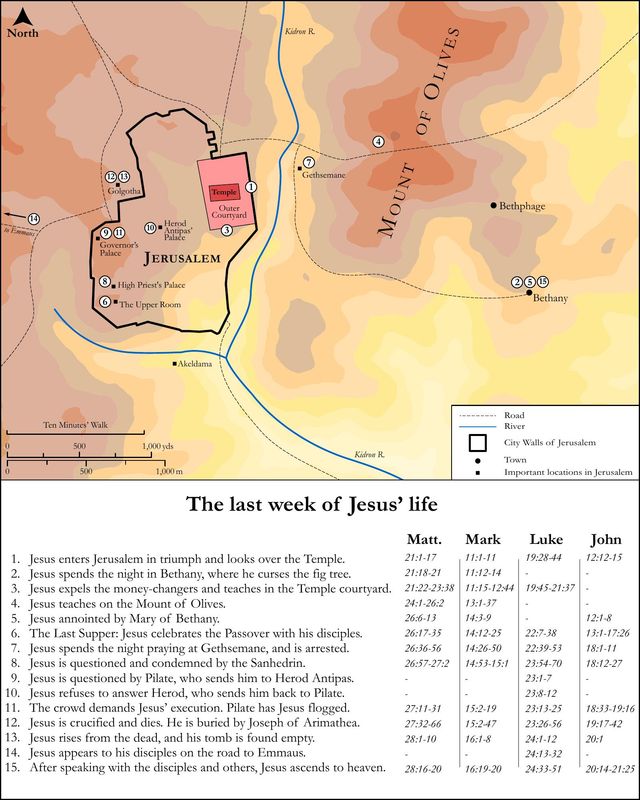
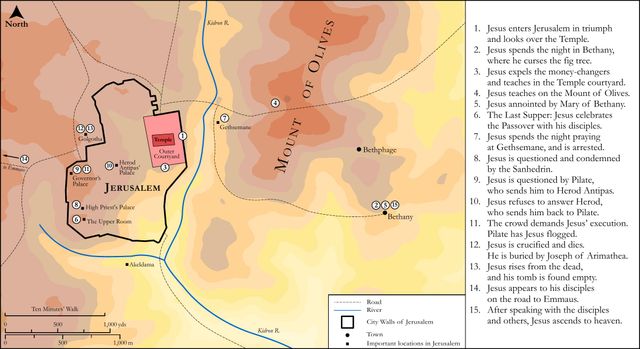
This profound declaration by Jesus occurs during the final week of His earthly ministry in Jerusalem, a period marked by intense theological and confrontational exchanges with various Jewish religious factions. Following attempts by the Sadducees to entrap Him with a question about the resurrection, a lawyer, identified as a Pharisee in Matthew 22:34, approaches Jesus with a pivotal question: "Master, which is the great commandment in the law?" (Matthew 22:36). Jesus' immediate response, drawn directly from the Shema in Deuteronomy 6:5, is to love God supremely. Verse 38 then serves as Jesus' authoritative pronouncement on the unparalleled importance of this first commandment, setting the stage for His subsequent declaration of the second great commandment in Matthew 22:39 and His summary that these two encapsulate the entire Law and Prophets in Matthew 22:40.
Historical & Cultural Context
The question posed to Jesus was not arbitrary but reflected a common and vigorous debate among Jewish rabbis and scribes of the Second Temple period. The Torah contained 613 distinct commandments (Mitzvot), and scholars often engaged in discussions to identify which were the most weighty or foundational. This intellectual exercise aimed to understand the hierarchy and core principles of God's Law. The "Shema" (Hear, O Israel), found in Deuteronomy 6:4-5, was a central confession of faith recited daily by devout Jews, emphasizing monotheism and the command to love God with one's entire being. Jesus' answer would have resonated deeply within this cultural framework, affirming the traditional understanding of the Shema's centrality while simultaneously elevating it to the supreme position among all commandments.
Key Themes
ShowHideThe verse contributes significantly to several overarching themes within Matthew's Gospel and biblical theology. Firstly, it highlights the Supreme Priority of Love for God. By labeling this commandment as "first and great," Jesus unequivocally establishes it as the foundational and most significant of all divine directives, transcending mere ritual or legal observance. Secondly, it underscores the theme of Holistic Devotion. While Matthew 22:38 itself doesn't reiterate the components of love (heart, soul, mind), it implicitly refers back to Jesus' full statement in Matthew 22:37, signifying that love for God must engage every aspect of a person's being—emotions, will, intellect, and even physical strength, as noted in parallel accounts like Mark 12:30. Finally, this verse, in conjunction with the following verses, develops the theme of the Fulfillment of the Law. Jesus reveals that all other commands, and indeed the entire Law and the Prophets, are encapsulated and fulfilled by these two great commandments of love for God and neighbor, making them the interpretive key to God's entire revelation.
Exposition and Analysis
ShowHideKey Word Analysis
ShowHideThis word signifies not merely chronological order but, more importantly, preeminence, supreme importance, and being chief among others. In this context, it denotes that this commandment holds the highest rank and is foundational to all others.
This term conveys magnitude, power, and significance. When applied to the commandment, it emphasizes its immense weight, authority, and profound impact on human life and divine relationship. It is a command of unparalleled import.
This refers to an injunction, an authoritative prescription, or a precept. It highlights that this is a direct, binding directive from God, carrying divine authority and requiring obedience.
Verse Breakdown
ShowHide"This is"
This phrase directly refers to the commandment Jesus has just articulated in Matthew 22:37—to love the Lord your God with all your heart, soul, and mind. It serves as a definitive identification of the subject of His pronouncement.
"the first"
This clause emphasizes the unparalleled priority of loving God. It implies not only that this commandment is chronologically primary in the Law but, more significantly, that it holds the supreme position in terms of importance, foundational nature, and spiritual weight. It is the chief and most essential directive.
"and great commandment."
This concluding phrase reinforces and amplifies the significance of the preceding "first." The addition of "great" underscores the immense magnitude, profound importance, and far-reaching implications of this command. Together, "first and great" leave no ambiguity about its unparalleled authority and centrality in God's revealed will and for human conduct.
Literary Devices
ShowHideMatthew 22:38 employs several literary devices to underscore the profound importance of Jesus' statement. The most prominent is Emphasis, achieved through the powerful coupling of "first and great." This combination is a form of Hendiadys, where two words joined by "and" express a single, intensified idea—in this case, "the supremely great commandment." This dual descriptor elevates the commandment beyond mere importance to a position of ultimate preeminence and magnitude. The verse also functions as a Declaration, a concise and authoritative statement that leaves no room for debate regarding the commandment's status. Furthermore, it acts as a Climax within Jesus' response to the lawyer's question, providing the definitive answer and setting the stage for the subsequent explanation of the Law's summary.
Theological and Thematic Connections
ShowHideThe declaration in Matthew 22:38 is profoundly theological, revealing the very heart of God's character and His desire for humanity. It posits that the essence of all divine law and the foundation of a right relationship with God is not ritualistic adherence or external performance, but an internal, all-encompassing love. This love is not merely an emotion but an active, holistic devotion that engages every faculty of one's being—intellect, emotion, and will. It reflects God's own nature as love and His primary call for His creation to reciprocate that love, making it the wellspring from which all true obedience and spiritual flourishing flow.
Reflection and Application
ShowHideMatthew 22:38 serves as a profound challenge and a guiding principle for every believer, calling us to a radical reorientation of our lives around the singular priority of loving God. It teaches that genuine spirituality begins not with outward displays or adherence to a list of rules, but with an internal, all-consuming affection and devotion to our Creator. For us today, this means consciously evaluating if our deepest affections, thoughts, and energies are truly directed towards Him. It compels us to move beyond mere religious duty to a heartfelt, passionate pursuit of God, recognizing that our obedience to His commands is ultimately an overflow of our love for Him. This verse invites us to cultivate a love that is not compartmentalized but permeates every aspect of our existence, transforming our motivations, choices, and daily interactions into expressions of our supreme love for the Lord.
Questions for Reflection
ShowHideFAQ
ShowHideWhy does Jesus call this the "first and great" commandment?
ShowHideJesus calls this the "first and great" commandment because it is foundational and preeminent above all others. "First" (Greek: prōtos) implies not just chronological order, but supreme importance and priority. It's the chief commandment from which all others derive their meaning and power. "Great" (Greek: mégas) emphasizes its immense magnitude, weight, and significance. Together, these terms underscore that loving God with one's entire being is the ultimate and most comprehensive directive, encapsulating the very essence of a right relationship with the Creator and serving as the wellspring for all other righteous actions and attitudes. It is the command that defines the core of God's desire for humanity.
How does this commandment relate to the rest of the Law and the Prophets?
ShowHideAs Jesus Himself explains in Matthew 22:40, "On these two commandments hang all the Law and the Prophets." This means that the commandment to love God (the first and great commandment) and the subsequent commandment to love your neighbor as yourself (Matthew 22:39) are the interpretive keys and the ultimate fulfillment of all God's revealed will. All the specific laws, moral injunctions, and prophetic declarations in the Old Testament are ultimately expressions of, or lead back to, these two fundamental principles of love for God and love for humanity. They are not merely two commands among many, but the very essence and summary of divine expectation.
Christ-Centered Fulfillment
ShowHideMatthew 22:38, declaring the first and great commandment, finds its ultimate fulfillment and perfect embodiment in the person and work of Jesus Christ. He is the only one who perfectly loved the Lord His God with all His heart, soul, and mind, demonstrating flawless devotion throughout His earthly life. His entire ministry, from His obedience to the Father's will to His sacrificial death, was an expression of this supreme love. Furthermore, Jesus did not merely teach this commandment; He lived it out, becoming the living standard by which this "first and great" love is defined. Through His atoning work on the cross, He not only fulfilled the Law on our behalf but also made it possible for us, through the indwelling Holy Spirit, to begin to truly love God in the way commanded (Romans 5:5). The new covenant, inaugurated by Christ's blood, writes this law of love on our hearts (Jeremiah 31:33), empowering believers to live out the very essence of the Law that Jesus summarized. Thus, the "first and great commandment" points to Christ as its perfect fulfiller and the source of our ability to obey it (John 15:5).