


Mark 12:30
Bible text: King James Version (1769 Blayney text) · Public domain
Bible text: King James Version with Strong's numbers · Public domain
Bible text: Berean Standard Bible · Public domain
Bible text: American Standard Version (1901) · Public domain
Bible text: World English Bible, Messianic edition · Public domain
Bible text: Geneva Bible (1599) · Public domain
Bible text: Young's Literal Translation · Public domain
- καὶkaiandG2532CONJConjunction
- ἀγαπήσειςagapēseisyou will loveG25V-FAI-2SVerb Future Active Indicative 2nd Singular
- κύριονkurion[the] LordG2962N-ASM-TNoun Accusative Singular Masculine Title
- τὸνtontheG3588T-ASMDefinite article Accusative Singular Masculine
- θεόνtheonGodG2316N-ASM-TNoun Accusative Singular Masculine Title
- σουsouof youG4771P-2GSPersonal pronoun Genitive 2nd Singular
- ἐξexwithG1537PREPPreposition
- ὅληςholēsallG3650A-GSFAdjective Genitive Singular Feminine
- τῆςtēstheG3588T-GSFDefinite article Genitive Singular Feminine
- καρδίαςkardiasheartG2588N-GSFNoun Genitive Singular Feminine
- σουsouof youG4771P-2GSPersonal pronoun Genitive 2nd Singular
- καὶkaiandG2532CONJConjunction
- ἐξexwithG1537PREPPreposition
- ὅληςholēsallG3650A-GSFAdjective Genitive Singular Feminine
- τῆςtēstheG3588T-GSFDefinite article Genitive Singular Feminine
- ψυχῆςpsuchēssoulG5590N-GSFNoun Genitive Singular Feminine
- σουsouof youG4771P-2GSPersonal pronoun Genitive 2nd Singular
- καὶkaiandG2532CONJConjunction
- ἐξexwithG1537PREPPreposition
- ὅληςholēsallG3650A-GSFAdjective Genitive Singular Feminine
- τῆςtēstheG3588T-GSFDefinite article Genitive Singular Feminine
- διανοίαςdianoiasmindG1271N-GSFNoun Genitive Singular Feminine
- σουsouof youG4771P-2GSPersonal pronoun Genitive 2nd Singular
- καὶkaiandG2532CONJConjunction
- ἐξexwithG1537PREPPreposition
- ὅληςholēsallG3650A-GSFAdjective Genitive Singular Feminine
- τῆςtēstheG3588T-GSFDefinite article Genitive Singular Feminine
- ἰσχύοςischuosstrengthG2479N-GSFNoun Genitive Singular Feminine
- σουsouof you.’G4771P-2GSPersonal pronoun Genitive 2nd Singular
- αὕτηhautēthisG3778D-NSFDemonstrative pronoun Nominative Singular Feminine
- πρώτηprōtēfirstG4413A-NSF-SAdjective Nominative Singular Feminine Superlative
- ἐντολήentolēcommandmentG1785N-NSFNoun Nominative Singular Feminine
English is a literal word-by-word gloss of the Greek, not the KJV's wording. Why?
This is the original text the KJV's translators worked from — each Greek word with its own literal English meaning in this verse, prepared by scholars at Tyndale House, Cambridge. The KJV translates whole sentences, not word by word, so its wording differs: one Greek word can become several English words, and the KJV may choose “charity” where the gloss reads “love”. Both are faithful — they answer different questions. For the KJV's own rendering, switch to the KJV text.
Details
See on the biblical-era maps


Study this verse
Public-domain commentary
Matthew Henry
From his Commentary on the Whole Bible. Henry comments on passages, not single verses — this entry covers Mark 12:28–34. His three-level outline is real structure in the source text, so it is rendered as structure.
The scribes and Pharisees were (however bad otherwise) enemies to the Sadducees; now one would have expected that, when they heard Christ argue so well against the Sadducees, they would have countenanced him, as they did Paul when he appeared against the Sadducees (Act 23:9); but it had not the effect: because he did not fall in with them in the ceremonials of religion, he agreeing with them in the essentials, gained him no manner of respect with them. Only we have here an account of one of them, a scribe, who had so much civility in him as to take notice of Christ's answer to the Sadducees, and to own that he had answered well, and much to the purpose (Mar 12:28); and we have reason to hope that he did not join with the other scribes in persecuting Christ; for here we have his application to Christ for instruction, and it was such as became him; not tempting Christ, but desiring to improve his acquaintance with him.
I.He enquired, Which is the first commandment of all? Mar 12:28.
He doth not mean the first in order, but the first in weight and dignity; "Which is that command which we ought to have in a special manner an eye to, and our obedience to which will lay a foundation for our obedience to all the rest?" Not that any commandment of God is little (they are all the commands of a great God), but some are greater than others, moral precepts than rituals, and of some we may say, They are the greatest of all.
II.Christ gave him a direct answer to this enquiry, Mar 12:29-31.
Those that sincerely desire to be instructed concerning their duty, Christ will guide in judgment, and teach his way. He tells him,
1.That the great commandment of all, which is indeed inclusive of all, is, that of loving God with all our hearts.
(1.)Where there is a commanding principle in the soul, there is a disposition to every other duty. Love is the leading affection of the soul; the love of God is the leading grace in the renewed soul.
(2.)Where this is not, nothing else that is good is done, or done aright, or accepted, or done long. Loving God with all our heart, will effectually take us off fRom. and arm us against, all those things that are rivals with him for the throne in our souls, and will engage us to every thing by which he may be honoured, and with which he will be pleased; and no commandment will be grievous where this principle commands, and has the ascendant. Now here in, Mark, our Saviour prefixes to this command the great doctrinal truth upon which it is built (Mar 12:29); Hear, O Israel, The Lord our God is one Lord; if we firmly believe this, it will follow, that we shall love him with all our heart. He is Jehovah, who has all amiable perfections in himself; he is our God, to whom we stand related and obliged; and therefore we ought to love him, to set our affections on him, let out own desire toward him, and take a delight in him; and he is one Lord, therefore he must be loved with our whole heart; he has the sole right to us, and therefore ought to have the sole possession of us. If he be one, our hearts must be one with him, and since there is no God besides, no rival must be admitted with him upon the throne.
2.That the second great commandment is, to love our neighbour as ourselves (Mar 12:31), as truly and sincerely as we love ourselves, and in the same instances, and we must show it by doing as we would be done by. As we must therefore love God better than ourselves, because he is Jehovah, a being infinitely better than we are, and must love him with all our heart, because he is one Lord, and there is no other like him; so we must love our neighbour as ourselves, because he is of the same nature with ourselves; our hearts are fashioned alike, and my neighbour and myself are of one body, of one society, that of the world of mankind; and if a fellow-Christian, and of the same sacred society, the obligation is the stronger. Hath not one God created us? Mal 2:10. Has not one Christ redeemed us? Well might Christ say, There is no other commandment greater than these; for in these all the law is fulfilled, and if we make conscience of obedience to these, all other instances of obedience will follow of course.
III.The scribe consented to what Christ said, and descanted upon it, Mar 12:32, Mar 12:33.
1.He commends Christ's decision of this question; Well, Master, thou hast said the truth. Christ's assertions needed not the scribe's attestations; but this scribe, being a man in authority, thought it would put some reputation upon what Christ said, to have it commended by him; and it shall be brought in evidence against those who persecuted Christ, as a deceiver, that one of themselves, even a scribe of their own, confessed that he said the truth, and said it well. And thus must we subscribe to Christ's sayings, must set to our seal that they are true.
2.He comments upon it. Christ had quoted that great doctrine, that the Lord our God is one Lord; and this he not only assented to, but added, "There is none other but he; and therefore we must have no other God besides." This excludes all rivals with him, and secures the throne in the heart entire for him. Christ had laid down that great law, of loving God with all our hearts; and this also he explains - that it is loving him with the understanding, as those that know what abundant reason we have to love him. Our love to God, as it must be an entire, so it must be an intelligent, love; we must love him with all the understanding, ex holēs tēs suneseōs - out of the whole understanding; our rational powers and faculties must all be set on work to lead out the affections of our souls toward God. Christ has said, "To love God and our neighbour is the greatest commandment of all;" "Yea," saith the scribe, "it is better, it is more than all whole-burnt-offerings and sacrifices, more acceptable to God, and will turn to a better account to ourselves." There were those who held, that the law of sacrifices was the greatest commandment of all; but this scribe readily agreed with our Saviour in this - that the law of love to God and our neighbour is greater than that of sacrifice, even than that of whole-burnt-offerings, which were intended purely for the honour of God.
IV.Christ approved of what he said, and encouraged him to proceed in his enquiries of him, Mar 12:34.
1.He owned that he understood well, as far as he went; so far, so good. Jesus saw that he answered discreetly, and was the more pleased with it, because he had of late met with so many even of the scribes, men of letters, that answered indiscreetly, as those that had no understanding, nor desired to have any. He answered nounechōs - as one that had a mind; as a rational intelligent man, as one that had his wits about him; as one whose reason was not blinded, whose judgment was not biassed, and whose forethought was not fettered, by the prejudices which other scribes were so much under the power of. He answered as one that allowed himself liberty and leisure to consider, as one that had considered.
2.He owned that he stood fair for a further advance; "Thou art not far from the kingdom of God, the kingdom of grace and glory; thou art in a likely way to be a Christian, a disciple of Christ. For the doctrine of Christ insists most upon these things, and is designed, and has a tendency direct, to bring thee to this." Note, There is hope of those who make a good use of the light they have, and go as far as that will carry them, that by the grace of God they will be led further, by the clearer discoveries God has to make to them. What became of this scribe we are not told, but would willingly hope that he took the hint Christ hereby gave him, and that, having been told by him, so much to his satisfaction, what was the great commandment of the law, he proceeded to enquire of him, or his apostles, what was the great commandment of the gospel too. Yet, if he did not, but took, up here, and went no further, we are not to think it strange; for there are many who are not far from the kingdom of God, and yet never come thither. Now, one would think, this should have invited many to consult him: but it had a contrary effect; No man, after that, durst ask him any question; every thing he said, was spoken with such authority and majesty, that every one stood in awe of him; those that desired to learn, were ashamed to ask, and those that designed to cavil, were afraid to ask.
Historical interpretation
Nineteen Centuries of Reception
11 surviving comments on this verse. Each one is dated, so this reads as a timeline rather than a list.
Select a marker to jump to its quote. Markers stagger vertically where authors wrote within a few decades of each other.
This question is only that which is a problem common to all skilled in the law, namely, that the commandments are differently set forth in Exodus, Leviticus, and Deuteronomy. Wherefore He brought forward not one but two commandments, by which, as by two paps rising on the breast of the bride, our infancy is nourished. And therefore there is added, And Jesus answered him, The first of all the commandments is, Hear, O Israel; the Lord thy God is one God. He mentions the first and greatest commandment of all; this is that to which each of us must give the first place in his heart, as the only foundation of piety, that is, the knowledge and confession of the Divine Unity, with the practice of good works, which is perfected in the love of God and our neighbour; wherefore there is added, Thou shalt love the Lord thy God with all thy heart, and with all thy mind, and with all thy soul, and with all thy strength: this is the first commandment.
Or else, he is not far who comes with knowledge; for ignorance is farther from the kingdom of God than knowledge; wherefore he says above to the Sadducees, Ye err, not knowing the Scriptures, or the power of God. It goes on: And no man after that durst ask him any questions.
The way of life, then, is this: First, thou shalt love God who made thee; second, thy neighbour as thyself; and all things whatsoever thou wouldst should not occur to thee, thou also to another do not do.
And that we ought to worship God alone, He thus persuaded us: "The greatest commandment is, Thou shalt worship the Lord thy God, and Him only shall thou serve, with all thy heart, and with all thy strength, the Lord God that made thee."
When you decide to keep the command of this precept and reject all other gods and lords and have no god or lord except the one God and Lord, you have declared war on all others without treaty. When, therefore, we come to the grace of baptism, renouncing all other gods and lords, we confess the only God, Father, Son and Holy Spirit.
The expression, “with the whole,” admits of no division into parts. As much love as you shall have squandered on lower objects, that much will necessarily be lacking to you from the whole.
It is not the privilege of any chance person to go forward to the perfection of love and to learn to know him who is truly beloved, but of him who has already “put off the old man, which is being corrupted through its deceptive lusts, and has put on the new man,” which is being renewed that it may be recognized as an image of the creator. Moreover, he who loves money and is aroused by the corruptible beauty of the body and esteems exceedingly this little glory here, since he has expended the power of loving on what is not proper, he is quite blind in regard to the contemplation of him who is truly beloved.
Human life consists in a threefold unity. We are taught similarly by the apostle in what he says to the Ephesians, praying for them that the complete grace of their “body and soul and spirit” may be preserved at the coming of the Lord. We use the word “body,” for the nutritive part, the word for the vital, “soul,” and the word “spirit” for the intellective dimension. In just this way the Lord instructs the writer of the Gospel that he should set before every commandment that love to God which is exercised with all the heart and soul and mind. This single phrase embraces the human whole: the corporeal heart, the mind as the higher intellectual and mental nature, and the soul as their mediator.
(ubi sup.) He shows when he says, this is greater than all sacrifices, that a grave question was often debated between the scribes and Pharisees, which was the first commandment, or the greatest of the Divine law; that is, some praised offerings and sacrifices, others preferred acts of faith and love, because many of the fathers before the law pleased God by that faith only, which works by love. This scribe shows that he was of the latter opinion. But it continues, And when Jesus saw that he answered discreetly, he said unto him, Thou art not far from the kingdom of God.
(ubi sup) But the reason why he was not far from the kingdom of God was, that he proved himself to be a favourer of that opinion, which is proper to the New Testament and to Gospel perfection.
(ubi sup.) For since they were confuted in argument, they ask Him no farther questions, but take Him without any disguise, and give Him up to the Roman power. From which we understand that the venom of envy may be overcome, but can hardly lie quiet.
See how He has enumerated all the powers of the soul; for there is a 1living power in the soul, which He explains, when He says, With all thy soul, and to this belong anger and desire, all of which He will have us give to Divine love. There is also another power, which is called natural, to which belong nutriment and growth, and this also is all to be given to God, for which reason He says, With all thy heart. There is also another power, the rational, which He calls the mind, and that too is to be given whole to God.
He says that it is like, because these two commandments are harmonious one with the other, and mutually contain the other. For he who loves God, loves also His creature; but the chief of His creatures is man, wherefore he who loves God ought to love all men. But he who loves his neighbour, who so often offends him, ought much more to love Him, who is ever giving him benefits. And therefore on account of the connection between these commandments, He adds, There is none other commandment greater than these. It goes on: And the Scribe said unto him, Well, Master, thou hast said the truth: for there is one God, and there is none other but he: and to love him with all the heart, and with all the soul, and with all the understanding, and with all the strength, and to love his neighbour as himself, is more than all whole burnt offerings and sacrifices.
By which He shows that he was not perfect, for He did not say, Thou art within the kingdom of heaven, but, Thou art not far from the kingdom of God.
(non occ.) That is, because they contradicted the Scriptures, and derogated from the power of God.
(non occ.) After that the Lord confuted the Pharisees, and the Sadducees, who tempted Him, it is here shown how He satisfied the Scribe who questioned Him; wherefore it is said, And one of the scribes came, and having heard them reasoning together, and perceiving that he had answered them well, asked him, Which is the first commandment of all?
(non occ.) The words which are added, And with all thy strength, may be referred to the bodily powers. It goes on: And the second is like, namely this, Thou shalt love thy neighbour as thyself.
Here is the paradox of Christianity. As practical imperatives for here and now the two great commandments have to be translated "Behave as if you loved God and man." For no man can love because he is told to. Yet obedience on this practical level is not really obedience at all. And if a man really loved God and man, once again this would hardly be obedience; for if he did, he would be unable to help it. Thus the command really says to us, "Ye must be born again." Till then, we have duty, morality, the Law. A schoolmaster, as St. Paul says, to bring us to Christ. We must expect no more of it than of a schoolmaster; we must allow it no less. I must say my prayers today whether I feel devout or not; but that is only as I must learn my grammar if I am ever to read the poets.
Continue studying Mark 12:30 across the web’s major study libraries — every link below opens this exact verse, chapter, or book on the destination site.
Read & Compare
 BibleGatewayThis verse in more than 200 translations and 70 languages.
 Bible.comThe YouVersion reader — hundreds of translations, reading plans, and highlights.
 ESV.orgCrossway's official English Standard Version reader.
 NET BibleThe NET translation with 60,000+ translators' notes on every rendering decision.
 STEP BibleTyndale House's free study tool — original text, vocabulary, and scholarly resources.
 BibliaLogos Bible Software's free web reader.
 USCCBThe New American Bible (Revised Edition) with the U.S. bishops' study notes.
Commentaries
 BibleHub CommentariesDozens of classic commentaries on this verse, gathered on one page.
 StudyLightMore than 100 commentary sets — the largest collection on the web.
 BibleRefPlain-English commentary on what this verse means, verse by verse.
 Enduring WordDavid Guzik's free commentary on this chapter, widely used by Bible teachers.
 Bible Study ToolsVerse commentary alongside Greek and Hebrew study aids.
Original Language & Research
- BibleHub InterlinearThe verse word by word — original language, transliteration, and English.
- BibleHub LexiconEvery word's original-language definition and Strong's entry.
 Blue Letter BibleDeep-study tools — Strong's numbers, concordance, and word studies.
 CNTR CollationThe earliest Greek manuscripts of this verse, collated letter by letter.
Sermons, Hymns & Audio


TrulyRandomVerse is not affiliated with these sites and doesn’t control their content. They’re linked because they’re genuinely useful.
Summary
Mark 12:30 presents Jesus' profound response to a scribe's inquiry about the greatest commandment, echoing the ancient Shema from Deuteronomy 6:5. This verse encapsulates the foundational principle of all biblical law and ethics: an absolute, comprehensive, and undivided love for God, engaging every facet of human existence—heart, soul, mind, and strength—as the supreme priority for humanity.
Context
ShowHideLiterary Context
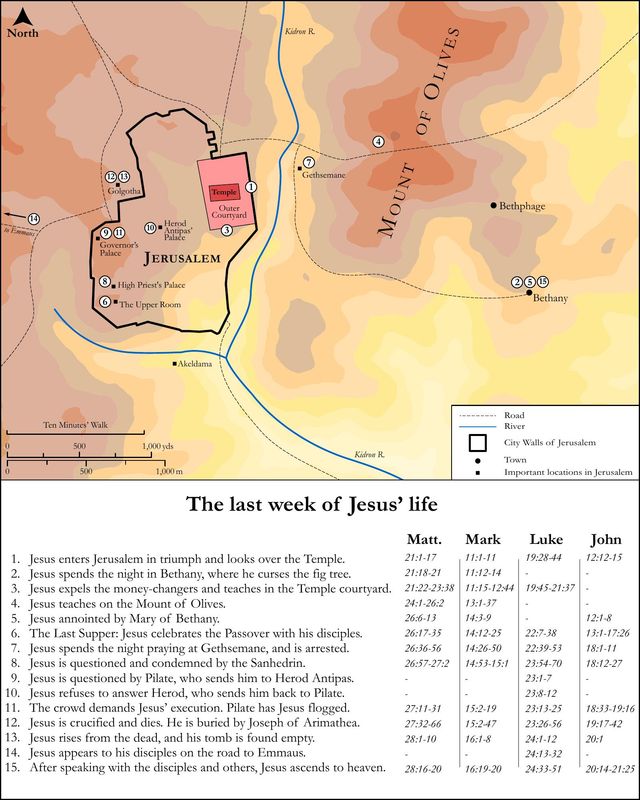
Mark 12:30 is embedded within a series of intense theological and ethical debates between Jesus and various Jewish religious factions in Jerusalem during the final week of His earthly ministry. Preceding this exchange, Jesus deftly silences the Pharisees and Herodians regarding taxes to Caesar (Mark 12:13-17) and then confounds the Sadducees on the resurrection (Mark 12:18-27). Unlike these adversarial encounters, the scribe's question in Mark 12:28 is presented as genuine and insightful, seeking understanding rather than attempting to trap Jesus. Jesus' answer, therefore, is not a defensive retort but a profound theological declaration that summarizes the essence of the Law, directly leading into the second great commandment to love one's neighbor in Mark 12:31.
Historical & Cultural Context
The command to love God with all one's being originates from the Shema Yisrael, found in Deuteronomy 6:4-5. This passage was, and remains, the central confession of faith for the Jewish people, recited daily. It served as a constant reminder of God's singularity and Israel's covenantal obligation to Him. In Jesus' time, debates among rabbinic schools often centered on identifying the "greatest" or "most important" commandment, with some emphasizing ritual laws, others moral precepts. By quoting the Shema, Jesus affirmed a core tenet of Jewish identity while elevating the internal disposition of love over mere external observance, a theme consistent with His teaching throughout the Gospels, such as in the Sermon on the Mount.
Key Themes
ShowHideMark 12:30 profoundly contributes to several key themes within the Gospel of Mark and broader biblical theology. Firstly, it underscores the Supremacy of God and His Law, establishing that ultimate devotion to God is the foundational principle from which all other ethical and moral obligations flow. Secondly, it highlights Holistic Discipleship, emphasizing that true love for God is not compartmentalized but demands the engagement of every aspect of a person's being—intellect, emotion, will, and physical action. This holistic call to devotion is a recurring theme in Jesus' teachings, urging a transformation of the inner person that produces outward righteousness, as seen in His critique of superficial religiosity in Mark 7:6-8. Finally, the verse speaks to the Continuity and Fulfillment of the Old Testament, demonstrating that Jesus did not come to abolish the Law but to fulfill and reveal its deepest meaning, drawing directly from the heart of the Torah to articulate the essence of God's will.
Exposition and Analysis
ShowHideKey Word Analysis
ShowHideThis verb signifies a volitional, self-sacrificial, and unconditional love, distinct from mere affection or emotional attachment (phileō). It is a love that chooses the good of the beloved, often at personal cost. In the context of loving God, it implies a commitment of the will and an active pursuit of His purposes and glory, rather than a passive feeling. It is the very character of God Himself, as revealed in 1 John 4:8.
Derived from "through" (dia) and "mind" (nous), diánoia refers to deep thought, the faculty of understanding, reason, and disposition. Its inclusion in Mark's (and Luke's) version of the Shema, though not explicitly in the Hebrew of Deuteronomy 6:5, highlights the intellectual dimension of loving God. It calls for engaging one's intellect, understanding His truth, meditating on His Word, and allowing one's thoughts to be transformed by Him (Romans 12:2). This emphasizes that biblical faith is not irrational but deeply thoughtful and engaging.
This noun denotes an authoritative injunction or precept. It signifies a divine directive, a binding instruction from God. By calling this the "first commandment," Jesus underscores its supreme authority and foundational importance within the entire framework of God's revealed will. It is not merely a suggestion but a divine imperative that governs all other aspects of obedience and relationship with God.
Verse Breakdown
ShowHide"And thou shalt love the Lord thy God"
This is the direct command, establishing the object of supreme devotion—the sovereign Lord, the covenant God of Israel. The verb "shalt love" is a divine imperative, indicating that this is not an option but a fundamental requirement for all humanity.
"with all thy heart,"
The "heart" (kardía) in biblical thought is the core of one's being—the seat of intellect, will, emotion, and moral character. To love God with all one's heart means to dedicate one's innermost thoughts, desires, intentions, and moral compass entirely to Him, without reservation or division.
"and with all thy soul,"
The "soul" (psychḗ) refers to one's life force, individual existence, personality, and desires. Loving God with all one's soul implies a complete dedication of one's very life, vitality, and personal identity to Him. It's about living for God, with every breath and every aspect of one's unique personhood.
"and with all thy mind,"
The "mind" (diánoia) signifies the intellectual faculty, understanding, and thought processes. This clause emphasizes that loving God involves rational engagement, deep thought, and the intentional pursuit of knowledge about Him. It means aligning one's worldview, beliefs, and understanding with God's truth, and allowing one's intellect to be transformed by His wisdom.
"and with all thy strength:"
The "strength" (ischýs) refers to one's physical power, energy, resources, and capabilities. This component calls for the outward expression of love through tangible actions, service, and the diligent use of one's physical and material abilities in obedience to God and for His glory. It encompasses all one's active capacity and resources.
"this [is] the first commandment."
Jesus concludes by unequivocally stating the supreme priority and foundational nature of this command. It is not merely one among many, but the preeminent and most vital of all divine injunctions, serving as the wellspring from which all other commandments derive their meaning and power.
Literary Devices
ShowHideMark 12:30 employs several powerful literary devices to convey its profound message. The most prominent is Parallelism and Anaphora, seen in the repeated phrase "with all thy..." preceding "heart," "soul," "mind," and "strength." This repetition creates a rhythmic emphasis, underscoring the comprehensive and exhaustive nature of the required love. It builds a sense of Climax or Ascension, as each successive element adds to the totality, culminating in an all-encompassing devotion. Furthermore, the verse is a direct Quotation (or Allusion) to Deuteronomy 6:5, demonstrating Jesus' deep grounding in the Old Testament and His affirmation of its core truths. The use of "all" (Greek, hólos) functions as a form of Hyperbole or Intensification, emphasizing the absolute, undivided, and complete commitment demanded by this supreme command, leaving no part of the human being untouched by this divine love.
Theological and Thematic Connections
ShowHideMark 12:30 stands as a theological cornerstone, articulating the very essence of humanity's relationship with God. It affirms that the ultimate purpose of human existence is to love God supremely and holistically, recognizing Him as the singular, sovereign Lord. This comprehensive love—engaging intellect, emotion, will, and action—is not merely an emotional sentiment but a radical reorientation of one's entire being towards God. It serves as the foundational principle for all ethical living and is the wellspring from which genuine obedience and love for others flow. This commandment encapsulates the spirit of the entire Law and Prophets, revealing that God desires not just outward conformity but an inner transformation driven by profound affection and devotion.
Reflection and Application
ShowHideMark 12:30 offers a timeless and challenging call to a radical reorientation of our lives. In a world that constantly vies for our affections, attention, and energy, this verse reminds us that our primary allegiance and deepest love must be reserved for God alone. It challenges us to examine every aspect of our being—our thoughts, emotions, desires, and actions—and ask if they are truly aligned with and motivated by our love for Him. This command is not a burden but an invitation to experience the fullness of life found in a devoted relationship with our Creator. It calls us to intellectual pursuit of God's truth, emotional surrender to His will, volitional obedience to His commands, and active service with all our available resources. Living out this commandment transforms not only our individual lives but also our relationships with others, as genuine love for God naturally overflows into love for our neighbor.
Questions for Reflection
ShowHideFAQ
ShowHideWhy does Mark include "mind" when Deuteronomy 6:5 doesn't explicitly mention it in the Hebrew?
ShowHideWhile the Hebrew text of Deuteronomy 6:5 lists "heart, soul, and might (or strength)," the Septuagint (the Greek translation of the Old Testament widely used in Jesus' time) often translates "might" (מְאֹד, me'od) with a word that can imply intellectual capacity or understanding. Furthermore, the concept of the "heart" in Hebrew thought was comprehensive, encompassing intellect, will, and emotion. Mark's (and Luke's) inclusion of "mind" (diánoia) clarifies and emphasizes an aspect already implicit in the Hebrew concept of "heart" and "soul," ensuring that the intellectual dimension of love for God is explicitly recognized. It highlights that true devotion is not blind faith but engages reason, understanding, and thoughtful commitment, aligning with the holistic nature of God's demand for our entire being. Jesus' emphasis on the "mind" ensures that our faith is robust, informed, and intellectually engaged, not merely emotional or performative.
How is "love" in this verse different from other forms of love?
ShowHideThe Greek word used here is agapáō (verb) and its related noun agapē. This is a distinct type of love in the New Testament, often contrasted with phileō (brotherly affection, fondness) or eros (passionate, often romantic love). Agapáō signifies a volitional, self-sacrificial, and unconditional love that is rooted in choice and commitment rather than mere emotion or attraction. It is a love that actively seeks the highest good of the beloved, regardless of their worthiness or reciprocation. When applied to loving God, it means choosing to obey Him, to trust Him, to worship Him, and to align one's will with His, even when it is difficult. It is the very character of God Himself, as demonstrated in His sending of His Son, and it is the love He empowers believers to express.
Christ-Centered Fulfillment
ShowHideMark 12:30 finds its ultimate and perfect fulfillment in the person and work of Jesus Christ. He alone lived a life of absolute and undivided love for God, embodying this first and greatest commandment in every facet of His being. His "heart" was perfectly aligned with the Father's will, even unto death (Luke 22:42). His "soul" was poured out as an offering for sin, dedicating His very life force to accomplish redemption (Isaiah 53:10-12). His "mind" was fully submitted to divine wisdom, understanding the Scriptures and the Father's plan with unparalleled clarity (John 8:29). And His "strength" was expended in tireless ministry, healing, teaching, and ultimately enduring the cross, demonstrating the pinnacle of obedient love (Philippians 2:8). Through His perfect obedience, Christ fulfilled the Law on our behalf. Moreover, through His Spirit, He empowers believers to begin to live out this impossible command. The love of God is "shed abroad in our hearts by the Holy Ghost" (Romans 5:5), enabling us to genuinely love God with a measure of the same holistic devotion that Christ Himself exemplified, making this foundational commandment not just an ideal, but a transformative reality in the life of every believer.