


Matthew 22:37
- ὁho<the>G3588T-NSMDefinite article Nominative Singular Masculine
- δὲdeAndG1161CONJConjunction
- ἸησοῦςIēsousJesusG2424N-NSM-PNoun Nominative Singular Masculine Individual
- ἔφηephēwas sayingG5346V-IAI-3SVerb Imperfect Active Indicative 3rd Singular
- αὐτῷ·autōto himG846P-DSMPersonal pronoun Dative Singular Masculine
- ἀγαπήσειςagapēseisYou will loveG25V-FAI-2SVerb Future Active Indicative 2nd Singular
- κύριονkurion[the] LordG2962N-ASM-TNoun Accusative Singular Masculine Title
- τὸνtontheG3588T-ASMDefinite article Accusative Singular Masculine
- θεόνtheonGodG2316N-ASM-TNoun Accusative Singular Masculine Title
- σουsouof youG4771P-2GSPersonal pronoun Genitive 2nd Singular
- ἐνenwithG1722PREPPreposition
- ὅλῃholēallG3650A-DSFAdjective Dative Singular Feminine
- τῇtēatheG3588T-DSFDefinite article Dative Singular Feminine
- καρδίᾳkardiaheartG2588N-DSFNoun Dative Singular Feminine
- σουsouof youG4771P-2GSPersonal pronoun Genitive 2nd Singular
- καὶkaiandG2532CONJConjunction
- ἐνenwithG1722PREPPreposition
- ὅλῃholēallG3650A-DSFAdjective Dative Singular Feminine
- τῇtēatheG3588T-DSFDefinite article Dative Singular Feminine
- ψυχῇpsuchēasoulG5590N-DSFNoun Dative Singular Feminine
- σουsouof youG4771P-2GSPersonal pronoun Genitive 2nd Singular
- καὶkaiandG2532CONJConjunction
- ἐνenwithG1722PREPPreposition
- ὅλῃholēallG3650A-DSFAdjective Dative Singular Feminine
- τῇtēatheG3588T-DSFDefinite article Dative Singular Feminine
- διανοίᾳdianoiamindG1271N-DSFNoun Dative Singular Feminine
- σουsouof you.’G4771P-2GSPersonal pronoun Genitive 2nd Singular
English is a literal word-by-word gloss of the Greek, not the KJV's wording. Why?
This is the original text the KJV's translators worked from — each Greek word with its own literal English meaning in this verse, prepared by scholars at Tyndale House, Cambridge. The KJV translates whole sentences, not word by word, so its wording differs: one Greek word can become several English words, and the KJV may choose “charity” where the gloss reads “love”. Both are faithful — they answer different questions. For the KJV's own rendering, switch to the KJV text.
Details
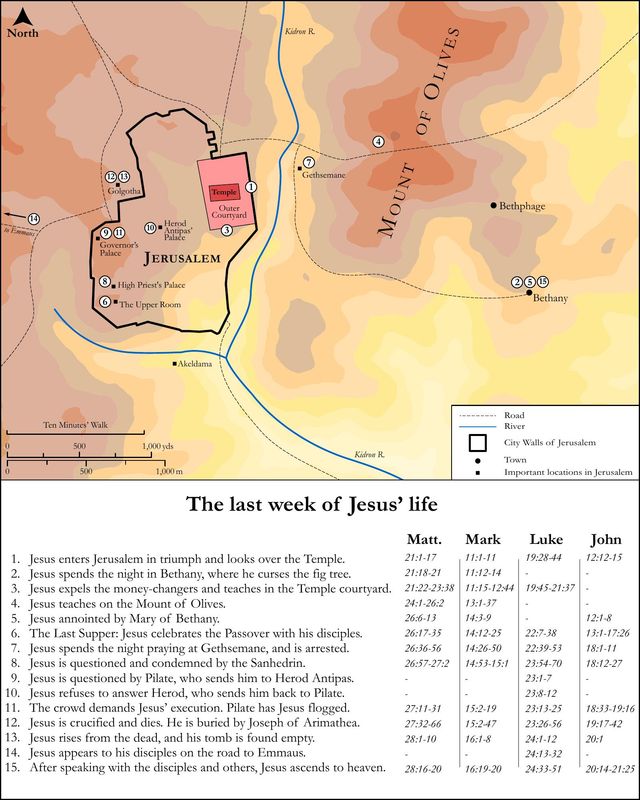
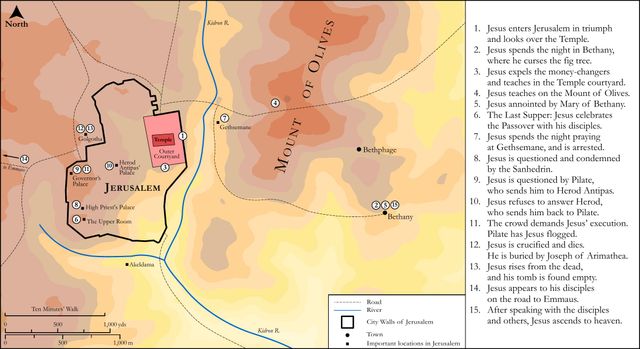
See on the biblical-era map

Study this verse
Historical interpretation
Seventeen Centuries of Reception
19 surviving comments on this verse. Each one is dated, so this reads as a timeline rather than a list.
Select a marker to jump to its quote. Markers stagger vertically where authors wrote within a few decades of each other.
Thus, "love covers the multitude of sins; " and loving God, to wit, with all its strength (by which in the endurance of martyrdom it maintains the fight), with all its life (which it lays down for God), it makes of man a martyr.
To recapitulate, then: Shall that very flesh, which the Divine Creator formed with His own hands in the image of God; which He animated with His own afflatus, after the likeness of His own vital vigour; which He set over all the works of His hand, to dwell amongst, to enjoy, and to rule them; which He clothed with His sacraments and His instructions; whose purity He loves, whose mortifications He approves; whose sufferings for Himself He deems precious;-(shall that flesh, I say), so often brought near to God, not rise again? God forbid, God forbid, (I repeat), that He should abandon to everlasting destruction the labour of His own hands, the care of His own thoughts, the receptacle of His own Spirit, the queen of His creation, the inheritor of His own liberality, the priestess of His religion, the champion of His testimony, the sister of His Christ! We know by experience the goodness of God; from His Christ we learn that He is the only God, and the very good. Now, as He requires from us love to our neighbour after love to Himself, so He will Himself do that which He has commanded.
And we know the quality of the hortatory addresses of carnal conveniences, how easy it is to say, "I must believe with my whole heart; I must love God, and my neighbour as myself: for `on these two precepts the whole Law hangeth, and the prophets, 'not on the emptiness of my lungs and intestines.
Accordingly, the divine law enjoins duties in respect of both these attributes: Thou shalt love God, and, Thou shalt fear God. It proposed one for the obedient man, the other for the transgressor.
Worthy is he, confirmed in all his gifts, who exults in the wisdom of God, having a heart full of the love of God, and a soul completely enlightened by the lamp of knowledge and a mind filled with the word of God. It follows then that all such gifts truly come from God. He would understand that all the law and the prophets are in some way a part of the wisdom and knowledge of God. He would understand that all the law and the prophets depend upon and adhere to the principle of the love of the Lord God and of neighbor and that the perfection of piety consists in love.
However, now as he responds, he says, “Love the Lord your God with your whole heart, your whole soul and your whole mind.” This is the greatest and the first commandment. His statement contains something necessary for us to know, since it is the greatest. The others—even to the least of them—are inferior to it.
Or otherwise; With all thy heart, that is, in all recollection, act, thought; with all thy soul, to be ready, that is, to lay it down for God's religion; with all thy mind, bringing forth nothing but what is of God. And consider whether you cannot thus take the heart of the understanding, by which we contemplate things intellectual, and the mind of that by which we utter thoughts, walking as it were with the mind through each expression, and uttering it. If the Lord had given no answer to the Pharisee who thus tempted Him, we should have judged that there was no commandment greater than the rest. But when the Lord adds, This is the first and great commandment, we learn how we ought to think of the commandments, that there is a great one, and that there are less down to the least. And the Lord says not only that it is a great, but that it is the first commandment, not in order of Scripture, but in supremacy of value. They only take upon them the greatness and supremacy of this precept, who not only love the Lord their God, but add these three conditions. Nor did He only teach the first and great commandment, but added that there was a second like unto the first, Thou shall love thy neighbour as thyself. But if Whoso loveth iniquity hath hated his own soul, (Ps. 11:5.) it is manifest that he does not love his neighbour as himself, when he does not love himself.
Or, because he that has fulfilled the things that are written concerning the love of God and our neighbour, is worthy to receive from God the great reward, that he should be enabled to understand the Law and the Prophets.
Or otherwise; That the second command is like the first signifies that the obligation and merit of both are alike; for no love of God without Christ, or of Christ without God, can profit to salvation.
It follows, On these two commandments hang all the Law and the Prophets.
What then saith Christ? Indicating from what they were led to this; from having no charity, from pining with envy, from being seized by jealousy, He saith, "Thou shalt love the Lord thy God. This is the first and great commandment. And the second is like unto this, Thou shalt love thy neighbor as thyself."
But wherefore "like unto this?" Because this makes the way for that, and by it is again established; "For every one that doeth evil hateth the light, neither cometh to the light;" and again, "The fool hath said in his heart, There is no God." And what in consequence of this? "They are corrupt, and become abominable in their ways." And again, "The love of money is the root of all evils; which while some coveted after they have erred from the faith;" and, "He that loveth me, will keep my commandment."
But His commandments, and the sum of them, are, "Thou shalt love the Lord thy God, and thy neighbor as thyself." If therefore to love God is to love one's neighbor, "For if thou lovest me," He saith, "O Peter, feed my sheep," but to love one's neighbor worketh a keeping of the commandments, with reason doth He say, "On these hang all the law and the prophets."
(Verse 34 and following) But when the Pharisees heard that he had silenced the Sadducees, they gathered together. And one of them, a lawyer, asked him a question to test him: "Teacher, which is the great commandment in the Law?" And he said to him, "You shall love the Lord your God with all your heart and with all your soul and with all your mind. This is the great and first commandment. And a second is like it: You shall love your neighbor as yourself. In his two commands, the whole law and the prophets hang. What we read about Herod and Pontius Pilate, that they conspired in the death of the Lord, we also see now concerning the Pharisees and the Sadducees, who are opposed to each other, but agree with the same mind in testing Jesus. Therefore, those who had already been confuted in the display of the coin and had seen the faction of the opposing party undermined, should have been warned by example not to plot further snares: but malice and envy nourish audacity. One of the legal experts, not desiring to not know but attempting, asks whether the one being questioned knew what was being asked, what the greater commandment is: not asking about the commandments, but what the first and great commandment is; so that when all that God has commanded is great: whatever he may answer, he may have an opportunity to slander, asserting that something else is great among many. Therefore, whoever knows and asks not by desire to learn, but by the desire to know, whether the one who is going to respond knows, approaches in the likeness of the Pharisees, not as a disciple, but as a tempter.
The Pharisees having been themselves already confuted (in the matter of the denarius), and now seeing their adversaries also overthrown, should have taken warning to attempt no further deceit against Him; but hate and jealousy are the parents of impudence.
The Pharisees and Sadducees, thus foes to one another, unite in one common purpose to tempt Jesus.
Or he enquires not for the sake of the commands, but which is the first and great commandment, that seeing all that God commands is great, he may have occasion to cavil whatever the answer be.
(De Doctr. Christ. i. 30. et 26.) But since the Divine substance is more excellent and higher than our nature, the command to love God is distinct from that to love our neighbour. But if by yourself, you understand your whole self, that is both your soul and your body, and in like manner of your neighbour, there is no sort of things to be loved omitted in these commands. The love of God goes first, and the rule thereof is so set out to us as to make all other loves center in that, so that nothing seems said of loving yourself. But then follows, Thou shall love thy neighbour as thyself, so that love of yourself is not omitted.
(de Doctr. Christ. i. 22.) Or otherwise; You are commanded to love God with all thy heart, that your whole thoughts—with all thy soul, that your whole life—with all thy mind, that your whole understanding—may be given to Him from whom you have that you give. Thus He has left no part of our life which may justly be unfilled of Him, or give place to the desire after any other final good; but if aught else present itself for the soul's love, it should be absorbed into that channel in which the whole current of love runs. For man is then the most perfect when his whole life tends towards the life unchangeable, and clings to it with the whole purpose of his soul.
Therefore the first commandment teaches every kind of godliness. For to love God with the whole heart is the cause of every good. The second commandment includes the righteous acts we do toward other people. The first commandment prepares the way for the second and in turn is established by the second. For the person who is grounded in the love of God clearly also loves his neighbor in all things himself. The kind of person who fulfills these two commandments experiences all the commandments.
Or the Pharisees meet together, that their numbers may silence Him whom their reasonings could not confute; thus, while they array numbers against Him, showing that truth failed them; they said among themselves, Let one speak for all, and all speak, through one, so if He prevail, the victory may seem to belong to all; if He be overthrown, the defeat may rest with Him alone; so it follows, Then one of them, a teacher of the Law, asked him a question, tempting him.
He who now enquires for the greatest commandment had not observed the least. He only ought to seek for a higher righteousness who has fulfilled the lower.
But the Lord so answers him, as at once to lay bare the dissimulation of his enquiry, Jesus saith unto him, Thou shalt love the Lord thy God with all thy heart, with all thy soul, and with all thy mind. Thou shalt love, not 'fear,' for to love is more than to fear; to fear belongs to slaves, to love to sons; fear is in compulsion, love in freedom. Whoso serves God in fear escapes punishment, but has not the reward of righteousness because he did well unwillingly through fear. God does not desire to be served servilely by men as a master, but to be loved as a father, for that He has given the spirit of adoption to men. But to love God with the whole heart, is to have the heart inclined to the love of no one thing more than of God. To love God again with the whole soul is to have the mind stayed upon the truth, and to be firm in the faith. For the love of the heart and the love of the soul are different. The first is in a sort carnal, that we should love God even with our flesh, which we cannot do unless we first depart from the love of the things of this world. The love of the heart is felt in the heart, but the love of the soul is not felt, but is perceived because it consists in a judgment of the soul. For he who believes that all good is in God, and that without Him is no good, he loves God with his whole soul. But to love God with the whole mind, is to have all the faculties open and unoccupied for Him. He only loves God with his whole mind, whose intellect ministers to God, whose wisdom is employed about God, whose thoughts travail in the things of God, and whose memory holds the things which are good.
But who loves man is as who loves God; for man is God's image, wherein God is loved, as a King is honoured in his statue. For this cause this commandment is said to be like the first.
Not the Sadducees but the multitudes were astonished. This is daily done in the Church; when by Divine inspiration the adversaries of the Church are overcome, the multitude of the faithful rejoice.
For to these two commandments belongs the whole decalogue; the commandments of the first table to the love of God, those of the second to the love of our neighbour.
Or, with all thy heart, i. e. understanding; with all thy soul, i.e. thy will; with all thy mind, i.e. memory; so you shall think, will, remember nothing contrary to Him.
Here is the paradox of Christianity. As practical imperatives for here and now the two great commandments have to be translated "Behave as if you loved God and man." For no man can love because he is told to. Yet obedience on this practical level is not really obedience at all. And if a man really loved God and man, once again this would hardly be obedience; for if he did, he would be unable to help it. Thus the command really says to us, "Ye must be born again." Till then, we have duty, morality, the Law. A schoolmaster, as St. Paul says, to bring us to Christ. We must expect no more of it than of a schoolmaster; we must allow it no less. I must say my prayers today whether I feel devout or not; but that is only as I must learn my grammar if I am ever to read the poets.
Continue studying Matthew 22:37 across the web’s major study libraries — every link below opens this exact verse, chapter, or book on the destination site.
Read & Compare
 BibleGatewayThis verse in more than 200 translations and 70 languages.
 Bible.comThe YouVersion reader — hundreds of translations, reading plans, and highlights.
 ESV.orgCrossway's official English Standard Version reader.
 NET BibleThe NET translation with 60,000+ translators' notes on every rendering decision.
 STEP BibleTyndale House's free study tool — original text, vocabulary, and scholarly resources.
 BibliaLogos Bible Software's free web reader.
 USCCBThe New American Bible (Revised Edition) with the U.S. bishops' study notes.
Commentaries
 BibleHub CommentariesDozens of classic commentaries on this verse, gathered on one page.
 StudyLightMore than 100 commentary sets — the largest collection on the web.
 BibleRefPlain-English commentary on what this verse means, verse by verse.
 Enduring WordDavid Guzik's free commentary on this chapter, widely used by Bible teachers.
 Bible Study ToolsVerse commentary alongside Greek and Hebrew study aids.
Original Language & Research
- BibleHub InterlinearThe verse word by word — original language, transliteration, and English.
- BibleHub LexiconEvery word's original-language definition and Strong's entry.
 Blue Letter BibleDeep-study tools — Strong's numbers, concordance, and word studies.
 CNTR CollationThe earliest Greek manuscripts of this verse, collated letter by letter.
Sermons, Hymns & Audio


TrulyRandomVerse is not affiliated with these sites and doesn’t control their content. They’re linked because they’re genuinely useful.
Summary
In Matthew 22:37, Jesus delivers the "first and great commandment" in response to a lawyer's challenge, declaring that the paramount duty of humanity is to love the Lord God with every fiber of one's being: heart, soul, and mind. This profound statement, drawn from the foundational Old Testament text of the Shema, encapsulates the essence of divine expectation, calling for a holistic, undivided, and intellectual devotion to God as the wellspring from which all other commandments flow.
Context
ShowHideLiterary Context
This declaration by Jesus occurs within a series of intense interrogations and challenges from various Jewish religious factions—the Pharisees, Sadducees, and Herodians—during His final week in Jerusalem. Following His parables of judgment and the question about paying taxes to Caesar, the Sadducees attempt to trap Him with a question about the resurrection. After silencing them, a lawyer, a Pharisee, steps forward to test Jesus with a question concerning the greatest commandment in the Law, as recorded in Matthew 22:34-36. Jesus' response in Matthew 22:37-40 not only answers the lawyer definitively but also serves as a comprehensive summary of the entire Mosaic Law and the Prophets, demonstrating His mastery and profound understanding of God's will.
Historical & Cultural Context
Jesus' answer is a direct quotation from Deuteronomy 6:5, a verse central to Jewish identity and daily devotion, known as the Shema (from the Hebrew word "hear"). This passage was recited twice daily by devout Jews and served as a core affirmation of monotheism and the requirement for exclusive, total allegiance to Yahweh. By quoting this verse, Jesus affirms the continuity of His teaching with the Old Testament Law, while simultaneously revealing its deepest spiritual intent. The lawyer's question was not merely academic; it reflected ongoing rabbinic debates about the hierarchy of commandments, with some scholars identifying hundreds of individual laws. Jesus' concise and profound summary cut through these complex discussions, pointing to the foundational principle of love.
Key Themes
ShowHideMatthew 22:37 contributes significantly to several key themes within the Gospel of Matthew and broader biblical theology. Firstly, it underscores the supremacy of God and the priority of loving Him above all else, establishing this as the foundational principle for all ethical and spiritual life. Secondly, it highlights the theme of holistic devotion, emphasizing that true love for God must engage every aspect of human existence—intellect, emotion, and will—as Jesus details in the comprehensive scope of "heart, soul, and mind." Thirdly, this verse, especially when paired with the command to love one's neighbor in Matthew 22:39, serves as a summary of the Law and Prophets, revealing that all divine commands ultimately flow from and are fulfilled by love, as Jesus explicitly states in Matthew 22:40.
Exposition and Analysis
ShowHideKey Word Analysis
ShowHideTo love in a social or moral sense; to be beloved. This term denotes a volitional, self-sacrificial, and unconditional love, distinct from mere affection or emotional attachment. It is a love that seeks the highest good of the beloved, making it the perfect descriptor for humanity's relationship with God.
The heart, figuratively the thoughts or feelings (mind); also by analogy, the middle. This refers to the inner core of a person—the seat of emotions, desires, will, and moral character. Loving God with all the heart means dedicating one's deepest affections, intentions, and moral compass entirely to Him.
Deep thought, properly, the faculty (mind or its disposition), by implication, its exercise. This term emphasizes the intellectual aspect of love for God, encompassing understanding, reasoning, and reflective thought. It signifies that devotion to God is not merely emotional or volitional, but also requires active engagement of one's intellect in knowing and understanding Him.
Verse Breakdown
ShowHide"Jesus said unto him,"
This phrase sets the stage, identifying Jesus as the speaker and the lawyer as the recipient of this profound teaching. It highlights the authoritative nature of Jesus' response, not merely as a suggestion but as a divine pronouncement.
"Thou shalt love the Lord thy God"
This is the imperative command, directly quoting from the Shema in Deuteronomy 6:5. It establishes the object of this supreme love—"the Lord thy God"—emphasizing His singular sovereignty and demanding exclusive devotion. The verb "shalt love" (agapáō) signifies a command for a deliberate, committed, and comprehensive love, not merely an emotion.
"with all thy heart,"
This clause specifies the first dimension of this total love. "Heart" refers to the innermost being, the seat of one's will, emotions, and moral choices. It implies a love that is genuine, sincere, and deeply rooted in one's core identity, devoid of hypocrisy or half-heartedness.
"and with all thy soul,"
This expands the scope of love to encompass one's entire life force, vitality, and individual personality. "Soul" (psychḗ) here denotes the very essence of one's existence, suggesting a love that permeates every aspect of one's living, breathing, and being, dedicating one's very life to God.
"and with all thy mind."
This final clause, particularly emphasized in Matthew's account, includes the intellectual faculty. "Mind" (diánoia) refers to one's understanding, intellect, and reasoning capabilities. It calls for a thoughtful, reasoned, and informed love for God, engaging one's cognitive abilities to know, understand, and meditate upon His character, Word, and will. This ensures that love is not blind but is grounded in truth and understanding.
Literary Devices
ShowHideJesus' statement in Matthew 22:37 employs several powerful literary devices. The most prominent is Quotation, as Jesus directly cites Deuteronomy 6:5, thereby grounding His teaching in the established authority of the Old Testament Law. This act of quotation also functions as Affirmation and Interpretation, showing that He is not abolishing the Law but fulfilling and revealing its deepest spiritual meaning. The repeated use of "all thy" before "heart," "soul," and "mind" serves as a powerful form of Emphasis and Anaphora, underscoring the comprehensive and undivided nature of the demanded love. This repetition also creates a Triadic Structure, highlighting the three distinct yet interconnected facets of human being that must be fully engaged in loving God, ensuring a holistic and exhaustive devotion.
Theological and Thematic Connections
ShowHideMatthew 22:37 stands as a theological cornerstone, articulating God's primary demand for humanity: an exclusive and total devotion rooted in love. This commandment reveals the very nature of God, who desires not merely external obedience but a relationship of profound affection and commitment from the core of one's being. It establishes that genuine worship and righteous living flow from an inner disposition of love for the Creator. This holistic love for God is the wellspring from which all other aspects of Christian living, including loving one's neighbor, naturally flow, forming the foundation upon which the entire edifice of God's moral law rests.
Reflection and Application
ShowHideMatthew 22:37 is a profound call to examine the depth and breadth of our love for God. It challenges us to move beyond superficial religiosity or mere outward observance and to cultivate a genuine, all-encompassing devotion. Loving God with all our heart means allowing our emotions, desires, and will to be fully aligned with His. Loving Him with all our soul implies dedicating our very life force, our essence, and our entire existence to His glory. And loving Him with all our mind compels us to engage our intellect—to study His Word, to meditate on His character, to seek understanding of His ways, and to allow our thoughts to be captivated by Him. This verse calls for an integrated faith where every facet of our being is surrendered to and transformed by our love for God, leading to a truly holistic and vibrant spiritual life that impacts every decision and relationship.
Questions for Reflection
ShowHideFAQ
ShowHideWhat is the significance of Jesus adding "mind" to the traditional Old Testament command?
ShowHideWhile the Hebrew word for "heart" (levav) in Deuteronomy 6:5 often encompassed the intellect, Matthew's explicit inclusion of "mind" (Greek: diánoia) emphasizes the cognitive aspect of loving God. This highlights that Christian faith is not merely emotional or volitional but also requires thoughtful engagement, understanding, and intellectual devotion. It calls believers to use their reasoning abilities to know God, meditate on His Word, and understand His will, ensuring that their love is informed and robust.
How does this commandment relate to the second great commandment to love one's neighbor?
ShowHideJesus Himself connects these two commandments, stating in Matthew 22:40 that "On these two commandments hang all the Law and the Prophets." Loving God with all one's being is the foundational and primary command. True love for God naturally overflows into love for others, as it transforms one's character to reflect God's own loving nature. One cannot genuinely love God while neglecting their neighbor, nor can true love for neighbor exist apart from a foundational love for God. The second commandment is an outflow and practical demonstration of the first.
Christ-Centered Fulfillment
ShowHideMatthew 22:37 finds its ultimate fulfillment and perfect embodiment in the person of Jesus Christ. He is the only one who perfectly loved the Lord His God "with all His heart, and with all His soul, and with all His mind." His entire earthly life, from His unwavering obedience to the Father's will (as seen in John 4:34) to His ultimate sacrifice on the cross, was an expression of this complete and undivided love. Christ's perfect love for God enabled Him to perfectly fulfill the Law, becoming the righteous standard for humanity. Furthermore, through His atoning work, Jesus does not merely give us a command to follow, but He empowers us to fulfill it. By the indwelling of the Holy Spirit, believers are given a new heart and mind, enabling them to genuinely love God in a way that was impossible under the old covenant (Ezekiel 36:26-27). Thus, Christ is not only the perfect example of this love but also the divine enabler, making it possible for us to participate in this profound and holistic devotion to God, as we are conformed to His image (Romans 8:29).