


Exodus 12:12
Bible text: King James Version (1769 Blayney text) · Public domain
Bible text: King James Version with Strong's numbers · Public domain
Bible text: Berean Standard Bible · Public domain
Bible text: American Standard Version (1901) · Public domain
Bible text: World English Bible, Messianic edition · Public domain
Bible text: Geneva Bible (1599) · Public domain
Bible text: Young's Literal Translation · Public domain
- וְעָבַרְתִּיve·'a·var·Tiand I will passH5674Conj-w ¦ V-Qal-ConsecPerf-1csVerb Qal Consecutive Perfect 1st Singular common genderוְandעָבַרְתִּיI will pass
- בְאֶרֶץve·'e·retzin [the] land ofH776Prep-b ¦ N-fscNoun Singular Feminine Constructבְinאֶרֶץ[the] land of
- מִצְרַיִםmitz·ra·YimEgyptH4714N-properNoun Proper Location
- בַּלַּיְלָהba·Lay·lahin the nightH3915Prep-b ¦ N-msNoun Singular Masculine Absoluteבַּin theלַּיְלָהnight
- הַזֶּהha·Zeh<the> thisH2088Art ¦ PrtParticle Demonstrativeהַ<the>זֶּהthis
- וְהִכֵּיתִיve·hi·kei·Tiand I will strikeH5221Conj-w ¦ V-Hiphil-ConsecPerf-1csVerb Hiphil Consecutive Perfect 1st Singular common genderוְandהִכֵּיתִיI will strike
- כָלkholeveryH3605N-mscNoun Singular Masculine Construct
- בְּכוֹרbe·khOrfirstbornH1060N-msNoun Singular Masculine Absolute
- בְּאֶרֶץbe·'E·retzin [the] land ofH776Prep-b ¦ N-fscNoun Singular Feminine Constructבְּinאֶרֶץ[the] land of
- מִצְרַיִםmitz·Ra·yimEgyptH4714N-properNoun Proper Location
- מֵאָדָםme·'a·Damfrom humankindH120Prep-m ¦ N-msNoun Singular Masculine Absoluteמֵfromאָדָםhumankind
- וְעַדve·'adand untoH5704Conj-w ¦ PrepPrepositionוְandעַדunto
- בְּהֵמָהbe·he·MahlivestockH929N-fsNoun Singular Feminine Absolute
- וּבְכָלu·ve·Kholand on allH3605Conj-w ¦ Prep-b ¦ N-mscNoun Singular Masculine Constructוּandבְonכָלall
- אֱלֹהֵי'e·lo·Hei[the] gods ofH430N-mpcNoun Plural Masculine Construct
- מִצְרַיִםmitz·Ra·yimEgyptH4714N-properNoun Proper Location
- אֶעֱשֶׂה'e·'e·SehI will doH6213V-Qal-Imperf-1csVerb Qal Imperfect 1st Singular common gender
- שְׁפָטִיםshe·fa·Timacts of judgmentH8201N-mpNoun Plural Masculine Absolute
- אֲנִי'a·NiIH589Pro-1csPronoun Personal 1st Singular common gender
- יְהוָהYah·weh[am] YahwehH3068N-properNoun Proper Title
English is a literal word-by-word gloss of the Hebrew, not the KJV's wording. Why?
This is the original text the KJV's translators worked from — each Hebrew word with its own literal English meaning in this verse, prepared by scholars at Tyndale House, Cambridge. The KJV translates whole sentences, not word by word, so its wording differs: one Hebrew word can become several English words, and the KJV may choose “the LORD” where the gloss reads “Yahweh”. Both are faithful — they answer different questions. For the KJV's own rendering, switch to the KJV text.
Details
See on the biblical-era maps

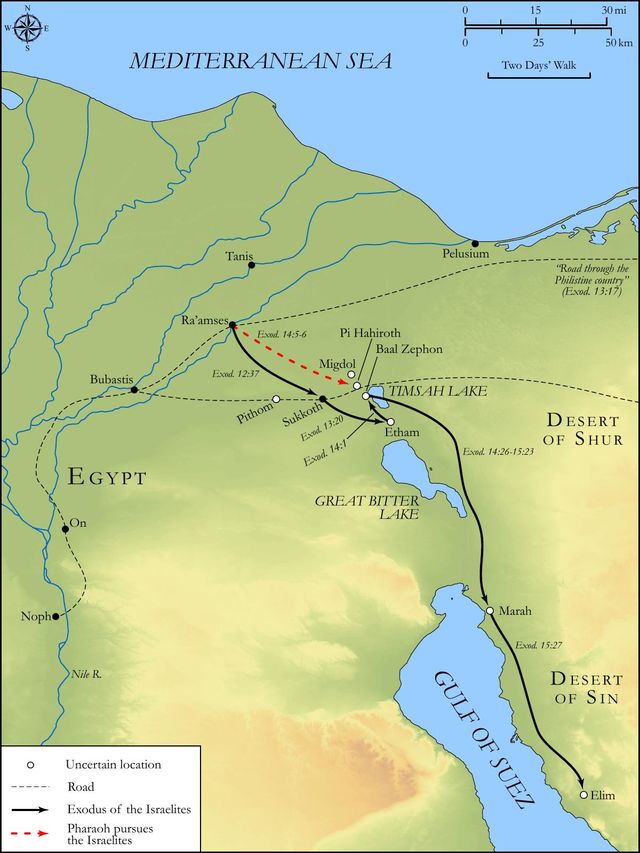
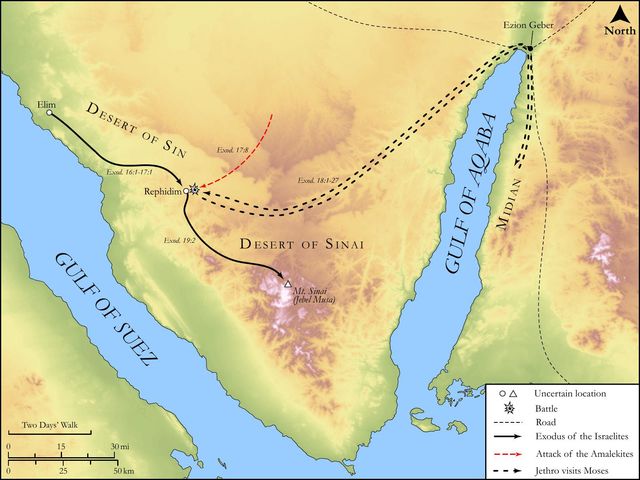
Study this verse
Public-domain commentary
Matthew Henry
From his Commentary on the Whole Bible. Henry comments on passages, not single verses — this entry covers Exodus 12:1–20. His three-level outline is real structure in the source text, so it is rendered as structure.
Moses and Aaron here receive of the Lord what they were afterwards to deliver to the people concerning the ordinance of the passover, to which is prefixed an order for a new style to be observed in their months (Exo 12:1, Exo 12:2): This shall be to you the beginning of months. They had hitherto begun their year from the middle of September, but henceforward they were to begin it from the middle of March, at least in all their ecclesiastical computations. Note, It is good to begin the day, and begin the year, and especially to begin our lives, with God. This new calculation began the year with the spring, which reneweth the face of the earth, and was used as a figure of the coming of Christ, Sol 2:11, Sol 2:12. We may suppose that, while Moses was bringing the ten plagues upon the Egyptians, he was directing the Israelites to prepare for their departure at an hour's warning. Probably he had be degrees brought them near together from their dispersions, for their are here called the congregation of Israel (Exo 12:3), and to them as a congregation orders are here sent. Their amazement and hurry, it is easy to suppose, were great; yet now they must apply themselves to the observance of a sacred rite, to the honour of God. Note, When our heads are fullest of care, and our hands of business, yet we must not forget our religion, nor suffer ourselves to be indisposed for acts of devotion.
I.God appointed that on the night wherein they were to go out of Egypt they should, in each of their families, kill a lamb, or that two or three families, if they were small, should join for a lamb. The lamb was to be got ready four days before and that afternoon they were to kill it (Exo 12:6) as a sacrifice; not strictly, for it was not offered upon the altar, but as a religious ceremony, acknowledging God's goodness to them, not only in preserving them from, but in delivering them by, the plagues inflicted on the Egyptians. See the antiquity of family-religion; and see the convenience of the joining of small families together for religious worship, that it may be made the more solemn.
II.The lamb so slain they were to eat, roasted (we may suppose, in its several quarters), with unleavened bread and bitter herbs, because they were to eat it in haste (Exo 12:11), and to leave none of it until the morning; for God would have them to depend upon him for their daily bread, and not to take thought for the morrow. He that led them would feed them.
III.Before they ate the flesh of the lamb, they were to sprinkle the blood upon the doorposts, Exo 12:7.
By this their houses were to be distinguished from the houses of the Egyptians, and so their first-born secured from the sword of the destroying angel, Exo 12:12, Exo 12:13. Dreadful work was to be made this night in Egypt; all the first-born both of man and beast were to be slain, and judgment executed upon the gods of Egypt. Moses does not mention the fulfillment, in this chapter, yet he speaks of it Num 33:4. It is very probable that the idols which the Egyptians worshipped were destroyed, those of metal melted, those of wood consumed, and those of stone broken to pieces, whence Jethro infers (Exo 18:11), The Lord is greater than all gods. The same angel that destroyed their first-born demolished their idols, which were no less dear to them. For the protection of Israel from this plague they were ordered to sprinkle the blood of the lamb upon the door-posts, their doing which would be accepted as an instance of their faith in the divine warnings and their obedience to the divine precepts. Note,
1.If in times of common calamity God will secure his own people, and set a mark upon them; they shall be hidden either in heaven or under heaven, preserved either from the stroke of judgments or at least from the sting of them.
2.The blood of sprinkling is the saint's security in times of common calamity; it is this that marks them for God, pacifies conscience, and gives them boldness of access to the throne of grace, and so becomes a wall of protection round them and a wall of partition between them and the children of this world.
IV.This was to be annually observed as a feast of the Lord in their generations, to which the feast of unleavened bread was annexed, during which, for seven days, they were to eat no bread but what was unleavened, in remembrance of their being confined to such bread, of necessity, for many days after they came out of Egypt, Exo 12:14-20. The appointment is inculcated for their better direction, and that they might not mistake concerning it, and to awaken those who perhaps in Egypt had grown generally very stupid and careless in the matters of religion to a diligent observance of the institution. Now, without doubt, there was much of the gospel in this ordinance; it is often referred to in the New Testament, and, in it, to us is the gospel preached, and not to them only, who could not stedfastly look to the end of these things, Heb 4:2; Co2 3:13.
1.The paschal lamb was typical. Christ is our Passover, Co1 5:7.
(1.)It was to be a lamb; and Christ is the Lamb of God (Joh 1:29), often in the Revelation called the Lamb, meek and innocent as a lamb, dumb before the shearers, before the butchers.
(2.)It was to be a male of the first year (Exo 12:5), in its prime; Christ offered up himself in the midst of his days, not in infancy with the babes of Bethlehem. It denotes the strength and sufficiency of the Lord Jesus, on whom our help was laid.
(3.)It was to be without blemish (Exo 12:5), denoting the purity of the Lord Jesus, a Lamb without spot, Pe1 1:19. The judge that condemned him (as if his trial were only like the scrutiny that was made concerning the sacrifices, whether they were without blemish or no) pronounced him innocent.
(4.)It was to be set apart four days before (Exo 12:3, Exo 12:6), denoting the designation of the Lord Jesus to be a Saviour, both in the purpose and in the promise. It is very observable that as Christ was crucified at the passover, so he solemnly entered into Jerusalem four days before, the very day that the paschal lamb was set apart.
(5.)It was to be slain, and roasted with fire (Exo 12:6-9), denoting the exquisite sufferings of the Lord Jesus, even unto death, the death of the cross. The wrath of God is as fire, and Christ was made a curse for us.
(6.)It was to be killed by the whole congregation between the two evenings, that is, between three o'clock and six. Christ suffered in the end of the world (Heb 9:26), by the hand of the Jews, the whole multitude of them (Luk 23:18), and for the good of all his spiritual Israel.
(7.)Not a bone of it must be broken (Exo 12:46), which is expressly said to be fulfilled in Christ (Joh 19:33, Joh 19:36), denoting the unbroken strength of the Lord Jesus.
2.The sprinkling of the blood was typical.
(1.)It was not enough that the blood of the lamb was shed, but it must be sprinkled, denoting the application of the merits of Christ's death to our souls; we must receive the atonement, Rom 5:11.
(2.)It was to be sprinkled with a bunch of hyssop (Exo 12:22) dipped in the basin. The everlasting covenant, like the basin, in the conservatory of this blood, the benefits and privileges purchased by it are laid up for us there; faith is the bunch of hyssop by which we apply the promises to ourselves and the benefits of the blood of Christ laid up in them.
(3.)It was to be sprinkled upon the door-posts, denoting the open profession we are to make of faith in Christ, and obedience to him, as those that are not ashamed to own our dependence upon him. The mark of the beast may be received on the forehead or in the right hand, but the seal of the Lamb is always in the forehead, Rev 7:3. There is a back-way to hell, but no back-way to heaven; no, the only way to this is a high-way, Isa 35:8.
(4.)It was to be sprinkled upon the lintel and the sideposts, but not upon the threshold (Exo 12:7), which cautions us to take heed of trampling under foot the blood of the covenant, Heb 10:29. It is precious blood, and must be precious to us.
(5.)The blood, thus sprinkled, was a means of the preservation of the Israelites from the destroying angel, who had nothing to do where the blood was. If the blood of Christ be sprinkled upon our consciences, it will be our protection from the wrath of God, the curse of the law, and the damnation of hell, Rom 8:1.
3.The solemnly eating of the lamb was typical of our gospel-duty to Christ.
(1.)The paschal lamb was killed, not to be looked upon only, but to be fed upon; so we must by faith make Christ ours, as we do that which we eat, and we must receive spiritual strength and nourishment from him, as from our food, and have delight and satisfaction in him, as we have in eating and drinking when we are hungry or thirsty: see Joh 6:53-55.
(2.)It was to be all eaten; those that by faith feed upon Christ must feed upon a whole Christ; they must take Christ and his yoke, Christ and his cross, as well as Christ and his crown. Is Christ divided? Those hat gather much of Christ will have nothing over.
(3.)It was to be eaten immediately, not deferred till morning, Exo 12:10. Today Christ is offered, and is to be accepted while it is called today, before we sleep the sleep of death.
(4.)It was to be eaten with bitter herbs (Exo 12:8), in remembrance of the bitterness of their bondage in Egypt. We must feed upon Christ with sorrow and brokenness of heart, in remembrance of sin; this will give an admirable relish to the paschal lamb. Christ will be sweet to us if sin be bitter.
(5.)It was to be eaten in a departing posture (Exo 12:11); when we feed upon Christ by faith we must absolutely forsake the rule and dominion of sin, shake off Pharaoh's yoke; and we must sit loose to the world, and every thing in it, forsake all for Christ, and reckon it no bad bargain, Heb 13:13, Heb 13:14.
4.The feast of unleavened bread was typical of the Christian life, Co1 5:7, Co1 5:8. Having received Christ Jesus the Lord,
(1.)We must keep a feast in holy joy, continually delighting ourselves in Christ Jesus; no manner of work must be done (Exo 12:16), no care admitted or indulged, inconsistent with, or prejudicial to, this holy joy: if true believers have not a continual feast, it is their own fault.
(2.)It must be a feast of unleavened bread, kept in charity, without the leaven of malice, and in sincerity, without the leaven of hypocrisy. The law was very strict as to the passover, and the Jews were so in their usages, that no leaven should be found in their houses, Exo 12:19. All the old leaven of sin must be put far from us, with the utmost caution and abhorrence, if we would keep the feast of a holy life to the honour of Christ.
(3.)It was by an ordinance for ever (Exo 12:17); as long as we live, we must continue feeding upon Christ and rejoicing in him, always making thankful mention of the great things he has done for us.
Historical interpretation
Historical reception
1 surviving comment on this verse from the historical church.
In what follows, “on their gods I shall pass judgment,” the Hebrews affirm that on the night on which the people departed, all the temples in Egypt were destroyed, either by an earthquake or by a bolt of lightning. But we say, spiritually, that when we depart from Egypt, the idols of error take flight and the whole culture of perverse dogmas is crushed.
Continue studying Exodus 12:12 across the web’s major study libraries — every link below opens this exact verse, chapter, or book on the destination site.
Read & Compare
 BibleGatewayThis verse in more than 200 translations and 70 languages.
 Bible.comThe YouVersion reader — hundreds of translations, reading plans, and highlights.
 ESV.orgCrossway's official English Standard Version reader.
 NET BibleThe NET translation with 60,000+ translators' notes on every rendering decision.
 STEP BibleTyndale House's free study tool — original text, vocabulary, and scholarly resources.
 BibliaLogos Bible Software's free web reader.
 USCCBThe New American Bible (Revised Edition) with the U.S. bishops' study notes.
Commentaries
 BibleHub CommentariesDozens of classic commentaries on this verse, gathered on one page.
 StudyLightMore than 100 commentary sets — the largest collection on the web.
 BibleRefPlain-English commentary on what this verse means, verse by verse.
 Enduring WordDavid Guzik's free commentary on this chapter, widely used by Bible teachers.
 Bible Study ToolsVerse commentary alongside Greek and Hebrew study aids.
Original Language & Research
- BibleHub InterlinearThe verse word by word — original language, transliteration, and English.
- BibleHub LexiconEvery word's original-language definition and Strong's entry.
 Blue Letter BibleDeep-study tools — Strong's numbers, concordance, and word studies.
 SefariaThe Hebrew text with Rashi and centuries of Jewish commentary.
Sermons, Hymns & Audio


TrulyRandomVerse is not affiliated with these sites and doesn’t control their content. They’re linked because they’re genuinely useful.
Summary
Exodus 12:12 declares God's decisive and personal judgment upon Egypt, announcing His intent to "pass through" the land that very night to strike down every firstborn, human and animal, and to execute judgment against all the gods of Egypt. This powerful declaration culminates in God's self-revelation as "the LORD" (Yahweh), underscoring His absolute sovereignty, unique identity, and unwavering commitment to deliver Israel through a climactic act of righteous wrath and unparalleled power.
Context
ShowHideLiterary Context
This verse is a crucial divine declaration nestled within the detailed instructions for the first Passover. Immediately preceding it, God has meticulously outlined the preparation of the Passover lamb, its consumption, and the application of its blood to the doorposts and lintels of Israelite homes, promising protection for those under the blood, as detailed in Exodus 12:1-11. Exodus 12:12 serves as the divine rationale and assurance for these instructions, explaining why the Passover ritual is necessary—because God Himself is about to unleash the final, most devastating plague. Following this verse, the text describes the actual execution of the plague, the wailing throughout Egypt, and Pharaoh's desperate plea for Moses and Aaron to leave with the Israelites (Exodus 12:29-32). Thus, this verse is the pivot point between divine command and its dramatic fulfillment.
Historical & Cultural Context
Ancient Egypt was a polytheistic society, deeply entrenched in the worship of a vast pantheon of gods and goddesses, many associated with natural forces, animals, or aspects of human life. Pharaoh himself was considered a divine being, a living god, often identified with Ra, the sun god, or Horus. The firstborn, whether human or animal, held immense significance in Israel and Egypt alike; they represented the strength, future, and prime of a family or nation. The death of the firstborn was a catastrophic blow, striking at the very heart of Egyptian society and succession. Each of the preceding nine plagues had systematically targeted specific Egyptian deities or aspects of the order they worshipped, demonstrating Yahweh's superiority: the Nile (Hapi), frogs (Heqet), gnats (Geb), flies (Ra), livestock (Apis, Hathor), boils (Sekhmet), hail (Nut, Seth), locusts (Seth), and darkness (Ra). The tenth plague, the death of the firstborn, was the ultimate challenge, directly confronting Pharaoh's own divinity and the life-giving powers of gods like Osiris (god of the underworld and rebirth) and Ra. This was not merely a natural disaster, but the LORD's judgment against the entire Egyptian worldview and its false gods, asserting Yahweh's absolute and unique sovereignty.
Key Themes
ShowHideExodus 12:12 powerfully contributes to several overarching themes within the book of Exodus and the broader Pentateuch. It underscores God's absolute sovereignty over all creation, nations, and false deities, a theme first introduced with His self-revelation at the burning bush. The verse vividly illustrates the nature of divine judgment, portraying it as a righteous, decisive, and personal act against sin and oppression, necessary for the deliverance of His people. Furthermore, it highlights the theme of redemption through sacrifice, as the judgment on Egypt is inextricably linked to the Passover lamb, whose blood provides protection and prefigures ultimate salvation. Finally, this climactic event demonstrates God's unwavering faithfulness to His covenant promises, particularly those made to Abraham regarding the liberation of his descendants from bondage (Genesis 15:13-14).
Exposition and Analysis
ShowHideExodus 12:12 is a powerful statement of divine intention and identity, articulating the climax of God's judgment on Egypt.
Key Word Analysis
ShowHideThis verb (H5221) means "to strike (lightly or severely, literally or figuratively); beat, kill, slay." In this context, it signifies a decisive, destructive, and fatal blow, emphasizing the severity and finality of the judgment on the firstborn. It indicates a direct and forceful act of divine power.
This noun (H8201) refers to "a sentence, i.e., infliction; judgment." More than just "punishment," shepheṭ denotes a legal verdict, a righteous decree, or an act of justice. God's actions are not arbitrary; they are the execution of a just sentence against a rebellious Pharaoh and an idolatrous nation that had oppressed His people for centuries. This term elevates the plagues from mere disasters to divine acts of righteous judgment.
This proper noun (H3068) is derived from a root meaning "to be" or "to exist," signifying "the self-Existent or Eternal." It is God's personal, covenant name, Yahweh, revealed to Moses. In this context, it asserts that the one true God, the God of Israel, is the sole actor and ultimate authority behind these judgments, demonstrating His unique, unrivaled power over all creation and all other claims to divinity.
Verse Breakdown
ShowHide"For I will pass through the land of Egypt this night,"
This opening clause establishes God's direct, personal, and immediate involvement. The judgment is not delegated; God Himself will "pass through," indicating a sovereign, purposeful, and inescapable presence. The specificity of "this night" adds to the dramatic tension and urgency, emphasizing the imminence of the final plague.
"and will smite all the firstborn in the land of Egypt, both man and beast;"
This specifies the primary target of the judgment: the firstborn. This was a direct assault on the future generation and the very lifeblood of Egyptian society, including their animals, which were integral to their economy and often revered as deities. This comprehensive judgment signifies the depth of Egypt's rebellion and the severity of God's response.
"and against all the gods of Egypt I will execute judgment:"
This clause reveals how far the plague reached, to the gods themselves. The death of the firstborn was not merely a human tragedy but a divine assault on the entire pantheon of Egyptian deities. Each preceding plague had chipped away at the credibility of these gods, but this final plague was a decisive, public demonstration of Yahweh's absolute supremacy over every idol and spiritual power in Egypt. It was a theological war, and Yahweh was declaring victory.
"I [am] the LORD."
This concluding affirmation is the ultimate statement of divine authority and identity. It is God's self-attestation, declaring that the one performing these mighty acts is none other than Yahweh, the covenant-keeping God of Israel, the only true God. This declaration undergirds the justice and power of all that precedes it.
Literary Devices
ShowHideThe verse employs a direct, declarative style, emphasizing God's absolute authority and unwavering resolve. The parallelism between "smite all the firstborn" and "execute judgment against all the gods" highlights the dual nature of God's action: a physical judgment with profound spiritual implications. The phrase "I am the LORD" functions as a powerful divine signature, sealing the pronouncement with ultimate authority and identifying the source of the unparalleled power and justice. This self-identification also serves as a climax to the preceding plagues, revealing the ultimate purpose of God's actions: to make His unique identity known.
Theological and Thematic Connections
ShowHideExodus 12:12 is rich with theological truths, revealing profound aspects of God's character and His redemptive plan. This verse unequivocally asserts God's absolute sovereignty and unique deity, demonstrating that He is not merely a god among many, but the one true God, whose power is unrivaled and whose will cannot be thwarted, particularly in His righteous judgment against the idolatry and oppression of Egypt. This severe judgment, far from being arbitrary, is presented as a just and necessary act, the culmination of Pharaoh's hardened heart and centuries of cruelty against God's chosen people. Thus, God's judgment on the oppressor becomes the very means of deliverance for the oppressed, inextricably linking divine justice with the salvation of Israel. This climactic act also powerfully demonstrates God's unwavering faithfulness to His ancient covenant promises, proving His commitment to His people and His word.
Reflection and Application
ShowHideExodus 12:12, though set in an ancient context, offers timeless lessons for our lives today. This verse reminds us that God is not a distant, passive deity but is actively involved in human history and the affairs of nations. He is sovereign over all powers, human and spiritual. This should instill both awe and trust, knowing that no power, human ideology, or spiritual force can ultimately thwart His purposes. God's judgment on the "gods of Egypt" serves as a powerful warning against idolatry in any form. While we may not bow to statues of Ra or Osiris, modern idolatry takes many subtle forms: the worship of money, power, success, self, technology, or even political ideologies. Anything that takes the place of God in our lives will ultimately be exposed and judged by His supreme authority. This verse calls us to examine our allegiances and ensure our ultimate loyalty is to the one true God. The severity of the judgment on Egypt underscores the serious consequences of persistent disobedience, oppression, and rebellion against God's commands. It reminds us that God is just and will ultimately bring all things to account. This should lead to humility, repentance, and a deep appreciation for His mercy.
Questions for Reflection
ShowHideFAQ
ShowHideWhy did God punish the firstborn, including animals, and not just Pharaoh?
ShowHideThe death of the firstborn was the ultimate, climactic plague designed to break Pharaoh's hardened will and demonstrate God's absolute power over all of Egypt. Among the Egyptians and the tribes of Israel, the firstborn represented the strength, future, and prime of a family or nation. Striking the firstborn was a direct blow to the very heart of Egyptian society and the succession of its leadership, including Pharaoh's own claim to divinity. Animals were often sacred (e.g., Apis bull) or integral to Egyptian life and worship, so their inclusion underscored the comprehensive nature of God's judgment on every aspect of Egyptian existence and their religious system. This widespread judgment was necessary to show that no one was exempt from God's wrath and to compel Pharaoh to release Israel.
Does "judgment against all the gods of Egypt" imply that literal gods exist alongside Yahweh?
ShowHideNo, this phrase does not imply the literal existence of other gods as co-equal or competing deities with Yahweh. Instead, it signifies God's power over the idols worshipped as gods, the demonic forces that may have empowered such idolatry, and the entire religious and political system that opposed Him. The plagues systematically dismantled the credibility and power of the Egyptian pantheon (e.g., Ra, Osiris, Hapi, Heqet), proving Yahweh's unique and absolute sovereignty. It demonstrates that these "gods" were powerless to protect their worshippers or their land from the one true God.
How is this severe judgment consistent with God's love and mercy?
ShowHideThis is a challenging question, but the Bible presents God as both perfectly loving and perfectly just. While the judgment was severe, it was not arbitrary. It came after Pharaoh had repeatedly hardened his heart and refused to release Israel, despite numerous warnings and lesser plagues. God's justice is an expression of His holiness, which cannot tolerate persistent evil and oppression. Furthermore, this judgment on Egypt was the very means by which God demonstrated His covenant faithfulness and delivered His oppressed people, Israel. From Israel's perspective, it was an act of profound love and mercy, liberating them from centuries of brutal slavery. God's love for His people necessitated His righteous judgment against their oppressors.
Christ-Centered Fulfillment
ShowHideExodus 12:12, with its declaration of judgment and the institution of the Passover, finds profound fulfillment and amplification in the person and work of Jesus Christ. Just as God struck down the firstborn of Egypt, the New Testament reveals that God's ultimate judgment on sin fell upon His own "firstborn" Son, Jesus Christ, who was not spared (Romans 8:32). Jesus, the perfect and sinless Son of God, bore the full weight of divine judgment for humanity's sin on the cross, becoming the ultimate substitutionary sacrifice. This act also represents Christ's decisive victory over all spiritual powers, principalities, and forces of evil, fulfilling God's "judgment against all the gods of Egypt" by disarming and triumphing over them (Colossians 2:15). The Passover, introduced in Exodus 12, with its requirement of a spotless lamb whose blood provides protection from judgment, is the clearest Old Testament type of Christ. Jesus is explicitly identified as "our Passover lamb" (1 Corinthians 5:7), whose shed blood delivers believers from the judgment of sin and death. Just as the Israelites were "passed over" by the angel of death because of the blood, believers are "passed over" from eternal condemnation because of Christ's atoning sacrifice. Finally, the powerful self-declaration "I am the LORD" (Yahweh) in Exodus 12:12 finds its ultimate echo in Jesus' own "I Am" statements in the Gospels (e.g., "I am the bread of life" in John 6:35; "I am the light of the world" in John 8:12; "I am the way, the truth, and the life" in John 14:6). These statements are implicit claims to divine identity, aligning Jesus with the very Yahweh who executed judgment and delivered Israel in the Exodus, revealing Him as the embodiment of God's sovereign authority and redemptive power.