


Exodus 12:4
Bible text: King James Version (1769 Blayney text) · Public domain
Bible text: King James Version with Strong's numbers · Public domain
Bible text: Berean Standard Bible · Public domain
Bible text: American Standard Version (1901) · Public domain
Bible text: World English Bible, Messianic edition · Public domain
Bible text: Geneva Bible (1599) · Public domain
Bible text: Young's Literal Translation · Public domain
- וְאִםve·'imand ifH518Conj-w ¦ PrtParticle Conditionalוְandאִםif
- יִמְעַטyim·'Atit will be [too] smallH4591V-Qal-Imperf-3msVerb Qal Imperfect 3rd Singular Masculine
- הַבַּיִתha·ba·Yitthe householdH1004Art ¦ N-msNoun Singular Masculine Absoluteהַtheבַּיִתhousehold
- מִהְיֹתmih·Yotfor beingH1961Prep-m ¦ V-Qal-InfVerb Qal Infinitive Constructמִforהְיֹתbeing
- מִשֶּׂהmi·Sehfor a lambH7716Prep-m ¦ N-csNoun Singular common gender Absoluteמִforשֶּׂהa lamb
- וְלָקַחve·la·Kachand he will takeH3947Conj-w ¦ V-Qal-ConsecPerf-3msVerb Qal Consecutive Perfect 3rd Singular Masculineוְandלָקַחhe will take
- הוּאHu'heH1931Pro-3msPronoun Personal 3rd Singular Masculine
- וּשְׁכֵנוֹu·she·khe·Noand his neighborH7934Conj-w ¦ N-msc ¦ 3msNoun Singular Masculine Constructוּandשְׁכֵנneighborוֹhis
- הַקָּרֹבha·ka·Ro<the> nearH7138Art ¦ Adj-msAdjective Singular Masculine Absoluteהַ<the>קָּרֹבnear
- אֶל'eltoH413PrepPreposition
- בֵּיתוֹbei·Tohis houseH1004N-msc ¦ 3msNoun Singular Masculine Constructבֵּיתhouseוֹhis
- בְּמִכְסַתbe·mikh·Satby [the] number ofH4373Prep-b ¦ N-fscNoun Singular Feminine Constructבְּbyמִכְסַת[the] number of
- נְפָשֹׁתne·fa·ShotpeopleH5315N-fpNoun Plural Feminine Absolute
- אִישׁ'isheach oneH376N-msNoun Singular Masculine Absolute
- לְפִיle·Fito [the] mouth ofH6310Prep-l ¦ N-mscNoun Singular Masculine Constructלְtoפִי[the] mouth of
- אָכְלוֹ'a·khe·Lohis foodH400N-msc ¦ 3msNoun Singular Masculine Constructאָכְלfoodוֹhis
- תָּכֹסּוּta·Kho·suyou will estimateH3699V-Qal-Imperf-2mpVerb Qal Imperfect 2nd Plural Masculine
- עַל'alonH5921PrepPreposition
- הַשֶּׂהha·Sehthe lambH7716Art ¦ N-csNoun Singular common gender Absoluteהַtheשֶּׂהlamb
English is a literal word-by-word gloss of the Hebrew, not the KJV's wording. Why?
This is the original text the KJV's translators worked from — each Hebrew word with its own literal English meaning in this verse, prepared by scholars at Tyndale House, Cambridge. The KJV translates whole sentences, not word by word, so its wording differs: one Hebrew word can become several English words, and the KJV may choose “the LORD” where the gloss reads “Yahweh”. Both are faithful — they answer different questions. For the KJV's own rendering, switch to the KJV text.
Details
See on the biblical-era maps

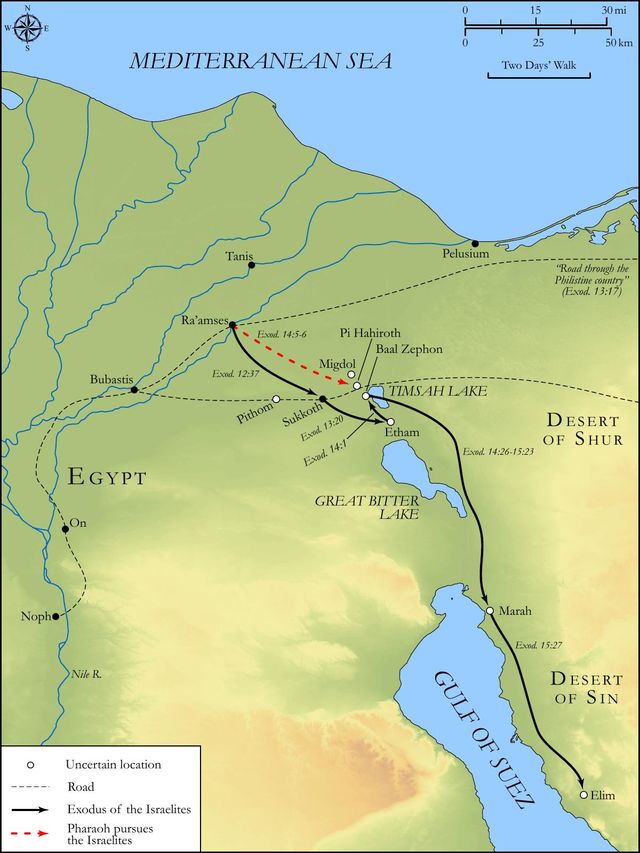
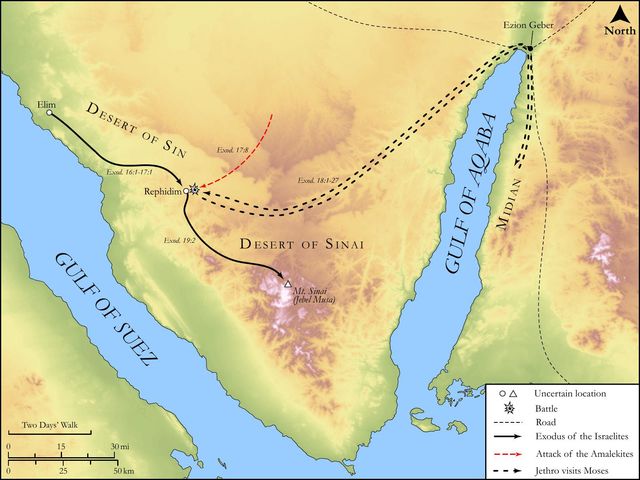
Study this verse
Public-domain commentary
Matthew Henry
From his Commentary on the Whole Bible. Henry comments on passages, not single verses — this entry covers Exodus 12:1–20. His three-level outline is real structure in the source text, so it is rendered as structure.
Moses and Aaron here receive of the Lord what they were afterwards to deliver to the people concerning the ordinance of the passover, to which is prefixed an order for a new style to be observed in their months (Exo 12:1, Exo 12:2): This shall be to you the beginning of months. They had hitherto begun their year from the middle of September, but henceforward they were to begin it from the middle of March, at least in all their ecclesiastical computations. Note, It is good to begin the day, and begin the year, and especially to begin our lives, with God. This new calculation began the year with the spring, which reneweth the face of the earth, and was used as a figure of the coming of Christ, Sol 2:11, Sol 2:12. We may suppose that, while Moses was bringing the ten plagues upon the Egyptians, he was directing the Israelites to prepare for their departure at an hour's warning. Probably he had be degrees brought them near together from their dispersions, for their are here called the congregation of Israel (Exo 12:3), and to them as a congregation orders are here sent. Their amazement and hurry, it is easy to suppose, were great; yet now they must apply themselves to the observance of a sacred rite, to the honour of God. Note, When our heads are fullest of care, and our hands of business, yet we must not forget our religion, nor suffer ourselves to be indisposed for acts of devotion.
I.God appointed that on the night wherein they were to go out of Egypt they should, in each of their families, kill a lamb, or that two or three families, if they were small, should join for a lamb. The lamb was to be got ready four days before and that afternoon they were to kill it (Exo 12:6) as a sacrifice; not strictly, for it was not offered upon the altar, but as a religious ceremony, acknowledging God's goodness to them, not only in preserving them from, but in delivering them by, the plagues inflicted on the Egyptians. See the antiquity of family-religion; and see the convenience of the joining of small families together for religious worship, that it may be made the more solemn.
II.The lamb so slain they were to eat, roasted (we may suppose, in its several quarters), with unleavened bread and bitter herbs, because they were to eat it in haste (Exo 12:11), and to leave none of it until the morning; for God would have them to depend upon him for their daily bread, and not to take thought for the morrow. He that led them would feed them.
III.Before they ate the flesh of the lamb, they were to sprinkle the blood upon the doorposts, Exo 12:7.
By this their houses were to be distinguished from the houses of the Egyptians, and so their first-born secured from the sword of the destroying angel, Exo 12:12, Exo 12:13. Dreadful work was to be made this night in Egypt; all the first-born both of man and beast were to be slain, and judgment executed upon the gods of Egypt. Moses does not mention the fulfillment, in this chapter, yet he speaks of it Num 33:4. It is very probable that the idols which the Egyptians worshipped were destroyed, those of metal melted, those of wood consumed, and those of stone broken to pieces, whence Jethro infers (Exo 18:11), The Lord is greater than all gods. The same angel that destroyed their first-born demolished their idols, which were no less dear to them. For the protection of Israel from this plague they were ordered to sprinkle the blood of the lamb upon the door-posts, their doing which would be accepted as an instance of their faith in the divine warnings and their obedience to the divine precepts. Note,
1.If in times of common calamity God will secure his own people, and set a mark upon them; they shall be hidden either in heaven or under heaven, preserved either from the stroke of judgments or at least from the sting of them.
2.The blood of sprinkling is the saint's security in times of common calamity; it is this that marks them for God, pacifies conscience, and gives them boldness of access to the throne of grace, and so becomes a wall of protection round them and a wall of partition between them and the children of this world.
IV.This was to be annually observed as a feast of the Lord in their generations, to which the feast of unleavened bread was annexed, during which, for seven days, they were to eat no bread but what was unleavened, in remembrance of their being confined to such bread, of necessity, for many days after they came out of Egypt, Exo 12:14-20. The appointment is inculcated for their better direction, and that they might not mistake concerning it, and to awaken those who perhaps in Egypt had grown generally very stupid and careless in the matters of religion to a diligent observance of the institution. Now, without doubt, there was much of the gospel in this ordinance; it is often referred to in the New Testament, and, in it, to us is the gospel preached, and not to them only, who could not stedfastly look to the end of these things, Heb 4:2; Co2 3:13.
1.The paschal lamb was typical. Christ is our Passover, Co1 5:7.
(1.)It was to be a lamb; and Christ is the Lamb of God (Joh 1:29), often in the Revelation called the Lamb, meek and innocent as a lamb, dumb before the shearers, before the butchers.
(2.)It was to be a male of the first year (Exo 12:5), in its prime; Christ offered up himself in the midst of his days, not in infancy with the babes of Bethlehem. It denotes the strength and sufficiency of the Lord Jesus, on whom our help was laid.
(3.)It was to be without blemish (Exo 12:5), denoting the purity of the Lord Jesus, a Lamb without spot, Pe1 1:19. The judge that condemned him (as if his trial were only like the scrutiny that was made concerning the sacrifices, whether they were without blemish or no) pronounced him innocent.
(4.)It was to be set apart four days before (Exo 12:3, Exo 12:6), denoting the designation of the Lord Jesus to be a Saviour, both in the purpose and in the promise. It is very observable that as Christ was crucified at the passover, so he solemnly entered into Jerusalem four days before, the very day that the paschal lamb was set apart.
(5.)It was to be slain, and roasted with fire (Exo 12:6-9), denoting the exquisite sufferings of the Lord Jesus, even unto death, the death of the cross. The wrath of God is as fire, and Christ was made a curse for us.
(6.)It was to be killed by the whole congregation between the two evenings, that is, between three o'clock and six. Christ suffered in the end of the world (Heb 9:26), by the hand of the Jews, the whole multitude of them (Luk 23:18), and for the good of all his spiritual Israel.
(7.)Not a bone of it must be broken (Exo 12:46), which is expressly said to be fulfilled in Christ (Joh 19:33, Joh 19:36), denoting the unbroken strength of the Lord Jesus.
2.The sprinkling of the blood was typical.
(1.)It was not enough that the blood of the lamb was shed, but it must be sprinkled, denoting the application of the merits of Christ's death to our souls; we must receive the atonement, Rom 5:11.
(2.)It was to be sprinkled with a bunch of hyssop (Exo 12:22) dipped in the basin. The everlasting covenant, like the basin, in the conservatory of this blood, the benefits and privileges purchased by it are laid up for us there; faith is the bunch of hyssop by which we apply the promises to ourselves and the benefits of the blood of Christ laid up in them.
(3.)It was to be sprinkled upon the door-posts, denoting the open profession we are to make of faith in Christ, and obedience to him, as those that are not ashamed to own our dependence upon him. The mark of the beast may be received on the forehead or in the right hand, but the seal of the Lamb is always in the forehead, Rev 7:3. There is a back-way to hell, but no back-way to heaven; no, the only way to this is a high-way, Isa 35:8.
(4.)It was to be sprinkled upon the lintel and the sideposts, but not upon the threshold (Exo 12:7), which cautions us to take heed of trampling under foot the blood of the covenant, Heb 10:29. It is precious blood, and must be precious to us.
(5.)The blood, thus sprinkled, was a means of the preservation of the Israelites from the destroying angel, who had nothing to do where the blood was. If the blood of Christ be sprinkled upon our consciences, it will be our protection from the wrath of God, the curse of the law, and the damnation of hell, Rom 8:1.
3.The solemnly eating of the lamb was typical of our gospel-duty to Christ.
(1.)The paschal lamb was killed, not to be looked upon only, but to be fed upon; so we must by faith make Christ ours, as we do that which we eat, and we must receive spiritual strength and nourishment from him, as from our food, and have delight and satisfaction in him, as we have in eating and drinking when we are hungry or thirsty: see Joh 6:53-55.
(2.)It was to be all eaten; those that by faith feed upon Christ must feed upon a whole Christ; they must take Christ and his yoke, Christ and his cross, as well as Christ and his crown. Is Christ divided? Those hat gather much of Christ will have nothing over.
(3.)It was to be eaten immediately, not deferred till morning, Exo 12:10. Today Christ is offered, and is to be accepted while it is called today, before we sleep the sleep of death.
(4.)It was to be eaten with bitter herbs (Exo 12:8), in remembrance of the bitterness of their bondage in Egypt. We must feed upon Christ with sorrow and brokenness of heart, in remembrance of sin; this will give an admirable relish to the paschal lamb. Christ will be sweet to us if sin be bitter.
(5.)It was to be eaten in a departing posture (Exo 12:11); when we feed upon Christ by faith we must absolutely forsake the rule and dominion of sin, shake off Pharaoh's yoke; and we must sit loose to the world, and every thing in it, forsake all for Christ, and reckon it no bad bargain, Heb 13:13, Heb 13:14.
4.The feast of unleavened bread was typical of the Christian life, Co1 5:7, Co1 5:8. Having received Christ Jesus the Lord,
(1.)We must keep a feast in holy joy, continually delighting ourselves in Christ Jesus; no manner of work must be done (Exo 12:16), no care admitted or indulged, inconsistent with, or prejudicial to, this holy joy: if true believers have not a continual feast, it is their own fault.
(2.)It must be a feast of unleavened bread, kept in charity, without the leaven of malice, and in sincerity, without the leaven of hypocrisy. The law was very strict as to the passover, and the Jews were so in their usages, that no leaven should be found in their houses, Exo 12:19. All the old leaven of sin must be put far from us, with the utmost caution and abhorrence, if we would keep the feast of a holy life to the honour of Christ.
(3.)It was by an ordinance for ever (Exo 12:17); as long as we live, we must continue feeding upon Christ and rejoicing in him, always making thankful mention of the great things he has done for us.
Continue studying Exodus 12:4 across the web’s major study libraries — every link below opens this exact verse, chapter, or book on the destination site.
Read & Compare
 BibleGatewayThis verse in more than 200 translations and 70 languages.
 Bible.comThe YouVersion reader — hundreds of translations, reading plans, and highlights.
 ESV.orgCrossway's official English Standard Version reader.
 NET BibleThe NET translation with 60,000+ translators' notes on every rendering decision.
 STEP BibleTyndale House's free study tool — original text, vocabulary, and scholarly resources.
 BibliaLogos Bible Software's free web reader.
 USCCBThe New American Bible (Revised Edition) with the U.S. bishops' study notes.
Commentaries
 BibleHub CommentariesDozens of classic commentaries on this verse, gathered on one page.
 StudyLightMore than 100 commentary sets — the largest collection on the web.
 BibleRefPlain-English commentary on what this verse means, verse by verse.
 Enduring WordDavid Guzik's free commentary on this chapter, widely used by Bible teachers.
 Bible Study ToolsVerse commentary alongside Greek and Hebrew study aids.
Original Language & Research
- BibleHub InterlinearThe verse word by word — original language, transliteration, and English.
- BibleHub LexiconEvery word's original-language definition and Strong's entry.
 Blue Letter BibleDeep-study tools — Strong's numbers, concordance, and word studies.
 SefariaThe Hebrew text with Rashi and centuries of Jewish commentary.
Sermons, Hymns & Audio


TrulyRandomVerse is not affiliated with these sites and doesn’t control their content. They’re linked because they’re genuinely useful.
Summary
Exodus 12:4 presents God's precise instructions for the communal consumption of the first Passover lamb, stipulating that if a household was too small to consume the entire lamb, they were to unite with a neighbor, calculating the number of participants based on each individual's capacity to eat. This divine command underscores the communal nature of God's redemptive provision, the importance of meticulous stewardship of sacred resources, and the necessity of precise obedience to divine directives for the foundational meal that marked Israel's deliverance from bondage in Egypt.
Context
ShowHideLiterary Context
This verse is intricately woven into the detailed divine blueprint for the institution of the Passover, a pivotal event in Israel's history, as outlined in Exodus 12:1-20. Immediately preceding it, Exodus 12:3 commands each household to select a lamb, initiating the practical preparations for the sacred meal. Following this verse, Exodus 12:5 specifies the lamb's unblemished characteristics (male, year old, without blemish), and Exodus 12:6 dictates the timing of its slaughter. Thus, Exodus 12:4 functions as a crucial logistical and communal detail, ensuring the proper and complete consumption of the lamb within the broader sequence of preparing for and partaking in this foundational redemptive act.
Historical & Cultural Context
In ancient Israelite society, the "household" (Hebrew: bayit) was not merely a nuclear family but often an expansive social and economic unit, encompassing extended relatives, servants, and even resident aliens. Communal meals were central to social cohesion and identity. The Passover, however, was a unique, sacred ritual meal, consumed rapidly in preparation for an immediate departure, with strict prohibitions against leaving any leftovers until morning (Exodus 12:10). The instruction to share the lamb with a neighbor if a household was too small highlights both the intrinsic communal responsibility within covenant life and the practical necessity of ensuring no part of the sacred offering was wasted. This reflects a culture where resources were highly valued, and community solidarity was paramount for survival and flourishing, particularly during a time of national crisis and impending exodus.
Key Themes
ShowHideExodus 12:4 contributes significantly to several major theological and narrative themes within the book of Exodus and broader biblical narrative. Firstly, it underscores the theme of Divine Provision and Meticulous Instruction, demonstrating God's detailed care for His people, extending even to the practicalities of their obedience. Secondly, it emphasizes the Communal Nature of Redemption, illustrating that salvation is not a solitary endeavor but a corporate experience, fostering unity and mutual responsibility within the covenant community. This is a recurring theme, echoing in later commands for communal worship and shared burdens, such as the gathering of manna where each was to gather "according to his eating" (Exodus 16:16). Thirdly, the verse highlights Stewardship and Sanctity of Offerings, reinforcing the principle that sacred resources, like the Passover lamb, must be treated with reverence and consumed entirely, avoiding waste. This principle of complete consumption and no leftovers is reiterated for other offerings, such as the peace offering (Leviticus 7:15).
Exposition and Analysis
ShowHideExodus 12:4 provides specific guidelines for the consumption of the Passover lamb, emphasizing communal participation and careful stewardship.
Key Word Analysis
ShowHideWhile literally "house" (H1004), bayith here refers to the family unit, often encompassing extended relatives and servants (H1004: probably from בָּנָה abbreviated; a house (in the greatest variation of applications, especially family, etc.); court, daughter, door, [phrase] dungeon, family, [phrase] forth of, [idiom] great as would contain, hangings, home(born), (winter) house(-hold), inside(-ward), palace, place, [phrase] prison, [phrase] steward, [phrase] tablet, temple, web, [phrase] within(-out)). Its use highlights that the Passover was a family-centric observance, yet one that could extend beyond the immediate nuclear family to ensure proper consumption and communal participation.
This Hebrew term (H5315), often translated "soul," refers to the whole person, the living being (H5315: from נָפַשׁ; properly, a breathing creature, i.e. animal of (abstractly) vitality; used very widely in a literal, accommodated or figurative sense (bodily or mental); any, appetite, beast, body, breath, creature, [idiom] dead(-ly), desire, [idiom] (dis-) contented, [idiom] fish, ghost, [phrase] greedy, he, heart(-y), (hath, [idiom] jeopardy of) life ([idiom] in jeopardy), lust, man, me, mind, mortally, one, own, person, pleasure, (her-, him-, my-, thy-) self, them (your) -selves, [phrase] slay, soul, [phrase] tablet, they, thing, ([idiom] she) will, [idiom] would have it). Counting "according to the number of the souls" means counting individuals, emphasizing that each person was to partake, not just the head of the household. It underscores the personal participation required in this redemptive act.
The phrase "every man according to his eating" (H400: from אָכַל; food; eating, food, meal(-time), meat, prey, victuals) is crucial. It's not just a rigid headcount but a practical assessment of how much each person could realistically consume. This ensured sufficiency for all and prevented waste, reflecting a pragmatic approach to sacred resources and emphasizing responsible consumption.
Verse Breakdown
ShowHide"And if the household be too little for the lamb,"
This initial clause addresses a practical challenge. A single lamb was a substantial animal, and a small family unit might not be able to consume it entirely in one sitting, especially given the strict command to eat it all and leave nothing until morning (Exodus 12:10). This highlights God's foresight in anticipating logistical difficulties.
"let him and his neighbour next unto his house take [it] according to the number of the souls;"
The divine solution is communal sharing. The head of the household was instructed to invite a neighbor to join them for the Passover meal. The counting of participants was to be based on the total number of individuals ("souls") from both households combined, ensuring an adequate group size to consume the entire lamb. This command fostered community, mutual support, and solidarity among the Israelites on the eve of their deliverance.
"every man according to his eating shall make your count for the lamb."
This final phrase refines the counting method, adding a layer of practical wisdom. It was not merely a rigid headcount, but a flexible estimation based on each person's actual capacity to eat. This ensured that the assembled group was precisely the right size to consume the entire lamb without any portion being wasted, demonstrating God's concern for both efficiency and sufficiency in the sacred ritual.
Literary Devices
ShowHideThe passage employs precise, legalistic language, characteristic of covenant stipulations and divine commands, which underscores the non-negotiable and detailed nature of God's instructions for the Passover. The repetition of the phrase "according to" (Hebrew: lephi, translated as "according to the number" and "according to his eating") functions as a rhetorical device to emphasize the meticulous calculation and proportional distribution required. This repetition highlights the exactitude and careful obedience expected from the Israelites, reinforcing the solemnity and sacredness of the Passover ritual. The entire verse functions as a synecdoche, where the specific instruction about sharing the lamb represents the broader principles of communal responsibility, divine provision, and careful stewardship that permeate the Passover narrative.
Theological and Thematic Connections
ShowHideExodus 12:4 reveals several profound theological truths that transcend its immediate historical context. Firstly, it demonstrates God's meticulous care for His people, even in the practical details of their obedience. His commands are not arbitrary but are given with divine wisdom, ensuring both the sanctity of the ritual and the well-being of the participants. Secondly, the instruction to share the lamb highlights the communal nature of God's redemption and provision. Salvation was not a solitary act but a corporate experience, fostering unity and mutual responsibility within the covenant community. This principle of sharing resources and burdens is echoed throughout Scripture, as seen in the early church's practice of sharing all things in common, ensuring "distribution was made unto every man according as he had need" (Acts 2:44-45). Thirdly, the emphasis on consuming the entire lamb and not leaving leftovers (Exodus 12:10) underscores the importance of stewardship and the sacredness of the offering. This principle is also found in regulations for other sacrifices, such as the peace offering, which was to be eaten on the day it was offered (Leviticus 7:15). Ultimately, the sufficiency of the lamb for all who partook foreshadows the abundant provision of God's grace.
Reflection and Application
ShowHideExodus 12:4 offers timeless principles for believers today, inviting us to consider how these ancient commands inform our contemporary faith and practice. It calls us to embrace community and hospitality, recognizing that our spiritual journey is profoundly shared. Just as the Israelites were commanded to invite neighbors to partake in the Passover, we are encouraged to share our spiritual blessings, material resources, and even our tables with others, especially those who might otherwise be isolated or lacking. This verse also reminds us of the importance of prudent stewardship in all areas of life—our resources, time, talents, and spiritual gifts. God's concern for the careful consumption of the lamb teaches us to value what God provides and to use it wisely, avoiding waste and ensuring that all needs are met within the community of faith. Finally, it reinforces the truth of God's sufficiency: the lamb was enough for all who partook, pointing to the ultimate sufficiency of Christ for all who believe, a truth that should inspire both gratitude and generosity.
Questions for Reflection
ShowHideFAQ
ShowHideWhy was it so important not to waste the lamb?
ShowHideThe lamb was a sacred offering, specifically chosen and set apart by God for a profound redemptive purpose. Wasting any part of it would have been an act of disrespect towards God and the solemnity of the occasion. Furthermore, in the households of that day, resources were precious, and good stewardship was not merely a virtue but a necessity for survival. The command to consume the entire lamb also emphasized the complete and immediate nature of the Passover event, allowing no lingering or casual approach to God's deliverance. It underscored the totality of the sacrifice and the full participation required from those who benefited from it.
Does "every man according to his eating" imply that some people could eat more than others, leading to unfairness?
ShowHideNo, it implies practicality and efficiency, not unfairness. The phrase "according to his eating" (literally, "according to the mouth of his eating") suggests a realistic assessment of individual consumption capacity. The goal was to ensure that the entire lamb was consumed by the group without waste, and that everyone received an adequate portion. It wasn't about competitive eating or greed, but about prudent management of a sacred resource to ensure sufficiency for all participants. This principle is seen elsewhere in Scripture, such as in the gathering of manna, where each person gathered "according to his eating" (Exodus 16:16). The emphasis is on meeting the needs of the community while honoring the sacredness of the provision.
Is this instruction still relevant for believers today, given we don't sacrifice lambs?
ShowHideWhile the literal instruction to share a lamb is specific to the ancient Passover, the underlying principles are profoundly timeless and relevant for believers today. It teaches us about the importance of community and hospitality in our shared faith journey, encouraging us to welcome and provide for others. It highlights the need for prudent stewardship of all God's blessings—our time, talents, and material resources—reminding us to use them wisely and avoid waste. Most importantly, it points to the sufficiency of God's provision for His people, a truth ultimately fulfilled in Christ. These principles are vital to how we live out our faith in contemporary contexts, encouraging generosity, wisdom, and reliance on God's abundant grace.
Christ-Centered Fulfillment
ShowHideExodus 12:4, with its detailed instructions for the Passover lamb, finds its ultimate fulfillment and amplification in the person and work of Jesus Christ. The Passover lamb, whose blood protected Israel from judgment, points directly to Jesus as "the Lamb of God, who takes away the sin of the world" (John 1:29). The instruction that the lamb was to be sufficient for a household, or even multiple households, beautifully foreshadows the all-sufficiency of Christ's sacrifice. His atoning death on the cross is not limited to a select few but is abundant and effective for all who believe, regardless of their "household" size or background, providing complete redemption and forgiveness (Hebrews 9:12).
Furthermore, the communal eating of the Passover lamb prefigures the Lord's Supper (Eucharist), which Jesus instituted as a new covenant meal on the eve of His crucifixion (Matthew 26:26-28). Just as the Israelites gathered to partake of the lamb, believers gather to remember and participate in Christ's body and blood, a shared meal of remembrance, communion, and anticipation of His return (1 Corinthians 11:23-26). The unity and mutual responsibility seen in sharing the Passover lamb are echoed in the call for unity and fellowship within the body of Christ, where all partake of the one bread, symbolizing their shared identity in Christ and their participation in His one body (1 Corinthians 10:17). Thus, Exodus 12:4 sets the stage for understanding the depth of God's provision and the communal nature of salvation, fully realized in Jesus Christ, our perfect and sufficient Passover Lamb, who has been sacrificed for us (1 Corinthians 5:7).