


Exodus 12:34
Bible text: King James Version (1769 Blayney text) · Public domain
Bible text: Berean Standard Bible · Public domain
Bible text: American Standard Version (1901) · Public domain
Bible text: World English Bible, Messianic edition · Public domain
Bible text: Geneva Bible (1599) · Public domain
Bible text: Young's Literal Translation · Public domain
- וַיִּשָּׂאvai·yi·Sa'and it carried offH5375Conj-w ¦ V-Qal-ConsecImperf-3msVerb Qal Consecutive Imperfect 3rd Singular Masculineוַandיִּשָּׂאit carried off
- הָעָםha·'Amthe peopleH5971Art ¦ N-msNoun Singular Masculine Absoluteהָtheעָםpeople
- אֶת'et<obj.>H853DirObjMParticle Object Indicator
- בְּצֵקוֹbe·tze·Koits doughH1217N-msc ¦ 3msNoun Singular Masculine Constructבְּצֵקdoughוֹits
- טֶרֶםTe·rembeforeH2962Adj-csAdjective Numerical Singular common gender Absolute
- יֶחְמָץyech·Matzit was leavenedH2556V-Qal-Imperf-3msVerb Qal Imperfect 3rd Singular Masculine
- מִשְׁאֲרֹתָםmish·'a·ro·Tamtheir kneading troughsH4863N-fpc ¦ 3mpNoun Plural Feminine Constructמִשְׁאֲרֹתָkneading troughsםtheir
- צְרֻרֹתtze·ru·Rot[were] bound upH6887V-Qal-PassPrtcpl-fpVerb Qal Participle Passive Plural Feminine Absolute
- בְּשִׂמְלֹתָםbe·sim·lo·Tamin their clothesH8071Prep-b ¦ N-fpc ¦ 3mpNoun Plural Feminine Constructבְּinשִׂמְלֹתָclothesםtheir
- עַל'alonH5921PrepPreposition
- שִׁכְמָםshikh·Mamtheir shoulderH7926N-msc ¦ 3mpNoun Singular Masculine Constructשִׁכְמָshoulderםtheir
English is a literal word-by-word gloss of the Hebrew, not the KJV's wording. Why?
This is the original text the KJV's translators worked from — each Hebrew word with its own literal English meaning in this verse, prepared by scholars at Tyndale House, Cambridge. The KJV translates whole sentences, not word by word, so its wording differs: one Hebrew word can become several English words, and the KJV may choose “the LORD” where the gloss reads “Yahweh”. Both are faithful — they answer different questions. For the KJV's own rendering, switch to the KJV text.
Details
See on the biblical-era maps
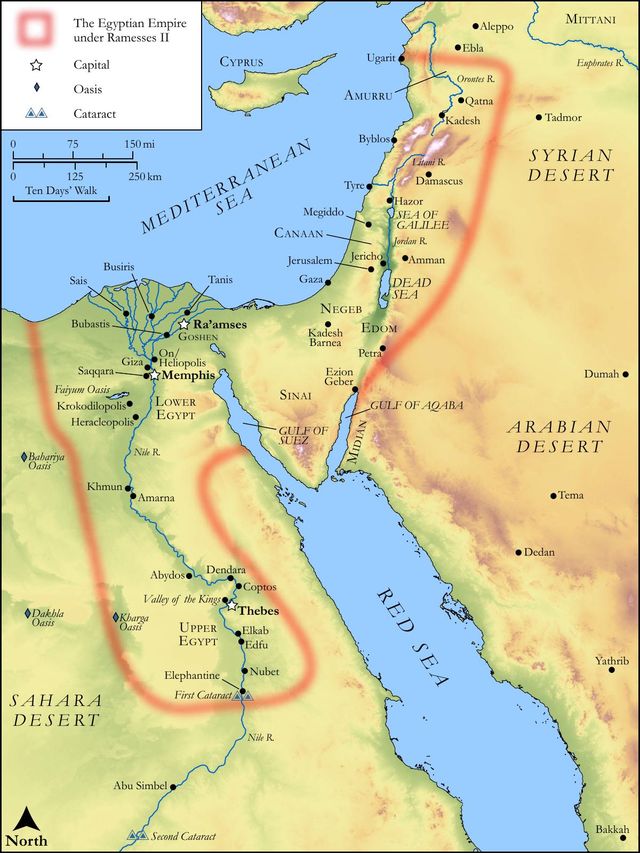
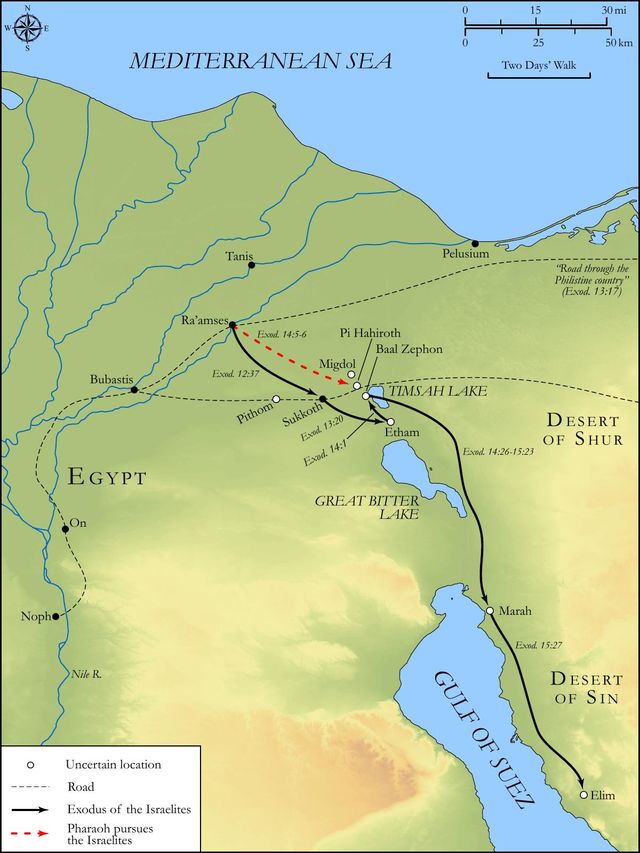
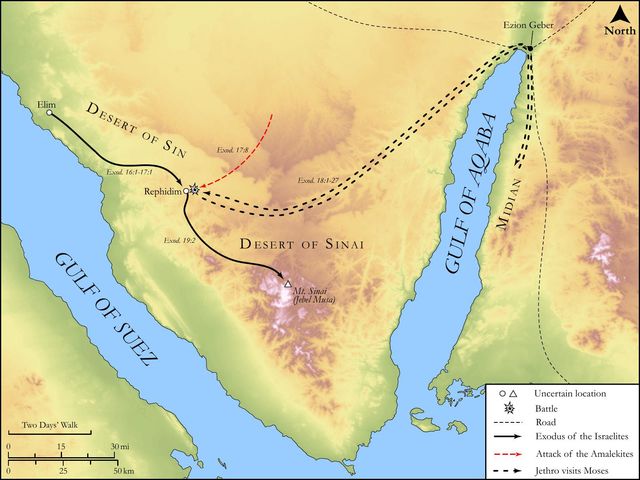
Study this verse
Public-domain commentary
Matthew Henry
From his Commentary on the Whole Bible. Henry comments on passages, not single verses — this entry covers Exodus 12:29–36. His four-level outline is real structure in the source text, so it is rendered as structure.
Here we have, I. The Egyptians' sons, even their first-born, slain, Exo 12:29, Exo 12:30. If Pharaoh would have taken the warning which was given him of this plague, and would thereupon have released Israel, what a great many dear and valuable lives might have been preserved! But see what obstinate infidelity brings upon men. Observe, 1. The time when this blow was given: It was at midnight, which added to the terror of it. The three preceding nights were made dreadful by the additional plague of darkness, which might be felt, and doubtless disturbed their repose; and now, when they hoped for one quiet night's rest, at midnight was the alarm given. When the destroying angel drew his sword against Jerusalem, it was in the day-time (Sa2 24:15), which made it the less frightful; but the destruction of Egypt was by a pestilence walking in darkness, Psa 91:6. Shortly there will be an alarming cry at midnight, Behold, the bridegroom cometh. 2. On whom the plague fastened - on their first-born, the joy and hope of their respective families. They had slain the Hebrews' children, and now God slew theirs. Thus he visits the iniquity of the fathers upon the children; and he is not unrighteous who taketh vengeance. 3. How far it reached - from the throne to the dungeon. Prince and peasant stand upon the same level before God's judgments, for there is no respect of persons with him; see Job 34:29, Job 34:20. Now the slain of the Lord were many; multitudes, multitudes, fall in this valley of decision, when the controversy between God and Pharaoh was to be determined. 4. What an outcry was made upon it: There was a great cry in Egypt, universal lamentation for their only son (with many), and with all for their first-born. If any be suddenly taken ill in the night, we are wont to call up neighbours; but the Egyptians could have no help, no comfort, from their neighbours, all being involved in the same calamity. Let us learn hence, (1.) To tremble before God, and to be afraid of his judgments, Psa 119:120. Who is able to stand before him, or dares resist him? (2.) To be thankful to God for the daily preservation of ourselves and our families: lying so much exposed, we have reason to say, "It is of the Lord's mercies that we are not consumed."
II.God's sons, even his first-born, released; this judgment conquered Pharaoh, and obliged him to surrender at discretion, without capitulating. Men had better come up to God's terms at first, for he will never come down to theirs, let them object as long as they will. Now Pharaoh's pride is abased, and he yields to all that Moses had insisted on: Serve the Lord as you have said (Exo 12:31), and take your flocks as you have said, Exo 12:32. Note, God's word will stand, and we shall get nothing by disputing it, or delaying to submit to it. Hitherto the Israelites were not permitted to depart, but now things had come to the last extremity, in consequence of which,
1.They are commanded to depart: Rise up, and get you forth, Exo 12:31. Pharaoh had told Moses he should see his face no more; but now he sent for him. Those will seek God early in their distress who before had set him at defiance. Such a fright he was now in that he gave orders by night for their discharge, fearing lest, if he delayed any longer, he himself should fall next; and that he sent them out, not as men hated (as the pagan historians have represented this matter), but as men feared, is plainly discovered by his humble request to them (Exo 12:32): "Bless me also; let me have your prayers, that I may not be plagued for what is past, when you are gone." Note, Those that are enemies to God's church are enemies to themselves, and, sooner or later, they will be made to see it.
2.They are hired to depart by the Egyptians; they cried out (Exo 12:33), We be all dead men. Note, When death comes into our houses, it is seasonable for us to think of our own mortality. Are our relations dead? It is easy to infer thence that we are dying, and, in effect, already dead men. Upon this consideration they were urgent with the Israelites to be gone, which gave great advantage to the Israelites in borrowing their jewels, Exo 12:35, Exo 12:36. When the Egyptians urged them to be gone, it was easy for the to say that the Egyptians had kept them poor, that they could not undertake such a journey with empty purses, but, that, if they would give them wherewithal to bear their charges, they would be gone. And this the divine Providence designed in suffering things to come to this extremity, that they, becoming formidable to the Egyptians, might have what they would, for asking; the Lord also, by the influence he has on the minds of people, inclined the hearts of the Egyptians to furnish them with what they desired, they probably intending thereby to make atonement, that the plagues might be stayed, as the Philistines, when they returned the ark, sent a present with it for a trespass-offering, having an eye to this precedent, Sa1 6:3, Sa1 6:6. The Israelites might receive and keep what they thus borrowed, or rather required, of the Egyptians,
(1.)As justly as servants receive wages from their masters for work done, and sue for it if it be detained.
(2.)As justly as conquerors take the spoils of their enemies whom they have subdued; Pharaoh was in rebellion against the God of the Hebrews, by which all that he had was forfeited.
(3.)As justly as subjects receive the estates granted to them by their prince. God is the sovereign proprietor of the earth, and the fulness thereof; and, if he take from one and give to another, who may say unto him, What doest thou? It was by God's special order and appointment that the Israelites did what they did, which was sufficient to justify them, and bear them out; but what they did will by no means authorize others (who cannot pretend to any such warrant) to do the same. Let us remember,
[1.]That the King of kings can do no wrong.
[2.]That he will do right to those whom men injure, Psa 146:7. Hence it is that the wealth of the sinner often proves to be laid up for the just, Pro 13:22; Job 27:16, Job 27:17.
Continue studying Exodus 12:34 across the web’s major study libraries — every link below opens this exact verse, chapter, or book on the destination site.
Read & Compare
 BibleGatewayThis verse in more than 200 translations and 70 languages.
 Bible.comThe YouVersion reader — hundreds of translations, reading plans, and highlights.
 ESV.orgCrossway's official English Standard Version reader.
 NET BibleThe NET translation with 60,000+ translators' notes on every rendering decision.
 STEP BibleTyndale House's free study tool — original text, vocabulary, and scholarly resources.
 BibliaLogos Bible Software's free web reader.
 USCCBThe New American Bible (Revised Edition) with the U.S. bishops' study notes.
Commentaries
 BibleHub CommentariesDozens of classic commentaries on this verse, gathered on one page.
 StudyLightMore than 100 commentary sets — the largest collection on the web.
 BibleRefPlain-English commentary on what this verse means, verse by verse.
 Enduring WordDavid Guzik's free commentary on this chapter, widely used by Bible teachers.
 Bible Study ToolsVerse commentary alongside Greek and Hebrew study aids.
Original Language & Research
- BibleHub InterlinearThe verse word by word — original language, transliteration, and English.
- BibleHub LexiconEvery word's original-language definition and Strong's entry.
 Blue Letter BibleDeep-study tools — Strong's numbers, concordance, and word studies.
 SefariaThe Hebrew text with Rashi and centuries of Jewish commentary.
Sermons, Hymns & Audio


TrulyRandomVerse is not affiliated with these sites and doesn’t control their content. They’re linked because they’re genuinely useful.
Summary
Exodus 12:34 vividly captures the Israelites' urgent and divinely orchestrated departure from Egypt, portraying them carrying their raw, unleavened dough in kneadingtroughs wrapped in their garments upon their shoulders. This scene underscores the extreme haste of their liberation, emphasizing God's decisive intervention and the people's immediate obedience, which left no time for the normal process of bread preparation, marking a pivotal moment in their exodus.
Context
ShowHideLiterary Context
This verse immediately follows Pharaoh's desperate command for the Israelites to leave Egypt after the devastating tenth plague, the death of the firstborn, as detailed in Exodus 12:31-33. It depicts the practical, chaotic, yet divinely directed implementation of their exodus. The specific detail of the unleavened dough directly connects to the Passover instructions given earlier in Exodus 12:8, which mandated the eating of unleavened bread. The scene described in Exodus 12:34 sets the stage for the full account of their departure and the subsequent institution of the Feast of Unleavened Bread, reiterated in Exodus 12:39. This verse serves as a bridge, showing the transition from the night of the plague to the actual journey.
Historical & Cultural Context
In Egypt and in Israel, bread was a fundamental staple, and its preparation was a daily, time-consuming ritual involving the fermentation (leavening) of dough. The detail of the Israelites taking their dough "before it was leavened" highlights the unprecedented urgency of their departure, which was not a planned migration but a forced expulsion by a terrified Pharaoh. "Kneadingtroughs" (Hebrew: mish'erot) were essential household items, often substantial, portable bowls used for mixing and proofing dough. The act of binding these bulky items in their clothes and carrying them on their shoulders signifies a desperate, improvised flight, leaving behind all but the most immediate necessities. This cultural detail underscores the complete disruption of normal life and the miraculous, sudden nature of their liberation, a moment intended to be remembered perpetually through the Feast of Unleavened Bread, as commanded in Exodus 13:6-7.
Key Themes
ShowHideExodus 12:34 contributes significantly to several major theological and narrative themes within the book of Exodus and the broader Pentateuch. Foremost among these is the theme of Divine Sovereignty and Deliverance, demonstrating God's absolute power to fulfill His promises and deliver His people decisively, even compelling their oppressors to facilitate their escape. It also highlights the theme of Human Obedience and Faith, as the Israelites respond immediately to the divine imperative, trusting God's provision despite the uncertainty of their journey. The detail of the unleavened dough introduces the powerful theme of New Beginnings and Purity, symbolizing a clean break from the old life of slavery and the commencement of a new, consecrated existence with God. This symbolism of unleavened bread, or matzah, becomes a central motif for the Passover and the Feast of Unleavened Bread, echoing throughout the biblical narrative as a reminder of God's redemptive work and the call to spiritual purity, as seen in later instructions in Leviticus 23:6.
Exposition and Analysis
ShowHideExodus 12:34 provides a precise, almost photographic detail of the Israelites' departure, emphasizing the divine urgency and human response.
Key Word Analysis
ShowHideThis term refers to the unbaked mixture of flour and water. Its presence here, specifically "before it was leavened," underscores the extreme haste of the departure. It signifies the raw, unprepared state of their provisions, highlighting that there was no time for the normal, leisurely process of bread-making. This raw dough becomes a symbol of their immediate, unadorned response to God's command to leave.
This word describes dough that has fermented and risen. The phrase "before it was leavened" is crucial, signifying not just speed but also the symbolic purity associated with unleavened bread (matzah). The inability for the dough to rise speaks to the immediate, non-negotiable nature of God's command and their deliverance, which allowed no delay for the natural process of fermentation.
These were the vessels used for mixing and kneading dough, often substantial and made of wood or earthenware. The fact that they carried these, along with the raw dough, underscores their complete readiness to leave at a moment's notice, taking their most basic food provisions with them. It highlights the improvisation and the practical, immediate nature of their response to God's call, prioritizing survival essentials over comfort or convenience.
Verse Breakdown
ShowHide"And the people took their dough before it was leavened,"
This opening clause emphasizes the active participation of the Israelites in their own deliverance, even under duress. They didn't passively wait; they acted immediately upon Pharaoh's command, which was itself a result of God's judgment. The raw state of the dough vividly illustrates the lack of time—there was no opportunity for the natural process of fermentation and baking. This detail impresses upon the reader the suddenness and overwhelming urgency of God's command and Pharaoh's desperate expulsion.
"their kneadingtroughs being bound up in their clothes upon their shoulders."
This second clause paints a vivid picture of extreme haste and improvisation. Instead of baking bread for the journey, they packed the raw dough in its mixing bowls. Wrapping these bulky troughs in their garments and hoisting them onto their shoulders was a practical, albeit awkward, solution for transporting their most essential food source. This imagery powerfully conveys the chaotic yet divinely directed nature of their exodus, where every moment counted, and every action reflected a desperate scramble for freedom.
Literary Devices
ShowHideThe verse employs vivid imagery and concrete detail to convey abstract concepts of divine urgency and human response. The visual of people carrying raw dough and cumbersome kneadingtroughs on their shoulders is a powerful metaphor for sudden liberation, the complete disruption of normal life, and the immediate, sometimes inconvenient, demands of divine obedience. The "unleavened dough" itself functions as a metonymy, where a specific detail stands for the entire hasty departure and the new, purified life it inaugurates. The synecdoche of "shoulders" (H7926, shᵉkem) representing the act of carrying burdens further emphasizes the physical strain and immediate action required.
Theological and Thematic Connections
ShowHideExodus 12:34 is rich with theological significance, revealing profound truths about God's character, human response, and the nature of salvation. It underscores God's absolute sovereignty and His power to orchestrate events, even compelling their oppressors, to fulfill His covenant promises. The Israelites' immediate, albeit chaotic, obedience highlights the necessity of faith and responsiveness to divine calls, even when circumstances are uncertain. The symbolism of the unleavened dough, born out of haste, becomes a perpetual memorial, signifying a clean break from the old life of bondage and the commencement of a new, purified walk with God as His redeemed people. This theme of leaving behind the "old leaven" for a new life is a recurring motif throughout scripture.
Cross-References:
Reflection and Application
ShowHideExodus 12:34 is not merely a historical detail but a profound reminder for believers today about the nature of God's call and our response. Just as the Israelites had to be prepared to move at a moment's notice, we are called to live with a spirit of readiness and responsiveness to God's will. This might involve a sudden shift in career, a call to ministry, or simply a daily willingness to step out in faith when God prompts, even if it disrupts our comfort or plans. Are we holding onto our "leavened dough"—our settled routines, our carefully laid plans, our comfort zones—when God is calling us to a swift, new journey? The symbolism of unleavened bread challenges us to consider what "leaven" (old habits, sins, worldly attachments, or spiritual complacency) we might need to purge from our lives. God's deliverance often calls for a decisive break from the past, embracing a new, purer walk with Him. This verse encourages us to shed anything that hinders our immediate and full obedience to Christ. Furthermore, the Israelites left with raw dough, trusting that God would provide for their sustenance. Similarly, when God calls us to a new path, it may involve uncertainty and a lack of complete preparation. This verse reminds us to trust in God's faithfulness to provide for us as we follow His leading, even when the future is unclear.
Questions for Reflection
ShowHideFAQ
ShowHideWhy didn't they just bake the bread quickly before leaving?
ShowHideBaking bread, even quickly, still requires time for the dough to rise (leaven) and then to bake thoroughly. The command from Pharaoh was immediate and absolute; the text states they "could not tarry" (Exodus 12:39). They were literally "thrust out" of Egypt, meaning there was no opportunity for the normal, time-consuming process of fermentation and baking. The urgency was paramount, reflecting God's swift and decisive deliverance, which left no room for leisurely preparation. Their departure was not a planned migration but an expulsion, demanding instant action.
What is the significance of "kneadingtroughs" being bound up in clothes?
ShowHideThis specific detail highlights the extreme haste and improvisation of their departure. Kneadingtroughs (Hebrew: mish'arot) were often large, heavy bowls used for preparing a family's daily bread, not typically items one would carry on a journey. Binding them in clothes and hoisting them onto shoulders indicates they took their most basic, essential provisions in the most practical, albeit unconventional, way possible. It signifies that they left everything else behind, demonstrating their readiness to obey God's command and their complete reliance on His provision for the journey ahead, even if it meant carrying awkward burdens.
Christ-Centered Fulfillment
ShowHideExodus 12:34, with its emphasis on sudden, decisive liberation and the unleavened bread, finds profound fulfillment and amplification in the person and work of Jesus Christ. The Exodus was a historical act of redemption, freeing Israel from physical slavery in Egypt, and it powerfully foreshadows the ultimate spiritual redemption accomplished by Jesus Christ, who delivers humanity from the bondage of sin and death, as articulated in Romans 6:22. Just as the Israelites were "thrust out" of Egypt, believers are decisively freed from the dominion of darkness and transferred into the glorious kingdom of God's Son, as celebrated in Colossians 1:13. The unleavened bread of the Exodus, eaten in haste, points directly to Christ, who is our "Passover lamb... sacrificed for us" (1 Corinthians 5:7). He is also the true "bread of life" (John 6:35), whose body was broken to give life to the world. The urgency of the unleavened bread reflects the immediate and decisive nature of the salvation offered through Christ; there is no time for delay or for the "leaven" of sin to corrupt our response. The symbolism of leaving the "leaven" of Egypt behind is fully realized in the New Covenant. Through Christ, believers are called to be a "new creation" (2 Corinthians 5:17), leaving behind the "old leaven" of malice, wickedness, and sin. The purity and sincerity associated with unleavened bread become a spiritual reality for those who walk in Christ, signifying a life set apart from the corruption of the world and dedicated to truth and holiness (1 Corinthians 5:8). The call to immediate obedience and decisive break from the past, seen in Exodus 12:34, is echoed in the gospel's call to repent and believe, entering a new life in Christ without delay or reservation.