


Old Testament · Poetry and Wisdom · Book 19 of 66
Psalms
Israel’s prayers and praises to the LORD: a hundred and fifty psalms in five books, from Moses’ day to the captivity.
- 150 chapters
- 2,461 verses
- About 3.3 hours to read
The Psalms are a hundred and fifty prayers and songs: Scripture given by God, and words addressed to him. Many are tied by their titles to a day in a life, as when David “fled from Absalom his son” (Psalm 3:1) or when “Nathan the prophet came unto him” (51:1). Others speak for the whole people, down to the captives who sat “by the rivers of Babylon” (137:1).
Two psalms stand at the door: Psalm 1 blesses the man whose “delight is in the law of the LORD” (1:2), and Psalm 2 sets the LORD’s anointed king on Zion. The law and the king return throughout. Watch also for the LORD’s mercy, named in every verse of Psalm 136, and for the turn from complaint to praise. Each of the first four books closes with a blessing of the LORD, and the last verse calls on “every thing that hath breath” to praise the LORD (150:6).
A Psalm of David. The LORD is my shepherd; I shall not want.
Psalms 23:1 KJV
Before you read
- Who wrote it
- By the psalms’ own titles: David 73, Asaph 12, the sons of Korah 11, Solomon 2, and Moses, Heman and Ethan one each; Psalm 88 carries two names. Fifty name no writer, and the New Testament gives two of these to David (Acts 4:25; Hebrews 4:7).
- When it was written
- From “A Prayer of Moses the man of God” (90:1), through David’s flight from Saul and from Absalom (57:1; 3:1), to the captivity (137:1). Hippolytus gives the tradition:
Esdra, as tradition says, having collected in one volume, after the captivity, the psalms of several
. - To whom
- Israel at worship: fifty-five titles commit the psalm “To the chief Musician”, and Psalms 120 to 134 are each “A Song of degrees” (120:1).
How Psalms is laid out
5 movements · 533 passages · 2,461 verses
Two doors, then David’s prayers
Psalms 1–41 · 616 verses
Two untitled psalms open the book: the blessed man who delights in the law of the LORD, and the LORD’s anointed king on Zion. Every titled psalm after them names David, several from his troubles. Psalm 22 begins “why hast thou forsaken me?”, Psalm 23 follows with the shepherd, and a doxology closes this first book.
41 psalms
- 1 The Way of the Righteous
- 2 The Rebellion of the Nations
- 3 The Crisis and the Taunt
- 4 A Plea for Righteous Vindication
- 5 A Morning Prayer for Divine Attention
- 6 A Plea for Mercy and Relief from Judgment
- 7 A Prayer of Deliverance and Trust
- 8 God's Excellent Name and Glory
- 9 Praising God for Victory and Justice
- 10 A Cry Against the Wicked Oppressor
- 11 Trust in the Lord Amidst Danger
- 12 A Plea Amidst Deceitful Men
- 13 The Cry of Abandonment
- 14 The Fool's Rejection of God
- 15 Who Shall Abide in the LORD's Tabernacle
- 16 Refuge in the LORD Alone
- 17 Plea for a Just Hearing (Vv. 1-5)
- 18 Invocation and Declaration of Trust
- 19 God's Glory Revealed in Creation
- 20 A Prayer for the King’s Deliverance
- 21 Thanksgiving for the King's Deliverance
- 22 The Cry of Abandonment
- 23 The LORD, My Shepherd
- 24 God's Ownership of Creation
- 25 A Prayer for Guidance and Protection
- 26 Plea for Vindication and Judgment
- 27 Confidence in God, Light and Salvation
- 28 A Cry for Deliverance and Judgment
- 29 Call to Worship and Ascribe Glory
- 30 Praise for God's Rescue from Death
- 31 A Plea for Righteous Deliverance
- 32 The Joy of Forgiveness
- 33 Call to Joyful Praise
- 34 Commitment to Perpetual Praise
- 35 Prayer for God, the Divine Warrior
- 36 The Depravity of the Wicked
- 37 Do Not Fret, But Trust the Lord
- 38 The Burden of Sin and Illness
- 39 The Struggle for Silence
- 40 I Waited Patiently for the Lord
- 41 The Blessings of Compassion for the Afflicted
The thirsting soul and the king
Psalms 42–72 · 465 verses
The sons of Korah open it, thirsting for God “as the hart panteth after the water brooks.” Psalm 45 sings the king whose throne is for ever. Here the name God largely replaces the LORD: Psalm 53 repeats Psalm 14 that way. Psalm 72 prays for the king’s son, and “the prayers of David the son of Jesse are ended.”
31 psalms
- 42 As the Deer Pants for Water
- 43 Plea for Vindication and Deliverance
- 44 Remembering God's Past Deliverance
- 45 Praise for the King's Glory and Power
- 46 God, Our Refuge in Cosmic Chaos
- 47 Call to Universal Worship
- 48 Great is the Lord in Zion
- 49 A Universal Call to Hear Wisdom
- 50 The Divine Judge Summons the World
- 51 A Humble Plea for Mercy and Cleansing
- 52 The Wicked Boaster Condemned
- 53 The Fool's Denial and Universal Corruption
- 54 David's Prayer in Distress
- 55 A Prayer for Deliverance from Distress
- 56 Plea for Mercy Amidst Oppression
- 57 A Prayer for Refuge Under God's Wings
- 58 The Corruption of Earthly Judges
- 59 A Cry for Deliverance from Treacherous Enemies
- 60 Lament and Plea for Restoration
- 61 A Prayer for Refuge in Distress
- 62 God Alone Is My Salvation
- 63 Longing for God in the Wilderness
- 64 Prayer for Deliverance from Secret Enemies
- 65 Praise, Atonement, and Access to God
- 66 Call to Universal Worship for God's Works
- 67 Prayer for Divine Blessing and Light
- 68 The Battle Cry and Prayer for Victory
- 69 Overwhelmed by Deep Waters
- 70 An Urgent Prayer for Deliverance
- 71 Prayer for Refuge and Deliverance
- 72 Prayer for the King's Righteous Rule
The sanctuary and David’s crown
Psalms 73–89 · 358 verses
Asaph opens it, envious at “the prosperity of the wicked” until he went into the sanctuary. Psalms 74 and 79 mourn that sanctuary burned and Jerusalem laid on heaps. Psalm 89 recites the LORD’s oath to David, then sees his throne cast down to the ground, and the third doxology follows.
17 psalms
- 73 The Psalmist's Initial Struggle
- 74 A Lament Over God’s Abandonment
- 75 Thanksgiving and God's Righteous Judgment
- 76 God Is Known in Judah and Zion
- 77 A Cry of Deep Distress
- 78 A Call to Hear God's Law
- 79 Jerusalem and Temple Desecrated
- 80 Invocation and Plea for Restoration
- 81 Call to Joyful Worship
- 82 God Judges the Divine Council
- 83 The Psalmist Cries for God's Intervention
- 84 Longing for the House of God
- 85 Remembering God's Past Deliverance
- 86 Plea for Mercy and Protection
- 87 Zion: The City God Loves
- 88 Superscription and Invocation
- 89 A Commitment to Praise God's Faithfulness
The LORD reigneth
Psalms 90–106 · 321 verses
Moses’ prayer opens it: “Lord, thou hast been our dwelling place in all generations.” Psalms 93, 97 and 99 begin “The LORD reigneth.” Psalm 104 sings creation; 105 and 106 retell Israel’s history, the LORD’s faithfulness and the people’s rebellion, ending with the plea “gather us from among the heathen” and the fourth doxology.
17 psalms
- 90 God, Our Eternal Refuge
- 91 The Security of Dwelling in the Most High
- 92 A Call to Worship and Thanksgiving
- 93 The LORD Reigns in Majesty
- 94 Plea for Divine Vengeance and Justice
- 95 Call to Joyful Worship and Adoration
- 96 A Call to Universal Praise and Mission
- 97 The Lord Reigns in Majesty
- 98 God's Victory and Universal Salvation
- 99 The LORD Reigns in Holiness
- 100 A Universal Call to Worship
- 101 The King’s Vow of Justice and Mercy
- 102 A Prayer of the Afflicted and Overwhelmed
- 103 Bless the Lord, O My Soul
- 104 God's Transcendent Majesty
- 105 Call to Worship and Remembrance
- 106 Introduction: A Call to Praise and Prayer
Praise ye the LORD
Psalms 107–150 · 701 verses
It opens with thanks from the redeemed, gathered out of the lands, as the fourth book’s last psalm had prayed. Psalm 110 seats David’s Lord at the LORD’s right hand, Psalm 119 praises the law through the Hebrew alphabet, and fifteen Songs of degrees follow. Psalms 146 to 150 each begin and end “Praise ye the LORD.”
44 psalms
- 107 Call to Praise the Redeeming Lord
- 108 A Heart Fixed on God's Praise
- 109 Complaint Against Deceitful Enemies
- 110 The LORD Exalts the Messianic King
- 111 Praise for the LORD's Great Works
- 112 The Blessedness of Fearing the Lord
- 113 Call to Universal and Eternal Praise
- 114 God Leads Israel from Egypt
- 115 A Plea for God's Glory
- 116 A Declaration of Love for the LORD
- 117 Call to Universal Praise
- 118 Call to Universal Thanksgiving
- 119 ALEPH: The Blessing of Walking in God's Law
- 120 A Cry for Deliverance
- 121 The Pilgrim Looks Upward
- 122 Joyful Arrival in Jerusalem
- 123 Looking Up to the Lord in Heaven
- 124 If the Lord Had Not Been on Our Side
- 125 The Permanent Security of the Faithful
- 126 Joyful Remembrance of Restoration
- 127 God Must Establish the Work
- 128 The Blessings of Fearing the Lord
- 129 Israel's Endurance Through Affliction
- 130 A Cry from the Depths
- 131 David's Declaration of Humility
- 132 David's Vow to Find God's Dwelling
- 133 The Joy and Blessing of Communal Unity
- 134 The Servants' Call to Bless and the Benediction
- 135 Call to Praise in the Temple
- 136 Call to Thank the Supreme Lord
- 137 Sorrow and Silence in Babylonian Exile
- 138 Personal Vow of Thanksgiving
- 139 God's Omniscience
- 140 Prayer for Deliverance from Treacherous Enemies
- 141 Invocation and Prayer as Sacrifice
- 142 A Desperate Cry from the Cave
- 143 Appeal to God's Faithfulness and Righteousness
- 144 Praise for the Divine Warrior
- 145 A Vow of Eternal Praise
- 146 Call to Praise and Lifelong Commitment
- 147 Call to Praise the Compassionate God
- 148 Call to the Heavenly Hosts
- 149 A Call to Joyful Praise
- 150 Where and Why to Praise God
The words Psalms turns on
Three words from its titles, psalm, prayer and praise, and three it keeps returning to: mercy, law and the anointed.
What Psalms teaches
chêçêd · mercy
His mercy endureth for ever
The word the KJV renders “mercy” and “lovingkindness”, chêçêd, stands in 127 verses of the Psalms, out of 241 in all Scripture. It is the LORD’s covenant faithfulness, part of the name he proclaimed to Moses (Exodus 34:6–7), and David gives that name back to him: “The LORD is merciful and gracious, slow to anger, and plenteous in mercy” (103:8). Psalm 136 closes all 26 of its verses with “for his mercy endureth for ever” (136:1–26). When David’s throne falls, Psalm 89 holds the LORD to his sworn mercy: “Lord, where are thy former lovingkindnesses, which thou swarest unto David in thy truth?” (89:49)
tᵉhillâh · praise
From the cry to praise
Many psalms begin where the sufferer stands: “How long wilt thou forget me, O LORD? for ever?” (13:1). The same psalm ends five verses later, “I will sing unto the LORD, because he hath dealt bountifully with me” (13:6). Psalm 22 goes from “why hast thou forsaken me?” to “My praise shall be of thee in the great congregation” (22:25), because “when he cried unto him, he heard” (22:24). The complaint is taken to the God who inhabits “the praises of Israel” (22:3), so lament in the Psalms is already faith, spoken to the one who answers.
mâshîyach · anointed
The LORD and his anointed
Psalm 2 sets out the conflict: the rulers take counsel “against the LORD, and against his anointed” (2:2), and the LORD answers, “Yet have I set my king upon my holy hill of Zion” (2:6). The anointed is David and his seed for evermore (18:50). Psalm 89 recites the oath, “Thy seed will I establish for ever” (89:4), then finds the throne cast down. Psalm 110 sees a king at the LORD’s right hand who is also “a priest for ever after the order of Melchizedek” (110:4), though no king of David’s house was allowed to be both (2 Chronicles 26:18).
Christ in Psalms
The risen Lord said that all things must be fulfilled “which were written in the law of Moses, and in the prophets, and in the psalms, concerning me” (Luke 24:44). The apostles preached them so. Peter read Psalm 16 as David speaking “of the resurrection of Christ” (Acts 2:31), and Paul read Psalm 2’s “Thou art my Son, this day have I begotten thee” of the resurrection too (Acts 13:33). Jesus asked how David, in Psalm 110, could “in spirit call him Lord” (Matthew 22:43) if the Christ were only his son, and Hebrews reads the same psalm of his priesthood (Hebrews 5:6).
On the cross he prayed the Psalms: the first words of Psalm 22 (Matthew 27:46), and at the last Psalm 31:5 (Luke 23:46). Hebrews puts the praise of Psalm 22 in his mouth as well: “I will declare thy name unto my brethren” (Hebrews 2:12).
People
By how many verses name them
- DavidSon of Jesse86
- JacobSon of Isaac and Rebekah; a brother of Esau36
- AsaphA son of Berechiah; father of Zaccur, Joseph, Nethaniah and Asharelah12
- KorahSon of Izhar; a brother of Nepheg, Zichri and Shelomith11
- AaronSon of Amram and Jochebed; a brother of Moses and Miriam; husband of Elisheba9
- MosesSon of Amram and Jochebed; a brother of Aaron and Miriam; husband of Zipporah8
- EphraimSon of Joseph and Asenath; a brother of Manasseh5
- JosephSon of Israel and Rachel; a brother of Benjamin5
39 more are named.
Places
54 named
- ZionThe LORD’s chosen dwelling, the hill where he sets his king33
- JerusalemThe city of the sanctuary, laid on heaps in Psalm 7917
- EgyptThe plagues and the exodus, retold in Psalms 78 and 10515
- EdomRemembered for urging Jerusalem’s ruin on the day it fell6
- BashanIts bulls and its high hill, figures of strength5
- LebanonIts cedars, planted by the LORD and broken by his voice5
- Red SeaDivided and dried up before Israel, in the retold exodus5
- BabylonWhere the captives sat down and wept, remembering Zion3
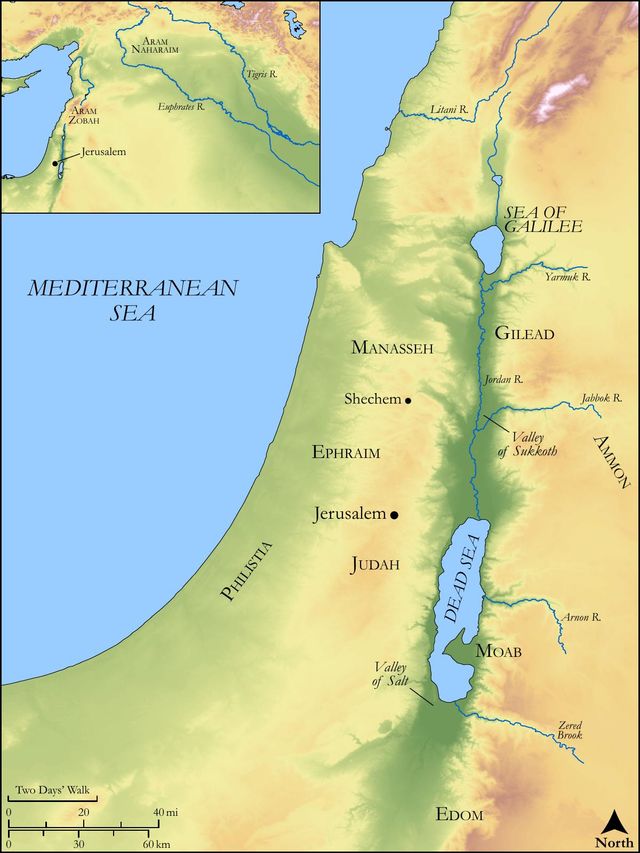
Where Psalms reaches
The passages it leans on, and the ones that lean on it
The same song of deliverance, under the same heading, in the history of David’s reign.
Psalms 2:7 Acts 13:33 Hebrews 1:5
The decree to the Son, read of the resurrection and of the Son above the angels.
Psalms 22:1 Matthew 27:46 Hebrews 5:7
The cry from the cross, and prayers offered “with strong crying and tears” and heard.
Psalms 110:1 Matthew 22:44 Hebrews 1:13
David’s Lord at the right hand: Jesus’ question to the Pharisees, and the Son above the angels.
Psalms 118:22 Matthew 21:42 Acts 4:11
The stone the builders refused, applied by Jesus to himself and by Peter before the council.
Books Psalms links to most
The Church Fathers on Psalms
4,840 quotations from 83 writers before AD 800 · the ten most quoted, in date order
- Origen253
- Eusebius339
- Basil379
- Diodorus390
- Ambrose397
- Chrysostom407
- Jerome420
- Augustine430
- Theodoret458
- Cassiodorus585
Basil read Psalm 1 as the foundation laid under the whole book.
Like the foundation in a house, the keel in a ship and the heart in a body, so is [Psalm 1 as a] brief introduction to the whole structure of the Psalms.
Hippolytus records the Hebrew division into five books, each closed by a blessing.
… the Hebrews also divided the Psalter into five books, so that it might be another Pentateuch. … For they judged that each psalm closing with the words, "Blessed be the Lord, Amen, amen," formed the conclusion of a book.
Jerome kept it one volume, as the apostles named it, and took its writers from the titles.
And we, the authority of the Hebrews being followed, and especially of the Apostles, who always in the New Testament name the Book of Psalms, have asserted one volume. We also testify of all the authors who are set down in the titles of their psalms … which Ezra compiled into one volume.
Augustine heard Christ and his Church praying the Psalms with one voice.
Christ, then, and the Church, that is, whole Christ, the Head and the Body, says here, "I will love You, O Lord, My strength" [Psalm 18:1]. I will love You, O Lord, by whom I am strong.
Keep studying
Articles