


Matthew 21:42
Bible text: King James Version (1769 Blayney text) · Public domain
Bible text: King James Version with Strong's numbers · Public domain
Bible text: Berean Standard Bible · Public domain
Bible text: American Standard Version (1901) · Public domain
Bible text: World English Bible, Messianic edition · Public domain
Bible text: Geneva Bible (1599) · Public domain
Bible text: Young's Literal Translation · Public domain
- ΛέγειLegeiSaysG3004V-PAI-3SVerb Present Active Indicative 3rd Singular
- αὐτοῖςautoisto themG846P-DPMPersonal pronoun Dative Plural Masculine
- ὁho<the>G3588T-NSMDefinite article Nominative Singular Masculine
- Ἰησοῦς·IēsousJesusG2424N-NSM-PNoun Nominative Singular Masculine Individual
- οὐδέποτεoudepotesurely sometimeG3763ADV-NAdverb or adverb and particle combined Negative
- ἀνέγνωτεanegnōteyou did readG314V-2AAI-2PVerb 2nd Aorist Active Indicative 2nd Plural
- ἐνeninG1722PREPPreposition
- ταῖςtaistheG3588T-DPFDefinite article Dative Plural Feminine
- γραφαῖς·graphaisScripturesG1124N-DPFNoun Dative Plural Feminine
- λίθονlithon[The] stoneG3037N-ASMNoun Accusative Singular Masculine
- ὃνhonwhichG3739R-ASMRelative pronoun Accusative Singular Masculine
- ἀπεδοκίμασανapedokimasanrejectedG593V-AAI-3PVerb Aorist Active Indicative 3rd Plural
- οἱhoithoseG3588T-NPMDefinite article Nominative Plural Masculine
- οἰκοδομοῦντεςoikodomountesbuildingG3618V-PAP-NPMVerb Present Active Participle Nominative Plural Masculine
- οὗτοςhoutosthisG3778D-NSMDemonstrative pronoun Nominative Singular Masculine
- ἐγενήθηegenēthēhas becomeG1096V-2AOI-3SVerb 2nd Aorist Passive Deponent Indicative 3rd Singular
- εἰςeistheG1519PREPPreposition
- κεφαλὴνkephalēnchiefG2776N-ASFNoun Accusative Singular Feminine
- γωνίαςgōniascornerG1137N-GSFNoun Genitive Singular Feminine
- παρὰparaFromG3844PREPPreposition
- κυρίουkuriou[the] LordG2962N-GSM-TNoun Genitive Singular Masculine Title
- ἐγένετοegenetowasG1096V-2ADI-3SVerb 2nd Aorist Middle Deponent Indicative 3rd Singular
- αὕτηhautēthisG3778D-NSFDemonstrative pronoun Nominative Singular Feminine
- καὶkaiandG2532CONJConjunction
- ἔστινestinit isG1510V-PAI-3SVerb Present Active Indicative 3rd Singular
- θαυμαστὴthaumastēmarvelousG2298A-NSFAdjective Nominative Singular Feminine
- ἐνeninG1722PREPPreposition
- ὀφθαλμοῖςophthalmois[the] eyesG3788N-DPMNoun Dative Plural Masculine
- ἡμῶν;hēmōnof us?’G3165P-1GPPersonal pronoun Genitive 1st Plural
English is a literal word-by-word gloss of the Greek, not the KJV's wording. Why?
This is the original text the KJV's translators worked from — each Greek word with its own literal English meaning in this verse, prepared by scholars at Tyndale House, Cambridge. The KJV translates whole sentences, not word by word, so its wording differs: one Greek word can become several English words, and the KJV may choose “charity” where the gloss reads “love”. Both are faithful — they answer different questions. For the KJV's own rendering, switch to the KJV text.
Details
See on the biblical-era maps
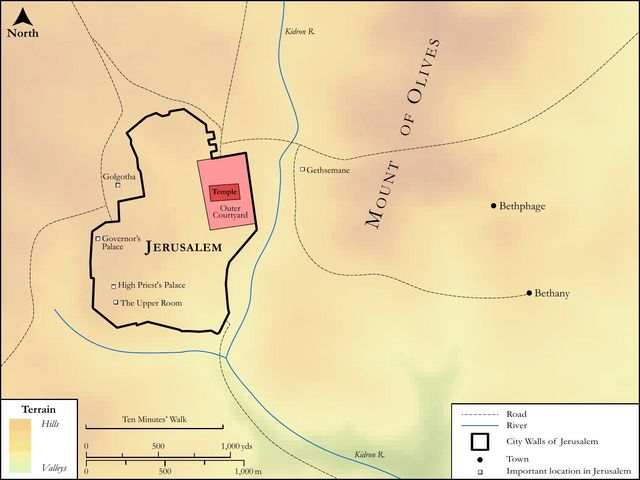
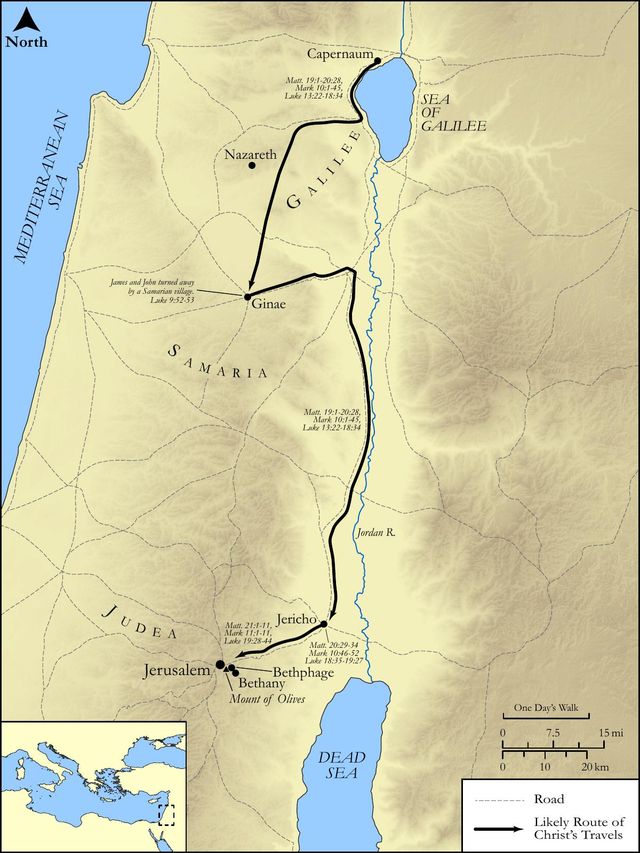
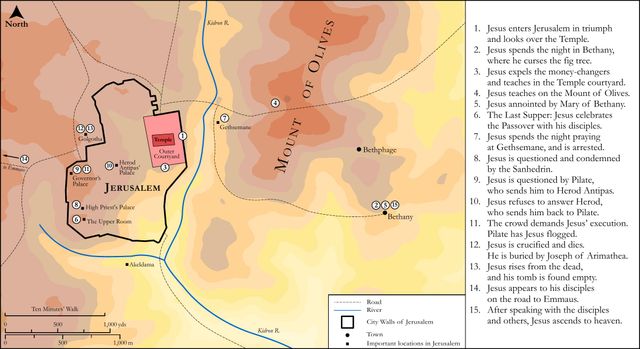
Study this verse
Historical interpretation
Ten Centuries of Reception
10 surviving comments on this verse. Each one is dated, so this reads as a timeline rather than a list.
Select a marker to jump to its quote. Markers stagger vertically where authors wrote within a few decades of each other.
That is, the stone is the gift of God to the whole building, and is wonderful in our eyes, who can discern it with the eyes of the mind.
Or, He set forth the Prophets as it were winepresses, into which an abundant measure of the Holy Spirit, as of new wine, might flow in a teeming stream.
Or, The tower is the eminence of the Law, which ascended from earth to heaven, and from which, as from a watch-tower, the coming of Christ might be spied. And let it out to husbandmen.
These more than the first who were sent, denote that time, when, after the preaching of single Prophets, a great number was sent forth together.
By the Son sent at last, is denoted the advent of our Lord.
Christ was cast out of Jerusalem, as out of the vineyard, to His sentence of punishment.
He is become the head of the corner, because He is the union of both sides between the Law and the Gentiles.
Then that they might learn that not only the nature of justice requires these things, but even from the beginning the grace of the Spirit had foretold them, and God had so decreed, He both added a prophecy, and reproves them in a way to put them to shame, saying, "Did ye never read, The stone which the builders rejected, the same is become the head of the corner? this is the Lord's doing, and it is marvellous in our eyes;" by all things showing, that they should be cast out for unbelief, and the Gentiles brought in. This He darkly intimated by the Canaanitish woman also; this again by the ass, and by the centurion, and by many other parables; this also now.
Wherefore He added too, "This is the Lord's doing, and it is marvellous in our eyes," declaring beforehand that the believing Gentiles, and as many of the Jews as should also themselves believe, shall be one, although the difference between them had been so great before.
Then, that they might learn that nothing was opposed to God's will of the things doing, but that the event was even highly acceptable, and beyond expectation, and amazing every one of the beholders (for indeed the miracle was far beyond words), He added and said, "It is the Lord's doing." And by the stone He means Himself, and by builders the teachers of the Jews; as Ezekiel also saith, "They that build the wall, and daub it with untempered mortar." But how did they reject Him? By saying, "This man is not of God;" "This man deceiveth the people;" and again, "Thou art a Samaritan, and hast a devil."
(Hom. lxviii.) The design of this further parable is to show that their guilt was heinous, and unworthy to be forgiven.
Or, it applies to His long-suffering, in that He did not always bring down immediate punishment on their sins.
(non occ. ap. Chrys.) He calls the Prophets servants, who as the Lord's Priests offer the fruits of the people, and the proofs of their obedience in their works. But they showed their wickedness not only in refusing the fruits, but in having indignation against those that come to them, as it follows, And the husbandmen took his servants, and beat one, and killed another, and stoned another.
Wherefore then did He not send Him immediately? That from what they had done to the others they might accuse themselves, and putting away their madness they might reverence His Son when He came.
Or He speaks as declaring what ought to be; they ought to reverence Him; thus showing that their sin was great, and void of all excuse.
Or there is no contradiction, because both are right; they first made answer in these words, and then the Lord repeated them.
Or otherwise: the Lord proposed this parable to them with this intent, that not understanding it they should give sentence against themselves; as was done by Nathan to David. Again, when they perceived the meaning of the things that had been said against them, they said, God forbid.
Christ is the stone, the builders are the Jewish teachers who rejected Christ, saying, This man is not of God. (John 9:16.)
And that they might know that nothing that had been done was against God's will, He adds, It is the Lord's doing.
Or, He here points out their twofold destruction; first in their stumbling and being offended at Him, signified in that, Whosoever shall fall upon this stone; the other in the captivity that should come upon them, signified by that, But upon whomsoever it shall fall.
(Verse 42.) Jesus said to them: Have you never read in the Scriptures: The stone which the builders rejected, the same has become the head of the corner? This is the Lord's doing, and it is marvelous in our eyes. (Psalm 118:22-23). Various parables and different teachings are woven into this story. For those whom he previously called workers, vine-dressers, and farmers, he now calls builders, that is, masons. Hence the Apostle says: You are God's field, you are God's building. (1 Corinthians 3:9). So just as bricklayers and vine-growers take possession of a vineyard, they also took possession of a stone, which they either place in the foundations, next to the architect Paul (Ibid.), or in the corner, to join together two walls, that is, both peoples (Ephesians 2), who were rejected by them, became the cornerstone. And this was done by the Lord, not by human strength, but by the power of God. Peter also confidently speaks of this stone of support: This stone, which was rejected by you builders, has become the cornerstone (1 Peter 2:7). And Isaiah said: Behold, I will send a chosen, precious, corner stone into the foundations of Zion: and he that believeth in him, shall not be confounded (Isa. II, 16).
He hath planted a vine of which Isaiah speaks, The vine of the Lord of Hosts is the house of Israel. (Isa. 5:7.) And hedged it round about; i. e. either the wall of the city, or the guardianship of Angels.
A winepress, that is to say, An altar; or those winepresses after which the three Psalms, the 8th, the 80th, and the 83d are entitleda, that is to say, the martyrs.
And built a tower therein, that is, the Temple, of which it is said by Micah, And thou, O cloudy tower of the daughter of Sion. (Mic. 4:8.)
Not a change of place, for God, by whom all things are filled, cannot be absent from any place; but He seems to be absent from the vineyard, that He may leave the vine-dressers a freedom of acting.
Beat them, as Jeremiah, killed them, as Isaiah, stoned them, as Naboth and Zacharias, whom they slew between the temple and the altar.
But when He says, They will reverence my Son, He does not speak as in ignorance. For what is there that this householder (by whom in this place God is intended) knows not? But God is thus spoken of as being uncertain, in order that free-will may be reserved for man.
Let us enquire of Arrius and Eunomius. See here the Father is said not to know somewhat. Whatever answer they make for the Father, let them understand the same of the Son, when He says that He knows not the day of the consummation of all things. (Mat. 22:36.)
The Lord asks them not as though He did not know what they would answer, but that they might be condemned by their own answer.
The same things are treated under various figures; whom above He called labourers and husbandmen, He now calls builders.
Whoso sinneth, yet believeth on Him, falls indeed upon a stone and is broken, yet is not altogether crushed, but is preserved to salvation through endurance. But on whomsoever it shall fall, that is, whomsoever this stone shall itself assault, and whosoever shall utterly deny Christ, it shall so crush him, that not a bone of him shall be left in which a drop of water could be taken up.
This He brings in because the Priests had asked not in order to learn, but to tempt Him. But of the common folk many had believed; and for that reason He brings forward the parable of the two sons, showing them therein that the common sort, who from the first professed secular lives, were better than the Priests who from the first professed the service of God, inasmuch as the people at length turned repentant to God, but the Priests impenitent, never left off to sin against God. And the elder son represents the people; because the people is not for the sake of the Priests, but the Priests are for the sake of the people.
He is called man, by title, not by nature; in a kind of likeness, not in verity. For the Son knowing that by occasion of His human name He himself should be blasphemed as though he were mere man, spoke therefore of the Invisible God the Father as man; He who by nature is Lord of Angels and men, but by goodness their Father.
Or, by the hedge understand the protection of the holy fathers, who were set as a wall round the people of Israel.
Or, the winepress is the word of God, which tortures man when it contradicts his fleshly nature.
When, that is, Priests and Levites were constituted by the Law, and undertook the direction of the people. And as an husbandman, though he offer to his Lord of his own stock, does not please him so much as by giving him the fruit of his own vineyard; so the Priest does not so much please God by his own righteousness, as by teaching the people of God holiness; for his own righteousness is but one, but that of the people manifold. And went into a far country.
At each step of their wickedness the mercy of God was increased, and at each step of the Divine mercy the wickedness of the Jews increased; thus there was a strife between human wickedness and Divine goodness.
He sent Him not as the bearer of a sentence of punishment against the guilty, but of an offer of repentance; He sent Him to put them to shame, not to punish them.
But some say, that it was after His incarnation, that Christ was called a Son in right of His baptism like the other saints, whom the Lord refutes by this place, saying, I will send my Son. Therefore when He thus meditated sending His Son after the Prophets, He must have been already His Son. Further, if He had been His Son in the same way as all the saints to whom the word of God was sent, He ought to have called the Prophets also His sons, as He calls Christ, or to call Christ His servant, as He calls the Prophets.
After His entry into the Temple, and having cast out those who sold the animals for the sacrifices, then they took counsel to kill Him, Come, let us kill him. For they reasoned among themselves, It will happen that the people hereby shall disuse the practice of sacrificing, which pertains to our gain, and shall be content to offer the sacrifice of righteousness, which pertains to the glory of God; and so the nation shall no more be our possession, but shall become God's. But if we shall kill Him, then there being none to seek the fruit of righteousness from the people, the practice of offering sacrifice shall continue, and so this people shall become our possession; as it follows, And the inheritance shall be ours. These are the usual thoughts of all worldly Priests, who take no thought how the people shall live without sin, but look to how much is offered in the Church, and esteem that the profit of their ministry.
That their answer is true, comes not of any righteous judgment in them, but from the case itself; truth constrained them.
Otherwise: Luke has given the answer of their lips, Matthew that of their hearts. For some made answer openly contradicting Him, and saying, God forbid, but their consciences took it up with He shall miserably destroy these wicked men. For so when a man is detected in any wickedness, he excuses himself in words, but his conscience within pleads guilty.
When they seemed discontent, He brings forward Scripture testimony; as much as to say, If ye understood not My parable, at least acknowledge this Scripture.
As much as to say, How do ye not understand in what building that stone is to be set, not in yours, seeing it is rejected, but in another; but if the building is to be other, your building will be rejected.
Christ is called A Stone, not only because of His strength, but because He mightily crushes His enemies; whence it follows, And whosoever shall fall on this stone shall be broken, and on whomsoever it shall fall, it shall grind him to powder.
It is one thing to be broken, and another to be ground to powder. Of what is broken there remains something; but what is ground to powder is as it were converted into dust. And what falls upon a stone is not broken by any power of the stone, but because it fell heavily, either by reason of its weight, or of its fall from a great height. So a Christian in sinning, perishes, but not to the utmost that Christ can destroy; but only so far as he destroys himself, either by the greatness of his sin, or by his exalted rank. But the unbelievers perish to the utmost that Christ can destroy them.
The season of fruit, He says, not of rent-paying, because this stiff-necked nation brings forth no fruit.
Or, the first servants who were sent were the Lawgiver Moses himself, and Aaron the first Priest of God; whom, having beaten them with the scourge of their tongue, they sent away empty; by the other servants understand the company of the Prophets.
By what they say, This is the Son, He manifestly proves that the rulers of the Jews crucified the Son of God, not through ignorance, but through jealousy. For they understood that it was He to whom the Father speaks by the Prophet, Ask of me, and I shall give thee the heathen for thine inheritance (Ps. 2:8.) The inheritance given to the Son is the holy Church; an inheritance not left Him by His Father when dying, but wonderfully purchased by His own death.
Or, The Jews endeavoured by putting Him to death to seize upon the inheritance, when they strove to overthrow the faith which is through Him, and to substitute their own righteousness which is by the Law, and therewith to imbue the Gentiles. It follows, And they caught him, and cast him out of the vineyard, and slew him.
Morally; a vineyard has been let out to each of us to dress, when the mystery of baptism was given us, to be cultivated by action. Servants one, two, and three are sent us when Law, Psalm, and Prophecy are read, after whose instructions we are to work well. He that is sent is beaten and cast out when the word is contemned, or, which is worse, is blasphemed. He kills (as far as in him lies) the heir, who tramples under foot the Son, and does despite to the Spirit of grace. The wicked husbandman is destroyed, and the vineyard is given to another, when the gift of grace which the proud has contemned is given to the lowly.
But despite of their displeasure, the same stone furnished the head stone of the corner, for out of both nations He has joined by faith in Him as many as He would.
The stone means Christ Himself; the builders are the teachers of the Jews who rejected Him as if He were useless, saying, "Thou art a Samaritan and hast a demon." But when He rose from the dead, He was set in place as the head of the corner, that is, He became the head of the Church, joining Jews and Gentiles in one faith. For as the stone which forms the corner of a building makes continuous the walls leading to and from it, so Christ has bound all together in one faith. This corner is marvelous, and is the Lord’s doing. [See Ps.117:22-23] For the Church which connects us and makes us one in faith is the Lord’s doing, and is worthy of all wonder, so well is it built. And in another sense is it marvelous, because the Word of Christ has been confirmed and substantiated by marvels, that is, miracles, so that the composition of the Church is marvelous. The kingdom of God, that is, closeness with God, has been taken from the Jews and given to those who believed. Those who stumble against the Rock of Christ and take offence at Him will not only be crushed at the second coming, but already here in this life they have been scattered like powder by Christ. They have been scattered over all the earth, as we now see the pitiable Jews to be. Understand that he who is crushed to powder to be scattered is dispersed abroad and scattered in diaspora.
(ord.) Or, the Lord whom they killed, came immediately rising from the dead, and brought to an evil end those wicked husbandmen, and gave up His vineyard to other husbandmen, that is, to the Apostles.
Continue studying Matthew 21:42 across the web’s major study libraries — every link below opens this exact verse, chapter, or book on the destination site.
Read & Compare
 BibleGatewayThis verse in more than 200 translations and 70 languages.
 Bible.comThe YouVersion reader — hundreds of translations, reading plans, and highlights.
 ESV.orgCrossway's official English Standard Version reader.
 NET BibleThe NET translation with 60,000+ translators' notes on every rendering decision.
 STEP BibleTyndale House's free study tool — original text, vocabulary, and scholarly resources.
 BibliaLogos Bible Software's free web reader.
 USCCBThe New American Bible (Revised Edition) with the U.S. bishops' study notes.
Commentaries
 BibleHub CommentariesDozens of classic commentaries on this verse, gathered on one page.
 StudyLightMore than 100 commentary sets — the largest collection on the web.
 BibleRefPlain-English commentary on what this verse means, verse by verse.
 Enduring WordDavid Guzik's free commentary on this chapter, widely used by Bible teachers.
 Bible Study ToolsVerse commentary alongside Greek and Hebrew study aids.
Original Language & Research
- BibleHub InterlinearThe verse word by word — original language, transliteration, and English.
- BibleHub LexiconEvery word's original-language definition and Strong's entry.
 Blue Letter BibleDeep-study tools — Strong's numbers, concordance, and word studies.
 CNTR CollationThe earliest Greek manuscripts of this verse, collated letter by letter.
Sermons, Hymns & Audio


TrulyRandomVerse is not affiliated with these sites and doesn’t control their content. They’re linked because they’re genuinely useful.
Summary
In Jesus confronts the Jewish religious leaders with a powerful rhetorical question, quoting from Psalm 118:22-23. He reveals a profound spiritual truth: though He, the Messiah, would be rejected and disdained by those who should have recognized Him, God would sovereignly exalt Him to the most crucial position—the "head of the corner"—in His divine plan. This declaration serves as both a direct indictment of their spiritual blindness and a marvelous testament to God's unexpected and perfect work in establishing His kingdom through His Son.
Context
ShowHideLiterary Context
This verse is strategically placed within Jesus' final week in Jerusalem, a period marked by intense confrontation with the Jewish religious establishment. It immediately follows the Parable of the Wicked Vinedressers, where Jesus vividly portrays the history of Israel's rejection of God's prophets and, ultimately, His Son. The chief priests and Pharisees understood that Jesus was speaking about them (Matthew 21:45), and this quotation from Psalm 118 serves as Jesus' direct, undeniable application of the parable's truth to their present actions. It underscores His messianic claim and foreshadows His impending crucifixion and subsequent resurrection and exaltation. This exchange is part of a larger series of challenges to Jesus' authority in Matthew 21 and Matthew 22.
Historical & Cultural Context
In ancient Near Eastern construction, the "head of the corner" (or chief cornerstone) was the most vital stone in a building. It was often the first stone laid, setting the alignment and ensuring the stability and integrity of the entire structure. Alternatively, it could refer to the capstone, the topmost stone that united two walls at an angle, completing the edifice. The Jewish religious leaders saw themselves as the "builders" of God's people, responsible for guiding Israel in accordance with God's law. Their rejection of Jesus, therefore, was a profound spiritual failure, akin to a builder discarding the very stone essential for the structure's foundation or completion. The quotation from Psalm 118:22-23 was a well-known passage, understood by many as having messianic implications, making Jesus' application of it to Himself a direct and provocative claim to be the promised Messiah.
Key Themes
ShowHideThis verse powerfully encapsulates several key theological and narrative themes. The central theme is Rejection and Exaltation, illustrating the paradoxical truth that what human authorities deem worthless, God exalts to supreme importance. It highlights the Divine Sovereignty of God, demonstrating that His plan will prevail despite human opposition and evil intent; Jesus' rejection was not an accident but part of God's predetermined will. Furthermore, it underscores Jesus' Messianic Identity and the Fulfillment of Prophecy, as Jesus explicitly identifies Himself with the "stone" of Psalm 118. The passage also subtly touches upon the Authority of Scripture, as Jesus appeals to the Old Testament as the ultimate arbiter of truth, challenging the leaders' understanding and application of their own sacred texts. Finally, it implies a theme of Judgment for those who reject the cornerstone, as their actions lead to their own undoing.
Exposition and Analysis
ShowHideKey Word Analysis
ShowHideThis term (G3037) refers to a literal stone, but here it is used metaphorically to represent a person. In the context of building, it signifies a foundational or structural element. Jesus' use of "stone" directly alludes to Psalm 118:22, clearly identifying Himself as the divinely appointed, yet humanly rejected, essential component of God's spiritual edifice.
This verb (G593) means "to disapprove" or "to repudiate." It implies a deliberate act of casting aside something deemed unfit or unworthy after examination. The "builders" (the Jewish religious leaders) consciously chose to disallow or reject Jesus, highlighting their active role in His condemnation, despite His divine credentials.
This noun (G1137) literally means "an angle." In architecture, the "head of the corner" (or chief cornerstone) was the most important stone in a building's foundation, laid at the corner to align and support the entire structure, or the capstone that completed and united the walls at the apex. Its significance underscores Jesus' indispensable role as the foundational and unifying element of God's new spiritual temple, the Church.
Verse Breakdown
ShowHide"Jesus saith unto them, Did ye never read in the scriptures"
Jesus initiates His statement with a rhetorical question, directly challenging the religious leaders. By asking if they "never read" the Scriptures, He exposes their spiritual blindness and hypocrisy, implying they should have known this prophecy and recognized its fulfillment in Him. It's an appeal to the very authority they claimed to uphold.
"The stone which the builders rejected"
This clause directly identifies Jesus with the "stone" of Psalm 118:22. The "builders" are the Jewish religious leaders—the chief priests, elders, and scribes—who, despite their responsibility to guide Israel, actively rejected and condemned Jesus, deeming Him unworthy or dangerous.
"the same is become the head of the corner"
This is the paradoxical fulfillment. The very one they rejected has been exalted by God to the most crucial position. The "head of the corner" signifies Jesus' supreme importance as the foundational and unifying element of God's new covenant community, the Church. His rejection by humans led to His divine exaltation.
"this is the Lord's doing"
This phrase emphatically declares that Jesus' rejection and subsequent exaltation are not random occurrences but are entirely orchestrated by God's sovereign will. It underscores the divine purpose behind these events, revealing God's active hand in fulfilling His redemptive plan.
"and it is marvellous in our eyes?"
The concluding phrase, also from Psalm 118:23, expresses the awe and wonder at God's unexpected and glorious work. What humans dismissed as worthless, God transformed into the most precious and indispensable element, a truly astonishing display of divine power, wisdom, and reversal of human judgment.
Literary Devices
ShowHideJesus employs several potent literary devices in Matthew 21:42 to convey His message. The most prominent is Allusion/Quotation, as He directly quotes from Psalm 118:22-23, a well-known messianic passage, to validate His claims and indict His listeners from their own sacred texts. This quotation functions as a powerful Metaphor and Symbolism, where "the stone" represents Jesus Himself, "the builders" symbolize the Jewish religious leaders, and "the head of the corner" signifies Jesus' ultimate, indispensable, and foundational role in God's kingdom. There is also profound Irony in the fact that the very individuals entrusted with building God's spiritual house reject the most essential component. Furthermore, Jesus uses a Rhetorical Question ("Did ye never read in the scriptures?") not to elicit information, but to challenge and expose the spiritual ignorance and willful blindness of His adversaries, forcing them to confront their own understanding of prophecy and their role in its fulfillment.
Theological and Thematic Connections
ShowHideMatthew 21:42 is a cornerstone (pun intended) for understanding Christology, the nature of God's sovereignty, and the foundation of the Church. It reveals Jesus' self-understanding as the divinely appointed Messiah, whose rejection by human authorities was not a defeat but a necessary step in God's redemptive plan. This paradox—that the despised and rejected would become the most vital—underscores God's ability to work through human sin and opposition to accomplish His perfect will. It speaks to the absolute centrality of Christ in salvation history and in the life of every believer, emphasizing that there is no other foundation upon which true faith or the Church can be built. The "marvelous" nature of God's doing highlights His unexpected wisdom and power, which often operates contrary to human expectations and judgments.
Reflection and Application
ShowHideMatthew 21:42 calls us to profound self-examination regarding our own relationship with Jesus Christ. Just as the builders of old rejected the most vital stone, we too can, in subtle or overt ways, reject Christ's rightful place as the "head of the corner" in our lives. This might manifest as relying on our own wisdom, pursuing worldly foundations, or allowing anything other than Christ to be the ultimate authority and source of stability. This verse serves as a powerful reminder that true spiritual life and secure faith are built exclusively upon Him. For those who feel rejected or overlooked by the world, it offers immense comfort: God often chooses what the world dismisses to accomplish His greatest purposes, exalting the humble and making the seemingly insignificant indispensable. It reassures us that despite human failings or widespread opposition, God's sovereign plan for His Son and His kingdom will always prevail, a truth that should fill us with both awe and unwavering confidence.
Questions for Reflection
ShowHideFAQ
ShowHideWhat is the significance of the "head of the corner" (or chief cornerstone)?
ShowHideIn ancient architecture, the "head of the corner" (Greek: kephalē gōnias) was the most crucial stone in a building. It could be the foundational stone laid at the corner, which set the alignment and stability for the entire structure, ensuring that all other stones were properly placed. Alternatively, it could refer to the capstone, the topmost stone that united two walls at their apex, completing and securing the edifice. Spiritually, it signifies Jesus' indispensable and supreme role. He is the foundation upon which the entire spiritual building of God's kingdom and the Church is built, and He is the unifying element that holds all believers together. To reject Him is to reject the very possibility of a stable and complete spiritual structure.
Why did Jesus quote Psalm 118 in this context?
ShowHideJesus quoted Psalm 118:22-23 for several profound reasons. First, it was a well-known messianic psalm, and by quoting it, Jesus was directly asserting His own messianic identity to the religious leaders. He was claiming to be the long-awaited "stone" that God would exalt. Second, it served as a direct indictment of the leaders themselves, who, as "builders" of Israel, were rejecting God's chosen Messiah, just as the psalm foretold. He was using their own sacred texts to expose their spiritual blindness and culpability. Third, it underscored the theme of divine sovereignty, emphasizing that His rejection and subsequent exaltation were not accidental but part of God's marvelous and predetermined plan, as revealed in Scripture.
Who are "the builders" in this verse?
ShowHideIn the immediate context of Matthew 21:42, "the builders" primarily refer to the Jewish religious leaders of Jesus' day: the chief priests, elders, and scribes. These were the spiritual authorities and custodians of God's law and people. They were responsible for guiding Israel in accordance with God's will, effectively "building" the nation's spiritual life. However, instead of recognizing and embracing Jesus as the Messiah, they rejected Him, sought to discredit Him, and ultimately orchestrated His crucifixion. This act of rejection demonstrates their profound spiritual blindness and their failure in their God-given role.
Christ-Centered Fulfillment
ShowHideMatthew 21:42 stands as a profound Christ-centered prophecy and declaration, finding its ultimate fulfillment in Jesus' entire redemptive work. His rejection by the religious leaders and the nation of Israel, culminating in His crucifixion, was the very act through which God accomplished salvation. As the "stone which the builders rejected," Jesus endured the ultimate scorn and suffering, fulfilling prophecies like that found in Isaiah 53:3. Yet, it was precisely through this rejection and His subsequent death that He became the "head of the corner"—exalted through His glorious resurrection and ascension, demonstrating God's sovereign reversal of human judgment. He is now the living, indispensable foundation of the Church, His body, connecting both Jew and Gentile into one spiritual temple (Ephesians 2:19-22). Every believer is a "living stone" built upon Him, the chief cornerstone (1 Peter 2:4-5), and it is through His perfect sacrifice and His ongoing headship that God's marvelous plan of redemption is realized and sustained for all eternity (Colossians 1:18).