


Matthew 22:11
- ΕἰσελθὼνEiselthōnHaving entered inG1525V-2AAP-NSMVerb 2nd Aorist Active Participle Nominative Singular Masculine
- δὲdethenG1161CONJConjunction
- ὁhotheG3588T-NSMDefinite article Nominative Singular Masculine
- βασιλεὺςbasileuskingG935N-NSMNoun Nominative Singular Masculine
- θεάσασθαιtheasasthaito seeG2300V-ADNVerb Aorist Middle Deponent Infinitive
- τοὺςtousthoseG3588T-APMDefinite article Accusative Plural Masculine
- ἀνακειμένουςanakeimenousrecliningG345V-PNP-APMVerb Present Middle Or Passive Deponent Participle Accusative Plural Masculine
- εἶδενeidenhe sawG1492V-2AAI-3SVerb 2nd Aorist Active Indicative 3rd Singular
- ἐκεῖekeithereG1563ADVAdverb
- ἄνθρωπονanthrōpona manG444N-ASMNoun Accusative Singular Masculine
- οὐκouknotG3756PRT-NNegative Particle Negative
- ἐνδεδυμένονendedumenonbeing dressed himselfG1746V-RMP-ASMVerb Perfect Middle Participle Accusative Singular Masculine
- ἔνδυμαendumain clothesG1742N-ASNNoun Accusative Singular Neuter
- γάμουgamouof weddingG1062N-GSMNoun Genitive Singular Masculine
English is a literal word-by-word gloss of the Greek, not the KJV's wording. Why?
This is the original text the KJV's translators worked from — each Greek word with its own literal English meaning in this verse, prepared by scholars at Tyndale House, Cambridge. The KJV translates whole sentences, not word by word, so its wording differs: one Greek word can become several English words, and the KJV may choose “charity” where the gloss reads “love”. Both are faithful — they answer different questions. For the KJV's own rendering, switch to the KJV text.
Details
See on the biblical-era map
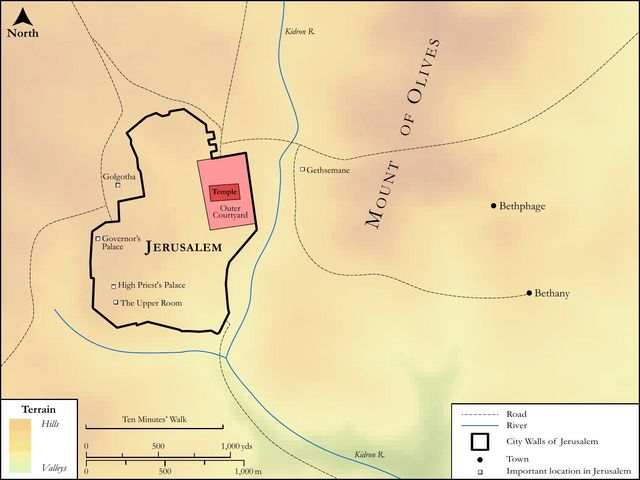
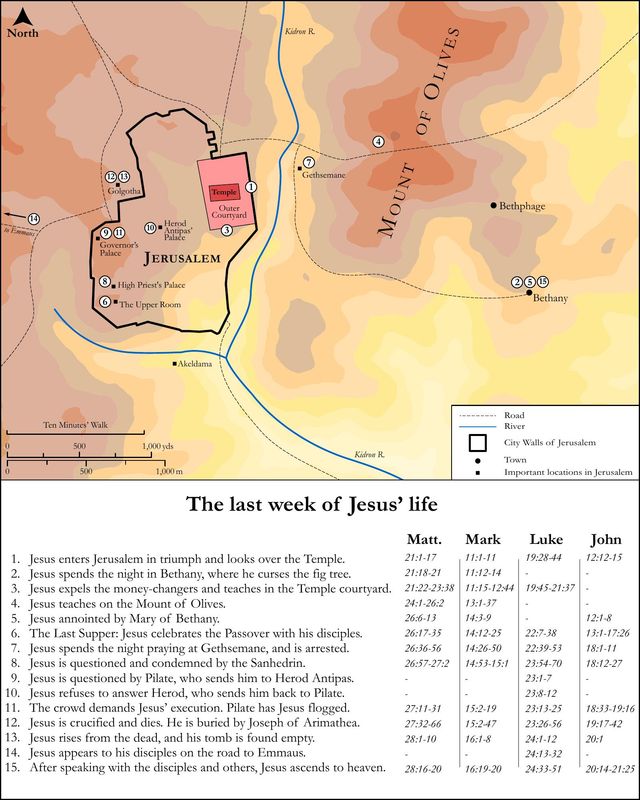
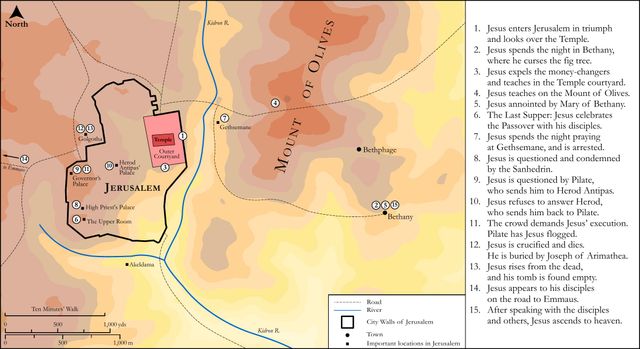
Study this verse
Historical interpretation
Eleven Centuries of Reception
15 surviving comments on this verse. Each one is dated, so this reads as a timeline rather than a list.
Select a marker to jump to its quote. Markers stagger vertically where authors wrote within a few decades of each other.
Therefore the apostate withal will recover his former "garment," the robe of the Holy Spirit; and a renewal of the "ring," the sign and seal of baptism; and Christ will again be "slaughtered; " and he will recline on that couch from which such as are unworthily clad are wont to be lifted by the torturers, and cast away into darkness, -much more such as have been stripped.
" Therefore they shall be "clothed in white raiment," that is, in the bright beauty of the unwedded flesh. In the gospel even, "the wedding garment" may be regarded as the sanctity of the flesh. And so, when Isaiah tells us what sort of "fast the Lord hath chosen," and subjoins a statement about the reward of good works, he says: "Then shall thy light break forth as the morning, and thy garments, shall speedily arise; " where he has no thought of cloaks or stuff gowns, but means the rising of the flesh, which he declared the resurrection of, after its fall in death.
The marriage-feast of Christ and the Church is filled, when they who were found by the Apostles, being restored to God, sat down to the feast. But since it behoved that both bad and good should be called, not that the bad should continue bad, but that they should put off the garments unmeet for the wedding, and should put on the marriage garments, to wit, bowels of mercy and kindness, for this cause the King goes out, that He may see them set down before the supper is set before them, that they may be detained who have the wedding garment in which He is delighted, and that he may condemn the opposite.
But when He was come in, He found there one who had not put off his old behaviour; He saw there a man which had not on a wedding garment. He speaks of one only, because all, who after faith continue to serve that wickedness which they had before the faith, are but of one kind.
Rightly has the Father already made this wedding, because this eternal union and espousal of the new body is already perfect in Christ.
Or; The servants who were first sent to call them that were bidden, are the Apostles; they who, being before bidden, are now invited to come in, are the people of Israel, who had before been bidden through the Law to the glories of eternity. To the Apostles therefore it belonged to remind those whom the Prophets had invited. Those sent with the second injunction are the Apostolic men their successors.
Or otherwise; The oxen are the glorious army of Martyrs, offered, like choice victims, for the confession of God; the fatlings are spiritual men, as birds fed for flight upon heavenly food, that they may fill others with the abundance of the food they have eaten.
For men are taken up with worldly ambition as with a farm; and many through covetousness are engrossed with trafficking.
By the street also is to be understood the time of this world, and they are therefore bid to go to the crossings of the streets, because the past is remitted to all.
Or; The wedding garment is the grace of the Holy Spirit, and the purity of that heavenly temper, which taken up on the confession of a good enquiry is to be preserved pure and unspotted for the company of the kingdom of heaven.
For to invite all without exception is a courtesy of public benevolence; but out of the invited or called, the election will be of worth, by distinction of merit.
(Hom. lxix.) Forasmuch as He had said, And it shall be given to a nation bringing forth the fruits thereof, He now proceeds to show what nation that is.
These occupations seem to be entirely reasonable; but we learn hence, that however necessary the things that take up our time, we ought to prefer spiritual things to every thing beside. But it seems to me that they only pretended these engagements as a cloak for their disregard of the invitation.
Then in order that not even these should put confidence in their faith alone, He discourses unto them also concerning the judgment to be passed upon wicked actions; to them that have not yet believed, of coming unto Him by faith, and to them that have believed, of care with respect to their life. For the garment is life and practice.
And yet the calling was of grace; wherefore then doth He take a strict account? Because although to be called and to be cleansed was of grace, yet, when called and clothed in clean garments, to continue keeping them so, this is of the diligence of them that are called.
The being called was not of merit, but of grace. It was fit therefore to make a return for the grace, and not to show forth such great wickedness after the honor. "But I have not enjoyed," one may say, "so much advantage as the Jews." Nay, but thou hast enjoyed far greater benefits. For what things were being prepared for them throughout all their time, these thou hast received at once, not being worthy. Wherefore Paul also saith, "And that the Gentiles might glorify God for His mercy." For what things were due to them, these thou hast received.
Wherefore also great is the punishment appointed for them that have been remiss. For as they did despite by not coming, so also thou by thus sitting down with a corrupt life. For to come in with filthy garments is this namely, to depart hence having one's life impure; wherefore also he was speechless.
Seest thou how, although the fact was so manifest, He doth not punish at once, until he himself, who has sinned, has passed the sentence? For by having nothing to reply he condemned himself, and so is taken away to the unutterable torments.
He sent his servant, without doubt Moses, by whom He gave the Law, to those who had been invited. But if you read servants as most copies have, it must be referred to the Prophets, by whom they were invited, but neglected to come. By the servants who were sent the second time, we may better understand the Prophets than the Apostles; that is to say, if servant is read in the first place; but if 'servants,' then by the second servants are to be understood the Apostles;
The dinner that is prepared, the oxen and the fatlings that are killed, is either a description of regal magnificence by the way of metaphor, that by carnal things spiritual may be understood; or the greatness of the doctrines, and the manifold teaching of God in His law, may be understood.
When He was doing works of mercy, and bidding to His marriage-feast, He was called a man; (homini regi) now when He comes to vengeance, the man is dropped, and He is called only a King.
By His armies we understand the Romans under Vespasian and Titus, who having slaughtered the inhabitants of Judæa, laid in ashes the faithless city.
For the Gentile nation was not in the streets, but in the crossings of the streets.
For there is an infinite difference among the Gentiles themselves; some are more prone to vice, others are endowed with more incorrupt and virtuous manners.
Or; The marriage garment is the commandments of the Lord, and the works which are done under the Law and the Gospel, and form the clothing of the new man. Whoso among the Christian body shall be found in the day of judgment not to have these, is straightway condemned. He saith unto him, Friend, how camest thou in hither, not having a wedding garment? He calls him friend, because he was invited to the wedding as being a friend by faith; but He charges him with want of manners in polluting by his filthy dress the elegance of the wedding entertainment.
For in that day there will be no room for blustering manner, nor power of denial, when all the Angels and the world itself are witnesses against the sinner.
By a metaphor taken from the body, there shall be weeping and gnashing of teeth, is shown the greatness of the torments. The binding of the hands and feet also, and the weeping of eyes, and the gnashing of teeth, understand as proving the truth of the resurrection of the body.
And because in the marriage and supper the chief thing is the end and not the beginning, therefore He adds, For many are called, but few chosen.
(Verse 11, 12.) But the king entered to see the guests, and he saw there a man who was not wearing a wedding garment. And he said to him, 'Friend, how did you come in here without a wedding garment?' But he was speechless. Those who were invited to the wedding feast had filled it up from the hedges and corners and streets and various places. But later, when the king came in to see the guests at his feast (that is, those who were resting in his trust, so that on the day of judgment he could visit the guests and discern the merits of each one), he found one who was not wearing a wedding garment. This one, all those who are associated with wickedness are understood. But the wedding garment, the commandments of the Lord, and the works that are fulfilled from the law and the Gospel, make the clothing of the new man. Therefore, if anyone is found at the time of judgment not having the wedding garment, that is, the garment of the heavenly ((Al. celestial)) man; but having a polluted garment, that is, the old man's rags, he is immediately seized and it is said to him: Friend, how did you enter here? He calls his friend because he was invited to a wedding: he accuses him of impudence because he has stained the wedding with his dirty clothes. But he remained silent. For in that moment there will be no place for repentance, nor the opportunity to deny, when all the angels and the world itself are witnesses of sins.
(de Cons. Ev. ii. 71.) This parable is related only by Matthew. Luke gives one like it, but it is not the same, as the order shows.
Otherwise; When the resurrection of the saints shall be, then the life, which is Christ, shall revive man, swallowing up his mortality in its own immortality. For now we receive the Holy Spirit as a pledge of the future union, but then we shall have Christ Himself more fully in us.
When the servants were sent to call them, they must have been invited before. Men have been invited from the time of Abraham, to whom was promised Christ's incarnation.
whom He sent when He said unto them, Go not into the way of the Gentiles, but rather go to the lost sheep of the house of Israel. (Mat. 10:5.)
When therefore the Lord bade the Apostles, Go ye and preach, saying, The kingdom of heaven is at hand, it was the same message as is here given, I have prepared my dinner; i. e. I have set out the table of Scripture out of the Law and the Prophets.
Otherwise; He says oxen and fatlings, not as though the oxen were not fatted, but because all the oxen were not fat. Therefore the fatlings denote the Prophets who were filled with the Holy Spirit; the oxen those who were both Priests and Prophets, as Jeremiah and Ezekiel; for as the oxen are the leaders of the herd, so also the Priests are leaders of the people.
That He says, And all things are now ready, means, that all that is required to salvation is already filled up in the Scriptures; there the ignorant may find instruction; the self-willed may read of terrors; he who is in difficulty may there find promises to rouse him to activity.
(non occ. sed vid. Gloss. ord.) Or He says, All things are now ready which belong to the mystery of the Lord's Passion, and our redemption. He says, Come to the marriage, not with your feet, but with faith, and good conduct. But they made light of it; why they did so He shows when He adds, And they went their way, one to his farm, another to his merchandize.
Or otherwise; When we work with the labour of our hands, for example, cultivating our field or our vineyard, or any manufacture of wood or iron, we seem to be occupied with our farm; any other mode of getting money unattended with manual labour is here called merchandize. O most miserable world! and miserable ye that follow it! The pursuits of this world have ever shut men out of life.
Or, by the business of a farm, He denotes the Jewish populace, whom the delights of this world separated from-Christ; by the excuse of merchandize, the Priests and other ministers of the Temple, who, coming to the service of the Law and the Temple through greediness of gain, have been shut out of the faith by covetousness. Of these He said not, 'They were filled with envy,' but They made light of it. For they who through hate and spite crucified Christ, are they who were filled with envy; but they who being entangled in business did not believe on Him, are not said to have been filled with envy, but to have made light of it. The Lord is silent respecting His own death, because He had spoken of it in the foregoing parable, but He shows forth the death of His disciples, whom after His ascension the Jews put to death, stoning Stephen and executing James the son of Alphæus, for which things Jerusalem was destroyed by the Romans. And it is to be observed, that anger is attributed to God figuratively and not properly; He is then said to be angry when He punishes.
The Roman army is called God's army; because The earth is the Lord's, and the fulness thereof; (Ps. 24:1.) nor would the Romans have come to Jerusalem, had not the Lord stirred them thither.
Or; The streets are all the professions of this world, as philosophy, soldiery, and the like. And therefore He says, Go out into the crossings of the streets, that they may call to the faith men of every condition. Moreover, as chastity is the way that leads to God, so fornication is the way that leads to the Devil; and so it is in the other virtues and vices. Thus He bids them invite to the faith men of every profession or condition.
The King came in to see the guests; not as though there was any place where He is not; but where He will look to give judgment, there He is said to be present; where He will not, there He seems to be absent. The day of His coming to behold is the day of judgment, when He will visit Christians seated at the board of the Scriptures.
Or, it points to the difference of punishment inflicted on sinners. Outer darkness being the deepest, inward darkness the lesser, as it were the outskirts of the place.
Or otherwise; Whenever God will try His Church, He enters into it that He may see the guests; and if He finds any one not having on the wedding garment, He enquires of him, How then were you made a Christian, if you neglect these works? Such a one Christ gives over to His ministers, that is, to seducing leaders, who bind his hands, that is, his works, and his feet, that is, the motions of his mind, and cast him into darkness, that is, into the errors of the Gentiles or the Jews, or into heresy. The nigher darkness is that of the Gentiles, for they have never heard the truth which they despise; the outer darkness is that of the Jews, who have heard but do not believe; the outermost is that of the heretics, who have heard and have learned.
That is, the whole sacrament of the human dispensation is completed and closed. But they which, were bidden, (Rom. 10:3.) that is, the Jews, were not worthy, because, ignorant of the righteousness of God, and going about to establish their own righteousness, they have not submitted themselves to the righteousness of God. The Jewish nation then being rejected, the Gentile people were taken in to the marriage-feast; whence it follows, Go ye out into the crossings of the streets, and as many as ye shall find, bid to the wedding.
These are the errors of the Gentiles.
(Hom. in Ev. xxxviii. 2.) Here, by the wedding-feast is denoted the present Church; there, by the supper, the last and eternal feast. For into this enter some who shall perish; into that whosoever has once entered in shall never be put forth. But if any should maintain that these are the same lessons, we may perhaps explain that that part concerning the guest who had come in without a wedding garment, which Luke has not mentioned, Matthew has related. That the one calls it supper, the other dinner, makes no difference; for with the ancients the dinner was at the ninth hour, and was therefore often called supper.
(ubi sup.) G marriage feast for God the Son, when He joined Him to human nature in the womb of the Virgin. But far be it from us to conclude, that because marriage takes place between two separate persons, that therefore the person of our Redeemer was made up of two separate persons. We say indeed that He exists of two natures, and in two natures, but we hold it unlawful to believe that He was compounded of two persons. It is safer therefore to say, that the marriage feast was made by the King the Father for the King the Son when He joined to Him the Holy Church in the mystery of His incarnation. The womb of the Virgin Mother was the bride-chamber of this Bridegroom.
(ubi sup.) But because these who were first invited would not come to the feast, the second summons says, Behold, I have prepared my dinner.
(ubi sup.) By the oxen are signified the Fathers of the Old Testament; who by sufferance of the Law gored their enemies with the horn of bodily strength. By fatlings are meant fatted animals, for from 'alere', comes 'altilia,' as it were 'alitilia' or 'alita.' By the fatlings are intended the Fathers of the New Testament; who while they receive sweet grace of inward fattening, are raised by the wing of contemplation from earthly desires to things above. He says therefore, My oxen and my fallings are killed; as much as to say, Look to the deaths of the Fathers who have been before you, and desire some amendment of your lives.
(ubi sup.) It is to be observed, that in the first invitation nothing was said of the oxen or fatlings, but in the second it is announced that they are already killed, because Almighty God when we will not hear His words gives examples, that what we suppose impossible may become easy to us to surmount, when we hear that others have passed through it before us.
Whosoever then intent upon earthly business, or devoted to the actions of this world, feigns to be meditating upon the mystery of the Lord's Passion, and to be living accordingly, is he that refuses to come to the King's wedding on pretext of going to his farm or his merchandize. Nay often, which is worse, some who are called not only reject the grace, but become persecutors, And the remnant took his servants, and entreated them despitefully, and slew them.
(ubi sup.) Or, The armies of our King are the legions of His Angels. He is said therefore to have sent His armies, and to have destroyed those murderers, because all judgment is executed upon men by the Angels. He destroys those murderers, when He cuts off persecutors; and burns up their city, because not only their souls, but the body of flesh they had tenanted, is tormented in the everlasting fire of hell.
(ubi sup.) But when He sees that His invitation is spurned at, He will not have His Son's marriage-feast empty; the word of God will find where it may stay itself.
(ubi sup.) Or otherwise; In holy Scripture, way is taken to mean actions; so that the crossings of the ways we understand as failure in action, for they usually come to God readily, who have had little prosperity in worldly actions.
(ubi sup.) Or; He means that in this present Church there cannot be bad without good, nor good without bad. He is not good who refuses to endure the bad.
(ubi sup.) What ought we to understand by the wedding garment, but charity? For this the Lord had upon Him, when He came to espouse the Church to Himself. He then enters in to the wedding feast, but without the wedding garment, who has faith in the Church, but not charity.
(ubi sup.) The hands and feet are then bound by a severe sentence of judgment, which before refused to be bound from wicked actions by amendment of life. Or punishment binds them, whom sin had before bound from good works.
(ubi sup.) By inward darkness we express blindness, of heart; outer darkness signifies the everlasting night of damnation.
(ubi sup.) There shall gnash those teeth which here delighted in gluttony; there shall weep those eyes which here roamed in illicit desire; every member shall there have its peculiar punishment, which here was a slave to its peculiar vice.
(ubi sup.) For some never begin a good course, and some never continue in that good course which they have begun. Let each one's care about himself be in proportion to his ignorance of what is yet to come.
But since you have now entered the house of the wedding, that is, the holy Church, by the Lord's generosity, carefully observe, brothers, lest the king upon entering find fault with something in the attire of your mind. For with great fear of heart we must consider what is immediately added: "The king entered to see those reclining at table, and he saw there a man not clothed in a wedding garment." What, dearest brothers, do we think is expressed by the wedding garment? For if we say the wedding garment is baptism or faith, who entered this wedding without baptism and faith? For by that very fact he is outside, because he has not yet believed. What then should we understand the wedding garment to be, except charity? For he enters the wedding, but does not enter with a wedding garment, who standing in the holy Church has faith but does not have charity. For rightly is charity called the wedding garment, because our Creator had this in himself when he came to the wedding of uniting the Church to himself. For it was accomplished solely by the love of God that his only-begotten Son united the minds of chosen people to himself. Hence John also says: "For God so loved the world that he gave his only-begotten Son for us." He therefore who came to humanity through charity made known that same charity to be the wedding garment. Therefore everyone among you who, being placed in the Church, has believed in God has already entered the wedding; but he does not come with a wedding garment if he does not preserve the grace of charity. And certainly, brothers, if anyone were invited to a carnal wedding, he would change his garment, he would show by the very beauty of his attire that he rejoices with the bridegroom and bride, and he would be ashamed to appear in despised garments among those rejoicing and celebrating the feast. We come to the wedding of God, and we neglect to change the garment of our heart. The angels rejoice together when the elect are taken up to heaven. With what mind, then, do we behold these spiritual festivities, we who do not have the wedding garment, that is, charity, which alone presents us as beautiful?
It should be known that just as a garment is woven on two beams, namely the upper and the lower, so charity is held in two commandments, that is, in the love of God and of neighbor. For it is written: "You shall love the Lord your God with all your heart, and with all your soul, and with all your strength; and your neighbor as yourself." In this matter it should be noted that in the love of neighbor a measure of love is established, when it is said: "You shall love your neighbor as yourself"; but the love of God is constrained by no measure, when it is said: "You shall love the Lord your God with all your heart, and with all your soul, and with all your strength." For one is not commanded how much to love, but from how much, when it is said: "With all," because he truly loves God who leaves nothing of himself for himself.
Therefore whoever takes care to have a wedding garment at the wedding must keep these two commandments of charity. For this is why, in the prophet Ezekiel, the vestibule of the gate of that city situated on the mountain is measured at two cubits, because surely the entrance to the heavenly city is not opened to us if in this Church, which is called a vestibule because it is still outside, the love of God and neighbor is not maintained. This is why scarlet twice-dyed is commanded to be woven into the curtains of the tabernacle. You are, brothers, you are the curtains of the tabernacle, who veil heavenly secrets in your hearts through faith. But twice-dyed scarlet must be in the curtains of the tabernacle. For scarlet has the appearance of fire. And what is charity, if not fire? But this charity must be twice-dyed, so that it may be dyed through the love of God, and dyed through the love of neighbor. For he who so loves God that through contemplation of Him he neglects his neighbor, is indeed scarlet, but not twice-dyed. Again, he who so loves his neighbor that nevertheless he abandons the contemplation of God through love of him, is scarlet, but not twice-dyed. Therefore, that your charity may be able to be twice-dyed scarlet, let it kindle itself both to the love of God and to the love of neighbor, so that it neither abandons the contemplation of God out of compassion for neighbor, nor, clinging to the contemplation of God more than it ought, casts aside compassion for neighbor. And so let every person living among people so yearn for Him whom he desires, that nevertheless he does not abandon the one with whom he was running; and let him so bring help to this one, that he in no way grows sluggish toward Him to whom he was hastening.
It must also be known that this love of neighbor is subdivided into two precepts, as a certain wise man says: "See that you do not do to another what you hate to have done to you." And Truth Himself preaches through Himself, saying: "What you wish men to do to you, do the same to them." For if we both give to others what we rightly wish to be rendered to us, and we ourselves avoid doing to others what we do not wish done to us, we preserve the laws of charity unharmed.
But let no one, when he loves someone, think that he immediately has charity, unless he first examines the very strength of his love. For if anyone loves someone, but does not love him for the sake of God, he does not have charity, but thinks he has it. True charity, however, is when a friend is loved in God, and an enemy is loved for the sake of God. For he loves those whom he loves for the sake of God, who already knows how to love even those by whom he is not loved. For charity is usually proven only through the adversity of hatred. Hence the Lord Himself says: "Love your enemies, do good to those who hate you." Therefore, he loves securely who loves for the sake of God the one by whom he understands he is not loved. These things are great, these things are lofty, and difficult for many to practice, but nevertheless this is the wedding garment.
Whoever does not have this garment while reclining at the wedding feast, let him now anxiously fear when the king enters, lest he be cast outside. For behold it is said: "The king entered the wedding feast to see those reclining at table, and he saw there a man not clothed with a wedding garment." We are the ones, dearest brothers, who recline at the wedding feast of the Word, who already have faith in the Church, who are fed by the banquets of Sacred Scripture, who rejoice that the Church is joined to God. Consider, I ask, whether you have come to this wedding feast with a wedding garment; examine your thoughts with anxious inquiry. Weigh your hearts concerning each matter: whether you now hold hatred against no one, whether you are not inflamed by any torch of envy against another's good fortune, whether you do not hasten to harm anyone through hidden malice.
The entry into the wedding takes place without distinction of persons, for by grace alone we have all been called, good and bad alike; but the life thereafter of those who enter shall not be without examination, for indeed the king makes an exceedingly careful examination of those found to be sullied after entering into the faith. Let us tremble, then, when we understand that if one does not lead a pure life, faith alone benefits him not at all. For not only is he cast out of the wedding feast, but he is sent away into the fire. Who is he that is wearing filthy garments? It is he who is not clothed with compassion, goodness, and brotherly love. For there are many who deceive themselves with vain hopes, thinking that they shall attain the kingdom of heaven, and they include themselves among the assembly of the dinner guests, thinking great things of themselves. Being justified in regard to that unworthy man, the Lord demonstrates these two things to us; first, that He loves mankind, and secondly, that we ought not to pass judgement on anyone, even if they sin openly, unless they have been reproved for their sin. The Lord then says to His servants, the angels of punishment, Bind his hands and feet, that is, the soul's powers of action. For in this present age is the time to act and to do, but in the age to come all of the soul's powers of action are bound, and a man cannot then do any good thing to outweigh his sins. Gnashing of teeth is the meaningless repentance that will then take place. Many are called, for God calls many, indeed, all, but few are chosen. Few are saved and found worthy to be chosen by God. It is God's part to call, but to become one of the chosen or not, is our part. He shows, then, that this parable was spoken for the Jews who were called but were not chosen, as they did not listen.
(interlin.) Answered, that is, meeting their evil thoughts of putting Him to death.
(interlin.) Or, All things are now ready, i. e. The entrance into the kingdom, which had been hitherto closed, is now ready through faith in My incarnation.
Continue studying Matthew 22:11 across the web’s major study libraries — every link below opens this exact verse, chapter, or book on the destination site.
Read & Compare
 BibleGatewayThis verse in more than 200 translations and 70 languages.
 Bible.comThe YouVersion reader — hundreds of translations, reading plans, and highlights.
 ESV.orgCrossway's official English Standard Version reader.
 NET BibleThe NET translation with 60,000+ translators' notes on every rendering decision.
 STEP BibleTyndale House's free study tool — original text, vocabulary, and scholarly resources.
 BibliaLogos Bible Software's free web reader.
 USCCBThe New American Bible (Revised Edition) with the U.S. bishops' study notes.
Commentaries
 BibleHub CommentariesDozens of classic commentaries on this verse, gathered on one page.
 StudyLightMore than 100 commentary sets — the largest collection on the web.
 BibleRefPlain-English commentary on what this verse means, verse by verse.
 Enduring WordDavid Guzik's free commentary on this chapter, widely used by Bible teachers.
 Bible Study ToolsVerse commentary alongside Greek and Hebrew study aids.
Original Language & Research
- BibleHub InterlinearThe verse word by word — original language, transliteration, and English.
- BibleHub LexiconEvery word's original-language definition and Strong's entry.
 Blue Letter BibleDeep-study tools — Strong's numbers, concordance, and word studies.
 CNTR CollationThe earliest Greek manuscripts of this verse, collated letter by letter.
Sermons, Hymns & Audio


TrulyRandomVerse is not affiliated with these sites and doesn’t control their content. They’re linked because they’re genuinely useful.
Summary
Matthew 22:11 is a pivotal moment within the Parable of the Wedding Feast, where the King, representing God, scrutinizes the guests gathered for His Son's marriage celebration. This verse highlights the King's discovery of a man who lacks the appropriate attire, signaling a profound theological truth about the necessary spiritual condition for entry into the Kingdom of Heaven, beyond mere presence or initial invitation.
Context
ShowHideLiterary Context
This verse is situated within a series of parables Jesus delivers in Matthew 21 and Matthew 22, directly confronting the Jewish religious leaders who questioned His authority. Following the parables of the Two Sons (Matthew 21:28-32) and the Wicked Tenants (Matthew 21:33-46), the Parable of the Wedding Feast (Matthew 22:1-14) serves as a climactic indictment of Israel's rejection of God's invitation through His prophets and ultimately, His Son. Matthew 22:11 specifically follows the King's servants gathering "both bad and good" from the highways to fill the wedding hall (Matthew 22:10), setting the stage for the King's inspection and the subsequent judgment. It transitions the narrative from the broad invitation to the individual's accountability.
Historical & Cultural Context
In ancient Near Eastern and Roman cultures, particularly for royal or significant feasts, it was customary for the host to provide appropriate garments for guests, especially those of humble means or those invited spontaneously from the streets. This provision ensured that all guests could participate in the celebration with dignity and unity, reflecting the host's generosity and the importance of the occasion. To refuse or fail to wear the provided garment would be a grave insult to the host, signifying disrespect for the event and the King himself. The parable's audience, familiar with such customs, would immediately grasp the severity of the man's offense, understanding it as a deliberate act of defiance or profound disregard rather than an oversight due to poverty.
Key Themes
ShowHideMatthew 22:11 contributes significantly to several overarching themes within Matthew's Gospel and the broader biblical narrative. Firstly, it underscores the theme of Divine Scrutiny and Judgment, emphasizing that while God's invitation to His Kingdom is broad and gracious, it is not without conditions for entry. The King's inspection highlights God's discerning eye over those who claim to be part of His covenant community. Secondly, it powerfully illustrates the Requirement for Righteousness to enter God's Kingdom; the "wedding garment" symbolizes the necessary spiritual attire, which is not self-made but divinely provided. This theme is echoed in other parables, such as the Parable of the Ten Virgins, which stresses preparedness. Finally, the verse speaks to the Nature of the Kingdom of Heaven, revealing it as a realm of holy fellowship that demands a transformed life, not merely a superficial association or intellectual assent.
Exposition and Analysis
ShowHideKey Word Analysis
ShowHideThis word refers to a "king," a sovereign ruler. In the context of the parable, the "king" unequivocally represents God the Father. His actions—sending invitations, preparing a feast, and inspecting guests—underscore His absolute authority, divine initiative in salvation, and ultimate role as judge over His creation. The King's coming "in to see the guests" signifies a moment of divine assessment, where outward appearance or mere presence is weighed against true spiritual condition.
This primary verb means "to see," often implying a perceptive or knowing gaze. While other Greek words for "seeing" might denote a casual glance, eídō here suggests a deliberate, discerning observation by the King. It's not just that the King noticed the man, but that He perceived his lack of the appropriate garment, implying a full understanding of its significance and the man's culpability. This "seeing" leads directly to the King's judgment, highlighting God's omniscience and His ability to discern the heart.
Meaning "nuptials" or "wedding," this word sets the celebratory context of the feast. The "wedding" signifies a joyous union, particularly in biblical theology, the union between Christ and His church. The feast is not just any meal; it is a sacred, covenantal celebration, emphasizing the profound joy and intimate fellowship awaiting those who are properly prepared for God's Kingdom.
This term refers to "apparel" or "garment," specifically an outer robe. When combined with gámos to form "wedding garment," it becomes a potent symbol. In the cultural context, such a garment would likely have been provided by the host. Its absence, therefore, is not a matter of poverty but a deliberate rejection of the host's provision, an act of disrespect that makes the man unfit for the sacred celebration. The "wedding garment" thus symbolizes the righteousness provided by God, necessary for entry into His Kingdom.
Verse Breakdown
ShowHide"And when the king came in to see the guests"
This clause initiates the crucial moment of divine inspection. The King's entrance signifies the arrival of a time of accountability, where those who have accepted the invitation are now subject to a thorough examination. This is not a casual visit but a purposeful assessment of the assembled company, highlighting God's active involvement in discerning the true spiritual state of His people.
"he saw there a man"
This simple observation carries immense weight. Out of the multitude of guests, the King's discerning eye immediately identifies a specific individual. This emphasizes the personal nature of God's scrutiny; salvation is individual, and so is accountability. The man's presence among the guests indicates he accepted the initial invitation, yet his subsequent condition reveals a deeper issue.
"which had not on a wedding garment"
This is the core revelation of the verse and the man's fatal flaw. The absence of the "wedding garment" is not a minor detail but a profound spiritual deficiency. In a context where such garments were likely provided by the host, its lack signifies a deliberate refusal to comply with the King's expectations, an act of rebellion, or a profound misunderstanding of the gravity and sanctity of the occasion. It symbolizes a lack of the righteousness, whether imputed or practical, that is essential for fellowship with God in His Kingdom.
Literary Devices
ShowHideThe primary literary device at play in Matthew 22:11 and the broader parable is Symbolism. The "king" symbolizes God the Father, the "wedding feast" symbolizes the Kingdom of Heaven and the blessings of salvation, and the "guests" symbolizes those invited into God's covenant community. Most critically, the "wedding garment" symbolizes the righteousness required for entry into God's presence. This righteousness is understood by many as the imputed righteousness of Christ, freely offered by God's grace, and/or the practical righteousness that flows from a transformed life, made possible by the Holy Spirit. The absence of this garment is a powerful symbol of spiritual unreadiness or an unwillingness to accept God's provision. The entire narrative functions as an Allegory, where the characters and events directly correspond to spiritual realities, conveying profound theological truths about salvation, judgment, and the nature of true faith.
Theological and Thematic Connections
ShowHideMatthew 22:11 profoundly connects to the theological understanding of salvation as both a gracious invitation and a call to a transformed life. While God's grace extends an open invitation to all, as seen in the gathering of "both bad and good," this verse clarifies that mere acceptance of the invitation is insufficient. There is a divine expectation of spiritual preparedness, symbolized by the wedding garment. This garment represents the righteousness necessary to stand in God's presence, which is not earned by human effort but is a divine provision, freely offered to those who respond in faith and humility. To reject this provision, whether through pride, indifference, or a desire to enter on one's own terms, is to refuse the very means by which one can truly belong to the Kingdom. This highlights the tension between God's sovereign grace and human responsibility, emphasizing that genuine faith results in a life clothed in Christ's righteousness and characterized by obedience.
Reflection and Application
ShowHideMatthew 22:11 serves as a profound and sobering reminder that genuine faith involves more than just outward association with the Christian community or intellectual assent to theological truths. It challenges us to look beyond superficial adherence and to examine the true state of our hearts and lives. Are we merely "guests" who have shown up, or have we truly embraced the King's provision for our spiritual attire? This verse calls for a deep introspection: have we truly repented of our sins and clothed ourselves in the righteousness that comes through faith in Christ? Are we living lives that reflect the transforming power of the Holy Spirit, or are we attempting to enter God's presence on our own terms, in our own "garments" of self-righteousness or indifference? The parable warns against a casual approach to salvation and the Kingdom, urging us to ensure that our spiritual condition aligns with God's holy standards, not by our own merit, but by humbly receiving and living out His grace.
Questions for Reflection
ShowHideFAQ
ShowHideWhat does the wedding garment symbolize?
ShowHideThe "wedding garment" in Matthew 22:11 is widely interpreted as symbolizing the righteousness required to enter God's Kingdom. Theologically, it represents two primary aspects: first, the imputed righteousness of Christ, which is freely given to believers through faith and covers their sin, making them acceptable before God (Philippians 3:9). Second, it can also represent the practical righteousness and holiness that result from genuine conversion and a life lived in submission to God's will, empowered by the Holy Spirit (Romans 13:14). Since it was customary for the host to provide such garments, its absence signifies a deliberate rejection of the King's provision and a profound disrespect for the sacredness of the event.
Was the man's punishment fair?
ShowHideFrom a human perspective, the punishment described in Matthew 22:13 seems harsh. However, within the parabolic context, the man's refusal to wear the provided wedding garment was a grave insult to the King and a deliberate act of defiance. It wasn't an oversight due to poverty, but a rejection of the King's grace and provision. The parable is an allegory for God's judgment. The man represents those who hear God's invitation to salvation but refuse to accept the terms of entry—namely, the righteousness God provides through Christ. His expulsion into "outer darkness" symbolizes eternal separation from God, a just consequence for those who willfully reject God's gracious provision and persist in their own unrighteousness.
Does this parable mean salvation isn't free?
ShowHideThis parable does not negate the freeness of salvation, but rather clarifies its nature. The invitation to the feast is indeed free and extended to "both bad and good" (Matthew 22:10), symbolizing God's universal call to salvation, offered by grace. However, the wedding garment signifies that while the invitation is free, there is a required response: humble acceptance of God's provision for righteousness. It's not about earning salvation through works, but about receiving the "garment" (Christ's righteousness and a transformed life) that God freely offers. To refuse this garment is to reject the very means by which one can truly participate in the Kingdom, demonstrating a lack of true faith or commitment.
Christ-Centered Fulfillment
ShowHideMatthew 22:11 finds its ultimate fulfillment in Jesus Christ, who is the very embodiment of the "wedding garment" required for entry into God's eternal Kingdom. The man without the garment represents humanity's inherent inability to provide its own righteousness to stand before a holy God. Every human attempt to achieve righteousness through works, lineage, or self-effort is but a "filthy garment" (Isaiah 64:6) in God's sight. Christ, however, perfectly fulfilled all righteousness through His sinless life and atoning death, becoming "our righteousness" (1 Corinthians 1:30). Through faith in Him, believers are "clothed with Christ" (Galatians 3:27), having His perfect righteousness imputed to them (2 Corinthians 5:21). The wedding feast itself points to the "marriage supper of the Lamb" (Revelation 19:7-9), where the bride, the Church, is "granted to be arrayed in fine linen, clean and bright, for the fine linen is the righteous acts of the saints." This fine linen is not earned but is a gift, made possible by Christ's sacrifice and the transformative work of the Holy Spirit, enabling believers to live lives of practical righteousness that flow from their union with Him. Thus, the "wedding garment" is ultimately Christ Himself and the new life He provides, making us acceptable and eternally welcomed into God's presence.