


Matthew 22:2
Bible text: King James Version (1769 Blayney text) · Public domain
Bible text: Berean Standard Bible · Public domain
Bible text: American Standard Version (1901) · Public domain
Bible text: World English Bible, Messianic edition · Public domain
Bible text: Geneva Bible (1599) · Public domain
Bible text: Young's Literal Translation · Public domain
- ὡμοιώθηhōmoiōthēHas become likeG3666V-API-3SVerb Aorist Passive Indicative 3rd Singular
- ἡhētheG3588T-NSFDefinite article Nominative Singular Feminine
- βασιλείαbasileiakingdomG932N-NSFNoun Nominative Singular Feminine
- τῶνtōnof theG3588T-GPMDefinite article Genitive Plural Masculine
- οὐρανῶνouranōnheavensG3772N-GPMNoun Genitive Plural Masculine
- ἀνθρώπῳanthrōpōto a manG444N-DSMNoun Dative Singular Masculine
- βασιλεῖbasileia kingG935N-DSMNoun Dative Singular Masculine
- ὅστιςhostiswhoG3748R-NSMRelative pronoun Nominative Singular Masculine
- ἐποίησενepoiēsenmadeG4160V-AAI-3SVerb Aorist Active Indicative 3rd Singular
- γάμουςgamousa wedding feastG1062N-APMNoun Accusative Plural Masculine
- τῷtōfor theG3588T-DSMDefinite article Dative Singular Masculine
- υἱῷhuiōsonG5207N-DSMNoun Dative Singular Masculine
- αὐτοῦautouof himG846P-GSMPersonal pronoun Genitive Singular Masculine
English is a literal word-by-word gloss of the Greek, not the KJV's wording. Why?
This is the original text the KJV's translators worked from — each Greek word with its own literal English meaning in this verse, prepared by scholars at Tyndale House, Cambridge. The KJV translates whole sentences, not word by word, so its wording differs: one Greek word can become several English words, and the KJV may choose “charity” where the gloss reads “love”. Both are faithful — they answer different questions. For the KJV's own rendering, switch to the KJV text.
Details
See on the biblical-era maps

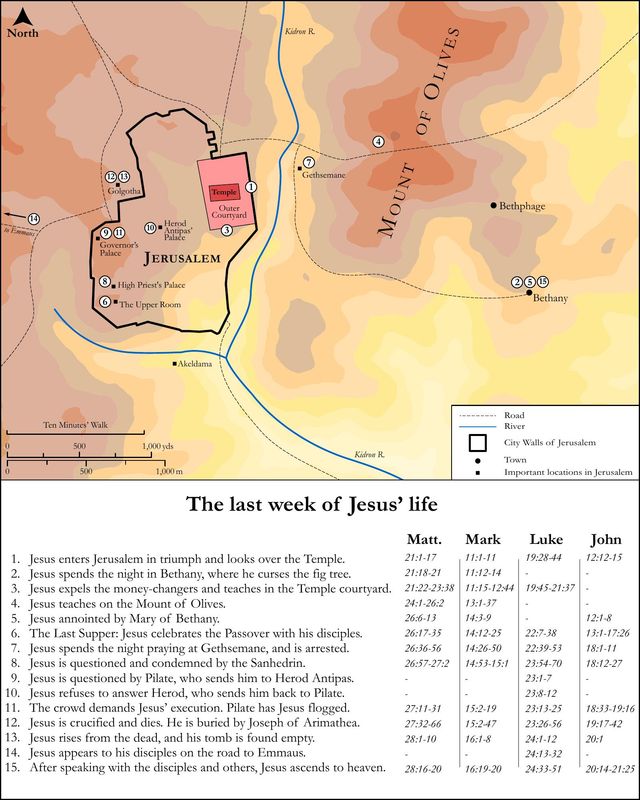
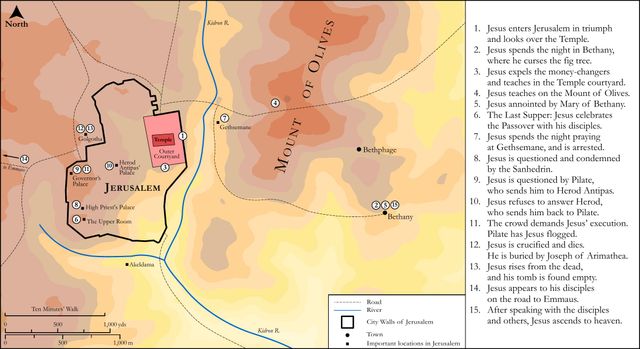
Study this verse
Historical interpretation
Ten Centuries of Reception
12 surviving comments on this verse. Each one is dated, so this reads as a timeline rather than a list.
Select a marker to jump to its quote. Markers stagger vertically where authors wrote within a few decades of each other.
The kingdom of heaven, in respect of Him who reigns there, is like a king; in respect of Him who shares the kingdom, it is like a king's son; in respect of those things which are in the kingdom, it is like servants and guests, and among them the king's armies. It is specified, A man that is a king, that what is spoken may be as by a man to men, and that a man may regulate men unwilling to be regulated by God. But the kingdom of heaven will then cease to be like a man, when zeal and contention and all other passions and sins having ceased, we shall cease to walk after men, and shall see Him as He is. For now we see Him not as He is, but as He has been made for us in our dispensation.
Or, by the marriage of Bridegroom with Bride, that is, of Christ with the soul, understand the Assumption of the Word, the produce whereof is good works.
Rightly has the Father already made this wedding, because this eternal union and espousal of the new body is already perfect in Christ.
Or; The servants who were first sent to call them that were bidden, are the Apostles; they who, being before bidden, are now invited to come in, are the people of Israel, who had before been bidden through the Law to the glories of eternity. To the Apostles therefore it belonged to remind those whom the Prophets had invited. Those sent with the second injunction are the Apostolic men their successors.
Or otherwise; The oxen are the glorious army of Martyrs, offered, like choice victims, for the confession of God; the fatlings are spiritual men, as birds fed for flight upon heavenly food, that they may fill others with the abundance of the food they have eaten.
For men are taken up with worldly ambition as with a farm; and many through covetousness are engrossed with trafficking.
By the street also is to be understood the time of this world, and they are therefore bid to go to the crossings of the streets, because the past is remitted to all.
Or; The wedding garment is the grace of the Holy Spirit, and the purity of that heavenly temper, which taken up on the confession of a good enquiry is to be preserved pure and unspotted for the company of the kingdom of heaven.
For to invite all without exception is a courtesy of public benevolence; but out of the invited or called, the election will be of worth, by distinction of merit.
Seest thou both in the former parable and in this the difference between the Son and the servants? Seest thou at once the great affinity between both parables, and the great difference also? For this also indicates God's long-suffering, and His great providential care, and the Jews' ingratitude.
But this parable hath something also more than the other. For it proclaims beforehand both the casting out of the Jews, and the calling of the Gentiles; and it indicates together with this also the strictness of the life required, and how great the punishment appointed for the careless.
And well is this placed after the other. For since He had said, "It shall be given to a nation bringing forth the fruits thereof," He declares next to what kind of nation; and not this only, but He also again sets forth His providential care towards the Jews as past utterance. For there He appears before His crucifixion bidding them; but here even after He is slain, He still urges them, striving to win them over. And when they deserved to have suffered the most grievous punishment, then He both presses them to the marriage, and honors them with the highest honor. And see how both there He calls not the Gentiles first, but the Jews, and here again. But as there, when they would not receive Him, but even slew Him when He was come, then He gave away the vineyard; thus here too, when they were not willing to be present at the marriage, then He called others.
What then could be more ungrateful than they, when being bidden to a marriage they rush away? For who would not choose to come to a marriage, and that a King's marriage, and of a King making a marriage for a Son?
And wherefore is it called a marriage? one may say. That thou mightest learn God's tender care, His yearning towards us, the cheerfulness of the state of things, that there is nothing sorrowful there, nor sad, but all things are full of spiritual joy: Therefore also John calls Him a bridegroom, therefore Paul again saith, "For I have espoused you to one husband;" and, "This is a great mystery, but I speak concerning Christ and the Church."
Why then is not the bride said to be espoused to Him, but to the Son? Because she that is espoused to the Son, is espoused to the Father. For it is indifferent in Scripture that the one or the other should be said, because of the identity of the substance.
Hereby He proclaimed the resurrection also. For since in what went before He had spoken of the death, He shows that even after the death, then is the marriage, then the bridegroom.
(Hom. lxix.) Forasmuch as He had said, And it shall be given to a nation bringing forth the fruits thereof, He now proceeds to show what nation that is.
These occupations seem to be entirely reasonable; but we learn hence, that however necessary the things that take up our time, we ought to prefer spiritual things to every thing beside. But it seems to me that they only pretended these engagements as a cloak for their disregard of the invitation.
He sent his servant, without doubt Moses, by whom He gave the Law, to those who had been invited. But if you read servants as most copies have, it must be referred to the Prophets, by whom they were invited, but neglected to come. By the servants who were sent the second time, we may better understand the Prophets than the Apostles; that is to say, if servant is read in the first place; but if 'servants,' then by the second servants are to be understood the Apostles;
The dinner that is prepared, the oxen and the fatlings that are killed, is either a description of regal magnificence by the way of metaphor, that by carnal things spiritual may be understood; or the greatness of the doctrines, and the manifold teaching of God in His law, may be understood.
When He was doing works of mercy, and bidding to His marriage-feast, He was called a man; (homini regi) now when He comes to vengeance, the man is dropped, and He is called only a King.
By His armies we understand the Romans under Vespasian and Titus, who having slaughtered the inhabitants of Judæa, laid in ashes the faithless city.
For the Gentile nation was not in the streets, but in the crossings of the streets.
For there is an infinite difference among the Gentiles themselves; some are more prone to vice, others are endowed with more incorrupt and virtuous manners.
Or; The marriage garment is the commandments of the Lord, and the works which are done under the Law and the Gospel, and form the clothing of the new man. Whoso among the Christian body shall be found in the day of judgment not to have these, is straightway condemned. He saith unto him, Friend, how camest thou in hither, not having a wedding garment? He calls him friend, because he was invited to the wedding as being a friend by faith; but He charges him with want of manners in polluting by his filthy dress the elegance of the wedding entertainment.
For in that day there will be no room for blustering manner, nor power of denial, when all the Angels and the world itself are witnesses against the sinner.
By a metaphor taken from the body, there shall be weeping and gnashing of teeth, is shown the greatness of the torments. The binding of the hands and feet also, and the weeping of eyes, and the gnashing of teeth, understand as proving the truth of the resurrection of the body.
And because in the marriage and supper the chief thing is the end and not the beginning, therefore He adds, For many are called, but few chosen.
(Chapter 22—Verses 1, 2.) And Jesus answered and spoke to them again in parables, saying: The kingdom of heaven is like a king who made a marriage for his son. The Pharisees, understanding that these parables were about them, sought to seize him and kill him. Knowing their intention, the Lord rebuked them, undeterred by their rage, and without fear, so as to convict the sinners. This king who made a marriage for his son is the almighty God. But it signifies the union of our Lord Jesus Christ and the Church, which is gathered from both Jews and Gentiles.
(de Cons. Ev. ii. 71.) This parable is related only by Matthew. Luke gives one like it, but it is not the same, as the order shows.
Otherwise; When the resurrection of the saints shall be, then the life, which is Christ, shall revive man, swallowing up his mortality in its own immortality. For now we receive the Holy Spirit as a pledge of the future union, but then we shall have Christ Himself more fully in us.
When the servants were sent to call them, they must have been invited before. Men have been invited from the time of Abraham, to whom was promised Christ's incarnation.
whom He sent when He said unto them, Go not into the way of the Gentiles, but rather go to the lost sheep of the house of Israel. (Mat. 10:5.)
When therefore the Lord bade the Apostles, Go ye and preach, saying, The kingdom of heaven is at hand, it was the same message as is here given, I have prepared my dinner; i. e. I have set out the table of Scripture out of the Law and the Prophets.
Otherwise; He says oxen and fatlings, not as though the oxen were not fatted, but because all the oxen were not fat. Therefore the fatlings denote the Prophets who were filled with the Holy Spirit; the oxen those who were both Priests and Prophets, as Jeremiah and Ezekiel; for as the oxen are the leaders of the herd, so also the Priests are leaders of the people.
That He says, And all things are now ready, means, that all that is required to salvation is already filled up in the Scriptures; there the ignorant may find instruction; the self-willed may read of terrors; he who is in difficulty may there find promises to rouse him to activity.
(non occ. sed vid. Gloss. ord.) Or He says, All things are now ready which belong to the mystery of the Lord's Passion, and our redemption. He says, Come to the marriage, not with your feet, but with faith, and good conduct. But they made light of it; why they did so He shows when He adds, And they went their way, one to his farm, another to his merchandize.
Or otherwise; When we work with the labour of our hands, for example, cultivating our field or our vineyard, or any manufacture of wood or iron, we seem to be occupied with our farm; any other mode of getting money unattended with manual labour is here called merchandize. O most miserable world! and miserable ye that follow it! The pursuits of this world have ever shut men out of life.
Or, by the business of a farm, He denotes the Jewish populace, whom the delights of this world separated from-Christ; by the excuse of merchandize, the Priests and other ministers of the Temple, who, coming to the service of the Law and the Temple through greediness of gain, have been shut out of the faith by covetousness. Of these He said not, 'They were filled with envy,' but They made light of it. For they who through hate and spite crucified Christ, are they who were filled with envy; but they who being entangled in business did not believe on Him, are not said to have been filled with envy, but to have made light of it. The Lord is silent respecting His own death, because He had spoken of it in the foregoing parable, but He shows forth the death of His disciples, whom after His ascension the Jews put to death, stoning Stephen and executing James the son of Alphæus, for which things Jerusalem was destroyed by the Romans. And it is to be observed, that anger is attributed to God figuratively and not properly; He is then said to be angry when He punishes.
The Roman army is called God's army; because The earth is the Lord's, and the fulness thereof; (Ps. 24:1.) nor would the Romans have come to Jerusalem, had not the Lord stirred them thither.
Or; The streets are all the professions of this world, as philosophy, soldiery, and the like. And therefore He says, Go out into the crossings of the streets, that they may call to the faith men of every condition. Moreover, as chastity is the way that leads to God, so fornication is the way that leads to the Devil; and so it is in the other virtues and vices. Thus He bids them invite to the faith men of every profession or condition.
The King came in to see the guests; not as though there was any place where He is not; but where He will look to give judgment, there He is said to be present; where He will not, there He seems to be absent. The day of His coming to behold is the day of judgment, when He will visit Christians seated at the board of the Scriptures.
Or, it points to the difference of punishment inflicted on sinners. Outer darkness being the deepest, inward darkness the lesser, as it were the outskirts of the place.
Or otherwise; Whenever God will try His Church, He enters into it that He may see the guests; and if He finds any one not having on the wedding garment, He enquires of him, How then were you made a Christian, if you neglect these works? Such a one Christ gives over to His ministers, that is, to seducing leaders, who bind his hands, that is, his works, and his feet, that is, the motions of his mind, and cast him into darkness, that is, into the errors of the Gentiles or the Jews, or into heresy. The nigher darkness is that of the Gentiles, for they have never heard the truth which they despise; the outer darkness is that of the Jews, who have heard but do not believe; the outermost is that of the heretics, who have heard and have learned.
That is, the whole sacrament of the human dispensation is completed and closed. But they which, were bidden, (Rom. 10:3.) that is, the Jews, were not worthy, because, ignorant of the righteousness of God, and going about to establish their own righteousness, they have not submitted themselves to the righteousness of God. The Jewish nation then being rejected, the Gentile people were taken in to the marriage-feast; whence it follows, Go ye out into the crossings of the streets, and as many as ye shall find, bid to the wedding.
These are the errors of the Gentiles.
(Hom. in Ev. xxxviii. 2.) Here, by the wedding-feast is denoted the present Church; there, by the supper, the last and eternal feast. For into this enter some who shall perish; into that whosoever has once entered in shall never be put forth. But if any should maintain that these are the same lessons, we may perhaps explain that that part concerning the guest who had come in without a wedding garment, which Luke has not mentioned, Matthew has related. That the one calls it supper, the other dinner, makes no difference; for with the ancients the dinner was at the ninth hour, and was therefore often called supper.
(ubi sup.) G marriage feast for God the Son, when He joined Him to human nature in the womb of the Virgin. But far be it from us to conclude, that because marriage takes place between two separate persons, that therefore the person of our Redeemer was made up of two separate persons. We say indeed that He exists of two natures, and in two natures, but we hold it unlawful to believe that He was compounded of two persons. It is safer therefore to say, that the marriage feast was made by the King the Father for the King the Son when He joined to Him the Holy Church in the mystery of His incarnation. The womb of the Virgin Mother was the bride-chamber of this Bridegroom.
(ubi sup.) But because these who were first invited would not come to the feast, the second summons says, Behold, I have prepared my dinner.
(ubi sup.) By the oxen are signified the Fathers of the Old Testament; who by sufferance of the Law gored their enemies with the horn of bodily strength. By fatlings are meant fatted animals, for from 'alere', comes 'altilia,' as it were 'alitilia' or 'alita.' By the fatlings are intended the Fathers of the New Testament; who while they receive sweet grace of inward fattening, are raised by the wing of contemplation from earthly desires to things above. He says therefore, My oxen and my fallings are killed; as much as to say, Look to the deaths of the Fathers who have been before you, and desire some amendment of your lives.
(ubi sup.) It is to be observed, that in the first invitation nothing was said of the oxen or fatlings, but in the second it is announced that they are already killed, because Almighty God when we will not hear His words gives examples, that what we suppose impossible may become easy to us to surmount, when we hear that others have passed through it before us.
Whosoever then intent upon earthly business, or devoted to the actions of this world, feigns to be meditating upon the mystery of the Lord's Passion, and to be living accordingly, is he that refuses to come to the King's wedding on pretext of going to his farm or his merchandize. Nay often, which is worse, some who are called not only reject the grace, but become persecutors, And the remnant took his servants, and entreated them despitefully, and slew them.
(ubi sup.) Or, The armies of our King are the legions of His Angels. He is said therefore to have sent His armies, and to have destroyed those murderers, because all judgment is executed upon men by the Angels. He destroys those murderers, when He cuts off persecutors; and burns up their city, because not only their souls, but the body of flesh they had tenanted, is tormented in the everlasting fire of hell.
(ubi sup.) But when He sees that His invitation is spurned at, He will not have His Son's marriage-feast empty; the word of God will find where it may stay itself.
(ubi sup.) Or otherwise; In holy Scripture, way is taken to mean actions; so that the crossings of the ways we understand as failure in action, for they usually come to God readily, who have had little prosperity in worldly actions.
(ubi sup.) Or; He means that in this present Church there cannot be bad without good, nor good without bad. He is not good who refuses to endure the bad.
(ubi sup.) What ought we to understand by the wedding garment, but charity? For this the Lord had upon Him, when He came to espouse the Church to Himself. He then enters in to the wedding feast, but without the wedding garment, who has faith in the Church, but not charity.
(ubi sup.) The hands and feet are then bound by a severe sentence of judgment, which before refused to be bound from wicked actions by amendment of life. Or punishment binds them, whom sin had before bound from good works.
(ubi sup.) By inward darkness we express blindness, of heart; outer darkness signifies the everlasting night of damnation.
(ubi sup.) There shall gnash those teeth which here delighted in gluttony; there shall weep those eyes which here roamed in illicit desire; every member shall there have its peculiar punishment, which here was a slave to its peculiar vice.
(ubi sup.) For some never begin a good course, and some never continue in that good course which they have begun. Let each one's care about himself be in proportion to his ignorance of what is yet to come.
I remember that I have often said that frequently in the holy Gospel the present Church is called the kingdom of heaven. For the congregation of the righteous is called the kingdom of heaven. Because the Lord says through the prophet: "Heaven is my throne"; and Solomon says: "The soul of the righteous is the seat of wisdom"; Paul also says: "Christ the power of God and the wisdom of God"; we ought clearly to conclude that if God is wisdom, and the soul of the righteous is the seat of wisdom, since heaven is called the throne of God, therefore the soul of the righteous is heaven. Hence it is said through the Psalmist concerning the holy preachers: "The heavens declare the glory of God." Therefore the kingdom of heaven is the Church of the righteous, because while their hearts seek nothing on earth, through the fact that they sigh for things above, the Lord already reigns in them as if in heavenly places. Let it therefore be said: "The kingdom of heaven is like a man who was a king, who made a wedding feast for his son."
Now your charity understands who this king is, the father of the king's son: namely he to whom the Psalmist says: "O God, give your judgment to the king, and your justice to the king's son." He made a wedding for his son. For God the Father made a wedding for God his Son when he joined him to human nature in the womb of the Virgin, when he willed that God before all ages should become man at the end of the ages. But since this union is usually made from two persons, far be it from our understanding that we should believe the person of God and man, our Redeemer Jesus Christ, to be united from two persons. Indeed we say that he exists from two and in two natures; but we avoid as impious the belief that he is composed of two persons. Therefore it can be said more openly and safely that in this the Father made a wedding for his Son the king, by which through the mystery of the incarnation he joined the holy Church to him. Moreover, the womb of the Virgin mother was the bridal chamber of this bridegroom. Hence the Psalmist also says: "He has set his tabernacle in the sun, and he himself comes forth like a bridegroom from his chamber." For like a bridegroom he came forth from his chamber, because God incarnate went out from the uncorrupted womb of the Virgin to join the Church to himself.
(interlin.) Answered, that is, meeting their evil thoughts of putting Him to death.
(interlin.) Or, All things are now ready, i. e. The entrance into the kingdom, which had been hitherto closed, is now ready through faith in My incarnation.
Continue studying Matthew 22:2 across the web’s major study libraries — every link below opens this exact verse, chapter, or book on the destination site.
Read & Compare
 BibleGatewayThis verse in more than 200 translations and 70 languages.
 Bible.comThe YouVersion reader — hundreds of translations, reading plans, and highlights.
 ESV.orgCrossway's official English Standard Version reader.
 NET BibleThe NET translation with 60,000+ translators' notes on every rendering decision.
 STEP BibleTyndale House's free study tool — original text, vocabulary, and scholarly resources.
 BibliaLogos Bible Software's free web reader.
 USCCBThe New American Bible (Revised Edition) with the U.S. bishops' study notes.
Commentaries
 BibleHub CommentariesDozens of classic commentaries on this verse, gathered on one page.
 StudyLightMore than 100 commentary sets — the largest collection on the web.
 BibleRefPlain-English commentary on what this verse means, verse by verse.
 Enduring WordDavid Guzik's free commentary on this chapter, widely used by Bible teachers.
 Bible Study ToolsVerse commentary alongside Greek and Hebrew study aids.
Original Language & Research
- BibleHub InterlinearThe verse word by word — original language, transliteration, and English.
- BibleHub LexiconEvery word's original-language definition and Strong's entry.
 Blue Letter BibleDeep-study tools — Strong's numbers, concordance, and word studies.
 CNTR CollationThe earliest Greek manuscripts of this verse, collated letter by letter.
Sermons, Hymns & Audio


TrulyRandomVerse is not affiliated with these sites and doesn’t control their content. They’re linked because they’re genuinely useful.
Summary
Matthew 22:2 introduces Jesus' profound Parable of the Wedding Feast, illustrating the nature of the Kingdom of Heaven. It portrays God as a king who prepares a grand marriage celebration for his son, symbolizing the divine invitation extended to humanity to participate in God's ultimate plan of salvation and communion through Christ. This opening verse sets the stage for a narrative that reveals both the graciousness of God's offer and the gravity of its rejection.
Context
ShowHideLiterary Context
This parable is strategically placed within a series of parables Jesus delivers in the temple courts of Jerusalem, immediately following intense confrontations with the chief priests and elders. It directly succeeds the Parable of the Two Sons and the Parable of the Wicked Vinedressers, both of which served as direct indictments against the Jewish leadership for their rejection of God's prophets and, ultimately, His Son. Matthew 22:2 thus functions as a continuation of Jesus' teaching on the Kingdom of God, using a familiar cultural event—a royal wedding—to convey profound spiritual truths about God's invitation, the rejection by those initially invited, and the subsequent broadening of the invitation to others. The subsequent verses of the parable, particularly Matthew 22:11-14, further elaborate on the necessary response to this divine invitation.
Historical & Cultural Context
Royal weddings among the kings of that day were events of immense social and political significance, often lasting for several days and involving elaborate feasts. Invitations were typically extended in two stages: an initial announcement of the upcoming event, and then a second, urgent summons when the preparations were complete and the feast was ready. To refuse a royal invitation, especially a second summons, was not merely an inconvenience but a profound act of disrespect and defiance, potentially carrying severe consequences. The imagery of a "feast" or "banquet" also carried deep resonance within Jewish tradition, frequently symbolizing God's eschatological blessings and the joyous communion of His people in the age to come, as seen in prophetic texts like Isaiah 25:6-8.
Key Themes
ShowHideMatthew 22:2 introduces several foundational themes that permeate the chapter and the broader Gospel. Firstly, the overarching theme of the Kingdom of Heaven (or Kingdom of God) is central, frequently expounded by Jesus through parables, as seen in Matthew 13. Here, it is likened to a joyous, celebratory event, emphasizing its blessed and abundant nature rather than a mere set of rules. Secondly, the verse highlights God's Sovereign Invitation, portraying God the Father ("a certain king") initiating a grand event for His Son. This underscores God's proactive love and initiative in extending salvation and fellowship to humanity. Finally, the imagery of the "marriage for his son" foreshadows the Messianic Banquet and the ultimate union of Christ with His people, a theme that finds its ultimate fulfillment in the Marriage Supper of the Lamb in the book of Revelation.
Exposition and Analysis
ShowHideKey Word Analysis
ShowHideProperly royalty, i.e., rule, or concretely, a realm. In this context, "the kingdom of heaven" refers to God's sovereign rule and reign, both present and future, and the sphere in which His divine will is perfectly executed. Matthew's use of "heaven" (ouranós) instead of "God" (theós) is a common Jewish circumlocution to show reverence for the divine name.
Meaning to assimilate, compare, or become similar. This verb signals that Jesus is speaking in a parable, drawing a comparison between a familiar earthly scenario and the spiritual realities of God's kingdom. It indicates that the earthly story serves as an analogy, not a literal description, inviting listeners to discern deeper truths.
Referring to nuptials or a wedding. The plural form (gamous) in Greek emphasizes the scale and duration of the celebration, typical of royal weddings which were grand, multi-day affairs. Symbolically, it points to the ultimate union and celebratory feast between God and His people, realized through the Son.
Verse Breakdown
ShowHide"The kingdom of heaven is like unto"
This opening phrase, characteristic of Jesus' parables, immediately signals that what follows is an analogy designed to illuminate the nature and dynamics of God's sovereign rule. It invites the listener to consider how an earthly scenario can reveal profound spiritual truths about God's active reign in the world and in human lives.
"a certain king"
This figure unequivocally represents God the Father. The king's absolute authority, immense wealth, and benevolent initiative in preparing such a significant event underscore God's supreme sovereignty, His boundless generosity, and His proactive desire to invite humanity into fellowship with Him.
"which made a marriage for his son"
This is the central image of the verse, symbolizing the ultimate redemptive plan of God. The "son" clearly points to Jesus Christ, the Messiah. The "marriage" or "wedding feast" signifies the joyous, climactic event of salvation and communion that God has prepared through His Son. It speaks to the covenantal relationship God desires with humanity, culminating in a celebration of unparalleled joy and abundance.
Literary Devices
ShowHideThe primary literary device employed in Matthew 22:2 is Simile, explicitly stated by the phrase "The kingdom of heaven is like unto." This introduces the entire passage as a Parable, a narrative designed to teach a moral or spiritual lesson. Within this parable, profound Symbolism is at play: the "king" symbolizes God the Father, the "son" symbolizes Jesus Christ, and the "marriage feast" symbolizes the joyous, ultimate celebration of salvation and communion between God and His people, often referred to as the Messianic banquet. The act of "making" (poiéō) the marriage highlights God's active, intentional, and sovereign preparation of this divine plan.
Theological and Thematic Connections
ShowHideMatthew 22:2 establishes the foundational truth that God, in His sovereign grace, initiates the grand plan of salvation and invites humanity to partake in it through His Son. The imagery of a royal wedding feast underscores the joy, abundance, and ultimate communion that characterize the Kingdom of Heaven. It highlights God's proactive love, His desire for fellowship, and the central role of Christ in bringing this divine purpose to fruition. This verse sets the stage for understanding the nature of God's invitation, the privilege of being called, and the profound significance of our response to His gracious offer.
Reflection and Application
ShowHideMatthew 22:2 serves as a profound reminder of the immense privilege we have in being invited into God's Kingdom. The "king" initiates the event, demonstrating God's proactive, unconditional love and His desire for deep relationship with humanity. This is not a kingdom we earn, but a joyous feast we are invited to attend, a gift freely offered. Our primary response should be one of humble gratitude and eager acceptance, recognizing the unparalleled honor of being called to such a divine celebration. This verse challenges us to consider the value we place on God's invitation and whether our lives reflect a joyful anticipation of His eternal reign.
Questions for Reflection
ShowHideFAQ
ShowHideWhat is the "kingdom of heaven" that Jesus refers to?
ShowHideThe "kingdom of heaven" (or "kingdom of God" in other Gospels) refers to God's sovereign rule and reign. It is both a present reality, experienced by those who submit to God's will and authority, and a future consummation, when God's perfect rule will be fully established on earth. Jesus' parables often explain the characteristics, demands, and unfolding of this spiritual kingdom.
Who are the "king" and "his son" in this parable?
ShowHideIn this parable, the "king" clearly represents God the Father, the ultimate sovereign and initiator of all divine plans. "His son" unequivocally refers to Jesus Christ, the Messiah, through whom God's redemptive plan is fulfilled and His ultimate communion with humanity is established. The entire narrative revolves around the central role of the Son in God's eternal purpose.
Why is the Kingdom of Heaven likened to a "marriage"?
ShowHideThe "marriage" or "wedding feast" is a powerful symbol of joy, celebration, covenant, and intimate union. In biblical prophecy, a marriage often symbolizes the relationship between God and His people (e.g., Isaiah 62:4-5). By likening the Kingdom of Heaven to a royal wedding for His Son, Jesus emphasizes the blessed, abundant, and ultimately celebratory nature of God's redemptive plan, culminating in the joyous union between Christ and His Church.
Christ-Centered Fulfillment
ShowHideMatthew 22:2, with its depiction of a king making a marriage for his son, finds its profound Christ-centered fulfillment in the person and work of Jesus Christ. The "Son" is none other than Jesus Himself, the beloved Son of God, for whom the ultimate "marriage feast" is prepared. This feast symbolizes the new covenant established through Christ's sacrificial death and resurrection, inviting all humanity into a saving relationship with God. Jesus, as the bridegroom (e.g., John 3:29), comes to unite Himself with His bride, the Church, purchased by His own blood (Ephesians 5:25-27). The ultimate consummation of this divine marriage will be celebrated at the Marriage Supper of the Lamb in eternity, where Christ and His redeemed people will share in eternal joy and fellowship, fulfilling the ancient prophetic visions of God's joyous banquet with His people (e.g., Isaiah 25:6). Thus, this parable's opening verse not only foreshadows God's gracious invitation but also points directly to Jesus as the central figure through whom this glorious, eternal union is made possible.