


Matthew 22:14
Bible text: King James Version (1769 Blayney text) · Public domain
Bible text: Berean Standard Bible · Public domain
Bible text: American Standard Version (1901) · Public domain
Bible text: World English Bible, Messianic edition · Public domain
Bible text: Geneva Bible (1599) · Public domain
Bible text: Young's Literal Translation · Public domain
- πολλοὶpolloiManyG4183A-NPMAdjective Nominative Plural Masculine
- γάρgarforG1063CONJConjunction
- εἰσινeisinareG1510V-PAI-3PVerb Present Active Indicative 3rd Plural
- κλητοίklētoicalledG2822A-NPMAdjective Nominative Plural Masculine
- ὀλίγοιoligoifewG3641A-NPMAdjective Nominative Plural Masculine
- δὲdehoweverG1161CONJConjunction
- ἐκλεκτοίeklektoichosenG1588A-NPMAdjective Nominative Plural Masculine
English is a literal word-by-word gloss of the Greek, not the KJV's wording. Why?
This is the original text the KJV's translators worked from — each Greek word with its own literal English meaning in this verse, prepared by scholars at Tyndale House, Cambridge. The KJV translates whole sentences, not word by word, so its wording differs: one Greek word can become several English words, and the KJV may choose “charity” where the gloss reads “love”. Both are faithful — they answer different questions. For the KJV's own rendering, switch to the KJV text.
Details
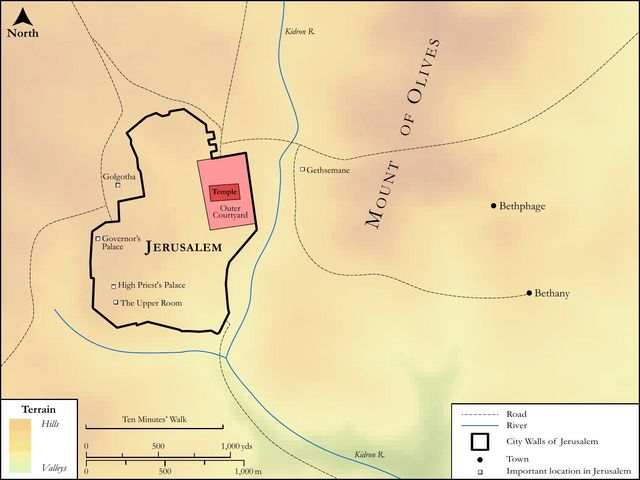
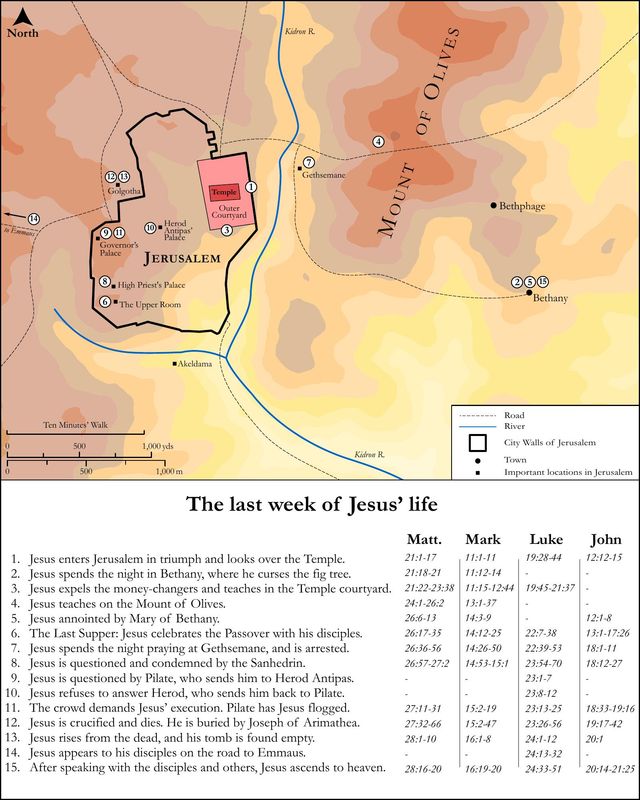
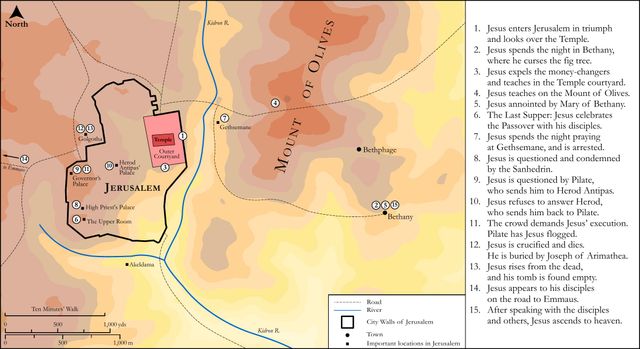
See on the biblical-era maps
Study this verse
Historical interpretation
Eleven Centuries of Reception
14 surviving comments on this verse. Each one is dated, so this reads as a timeline rather than a list.
Select a marker to jump to its quote. Markers stagger vertically where authors wrote within a few decades of each other.
"And therefore many are called, but few chosen." It is not asked who is ready to follow the broad way, but who the narrow.
Rightly has the Father already made this wedding, because this eternal union and espousal of the new body is already perfect in Christ.
Or; The servants who were first sent to call them that were bidden, are the Apostles; they who, being before bidden, are now invited to come in, are the people of Israel, who had before been bidden through the Law to the glories of eternity. To the Apostles therefore it belonged to remind those whom the Prophets had invited. Those sent with the second injunction are the Apostolic men their successors.
Or otherwise; The oxen are the glorious army of Martyrs, offered, like choice victims, for the confession of God; the fatlings are spiritual men, as birds fed for flight upon heavenly food, that they may fill others with the abundance of the food they have eaten.
For men are taken up with worldly ambition as with a farm; and many through covetousness are engrossed with trafficking.
By the street also is to be understood the time of this world, and they are therefore bid to go to the crossings of the streets, because the past is remitted to all.
Or; The wedding garment is the grace of the Holy Spirit, and the purity of that heavenly temper, which taken up on the confession of a good enquiry is to be preserved pure and unspotted for the company of the kingdom of heaven.
For to invite all without exception is a courtesy of public benevolence; but out of the invited or called, the election will be of worth, by distinction of merit.
What then? Shall we not go over unto blessedness so great? Shall we not come unto these angels; shall we not receive clean garments, and join in the ceremonies of this wedding feast; but shall we continue begging, in no respect in a better condition than the poor in the streets, or rather in a state far worse and more wretched? For much worse than these are they that are rich in evil ways, and it is better to beg than to spoil, for the one hath excuse, but the other brings punishment; and the beggar in no degree offends God, but this other both men and God; and undergoes the labors of rapine, but all the enjoyment thereof other men often reap.
Knowing then these things, let us lay aside all covetousness, and covet the things above, with great earnestness "taking the kingdom by force." For it cannot be, it cannot be that any one who is remiss should enter therein.
But God grant that we all having become earnest, and watchful may attain thereto, by the grace and love towards man of our Lord Jesus Christ, to whom be glory and might, world without end. Amen.
(Hom. lxix.) Forasmuch as He had said, And it shall be given to a nation bringing forth the fruits thereof, He now proceeds to show what nation that is.
These occupations seem to be entirely reasonable; but we learn hence, that however necessary the things that take up our time, we ought to prefer spiritual things to every thing beside. But it seems to me that they only pretended these engagements as a cloak for their disregard of the invitation.
(Verse 14) For many are called, but few are chosen. This parable encompasses in a brief sentence: that in the work of the vineyard, in the building of the house, and in the wedding feast, the focus should be on the end rather than the beginning.
He sent his servant, without doubt Moses, by whom He gave the Law, to those who had been invited. But if you read servants as most copies have, it must be referred to the Prophets, by whom they were invited, but neglected to come. By the servants who were sent the second time, we may better understand the Prophets than the Apostles; that is to say, if servant is read in the first place; but if 'servants,' then by the second servants are to be understood the Apostles;
The dinner that is prepared, the oxen and the fatlings that are killed, is either a description of regal magnificence by the way of metaphor, that by carnal things spiritual may be understood; or the greatness of the doctrines, and the manifold teaching of God in His law, may be understood.
When He was doing works of mercy, and bidding to His marriage-feast, He was called a man; (homini regi) now when He comes to vengeance, the man is dropped, and He is called only a King.
By His armies we understand the Romans under Vespasian and Titus, who having slaughtered the inhabitants of Judæa, laid in ashes the faithless city.
For the Gentile nation was not in the streets, but in the crossings of the streets.
For there is an infinite difference among the Gentiles themselves; some are more prone to vice, others are endowed with more incorrupt and virtuous manners.
Or; The marriage garment is the commandments of the Lord, and the works which are done under the Law and the Gospel, and form the clothing of the new man. Whoso among the Christian body shall be found in the day of judgment not to have these, is straightway condemned. He saith unto him, Friend, how camest thou in hither, not having a wedding garment? He calls him friend, because he was invited to the wedding as being a friend by faith; but He charges him with want of manners in polluting by his filthy dress the elegance of the wedding entertainment.
For in that day there will be no room for blustering manner, nor power of denial, when all the Angels and the world itself are witnesses against the sinner.
By a metaphor taken from the body, there shall be weeping and gnashing of teeth, is shown the greatness of the torments. The binding of the hands and feet also, and the weeping of eyes, and the gnashing of teeth, understand as proving the truth of the resurrection of the body.
And because in the marriage and supper the chief thing is the end and not the beginning, therefore He adds, For many are called, but few chosen.
What is that wedding garment, then? This is the wedding garment: “The goal of this command is charity,” says the apostle, “which comes from a pure heart and a good conscience and a sincere faith.” This is the wedding garment. Not charity of any kind whatever—for very often they who are partakers together of an evil conscience seem to love one another. Those who commit robberies together, who love the destructive arts of witchcraft, and who go to the coliseum together and join together in the shout of the chariot race or the wild beast fight—these too in some sense very often may be said to love one another.But in these is no charity from a pure heart, a good conscience and a faith unfeigned. The wedding garment is charity such as this: “Though I speak with the tongues of men and of angels and have not charity, I have become like a sounding brass and a tinkling cymbal.” Suppose someone who speaks in tongues comes in and is asked, “How did you get in here without a wedding garment?”
Suppose he answers, “But I have the gift of prophecy and understand all mysteries and all knowledge, and I have all faith, so that I could remove mountains.” But if he has no charity, he has nothing. Such may be the clothing of those who in fact lack the wedding garment. “Though,” he says, “I have all these and have not Christ, I am nothing.” Is then “the gift of prophecy” nothing? Is then “the knowledge of mysteries” nothing? It is not that these are nothing. But “I, if I have them, and have not charity, am nothing.”
(de Cons. Ev. ii. 71.) This parable is related only by Matthew. Luke gives one like it, but it is not the same, as the order shows.
Otherwise; When the resurrection of the saints shall be, then the life, which is Christ, shall revive man, swallowing up his mortality in its own immortality. For now we receive the Holy Spirit as a pledge of the future union, but then we shall have Christ Himself more fully in us.
When the servants were sent to call them, they must have been invited before. Men have been invited from the time of Abraham, to whom was promised Christ's incarnation.
whom He sent when He said unto them, Go not into the way of the Gentiles, but rather go to the lost sheep of the house of Israel. (Mat. 10:5.)
When therefore the Lord bade the Apostles, Go ye and preach, saying, The kingdom of heaven is at hand, it was the same message as is here given, I have prepared my dinner; i. e. I have set out the table of Scripture out of the Law and the Prophets.
Otherwise; He says oxen and fatlings, not as though the oxen were not fatted, but because all the oxen were not fat. Therefore the fatlings denote the Prophets who were filled with the Holy Spirit; the oxen those who were both Priests and Prophets, as Jeremiah and Ezekiel; for as the oxen are the leaders of the herd, so also the Priests are leaders of the people.
That He says, And all things are now ready, means, that all that is required to salvation is already filled up in the Scriptures; there the ignorant may find instruction; the self-willed may read of terrors; he who is in difficulty may there find promises to rouse him to activity.
(non occ. sed vid. Gloss. ord.) Or He says, All things are now ready which belong to the mystery of the Lord's Passion, and our redemption. He says, Come to the marriage, not with your feet, but with faith, and good conduct. But they made light of it; why they did so He shows when He adds, And they went their way, one to his farm, another to his merchandize.
Or otherwise; When we work with the labour of our hands, for example, cultivating our field or our vineyard, or any manufacture of wood or iron, we seem to be occupied with our farm; any other mode of getting money unattended with manual labour is here called merchandize. O most miserable world! and miserable ye that follow it! The pursuits of this world have ever shut men out of life.
Or, by the business of a farm, He denotes the Jewish populace, whom the delights of this world separated from-Christ; by the excuse of merchandize, the Priests and other ministers of the Temple, who, coming to the service of the Law and the Temple through greediness of gain, have been shut out of the faith by covetousness. Of these He said not, 'They were filled with envy,' but They made light of it. For they who through hate and spite crucified Christ, are they who were filled with envy; but they who being entangled in business did not believe on Him, are not said to have been filled with envy, but to have made light of it. The Lord is silent respecting His own death, because He had spoken of it in the foregoing parable, but He shows forth the death of His disciples, whom after His ascension the Jews put to death, stoning Stephen and executing James the son of Alphæus, for which things Jerusalem was destroyed by the Romans. And it is to be observed, that anger is attributed to God figuratively and not properly; He is then said to be angry when He punishes.
The Roman army is called God's army; because The earth is the Lord's, and the fulness thereof; (Ps. 24:1.) nor would the Romans have come to Jerusalem, had not the Lord stirred them thither.
Or; The streets are all the professions of this world, as philosophy, soldiery, and the like. And therefore He says, Go out into the crossings of the streets, that they may call to the faith men of every condition. Moreover, as chastity is the way that leads to God, so fornication is the way that leads to the Devil; and so it is in the other virtues and vices. Thus He bids them invite to the faith men of every profession or condition.
The King came in to see the guests; not as though there was any place where He is not; but where He will look to give judgment, there He is said to be present; where He will not, there He seems to be absent. The day of His coming to behold is the day of judgment, when He will visit Christians seated at the board of the Scriptures.
Or, it points to the difference of punishment inflicted on sinners. Outer darkness being the deepest, inward darkness the lesser, as it were the outskirts of the place.
Or otherwise; Whenever God will try His Church, He enters into it that He may see the guests; and if He finds any one not having on the wedding garment, He enquires of him, How then were you made a Christian, if you neglect these works? Such a one Christ gives over to His ministers, that is, to seducing leaders, who bind his hands, that is, his works, and his feet, that is, the motions of his mind, and cast him into darkness, that is, into the errors of the Gentiles or the Jews, or into heresy. The nigher darkness is that of the Gentiles, for they have never heard the truth which they despise; the outer darkness is that of the Jews, who have heard but do not believe; the outermost is that of the heretics, who have heard and have learned.
That is, the whole sacrament of the human dispensation is completed and closed. But they which, were bidden, (Rom. 10:3.) that is, the Jews, were not worthy, because, ignorant of the righteousness of God, and going about to establish their own righteousness, they have not submitted themselves to the righteousness of God. The Jewish nation then being rejected, the Gentile people were taken in to the marriage-feast; whence it follows, Go ye out into the crossings of the streets, and as many as ye shall find, bid to the wedding.
These are the errors of the Gentiles.
But when one has been rejected, in whom clearly the whole body of the wicked is represented, a general judgment is immediately added, in which it is said: "For many are called, but few are chosen." What we have heard is greatly to be feared, dearest brothers. Behold, we who have all now been called through faith come to the wedding feast of the heavenly king, we both believe and confess the mystery of his incarnation, we receive the banquet of the divine Word, but on the future day of judgment the king will enter. That we are called, we know; whether we are chosen, we do not know. Therefore it is necessary that each one of us humble himself in humility all the more because he does not know whether he is chosen. For some do not even begin good works, while others do not persist at all in the good works they have begun. One person is seen to lead nearly his whole life in wickedness, but near the end of his life he is called back from his wickedness through the lamentations of severe penance; another seems to lead a chosen life, and yet it happens that near the end of his life he turns aside to the wickedness of error. One begins good well and finishes better; another casts himself down in evil deeds from his earliest age, and in the same works is always finished worse than himself. Therefore let each one anxiously fear for himself all the more because he does not know what remains, for, what must often be said and retained without forgetfulness: "Many are called, but few are chosen."
But because sometimes the examples of the faithful convert the minds of hearers more than the words of teachers, I wish to tell you something from nearby, which your hearts may hear with all the more fear, since it sounds to them from close at hand. For we are not speaking of things done long ago, but we recall those of which witnesses exist, and who report that they were present. My father had three sisters, who were all three sacred virgins: one was called Tharsilla, another Gordiana, another Aemiliana. All were converted with one ardor, consecrated at one and the same time, living under regular discipline, they led a common life in their own home. And when they had been for a long time in the same manner of life, Tharsilla and Aemiliana began to grow daily with increasing love for their Creator, and though they were here only in body, daily they passed in spirit to eternal things. But on the contrary, Gordiana's spirit began to grow lukewarm from the warmth of inner love through daily losses, and little by little to return to the love of this world. Often Tharsilla used to say to her sister Aemiliana with great sighing: "I see that our sister Gordiana is not of our lot; for I perceive that she flows outward, and does not keep her heart to what she has professed." They took care to correct her with gentle daily reproof, and to reform her from levity of manners to the gravity of her state. She would indeed suddenly assume an expression of gravity amid the words of correction, but when the hour of that correction had passed, the assumed gravity of respectability immediately passed as well, and she soon returned to frivolous words. She rejoiced in the company of lay girls, and any person who was not devoted to this world was very burdensome to her.
But one night to this Tharsilla, my aunt, who among her sisters had excelled in the honor and height of sanctity by virtue of continuous prayer, zealous mortification, singular abstinence, and gravity of life, as she herself related, my great-great-grandfather Felix, bishop of this Roman Church, appeared in a vision, and showed her a mansion of perpetual brightness, saying: "Come, for I receive you into this mansion of light." She was immediately seized by a fever the following day and came to her final day. And just as when noble women and men are dying many gather to console their relatives, at the very hour of her departure many men and women stood around her bed, among whom my mother also was present; when suddenly she looked upward and saw Jesus coming, and with great earnestness began to cry out to those standing around, saying: "Depart, depart, Jesus comes." And as she gazed upon him whom she saw, that holy soul was released from the flesh; and suddenly such a fragrance of wondrous odor was spread about that the sweetness itself showed to all that the author of sweetness had come there. And when her body was stripped to be washed as is the custom for the dead, it was found that hardened skin had grown on her elbows and knees, in the manner of camels, from long practice of prayer, and her dead flesh testified to what her living spirit had always done.
These things occurred before the day of the Lord's Nativity. When that had passed, she soon appeared to her sister Aemiliana in a vision of the night, saying: "Come, so that since I spent the Lord's Nativity without you, I may now spend the holy day of Theophany with you." She, immediately anxious about the salvation of their sister Gordiana, replied: "And if I come alone, to whom do I leave our sister Gordiana?" To her, as she reported, Tharsilla said again with sad countenance: "Come, for our sister Gordiana has been reckoned among the laywomen." This vision was soon followed by bodily illness, and just as had been said, before the day of the Lord's appearing, with that illness growing worse, she died. But Gordiana, as soon as she found herself left alone, her wickedness increased, and what had previously lain hidden in the desire of thought, she afterward carried out in the effect of wicked action. For forgetful of the fear of the Lord, forgetful of modesty and reverence, forgetful of her consecration, she afterward took the steward of her fields as a husband. Behold, all three were first converted with one ardor, but they did not remain in one and the same devotion, because according to the Lord's voice, "Many are called, but few are chosen."
I have said these things therefore, lest anyone already established in good work attribute to himself the strength of good work, lest anyone trust in his own action, because even if he knows today what he is like, he still does not know what he will be tomorrow. Let no one therefore rejoice securely in his own works, since while still in the uncertainty of this life he does not know what end will follow.
But because I have related a matter which terrified you from divine severity, I also relate another thing from nearby which may console your terrified hearts from divine mercy; which however I remember that I already said in another sermon, but you were by no means present. Two years ago, a certain brother came to my monastery, which is situated near the Church of the blessed martyrs John and Paul, for the purpose of conversion. After being tested according to the rule for a long time, he was eventually admitted. His brother followed him to the monastery not out of zeal for conversion but out of carnal affection. Now the one who had come for conversion was very pleasing to the brothers; but his brother, on the contrary, was far different from his life and character. He lived in the monastery more from necessity than from choice. And though he was perverse in all his actions, he was patiently tolerated by everyone for the sake of his brother. For he was frivolous in speech, wicked in action, refined in clothing, unrefined in character; and he could not bear it if anyone spoke to him about adopting the religious life. Indeed, his way of life had become burdensome for all the brothers to witness, yet, as was said, he was tolerable to all for the sake of his brother. He greatly despised it if anyone spoke to him about correcting his depravity. He could not only not do good things, but could not even hear about them. He kept declaring, with oaths, anger, and mockery, that he would never embrace the religious life.
But in that plague which recently consumed a great part of the population of this city, he was struck in the groin and brought to the point of death. When he was breathing his last, the brothers gathered to protect his departure with their prayers. His body was already dead from the extremities, and vital warmth still lingered only in his chest. All the brothers began to pray more earnestly for him as they saw him departing so quickly. Suddenly, with the brothers standing by, he began to cry out with whatever effort he could and to interrupt their prayers, saying: "Withdraw, withdraw! Behold, I have been given to a dragon to be devoured, and because of your presence he cannot devour me. He has already swallowed my head in his mouth; give him room so that he may torment me no longer but do what he is going to do. If I have been given to him to be devoured, why do I suffer this delay because of you?" Then the brothers began to say to him: "What are you saying, brother? Make the sign of the holy cross upon yourself." He answered as best he could, saying: "I want to sign myself, but I cannot, because I am pressed down by the dragon." When the brothers heard this, they prostrated themselves on the ground and with tears began to pray more intensely for his deliverance. And behold, suddenly the sick man began to improve and to rejoice with whatever voice he had, saying: "Thanks be to God! Behold, the dragon who had taken me to devour me has fled; driven out by your prayers, he could not remain. Now intercede for my sins, because I am ready to be converted and to abandon the worldly life entirely." Therefore this man, who, as was already said, had been dead from the extremities of his body, was preserved for life and was converted to God with his whole heart. He was disciplined by long and continuous afflictions in that same conversion, and died a few days ago when his bodily illness increased. As he was dying, he did not see the dragon, because he had conquered it through the transformation of his heart.
Behold, my brothers, Gordiana, whom I mentioned above, fell from the height of the religious habit to punishment, and this brother, about whom I have told these things, returned from the very moment of death to eternal life. Therefore no one knows what is being done concerning himself in the hidden judgments of God; for "many are called, but few are chosen." Since, therefore, no one is certain about himself that he is chosen, it remains that all should tremble, all should fear concerning their conduct, all should rejoice only in divine mercy, and no one should presume upon his own strength.
(Hom. in Ev. xxxviii. 2.) Here, by the wedding-feast is denoted the present Church; there, by the supper, the last and eternal feast. For into this enter some who shall perish; into that whosoever has once entered in shall never be put forth. But if any should maintain that these are the same lessons, we may perhaps explain that that part concerning the guest who had come in without a wedding garment, which Luke has not mentioned, Matthew has related. That the one calls it supper, the other dinner, makes no difference; for with the ancients the dinner was at the ninth hour, and was therefore often called supper.
(ubi sup.) G marriage feast for God the Son, when He joined Him to human nature in the womb of the Virgin. But far be it from us to conclude, that because marriage takes place between two separate persons, that therefore the person of our Redeemer was made up of two separate persons. We say indeed that He exists of two natures, and in two natures, but we hold it unlawful to believe that He was compounded of two persons. It is safer therefore to say, that the marriage feast was made by the King the Father for the King the Son when He joined to Him the Holy Church in the mystery of His incarnation. The womb of the Virgin Mother was the bride-chamber of this Bridegroom.
(ubi sup.) But because these who were first invited would not come to the feast, the second summons says, Behold, I have prepared my dinner.
(ubi sup.) By the oxen are signified the Fathers of the Old Testament; who by sufferance of the Law gored their enemies with the horn of bodily strength. By fatlings are meant fatted animals, for from 'alere', comes 'altilia,' as it were 'alitilia' or 'alita.' By the fatlings are intended the Fathers of the New Testament; who while they receive sweet grace of inward fattening, are raised by the wing of contemplation from earthly desires to things above. He says therefore, My oxen and my fallings are killed; as much as to say, Look to the deaths of the Fathers who have been before you, and desire some amendment of your lives.
(ubi sup.) It is to be observed, that in the first invitation nothing was said of the oxen or fatlings, but in the second it is announced that they are already killed, because Almighty God when we will not hear His words gives examples, that what we suppose impossible may become easy to us to surmount, when we hear that others have passed through it before us.
Whosoever then intent upon earthly business, or devoted to the actions of this world, feigns to be meditating upon the mystery of the Lord's Passion, and to be living accordingly, is he that refuses to come to the King's wedding on pretext of going to his farm or his merchandize. Nay often, which is worse, some who are called not only reject the grace, but become persecutors, And the remnant took his servants, and entreated them despitefully, and slew them.
(ubi sup.) Or, The armies of our King are the legions of His Angels. He is said therefore to have sent His armies, and to have destroyed those murderers, because all judgment is executed upon men by the Angels. He destroys those murderers, when He cuts off persecutors; and burns up their city, because not only their souls, but the body of flesh they had tenanted, is tormented in the everlasting fire of hell.
(ubi sup.) But when He sees that His invitation is spurned at, He will not have His Son's marriage-feast empty; the word of God will find where it may stay itself.
(ubi sup.) Or otherwise; In holy Scripture, way is taken to mean actions; so that the crossings of the ways we understand as failure in action, for they usually come to God readily, who have had little prosperity in worldly actions.
(ubi sup.) Or; He means that in this present Church there cannot be bad without good, nor good without bad. He is not good who refuses to endure the bad.
(ubi sup.) What ought we to understand by the wedding garment, but charity? For this the Lord had upon Him, when He came to espouse the Church to Himself. He then enters in to the wedding feast, but without the wedding garment, who has faith in the Church, but not charity.
(ubi sup.) The hands and feet are then bound by a severe sentence of judgment, which before refused to be bound from wicked actions by amendment of life. Or punishment binds them, whom sin had before bound from good works.
(ubi sup.) By inward darkness we express blindness, of heart; outer darkness signifies the everlasting night of damnation.
(ubi sup.) There shall gnash those teeth which here delighted in gluttony; there shall weep those eyes which here roamed in illicit desire; every member shall there have its peculiar punishment, which here was a slave to its peculiar vice.
(ubi sup.) For some never begin a good course, and some never continue in that good course which they have begun. Let each one's care about himself be in proportion to his ignorance of what is yet to come.
The entry into the wedding takes place without distinction of persons, for by grace alone we have all been called, good and bad alike; but the life thereafter of those who enter shall not be without examination, for indeed the king makes an exceedingly careful examination of those found to be sullied after entering into the faith. Let us tremble, then, when we understand that if one does not lead a pure life, faith alone benefits him not at all. For not only is he cast out of the wedding feast, but he is sent away into the fire. Who is he that is wearing filthy garments? It is he who is not clothed with compassion, goodness, and brotherly love. For there are many who deceive themselves with vain hopes, thinking that they shall attain the kingdom of heaven, and they include themselves among the assembly of the dinner guests, thinking great things of themselves. Being justified in regard to that unworthy man, the Lord demonstrates these two things to us; first, that He loves mankind, and secondly, that we ought not to pass judgement on anyone, even if they sin openly, unless they have been reproved for their sin. The Lord then says to His servants, the angels of punishment, "Bind his hands and feet," that is, the soul’s powers of action. For in this present age is the time to act and to do, but in the age to come all of the soul’s powers of action are bound, and a man cannot then do any good thing to outweigh his sins. Gnashing of teeth is the meaningless repentance that will then take place. "Many are called" for God calls many, indeed, all, "but few are chosen." For few are saved and found worthy to be chosen by God. For it is God’s part to call, but to become one of the chosen or not, is our part. He shows, then, that this parable was spoken for the Jews who were called but were not chosen, as they did not listen.
(interlin.) Answered, that is, meeting their evil thoughts of putting Him to death.
(interlin.) Or, All things are now ready, i. e. The entrance into the kingdom, which had been hitherto closed, is now ready through faith in My incarnation.
Continue studying Matthew 22:14 across the web’s major study libraries — every link below opens this exact verse, chapter, or book on the destination site.
Read & Compare
 BibleGatewayThis verse in more than 200 translations and 70 languages.
 Bible.comThe YouVersion reader — hundreds of translations, reading plans, and highlights.
 ESV.orgCrossway's official English Standard Version reader.
 NET BibleThe NET translation with 60,000+ translators' notes on every rendering decision.
 STEP BibleTyndale House's free study tool — original text, vocabulary, and scholarly resources.
 BibliaLogos Bible Software's free web reader.
 USCCBThe New American Bible (Revised Edition) with the U.S. bishops' study notes.
Commentaries
 BibleHub CommentariesDozens of classic commentaries on this verse, gathered on one page.
 StudyLightMore than 100 commentary sets — the largest collection on the web.
 BibleRefPlain-English commentary on what this verse means, verse by verse.
 Enduring WordDavid Guzik's free commentary on this chapter, widely used by Bible teachers.
 Bible Study ToolsVerse commentary alongside Greek and Hebrew study aids.
Original Language & Research
- BibleHub InterlinearThe verse word by word — original language, transliteration, and English.
- BibleHub LexiconEvery word's original-language definition and Strong's entry.
 Blue Letter BibleDeep-study tools — Strong's numbers, concordance, and word studies.
 CNTR CollationThe earliest Greek manuscripts of this verse, collated letter by letter.
Sermons, Hymns & Audio


TrulyRandomVerse is not affiliated with these sites and doesn’t control their content. They’re linked because they’re genuinely useful.
Summary
Matthew 22:14 serves as a profound summary statement concluding Jesus' Parable of the Wedding Feast, revealing a critical distinction in the Kingdom of Heaven: while God's gracious invitation to salvation is extended broadly to all humanity, only a select few respond with genuine faith and commitment, demonstrating the transformed life required for true entry into His eternal presence. This verse encapsulates the tension between the universal call of the Gospel and the specific, effective work of divine election, underscoring the necessity of a sincere and righteous response to God's overtures.
Context
ShowHideLiterary Context
This verse provides the interpretive key to the preceding Parable of the Wedding Feast found in Matthew 22:1-14. This parable is strategically placed within a series of parables (including the Parable of the Two Sons and the Parable of the Wicked Tenants) that Jesus delivers in Jerusalem during His final week, directly confronting the religious authorities who rejected His messianic claims. The parables collectively build a narrative of God's patient invitation, Israel's rejection, the subsequent extension of the invitation to the Gentiles, and the ultimate judgment upon those who refuse or respond improperly. Matthew 22:14 acts as the climactic moral, emphasizing that even among those who accept the broad invitation, a deeper, genuine transformation symbolized by the "wedding garment" is required for true inclusion.
Historical & Cultural Context
Wedding feasts in ancient Jewish culture were significant social and religious events, often lasting for days, symbolizing joy, covenant, and community. Invitations were typically extended in two stages: an initial general invitation, followed by a specific summons when the feast was ready. Refusal, especially by prominent guests, was a grave insult. The "wedding garment" was crucial; it was customary for hosts, especially wealthy ones like the king in the parable, to provide appropriate attire for guests, or at least for guests to ensure they were dressed suitably for such an esteemed occasion. The guest's lack of a garment therefore signifies either a deliberate act of disrespect or a profound lack of understanding of the host's expectations. Historically, the parable reflects God's repeated invitations to Israel through the prophets, their rejection of the Messiah, and the subsequent opening of the Kingdom to "anyone they found" (Matthew 22:9), including Gentiles. The burning of the city (Matthew 22:7) is often seen as a prophetic reference to the Roman destruction of Jerusalem in A.D. 70, a direct consequence of Israel's rejection of God's Son.
Key Themes
ShowHideThe verse encapsulates several profound themes central to Jesus' teaching and the broader biblical narrative. Firstly, it highlights The Universal Divine Invitation, where God, in His boundless grace, extends the Gospel call to all people, desiring that all might come to repentance and salvation. Secondly, it underscores Human Responsibility and the Nature of True Faith, emphasizing that a mere outward acceptance or presence is insufficient; a genuine, transformative response, symbolized by the "wedding garment" of righteousness and faith, is essential. This resonates with Jesus' teaching on the narrow gate. Thirdly, the verse touches upon Divine Sovereignty and Election, affirming that while the call is broad, God's ultimate choice of those who truly belong to Him is a sovereign act, often understood in light of His foreknowledge and purpose, as seen in passages like Romans 8:29-30. Finally, it warns of Exclusion and Judgment, reminding listeners that a superficial or unrighteous response to God's invitation will ultimately lead to being cast out, highlighting the seriousness of the Kingdom's demands.
Exposition and Analysis
ShowHideKey Word Analysis
ShowHideThis word means "invited, i.e. appointed, or (specially), a saint." In this context, it refers to the widespread, general invitation (the outward proclamation of the Gospel) extended to all who hear it. It signifies the initial summons from God to humanity to enter into His Kingdom and partake in the blessings of salvation. This call is broad and indiscriminate, reaching "many."
Meaning "select; by implication, favorite." This term denotes those who are divinely selected or elected. It points to God's sovereign act of choosing, distinguishing those who not only hear the call but are also effectually drawn by God's Spirit, respond with genuine faith, and are transformed, thus becoming true members of His Kingdom. This is a narrower group than those merely "called."
Meaning "(singular) much (in any respect) or (plural) many." In this verse, "many" emphasizes the extensive, widespread nature of the invitation. The Gospel is proclaimed universally, and countless individuals are exposed to its message. This stands in stark contrast to the "few" who ultimately meet the criteria for true inclusion.
Verse Breakdown
ShowHide"For many are called"
This clause highlights the expansive and generous nature of God's invitation. The Gospel message, the good news of the Kingdom, is proclaimed widely, reaching a vast number of people. This "call" is an outward summons, an offer of grace that is freely extended to all who are within earshot of the divine invitation. It signifies the accessibility of God's grace and His desire for humanity to turn to Him.
"but few [are] chosen"
This contrasting clause introduces a critical distinction. While the call is broad, the number of those who are ultimately "chosen" is comparatively small. This "chosen" status refers to those who not only hear the call but also respond with genuine, transforming faith, aligning their lives with God's will and accepting the righteousness provided by Him (symbolized by the wedding garment). It speaks to God's sovereign election and the reality that true, saving faith is a work of God's Spirit in the heart, leading to a life of obedience and belonging.
Literary Devices
ShowHideThe primary literary device employed in this verse is Antithesis or Contrast. Jesus deliberately juxtaposes "many" with "few" and "called" with "chosen" to highlight a profound spiritual truth. This stark contrast emphasizes the vast difference between the widespread proclamation of the Gospel and the limited number of those who genuinely embrace it and are effectively brought into God's Kingdom. The verse also functions as an Aphorism or Proverbial Statement, a concise, memorable saying that encapsulates a deep theological principle derived from the preceding parable. It serves as a concluding moral, distilling the complex narrative into a powerful, easily repeatable truth. Furthermore, the verse implicitly relies on Symbolism from the parable itself, where the "wedding feast" symbolizes the Kingdom of Heaven and the "wedding garment" represents the righteousness or genuine faith required for entry.
Theological and Thematic Connections
ShowHideMatthew 22:14 stands as a cornerstone verse in understanding the complex interplay between divine sovereignty and human responsibility in salvation. It teaches that God's grace is universally offered through the Gospel ("many are called"), demonstrating His benevolent desire for all to come to Him. Yet, it simultaneously affirms God's sovereign prerogative in election ("few are chosen"), indicating that true membership in His Kingdom is not merely a matter of hearing the invitation but of a genuine, Spirit-wrought transformation and a righteous response that God Himself enables and acknowledges. This verse challenges the notion of a superficial faith, insisting that true belonging requires more than outward association; it demands an inward change and a life lived in conformity to God's will, which is ultimately a gift of His grace.
Reflection and Application
ShowHideThis powerful statement from Jesus compels us to move beyond a casual understanding of our faith and to deeply examine the nature of our response to God's gracious invitation. It's not enough to simply be "called" in the sense of having heard the Gospel or being nominally associated with Christianity; the crucial question is whether we are among the "chosen" – those whose lives genuinely reflect a transformed heart and a true commitment to Christ. This involves not just intellectual assent but a radical reorientation of our lives, symbolized by the "wedding garment" of Christ's righteousness and the new life He enables. We are called to live out our faith authentically, pursuing holiness, repentance, and obedience, recognizing that true belonging to God's Kingdom is evidenced by a life surrendered to His Lordship. This verse serves as both a comfort, knowing God's sovereign hand is at work, and a profound challenge to ensure our faith is living, active, and genuine.
Questions for Reflection
ShowHideFAQ
ShowHideDoes "chosen" mean God arbitrarily picks some and rejects others, making human choice irrelevant?
ShowHideThe relationship between God's sovereignty ("chosen") and human responsibility ("called") is a profound theological tension, not a contradiction. While God's election is a mysterious and sovereign act, it is never presented in Scripture as arbitrary or negating human free will. Rather, God's choosing is often understood as His foreknowledge of those who will respond to His call, or His divine initiative in drawing individuals to Himself (e.g., John 6:44). The "call" is genuine and universal, requiring a free response. The "chosen" are those whose hearts are opened by God's grace to respond to that call in genuine faith. The parable itself implies responsibility for the guest without the garment, suggesting that while God chooses, there is a necessary, Spirit-enabled human response of faith and obedience. The emphasis is on the necessity of a right response, not on a fatalistic predetermination that bypasses human will.
What is the practical difference between being "called" and being "chosen"?
ShowHideThe distinction is crucial. Being "called" refers to the outward, general invitation of the Gospel. This call is extended to everyone who hears the message of salvation through Jesus Christ. It's an open invitation, like the king sending his servants to invite "everyone they found" (Matthew 22:9). Many people hear this call; they may attend church, read the Bible, or have a general awareness of Christian teachings. However, being "chosen" refers to a deeper, effective work of God's grace. It describes those who not only hear the call but are inwardly transformed by the Holy Spirit, respond with genuine repentance and saving faith, and are truly brought into a relationship with God. They are the ones who put on the "wedding garment" of righteousness provided by Christ. The "called" are those invited; the "chosen" are those who truly belong to the Kingdom and demonstrate it through a transformed life.
Christ-Centered Fulfillment
ShowHideMatthew 22:14 finds its ultimate fulfillment and deepest meaning in the person and work of Jesus Christ. He is the very embodiment of God's universal "call" to humanity, for it is through Him that the invitation to the Kingdom is extended to "whosoever believes" (John 3:16). Jesus is also the "chosen" one of God, the Messiah uniquely selected and anointed by the Father to accomplish salvation (Isaiah 42:1). Furthermore, Christ Himself is the "wedding garment" that makes the "chosen" acceptable at the feast. We are not chosen based on our own merit or inherent righteousness, but by being clothed in His perfect righteousness through faith (2 Corinthians 5:21). Through His atoning sacrifice, Jesus provides the only way for sinful humanity to be reconciled to a holy God (John 14:6). Thus, to be "chosen" is to be chosen in Christ, to be united with Him, and to receive the new life and righteousness that He alone provides, enabling us to truly participate in the eternal feast of God's Kingdom.