


Matthew 7:13
- ΕἰσέλθατεEiselthatedo enterG1525V-2AAM-2PVerb 2nd Aorist Active Imperative 2nd Plural
- διὰdiathroughG1223PREPPreposition
- τῆςtēstheG3588T-GSFDefinite article Genitive Singular Feminine
- στενῆςstenēsnarrowG4728A-GSFAdjective Genitive Singular Feminine
- πύληςpulēsgateG4439N-GSFNoun Genitive Singular Feminine
- ὅτιhotiForG3754CONJConjunction
- πλατεῖαplateiawide [is]G4116A-NSFAdjective Nominative Singular Feminine
- ἡhētheG3588T-NSFDefinite article Nominative Singular Feminine
- πύληpulēgateG4439N-NSFNoun Nominative Singular Feminine
- καὶkaiandG2532CONJConjunction
- εὐρύχωροςeuruchōrosbroadG2149A-NSFAdjective Nominative Singular Feminine
- ἡhētheG3588T-NSFDefinite article Nominative Singular Feminine
- ὁδὸςhodoswayG3598N-NSFNoun Nominative Singular Feminine
- ἡhēwhichG3588T-NSFDefinite article Nominative Singular Feminine
- ἀπάγουσαapagousais leadingG520V-PAP-NSFVerb Present Active Participle Nominative Singular Feminine
- εἰςeistoG1519PREPPreposition
- τὴνtēn<the>G3588T-ASFDefinite article Accusative Singular Feminine
- ἀπώλειανapōleiandestructionG684N-ASFNoun Accusative Singular Feminine
- καὶkaiandG2532CONJConjunction
- πολλοίpolloimanyG4183A-NPMAdjective Nominative Plural Masculine
- εἰσινeisinareG1510V-PAI-3PVerb Present Active Indicative 3rd Plural
- οἱhoithoseG3588T-NPMDefinite article Nominative Plural Masculine
- εἰσερχόμενοιeiserchomenoienteringG1525V-PNP-NPMVerb Present Middle Or Passive Deponent Participle Nominative Plural Masculine
- δι᾽di᾽throughG1223PREPPreposition
- αὐτῆςautēsitG846P-GSFPersonal pronoun Genitive Singular Feminine
English is a literal word-by-word gloss of the Greek, not the KJV's wording. Why?
This is the original text the KJV's translators worked from — each Greek word with its own literal English meaning in this verse, prepared by scholars at Tyndale House, Cambridge. The KJV translates whole sentences, not word by word, so its wording differs: one Greek word can become several English words, and the KJV may choose “charity” where the gloss reads “love”. Both are faithful — they answer different questions. For the KJV's own rendering, switch to the KJV text.
Details
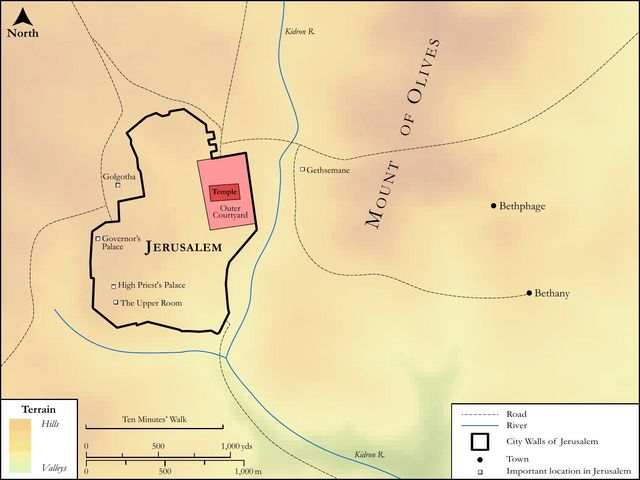
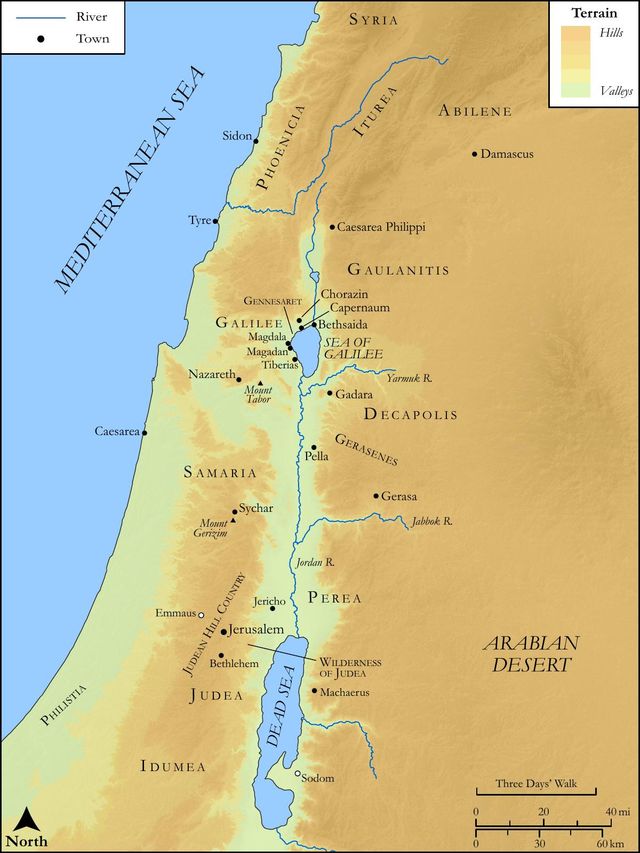
See on the biblical-era map
Study this verse
Public-domain commentary
Matthew Henry
From his Commentary on the Whole Bible. Henry comments on passages, not single verses — this entry covers Matthew 7:12–14. His four-level outline is real structure in the source text, so it is rendered as structure.
Our Lord Jesus here presses upon us that righteousness towards men which is an essential branch of true religion, and that religion towards God which is an essential branch of universal righteousness.
I.We must make righteousness our rule, and be ruled by it, Mat 7:12.
Therefore, lay this down for your principle, to do as you would be done by; therefore, that you may conform to the foregoing precepts, which are particular, that you may not judge and censure others, go by this rule in general; (you would not be censured, therefore do not censure), Or that you may have the benefit of the foregoing promises. Fitly is the law of justice subjoined to the law of prayer, for unless we be honest in our conversation, God will not hear our prayers, Isa 1:15-17; Isa 58:6, Isa 58:9; Zac 7:9, Zac 7:13. We cannot expect to receive good things from God, if we do not fair things, and that which is honest, and lovely, and of good report among men. We must not only be devout, but honest, else our devotion is but hypocrisy. Now here we have,
1.The rule of justice laid down; Whatsoever ye would that men should do to you, do you even so to them. Christ came to teach us, not only what we are to know and believe, but what we are to do; what we are to do, not only toward God, but toward men; not only towards our fellow-disciples, those of our party and persuasion, but towards men in general, all with whom we have to do. The golden rule of equity is, to do to others as we would they should do to us. Alexander Severus, a heathen emperor, was a great admirer of this rule, had it written upon the walls of his closet, often quoted it in giving judgment, honoured Christ, and favoured Christians for the sake of it. Quod tibi, hoc alteri - do to others as you would they should do to you. Take it negatively (Quod tibi fieri non vis, ne alteri feceris), or positively, it comes all to the same. We must not do to others the evil they have done us, nor the evil which they would do to us, if it were in their power; nor may we do that which we think, if it were done to us, we could bear contentedly, but what we desire should be done to us. This is grounded upon that great commandment, Thou shalt love thy neighbor as thyself. As we must bear the same affection to our neighbour that we would have borne to ourselves, so we must do the same good offices. The meaning of this rule lies in three things.
(1.)We must do that to our neighbour which we ourselves acknowledge to be fit and reasonable: the appeal is made to our own judgment, and the discovery of our judgment is referred to that which is our own will and expectation, when it is our own case.
(2.)We must put other people upon the level with ourselves, and reckon we are as much obliged to them, as they to us. We are as much bound to the duty of justice as they, and they as much entitled to the benefit of it as we.
(3.)We must, in our dealings with men, suppose ourselves in the same particular case and circumstances with those we have to do with, and deal accordingly. If I were making such a one's bargain, labouring under such a one's infirmity and affliction, how should I desire and expect to be treated? And this is a just supposition, because we know not how soon their case may really be ours: at least we may fear, lest God by his judgments should do to us as we have done to others, if we have not done as we would be done by.
2.A reason given to enforce this rule; This is the law and the prophets. It is the summary of that second great commandment, which is one of the two, on which hang all the law and the prophets, Mat 22:40. We have not this in so many words, either in the law or the prophets, but it is the concurring language of the whole. All that is there said concerning our duty towards our neighbour (and that is no little) may be reduced to this rule. Christ has here adopted it into this law; so that both the Old Testament and the New agree in prescribing this to us, to do as we would be done by. By this rule the law of Christ is commended, but the lives of Christians are condemned by comparing them with it. Aut hoc non evangelium, aut hi non evangelici. - Either this is not the gospel, or these are not Christians.
II.We must make religion our business, and be intent upon it; we must be strict and circumspect in our conversation, which is here represented to us as entering in at a strait gate, and walking on in a narrow way, Mat 7:13, Mat 7:14. Observe here,
1.The account that is given of the bad way of sin, and the good way of holiness. There are but two ways, right and wrong, good and evil; the way to heaven, and the way to hell; in the one of which we are all of us walking: no middle place hereafter, no middle way now: the distinction of the children of men into saints and sinners, godly and ungodly, will swallow up all to eternity.
Here is, (1.) An account given us of the way of sin and sinners; both what is the best, and what is the worst of it.
[1.]That which allures multitudes into it, and keeps them in it; the gate is wide, and the way broad, and there are many travellers in that way. First, "You will have abundance of liberty in that way; the gate is wide, and stands wide open to tempt those that go right on their way. You may go in at this gate with all your lusts about you; it gives no check to your appetites, to your passions: you may walk in the way of your heart, and in the sight of your eyes; that gives room enough." It is a broad way, for there is nothing to hedge in those that walk in it, but they wander endlessly; a broad way, for there are many paths in it; there is choice of sinful ways, contrary to each other, but all paths in this broad way. Secondly, "You will have abundance of company in that way: many there be that go in at this gate, and walk in this way." If we follow the multitude, it will be to do evil: if we go with the crowd, it will be the wrong way. It is natural for us to incline to go down the stream, and do as the most do; but it is too great a compliment, to be willing to be damned for company, and to go to hell with them, because they will not go to heaven with us: if many perish, we should be the more cautious.
[2.]That which should affright us all from it is, that it leads to destruction. Death, eternal death, is at the end of it (and the way of sin tends to it), - everlasting destruction from the presence of the Lord. Whether it be the high way of open profaneness, or the back way of close hypocrisy, if it be a way of sin, it will be our ruin, if we repent not.
(2.)Here is an account given us of the way of holiness.
[1.]What there is in it that frightens many from it; let us know the worst of it, that we may sit down and count the cost. Christ deals faithfully with us, and tells us,
First, That the gate is strait. Conversion and regeneration are the gate, by which we enter into this way, in which we begin a life of faith and serious godliness; out of a state of sin into a state of grace we must pass, by the new birth, Joh 3:3, Joh 3:5. This is a strait gate, hard to find, and hard to get through; like a passage between two rocks, Sa1 14:4. There must be a new heart, and a new spirit, and old things must pass away. The bent of the soul must be changed, corrupt habits and customs broken off; what we have been doing all our days must be undone again. We must swim against the stream; much opposition must be struggled with, and broken through, from without, and from within. It is easier to set a man against all the world than against himself, and yet this must be in conversion. It is a strait gate, for we must stoop, or we cannot go in at it; we must become as little children; high thoughts must be brought down; nay, we must strip, must deny ourselves, put off the world, put off the old man; we must be willing to forsake all for our interest in Christ. The gate is strait to all, but to some straiter than others; as to the rich, to some that have been long prejudiced against religion. The gate is strait; blessed be God, it is not shut up, nor locked against us, nor kept with a flaming sword, as it will be shortly, Mat 25:10.
Secondly, That the way is narrow. We are not in heaven as soon as we have got through the strait gate, nor in Canaan as soon as we have got through the Red Sea; no, we must go through a wilderness, must travel a narrow way, hedged in by the divine law, which is exceedingly broad, and that makes the way narrow; self must be denied, the body kept under, corruptions mortified, that are as a right eye and a right hand; daily temptations must be resisted; duties must be done that are against our inclination. We must endure hardness, must wrestle and be in an agony, must watch in all things, and walk with care and circumspection. We must go through much tribulation. It is hodos tethlimmenē - an afflicted way, a way hedged about with thorns; blessed be God, it is not hedged up. The bodies we carry about with us, and the corruptions remaining in us, make the way of our duty difficult; but, as the understanding and will grow more and more sound, it will open and enlarge, and grow more and more pleasant.
Thirdly, The gate being so strait and the way so narrow, it is not strange that there are but few that find it, and choose it. Many pass it by, through carelessness; they will not be at the pains to find it; they are well as they are, and see no need to change their way. Others look upon it, but shun it; they like not to be so limited and restrained. Those that are going to heaven are but few, compared to those that are going to hell; a remnant, a little flock, like the grape-gleanings of the vintage; as the eight that were saved in the ark, Pe1 3:20. In vitia alter alterum trudimus; Quomodo ad salutem revocari potest, quum nullus retrahit, et populus impellit - In the ways of vice men urge each other onward: how shall any one be restored to the path of safety, when impelled forwards by the multitude, without any counteracting influence? Seneca, Epist. 29. This discourages many: they are loth to be singular, to be solitary; but instead of stumbling at this, say rather, If so few are going to heaven, there shall be one the more for me.
[2.]Let us see what there is in this way, which, notwithstanding this, should invite us all to it; it leads to life, to present comfort in the favour of God, which is the life of the soul; to eternal bliss, the hope of which, at the end of our way, should reconcile us to all the difficulties and inconveniences of the road. Life and godliness are put together (Pe2 1:3); The gate is strait and the way narrow and up-hill, but one hour in heaven will make amends for it.
2.The great concern and duty of every one of us, in consideration of all this; Enter ye in at the strait gate. The matter is fairly stated; life and death, good and evil, are set before us; both the ways, and both the ends: now let the matter be taken entire, and considered impartially, and then choose you this day which you will walk in; nay, the matter determines itself, and will not admit of a debate. No man, in his wits, would choose to go to the gallows, because it is a smooth, pleasant way to it, nor refuse the offer of a palace and a throne, because it is a rough, dirty way to it; yet such absurdities as these are men guilty of, in the concerns of their souls. Delay not, therefore; deliberate not any longer, but enter ye in at the strait gate; knock at it by sincere and constant prayers and endeavors, and it shall be opened; nay, a wide door shall be opened, and an effectual one. It is true, we can neither go in, nor go on, without the assistance of divine grace; but it is as true, that grace is freely offered, and shall not be wanting to those that seek it, and submit to it. Conversion is hard work, but it is needful, and, blessed be God, it is not impossible if we strive, Luk 13:24.
Historical interpretation
Eleven Centuries of Reception
14 surviving comments on this verse. Each one is dated, so this reads as a timeline rather than a list.
Select a marker to jump to its quote. Markers stagger vertically where authors wrote within a few decades of each other.
But who, when so many incentives to evil were assailing him, would desire that good, which he could despise with impunity? Who, again, would take care of what he could lose without danger? You read bow broad is the road to evil, how thronged in comparison with the opposite: would not all glide down that road were there nothing in it to fear? We dread the Creator's tremendous threats, and yet scarcely turn away from evil.
More easily, it may be, through the "strait gate" of salvation will slenderer flesh enter; more speedily will lighter flesh rise; longer in the sepulchre will drier flesh retain its firmness.
"Enter ye in at the strait gate, for wide is the gate and broad is the way that leadeth to destruction, and many there be which go in thereat: and strait is the gate and narrow is the way which leadeth unto life. and few there be that find it."
And yet after this He said, "My yoke is easy, and my burden is light." And in what He hath lately said also, He intimated the same: how then doth He here say it is strait and confined? In the first place, if thou attend, even here He points to it as very light, and easy, and accessible. "And how," it may be said, "is the narrow and confined way easy?" Because it is a way and a gate; even as also the other, though it be wide, though spacious, is also a way and a gate. And of these there is nothing permanent, but all things are passing away, both the pains and the good things of life.
And not only herein is the part of virtue easy, but also by the end again it becomes yet easier. For not the passing away of our labors and toils, but also their issuing in a good end (for they end in life) is enough to console those in conflict. So that both the temporary nature of our labors, and the perpetuity of our crowns, and the fact that the labors come first, and the crowns after, must prove a very great relief in our toils. Wherefore Paul also called their affliction "light"; not from the nature of the events, but because of the mind of the combatants, and the hope of the future. "For our light affliction," saith he, "worketh an eternal weight of glory, while we look not at the things which are seen, but at the things which are not seen." For if to sailors the waves and the seas, to soldiers their slaughters and wounds, to husbandmen the winters and the frosts, to boxers the sharp blows, be light and tolerable things, all of them, for the hope of those rewards which are temporary and perishing; much more when heaven is set forth, and the unspeakable blessings, and the eternal rewards, will no one feel any of the present hardships. Or if any account it, even thus, to be toilsome, the suspicion comes of nothing but their own remissness.
See, at any rate, how He on another side also makes it easy, commanding not to hold intercourse with the dogs, nor to give one's self over to the swine, and to "beware of the false prophets;" thus on all accounts causing men to feel as if in real conflict. And the very fact too of calling it narrow contributed very greatly towards making it easy; for it wrought on them to be vigilant. As Paul then, when he saith, "We wrestle not against flesh and blood," doth so not to cast down, but to rouse up the spirits of the soldiers: even so He also, to shake the travellers out of their sleep, called the way rough. And not in this way only did He work upon men, to be vigilant, but also by adding, that it contains likewise many to supplant them; and, what is yet more grievous, they do not even attack openly, but hiding themselves; for such is the race of the false prophets. "But look not to this," saith He, "that it is rough and narrow, but where it ends; nor that the opposite is wide and spacious, but where it issues."
And all these things He saith, thoroughly to awaken our alacrity; even as elsewhere also He said, "Violent men take it by force." For whoever is in conflict, when he actually sees the judge of the lists marvelling at the painfulness of his efforts, is the more inspirited.
Let it not then bewilder us, when many things spring up hence, that turn to our vexation. For the way is strait, and the gate narrow, but not the city. Therefore must one neither look for rest here, nor there expect any more aught that is painful.
Now in saying, "Few there be that find it," here again He both declared the carelessness of the generality, and instructed His hearers not to regard the felicities of the many, but the labors of the few. For the more part, saith He, so far from walking this way, do not so much as make it their choice: a thing of most extreme criminality. But we should not regard the many, nor be troubled thereat, but emulate the few; and, by all means equipping ourselves, should so walk therein.
For besides that it is strait, there are also many to overthrow us in the way that leads thither.
Seest thou how many are the ways of destruction? By the rock, by the thorns, by the wayside, by the tares, by the net. Not without reason therefore did He say, "Broad is the way that leadeth to destruction, and many there be which go away by it."
But seeing He declares below, My yoke is pleasant, and my burden light, how is it that He says here that the way is strait and narrow? Even here He teaches that it is light and pleasant; for here is a way and a gate as that other, which is called the wide and broad, has also a way and a gate. Of these nothing is to remain; but all pass away. But to pass through toil and sweat, and to arrive at a good end, namely life, is sufficient solace to those who undergo these struggles. For if sailors can make light of storms and soldiers of wounds in hope of perishable rewards, much more when Heaven lies before, and rewards immortal, will none look to the impending dangers. Moreover the very circumstance that He calls it strait contributes to make it easy; by this He warned them to be always watching; this the Lord speaks to rouse our desires. He who strives in a combat, if he sees the prince admiring the efforts of the combatants, gets greater heart. Let us not therefore be sad when many sorrows befal us here, for the way is strait, but not the city; therefore neither need we look for rest here, nor expect any thing of sorrow there. When He says, Few there be that find it, He points to the sluggishness of the many, and instructs His hearers not to look to the prosperity of the many, but to the toils of the few.
Attend to the words, for they have an especial force, many walk in the broad way—few find the narrow way. For the broad way needs no search, and is not found, but presents itself readily; it is the way of all who go astray. Whereas the narrow way neither do all find, nor when they have found, do they straightway walk therein. Many, after they have found the way of truth, caught by the pleasures of the world, desert midway.
(Verse 13, 14) Enter through the narrow gate, for wide is the gate and spacious is the way that leads to destruction, and many are those who enter through it. How narrow is the gate and confined is the way that leads to life! And few are those who find it. The wide path is the pleasure of the world, which people desire. The narrow path, which is opened through struggles and fasting, which even the Apostle entered (II Cor. VI, XI): and Timothy is encouraged to enter through it (I Tim. V). At the same time, consider how clearly he has spoken about each path. Many walk the broad path, but few find the narrow one. The broad path is not sought after, nor is there a need for discovery: it offers itself willingly, and is the path of those who wander. But the narrow path, not everyone finds it, and those who do find it, do not immediately enter it. Indeed, many, once they have found the path of truth, are captivated by the pleasures of the world and turn back from the middle of the journey.
(De Trin. viii. 7.) Otherwise; Scripture does not mention the love of God, where it says, All things whatsoever ye would; because he who loves his neighbour must consequently love Love itself above all things; but God is Love; therefore he loves God above all things.
(Serm. in Mont. ii. 22.) The Lord had warned us above to have a heart single and pure with which to seek God; but as this belongs to but few, He begins to speak of finding out wisdom. For the searching out and contemplation whereof there has been formed through all the foregoing such an eye as may discern the narrow way and strait gate; whence He adds, Enter ye in at the strait gate.
But because this belongs to few, He now begins to speak of searching for and possessing wisdom, which is a tree of life; and certainly, in searching for and possessing, i.e. contemplating this wisdom, such an eye is led through all that precedes to a point where there may now be seen the narrow way and the strait gate. When, therefore, He says in continuation, Enter ye in at the strait gate: for wide is the gate, and broad is the way, that leads to destruction, and many there be which go in thereat: because strait is the gate, and narrow is the way, which leads unto life, and few there be that find it; He does not say so for this reason, that the Lord's yoke is rough, or His burden heavy; but because few are willing to bring their labours to an end, giving too little credit to Him who cries, Come unto me, all you that labour, and I will give you rest. Take my yoke upon you, and learn of me; for I am meek and lowly in heart: for my yoke is easy, and my burden is light (hence, moreover, the sermon before us took as its starting-point the lowly and meek in heart): and this easy yoke and light burden which many spurn, few submit to; and on that account the way becomes narrow which leads unto life, and the gate strait by which it is entered.
He says this not because the Lord’s yoke is rough or his burden heavy but because there are a few who wish their labors to end. They do not put their full trust in the Lord when he cries, “Come to me, all you who labor, and I will give you rest. Take my yoke upon you, and learn from me, for I am meek and humble of heart.… For my yoke is easy, and my burden light.” Hence the humble and the meek of heart are named at the very beginning of this sermon. But because there are many who spurn this smooth yoke and this light burden, it comes to pass that the way that leads to life is demanding and the entry gate is narrow.
A hermit was asked, ‘What is meant by the text “Narrow and strait is the way” (Matt. 7:14)?’ He answered, ‘Narrow and strait is the way by which a man does violence to his thoughts and for God’s sake breaks down his self-will. This is what was written about the apostles, “Lo, we have left all, and followed thee” (Matt. 19:27).’
Otherwise; This third precept again is connected with the right method of fasting, and the order of discourse will be this; But thou when thou fastest anoint thy head; and after comes, Enter ye in at the strait gate. For there are three chief passions in our nature, that are most adhering to the flesh; the desire of food and drink; the love of the man towards the woman; and thirdly, sleep. These it is harder to cut off from the fleshly nature than the other passions. And therefore abstinence from no other passion so sanctifies the body as that a man should be chaste, abstinent, and continuing in watchings. On account therefore of all these righteousnesses, but above all on account of the most toilsome fasting, it is that He says, Enter ye in at the strait gate. The gate of perdition is the Devil, through whom we enter into hell; the gate of life is Christ, through whom we enter into the kingdom of Heaven. The Devil is said to be a wide gate, not extended by the mightiness of his power, but made broad by the license of his unbridled pride. Christ is said to be a strait gate not with respect to smallness of power, but to His humility; for He whom the whole world contains not, shut Himself within the limits of the Virgin's womb. The way of perdition is sin of any kind It is said to be broad, because it is not contained within the rule of any discipline, but they that walk therein follow whatever pleases them. The way of life is all righteousness, and is called narrow for the contrary reasons. It must be considered that unless one walk in the way, he cannot arrive at the gate; so they that walk not in the way of righteousness, it is impossible that they should truly know Christ. Likewise neither does he run into the hands of the Devil, unless he walks in the way of sinners.
. The narrow gate means both trials that are voluntarily undertaken, such as fasting and the like, and trials that are involuntarily experienced, such as imprisonment and persecution. Just as a man who is fat, or who is carrying a great load, cannot go in through a narrow gate, neither can a gourmandizer or a rich man. These go in through the wide gate. To show that narrowness is temporary and that width is likewise transitory, He calls them a "gate" and a "way." For the gate is hardship, and he who undergoes hardship passes through his hardship as quickly as he would pass through a gate. And the pleasures of the gourmandizer’s feast are as transitory as any moment in a journey along a road. Since both are temporary, we ought to choose the better of the two.
(ord.) Though it be hard to do to another what you would have done to yourself; yet so must we do, that we may enter the strait gate.
(ord.) Though love be wide, yet it leads men from the earth through difficult and steep ways. It is sufficiently difficult to cast aside all other things, and to love One only, not to aim at prosperity, not to fear adversity.
Continue studying Matthew 7:13 across the web’s major study libraries — every link below opens this exact verse, chapter, or book on the destination site.
Read & Compare
 BibleGatewayThis verse in more than 200 translations and 70 languages.
 Bible.comThe YouVersion reader — hundreds of translations, reading plans, and highlights.
 ESV.orgCrossway's official English Standard Version reader.
 NET BibleThe NET translation with 60,000+ translators' notes on every rendering decision.
 STEP BibleTyndale House's free study tool — original text, vocabulary, and scholarly resources.
 BibliaLogos Bible Software's free web reader.
 USCCBThe New American Bible (Revised Edition) with the U.S. bishops' study notes.
Commentaries
 BibleHub CommentariesDozens of classic commentaries on this verse, gathered on one page.
 StudyLightMore than 100 commentary sets — the largest collection on the web.
 BibleRefPlain-English commentary on what this verse means, verse by verse.
 Enduring WordDavid Guzik's free commentary on this chapter, widely used by Bible teachers.
 Bible Study ToolsVerse commentary alongside Greek and Hebrew study aids.
Original Language & Research
- BibleHub InterlinearThe verse word by word — original language, transliteration, and English.
- BibleHub LexiconEvery word's original-language definition and Strong's entry.
 Blue Letter BibleDeep-study tools — Strong's numbers, concordance, and word studies.
 CNTR CollationThe earliest Greek manuscripts of this verse, collated letter by letter.
Sermons, Hymns & Audio


TrulyRandomVerse is not affiliated with these sites and doesn’t control their content. They’re linked because they’re genuinely useful.
Summary
Matthew 7:13 presents a profound and urgent call from Jesus to choose a specific path in life, contrasting it sharply with an alternative. This verse, a pivotal point in the Sermon on the Mount, warns against the popular, seemingly easy road that leads to spiritual ruin, while implicitly urging adherence to a more challenging, narrow way that ultimately leads to life, a theme further developed in the subsequent verse. It underscores the critical nature of spiritual discernment and the eternal consequences of one's choices.
Context
ShowHideLiterary Context
Matthew 7:13 stands as a solemn warning within the climactic section of Jesus's Sermon on the Mount, spanning Matthew chapters 5-7. Preceding this verse, Jesus has expounded on foundational Kingdom principles, including the nature of true righteousness (Matthew 5:20), prayer (Matthew 6:5-15), the dangers of materialism (Matthew 6:19-24), and the Golden Rule (Matthew 7:12). The "two paths" imagery serves as a concluding exhortation, urging listeners to make a decisive choice in light of all the preceding teachings. It immediately sets the stage for Matthew 7:14, which explicitly states the outcome of the narrow path, and then leads into warnings against false prophets (Matthew 7:15-20) and the importance of truly doing God's will (Matthew 7:21-23).
Historical & Cultural Context
In ancient Jewish thought, the concept of "two ways" was a common motif, found in wisdom literature like Proverbs (e.g., Proverbs 4:18-19) and later in texts like the Qumran community's "Manual of Discipline" (The Two Ways). This motif often represented the path of righteousness versus the path of wickedness, leading to life or death, respectively. Gates were also significant in ancient cities, serving as points of entry, commerce, and judgment. A "strait gate" (narrow entrance) would imply a restricted, perhaps less traveled, or more difficult entry point, contrasting with a wide, easily accessible main gate. The imagery would resonate with a populace familiar with walled cities and the challenges of travel, symbolizing the demanding nature of true commitment to God's covenant.
Key Themes
ShowHideThis verse powerfully contributes to several overarching themes in the Sermon on the Mount and broader biblical theology. The most prominent is The Choice of Two Paths, emphasizing that life presents a fundamental spiritual dichotomy, requiring a deliberate decision between following God's will and conforming to worldly ways. This choice is not neutral; it leads to vastly different eternal outcomes. Another key theme is The Difficulty and Exclusivity of True Discipleship. The "strait gate" signifies that genuine adherence to Jesus's teachings is not a path of ease or popularity, but one that demands self-denial and commitment, often running counter to societal norms, as seen in other calls to take up one's cross. Finally, the verse highlights The Popularity and Peril of the Broad Way, serving as a stark warning against merely following the majority. The fact that "many there be which go in thereat" underscores the deceptive appeal of the easy, undemanding path, which ultimately leads to "destruction," a concept of spiritual ruin and eternal loss, echoing the wages of sin described in Romans 6:23.
Exposition and Analysis
ShowHideKey Word Analysis
ShowHideMeaning "narrow (from obstacles standing close about)." This word emphatically conveys the idea of constriction, difficulty, or a confined space. It is crucial to understand that "strait" here means "narrow," not "straight" in the sense of being uncurved. The path is not easy or spacious; it requires careful navigation, discipline, and a focused commitment.
Meaning "a gate, i.e. the leaf or wing of a folding entrance (literally or figuratively)." The gate represents the point of entry or decision. In ancient cities, gates were significant, controlling access and often serving as places of judgment or public assembly. Here, it symbolizes the initial, decisive commitment required to embark on the path of discipleship.
Meaning "ruin or loss (physical, spiritual or eternal)." This is a powerful term signifying utter ruin, perishing, or complete loss, not annihilation but a state of being utterly undone or lost in an eternal sense. It denotes the tragic and irrecoverable outcome for those who choose the broad way, a state of spiritual perdition.
Verse Breakdown
ShowHide"Enter ye in at the strait gate:"
This is an imperative command, an urgent call to action. The "strait gate" signifies a demanding point of entry, requiring intentionality, humility, and a willingness to forsake the easier, more popular routes. It implies a conscious decision to embrace a life of discipleship that is characterized by adherence to God's standards, which often run counter to worldly values.
"for wide [is] the gate, and broad [is] the way,"
This clause provides the reason for the urgency of the command. It describes the alternative path, which is characterized by ease and spaciousness. The "wide gate" and "broad way" suggest a path that accommodates many, requires little effort, and aligns with popular opinion or self-indulgence. This path is appealing precisely because it lacks restrictions and demands.
"that leadeth to destruction,"
This phrase reveals the ultimate, dire consequence of choosing the broad way. "Destruction" (apṓleia) signifies utter ruin, spiritual perdition, and eternal loss. It is a stark warning that the seemingly comfortable and popular path has a devastating and irreversible end, emphasizing the eternal stakes involved in one's spiritual choices.
"and many there be which go in thereat:"
This final clause highlights the tragic reality that despite the clear warning, a multitude will choose the path of destruction. It underscores the deceptive allure of the broad way and the human tendency to follow the crowd, even when it leads to ruin. This serves as a sober reminder that popularity is not an indicator of truth or righteousness.
Literary Devices
ShowHideMatthew 7:13 is rich with Metaphor and Contrast. The central metaphor is that of "two paths" and "two gates," representing two distinct ways of life with divergent spiritual destinations. The "strait gate" and "narrow way" metaphorically describe the demanding, disciplined life of genuine discipleship, while the "wide gate" and "broad way" symbolize a life of ease, self-indulgence, or conformity to worldly values. This imagery is further amplified by the stark Contrast presented: "strait" versus "wide," and the ultimate outcomes of "destruction" versus the implied "life" (from the subsequent verse). This antithetical parallelism powerfully underscores the critical choice facing every individual, highlighting the eternal significance of their decisions. The verse also employs Hyperbole in the vividness of the "many" who choose the broad way, emphasizing the pervasive nature of spiritual error and the counter-cultural call of Christ.
Theological and Thematic Connections
ShowHideThis verse is foundational to understanding the nature of salvation and discipleship in the Kingdom of God. It underscores the theological truth that while God's grace is freely offered, entering into a relationship with Him and living a life pleasing to Him requires a deliberate, often challenging, commitment. The "strait gate" signifies that the path to true life is not one of universalism or an undemanding acceptance, but one that necessitates repentance, faith, and a willingness to submit to Christ's Lordship. It challenges the notion that all paths lead to God or that sincerity alone is sufficient. Instead, it posits that there is a specific, divinely appointed way, and choosing any other path, no matter how appealing or popular, leads to ultimate spiritual ruin. This highlights God's justice and the serious consequences of rejecting His way.
Reflection and Application
ShowHideMatthew 7:13 serves as a profound mirror, inviting us to critically examine the trajectory of our lives. Are we, perhaps unconsciously, drifting along the broad, comfortable path that promises ease but delivers destruction? Or are we intentionally striving to enter and remain on the narrow way, even when it demands sacrifice, self-denial, and a counter-cultural stance? This verse calls us to a radical re-evaluation of our priorities, our allegiances, and our daily choices. It reminds us that true faith is not merely intellectual assent but a transformative commitment that shapes our actions, our values, and our very way of being in the world. Embracing the strait gate means choosing Christ's teachings over worldly wisdom, divine approval over popular opinion, and eternal life over temporal comfort. It compels us to cultivate discernment, resist conformity, and diligently pursue a life of obedience, knowing that the challenging path is the only one that leads to true and lasting fulfillment.
Questions for Reflection
ShowHideFAQ
ShowHideDoes "strait gate" mean salvation is only for a few, or that God is exclusive?
ShowHideThe term "strait" (Greek: stenós) means narrow or constricted, implying difficulty and a specific, defined entrance, not that God is exclusive in His invitation. Rather, it emphasizes that the path to salvation and true life in Christ is specific and demanding, requiring repentance, faith, and submission to God's will. It's not about God limiting access, but about the nature of the path itself. Jesus invites all to come to Him (Matthew 11:28), but He also makes it clear that following Him involves a cost and a commitment (Luke 14:26-27). The "few" who find it (Matthew 7:14) are those who are willing to embrace the counter-cultural, self-denying demands of genuine discipleship, not because God arbitrarily limits access.
Christ-Centered Fulfillment
ShowHideMatthew 7:13 finds its ultimate fulfillment in Jesus Christ Himself. He is not merely the one who describes the "strait gate" and the "narrow way," but He is the Gate and the Way. In John 10:9, Jesus declares, "I am the door. If anyone enters by me, he will be saved." This powerfully identifies Him as the singular, necessary entrance to salvation and true life. Furthermore, in John 14:6, He states, "I am the way, and the truth, and the life. No one comes to the Father except through me." This confirms that the "strait gate" and "narrow way" are not abstract concepts or a set of rigid rules, but a person—Jesus Christ. To enter the "strait gate" is to put one's faith in Him, and to walk the "narrow way" is to follow Him, embodying His teachings and submitting to His Lordship, which indeed requires denying oneself and taking up one's cross daily (Luke 9:23). Thus, the warning of Matthew 7:13 becomes a profound invitation to embrace Christ as the exclusive and only means to eternal life, contrasting sharply with the broad paths of human devising that lead to ruin.