


New Testament · Pauline Epistles · Book 53 of 66
2 Thessalonians
Paul’s second letter to the persecuted Thessalonians: rest comes when the Lord Jesus is revealed, the day of Christ has not yet come, and the idle must work.
- 3 chapters
- 47 verses
- About 5 minutes to read
- Letters to the Churches, c. AD 48–96
The church at Thessalonica was still enduring “persecutions and tribulations” (2 Thessalonians 1:4) when two other troubles reached Paul. Word had gone round, by a spirit, a word or a letter claimed as his, “that the day of Christ is at hand” (2 Thessalonians 2:2), and some in the church had stopped working (2 Thessalonians 3:11). The letter answers all three.
To the persecuted it gives God’s justice: “it is a righteous thing with God to recompense tribulation to them that trouble you” (1:6), and rest to the troubled when the Lord Jesus is revealed. To the shaken it gives an order of events: “that day shall not come, except there come a falling away first, and that man of sin be revealed” (2:3). To the idle it gives the apostles’ own example and a rule: “if any would not work, neither should he eat” (3:10).
The letter also guards its own authority. It ends in Paul’s own hand, “which is the token in every epistle” (3:17), and tells the church to hold what it was taught, “whether by word, or our epistle” (2:15).
Let no man deceive you by any means: for that day shall not come, except there come a falling away first, and that man of sin be revealed, the son of perdition;
Before you read
- Who wrote it
- Paul, with Silvanus and Timotheus (2 Thessalonians 1:1). He closes in his own hand, “which is the token in every epistle” (3:17), against any letter passed off “as from us” (2:2).
- When it was written
- Probably from Corinth, not long after the first letter, which its “our epistle” may mean (2:15). The same three names open both, and Acts brings Silas and Timotheus to Paul at Corinth (Acts 18:5), where he stayed a year and six months (18:11).
- To whom
- Written “unto the church of the Thessalonians” (1:1), gathered when Paul reasoned in the synagogue there, and opposed from the start (Acts 17:1–9). Its “persecutions and tribulations” go on (1:4).
How 2 Thessalonians is laid out
5 movements · 9 passages · 47 verses
Faith that grows under persecution
1:1–4 · 4 verses
Paul, Silvanus and Timotheus greet the church in nearly the words of the first letter. They are bound to thank God, because the Thessalonians’ faith “groweth exceedingly” and their love for one another abounds. The apostles glory in them among the churches of God for their patience and faith in every persecution and tribulation.
1 passages
Rest when the Lord is revealed
1:5–12 · 8 verses
Their endurance is “a manifest token of the righteous judgment of God.” God will repay tribulation to those who trouble them and give rest to the troubled when the Lord Jesus is revealed from heaven in flaming fire. Those who know not God and obey not the gospel will be punished with everlasting destruction from his presence. Paul prays that God will count them worthy of their calling.
That day shall not come
2:1–12 · 12 verses
The church is not to be shaken by any claim that the day of Christ is at hand. A falling away must come first, and the man of sin be revealed, who sits in the temple of God as God. Something now withholds him. His coming is with Satan’s lying wonders, and the Lord will destroy him with the brightness of his own coming.
Chosen, called and kept
2:13–3:5 · 10 verses
Unlike them that perish, the Thessalonians were chosen “to salvation through sanctification of the Spirit and belief of the truth” and called by the gospel. They are to stand fast and hold the traditions they were taught. Paul prays for their comfort, asks their prayers, and trusts the faithful Lord to stablish them and keep them from evil.
Withdraw from the disorderly
3:6–18 · 13 verses
Some walk disorderly, “working not at all, but are busybodies.” The apostles worked night and day to be an example, and had commanded that “if any would not work, neither should he eat.” The church is to withdraw from such a brother, yet admonish him as a brother. The letter closes with peace, grace and Paul’s own signature.
The words 2 Thessalonians turns on
The man of sin is revealed and has his own coming, as the Lord Jesus does; chapter 3 sets the tradition against the disorderly.
What 2 Thessalonians teaches
díkaios · righteous
A righteous thing with God
Chapter 1 reads the persecution in the light of the judgment to come. The church’s patience under it “is a manifest token of the righteous judgment of God” (1:5), because God will settle the account at one moment, “when the Lord Jesus shall be revealed from heaven with his mighty angels” (1:7). Then he repays in kind: tribulation to those who trouble, rest to the troubled. The punishment is “everlasting destruction from the presence of the Lord” (1:9); the reward is to be glorified in him (1:12) when he comes “to be glorified in his saints” (1:10). Theodoret: Therefore God is said to be just, when, coming as the enforcer of the law, there is reward for us who have suffered for the faith and punishment for the godlessness of our persecutors.
katéchō · withhold
What withholdeth
The day of Christ “shall not come, except there come a falling away first, and that man of sin be revealed, the son of perdition” (2:3). Paul does not name what holds him back; he had told them in person: “ye know what withholdeth that he might be revealed in his time” (2:5–6). Christians have read it differently. Tertullian asked, What obstacle is there but the Roman state
, and Chrysostom wrote, Some indeed say, the grace of the Spirit, but others the Roman empire, to whom I most of all accede.
Severian of Gabala held the first view: That which restrains and prevents the coming of the lawless one is the Holy Spirit.
Both readings start from what the text does say: “the mystery of iniquity doth already work: only he who now letteth will let, until he be taken out of the way” (2:7).
alḗtheia · truth
The love of the truth
The coming of the man of sin is “with all deceivableness of unrighteousness in them that perish; because they received not the love of the truth, that they might be saved” (2:10). Then: “for this cause God shall send them strong delusion, that they should believe a lie” (2:11). The cause comes first. Those who would not love the truth, and “had pleasure in unrighteousness” (2:12), are given over to a lie, as God gave over those who “did not like to retain God in their knowledge” to “a reprobate mind” (Romans 1:28). Augustine: this sin is also punishment for preceding sin
. The church is the contrast, chosen “to salvation through sanctification of the Spirit and belief of the truth” (2:13), and told to “stand fast, and hold the traditions which ye have been taught, whether by word, or our epistle” (2:15).
atáktōs · disorderly
Working with quietness
Some in the church walk “disorderly, working not at all, but are busybodies” (3:11). Paul answers with an example before a rule. The apostles “wrought with labour and travail night and day” (3:8), “not because we have not power, but to make ourselves an ensample unto you to follow us” (3:9). The rule had been given in person: “if any would not work, neither should he eat” (3:10). So the brother who will not work walks “not after the tradition which he received of us” (3:6): what the apostles handed on included how a Christian eats his bread. The church is to have no company with him, “that he may be ashamed,” and the limit is set in the same breath: “count him not as an enemy, but admonish him as a brother” (3:14–15).
Christ in 2 Thessalonians
The letter calls the last day “the day of Christ” (2:2) and gives the Lord Jesus what the prophets gave the LORD. Those who obey not the gospel are punished “from the presence of the Lord, and from the glory of his power” (1:9), as in Isaiah’s day of the LORD men hide “for fear of the LORD, and for the glory of his majesty” (Isaiah 2:19). Jesus said the Son of man would come “in his glory, and all the holy angels with him” (Matthew 25:31); here he is “revealed from heaven with his mighty angels” (1:7).
The man of sin is the counterfeit. He too has a coming and a revealing, and “as God sitteth in the temple of God, shewing himself that he is God” (2:4). Isaiah had said of the Branch of Jesse, “with the breath of his lips shall he slay the wicked” (Isaiah 11:4), and Paul gives that work to the Lord Jesus, who “shall consume with the spirit of his mouth” the one who claims to be God, and destroy him “with the brightness of his coming” (2:8).
People
By how many verses name them
Places
0 named
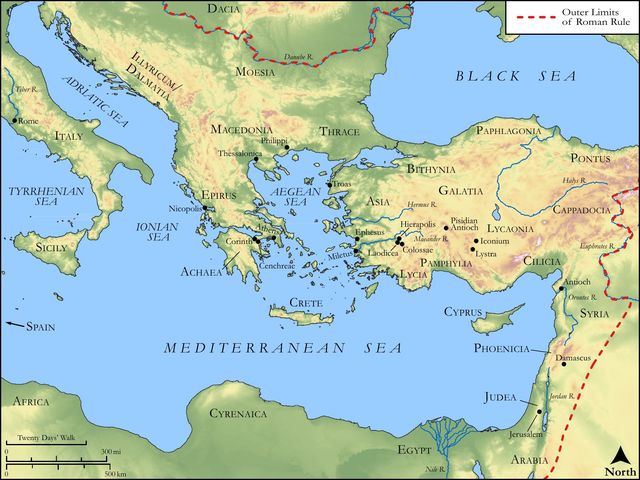
Where 2 Thessalonians reaches
The passages it leans on, and the ones that lean on it
2 Thessalonians 2:1 1 Thessalonians 4:17
“Our gathering together unto him”: the first letter’s word on the living caught up with the raised dead to meet the Lord.
2 Thessalonians 2:4 Daniel 7:25 Daniel 11:36
Daniel’s king who speaks great words against the most High and magnifies himself “above every god.”
2 Thessalonians 2:8 Isaiah 11:4 Revelation 19:15
The Branch of Jesse slays the wicked “with the breath of his lips”; John sees a sharp sword go out of the Rider’s mouth.
2 Thessalonians 2:9 Matthew 24:24
Jesus’ warning of false Christs who “shall shew great signs and wonders” to deceive, if it were possible, the very elect.
2 Thessalonians 3:10 1 Thessalonians 4:11
The command given in person and in the first letter: “work with your own hands, as we commanded you.”
Books 2 Thessalonians links to most
The Church Fathers on 2 Thessalonians
194 quotations from 40 writers before AD 800 · the ten most quoted, in date order
- Irenaeus202
- Tertullian220
- Cyprian258
- Victorinus304
- Basil379
- Ambrosiaster384
- Cyril386
- Ambrose397
- Chrysostom407
- Augustine430
Theodore of Mopsuestia on why the thanks of 1:3 is owed as a debt.
Paul seems to say here that the activity of grace has grown, for he does not say that “we give thanks” but that “we are bound to give thanks.” … what has happened in the Thessalonians is rightly referred to God as its source.
Irenaeus, writing in the second century, reads the man of sin as Antichrist.
And again, speaking of Antichrist, he says, "who opposeth and exalteth himself above all that is called God, or that is worshipped."
Augustine on the discipline of 3:14–15, and the spirit in which it is given.
But notice how it’s a quarrel of doves, not of wolves. He immediately added, “And do not regard him as an enemy, but rebuke him as a brother.” A dove is loving even when it is beating; a wolf hates even when it is being charming.
Keep studying
Articles