


Isaiah 30:10
- אֲשֶׁר'a·SherwhoH834RelParticle Relative
- אָמְרוּ'a·me·Ruthey have saidH559V-Qal-Perf-3cpVerb Qal Perfect 3rd Plural common gender
- לָרֹאִיםla·ro·'Imto the seersH7203Prep-l ¦ N-mpNoun Plural Masculine Absoluteלָto theרֹאִיםseers
- לֹאlo'notH3808NegParticle Negative
- תִרְאוּtir·'Uyou must seeH7200V-Qal-Imperf-2mpVerb Qal Imperfect 2nd Plural Masculine
- וְלַחֹזִיםve·La·cho·Zimand to the seersH2374Conj-w ¦ Prep-l ¦ N-mpNoun Plural Masculine Absoluteוְandלַto theחֹזִיםseers
- לֹאlo'notH3808NegParticle Negative
- תֶחֱזוּte·che·zuyou must seeH2372V-Qal-Imperf-2mpVerb Qal Imperfect 2nd Plural Masculine
- לָנוּLa·nufor usPrep-l ¦ 1cpSuffix Personal 1st Plural common genderלָforנוּus
- נְכֹחוֹתne·kho·Chotstraightforwardness<es>H5229Adj-fpAdjective Plural Feminine Absolute
- דַּבְּרוּda·be·ruspeakH1696V-Piel-Imp-2mpVerb Piel Imperative 2nd Plural Masculine
- לָנוּLa·nuto usPrep-l ¦ 1cpSuffix Personal 1st Plural common genderלָtoנוּus
- חֲלָקוֹתcha·la·Kotflattering [words]H2513Adj-fpAdjective Plural Feminine Absolute
- חֲזוּcha·ZuseeH2372V-Qal-Imp-2mpVerb Qal Imperative 2nd Plural Masculine
- מַהֲתַלּוֹתma·ha·ta·Lotdeception<s>H4123N-fpNoun Plural Feminine Absolute
English is a literal word-by-word gloss of the Hebrew, not the KJV's wording. Why?
This is the original text the KJV's translators worked from — each Hebrew word with its own literal English meaning in this verse, prepared by scholars at Tyndale House, Cambridge. The KJV translates whole sentences, not word by word, so its wording differs: one Hebrew word can become several English words, and the KJV may choose “the LORD” where the gloss reads “Yahweh”. Both are faithful — they answer different questions. For the KJV's own rendering, switch to the KJV text.
Details
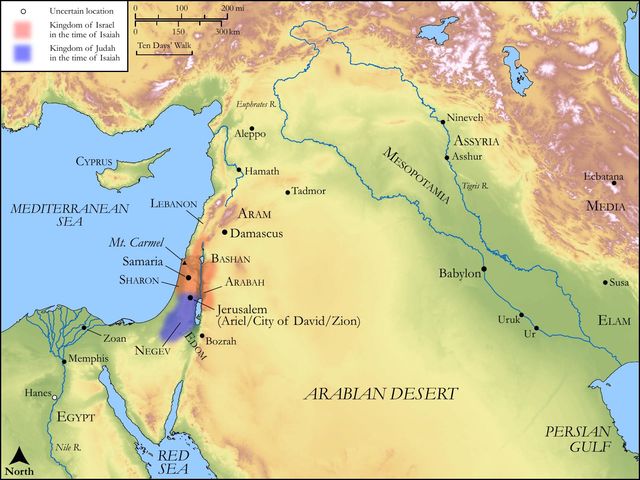
See on the biblical-era map
Study this verse
Public-domain commentary
Matthew Henry
From his Commentary on the Whole Bible. Henry comments on passages, not single verses — this entry covers Isaiah 30:8–17. His four-level outline is real structure in the source text, so it is rendered as structure.
Here, I. The preface is very awful. The prophet must not only preach this, but he must write it (Isa 30:8), write it in a table, to be hung up and exposed to public view; he must carefully note it, not in loose papers which might be lost or torn, but in a book, to be preserved for posterity, in perpetuam rei memoriam - for a standing testimony against this wicked generation; let it remain not only to the next succeeding ages, but for ever and ever, while the world stands; and so it shall, for the book of the scriptures no doubt, shall continue, and be read, to the end of time. Let it be written, 1. To shame the men of the present age, who would not hear and heed it when it was spoken. Let it be written, that it may not be lost; their children may profit by it, though they will not. 2. To justify God in the judgments he was about to ring upon them; people will be tempted to think he was too hard upon them, and over-severe, unless they know how very bad they were, how very provoking, and what fair means God tried with them before he brought it to this extremity. 3. For warning to others not to do as they did, lest they should fare as they fared. It is designed for admonition to those of the remotest place and age, even those upon whom the ends of the world have come, Co1 10:11. It may be of use for God's ministers not only to preach, but to write; for that which is written remains.
II.The character given of the profane and wicked Jews is very sad.
He must, if he will draw them in their own colours, write this concerning them (and we are sure he does not bear false witness against them, nor make them worse than they were, for the judgment of God is according to truth), That this is a rebellious people, Isa 30:9. The Jews were, for aught we know, the only professing people God had then in the world, and yet many of them were a rebellious people.
1.They rebelled against their own convictions and covenants: "They are lying children, that will not stand to what they say, that promise fair, but perform nothing;" when he took them into covenant with himself he said of them, Surely they are my people, children that will not lie (Isa 63:8); but they proved otherwise.
2.They rebelled against the divine authority: "They are children that will not hear the law of the Lord, nor heed it, but will do as they have a mind, let God himself say what he will to the contrary."
III.The charge drawn up against them is very high and the sentence passed upon them very dreadful.
Two things they here stand charged with, and their doom is read for both, a fearful doom: -
1.They forbade the prophets to speak to them in God's name, and to deal faithfully with them.
(1.)This their sin is described, Isa 30:10, Isa 30:11. They set themselves so violently against the prophets to hinder them from preaching, or at least from dealing plainly with them in their preaching, did so banter them and browbeat them, that they did in effect say to the seers, See not. They had the light, but they loved darkness rather. It was their privilege that they had seers among them, but they did what they could to put out their eyes - that they had prophets among them, but they did what they could to stop their mouths; for they tormented them in their wicked ways, Rev 11:10. Those that silence good ministers, and discountenance good preaching, are justly counted, and called, rebels against God. See what it was in the prophets' preaching with which they found themselves aggrieved.
[1.]The prophets told them of their faults, and warned them of their misery and danger by reason of sin, and they could not bear that. They must speak to them smooth things, must flatter them in their sins, and say that they did well, and there was no harm, no peril, in the course of life they lived in. Let a thing be ever so right and true, if it be not smooth, they will not hear it. But if it be agreeable to the good opinion they have of themselves, and will confirm them in that, though it be ever so false and ever so great a cheat upon them, they will have it prophesied to them. Those deserve to be deceived that desire to be so.
[2.]The prophets stopped them in their sinful pursuits, and stood in their way like the angel in Balaam's road, with the sword of God's wrath drawn in their hand; so that they could not proceed without terror. And this they took as a great insult. When they went on frowardly in the way of their hearts they said to the prophets, "Get you out of the way, turn aside out of the paths. What do you do in our way? Cannot you let us alone to do as we please?" Those have their hearts fully set in them to do evil that bid their faithful monitors to stand out of their way. Forbear, why shouldst thou be smitten? Ch2 25:16.
[3.]The prophets were continually telling them of the Holy One of Israel, what an enemy he is to sin ad how severely he will reckon with sinners; and this they could not endure to hear of. Both the thing itself and the expression of it were too serious for them; and therefore, if the prophets will speak to them, they will make it their bargain that they shall not call God the Holy One of Israel; for God's holiness is that attribute which wicked people most of all dread. Let us no more be troubled with that state-preface (as Mr. White calls it) to your impertinent harangues. Those have reason to fear perishing in their sins that cannot bear to be frightened out of them.
(2.)Now what is the doom passed upon them for this? We have it, Isa 30:12, Isa 30:13. Observe,
[1.]Who it is that gives judgment upon them: Thus saith the Holy One of Israel. That title of God which they particularly excepted against the prophet makes use of. Faithful ministers will not be driven from using such expressions as are proper to awaken sinners, though they be displeasing. We must tell men that God is the Holy One of Israel, and so they shall find him, whether they will hear or whether they will forbear.
[2.]What the ground of the judgment is: Because they despise this word - wither, in general, every word that the prophets said to them, or this word in particular, which declares God to be the Holy One of Israel: "they despise this, and will neither make it their fear, to stand in awe of it, nor make it their hope, to put any confidence in it; but, rather than they will be beholden to the Holy One of Israel, they will trust in oppression and perverseness, in the wealth they have got and the interest they have made by fraud and violence, or in the sinful methods they have taken for their own security, in contradiction to God and his will. On these they lean, and therefore it is just that they should fall." [3.] What the judgment is that is passed upon them: "This iniquity shall be to you as a breach ready to fall. This confidence of yours will be like a house built upon the sand, which will fall in the storm and bury the builder in the ruins of it. Your contempt of that word of God which you might build upon will make every thing else you trust like a wall that bulges out, which, if any weight be laid upon it, comes down, nay, which often sinks with its own weight." The ruin they would hereby bring upon themselves should be, First, A surprising ruin: The breaking shall come suddenly, at an instant, when they do not expect it, which will make it the more frightful, and when they are not prepared or provided for it, which will make it the more fatal. Secondly, An utter ruin, universal and irreparable: "Your and all your confidences shall be not only weak as the potter's clay (Isa 29:16), but broken to pieces as the potter's vessel. He that has the rod of iron shall break it (Psa 2:9) and he shall not spare, shall not have any regard to it, nor be in care to preserve or keep whole any part of it. But, when once it is broken so as to be unfit for use, let it be dashed, let it be crushed, all to pieces, so that there may not remain one sherd big enough to take up a little fire or water" - two things we have daily need of, and which poor people commonly fetch in a piece of a broken pitcher. They shall not only be as a bowing wall (Psa 62:3), but as a broken mug or glass, which is good for nothing, nor can ever be made whole again.
2.They slighted the gracious directions God gave them, not only how to secure themselves and make themselves safe, but how to compose themselves and make themselves easy; they would take their own way, Isa 30:15-17. Observe here,
(1.)The method God put them into for salvation and strength. The God that knew them, and knew what was proper for them, and desired their welfare, gave them this prescription; and it is recommended to us all. [1.] Would we be saved from the evil of every calamity, guarded against the temptation of it and secured from the curse of it, which are the only evil things in it? It must be in returning and rest, in returning to God and reposing in him as our rest. Let us return from our evil ways, into which we have gone aside, and rest and settle in the way of God and duty, and that is the way to be saved. "Return from this project of going down to Egypt, and rest satisfied in the will of God, and then you may trust him with your safety. In returning (in the thorough reformation of your hearts and lives) and in rest (in an entire submission of your souls to God and a complacency in him) you shall be saved." [2.] Would we be strengthened to do what is required of us and to bear what is laid upon us? It must be in quietness and in confidence; we must keep our spirits calm and sedate by a continual dependence upon God, and his power and goodness; we must retire into ourselves with a holy quietness, suppressing all turbulent and tumultuous passions, and keeping the peace in our own minds. And we must rely upon God with a holy confidence that he can do what he will and will do what is best for his people. And this will be our strength; it will inspire us with such a holy fortitude as will carry us with ease and courage through all the difficulties we may meet with.
(2.)The contempt they put upon this prescription; they would not take God's counsel, though it was so much for their own good. And justly will those die of their disease that will not take God for their physician. We are certainly enemies to ourselves if we will not be subjects to him. They would not so much as try the method prescribed: "But you said, No (Isa 30:16), we will not compose ourselves, for we will flee upon horses and we will ride upon the swift; we will hurry hither and thither to fetch in foreign aids." They think themselves wiser than God, and that they know what is good for themselves better than he does. When Sennacherib took all the fenced cities of Judah, those rebellious children would not be persuaded to sit still and patiently to expect God's appearing for them, as he did wonderfully at last; but they would shift for their own safety, and thereby they exposed themselves to so much the more danger.
(3.)The sentence passed upon them for this. Their sin shall be their punishment: "You will flee, and therefore you shall flee; you will be upon the full speed, and therefore so shall those be that pursue you." The dogs are most apt to run barking after him that rides fast. The conquerors protected those that sat still, but pursued those that made their escape; and so that very project by which they hoped to save themselves was justly their ruin and the most guilty suffered most. It is foretold, Isa 30:17,
[1.]That they should be easily cut off; they should be so dispirited with their own fears, increased by their flight, that one of the enemy should defeat a thousand of them, and five put an army to flight, which could never be unless their Rock had sold them Deu 32:30.
[2.]That they should be generally cut off, and only here and there one should escape alone in a solitary place, and be left for a spectacle too, as a beacon upon the top of a mountain, a warning to others to avoid the like sinful courses and carnal confidences.
Historical interpretation
Historical reception
3 surviving comments on this verse. Each one is dated, so this reads as a timeline rather than a list.
Select a marker to jump to its quote. Markers stagger vertically where authors wrote within a few decades of each other.
The chief priests and the Pharisees, through the agency of Pilate, sealed the tomb; but the women saw him who was risen.… The chief priests lacked understanding, but the women beheld with their own eyes. When the soldiers came into the city and told the chief priests what had happened, they said to the soldiers, “Say, his disciples came by night and stole him while we were sleeping.” Well did Isaiah foretell this also, in their persons: “But tell us, and relate another error.” Christ has risen and come back from the dead, and by a bribe they persuade the soldiers.
What insults a person more: when he says something and receives no answer or when he is silent and receives no answer? Obviously a person is most insulted when he speaks and receives no answer. God is insulted when he speaks and you will not heed what he says. They said in ancient days to the prophets, “Do not speak to us.” But you do worse. You say, “Speak to us, but we will not obey.” They turned the prophets away in order to keep them from speaking, sensing that there was some sort of awe or obligation in the voice itself. But you, with excessive contempt, do not even do this. Believe me, if you stopped our mouths by putting your hand over them, it would not be as great of an insult as it is for you to hear but not obey.
(v. 9 et seq.) For the people provoke to anger, and the sons are liars, sons unwilling to listen to the law of God. They say to the seers, “Do not see”; and to the prophets, “Do not prophesy to us what is right; speak to us pleasant words; see us errors. Depart from me the way; turn aside from me the path; let the Holy One of Israel cease from before us.” It is clear that they have provoked the Lord to anger, not wanting to hear the words of Jeremiah (Jer. 43). And they said to Him, 'Do not show us what we do not want to see; do not forbid us from the way of Egypt, nor tell us what is right; but speak what pleases us, so that we may go to Egypt and accumulate sins upon sins. Why do you impose on us what we do not willingly hear? Why do you show us the way which we do not want to enter? Why do you repeatedly proclaim to our ears, 'Thus says the Lord, the Holy One of Israel'? Let this preaching cease from us.' According to allegory, all heretics are called lying sons. For they went out from us, but they were not of us (1 John 2); they do not listen with the ears of the inner man to the Law of God, and they speak to the teachers of the Churches: Do not show us what is right, nor threaten us with the flames of hell; but promise us the kingdom of heaven, so that after indulgence and pleasures, paradise may be opened to us. Why do you show me the way of the Lord, which I do not willingly enter? What does the title Holy Israel or the word 'Israelis' mean, which does not penetrate the secrets of my heart? Indeed, it is also said to the negligent people of the Church if they turn away from the severity of the teachers and favor flatterers.
Continue studying Isaiah 30:10 across the web’s major study libraries — every link below opens this exact verse, chapter, or book on the destination site.
Read & Compare
 BibleGatewayThis verse in more than 200 translations and 70 languages.
 Bible.comThe YouVersion reader — hundreds of translations, reading plans, and highlights.
 ESV.orgCrossway's official English Standard Version reader.
 NET BibleThe NET translation with 60,000+ translators' notes on every rendering decision.
 STEP BibleTyndale House's free study tool — original text, vocabulary, and scholarly resources.
 BibliaLogos Bible Software's free web reader.
 USCCBThe New American Bible (Revised Edition) with the U.S. bishops' study notes.
Commentaries
 BibleHub CommentariesDozens of classic commentaries on this verse, gathered on one page.
 StudyLightMore than 100 commentary sets — the largest collection on the web.
 BibleRefPlain-English commentary on what this verse means, verse by verse.
 Enduring WordDavid Guzik's free commentary on this chapter, widely used by Bible teachers.
 Bible Study ToolsVerse commentary alongside Greek and Hebrew study aids.
Original Language & Research
- BibleHub InterlinearThe verse word by word — original language, transliteration, and English.
- BibleHub LexiconEvery word's original-language definition and Strong's entry.
 Blue Letter BibleDeep-study tools — Strong's numbers, concordance, and word studies.
 SefariaThe Hebrew text with Rashi and centuries of Jewish commentary.
Sermons, Hymns & Audio


TrulyRandomVerse is not affiliated with these sites and doesn’t control their content. They’re linked because they’re genuinely useful.
Summary
Isaiah 30:10 powerfully encapsulates the spiritual rebellion of ancient Judah, a people facing the existential threat of Assyrian invasion who deliberately chose to reject God's challenging truth. Instead of seeking divine guidance and embracing the call to repentance and quiet trust, they actively demanded that God's prophets deliver comforting falsehoods and validating delusions. This verse stands as a stark and enduring testament to humanity's deep-seated propensity to prefer pleasant self-deception over uncomfortable realities, even when those realities are delivered by God's own messengers for their ultimate good and salvation.
Context
ShowHideLiterary Context
Isaiah 30 is situated within a series of "woe" oracles (chapters 28-33) that condemn Judah's persistent reliance on foreign alliances, particularly with Egypt, rather than on the Lord their God. The verses immediately preceding Isaiah 30:10 set the stage by describing Judah as "rebellious children, lying children, children that will not hear the law of the Lord" Isaiah 30:9. This indictment of their stubbornness and refusal to listen to God's instruction directly precedes and explains their audacious demand for false prophecy in verse 10. The subsequent verses continue to elaborate on the severe consequences of this rejection, emphasizing that their trust in Egypt will lead to shame and disgrace, while true strength and deliverance are found only in repentance and quiet trust in God Isaiah 30:15. The entire chapter underscores the futility of human schemes apart from divine counsel.
Historical & Cultural Context
During Isaiah's prophetic ministry, the Southern Kingdom of Judah faced an imminent and overwhelming threat from the Neo-Assyrian Empire, which had already decimated the Northern Kingdom of Israel. King Hezekiah and his advisors were caught in a desperate geopolitical dilemma, weighing the overwhelming power of Assyria against the potential, albeit declining, strength of an alliance with Egypt. In this era, forming alliances with more powerful nations was a common strategic maneuver for smaller states. However, for Judah, a nation bound by a covenant with Yahweh, such alliances represented a profound theological betrayal. It was a rejection of God as their ultimate protector and sovereign, demonstrating a lack of faith in His ability and willingness to deliver them. The prophets, like Isaiah, served as God's covenant enforcers, tasked with delivering His challenging word, which often stood in direct opposition to the prevailing political and social strategies. The people's demand in Isaiah 30:10 vividly illustrates a cultural preference for political expediency and self-preservation over spiritual obedience, and a desire for prophetic validation of their worldly plans rather than divine conviction of their spiritual failings.
Key Themes
ShowHideIsaiah 30:10 powerfully articulates several crucial and recurring themes found throughout the book of Isaiah and the broader biblical narrative. Firstly, it highlights the pervasive theme of the rejection of divine truth by a people who prioritize comforting lies over challenging realities. This spiritual blindness is a common indictment in prophetic literature, where God's messengers are frequently scorned or silenced for speaking His unvarnished word Jeremiah 20:8. Secondly, the verse underscores the human tendency towards self-deception and spiritual delusion, where individuals or nations actively seek out messages that affirm their existing biases and justify their sinful choices, rather than confronting their true spiritual condition. This directly relates to the theme of false prophecy versus true prophecy, as the people explicitly demand "smooth things" and "deceits" instead of "right things," contrasting sharply with the nature of God's Word, which is often described as sharp, discerning, and convicting Hebrews 4:12. Finally, implicitly, the verse demonstrates the sovereignty and persistent faithfulness of God, who, despite His people's profound rebellion, continues to send His prophets with warnings and calls to repentance, demonstrating His unwavering desire for their salvation and His steadfast commitment to His covenant promises.
Exposition and Analysis
ShowHideKey Word Analysis
ShowHideThis primitive root (H559) is used with remarkable breadth, signifying "to say," "to command," "to declare," or "to utter." In this context, it denotes a direct, authoritative, and almost demanding instruction from the people to the prophets. It is not a polite request but a forceful directive, revealing their rebellious posture and their audacious attempt to dictate the content and nature of divine revelation, thereby inverting the proper order of authority.
Derived from nâkôach (H5229), this feminine noun properly signifies "straightforwardness," "integrity," or "a truth." It refers to messages that are direct, upright, equitable, and morally sound, often implying a truth that exposes wrongdoing, calls for ethical accountability, or demands a return to righteousness. The people's rejection of "right things" indicates their profound aversion to moral and spiritual accountability, preferring pleasant illusion over uncomfortable reality.
This potent term (H4123) stems from hâthal, meaning "to mock" or "to delude." It signifies "a delusion," "an illusion," or an "outright lie." The people's demand for "deceits" goes beyond merely wanting pleasantries; it is an active craving for messages that are fundamentally false and misleading. This word powerfully underscores the depth of their spiritual rebellion, as they are not merely passively resistant to truth but actively desire and embrace falsehoods that will validate their sinful choices and self-serving strategies.
Verse Breakdown
ShowHide"Which say to the seers, See not;"
This initial clause reveals the people's direct and audacious command to those who receive visions from God. They are instructing the "seers" (prophets whose primary mode of revelation is visionary insight) to cease their true prophetic function—to "see not" the divine realities, especially those that would expose their sin, warn of impending judgment, or reveal the folly of their chosen path. This is a deliberate attempt to blind God's messengers and, by extension, themselves to God's uncomfortable truth.
"and to the prophets, Prophesy not unto us right things,"
Extending their demand to all "prophets" (God's appointed spokesmen), the people explicitly forbid the delivery of "right things." This refers to prophecies that are morally upright, truthful, and in alignment with God's righteous character and commands. They are rejecting any message that would challenge their sinful behavior, call for repentance, expose the spiritual bankruptcy of their foreign alliances, or demand a return to covenant faithfulness.
"speak unto us smooth things,"
This phrase articulates their positive demand: instead of truth, they desire "smooth things." The Hebrew term implies flattery, slipperiness, or ease. They crave messages that are agreeable, comforting, and non-confrontational, designed to soothe their anxieties, please their ears, and affirm their current course of action, regardless of its spiritual implications or ultimate consequences.
"prophesy deceits:"
This is the most shocking and damning part of their demand, revealing the profound spiritual depravity of the people. They are not merely asking for pleasantries; they are actively requesting "deceits"—delusions, illusions, or outright lies. This demonstrates a profound and willful embrace of falsehood, indicating a spiritual state so hardened that they prefer self-deception and moral compromise to the liberating, though often challenging, truth of God. They desire a false reality that justifies their rebellion.
Literary Devices
ShowHideIsaiah 30:10 is replete with powerful literary devices that amplify its message. The verse functions as a direct Prophetic Indictment, a scathing accusation against the people of Judah for their spiritual rebellion and their rejection of divine authority. A striking Contrast is employed between "right things" and "smooth things" or "deceits," starkly highlighting the deliberate and perverse choice the people make against divine truth and in favor of comforting falsehoods. There is profound Irony at play: the very people who should be hungering for God's guidance and truth are actively demanding that His messengers speak lies. This turns the divine-human communication on its head, with humans presumptuously attempting to dictate God's message. The phrase "prophesy deceits" can also be seen as a form of Hyperbole, emphasizing the extreme nature of their spiritual depravity and their profound, willful rejection of reality. Finally, the collective "Which say" and "unto us" refers to the people of Judah as a Collective Persona, representing the widespread spiritual apostasy and corporate rebellion within the nation.
Theological and Thematic Connections
ShowHideIsaiah 30:10 serves as a timeless theological warning against the human heart's inherent propensity to resist divine truth, especially when that truth challenges personal comfort, cherished plans, or deeply ingrained biases. It unveils a profound spiritual sickness where individuals and communities prefer self-deception and the validation of their sinful desires over the transformative, often uncomfortable, power of God's Word. This deliberate rejection of "right things" in favor of "smooth things" and "deceits" underscores the fundamental conflict between human autonomy and divine authority—a conflict that frequently leads to a hardening of hearts and a refusal to acknowledge God's sovereignty and wisdom. The verse highlights that true spiritual health and genuine relationship with God necessitate a humble willingness to submit to His truth, even when it is convicting, demands radical change, or requires a difficult path, recognizing that His ways are always ultimately for our good, our sanctification, and our eternal salvation.
Reflection and Application
ShowHideIsaiah 30:10 offers a profound and challenging mirror for self-reflection in every age, compelling us to honestly examine our own hearts and the types of messages we choose to embrace. In a world saturated with diverse voices and information, it is remarkably easy to gravitate towards narratives, ideologies, or spiritual teachings that affirm our existing biases, validate our personal preferences, or align with our political leanings, rather than those that speak uncomfortable truths. This verse calls us to cultivate a discerning and courageous spirit, one that actively hungers for God's "right things," even when they expose our flaws, challenge our assumptions, or call us to a more difficult, counter-cultural path. It serves as a potent warning against the seductive appeal of "smooth things"—messages that promise ease, prosperity, or validation without demanding repentance, sacrifice, or genuine transformation. True spiritual growth and authentic discipleship often begin with humbly receiving God's corrective and refining word, allowing it to prune and shape us, rather than seeking out "deceits" that lull us into spiritual complacency or moral compromise. To genuinely follow Christ means to love the truth, even when it costs us our comfort, and to trust that God's truth, though sometimes sharp and demanding, always leads to abundant and eternal life.
Questions for Reflection
ShowHideFAQ
ShowHideWhat does it mean for people to "prophesy deceits"?
ShowHideTo "prophesy deceits" means to actively demand and receive messages that are fundamentally false, misleading, or illusory, rather than divine truth. In the context of Isaiah 30:10, the people of Judah were so hardened in their rebellion and committed to their chosen path (seeking an alliance with Egypt instead of trusting God) that they wanted their prophets to deliver prophecies that would validate their sinful choices, offer false hope, and avoid any message of judgment or call to repentance. It signifies a profound spiritual blindness and a willful embrace of self-delusion, where they preferred comforting lies over the challenging realities of God's word. This is a stark contrast to the true prophetic ministry, which is to speak God's unadulterated truth, regardless of its popularity or comfort level Jeremiah 23:32.
How does this verse relate to discerning spiritual messages today?
ShowHideIsaiah 30:10 provides a timeless and crucial warning for discerning spiritual messages in any era. It highlights the persistent human tendency to seek out teachers or messages that cater to our "itching ears" 2 Timothy 4:3, affirming our desires rather than challenging our sins or calling us to deeper commitment. Today, this can manifest in various forms of spiritual consumerism, where people choose churches, podcasts, or books that offer feel-good messages, prosperity promises, or easy solutions, while avoiding teaching that emphasizes repentance, sacrifice, or the difficult, costly aspects of discipleship. The verse calls us to critically evaluate all spiritual input against the unchanging truth of God's Word Acts 17:11, seeking out "right things" even when they are uncomfortable, and resolutely rejecting "smooth things" and "deceits" that lead us astray from genuine faith and obedience.
Christ-Centered Fulfillment
ShowHideIsaiah 30:10, with its chilling depiction of a people rejecting divine truth for comforting lies, finds its ultimate fulfillment and profound counterpoint in the person and work of Jesus Christ. While ancient Judah audaciously demanded that their prophets speak "smooth things" and "deceits," Jesus, the Word made flesh, came speaking the "right things"—the unvarnished truth of God, often challenging and uncomfortable to His hearers. He declared, "I am the way, the truth, and the life" John 14:6, embodying the very divine truth that humanity so consistently rejects. His teachings, exemplified in the Sermon on the Mount Matthew 5, were not "smooth things" designed to flatter, but radical calls to repentance, righteousness, and costly discipleship. He spoke of the narrow gate that leads to life Matthew 7:13-14 and the absolute necessity of denying oneself and taking up one's cross daily Luke 9:23, truths that many found too hard to accept, leading to their eventual turning away from Him John 6:66. Ultimately, the "right thing" that Judah refused to hear was the message of salvation through humble trust in God alone, a message perfectly embodied and offered through Christ's atoning work. He is the Lamb of God who takes away the sin of the world John 1:29, the ultimate truth that exposes all human "deceits" and offers genuine peace, reconciliation, and eternal life with God. In Him, we find not flattery or delusion, but grace and truth in abundance John 1:14, inviting us to embrace the challenging yet life-giving reality of God's kingdom.