


Revelation 11:10
- καὶkaiAndG2532CONJConjunction
- οἱhoithoseG3588T-NPMDefinite article Nominative Plural Masculine
- κατοικοῦντεςkatoikountesdwellingG2730V-PAP-NPMVerb Present Active Participle Nominative Plural Masculine
- ἐπὶepionG1909PREPPreposition
- τῆςtēstheG3588T-GSFDefinite article Genitive Singular Feminine
- γῆςgēsearthG1093N-GSFNoun Genitive Singular Feminine
- χαίρουσινchairousindoes rejoiceG5463V-PAI-3PVerb Present Active Indicative 3rd Plural
- ἐπ᾽ep᾽overG1909PREPPreposition
- αὐτοῖςautoisthemG846P-DPMPersonal pronoun Dative Plural Masculine
- καὶkaiandG2532CONJConjunction
- εὐφραίνονταιeuphrainontaidoes make merryG2165V-PPI-3PVerb Present Passive Indicative 3rd Plural
- καὶkaiandG2532CONJConjunction
- δῶραdōragiftsG1435N-APNNoun Accusative Plural Neuter
- πέμψουσινpempsousinwill sendG3992V-FAI-3PVerb Future Active Indicative 3rd Plural
- ἀλλήλοιςallēloisto one anotherG240C-DPMReciprocal pronoun Dative Plural Masculine
- ὅτιhotibecauseG3754CONJConjunction
- οὗτοιhoutoitheseG3778D-NPMDemonstrative pronoun Nominative Plural Masculine
- οἱhoi<the>G3588T-NPMDefinite article Nominative Plural Masculine
- δύοduotwoG1417A-NUIAdjective
- προφῆταιprophētaiprophetsG4396N-NPMNoun Nominative Plural Masculine
- ἐβασάνισανebasanisantormentedG928V-AAI-3PVerb Aorist Active Indicative 3rd Plural
- τοὺςtousthoseG3588T-APMDefinite article Accusative Plural Masculine
- κατοικοῦνταςkatoikountasdwellingG2730V-PAP-APMVerb Present Active Participle Accusative Plural Masculine
- ἐπὶepiuponG1909PREPPreposition
- τῆςtēstheG3588T-GSFDefinite article Genitive Singular Feminine
- γῆςgēsearthG1093N-GSFNoun Genitive Singular Feminine
English is a literal word-by-word gloss of the Greek, not the KJV's wording. Why?
This is the original text the KJV's translators worked from — each Greek word with its own literal English meaning in this verse, prepared by scholars at Tyndale House, Cambridge. The KJV translates whole sentences, not word by word, so its wording differs: one Greek word can become several English words, and the KJV may choose “charity” where the gloss reads “love”. Both are faithful — they answer different questions. For the KJV's own rendering, switch to the KJV text.
Details
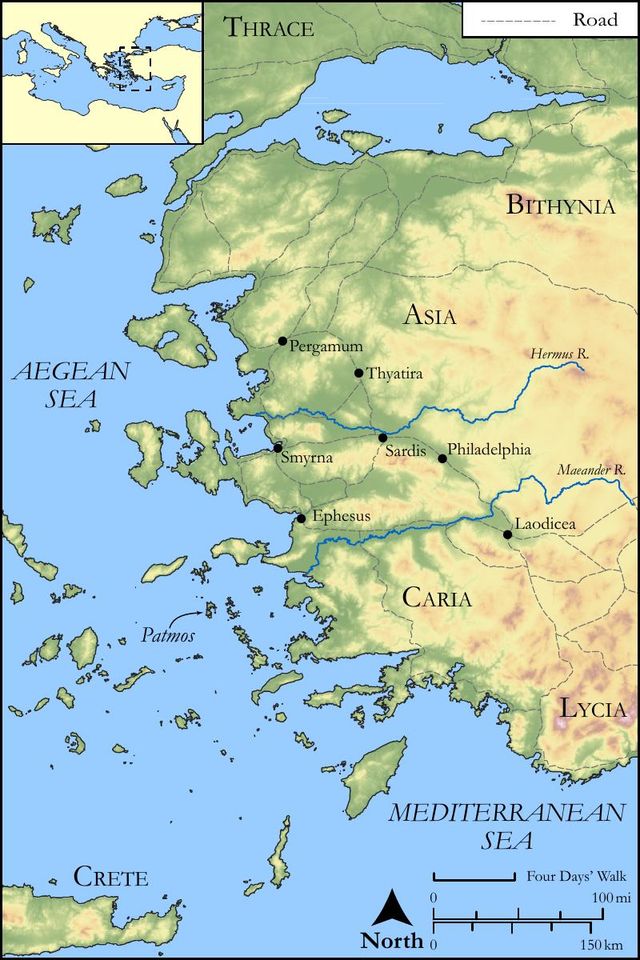
See on the biblical-era map

Study this verse
Public-domain commentary
Matthew Henry
From his Commentary on the Whole Bible. Henry comments on passages, not single verses — this entry covers Revelation 11:3–13. His three-level outline is real structure in the source text, so it is rendered as structure.
In this time of treading down, God has reserved to himself his faithful witnesses, who will not fail to attest the truth of his word and worship, and the excellency of his ways. Here observe,
I.The number of these witnesses: it is but a small number and yet it is sufficient.
1.It is but small. Many will own and acknowledge Christ in times of prosperity who will desert and deny him in times of persecution; one witness, when the cause is upon trial, is worth many at other times.
2.It is a sufficient number; for in the mouth of two witnesses every cause shall be established. Christ sent out his disciples two by two, to preach the gospel. Some think these two witnesses are Enoch and Elias, who are to return to the earth for a time: others, the church of the believing Jews and that of the Gentiles: it should rather seem that they are God's eminent faithful ministers, who shall not only continue to profess the Christian religion, but to preach it, in the worst of times.
II.The time of their prophesying, or bearing their testimony for Christ.
A thousand two hundred and threescore days; that is (as many think), to the period of the reign of antichrist; and, if the beginning of that interval could be ascertained, this number of prophetic days, taking a day for a year, would give us a prospect when the end shall be.
III.Their habit, and posture:
they prophesy in sackcloth, as those that are deeply affected with the low and distressed state of the churches and interest of Christ in the world.
IV.How they were supported and supplied during the discharge of their great and hard work:
they stood before the God of the whole earth, and he gave them power to prophesy. He made them to be like Zerubbabel and Joshua, the two olive-trees and candlestick in the vision of Zechariah, Zac 4:2, etc. God gave them the oil of holy zeal, and courage, and strength, and comfort; he made them olive-trees, and their lamps of profession were kept burning by the oil of inward gracious principles, which they received from God. They had oil not only in their lamps, but in their vessels - habits of spiritual life, light, and zeal.
V.Their security and defence during the time of their prophesying:
If any attempted to hurt them, fire proceeded out of their mouths, and devoured them, Rev 11:5. Some think this alludes to Elias's calling for the fire from heaven, to consume the captains and their companies that came to seize him, Kg2 1:12. God promised the prophet Jeremiah (Jer 5:14), Behold, I will make my words in thy mouth fire, and this people shall be wood, and it shall devour them. By their praying and preaching, and courage in suffering, they shall gall and wound the very hearts and consciences of many of their persecutors, who shall go away self-condemned, and be even terrors to themselves; like Pashur, at the words of the prophet Jeremiah, Jer 20:4. They shall have that free access to God, and that interest in him, that, at their prayers, God will inflict plagues and judgments upon their enemies, as he did on Pharaoh, turning their rivers into blood, and restraining the dews of heaven, shutting heaven up, that no rain shall fall for many days, as he did at the prayers of Elias, Kg1 17:1. God has ordained his arrows for the persecutors, and is often plaguing them while they are persecuting his people; they find it hard work to kick against the pricks.
VI.The slaying of the witnesses.
To make their testimony more strong, they must seal it with their blood. Here observe,
1.The time when they should be killed: When they have finished their testimony. They are immortal, they are invulnerable, till their work be done. Some think it ought to be rendered, when they were about to finish their testimony. When they had prophesied in sackcloth the greatest part of the 1260 years, then they should feel the last effect of antichristian malice.
2.The enemy that should overcome and slay them - the beast that ascendeth out of the bottomless pit. Antichrist, the great instrument of the devil, should make war against them, not only with the arms of subtle and sophistical learning, but chiefly with open force and violence; and God would permit his enemies to prevail against his witnesses for a time.
3.The barbarous usage of these slain witnesses; the malice of their enemies was not satiated with their blood and death, but pursued even their dead bodies.
(1.)They would not allow them a quiet grave; their bodies were cast out in the open street, the high street of Babylon, or in the high road leading to the city. This city is spiritually called Sodom for monstrous wickedness, and Egypt for idolatry and tyranny; and here Christ in his mystical body has suffered more than in any place in the world.
(2.)Their dead bodies were insulted by the inhabitants of the earth, and their death was a matter of mirth and joy to the antichristian world, Rev 11:10. They were glad to be rid of these witnesses, who by their doctrine and example had teased, terrified, and tormented the consciences of their enemies; these spiritual weapons cut wicked men to the heart, and fill them with the greatest rage and malice against the faithful.
VII.The resurrection of these witnesses, and the consequences thereof. Observe,
1.The time of their rising again; after they had lain dead three days and a half (Rev 11:11), a short time in comparison of that in which they had prophesied. Here may be a reference to the resurrection of Christ, who is the resurrection and the life. Thy dead men shall live, together with my dead body shall they arise. Or there may be a reference to the resurrection of Lazarus on the fourth day, when they thought it impossible. God's witnesses may be slain, but they shall rise again: not in their persons, till the general resurrection, but in their successors. God will revive his work, when it seems to be dead in the world.
2.The power by which they were raised: The spirit of life from God entered into them, and they stood upon their feet. God put not only life, but courage into them. God can make the dry bones to life; it is the Spirit of life from God that quickens dead souls, and shall quicken the dead bodies of his people, and his dying interest in the world.
3.The effect of their resurrection upon their enemies: Great fear fell upon them. The reviving of God's work and witnesses will strike terror into the souls of his enemies. Where there is guilt, there is fear; and a persecuting spirit, though cruel, is not a courageous, but a cowardly spirit. Herod feared John the Baptist.
VIII.The ascension of the witnesses into heaven and the consequences thereof, Rev 11:12, Rev 11:13. Observe,
1.Their ascension. By heaven we may understand either some more eminent station in the church, the kingdom of grace in this world, or a high place in the kingdom of glory above. The former seems to be the meaning: They ascended to heaven in a cloud (in a figurative, not in a literal sense) and their enemies saw them. It will be no small part of the punishment of persecutors, both in this world and at the great day, that they shall see the faithful servants of God greatly honoured and advanced. To this honour they did not attempt to ascend, till God called them, and said, Come up hither. The Lord's witnesses must wait for their advancement, both in the church and in heaven, till God calls them; they must not be weary of suffering and service, nor too hastily grasp at the reward; but stay till their Master calls them, and then they may gladly ascend to him.
2.The consequences of their ascension - a mighty shock and convulsion in the antichristian empire and the fall of a tenth part of the city. Some refer this to the beginning of the reformation from popery, when many princes and states fell off from their subjection to Rome. This great work met with great opposition; all the western world felt a great concussion, and the antichristian interest received a great blow, and lost a great deal of ground and interest,
(1.)By the sword of war, which was then drawn; and many of those who fought under the banner of antichrist were slain by it.
(2.)By the sword of the Spirit: The fear of God fell upon many. They were convinced of their errors, superstition, and idolatry; and by true repentance, and embracing the truth, they gave glory to the God of heaven. Thus, when God's work and witnesses revive, the devil's work and witnesses fall before him.
Historical interpretation
Six Centuries of Reception
7 surviving comments on this verse. Each one is dated, so this reads as a timeline rather than a list.
Select a marker to jump to its quote. Markers stagger vertically where authors wrote within a few decades of each other.
Since they do not allow their bodies to be gathered in a suitable place, they prevent a day for their memory to be indicated by a sacred celebration of the living.… It is no wonder that the earthly minded rejoice over the deaths of the righteous. For in addition to the plagues that beset the human race on account of the testaments of God, even the very sight of the righteous oppresses the unrighteous, as it is written, “Even the sight of him is a burden to us.” Not only does it oppress, it also causes him to melt away, and so the psalm says, “The sinner will see and be angry; he will gnash his teeth and melt away.”
The intentions are expressed by which the impious strive to remove the church of Christ from the world, as the psalmist says, “Let the name of Israel be remembered no more!” And although they are unable to fulfill their desire, yet they make their evil intention known.
Those Jews and Gentiles, who once were overpowered by the false wonders of the antichrist and who had indelibly engrafted that abominable name upon their hearts, prohibited the holy bodies from being buried, and they rejoiced because they were free from the torments that [the prophets] gave for their correction. For they did not acknowledge that “the Lord reproves him whom he loves,” and that “he scourges every son whom he receives” and “by muzzle and bridle he will pull and tug at those who are not near to him.” And God works in this way so that they might turn from necessity into the straight way from which they turned aside when they were deceived. We must make petition of the Lord and pray, “It is good for me that I was afflicted, that I might learn your statutes,” and “Turn us, O God of our salvation, that you do not enter into judgment with your servant.” “When we are judged by you, our beneficent master, we are chastened so that we may not be condemned along with the world” but may rather through a few torments escape an eternal punishment.
For these two prophets tormented them. Because of the plagues with which the human race is scourged on account of the Testaments of God, even the sight of the righteous themselves burdens the unjust. As they themselves say: He is grievous unto us even to behold (Wisdom II).
And those who dwell on the earth will rejoice over them. Whenever the righteous are afflicted, the unjust rejoice and feast, just as, when the wicked prosper, the poor are inflamed.
And they that dwell upon the earth shall rejoice over them, and make merry: and shall send gifts one to another, because these two tormented them that dwelt upon the earth. How they are tormented by them, we have explained a little earlier: by their devouring them with spiritual fire, stopping salutary rain, and turning waters into blood.
Moreover, it is necessary to send gifts to one another as a sign of joy and gladness.
For, as the two prophets say, tormented those who live on the earth, no physical torment, however; rather, by mocking their sins, exposing them, and uncovering their deceit, they will torment them intellectually.
Continue studying Revelation 11:10 across the web’s major study libraries — every link below opens this exact verse, chapter, or book on the destination site.
Read & Compare
 BibleGatewayThis verse in more than 200 translations and 70 languages.
 Bible.comThe YouVersion reader — hundreds of translations, reading plans, and highlights.
 ESV.orgCrossway's official English Standard Version reader.
 NET BibleThe NET translation with 60,000+ translators' notes on every rendering decision.
 STEP BibleTyndale House's free study tool — original text, vocabulary, and scholarly resources.
 BibliaLogos Bible Software's free web reader.
 USCCBThe New American Bible (Revised Edition) with the U.S. bishops' study notes.
Commentaries
 BibleHub CommentariesDozens of classic commentaries on this verse, gathered on one page.
 StudyLightMore than 100 commentary sets — the largest collection on the web.
 BibleRefPlain-English commentary on what this verse means, verse by verse.
 Enduring WordDavid Guzik's free commentary on this chapter, widely used by Bible teachers.
 Bible Study ToolsVerse commentary alongside Greek and Hebrew study aids.
Original Language & Research
- BibleHub InterlinearThe verse word by word — original language, transliteration, and English.
- BibleHub LexiconEvery word's original-language definition and Strong's entry.
 Blue Letter BibleDeep-study tools — Strong's numbers, concordance, and word studies.
 CNTR CollationThe earliest Greek manuscripts of this verse, collated letter by letter.
Sermons, Hymns & Audio


TrulyRandomVerse is not affiliated with these sites and doesn’t control their content. They’re linked because they’re genuinely useful.
Summary
Revelation 11:10 vividly portrays the global reaction to the death of the two prophetic witnesses, depicting a widespread celebration among "those who dwell upon the earth." This verse highlights the intense animosity of the world toward God's messengers, who had "tormented" them with their challenging message and divine judgments. The scene of rejoicing, merry-making, and gift-giving underscores the profound relief and perverse joy experienced by humanity at the silencing of truth and the perceived end of divine interference, setting the stage for God's dramatic counter-response.
Context
ShowHideLiterary Context
Revelation 11:10 immediately follows the dramatic account of the two witnesses' death in Revelation 11:7-9. After prophesying for 1,260 days, clothed in sackcloth, and wielding extraordinary power to inflict plagues, they are finally overcome and killed by the "beast that ascends out of the bottomless pit." Their bodies are left unburied in the street of the great city, "which spiritually is called Sodom and Egypt, where also our Lord was crucified." The preceding verses detail their powerful ministry, including their ability to shut up the heavens, turn waters to blood, and strike the earth with plagues, establishing them as formidable figures of divine judgment and truth. This verse, therefore, describes the world's jubilant response to their perceived defeat, directly contrasting with the solemnity and power of their ministry. The celebration is short-lived, however, as the narrative quickly shifts to their resurrection and ascension in Revelation 11:11-12, followed by a great earthquake, demonstrating God's ultimate sovereignty and the futility of human rebellion.
Historical & Cultural Context
The imagery of public celebration and gift-giving upon the death of enemies or the removal of an oppressive force was a common cultural practice in the ancient world. Victories in war, the overthrow of tyrants, or the cessation of a plague often led to festivals and exchanges of gifts. In the Roman Empire, for instance, public holidays and games were held to commemorate significant events, often involving expressions of collective joy. The "earth dwellers" (οἱ κατοικοῦντες ἐπὶ τῆς γῆς) is a recurring phrase in Revelation, often referring to those who are spiritually bound to the earthly system, hostile to God, and resistant to repentance (e.g., Revelation 3:10, Revelation 6:10). Their celebration is a stark portrayal of humanity's rebellion against divine authority, mirroring the historical rejection of prophets in Israel's past (e.g., Matthew 23:37). The "torment" inflicted by the prophets was not physical torture by them, but the spiritual and societal discomfort caused by their truth-telling and the plagues accompanying their ministry, which disrupted the status quo and exposed sin.
Key Themes
ShowHideThis verse powerfully contributes to several overarching themes within Revelation and biblical theology. Firstly, it highlights the world's inherent hostility towards God's truth and His messengers. The celebration is not merely relief but an active rejoicing over the silencing of a message that exposed their sin and called for repentance. This aligns with the broader biblical theme that "the light has come into the world, and people loved darkness rather than light because their deeds were evil," as seen in John 3:19. Secondly, it underscores the temporary triumph of evil. While the world celebrates, this victory is fleeting and illusory, serving as a dramatic prelude to God's swift and decisive intervention. This theme is central to Revelation's message of ultimate divine victory, where the Lamb ultimately triumphs over all opposition (e.g., Revelation 17:14). Thirdly, the "torment" caused by the prophets emphasizes the disruptive nature of divine truth. God's word is not always comforting; it often convicts, challenges, and exposes, causing discomfort to those who resist its call, echoing the sharp, two-edged sword of God's word in Hebrews 4:12.
Exposition and Analysis
ShowHideKey Word Analysis
ShowHideThis term, G1093, refers to the "terrene globe" but, in Revelation, often carries a specific theological nuance. "Those who dwell upon the earth" (οἱ κατοικοῦντες ἐπὶ τῆς γῆς) is a recurring phrase that typically denotes humanity in rebellion against God, those whose allegiances are solely to the earthly system and its values, rather than to heaven. They are contrasted with the heavenly inhabitants or God's faithful people. Their rejoicing signifies not merely a geographical location but a spiritual disposition of hostility towards God's kingdom.
This word, G2165, implies a state of being "in a good frame of mind" or "rejoicing." It denotes a deep, uninhibited joy and celebration, often associated with feasting and festivities. The use of this term here, alongside "rejoice" (chaírō), emphasizes the profound and public nature of their delight. It's not just a private sigh of relief, but a communal, almost holiday-like, expression of triumph over the prophets.
Meaning "to torture" or "to vex." This strong verb indicates that the presence, message, and miraculous plagues of the two prophets caused severe distress, affliction, and deep discomfort to the earth dwellers. Their prophetic ministry was not merely annoying but actively painful and disruptive to the ungodly status quo, leading to their profound relief and celebration at the prophets' demise.
Verse Breakdown
ShowHide"And they that dwell upon the earth shall rejoice over them,"
This clause establishes the primary reaction of the world's inhabitants to the death of the two witnesses. The phrase "they that dwell upon the earth" identifies those who are spiritually aligned with the earthly system, characterized by their opposition to God's truth. Their "rejoicing" signifies a profound sense of relief and triumph, celebrating the silencing of voices that had challenged their wickedness and disrupted their comfort.
"and make merry, and shall send gifts one to another;"
This part elaborates on the nature of their celebration, intensifying the imagery of jubilation. "Make merry" reinforces the idea of feasting and festive celebration. The act of "sending gifts one to another" is a cultural indicator of a holiday or a significant victory, akin to a public festival. This demonstrates the collective and widespread nature of their joy, treating the prophets' deaths as a cause for widespread public holiday and mutual congratulation.
"because these two prophets tormented them that dwelt on the earth."
This final clause provides the explicit reason for the world's celebration. The "torment" refers to the severe distress and affliction caused by the prophets' uncompromising message, their call to repentance, and the plagues they inflicted (as described in Revelation 11:5-6). The prophets' very existence and ministry were a source of deep discomfort and suffering for those who preferred to live in darkness, making their removal a cause for immense relief and celebration.
Literary Devices
ShowHideRevelation 11:10 employs several powerful literary devices. Irony is prominent, as what the world perceives as a victory—the death of God's messengers—is, in the broader divine narrative, merely a temporary setback before a greater display of God's power. The celebration of evil is set against the backdrop of God's ultimate sovereignty, making their joy tragically short-sighted. Contrast is also key, highlighting the stark opposition between the "earth dwellers" and God's prophets. The world's festive celebration stands in sharp contrast to the solemn, sackcloth-clad ministry of the witnesses, emphasizing the spiritual chasm between those aligned with God and those in rebellion against Him. The "sending of gifts" functions as Symbolism, representing not just a cultural practice but a perverse celebration of the suppression of truth, akin to celebrating a holiday of sin. This act underscores the depth of their animosity towards God's word and their collective relief at its perceived silencing.
Theological and Thematic Connections
ShowHideRevelation 11:10 powerfully illustrates the pervasive theme of humanity's rebellion against divine authority and the inherent opposition of the fallen world to God's truth. The "earth dwellers" represent those whose values and allegiances are entirely earthly, rejecting spiritual realities and divine intervention. Their celebration at the death of the prophets is a stark portrayal of the world's desire to silence any voice that exposes its sin or challenges its autonomy. This act of rejoicing over the demise of God's messengers is a profound theological statement about the spiritual depravity that prefers darkness to light, comfort over conviction, and self-indulgence over repentance. It underscores the cost of faithful witness in a hostile world, yet simultaneously foreshadows the ultimate futility of such worldly triumph in the face of God's sovereign plan.
Reflection and Application
ShowHideRevelation 11:10 offers a sobering yet ultimately hopeful message for believers today. It serves as a powerful reminder that faithful witness to God's truth will often be met not just with indifference, but with active hostility and even celebration from a world that prefers its own darkness. We should not be surprised when our adherence to biblical principles or our proclamation of the Gospel causes discomfort, opposition, or even scorn. Just as the prophets "tormented" the earth dwellers by exposing their sin and disrupting their comfort, so too can the light of Christ in us expose the darkness of the world. This verse calls us to cultivate a steadfast faith, understanding that true success in God's eyes is faithfulness, regardless of worldly reception. It encourages perseverance in the face of adversity, reminding us that the world's celebrations of evil are always temporary and ultimately futile. Our hope is not in the approval of the world, but in the ultimate vindication that comes from God, who has the final word.
Questions for Reflection
ShowHideFAQ
ShowHideWho are "they that dwell upon the earth" mentioned in Revelation 11:10?
ShowHideIn the book of Revelation, the phrase "they that dwell upon the earth" (οἱ κατοικοῦντες ἐπὶ τῆς γῆς) is a recurring and significant theological designation. It refers not merely to all human inhabitants of the planet, but specifically to those who are spiritually aligned with the worldly system, whose loyalties are bound to earthly powers and values, and who are fundamentally opposed to God and His kingdom. These are the ones who reject God's call to repentance, worship the Beast, and are hostile to God's divine interventions and His messengers. Their earthly focus contrasts sharply with God's people, who are often described as having their citizenship in heaven or as pilgrims on earth. This group's reaction to the prophets' death is therefore indicative of their spiritual rebellion and their preference for darkness over light, as seen in Revelation 13:8.
Why did they "rejoice and make merry" at the death of the two prophets?
ShowHideThe earth dwellers rejoiced and made merry because the two prophets had "tormented" them. This "torment" was not physical torture inflicted by the prophets, but the severe distress, affliction, and discomfort caused by their powerful prophetic ministry. As described in Revelation 11:5-6, the prophets had the power to consume their enemies with fire, shut up the heavens so that it would not rain, turn waters to blood, and strike the earth with plagues. Their uncompromising message of repentance, coupled with these divine judgments, disrupted the ungodly status quo and exposed the sin of the earth dwellers, making their lives uncomfortable and challenging. Therefore, the death of the prophets was perceived as a liberation from this divine interference and a cause for immense relief and celebration, akin to a public holiday.
Who are "these two prophets" whose death is celebrated?
ShowHide"These two prophets" refer to the two witnesses introduced earlier in Revelation 11:3. While their exact identity is debated among scholars (some suggest Moses and Elijah, others Enoch and Elijah, or symbolic representations of the church), their role is clear: they are God's appointed messengers who prophesy for 1,260 days in sackcloth, bearing powerful witness to God's truth and executing divine judgments. They are described as "the two olive trees and the two lampstands standing before the God of the earth" in Revelation 11:4, symbolizing their anointing by the Holy Spirit and their role as bearers of God's light and testimony. Their ministry is a direct challenge to the Beast and the world system, making them objects of intense hatred and, upon their death, perverse celebration.
Christ-Centered Fulfillment
ShowHideRevelation 11:10, depicting the world's jubilant celebration over the death of God's prophets, finds its ultimate and most profound fulfillment in the world's rejection and crucifixion of Jesus Christ. The "torment" the prophets inflicted upon the earth dwellers, through their truth-telling and judgment, foreshadows the even greater "torment" Jesus caused by exposing the sin of humanity and challenging the religious and political establishments of His day. Just as the world rejoiced at the silencing of the two witnesses, so too did the crowds and authorities rejoice at the crucifixion of Christ, believing they had finally rid themselves of the one who claimed to be God and exposed their wickedness (Luke 23:21-23). The sending of gifts parallels the sense of victory and relief felt by those who opposed Jesus, believing His death marked the end of His movement. However, just as the two witnesses were resurrected and ascended, proving their divine vindication (Revelation 11:11-12), so too did Christ's resurrection and ascension demonstrate God's ultimate triumph over sin, death, and the world's rebellion (Acts 2:24). Thus, Revelation 11:10 serves as a stark reminder of the world's enduring hostility towards God's truth and His messengers, a hostility that culminated in the crucifixion of the Son of God Himself, yet was ultimately defeated by His glorious resurrection and enthronement (Philippians 2:9-11).