


John 6:66
Bible text: King James Version (1769 Blayney text) · Public domain
Bible text: Berean Standard Bible · Public domain
Bible text: American Standard Version (1901) · Public domain
Bible text: World English Bible, Messianic edition · Public domain
Bible text: Geneva Bible (1599) · Public domain
Bible text: Young's Literal Translation · Public domain
- ἐκekFromG1537PREPPreposition
- τούτουtoutouthat [time]G3778D-GSNDemonstrative pronoun Genitive Singular Neuter
- πολλοὶpolloimanyG4183A-NPMAdjective Nominative Plural Masculine
- τῶνtōntheG3588T-GPMDefinite article Genitive Plural Masculine
- μαθητῶνmathētōndisciplesG3101N-GPMNoun Genitive Plural Masculine
- αὐτοῦautouof HimG846P-GSMPersonal pronoun Genitive Singular Masculine
- ἀπῆλθονapēlthonwent awayG565V-2AAI-3PVerb 2nd Aorist Active Indicative 3rd Plural
- εἰςeistoG1519PREPPreposition
- τὰtatheG3588T-APNDefinite article Accusative Plural Neuter
- ὀπίσωopisōbackG3694ADVAdverb
- καὶkaiandG2532CONJConjunction
- οὐκέτιouketino longerG2089PRT-N + G2089=ADV
- μετ᾽met᾽withG3326PREPPreposition
- αὐτοῦautouHimG846P-GSMPersonal pronoun Genitive Singular Masculine
- περιεπάτουνperiepatounwere walkingG4043V-IAI-3PVerb Imperfect Active Indicative 3rd Plural
English is a literal word-by-word gloss of the Greek, not the KJV's wording. Why?
This is the original text the KJV's translators worked from — each Greek word with its own literal English meaning in this verse, prepared by scholars at Tyndale House, Cambridge. The KJV translates whole sentences, not word by word, so its wording differs: one Greek word can become several English words, and the KJV may choose “charity” where the gloss reads “love”. Both are faithful — they answer different questions. For the KJV's own rendering, switch to the KJV text.
Details
See on the biblical-era maps

Study this verse
Public-domain commentary
Matthew Henry
From his Commentary on the Whole Bible. Henry comments on passages, not single verses — this entry covers John 6:60–71. His four-level outline is real structure in the source text, so it is rendered as structure.
We have here an account of the effects of Christ's discourse. Some were offended and others edified by it; some driven from him and others brought nearer to him.
I.To some it was a savour of death unto death; not only to the Jews, who were professed enemies to him and his doctrine, but even to many of his disciples, such as were disciples at large, who were his frequent hearers, and followed him in public; a mixed multitude, like those among Israel, that began all the discontents. Now here we have,
1.Their murmurings at the doctrine they heard (Joh 6:60): This is a hard saying, who can hear it?
(1.)They do not like it themselves: "What stuff is this? Eat the flesh, and drink the blood, of the Son of man! If it is to be understood figuratively, it is not intelligible; if literally, not practicable. What! must we turn cannibals? Can we not be religious, but we must be barbarous?" Si Christiani adorant quod comedunt (said Averroes), sit anima mea cum philosophis - If Christians adore what they eat, my mind shall continue with the philosophers. Now, when they found it a hard saying, if they had humbly begged of Christ to have declared unto them this parable, he would have opened it, and their understandings too; for the meek will he teach his way. But they were not willing to have Christ's sayings explained to them, because they would not lose this pretence for rejecting them - that they were hard sayings.
(2.)They think it impossible that any one else should like it: "Who can hear it? Surely none can." Thus the scoffers at religion are ready to undertake that all the intelligent part of mankind concur with them. They conclude with great assurance that no man of sense will admit the doctrine of Christ, nor any man of spirit submit to his laws. Because they cannot bear to be so tutored, so tied up, themselves, they think none else can: Who can hear it? Thanks be to God, thousands have heard these sayings of Christ, and have found them not only easy, but pleasant, as their necessary food.
2.Christ's animadversions upon their murmurings.
(1.)He well enough knew their murmurings, Joh 6:61. Their cavils were secret in their own breasts, or whispered among themselves in a corner. But,
[1.]Christ knew them; he saw them, he heard them. Note, Christ takes notice not only of the bold and open defiances that are done to his name and glory by daring sinners, but of the secret slights that are put upon his doctrine by carnal professors; he knows that which the fool saith in his heart, and cannot for shame speak out; he observes how his doctrine is resented by those to whom it is preached; who rejoice in it, and who murmur at it; who are reconciled to it, and bow before it, and who quarrel with it, and rebel against it, though ever so secretly.
[2.]He knew it in himself, not by any information given him, nor any external indication of the thing, but by his own divine omniscience. He knew it not as the prophets, by a divine revelation made to him (that which the prophets desired to know was sometimes hid from them, as Kg2 4:27), but by a divine knowledge in him. He is that essential Word that discerns the thoughts of the heart, Heb 4:12, Heb 4:13. Thoughts are words to Christ; we should therefore take heed not only what we say and do, but what we think.
(2.)He well enough knew how to answer them: "Doth this offend you? Is this a stumbling-block to you?" See how people by their own wilful mistakes create offences to themselves: they take offence where there is none given, and even make it where there is nothing to make it of. Note, We may justly wonder that so much offence should be taken at the doctrine of Christ for so little cause. Christ speaks of it here with wonder: "Doth this offend you?" Now, in answer to those who condemned his doctrine as intricate and obscure (Si non vis intelligi, debes negligi - If you are unwilling to be understood, you ought to be neglected),
[1.]He gives them a hint of his ascension into heaven, as that which would give an irresistible evidence of the truth of his doctrine (Joh 6:62): What and if you shall see the Son of man ascend up where he was before? And what then? First, "If I should tell you of that, surely it would much more offend you, and you would think my pretensions too high indeed. If this be so hard a saying that you cannot hear it, how will you digest it when I tell you of my returning to heaven, whence I came down?" See Joh 3:12. Those who stumble at smaller difficulties should consider how they will get over greater. Secondly, "When you see the Son of man ascend, this will much more offend you, for then my body will be less capable of being eaten by you in that gross sense wherein you now understand it;" so Dr. Whitby. Or, Thirdly, "When you see that, or hear it from those that shall see it, surely then you will be satisfied. You think I take too much upon me when I say, I came down from heaven, for it was with this that you quarrelled (Joh 6:42); but will you think so when you see me return to heaven?" If he ascended, certainly he descended, Eph 4:9, Eph 4:10. Christ did often refer himself thus to subsequent proofs, as Joh 1:50, Joh 1:51; Joh 2:14; Mat 12:40; Mat 26:64. Let us wait awhile, till the mystery of God shall be finished, and then we shall see that there was no reason to be offended at any of Christ's sayings.
[2.]He gives them a general key to this and all such parabolical discourses, teaching them that they are to be understood spiritually, and not after a corporal and carnal manner: It is the spirit that quickeneth, the flesh profiteth nothing, Joh 6:63. As it is in the natural body, the animal spirits quicken and enliven it, and without these the most nourishing food would profit nothing (what would the body be the better for bread, if it were not quickened and animated by the spirit), so it is with the soul. First, The bare participation of ordinances, unless the Spirit of God work with them, and quicken the soul by them, profits nothing; the word and ordinances, if the Spirit works with them, are as food to a living man, if not, they are as food to a dead man. Even the flesh of Christ, the sacrifice for sin, will avail us nothing unless the blessed Spirit quicken our souls thereby, and enforce the powerful influences of his death upon us, till we by his grace are planted together in the likeness of it. Secondly, The doctrine of eating Christ's flesh and drinking his blood, if it be understood literally, profits nothing, but rather leads us into mistakes and prejudices; but the spiritual sense or meaning of it quickens the soul, makes it alive and lively; for so it follows: The words that I speak unto you, they are spirit, and they are life. To eat the flesh of Christ! this is a hard saying, but to believe that Christ died for me, to derive from that doctrine strength and comfort in my approaches to God, my oppositions to sin and preparations for a future state, this is the spirit and life of that saying, and, construing it thus, it is an excellent saying. The reason why men dislike Christ's sayings if because they mistake them. The literal sense of a parable does us no good, we are never the wiser for it, but the spiritual meaning is instructive. Thirdly, The flesh profits nothing - those that are in the flesh (so some understand it), that are under the power of a carnal mind, profit not by Christ's discourses; but the Spirit quickeneth - those that have the Spirit, that are spiritual, are quickened and enlivened by them; for they are received ad modum recipientis - so as to correspond with the state of the receiver's mind. They found fault with Christ's sayings, whereas the fault was in themselves; it is only to sensual minds that spiritual things are senseless and sapless, spiritual minds relish them; see Co1 2:14, Co1 2:15.
[3.]He gives them an intimation of his knowledge of them, and that he had expected no better from them, though they called themselves his disciples, Joh 6:64, Joh 6:65. Now was fulfilled that of the prophet, speaking of Christ and his doctrine (Isa 53:1), Who hath believed our report? and to whom is the arm of the Lord revealed? Both these Christ here takes notice of.
First, They did not believe his report: "There are some of you who said you would leave all to follow me who yet believe not;" and this was the reason why the word preached did not profit them, because it was not mixed with faith, Heb 4:2. They did not believe him to be the Messiah, else they would have acquiesced in the doctrine he preached, and not have quarrelled with it, though there were some things in it dark, and hard to be understood. Oportet discentum credere - Young beginners in learning must take things upon their teacher's word. Note, 1. Among those who are nominal Christians, there are many who are real infidels. 2. The unbelief of hypocrites, before it discovers itself to the world, is naked and open before the eyes of Christ. He knew from the beginning who they were of the multitudes that followed him that believed, and who of the twelve should betray him; he knew from the beginning of their acquaintance with him, and attendance on him, when they were in the hottest pang of their zeal, who were sincere, as Nathanael (Joh 1:47), and who were not. Before they distinguished themselves by an overt act, he could infallibly distinguish who believed and who did not, whose love was counterfeit and whose cordial. We may gather hence, (1.) That the apostasy of those who have long made a plausible profession of religion is a certain proof of their constant hypocrisy, and that from the beginning they believed not, but is not a proof of the possibility of the total and final apostasy of any true believers: such revolts are not to be called the fall of real saints, but the discovery of pretended ones; see Jo1 2:19. Stella cadens non stella fuit - The star that falls never was a star. (2.) That it is Christ's prerogative to know the heart; he knows who they are that believe not, but dissemble in their profession, and yet continues them room in his church, the use of his ordinances, and the credit of his name, and does not discover them in this world, unless they by their own wickedness discover themselves; because such is the constitution of his visible church, and the discovering day is yet to come. But, if we pretend to judge men's hearts, we step into Christ's throne, and anticipate his judgment. We are often deceived in men, and see cause to change our sentiments of them; but this we are sure of, that Christ knows all men, and his judgment is according to truth.
Secondly, The reason why they did not believe his report was because the arm of the Lord was not revealed to them (Joh 6:65): Therefore said I unto you that no man can come to me, except it be given unto him of my Father; referring to Joh 6:44. Christ therefore could not but know who believed and who did not, because faith is the gift and work of God, and all his Father's gifts and works could not but be known to him, for they all passed through his hands. There he had said that none could come to him, except the Father draw him; here he saith, except it be given him of my Father, which shows that God draws souls by giving them grace and strength, and a heart to come, without which, such is the moral impotency of man, in his fallen state, that he cannot come.
3.We have here their final apostasy from Christ hereupon: From that time many of his disciples went back, and walked no more with him, Joh 6:66. When we admit into our minds hard thoughts of the word and works of Christ, and conceive a secret dislike, and are willing to hear insinuations tending to their reproach, we are then entering into temptation; it is as the letting forth of water; it is looking back, which, if infinite mercy prevent not, will end in drawing back; therefore Obsta principiis - Take heed of the beginnings of apostasy.
(1.)See here the backsliding of these disciples. Many of them went back to their houses, and families, and callings, which they had left for a time to follow him; went back, one to his farm and another to his merchandise; went back, as Orpah did, to their people, and to their gods, Rut 1:15. They had entered themselves in Christ's school, but they went back, did not only play truant for once, but took leave of him and his doctrine for ever. Note, The apostasy of Christ's disciples from him, though really a strange thing, yet has been such a common thing that we need not be surprised at it. Here were many that went back. It is often so; when some backslide many backslide with them; the disease is infectious.
(2.)The occasion of this backsliding: From that time, from the time that Christ preached this comfortable doctrine, that he is the bread of life, and that those who by faith feed upon him shall live by him (which, one would think, should have engaged them to cleave more closely to him) - from that time they withdrew. Note, The corrupt and wicked heart of man often makes that an occasion of offence which is indeed matter of the greatest comfort. Christ foresaw that they would thus take offence at what he said, and yet he said it. That which is the undoubted word and truth of Christ must be faithfully delivered, whoever may be offended at it. Men's humours must be captivated to God's word, and not God's word accommodated to men's humours.
(3.)The degree of their apostasy: They walked no more with him, returned no more to him and attended no more upon his ministry. It is hard for those who have been once enlightened, and have tasted the good word of God, if they fall away, to renew them again to repentance, Heb 6:4-6.
II.This discourse was to others a savour of life unto life.
Many went back, but, thanks be to God, all did not; even then the twelve stuck to him. Though the faith of some be overthrown, yet the foundation of God stands sure. Observe here,
1.The affectionate question which Christ put to the twelve (Joh 6:67): Will you also go away? He saith nothing to those who went back. If the unbelieving depart, let them depart; it was no great loss of those whom he never had; lightly come, lightly go; but he takes this occasion to speak to the twelve, to confirm them, and by trying their stedfastness the more to fix them: Will you also go away? (1.) "It is at your choice whether you will or no; if you will forsake me, now is the time, when so many do: it is an hour of temptation; if you will go back, go now." Note, Christ will detain none with him against their wills; his soldiers are volunteers, not pressed men. The twelve had now had time enough to try how they liked Christ and his doctrine, and that none of them might afterwards say that they were trepanned into discipleship, and if it were to do again they would not do it, he here allows them a power of revocation, and leaves them at their liberty; as Jos 24:15; Rut 1:15. (2.) "It is at your peril if you do go away." If there was any secret inclination in the heart of any of them to depart from him, he stops it with this awakening question, "Wilt you also go away? Think not that you hang at as loose an end as they did, and may go away as easily as they could. They have not been so intimate with me as you have been, nor received so many favours from me; they are gone, but will you also go? Remember your character, and say, Whatever others do, we will never go away. Should such a man as I flee?" Neh 6:11. Note, The nearer we have been to Christ and the longer we have been with him, the more engagements we have laid ourselves under to him, the greater will be our sin if we desert him. (3.) "I have reason to think you will not. Will you go away? No, I have faster hold of you than so; I hope better things of you (Heb 6:9), for you are they that have continued with me," Luk 22:28. When the apostasy of some is a grief to the Lord Jesus, the constancy of others is so much the more his honour, and he is pleased with it accordingly. Christ and believers know one another too well to part upon every displeasure.
2.The believing reply which Peter, in the name of the rest, made to this question, Joh 6:68, Joh 6:69. Christ put the question to them, as Joshua put Israel to their choice whom they would serve, with design to draw out from them a promise to adhere to him, and it had the like effect. Nay, but we will serve the Lord, Peter was upon all occasions the mouth of the rest, not so much because he had more of his Master's ear than they, but because he had more tongue of his own; and what he said was sometimes approved and sometimes reprimanded (Mat 16:17, Mat 16:23) - the common lot of those who are swift to speak. This here was well said, admirably well; and probably he said it by the direction, and with the express assent, of his fellow-disciples; at least he knew their mind, and spoke the sense of them all, and did not except Judas, for we must hope the best.
(1.)Here is a good resolution to adhere to Christ, and so expressed as to intimate that they would not entertain the least thought of leaving him: "Lord, to whom shall we go? It were folly to go from thee, unless we knew where to better ourselves; no, Lord, we like our choice too well to change." Note, Those who leave Christ would do well to consider to whom they will go, and whether they can expect to find rest and peace any where but in him. See Psa 73:27, Psa 73:28; Hos 2:9. "Whither shall we go? Shall we make our court to the world? It will certainly deceive us. Shall we return to sin? It will certainly destroy us. Shall we leave the fountain of living waters for broken cisterns?" The disciples resolve to continue their pursuit of life and happiness, and will have a guide to it, and will adhere to Christ as their guide, for they can never have a better. "Shall we go to the heathen philosophers, and become their disciples? They are become vain in their imaginations, and, professing themselves to be wise in other things, are become fools in religion. Shall we go to the scribes and Pharisees, and sit at their feet? What good can they do us who have made void the commandments of God by their traditions? Shall we go to Moses? He will send us back again to thee. Therefore, if ever we find the way to happiness, it must be in following thee." Note, Christ's holy religion appears to great advantage when it is compared with other institutions, for then it will be seen how far it excels them all. Let those who find fault with this religion find a better before they quit it. A divine teacher we must have; can we find a better than Christ? A divine revelation we cannot be without; if the scripture be not such a one, where else may we look for it?
(2.)Here is a good reason for this resolution. It was not the inconsiderate resolve of a blind affection, but the result of mature deliberation. The disciples were resolved never to go away from Christ,
[1.]Because of the advantage they promised themselves by him: Thou hast the words of eternal life. They themselves did not fully understand Christ's discourse, for as yet the doctrine of the cross was a riddle to them; but in the general they were satisfied that he had the words of eternal life, that is, First, That the word of his doctrine showed the way to eternal life, set it before us, and directed us what to do, that we might inherit it. Secondly, That the word of his determination must confer eternal life. His having the words of eternal life is the same with his having power to give eternal life to as many as were given him, Joh 17:2. He had in the foregoing discourse assured eternal life to his followers; these disciples fastened upon this plain saying, and therefore resolved to stick to him, when the others overlooked this, and fastened upon the hard sayings, and therefore forsook him. Though we cannot account for every mystery, every obscurity, in Christ's doctrine, yet we know, in the general, that it is the word of eternal life, and therefore must live and die by it; for if we forsake Christ we forsake our own mercies.
[2.]Because of the assurance they had concerning him (Joh 6:69): We believe, and are sure, that thou art that Christ. if he be the promised Messiah, he must bring in an everlasting righteousness (Dan 9:24), and therefore has the words of eternal life, for righteousness reigns to eternal life, Rom 5:21. observe, First, The doctrine they believed: that this Jesus was the Messiah promised to the fathers and expected by them, and that he was not a mere man, but the Son of the living God, the same to whom God had said, Thou art my Son, Psa 2:7. In times of temptation to apostasy it is good to have recourse to our first principles, and stick to them; and, if we faithfully abide by that which is past dispute, we shall be the better able both to find and to keep the truth in matters of doubtful disputation. Secondly, The degree of their faith: it rose up to a full assurance: We are sure. We have known it by experience; this is the best knowledge. We should take occasion from others' wavering to be so much the more established, especially in that which is the present truth. When we have so strong a faith in the gospel of Christ as boldly to venture our souls upon it, knowing whom we have believed, then, and not till then, we shall be willing to venture every thing else for it.
3.The melancholy remark which our Lord Jesus made upon this reply of Peter's (Joh 6:70, Joh 6:71): Have not I chosen you twelve, and one of you is a devil? And the evangelist tells us whom he meant: he spoke of Judas Iscariot. Peter had undertaken for them all that they would be faithful to their Master. Now Christ does not condemn his charity (it is always good to hope the best), but he tacitly corrects his confidence. We must not be too sure concerning any. God knows those that are his; we do not. Observe here,
(1.)Hypocrites and betrayers of Christ are no better than devils. Judas not only had a devil, but he was a devil. One of you is a false accuser; so diabolos sometimes signifies (Ti2 3:3); and it is probable that Judas, when he sold his Master to the chief priests, represented him to them as a bad man, to justify himself in what he did. But I rather take it as we read it: He is a devil, a devil incarnate, a fallen apostle, as the devil a fallen angel. He is Satan, an adversary, an enemy to Christ. He is Abaddon, and Apollyon, a son of perdition. He was of his father the devil, did his lusts, was in his interests, as Cain, Jo1 3:12. Those whose bodies were possessed by the devil are never called devils (demoniacs, but not devils); but Judas, into whose heart Satan entered, and filled it, is called a devil.
(2.)Many that are seeming saints are real devils. Judas had as fair an outside as many of the apostles; his venom was, like that of the serpent, covered with a fine skin. He cast out devils, and appeared an enemy to the devil's kingdom, and yet was himself a devil all the while. Not only he will be one shortly, but he is one now. It is strange, and to be wondered at; Christ speaks of it with wonder: Have not I? It is sad, and to be lamented, that ever Christianity should be made a cloak to diabolism.
(3.)The disguises of hypocrites, however they may deceive men, and put a cheat upon them, cannot deceive Christ, for his piercing eye sees through them. He can call those devils that call themselves Christians, like the prophet's greeting to Jeroboam's wife, when she came to him in masquerade (Kg1 14:6): Come in, thou wife of Jeroboam. Christ's divine sight, far better than any double sight, can see spirits.
(4.)There are those who are chosen by Christ to special services who yet prove false to him: I have chosen you to the apostleship, for it is expressly said that Judas was not chosen to eternal life (Joh 13:18), and yet one of you is a devil. Note, Advancement to places of honour and trust in the church is no certain evidence of saving grace. We have prophesied in thy name.
(5.)In the most select societies on this side heaven it is no new thing to meet with those that are corrupt. Of the twelve that were chosen to an intimate conversation with an incarnate Deity, as great an honour and privilege as ever men were chosen to, one was an incarnate devil. The historian lays an emphasis upon this, that Judas was one of the twelve that were so dignified and distinguished. Let us not reject and unchurch the twelve because one of them is a devil, nor say that they are all cheats and hypocrites because one of them was so; let those that are so bear the blame, and not those who, while they are undiscovered, incorporate with them. There is a society within the veil into which no unclean thing shall enter, a church of first-born, in which are no false brethren.
Historical interpretation
Two Centuries of Reception
7 surviving comments on this verse. Each one is dated, so this reads as a timeline rather than a list.
Select a marker to jump to its quote. Markers stagger vertically where authors wrote within a few decades of each other.
Let the chaff of a fickle faith fly off as much as it will at every blast of temptation, all the purer will be that heap of corn that shall be laid up in the garner of the Lord. Did not certain of the disciples turn back from the Lord himself when they were offended? Yet the rest did not therefore think that they must turn away from following him. But because they knew that he was the Word of Life and had come from God, they continued in his company to the very last, after he had gently inquired of them whether they also would go away. It is a comparatively small thing that certain men, like Phygelus, and Hermogenes, and Philetus and Hymenaeus, deserted his apostle: the betrayer of Christ was himself one of the apostles. We are surprised at seeing his churches forsaken by some people, although the things that we suffer after the example of Christ himself show us to be Christians. “They went out from us,” says [John], “but they were not of us. If they had been of us, they would no doubt have continued with us.”
"From that time many of His disciples went back, and walked no more with Him."
Rightly hath the Evangelist said, not that they "departed," but that they "went back"; showing that they cut themselves off from any increase in virtue, and that by separating themselves they lost the faith which they had of old. But this was not the case with the twelve; wherefore He saith to them, "Will ye also go away?"
Again showing that He needeth not their ministry and service, and proving to them that it was not for this that He led them about with Him. For how could He when He used such expressions even to them? But why did He not praise them? why did He not approve them? Both because He preserved the dignity befitting a teacher, and also to show them that they ought rather to be attracted by this mode of dealing. For had He praised them, they might, supposing that they were doing Him a favor, have had some human feeling; but by showing them that He needed not their attendance, He kept them to Him the more. And observe with what prudence He spake. He said not, "Depart ye," (this would have been to thrust them from Him,) but asked them a question, "Will ye also go away?" the expression of one who would remove all force or compulsion, and who wished not that they should be attached to Him through any sense of shame, but with a sense of favor. By not openly accusing, but gently glancing at them, He showeth what is the truly wise course under such circumstances. But we feel differently; with good reason, since we do everything holding fast our own honor, and therefore think that our estate is lowered by the departure of those who attend on us. But He neither flattered nor repulsed them, but asked them a question. Now this was not the act of one despising them, but of one wishing them not to be restrained by force and compulsion: for to remain on such terms is the same as to depart. What then saith Peter?
"To whom shall we go? Thou hast the words of eternal life. And we believe and are sure that Thou art the Christ, the Son of the living God."
Seest thou that it was not the words that caused offense, but the heedlessness, and sloth, and wrong-mindedness of the hearers? For even had He not spoken, they would have been offended, and would not have ceased to be ever anxious about bodily food, ever nailed to earth. Besides, the disciples heard at the same time with the others, yet they declared an opinion contrary to theirs, saying, "To whom shall we go?" An expression indicating much affection, for it shows that their Teacher was more precious to them than anything, than father or mother, or any possessions, and that if they withdrew from Him, they had not then whither to flee. Then lest it should seem that he had said, "to whom shall we go?" because there were none that would receive them, he straightway added, "Thou hast the words of eternal life." For the Jews listened carnally, and with human reasonings, but the disciples spiritually, and committing all to faith. Wherefore Christ said, "The words which I have spoken unto you are spirit"; that is, "do not suppose that the teaching of My words is subject to the rule of material consequences, or to the necessity of created things. Things spiritual are not of this nature, nor endure to submit to the laws of earth." This also Paul declareth, saying, "Say not in thine heart, Who shall ascend into heaven? (that is, to bring Christ down;) or, Who shall descend into the deep? (that is, to bring up Christ again from the dead.)"
"Thou hast the words of eternal life." These men already admitted the Resurrection, and all the apportionment which shall be there. And observe the brotherly and affectionate man, how he maketh answer for all the band. For he said not, "I know," but, "We know." Or rather, observe how he goes to the very words of his Teacher, not speaking as did the Jews. They said, "This is the son of Joseph"; but he said, "Thou art the Christ, the Son of the living God"; and "Thou hast the words of eternal life"; having perhaps heard Him say, "He that believeth on Me hath eternal life, and I will raise him up at the last day." For he showed that he retained all that had been said, by recalling the very words. What then did Christ? He neither praised nor expressed admiration of Peter, though He had elsewhere done so; but what saith He?
"Have not I chosen you twelve, and one of you is a devil?"
For since Peter said, "We believe," Jesus excepteth Judas from the band. In the other place Peter made no mention of the disciples; but when Christ said, "Whom say ye that I am?" he replied, "Thou art the Christ, the Son of the living God"; but here, since he said, "We believe," Christ with reason admitteth not Judas into that band. And this He did afar off, and long before the time, to check the wickedness of the traitor, knowing that He should avail nothing, yet doing His own part.
And remark His wisdom. He made not the traitor manifest, yet allowed him not to be hidden; that on the one hand he might not lose all shame, and become more contentious; and on the other, that he might not, thinking to be unperceived, work his wicked deed without fear. Therefore by degrees He bringeth plainer reproofs against him. First, He numbered him too among the others, when He said, "There are some of you that believe not," (for that He counted the traitor the Evangelist hath declared, saying, "For He knew from the beginning who they were that believed not, and who should betray Him;") but when he yet remained such, He brought against him a more severe rebuke, "One of you is a devil," yet made the fear common to them all, wishing to conceal him. And here it is worth while to enquire, why the disciples at this time said nothing, but afterwards were afraid and doubted, looking one upon another, and asking, "Lord, is it I?", when Peter beckoned to John to find out the traitor, by enquiring of their Teacher which was he. What is the reason? Peter had not yet heard, "Get thee behind me, Satan," wherefore he had no fear at all; but when he had been rebuked, and though he spoke through strong affection, instead of being approved of, had even been called "Satan," he afterwards with reason feared when he heard, "One of you shall betray Me." Besides, He saith not even now, "One of you shall betray Me," but, "One of you is a devil"; wherefore they understood not what was spoken, but thought that He was only reflecting upon their wickedness.
But wherefore said He, "I have chosen you twelve, and one of you is a devil"? It was to show that His teaching was entirely free from flattery. For that they might not think that He would flatter them, because when all had left Him they alone remained, and confessed by Peter that He was the Christ, He leadeth them away from such a suspicion. And what He saith is of this kind. "Nothing abasheth Me from rebuking the bad; think not that because ye have remained I shall choose to flatter you, or that because ye have followed Me I shall not rebuke the wicked. For neither doth another circumstance abash Me, which is much more powerful than this to abash a teacher. For he that remaineth affordeth a proof of his affection, while one that hath been chosen by a teacher, being rejected, attacheth to him a character for folly among senseless persons. Still neither doth this cause Me to refrain from My reproofs." This at least even now the heathen frigidly and senselessly urge against Christ. For God is not wont to make men good by compulsion and force, neither is His election and choice compulsory on those who are called, but persuasive. And that thou mayest learn that the calling compelleth not, consider how many of these who have been called have come to perdition, so that it is clear that it lieth in our own will also to be saved, or to perish.
(Hom. xlvii. 3) He does not say, withdrewb, but went back, i. e. from being good hearers, from the belief which they once had.
(Hom. xlvi. 2) But it may be asked, what reason was there for speaking words to them which did not edify, but might rather have injured them? It was very useful and necessary; for this reason, they had been just now urgent in petitioning for bodily food, and reminding Him of that which had been given to their fathers. So He reminds them here of spiritual food; to show that all those miracles were typical. They ought not then to have been offended, but should have enquired of Him further. The scandal was owing to their fatuity, not to the difficulty of the truths declared by our Lord.
(Hom. xlvii. 3) This was the right way to retain them. Had He praised them, they would naturally, as men do, have thought that they were conferring a favour upon Christ, by not leaving Him: by showing, as He did, that He did not need their company, He made them hold the more closely by Him. He does not say, however, Go away, as this would have been to cast them off, but asks whether they wished to go away; thus preventing their staying with Him from any feeling of shame or necessity: for to stay from necessity would be the same as going away. Peter, who loved his brethren, replies for the whole number, Lord, to whom shall we go?
(Hom. xlvii. 3) A speech of the greatest love: proving that Christ was more precious to them than father or mother. And that it might not seem to be said, from thinking that there was no one whose guidance they could look to, he adds, Thou hast the words of eternal life: which showed that he remembered his Master's words, I will raise Him up, and, hath eternal life. The Jews said, Is not this the Son of Joseph? how differently Peter: We believe and are sure, that Thou art that Christ, the Son of the living God.
(Hom. xlvii. 3) Peter however having said, We believe, our Lord excepts Judas from the number of those who believed: Jesus answered them, Have not I chosen you twelve, and one of you is a devil? i. e. Do not suppose that, because you have followed Me, I shall not reprove the wicked among you. It is worth enquiring, why the disciples say nothing here, whereas afterwards they ask in fear, Lord, is it I? (Matt. 26:22) But Peter had not yet been told, Get thee behind Me, Satan; (Mat. 16:23) and therefore had as yet no fear of this sort. Our Lord however does not say here, One of you shall betray Me, but, is a devil: so that they did not know what the speech meant, and thought that it was only a case of wickedness in general, that He was reproving. The Gentiles on the subject of election blame Christ foolishly. His election does not impose any necessity upon the person with respect to the future, but leaves it in the power of His will to be saved or perish.
(Hom. xlvii. 4) Mark the wisdom of Christ: He neither, by exposing him, makes him shameless and contentious; nor again emboldens him, by allowing him to think himself concealed.
The medical men called surgeons pass for being cruel but really deserve pity. For is it not pitiful to cut away the dead flesh of another person with merciless knives without being moved by his pain? Is it not pitiful that the one who is curing the patient is callous to his sufferings and has to appear as his enemy? Yet this is the order of nature. While truth is always bitter, a pleasant disposition waits upon evildoing. Isaiah goes naked without blushing as a type of the captivity to come. Jeremiah is sent from Jerusalem to the Euphrates (a river in Mesopotamia) and leaves his girdle to be marred in the Chaldean camp among the Assyrians hostile to his people. Ezekiel is told to eat bread made of mingled seeds and sprinkled with the dung of people and cattle. He has to see his wife die without shedding a tear. Amos is driven from Samaria. Why is he driven from it? Surely in this case, as in the others, because he was a spiritual surgeon who cut away the parts diseased by sin and urged people to repentance. The apostle Paul says, “Have I therefore become your enemy because I tell you the truth?” The Savior himself found it no different. Many of the disciples left him because his sayings seemed hard.
And from that time many of the disciples went back, and walked no more with Him.
(Tr. xxvii. 8) Being cut off from the body, their life was gone. They were no longer in the body; they were created among the unbelieving. There went back not a few, but many alter Satan, not alter Christ; as the Apostle says of some women, For some had already turned aside after Satan. (1 Tim. 5:15). Our Lord says to Peter, Get thee behind Me. He does not tell Peter to go after Satan.
(Tr. xxvii. 8) And perhaps this took place for our consolation; since it sometimes happens that a man says what is true, and what He says is not understood, and they which hear are offended and go. Then the man is sorry he spoke what was true; for he says to himself, I ought not to have spoken it; and yet our Lord was in the same case. He spoke the truth, and destroyed many. But He is not disturbed at it, because He knew from the beginning which would believe. We, if this happens to us, are disturbed. Let us desire consolation then from our Lord's example; and withal use caution in our speech.
"From that time many of His disciples went back, and walked no more with Him." Went back, but after Satan, not after Christ. For our Lord Christ once addressed Peter as Satan, rather because he wished to precede his Lord, and to give counsel that He should not die, He who had come to die, that we might not die for ever; and He says to him, "Get thee behind me, Satan; for thou savorest not the things that be of God, but the things that be of men." He did not drive him back to go after Satan, and so called him Satan; but He made him go behind Himself, that by walking after his Lord he should not be a Satan. But these went back in the same manner as the apostle says of certain women: "For some are turned back after Satan." They walked not further with Him. Behold, cut off from the body, for perhaps they were not in the body, they have lost life. They must be reckoned among the unbelieving, notwithstanding they were called disciples. Not a few, but "many went back." This happened, it may be, for our consolation. For sometimes it happens that a man may declare the truth, and that what he says may not be understood, and so they that hear it are offended and go away. Now the man regrets that he had spoken that truth, and he says to himself, "I ought not to have spoken so, I ought not to have said this." Behold; it happened to the Lord: He spoke, and lost many; He remained with few. But yet He was not troubled, because He knew from the beginning who they were that believed and that believed not. If it happen to us, we are sorely perplexed. Let us find comfort in the Lord, and yet let us speak words with prudence.
Hard indeed is ever wisdom to the unwise, and what one thinks will yield them no slight profit, is often seen to be even hurtful. For as to them who are diseased in their bodily sight, the light of the sun is an enemy, and it is pleasant to them to sit in dark places; so to the sick in mind, the more difficult doctrines are hateful, and those that are obscured by hard meanings are an abomination, even though the benefit be great: and petty things are pleasant, and more acceptable, even though sometimes no advantage accrue. Shall we not find this true in the present case? when Christ was laying before them the great and Divine Mystery, and through varied thought was laying open the understanding of it, and all but gathering up now the veil of the temple, and unveiling the inner tabernacle, they loath the so wise and heavenly word, they turn aside again to their brutish unlearning, and went bade, as the Evangelist saith, and refuse to walk any more with Him. For this is in truth, falling back. Wherefore by the Prophet Jeremiah He says again to the senseless and obstinate Jerusalem, the nurse of unbelievers, THOU forsookest Me, saith the LORD, and shalt go backward. For of a truth backward falling follows the rejection of good things: and God is All Good. Therefore the miserable men went back, and have fallen backwards, not walking with the Saviour any more, but turning as it were to other paths, and dragged down to their wonted passions.
But let us see again, whether we do not find the type of this too in the books of Moses. When then they had travelled through long ways and traversed that wild desert and were now at the very land of promise, Joshua the son of Nun and certain others with him were sent by Divine command to espy it. But when they had spied out the whole land and were returned again to Moses, some of them began speaking bitter things to the synagogue. For the land (said they) which we spied hath fierce inhabitants, and we saw the sons of the giants there, and concluded by adding such things as would strike terror into the hearers. But Joshua after them tried to adorn the land with many praises, and besought them saying, The land which we searched is an exceeding good land: if the Lord delight in us, He will bring us thereinto. But the forefathers of the Jews maintained that they ought to stone Joshua: and having condemned of powerlessness God Who is mighty to all things, they sat down and wept, as it is written, and hereby with reason provoke the Lord of all. But since they were thus faithless and outrageous, they fell from the promise: for He says, As I sware in My wrath, that they should not enter into My rest. And what besides? God commands them to return and go back again. For He saith to Moses, To morrow do YE strike your tents and return by the way of the Red sea. For since they would not enter into the land whereinto they were called, they are sent to turn round, and are compelled to retrace the same way |442 again. For they would not follow after the words of Joshua, nor on hearing of the good land, did they honour the adviser with their assent. What therefore those then suffered, this do these too now. For taught the way of everlasting life, and exhorted to hasten unto the kingdom of heaven, they outrage Him with their unbelief: wherefore justly did they go bach, losing by their own perversity the proceeding onward with their Guide unto salvation.
Continue studying John 6:66 across the web’s major study libraries — every link below opens this exact verse, chapter, or book on the destination site.
Read & Compare
 BibleGatewayThis verse in more than 200 translations and 70 languages.
 Bible.comThe YouVersion reader — hundreds of translations, reading plans, and highlights.
 ESV.orgCrossway's official English Standard Version reader.
 NET BibleThe NET translation with 60,000+ translators' notes on every rendering decision.
 STEP BibleTyndale House's free study tool — original text, vocabulary, and scholarly resources.
 BibliaLogos Bible Software's free web reader.
 USCCBThe New American Bible (Revised Edition) with the U.S. bishops' study notes.
Commentaries
 BibleHub CommentariesDozens of classic commentaries on this verse, gathered on one page.
 StudyLightMore than 100 commentary sets — the largest collection on the web.
 BibleRefPlain-English commentary on what this verse means, verse by verse.
 Enduring WordDavid Guzik's free commentary on this chapter, widely used by Bible teachers.
 Bible Study ToolsVerse commentary alongside Greek and Hebrew study aids.
Original Language & Research
- BibleHub InterlinearThe verse word by word — original language, transliteration, and English.
- BibleHub LexiconEvery word's original-language definition and Strong's entry.
 Blue Letter BibleDeep-study tools — Strong's numbers, concordance, and word studies.
 CNTR CollationThe earliest Greek manuscripts of this verse, collated letter by letter.
Sermons, Hymns & Audio


TrulyRandomVerse is not affiliated with these sites and doesn’t control their content. They’re linked because they’re genuinely useful.
Summary
John 6:66 marks a pivotal and somber moment in Jesus' ministry, revealing the profound cost of authentic discipleship. Following His challenging "Bread of Life" discourse, which many found difficult to accept, a significant number of those who had previously identified as His followers chose to abandon Him, effectively ceasing their active participation in His mission and returning to their former ways of life. This verse underscores the distinction between superficial interest and genuine, persevering faith, highlighting that not all who begin the journey with Christ are willing to embrace the deeper, often demanding, truths of His teaching.
Context
ShowHideLiterary Context
This verse immediately follows Jesus' deeply challenging and often misunderstood "Bread of Life" discourse, delivered in the synagogue at Capernaum (John 6:22-59). In this discourse, Jesus declared Himself to be the true bread from heaven, superior to the manna in the wilderness. He then escalated His teaching, stating the necessity of "eating His flesh and drinking His blood" for eternal life (John 6:53). These words, meant to convey a profound spiritual union and identification with His sacrificial work, were literalized and stumbled over by many of His listeners, including those who had been following Him. The preceding verses explicitly state the disciples' murmuring and questioning of the teaching's difficulty (John 6:60-61). Jesus' response in John 6:63 clarifies that "the words that I speak unto you, they are spirit, and they are life," indicating a spiritual rather than carnal understanding was required. Thus, John 6:66 serves as the immediate consequence and stark culmination of this spiritual sifting, revealing who truly belonged.
Historical & Cultural Context
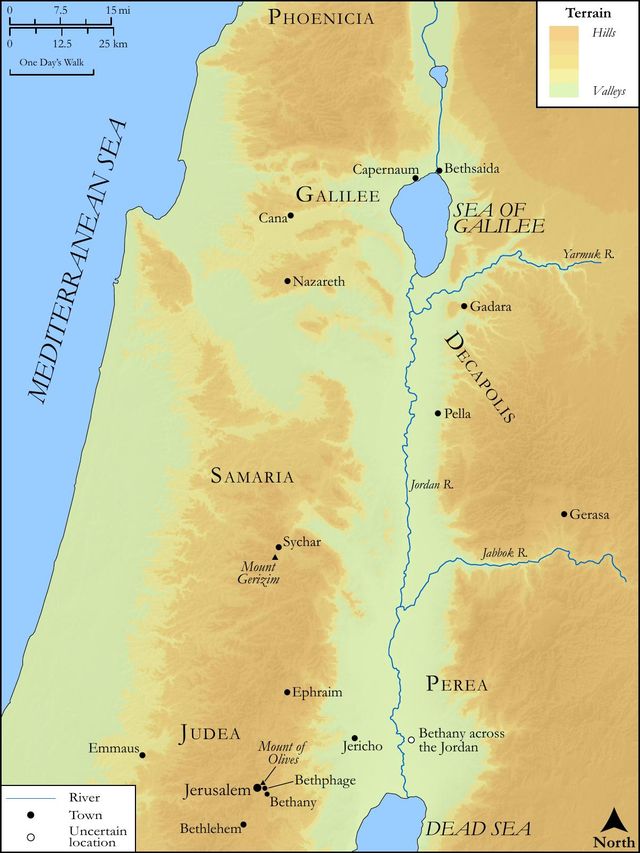
Capernaum, a bustling fishing village on the Sea of Galilee, was a hub of Jesus' early Galilean ministry. It was here that many of His miracles were performed and much of His teaching delivered. The Jewish audience, steeped in Old Testament sacrificial laws and dietary restrictions, would have found the concept of "eating flesh and drinking blood" profoundly shocking and even blasphemous if interpreted literally, as it violated Mosaic law (Leviticus 17:10-14). Their expectation of the Messiah was often a political deliverer, one who would provide physical bread and overthrow Roman rule, not a spiritual sacrifice demanding such radical identification. The term "disciples" (Greek: mathētēs) at this time referred to a broader group of followers or students who attached themselves to a rabbi, not exclusively the inner circle of the Twelve. These individuals had likely been attracted by Jesus' miracles (like the feeding of the five thousand in John 6:1-14) and His initial teachings, seeking perhaps physical provision or a political Messiah. Their departure highlights the clash between their earthly expectations and Jesus' heavenly, spiritual reality.
Key Themes
ShowHideJohn 6:66 powerfully contributes to several overarching themes in the Gospel of John and the broader biblical narrative. Firstly, it starkly illustrates the cost of discipleship. True following of Jesus demands more than superficial interest or a desire for physical benefits; it requires radical commitment and an embrace of challenging truths, even when they are difficult to comprehend or accept (Luke 14:26-33). Secondly, it highlights the theme of true versus superficial faith. Many were drawn to Jesus for what He could offer physically, but when His teaching turned to spiritual realities and the necessity of His sacrificial work, their faith proved shallow and conditional. This contrasts sharply with the enduring faith of the Twelve, particularly Peter's confession in John 6:68-69). Thirdly, it touches upon the sovereignty of God and human responsibility in salvation, as Jesus had previously stated, "No man can come to me, except the Father which hath sent me draw him" (John 6:44). While these disciples chose to turn away, their inability to grasp His truth was also tied to a lack of divine enablement. Finally, it reinforces the nature of Jesus' identity as the divine Son of God, whose words carry ultimate authority and whose mission transcends earthly expectations, demanding a spiritual response.
Exposition and Analysis
ShowHideKey Word Analysis
ShowHideFrom the verb manthanō (to learn), this term refers to a learner or pupil. In this context, it signifies individuals who had formally or informally attached themselves to Jesus as His students or followers. The use of "many of his disciples" (G4183 polýs meaning "many" or "much") indicates a significant number from the larger group of followers, not just casual observers, but those who had made some level of commitment to Him. Their turning away is therefore a more profound rejection than if it were merely the general crowd.
This adverb literally means "to the back" or "aback," indicating a turning away or reversal of direction. When combined with the verb "went" (Greek, apérchomai, to go off/depart), "went back" (Greek, apēlthon eis ta opisō) denotes a decisive withdrawal. It implies a return to a former state, a renunciation of their previous commitment to follow Jesus, and a physical and spiritual departure from His company and teachings.
This verb literally means "to tread all around" or "walk at large," but figuratively, it means "to live, deport oneself, or follow (as a companion or votary)." The phrase "walked no more with him" (G3765 oukéti meaning "no longer") signifies the cessation of their active association and identification with Jesus. It's a comprehensive statement about the end of their discipleship, implying they no longer lived according to His teachings or accompanied Him on His mission.
Verse Breakdown
ShowHide"From that [time] many of his disciples"
This clause establishes the immediate context of the departure. "That time" refers directly to the period following Jesus' "Bread of Life" discourse, which proved to be a stumbling block for many. The phrase "many of his disciples" is crucial, indicating that a significant portion of His established followers—not just curious onlookers—found His teaching too challenging and chose to leave. It highlights the widespread nature of the rejection.
"went back"
This phrase describes the action of these disciples. It conveys a physical turning away from Jesus and a return to their previous lives, beliefs, or associations. Spiritually, it signifies a renunciation of their commitment to Him and His teachings. It's a deliberate act of disengagement from the path they had chosen to walk with Him.
"and walked no more with him"
This final clause emphasizes the permanence and totality of their departure. "Walked with him" is a common biblical metaphor for companionship, discipleship, and living in accordance with someone's ways (Genesis 5:24). "No more" signifies a complete cessation of this relationship. They ceased to be His active followers, no longer aligning their lives with His mission, teachings, or presence. This is not a temporary lapse but a definitive end to their discipleship.
Literary Devices
ShowHideThe verse employs several powerful literary devices. Irony is prominent, as those who initially followed Jesus, drawn by His miracles and perhaps the promise of earthly benefits, ultimately turn away when confronted with the deeper, more demanding spiritual truths. Their initial proximity to the Messiah contrasts sharply with their ultimate rejection. Symbolism is also evident in the phrase "walked no more with him." Walking with someone is a common biblical metaphor for fellowship, discipleship, and shared journey. Thus, their cessation of "walking" symbolizes the termination of their spiritual relationship and commitment to Jesus. The verse also uses Understatement in its stark simplicity; "went back, and walked no more with him" succinctly conveys a profound spiritual tragedy and a widespread apostasy without extensive elaboration, allowing the gravity of the event to resonate through its directness. Furthermore, there is a clear Contrast between the superficial adherence of these departing disciples and the enduring, committed faith of the Twelve, who remained with Jesus (as seen in the subsequent verses).
Theological and Thematic Connections
ShowHideJohn 6:66 serves as a stark theological commentary on the nature of true faith and the reality of apostasy. It highlights that genuine discipleship is not merely intellectual assent or a pursuit of temporal benefits, but a spiritual commitment rooted in a willingness to accept Jesus' radical claims, even when they are challenging or counter-cultural. The departure of "many" underscores that the path to salvation is narrow and that not all who begin the journey will persevere. This event demonstrates the sifting work of God's Word, which exposes the true condition of the heart, revealing those who are truly "of God" and those who are merely interested. It also reinforces the divine prerogative in drawing people to Christ, as Jesus stated earlier in the chapter, "No man can come unto me, except it were given unto him of my Father" (John 6:65). This does not negate human responsibility but emphasizes that true faith is ultimately a gift and a work of God's grace.
Reflection and Application
ShowHideThis somber verse offers profound lessons for contemporary believers. It challenges us to examine the depth and authenticity of our own faith. Are we following Jesus for what we can gain—comfort, prosperity, social acceptance—or are we committed to Him even when His teachings are difficult, counter-cultural, or demand personal sacrifice? The "Bread of Life" discourse was a test of spiritual discernment and commitment; similarly, life presents us with moments where our allegiance to Christ is tested. True discipleship requires perseverance through hardship, misunderstanding, and the allure of returning to a "former way of life." We are called to cling to Christ and His words, recognizing that only He has the "words of eternal life" (John 6:68). This verse serves as a sober reminder that while many may begin the journey, not all will endure to the end. It should prompt us to cultivate a deep, abiding faith that is rooted in spiritual understanding and unwavering devotion, rather than superficial interest or conditional commitment.
Questions for Reflection
ShowHideFAQ
ShowHideWhat does "disciples" mean in this context, and why did so many turn away?
ShowHideIn this context, "disciples" (Greek: mathētḗs) refers to a broader group of followers who had attached themselves to Jesus as students or adherents, beyond just the twelve apostles. Many of them were likely drawn by His miracles, His ability to provide food (as seen in the feeding of the five thousand in John 6:1-14), or their expectation of a political Messiah. They turned away because Jesus' "Bread of Life" discourse, particularly His teaching about eating His flesh and drinking His blood (John 6:53), was spiritually challenging and difficult for them to comprehend or accept. They likely interpreted His words literally, finding them scandalous and blasphemous, rather than understanding their profound spiritual meaning of identifying with His sacrificial death and receiving eternal life through Him. Their faith was superficial, based on external benefits rather than a deep, spiritual commitment to His true identity and mission.
Christ-Centered Fulfillment
ShowHideJohn 6:66 profoundly underscores the exclusivity and demanding nature of following Christ, foreshadowing the ultimate sifting that occurs through His atoning work and the call to genuine faith. The turning away of these "disciples" illuminates the truth that not all who outwardly associate with Jesus truly belong to Him, a theme echoed in Jesus' later teachings about the narrow gate and the two paths (Matthew 7:13-14). Their departure highlights the necessity of a spiritual rebirth and divine enablement to truly embrace Christ, as Jesus Himself stated that no one can come to Him unless the Father draws them (John 6:44). This event sets the stage for the ultimate sacrifice of Christ on the cross, which would be an even greater stumbling block to many, yet the very means of salvation for those given to Him by the Father (1 Corinthians 1:23). Unlike these departing disciples, those who are truly Christ's sheep will hear His voice and follow Him, and He promises that they will never perish, nor will anyone snatch them out of His hand or His Father's hand (John 10:27-29). The perseverance of the saints, secured by the Holy Spirit, stands in stark contrast to the apostasy witnessed in John 6:66, affirming that true discipleship is a work of God from beginning to end, culminating in eternal life with the Christ whom they faithfully followed.