


John 6:65
Bible text: King James Version (1769 Blayney text) · Public domain
Bible text: King James Version with Strong's numbers · Public domain
Bible text: Berean Standard Bible · Public domain
Bible text: American Standard Version (1901) · Public domain
Bible text: World English Bible, Messianic edition · Public domain
Bible text: Geneva Bible (1599) · Public domain
Bible text: Young's Literal Translation · Public domain
- καὶkaiAndG2532CONJConjunction
- ἔλεγεν·elegenHe was sayingG3004V-IAI-3SVerb Imperfect Active Indicative 3rd Singular
- διὰdiaBecause ofG1223PREPPreposition
- τοῦτοtoutothisG3778D-ASNDemonstrative pronoun Accusative Singular Neuter
- εἴρηκαeirēkahave I saidG2046V-RAI-1SVerb Perfect Active Indicative 1st Singular
- ὑμῖνhuminto youG4771P-2DPPersonal pronoun Dative 2nd Plural
- ὅτιhotithatG3754CONJConjunction
- οὐδεὶςoudeisno [one]G3762A-NSMAdjective Nominative Singular Masculine
- δύναταιdunataiis ableG1410V-PNI-3SVerb Present Middle Or Passive Deponent Indicative 3rd Singular
- ἐλθεῖνeltheinto comeG2064V-2AANVerb 2nd Aorist Active Infinitive
- πρόςprostoG4314PREPPreposition
- μεmeMeG3165P-1ASPersonal pronoun Accusative 1st Singular
- ἐὰνeanonlyG1437CONDConjunction
- μὴmēunlessG3361PRT-NNegative Particle Negative
- ᾖēit shallG1510V-PAS-3SVerb Present Active Subjunctive 3rd Singular
- δεδομένονdedomenongrantedG1325V-RPP-NSNVerb Perfect Passive Participle Nominative Singular Neuter
- αὐτῷautōto himG846P-DSMPersonal pronoun Dative Singular Masculine
- ἐκekfromG1537PREPPreposition
- τοῦtoutheG3588T-GSMDefinite article Genitive Singular Masculine
- πατρόςpatrosFatherG3962N-GSM-TNoun Genitive Singular Masculine Title
- μουmouof mineG3165P-1GSPersonal pronoun Genitive 1st Singular
English is a literal word-by-word gloss of the Greek, not the KJV's wording. Why?
This is the original text the KJV's translators worked from — each Greek word with its own literal English meaning in this verse, prepared by scholars at Tyndale House, Cambridge. The KJV translates whole sentences, not word by word, so its wording differs: one Greek word can become several English words, and the KJV may choose “charity” where the gloss reads “love”. Both are faithful — they answer different questions. For the KJV's own rendering, switch to the KJV text.
Details
See on the biblical-era maps
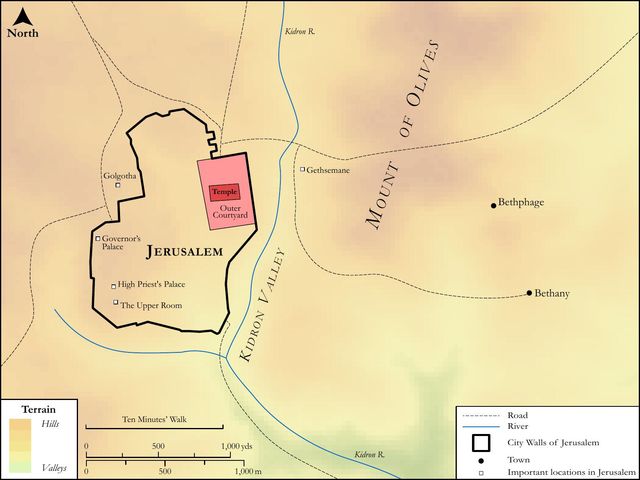
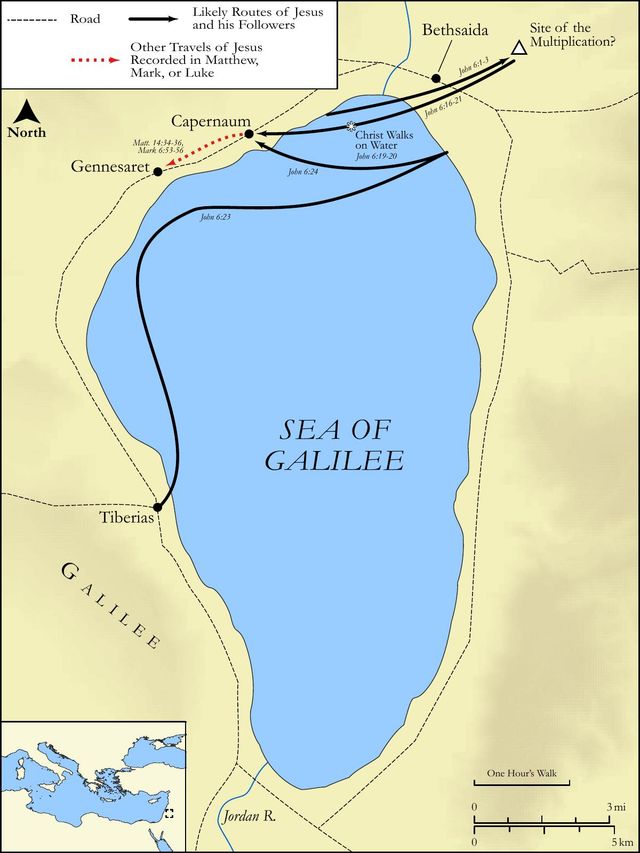
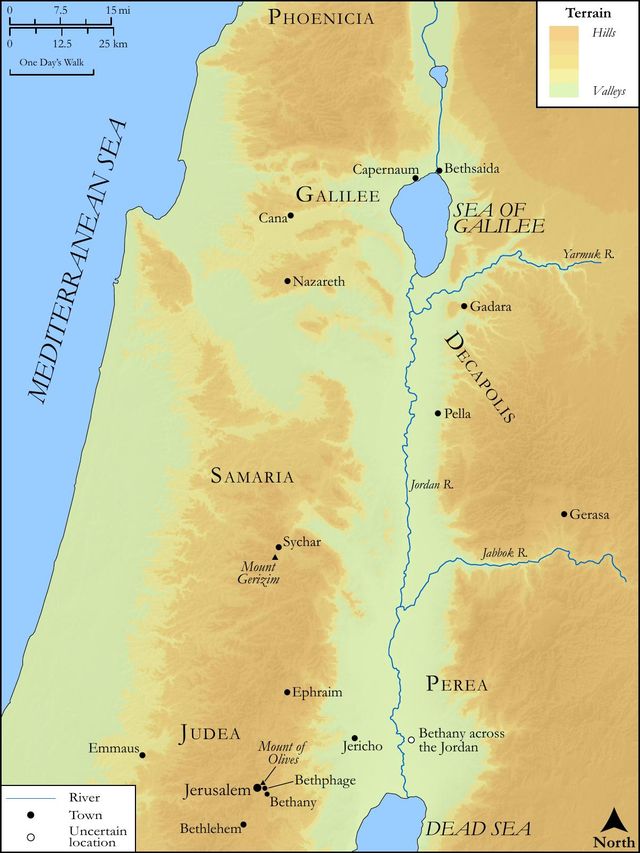
Study this verse
Public-domain commentary
Matthew Henry
From his Commentary on the Whole Bible. Henry comments on passages, not single verses — this entry covers John 6:60–71. His four-level outline is real structure in the source text, so it is rendered as structure.
We have here an account of the effects of Christ's discourse. Some were offended and others edified by it; some driven from him and others brought nearer to him.
I.To some it was a savour of death unto death; not only to the Jews, who were professed enemies to him and his doctrine, but even to many of his disciples, such as were disciples at large, who were his frequent hearers, and followed him in public; a mixed multitude, like those among Israel, that began all the discontents. Now here we have,
1.Their murmurings at the doctrine they heard (Joh 6:60): This is a hard saying, who can hear it?
(1.)They do not like it themselves: "What stuff is this? Eat the flesh, and drink the blood, of the Son of man! If it is to be understood figuratively, it is not intelligible; if literally, not practicable. What! must we turn cannibals? Can we not be religious, but we must be barbarous?" Si Christiani adorant quod comedunt (said Averroes), sit anima mea cum philosophis - If Christians adore what they eat, my mind shall continue with the philosophers. Now, when they found it a hard saying, if they had humbly begged of Christ to have declared unto them this parable, he would have opened it, and their understandings too; for the meek will he teach his way. But they were not willing to have Christ's sayings explained to them, because they would not lose this pretence for rejecting them - that they were hard sayings.
(2.)They think it impossible that any one else should like it: "Who can hear it? Surely none can." Thus the scoffers at religion are ready to undertake that all the intelligent part of mankind concur with them. They conclude with great assurance that no man of sense will admit the doctrine of Christ, nor any man of spirit submit to his laws. Because they cannot bear to be so tutored, so tied up, themselves, they think none else can: Who can hear it? Thanks be to God, thousands have heard these sayings of Christ, and have found them not only easy, but pleasant, as their necessary food.
2.Christ's animadversions upon their murmurings.
(1.)He well enough knew their murmurings, Joh 6:61. Their cavils were secret in their own breasts, or whispered among themselves in a corner. But,
[1.]Christ knew them; he saw them, he heard them. Note, Christ takes notice not only of the bold and open defiances that are done to his name and glory by daring sinners, but of the secret slights that are put upon his doctrine by carnal professors; he knows that which the fool saith in his heart, and cannot for shame speak out; he observes how his doctrine is resented by those to whom it is preached; who rejoice in it, and who murmur at it; who are reconciled to it, and bow before it, and who quarrel with it, and rebel against it, though ever so secretly.
[2.]He knew it in himself, not by any information given him, nor any external indication of the thing, but by his own divine omniscience. He knew it not as the prophets, by a divine revelation made to him (that which the prophets desired to know was sometimes hid from them, as Kg2 4:27), but by a divine knowledge in him. He is that essential Word that discerns the thoughts of the heart, Heb 4:12, Heb 4:13. Thoughts are words to Christ; we should therefore take heed not only what we say and do, but what we think.
(2.)He well enough knew how to answer them: "Doth this offend you? Is this a stumbling-block to you?" See how people by their own wilful mistakes create offences to themselves: they take offence where there is none given, and even make it where there is nothing to make it of. Note, We may justly wonder that so much offence should be taken at the doctrine of Christ for so little cause. Christ speaks of it here with wonder: "Doth this offend you?" Now, in answer to those who condemned his doctrine as intricate and obscure (Si non vis intelligi, debes negligi - If you are unwilling to be understood, you ought to be neglected),
[1.]He gives them a hint of his ascension into heaven, as that which would give an irresistible evidence of the truth of his doctrine (Joh 6:62): What and if you shall see the Son of man ascend up where he was before? And what then? First, "If I should tell you of that, surely it would much more offend you, and you would think my pretensions too high indeed. If this be so hard a saying that you cannot hear it, how will you digest it when I tell you of my returning to heaven, whence I came down?" See Joh 3:12. Those who stumble at smaller difficulties should consider how they will get over greater. Secondly, "When you see the Son of man ascend, this will much more offend you, for then my body will be less capable of being eaten by you in that gross sense wherein you now understand it;" so Dr. Whitby. Or, Thirdly, "When you see that, or hear it from those that shall see it, surely then you will be satisfied. You think I take too much upon me when I say, I came down from heaven, for it was with this that you quarrelled (Joh 6:42); but will you think so when you see me return to heaven?" If he ascended, certainly he descended, Eph 4:9, Eph 4:10. Christ did often refer himself thus to subsequent proofs, as Joh 1:50, Joh 1:51; Joh 2:14; Mat 12:40; Mat 26:64. Let us wait awhile, till the mystery of God shall be finished, and then we shall see that there was no reason to be offended at any of Christ's sayings.
[2.]He gives them a general key to this and all such parabolical discourses, teaching them that they are to be understood spiritually, and not after a corporal and carnal manner: It is the spirit that quickeneth, the flesh profiteth nothing, Joh 6:63. As it is in the natural body, the animal spirits quicken and enliven it, and without these the most nourishing food would profit nothing (what would the body be the better for bread, if it were not quickened and animated by the spirit), so it is with the soul. First, The bare participation of ordinances, unless the Spirit of God work with them, and quicken the soul by them, profits nothing; the word and ordinances, if the Spirit works with them, are as food to a living man, if not, they are as food to a dead man. Even the flesh of Christ, the sacrifice for sin, will avail us nothing unless the blessed Spirit quicken our souls thereby, and enforce the powerful influences of his death upon us, till we by his grace are planted together in the likeness of it. Secondly, The doctrine of eating Christ's flesh and drinking his blood, if it be understood literally, profits nothing, but rather leads us into mistakes and prejudices; but the spiritual sense or meaning of it quickens the soul, makes it alive and lively; for so it follows: The words that I speak unto you, they are spirit, and they are life. To eat the flesh of Christ! this is a hard saying, but to believe that Christ died for me, to derive from that doctrine strength and comfort in my approaches to God, my oppositions to sin and preparations for a future state, this is the spirit and life of that saying, and, construing it thus, it is an excellent saying. The reason why men dislike Christ's sayings if because they mistake them. The literal sense of a parable does us no good, we are never the wiser for it, but the spiritual meaning is instructive. Thirdly, The flesh profits nothing - those that are in the flesh (so some understand it), that are under the power of a carnal mind, profit not by Christ's discourses; but the Spirit quickeneth - those that have the Spirit, that are spiritual, are quickened and enlivened by them; for they are received ad modum recipientis - so as to correspond with the state of the receiver's mind. They found fault with Christ's sayings, whereas the fault was in themselves; it is only to sensual minds that spiritual things are senseless and sapless, spiritual minds relish them; see Co1 2:14, Co1 2:15.
[3.]He gives them an intimation of his knowledge of them, and that he had expected no better from them, though they called themselves his disciples, Joh 6:64, Joh 6:65. Now was fulfilled that of the prophet, speaking of Christ and his doctrine (Isa 53:1), Who hath believed our report? and to whom is the arm of the Lord revealed? Both these Christ here takes notice of.
First, They did not believe his report: "There are some of you who said you would leave all to follow me who yet believe not;" and this was the reason why the word preached did not profit them, because it was not mixed with faith, Heb 4:2. They did not believe him to be the Messiah, else they would have acquiesced in the doctrine he preached, and not have quarrelled with it, though there were some things in it dark, and hard to be understood. Oportet discentum credere - Young beginners in learning must take things upon their teacher's word. Note, 1. Among those who are nominal Christians, there are many who are real infidels. 2. The unbelief of hypocrites, before it discovers itself to the world, is naked and open before the eyes of Christ. He knew from the beginning who they were of the multitudes that followed him that believed, and who of the twelve should betray him; he knew from the beginning of their acquaintance with him, and attendance on him, when they were in the hottest pang of their zeal, who were sincere, as Nathanael (Joh 1:47), and who were not. Before they distinguished themselves by an overt act, he could infallibly distinguish who believed and who did not, whose love was counterfeit and whose cordial. We may gather hence, (1.) That the apostasy of those who have long made a plausible profession of religion is a certain proof of their constant hypocrisy, and that from the beginning they believed not, but is not a proof of the possibility of the total and final apostasy of any true believers: such revolts are not to be called the fall of real saints, but the discovery of pretended ones; see Jo1 2:19. Stella cadens non stella fuit - The star that falls never was a star. (2.) That it is Christ's prerogative to know the heart; he knows who they are that believe not, but dissemble in their profession, and yet continues them room in his church, the use of his ordinances, and the credit of his name, and does not discover them in this world, unless they by their own wickedness discover themselves; because such is the constitution of his visible church, and the discovering day is yet to come. But, if we pretend to judge men's hearts, we step into Christ's throne, and anticipate his judgment. We are often deceived in men, and see cause to change our sentiments of them; but this we are sure of, that Christ knows all men, and his judgment is according to truth.
Secondly, The reason why they did not believe his report was because the arm of the Lord was not revealed to them (Joh 6:65): Therefore said I unto you that no man can come to me, except it be given unto him of my Father; referring to Joh 6:44. Christ therefore could not but know who believed and who did not, because faith is the gift and work of God, and all his Father's gifts and works could not but be known to him, for they all passed through his hands. There he had said that none could come to him, except the Father draw him; here he saith, except it be given him of my Father, which shows that God draws souls by giving them grace and strength, and a heart to come, without which, such is the moral impotency of man, in his fallen state, that he cannot come.
3.We have here their final apostasy from Christ hereupon: From that time many of his disciples went back, and walked no more with him, Joh 6:66. When we admit into our minds hard thoughts of the word and works of Christ, and conceive a secret dislike, and are willing to hear insinuations tending to their reproach, we are then entering into temptation; it is as the letting forth of water; it is looking back, which, if infinite mercy prevent not, will end in drawing back; therefore Obsta principiis - Take heed of the beginnings of apostasy.
(1.)See here the backsliding of these disciples. Many of them went back to their houses, and families, and callings, which they had left for a time to follow him; went back, one to his farm and another to his merchandise; went back, as Orpah did, to their people, and to their gods, Rut 1:15. They had entered themselves in Christ's school, but they went back, did not only play truant for once, but took leave of him and his doctrine for ever. Note, The apostasy of Christ's disciples from him, though really a strange thing, yet has been such a common thing that we need not be surprised at it. Here were many that went back. It is often so; when some backslide many backslide with them; the disease is infectious.
(2.)The occasion of this backsliding: From that time, from the time that Christ preached this comfortable doctrine, that he is the bread of life, and that those who by faith feed upon him shall live by him (which, one would think, should have engaged them to cleave more closely to him) - from that time they withdrew. Note, The corrupt and wicked heart of man often makes that an occasion of offence which is indeed matter of the greatest comfort. Christ foresaw that they would thus take offence at what he said, and yet he said it. That which is the undoubted word and truth of Christ must be faithfully delivered, whoever may be offended at it. Men's humours must be captivated to God's word, and not God's word accommodated to men's humours.
(3.)The degree of their apostasy: They walked no more with him, returned no more to him and attended no more upon his ministry. It is hard for those who have been once enlightened, and have tasted the good word of God, if they fall away, to renew them again to repentance, Heb 6:4-6.
II.This discourse was to others a savour of life unto life.
Many went back, but, thanks be to God, all did not; even then the twelve stuck to him. Though the faith of some be overthrown, yet the foundation of God stands sure. Observe here,
1.The affectionate question which Christ put to the twelve (Joh 6:67): Will you also go away? He saith nothing to those who went back. If the unbelieving depart, let them depart; it was no great loss of those whom he never had; lightly come, lightly go; but he takes this occasion to speak to the twelve, to confirm them, and by trying their stedfastness the more to fix them: Will you also go away? (1.) "It is at your choice whether you will or no; if you will forsake me, now is the time, when so many do: it is an hour of temptation; if you will go back, go now." Note, Christ will detain none with him against their wills; his soldiers are volunteers, not pressed men. The twelve had now had time enough to try how they liked Christ and his doctrine, and that none of them might afterwards say that they were trepanned into discipleship, and if it were to do again they would not do it, he here allows them a power of revocation, and leaves them at their liberty; as Jos 24:15; Rut 1:15. (2.) "It is at your peril if you do go away." If there was any secret inclination in the heart of any of them to depart from him, he stops it with this awakening question, "Wilt you also go away? Think not that you hang at as loose an end as they did, and may go away as easily as they could. They have not been so intimate with me as you have been, nor received so many favours from me; they are gone, but will you also go? Remember your character, and say, Whatever others do, we will never go away. Should such a man as I flee?" Neh 6:11. Note, The nearer we have been to Christ and the longer we have been with him, the more engagements we have laid ourselves under to him, the greater will be our sin if we desert him. (3.) "I have reason to think you will not. Will you go away? No, I have faster hold of you than so; I hope better things of you (Heb 6:9), for you are they that have continued with me," Luk 22:28. When the apostasy of some is a grief to the Lord Jesus, the constancy of others is so much the more his honour, and he is pleased with it accordingly. Christ and believers know one another too well to part upon every displeasure.
2.The believing reply which Peter, in the name of the rest, made to this question, Joh 6:68, Joh 6:69. Christ put the question to them, as Joshua put Israel to their choice whom they would serve, with design to draw out from them a promise to adhere to him, and it had the like effect. Nay, but we will serve the Lord, Peter was upon all occasions the mouth of the rest, not so much because he had more of his Master's ear than they, but because he had more tongue of his own; and what he said was sometimes approved and sometimes reprimanded (Mat 16:17, Mat 16:23) - the common lot of those who are swift to speak. This here was well said, admirably well; and probably he said it by the direction, and with the express assent, of his fellow-disciples; at least he knew their mind, and spoke the sense of them all, and did not except Judas, for we must hope the best.
(1.)Here is a good resolution to adhere to Christ, and so expressed as to intimate that they would not entertain the least thought of leaving him: "Lord, to whom shall we go? It were folly to go from thee, unless we knew where to better ourselves; no, Lord, we like our choice too well to change." Note, Those who leave Christ would do well to consider to whom they will go, and whether they can expect to find rest and peace any where but in him. See Psa 73:27, Psa 73:28; Hos 2:9. "Whither shall we go? Shall we make our court to the world? It will certainly deceive us. Shall we return to sin? It will certainly destroy us. Shall we leave the fountain of living waters for broken cisterns?" The disciples resolve to continue their pursuit of life and happiness, and will have a guide to it, and will adhere to Christ as their guide, for they can never have a better. "Shall we go to the heathen philosophers, and become their disciples? They are become vain in their imaginations, and, professing themselves to be wise in other things, are become fools in religion. Shall we go to the scribes and Pharisees, and sit at their feet? What good can they do us who have made void the commandments of God by their traditions? Shall we go to Moses? He will send us back again to thee. Therefore, if ever we find the way to happiness, it must be in following thee." Note, Christ's holy religion appears to great advantage when it is compared with other institutions, for then it will be seen how far it excels them all. Let those who find fault with this religion find a better before they quit it. A divine teacher we must have; can we find a better than Christ? A divine revelation we cannot be without; if the scripture be not such a one, where else may we look for it?
(2.)Here is a good reason for this resolution. It was not the inconsiderate resolve of a blind affection, but the result of mature deliberation. The disciples were resolved never to go away from Christ,
[1.]Because of the advantage they promised themselves by him: Thou hast the words of eternal life. They themselves did not fully understand Christ's discourse, for as yet the doctrine of the cross was a riddle to them; but in the general they were satisfied that he had the words of eternal life, that is, First, That the word of his doctrine showed the way to eternal life, set it before us, and directed us what to do, that we might inherit it. Secondly, That the word of his determination must confer eternal life. His having the words of eternal life is the same with his having power to give eternal life to as many as were given him, Joh 17:2. He had in the foregoing discourse assured eternal life to his followers; these disciples fastened upon this plain saying, and therefore resolved to stick to him, when the others overlooked this, and fastened upon the hard sayings, and therefore forsook him. Though we cannot account for every mystery, every obscurity, in Christ's doctrine, yet we know, in the general, that it is the word of eternal life, and therefore must live and die by it; for if we forsake Christ we forsake our own mercies.
[2.]Because of the assurance they had concerning him (Joh 6:69): We believe, and are sure, that thou art that Christ. if he be the promised Messiah, he must bring in an everlasting righteousness (Dan 9:24), and therefore has the words of eternal life, for righteousness reigns to eternal life, Rom 5:21. observe, First, The doctrine they believed: that this Jesus was the Messiah promised to the fathers and expected by them, and that he was not a mere man, but the Son of the living God, the same to whom God had said, Thou art my Son, Psa 2:7. In times of temptation to apostasy it is good to have recourse to our first principles, and stick to them; and, if we faithfully abide by that which is past dispute, we shall be the better able both to find and to keep the truth in matters of doubtful disputation. Secondly, The degree of their faith: it rose up to a full assurance: We are sure. We have known it by experience; this is the best knowledge. We should take occasion from others' wavering to be so much the more established, especially in that which is the present truth. When we have so strong a faith in the gospel of Christ as boldly to venture our souls upon it, knowing whom we have believed, then, and not till then, we shall be willing to venture every thing else for it.
3.The melancholy remark which our Lord Jesus made upon this reply of Peter's (Joh 6:70, Joh 6:71): Have not I chosen you twelve, and one of you is a devil? And the evangelist tells us whom he meant: he spoke of Judas Iscariot. Peter had undertaken for them all that they would be faithful to their Master. Now Christ does not condemn his charity (it is always good to hope the best), but he tacitly corrects his confidence. We must not be too sure concerning any. God knows those that are his; we do not. Observe here,
(1.)Hypocrites and betrayers of Christ are no better than devils. Judas not only had a devil, but he was a devil. One of you is a false accuser; so diabolos sometimes signifies (Ti2 3:3); and it is probable that Judas, when he sold his Master to the chief priests, represented him to them as a bad man, to justify himself in what he did. But I rather take it as we read it: He is a devil, a devil incarnate, a fallen apostle, as the devil a fallen angel. He is Satan, an adversary, an enemy to Christ. He is Abaddon, and Apollyon, a son of perdition. He was of his father the devil, did his lusts, was in his interests, as Cain, Jo1 3:12. Those whose bodies were possessed by the devil are never called devils (demoniacs, but not devils); but Judas, into whose heart Satan entered, and filled it, is called a devil.
(2.)Many that are seeming saints are real devils. Judas had as fair an outside as many of the apostles; his venom was, like that of the serpent, covered with a fine skin. He cast out devils, and appeared an enemy to the devil's kingdom, and yet was himself a devil all the while. Not only he will be one shortly, but he is one now. It is strange, and to be wondered at; Christ speaks of it with wonder: Have not I? It is sad, and to be lamented, that ever Christianity should be made a cloak to diabolism.
(3.)The disguises of hypocrites, however they may deceive men, and put a cheat upon them, cannot deceive Christ, for his piercing eye sees through them. He can call those devils that call themselves Christians, like the prophet's greeting to Jeroboam's wife, when she came to him in masquerade (Kg1 14:6): Come in, thou wife of Jeroboam. Christ's divine sight, far better than any double sight, can see spirits.
(4.)There are those who are chosen by Christ to special services who yet prove false to him: I have chosen you to the apostleship, for it is expressly said that Judas was not chosen to eternal life (Joh 13:18), and yet one of you is a devil. Note, Advancement to places of honour and trust in the church is no certain evidence of saving grace. We have prophesied in thy name.
(5.)In the most select societies on this side heaven it is no new thing to meet with those that are corrupt. Of the twelve that were chosen to an intimate conversation with an incarnate Deity, as great an honour and privilege as ever men were chosen to, one was an incarnate devil. The historian lays an emphasis upon this, that Judas was one of the twelve that were so dignified and distinguished. Let us not reject and unchurch the twelve because one of them is a devil, nor say that they are all cheats and hypocrites because one of them was so; let those that are so bear the blame, and not those who, while they are undiscovered, incorporate with them. There is a society within the veil into which no unclean thing shall enter, a church of first-born, in which are no false brethren.
Historical interpretation
Two Centuries of Reception
6 surviving comments on this verse. Each one is dated, so this reads as a timeline rather than a list.
Select a marker to jump to its quote. Markers stagger vertically where authors wrote within a few decades of each other.
Finally, when, after the resurrection, the apostles are sent by the Lord to the heathens, they are bidden to baptize the Gentiles "in the name of the Father, and of the Son, and of the Holy Ghost." How, then, do some say, that a Gentile baptized without, outside the Church, yea, and in opposition to the Church, so that it be only in the name of Jesus Christ, everywhere, and in whatever manner, can obtain remission of sin, when Christ Himself commands the heathen to be baptized in the full and united Trinity? Unless while one who denies Christ is denied by Christ, he who denies His Father whom Christ Himself confessed is not denied; and he who blasphemes against Him whom Christ called His Lord and His God, is rewarded by Christ, and obtains remission of sins, and the sanctification of baptism! But by what power can he who denies God the Creator, the Father of Christ, obtain, in baptism, the remission of sins, since Christ received that very power by which we are baptized and sanctified, from the same Father, whom He called "greater" than Himself, by whom He desired to be glorified, whose will He fulfilled even unto the obedience of drinking the cup, and of undergoing death? What else is it then, than to become a partaker with blaspheming heretics, to wish to maintain and assert, that one who blasphemes and gravely sins against the Father and the Lord and God of Christ, can receive remission of sins in the name of Christ? What, moreover, is that, and of what kind is it, that he who denies the Son of God has not the Father, and he who denies the Father should be thought to have the Son, although the Son Himself testifies, and says, "No man can come unto me except it were given unto him of my Father? " So that it is evident, that no remission of sins can be received in baptism from the Son, which it is not plain that the Father has granted. Especially, since He further repeats, and says, "Every plant which my heavenly Father hath not planted shall be rooted up."
(Hom. xlvii. 2) i. e. difficult to receive, too much for their weakness. They thought He spoke above Himself, and more loftily than He had a right to do; and so said they, Who can bear it? which was answering in fact for themselves, that they could not.
(Hom. xlvii. 2) The revelation however of these hidden things was a mark of His Divinity: hence the meaning of what follows; And if ye shall see the Son of man ascend up where He was before; supply, What will ye say? He said the same to Nathanael, Because I said to thee, I saw thee under the fig tree, believest thou? Thou shalt see greater things than these. He does not add difficulty to difficulty, but to convince them by the number and greatness of His doctrines. For if He had merely said that He came down from heaven, without adding any thing further, he would have offended His hearers more; but by saying that His flesh is the life of the world, and that as He was sent by the living Father, so He liveth by the Father; and at last by adding that He came down from heaven, He removed all doubt. Nor does He mean to scandalize His disciples, but rather to remove their scandal. For so long as they thought Him the Son of Joseph, they could not receive His doctrines; but if they once believed that He had come down from heaven, and would ascend thither, they would be much more willing and able to admit them.
(Hom. xlvii. 3) He tries to remove their difficulties in another way, as follows, It is the spirit that quickeneth, the flesh profiteth nothing: that is to say, You ought to understand My words in a spiritual sense: he who understands them carnally is profited nothing. To interpret carnally is to take a proposition in its bare literal meaning, and allow no other. But we should not judge of mysteries in this way; but examine them with the inward eye; i. e. understand them spiritually. It was carnal to doubt how our Lord could give His flesh to eat. What then? Is it not real flesh? Yea, verily. In saying then that the flesh profiteth nothing, He does not speak of His own flesh, but that of the carnal hearer of His word.
(Hom. xlvii. 2) i. e. are spiritual, have nothing carnal in them, produce no effects of the natural sort; not being under the dominion of that law of necessity, and order of nature established on earth.
(Hom. xlvii. 2) Having spoken of His words being taken carnally, He adds, But there are some of you that believe not. Some, He says, not including His disciples in the number. This insight shows His high nature.
(Hom. xlvii. 2) To let you know that it was before these words, and not after, that the people murmured and were offended, the Evangelist adds, For Jesus knew from the beginning, who they were that believed not, and who should betray Him.
(Hom. xlvi. 2) As if He said, Men's unbelief does not disturb or astonish Me: I know to whom the Father hath given to come to Me. He mentions the Father, to show first that He had no eye to His own glory; secondly, that God was His Father, and not Joseph.
"But many of the disciples, when they had heard this, said, This is a hard saying."
What means "hard"? Rough, laborious, troublesome. Yet He said nothing of this kind, for He spake not of a mode of life, but of doctrines, continually handling the faith which is in Him. What then means, "is a hard saying"? Is it because it promiseth life and resurrection? Is it because He said that He came down from heaven? Or that it was impossible for one to be saved who ate not His flesh? Tell me, are these things "hard"? Who can assert that they are? What then means "hard"? It means, "difficult to be received," "transcending their infirmity," "having much terror." For they thought that He uttered words too high for His real character, and such as were above Himself. Therefore they said, "Who can hear it?" Perhaps making excuse for themselves, since they were about to start away.
"When Jesus knew in Himself that His disciples murmured at it," (for this is an attribute of His Godhead to bring secret things to light,) "He said unto them, Doth this offend you? What and if ye shall see the Son of Man ascend up where He was before?"
This also He doth in the case of Nathanael, saying, "Because I said unto thee, I saw thee under the fig-tree, believest thou? Thou shall see greater things than these." And to Nicodemus, "No man hath ascended up to heaven but the Son of man which is in heaven." What then, doth He add difficulties to difficulties? No, (that be far from Him,) but by the greatness of the doctrines, and the number of them, He desireth to bring them over. For if one had said simply, "I have come down from heaven," and added nothing more, he would have been the more likely to offend them; but He who said, "My body is the life of the world"; He who said, "As the living Father hath sent Me, so I live by the Father"; and who said, "I have come down from heaven," solves the difficulty. For the man who utters any one great thing concerning himself may perhaps be suspected of feigning, but he who connects together so many one after another removes all suspicion. All that He doth and saith is intended to lead them away from the thought, that Joseph was His father. And it was not with a wish to strengthen, but rather to do away that stumbling-block, that He said this. For whosoever deemed that He was Joseph's son could not receive His sayings, while one that was persuaded that He had come down from heaven, and would ascend thither, might more easily give heed to His words: at the same time He bringeth forward also another explanation, saying, "It is the Spirit that quickeneth, the flesh profiteth nothing."
His meaning is, "Ye must hear spiritually what relateth to Me, for he who heareth carnally is not profited, nor gathereth any advantage." It was carnal to question how He came down from heaven, to deem that He was the son of Joseph, to ask, "How can he give us His flesh to eat?" All this was carnal, when they ought to have understood the matter in a mystical and spiritual sense. "But," saith some one, "how could they understand what the 'eating flesh' might mean?" Then it was their duty to wait for the proper time and enquire, and not to abandon Him.
"The words that I speak unto you, they are spirit and they are life."
That is, they are divine and spiritual, have nothing carnal about them, are not subject to the laws of physical consequence, but are free from any such necessity, are even set above the laws appointed for this world, and have also another and a different meaning. Now as in this passage He said "spirit," instead of "spiritual," so when He speaketh of "flesh," He meant not "carnal things," but "carnally hearing," and alluding at the same time to them, because they ever desired carnal things when they ought to have desired spiritual. For if a man receives them carnally, he profits nothing. "What then, is not His flesh, flesh?" Most certainly. "How then saith He, that the flesh profiteth nothing?" He speaketh not of His own flesh, (God forbid!) but of those who received His words in a carnal manner. But what is "understanding carnally"? It is looking merely to what is before our eyes, without imagining anything beyond. This is understanding carnally. But we must not judge thus by sight, but must look into all mysteries with the eyes within. This is seeing spiritually. He that eateth not His flesh, and drinketh not His blood, hath no life in him. How then doth "the flesh profit nothing," if without it we cannot live? Seest thou that the words, "the flesh profiteth nothing," are spoken not of His own flesh, but of carnal hearing?
"But there are some of you that believe not."
Again, according to His custom, He addeth weight to His words, by foretelling what would come to pass, and by showing that He spake thus not from desire of honor from them, but because He cared for them. And when He said "some," He excepted the disciples. For at first He said, "Ye have both seen Me, and believe not"; but here, "There are some of you that believe not."
For He "knew from the beginning who they were that believed not, and who should betray Him."
"And He said, Therefore said I unto you, that no man can come unto Me except it were given unto Him from above from My Father."
Here the Evangelist intimates to us the voluntary character of the Dispensation, and His endurance of evil. Nor is the, "from the beginning," put here without a cause, but that thou mayest be aware of His foreknowledge from the first, and that before the words were uttered, and not after the men had murmured nor after they had been offended, He knew the traitor, but before, which was an attribute of Godhead. Then He added, "Except it be given him from above from My Father"; thus persuading them to deem God His Father, not Joseph, and showing them that it is no common thing to believe in Him. As though He had said, "Unbelievers disturb Me not; trouble Me not, astonish Me not. I know of old before they were created, I know to whom the Father hath given to believe"; and do thou, when thou hearest that "He hath given," imagine not merely an arbitrary distribution, but that if any hath rendered himself worthy to receive the gift, he hath received it.
But after He spoke, and distinguished those that believe from those that believe not, He clearly showed the cause why they believed not. "Therefore I said unto you," saith He, "that no man can come unto me except it were given to him of my Father." Hence to believe is also given to us; for certainly to believe is something. And if it is something great, rejoice that thou hast believed, yet be not lifted up; for "What hast thou that thou didst not receive?"
(Tr. xxvii. 7) And after distinguishing those who believed from those who did not believe, our Lord gives the reason of the unbelief of the latter, And He said, Therefore said I unto you, that no man can come unto Me, except it were given him of My Father.
(Tr. xxvii. 7) So then (our) faith is given to us: and no small gift it is. Wherefore rejoice if thou believest; but be not lifted up, for what hast thou which thou didst not receive? (1 Cor. 4:7.) And that this grace is given to some, and not to others, no one can doubt, without going against the plainest declarations of Scripture. As for the question, why it is not given to all, this cannot disquiet the believer, who knows that in consequence of the sin of one man, all are justly liable to condemnation; and that no blame could attach to God, even if none were pardoned; it being of His great mercy only that so many are. And why He pardons one rather than another, rests with Him, whose judgments are unsearchable, and His ways past finding out.
He teaches us that even the act of believing is by way of being a gift and not a matter of merit: "As I told you," he says, "no one can come to me but whoever has been given it by my Father." If we call to mind the earlier part of the Gospel, we shall discover where the Lord said this. We shall find that he said, "No one can come to me unless the Father who sent me drags him." He did not say "leads" but "drags." This violence happens to the heart, not to the flesh. So why be surprised? Believe, and you come; love, and you are dragged. Do not regard this violence as harsh and irksome; on the contrary, it is sweet and pleasant. It is the very pleasantness of the thing that drags you to it. Isn't a sheep dragged, or drawn irresistibly, when it is hungry and grass is shown to it? And I presume it is not being moved by bodily force but pulled by desire.
Continue studying John 6:65 across the web’s major study libraries — every link below opens this exact verse, chapter, or book on the destination site.
Read & Compare
 BibleGatewayThis verse in more than 200 translations and 70 languages.
 Bible.comThe YouVersion reader — hundreds of translations, reading plans, and highlights.
 ESV.orgCrossway's official English Standard Version reader.
 NET BibleThe NET translation with 60,000+ translators' notes on every rendering decision.
 STEP BibleTyndale House's free study tool — original text, vocabulary, and scholarly resources.
 BibliaLogos Bible Software's free web reader.
 USCCBThe New American Bible (Revised Edition) with the U.S. bishops' study notes.
Commentaries
 BibleHub CommentariesDozens of classic commentaries on this verse, gathered on one page.
 StudyLightMore than 100 commentary sets — the largest collection on the web.
 BibleRefPlain-English commentary on what this verse means, verse by verse.
 Enduring WordDavid Guzik's free commentary on this chapter, widely used by Bible teachers.
 Bible Study ToolsVerse commentary alongside Greek and Hebrew study aids.
Original Language & Research
- BibleHub InterlinearThe verse word by word — original language, transliteration, and English.
- BibleHub LexiconEvery word's original-language definition and Strong's entry.
 Blue Letter BibleDeep-study tools — Strong's numbers, concordance, and word studies.
 CNTR CollationThe earliest Greek manuscripts of this verse, collated letter by letter.
Sermons, Hymns & Audio


TrulyRandomVerse is not affiliated with these sites and doesn’t control their content. They’re linked because they’re genuinely useful.
Summary
John 6:65 profoundly articulates Jesus' teaching on the necessity of divine intervention for spiritual understanding and saving faith. In the midst of His "Bread of Life" discourse, Jesus clarifies that human beings, in their natural state, lack the inherent capacity to come to Him in a saving way; this spiritual enablement is a sovereign gift, graciously bestowed by God the Father. The verse underscores the Father's initiative and ultimate authority in drawing individuals into a relationship with His Son, emphasizing that salvation is fundamentally a work of divine grace.
Context
ShowHideLiterary Context
This verse is a pivotal statement within Jesus' extensive "Bread of Life" discourse, recorded in John 6. Following the miraculous feeding of the five thousand and His walking on water, Jesus presents Himself as the true spiritual sustenance, superior to the manna in the wilderness. His teaching, particularly the call to "eat his flesh, and drink his blood" (John 6:53), proved deeply challenging and offensive to many of His listeners, including some who had previously followed Him. Their murmuring and internal questioning about the spiritual implications of His words prompted Jesus to reiterate and clarify a truth He had already stated earlier in the chapter: "No man can come to me, except the Father which hath sent me draw him" (John 6:44). John 6:65 serves as a direct, emphatic reaffirmation of this divine prerequisite, explaining why many found His words hard and why they could not believe. It highlights the spiritual chasm between human natural ability and divine truth, asserting that only a supernatural work of the Father can bridge this gap and enable genuine faith.
Historical & Cultural Context
Jesus' discourse took place primarily in Capernaum, likely within a synagogue setting, addressing a predominantly Jewish audience. This audience was steeped in the Old Testament and its understanding of God's covenant relationship with Israel. They held various expectations for the Messiah, often focusing on political deliverance or physical provision, as evidenced by their desire to make Jesus king after the feeding miracle. Jesus' teaching about Himself as "bread" would have resonated with the manna narrative from the Exodus, but His spiritual reinterpretation, especially the radical imagery of eating His flesh and drinking His blood, would have been deeply unsettling. Such language, interpreted literally, would violate Jewish dietary laws and taboos against consuming blood. Furthermore, the concept of God "drawing" or "giving" individuals to Himself was not entirely alien to Jewish thought, often associated with divine election and the covenant relationship. However, Jesus' application of this concept to personal faith in Him as the Messiah, and the explicit statement of human inability apart from this divine initiative, challenged their understanding of human merit and religious performance as paths to God.
Key Themes
ShowHideJohn 6:65 powerfully articulates several foundational theological themes that permeate the Gospel of John and the New Testament. Firstly, it underscores the Divine Initiative and Sovereignty in salvation. The verse unequivocally states that "no man can come" unless it is "given unto him of my Father," emphasizing that the Father's active, sovereign work is the prerequisite for coming to Christ. This theme is echoed throughout Scripture, such as in Ephesians 2:8-9, which declares salvation to be "the gift of God," not of works. Secondly, the verse highlights Human Inability in spiritual matters. Jesus' declaration that "no man can come unto me" points to a fundamental spiritual incapacity or blindness inherent in fallen humanity, apart from God's enabling grace. This is not merely an unwillingness but a deep-seated inability to grasp and respond to divine truth in a saving way, a concept further explored in passages like 1 Corinthians 2:14. Thirdly, it emphasizes Grace as a Gift. Coming to Christ is presented not as an achievement or a result of human striving, but as a gracious bestowal from the Father. This aligns with the biblical teaching that faith itself is a gift, as seen in Philippians 1:29. Finally, the verse implicitly reinforces Christ's Exclusivity as the sole means of salvation, for it is to Him that the Father draws, and apart from Him, there is no life (John 14:6).
Exposition and Analysis
ShowHideKey Word Analysis
ShowHideThis verb signifies the ability or possibility to do something. In this context, when Jesus states "no man can come," it denotes a genuine, inherent inability or lack of power within humanity to initiate or achieve saving faith in Him. It's not merely a matter of unwillingness, but a fundamental spiritual incapacity that requires an external, divine enablement. This word highlights the spiritual impotence of humanity apart from God's grace.
This verb means to come or go, often implying movement towards a destination. Here, "come unto me" refers to a spiritual movement of faith, trust, and commitment towards Jesus. It encompasses not just physical proximity but a surrender of one's life to Him in belief. The inability to "come" therefore signifies an inability to exercise saving faith or enter into a genuine relationship with Christ.
This verb means to give, bestow, or grant. The use of the perfect passive participle ("it were given") indicates an action completed in the past with ongoing results, emphasizing that the ability to come to Jesus is a settled, sovereign act of divine bestowal. It highlights that this capacity is not self-generated but is entirely a gracious gift originating from the Father, underscoring the divine source and nature of saving faith.
Verse Breakdown
ShowHide"And he said, Therefore said I unto you"
This opening phrase indicates that Jesus is reiterating and reinforcing a point He has already made, specifically referring back to John 6:44. The "Therefore" (Greek: diá toûto) signals that what follows is a logical consequence or explanation for the difficulty many of His listeners were experiencing in accepting His teaching. It underscores the divine perspective on their spiritual resistance.
"that no man can come unto me"
This is a stark declaration of human spiritual inability. The phrase "no man" (Greek: oudeís) is absolute, emphasizing that apart from divine intervention, no individual possesses the inherent power or capacity to approach Jesus in a salvific way. "Can come" (Greek: dýnamai érchomai) denotes a genuine lack of ability, not merely a lack of desire. This incapacity is rooted in the fallen human condition, which is spiritually blind and hostile to God's truth.
"except it were given unto him of my Father"
This clause provides the essential divine prerequisite and the sole means by which anyone can overcome their spiritual inability and come to Jesus. The passive voice "it were given" (Greek: dedomenon) points to God the Father as the active agent, the one who bestows this spiritual capacity. It is a sovereign, gracious gift from the Father, enabling individuals to believe in and come to His Son. This highlights the Father's initiative and His indispensable role in the process of salvation, ensuring that faith is not a human achievement but a divine endowment.
Literary Devices
ShowHideJesus employs several literary devices in this concise statement to convey its profound truth. The use of Repetition is evident, as this verse echoes the sentiment of John 6:44, serving to emphasize and clarify a crucial theological point that His audience found difficult. This reiteration underscores its importance. There is a clear Contrast established between human inability ("no man can come") and divine enablement ("except it were given unto him of my Father"). This juxtaposition highlights the vast spiritual chasm that only God's sovereign grace can bridge. The phrase "no man" functions as an Absolute Statement, emphasizing the universality of human spiritual incapacity apart from divine intervention. Furthermore, the Divine Passive in "it were given" implicitly attributes the action to God without explicitly naming Him as the subject in that specific clause, thereby magnifying the divine origin of the gift of faith and the Father's sovereign role.
Theological and Thematic Connections
ShowHideJohn 6:65 stands as a cornerstone verse for understanding the biblical doctrine of divine sovereignty in salvation. It asserts that the Father's initiative is not merely helpful but absolutely necessary for anyone to come to Christ in saving faith. This truth resonates deeply with the broader biblical narrative of God's active pursuit of humanity, His election, and the gracious bestowal of faith. It challenges any notion that salvation is primarily a result of human will or effort, instead placing the ultimate agency squarely in the hands of God. This does not negate human responsibility, but rather defines the context within which human response becomes possible: as a divinely enabled response to God's drawing. The verse also highlights the unity of purpose between the Father and the Son in the work of redemption, with the Father drawing individuals to the Son, who is the sole source of eternal life.
Reflection and Application
ShowHideJohn 6:65 invites believers to a profound posture of humility and gratitude. Our ability to come to Christ, to believe in Him, and to receive eternal life is not a testament to our own spiritual acumen or strength of will, but is entirely a gracious gift from God the Father. This truth should humble us, stripping away any pride in our faith and fostering a deeper dependence on God for all spiritual matters. It reminds us that salvation is fundamentally God's work, from beginning to end. For those who struggle with assurance, this verse offers comfort: if you have come to Christ, it is because the Father has drawn you, a testament to His faithfulness and love. For those engaged in evangelism, it underscores the vital necessity of prayer, recognizing that while we faithfully proclaim the Gospel, it is ultimately God who opens hearts and enables belief. It also provides comfort in the face of rejection, reminding us that the spiritual receptivity of others is ultimately in God's sovereign hands, prompting us to pray for His drawing power in their lives.
Questions for Reflection
ShowHideFAQ
ShowHideDoes this verse negate human free will or responsibility in coming to Christ?
ShowHideJohn 6:65, along with John 6:44, emphasizes the divine initiative in salvation, stating that no one can come to Jesus unless the Father enables them. This highlights humanity's spiritual inability due to sin, rather than denying human choice. The Bible consistently presents a tension between God's sovereignty and human responsibility. While God sovereignly draws and enables, individuals are still called to respond in faith and are held accountable for their choices. The Father's drawing is not a coercive force that overrides the will, but an enabling grace that makes a willing response possible, transforming a heart that was once unwilling and unable into one that gladly embraces Christ. The "cannot" refers to a spiritual incapacity, not a physical restraint.
If no one can come unless given by the Father, does this mean some are excluded from salvation?
ShowHideThis verse speaks to the means by which salvation occurs, not necessarily a predetermined exclusion of individuals. It clarifies that the ability to come to Christ is a divine gift, not a natural human capacity. The "no man can come" refers to the universal spiritual inability of fallen humanity. The Father's "giving" or "drawing" is the gracious act that overcomes this inability, making salvation possible for those He draws. The Bible also teaches God's desire for all to come to repentance (2 Peter 3:9), and that Christ died for the sins of the world (1 John 2:2). The tension between these truths is a profound mystery, but John 6:65 primarily emphasizes that genuine saving faith is always a result of God's sovereign work, ensuring that no one can boast in their own ability to come to Him.
Christ-Centered Fulfillment
ShowHideJohn 6:65, while focusing on the Father's sovereign role, ultimately finds its Christ-centered fulfillment in identifying Jesus as the sole destination and object of the Father's gracious drawing. The Father does not draw people to an abstract concept or a set of rules, but specifically "unto me," meaning to Jesus Himself. This verse underscores Christ's unique and indispensable role as the mediator between God and humanity, for it is through Him alone that access to the Father is granted (John 14:6). The Father's "giving" is not merely an act of enabling faith, but an act of bringing individuals into a saving relationship with His Son, who is the "Bread of Life" (John 6:35) and the "Lamb of God who takes away the sin of the world" (John 1:29). Thus, the Father's sovereign work serves to glorify the Son, ensuring that all who are drawn by the Father come to believe in the one whom God has sent, thereby receiving eternal life through His atoning sacrifice and resurrection (John 3:16). The Father's initiative is perfectly aligned with Christ's mission to seek and to save the lost (Luke 19:10), demonstrating the unified purpose of the Trinity in redemption.