


John 8:31
- ἜλεγενElegenWas sayingG3004V-IAI-3SVerb Imperfect Active Indicative 3rd Singular
- οὖνounthereforeG3767CONJConjunction
- ὁho<the>G3588T-NSMDefinite article Nominative Singular Masculine
- ἸησοῦςIēsousJesusG2424N-NSM-PNoun Nominative Singular Masculine Individual
- πρὸςprostoG4314PREPPreposition
- τοὺςtoustheG3588T-APMDefinite article Accusative Plural Masculine
- πεπιστευκόταςpepisteukotashaving believedG4100V-RAP-APMVerb Perfect Active Participle Accusative Plural Masculine
- αὐτῷautōin HimG846P-DSMPersonal pronoun Dative Singular Masculine
- Ἰουδαίους·IoudaiousJewsG2453N-APM-PGNoun Accusative Plural Masculine Person Gentilic
- ἐὰνeanIfG1437CONDConjunction
- ὑμεῖςhumeisyou yourselvesG4771P-2NPPersonal pronoun Nominative 2nd Plural
- μείνητεmeinēteshall abideG3306V-AAS-2PVerb Aorist Active Subjunctive 2nd Plural
- ἐνeninG1722PREPPreposition
- τῷtōtheG3588T-DSMDefinite article Dative Singular Masculine
- λόγῳlogōwordG3056N-DSMNoun Dative Singular Masculine
- τῷtō<the>G3588T-DSMDefinite article Dative Singular Masculine
- ἐμῷemōof MineG1473S-1SDSMPossessive pronoun Dative 1st Person Singular Masculine
- ἀληθῶςalēthōstrulyG230ADVAdverb
- μαθηταίmathētaidisciplesG3101N-NPMNoun Nominative Plural Masculine
- μούmouof MineG3165P-1GSPersonal pronoun Genitive 1st Singular
- ἐστεesteyou areG1510V-PAI-2PVerb Present Active Indicative 2nd Plural
English is a literal word-by-word gloss of the Greek, not the KJV's wording. Why?
This is the original text the KJV's translators worked from — each Greek word with its own literal English meaning in this verse, prepared by scholars at Tyndale House, Cambridge. The KJV translates whole sentences, not word by word, so its wording differs: one Greek word can become several English words, and the KJV may choose “charity” where the gloss reads “love”. Both are faithful — they answer different questions. For the KJV's own rendering, switch to the KJV text.
Details
See on the biblical-era map
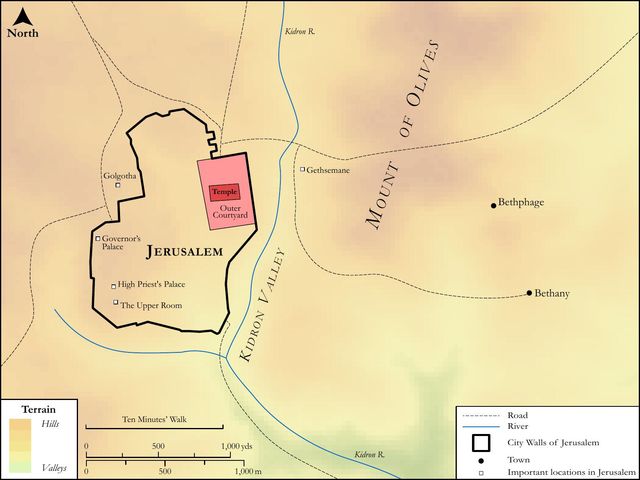
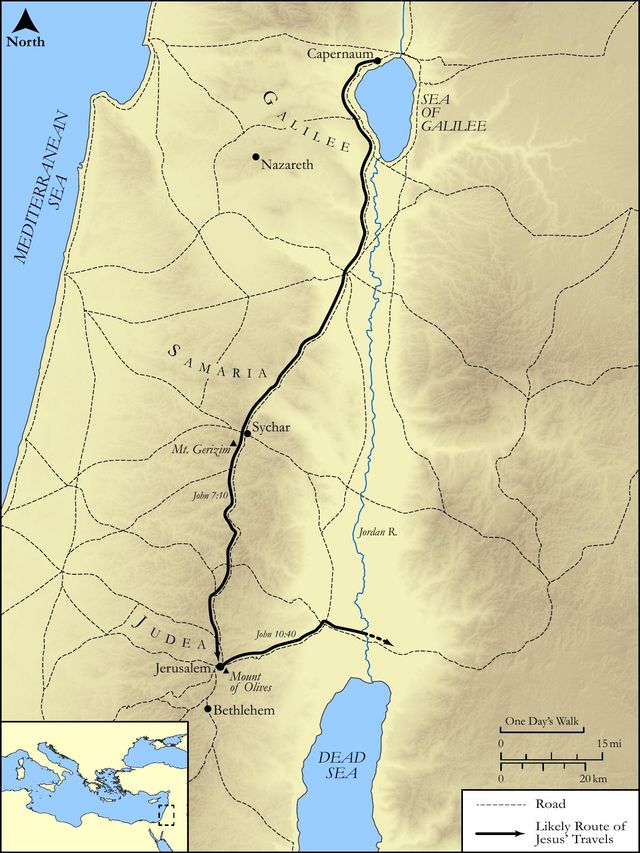
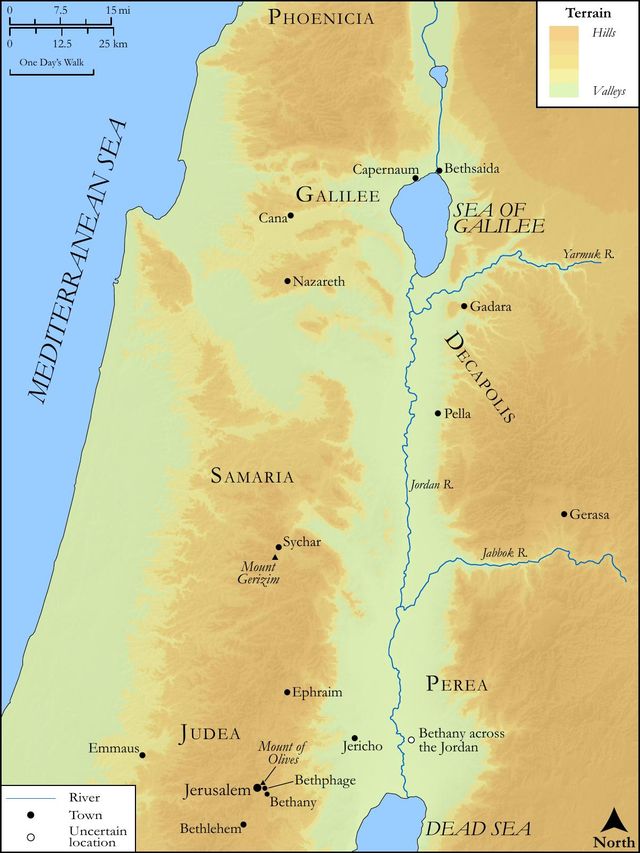
Study this verse
Public-domain commentary
Matthew Henry
From his Commentary on the Whole Bible. Henry comments on passages, not single verses — this entry covers John 8:31–37. His four-level outline is real structure in the source text, so it is rendered as structure.
We have in these verses,
I.A comfortable doctrine laid down concerning the spiritual liberty of Christ's disciples, intended for the encouragement of those Jews that believed. Christ, knowing that his doctrine began to work upon some of his hearers, and perceiving that virtue had gone out of him, turned his discourse from the proud Pharisees, and addressed himself to those weak believers. When he had denounced wrath against those that were hardened in unbelief, then he spoke comfort to those few feeble Jews that believed in him. See here,
1.How graciously the Lord Jesus looks to those that tremble at his word, and are ready to receive it; he has something to say to those who have hearing ears, and will not pass by those who set themselves in his way, without speaking to them.
2.How carefully he cherishes the beginnings of grace, and meets those that are coming towards him. These Jews that believed were yet but weak; but Christ did not therefore cast them off, for he gathers the lambs in his arms. When faith is in its infancy, he has knees to prevent it, breasts for it to suck, that it may not die from the womb. In what he said to them, we have two things, which he saith to all that should at any time believe: -
(1.)The character of a true disciple of Christ: If you continue in my word, then are you my disciples indeed. When they believed on him, as the great prophet, they gave up themselves to be his disciples. Now, at their entrance into his school, he lays down this for a settled rule, that he would own none for his disciples but those that continued in his word.
[1.]It is implied that there are many who profess themselves Christ's disciples who are not his disciples indeed, but only in show and name.
[2.]It highly concerns those that are not strong in faith to see to it that they be sound in the faith, that, though not disciples of the highest form, they are nevertheless disciples indeed.
[3.]Those who seem willing to be Christ's disciples ought to be told that they had as good never come to him, unless they come with a resolution by his grace to abide by him. Let those who have thoughts of covenanting with Christ have no thoughts of reserving a power of revocation. Children are sent to school, and bound apprentices, only for a few years; but those only are Christ's who are willing to be bound to him for the term of life.
[4.]Those only that continue in Christ's word shall be accepted as his disciples indeed, that adhere to his word in every instance without partiality, and abide by it to the end without apostasy. It is menein - to dwell in Christ's word, as a man does at home, which is his centre, and rest, and refuge. Our converse with the word and conformity to it must be constant. If we continue disciples to the last, then, and not otherwise, we approve ourselves disciples indeed.
(2.)The privilege of a true disciple of Christ. Here are two precious promises made to those who thus approve themselves disciples indeed, Joh 8:32.
[1.]"You shall know the truth, shall know all that truth which it is needful and profitable for you to know, and shall be more confirmed in the belief of it, shall know the certainty of it." Note, First, Even those who are true believers, and disciples indeed, yet may be, and are, much in the dark concerning many things which they should know. God's children are but children, and understand and speak as children. Did we not need to be taught, we should not need to be disciples. Secondly, It is a very great privilege to know the truth, to know the particular truths which we are to believe, in their mutual dependences and connections, and the grounds and reasons of our belief, - to know what is truth and what proves it to be so. Thirdly, It is a gracious promise of Christ, to all who continue in his word, that they shall know the truth as far as is needful and profitable for them. Christ's scholars are sure to be well taught.
[2.]The truth shall make you free; that is, First, The truth which Christ teaches tends to make men free, Isa 61:1. Justification makes us free from the guilt of sin, by which we were bound over to the judgment of God, and bound under amazing fears; sanctification makes us free from the bondage of corruption, by which we were restrained from that service which is perfect freedom, and constrained to that which is perfect slavery. Gospel truth frees us from the yoke of the ceremonial law, and the more grievous burdens of the traditions of the elders. It makes us free from our spiritual enemies, free in the service of God, free to the privileges of sons, and free of the Jerusalem which is from above, which is free. Secondly, The knowing, entertaining, and believing, of this truth does actually make us free, free from prejudices, mistakes, and false notions, than which nothing more enslaves and entangles the soul, free from the dominion of lust and passion; and restores the soul to the government of itself, by reducing it into obedience to its Creator. The mind, by admitting the truth of Christ in the light and power, is vastly enlarged, and has scope and compass given it, is greatly elevated and raised above things of sense, and never acts with so true a liberty as when it acts under a divine command, Co2 3:17. The enemies of Christianity pretend to free thinking, whereas really those are the freest reasonings that are guided by faith, and those are men of free thought whose thoughts are captivated and brought into obedience to Christ.
II.The offence which the carnal Jews took at this doctrine, and their objection against it.
Though it was a doctrine that brought glad tidings of liberty to the captives, yet they cavilled at it, Joh 8:33. The Pharisees grudged this comfortable word to those that believed, the standers by, who had no part nor lot in this matter; they thought themselves reflected upon and affronted by the gracious charter of liberty granted to those that believed, and therefore with a great deal of pride and envy they answered him, "We Jews are Abraham's seed, and therefore are free-born, and have not lost our birthright - freedom; we were never in bondage to any man; how sayest thou then, to us Jews, You shall be made free?" See here,
1.What it was that they were grieved at; it was an innuendo in those words, You shall be made free, as if the Jewish church and nation were in some sort of bondage, which reflected on the Jews in general, and as if all that did not believe in Christ continued in that bondage, which reflected on the Pharisees in particular. Note, The privileges of the faithful are the envy and vexation of unbelievers, Psa 112:10.
2.What it was that they alleged against it; whereas Christ intimated that they needed to be made free, they urge, (1.) "We are Abraham's seed, and Abraham was a prince and a great man; though we live in Canaan, we are not descended from Canaan, nor under his doom, a servant of servants shall he be; we hold in frank-almoign - free alms, and not in villenage - by a servile tenure." It is common for a sinking decaying family to boast of the glory and dignity of its ancestors, and to borrow honour from that name to which they repay disgrace; so the Jews here did. But this was not all. Abraham was in covenant with God, and his children by his right, Rom 11:28. Now that covenant, no doubt, was a free charter, and invested them with privileges not consistent with a state of slavery, Rom 9:4. And therefore they thought they had no occasion with so great a sum as they reckoned faith in Christ to be to obtain this freedom, when they were thus free-born. Note, It is the common fault and folly of those that have pious parentage and education to trust to their privilege and boast of it, as if it would atone for the want of real holiness. They were Abraham's seed, but what would this avail them, when we find one in hell that could call Abraham father? Saving benefits are not, like common privileges, conveyed by entail to us and our issue, nor can a title to heaven be made by descent, nor may we claim as heirs at law, by making out our pedigree; our title is purely by purchase, not our own but our Redeemer's for us, under certain provisos and limitations, which if we do not observe it will not avail us to be Abraham's seed. Thus many, when they are pressed with the necessity of regeneration, turn it off with this, We are the church's children; but they are not all Israel that are of Israel. (2.) We were never in bondage to any man. Now observe, [1.] How false this allegation was. I wonder how they could have the assurance to say a thing in the face of a congregation which was so notoriously untrue. Were not the seed of Abraham in bondage to the Egyptians? Were they not often in bondage to the neighbouring nations in the time of the judges? Were they not seventy years captives in Babylon? Nay, were they not at this time tributaries to the Romans, and, though not in a personal, yet in a national bondage to them, and groaning to be made free? And yet, to confront Christ, they have the impudence to say, We were never in bondage. Thus they would expose Christ to the ill-will both of the Jews, who were very jealous for the honour of their liberty, and of the Romans, who would not be thought to enslave the nations they conquered. [2.] How foolish the application was. Christ had spoken of a liberty wherewith the truth would make them free, which must be meant of a spiritual liberty, for truth as it is the enriching, so it is the enfranchising of the mind, and the enlarging of that from the captivity of error and prejudice; and yet they plead against the offer of spiritual liberty that they were never in corporal thraldom, as if, because they were never in bondage to any man, they were never in bondage to any lust. Note, Carnal hearts are sensible of no other grievances than those that molest the body and injure their secular affairs. Talk to them of encroachments upon their civil liberty and property, - tell them of waste committed upon their lands, or damage done to their houses, - and they understand you very well, and can give you a sensible answer; the thing touches them and affects them. But discourse to them of the bondage of sin, a captivity to Satan, and a liberty by Christ, - tell them of wrong done to their precious souls, and the hazard of their eternal welfare, - and you bring certain strange things to their ears; they say of it (as those did, Eze 20:49), Doth he not speak parables? This was much like the blunder Nicodemus made about being born again.
III.Our Saviour's vindication of his doctrine from these objections, and the further explication of it, Joh 8:34-37, where he does these four things: -
1.He shows that, notwithstanding their civil liberties and their visible church-membership, yet it was possible that they might be in a state of bondage (Joh 8:34): Whosoever commits sin, though he be of Abraham's seed, and was never in bondage to any man, is the servant of sin. Observe, Christ does not upbraid them with the falsehood of their plea, or their present bondage, but further explains what he had said for their edification. Thus ministers should with meekness instruct those that oppose them, that they may recover themselves, not with passion provoke them to entangle themselves yet more. Now here,
(1.)The preface is very solemn: Verily, verily, I say unto you; an awful asseveration, which our Saviour often used, to command a reverent attention and a ready assent. The style of the prophets was, Thus saith the Lord, for they were faithful as servants; but Christ, being a Son, speaks in his own name: I say unto you, I the Amen, the faithful witness; he pawns his veracity upon it. "I say it to you, who boast of your relation to Abraham, as if that would save you."
(2.)The truth is of universal concern, though here delivered upon a particular occasion: Whosoever commits sin is the servant of sin, and sadly needs to be made free. A state of sin is a state of bondage.
[1.]See who it is on whom this brand is fastened - on him that commits sin, pas ho poiōn hamartian - every one that makes sin. There is not a just man upon earth, that lives, and sins not; yet every one that sins is not a servant of sin, for then God would have no servants; but he that makes sin, that makes choice of sin, prefers the way of wickedness before the way of holiness (Jer 44:16, Jer 44:17), - that makes a covenant with sin, enters into league with it, and makes a marriage with it, - that makes contrivances of sin, makes provision for the flesh, and devises iniquity, - and that makes a custom of sin, who walks after the flesh, and makes a trade of sin.
[2.]See what the brand is which Christ fastens upon those that thus commit sin. He stigmatizes them, gives them a mark of servitude. They are servants of sin, imprisoned under the guilt of sin, under an arrest, in hold for it, concluded under sin, and they are subject to the power of sin. He is a servant of sin, that is, he makes himself so, and is so accounted; he has sold himself to work wickedness; his lusts give law to him, he is at their beck, and is not his own master. He does the work of sin, supports its interest, and accepts its wages, Rom 6:16.
2.He shows them that, being in a state of bondage, their having a place in the house of God would not entitle them to the inheritance of sons; for (Joh 8:35) the servant, though he be in the house for awhile, yet, being but a servant, abideth not in the house for ever. Services (we say) are no inheritances, they are but temporary, and not for a perpetuity; but the son of the family abideth ever. Now,
(1.)This points primarily at the rejection of the Jewish church and nation. Israel had been God's son, his first-born; but they wretchedly degenerated into a servile disposition, were enslaved to the world and the flesh, and therefore, though by virtue of their birthright they thought themselves secure of their church membership, Christ tells them that having thus made themselves servants they should not abide in the house for ever. Jerusalem, by opposing the gospel of Christ, which proclaimed liberty, and adhering to the Sinai-covenant, which gendered to bondage, after its term was expired came to be in bondage with her children (Gal 4:24, Gal 4:25), and therefore was unchurched and disfranchised, her charter seized and taken away, and she was cast out as the son of the bond-woman, Gen 21:14. Chrysostom gives this sense of this place: "Think not to be made free from sin by the rites and ceremonies of the law of Moses, for Moses was but a servant, and had not that perpetual authority in the church which the Son had; but, if the Son make you free, it is well," Joh 8:36. But,
(2.)It looks further, to the rejection of all that are the servants of sin, and receive not the adoption of the sons of God; though those unprofitable servants may be in God's house awhile, as retainers to his family, yet there is a day coming when the children of the bond-woman and of the free shall be distinguished. True believers only, who are the children of the promise and of the covenant, are accounted free, and shall abide for ever in the house, as Isaac: they shall have a nail in the holy place on earth (Ezr 9:8) and mansions in the holy place in heaven, Joh 14:2.
3.He shows them the way of deliverance out of the state of bondage into the glorious liberty of the children of God, Rom 8:21. The case of those that are the servants of sin is sad, but thanks be to God it is not helpless, it is not hopeless. As it is the privilege of all the sons of the family, and their dignity above the servants, that they abide in the house for ever; so he who is the Son, the first-born among many brethren, and the heir of all things, has a power both of manumission and of adoption (Joh 8:36): If the Son shall make you free, you shall be free indeed. Note,
(1.)Jesus Christ in the gospel offers us our freedom; he has authority and power to make free.
[1.]To discharge prisoners; this he does in justification, by making satisfaction for our guilt (on which the gospel offer is grounded, which is to all a conditional act of indemnity, and to all true believers, upon their believing, an absolute charter of pardon), and for our debts, for which we were by the law arrested and in execution. Christ, as our surety, or rather our bail (for he was not originally bound with us, but upon our insolvency bound for us), compounds with the creditor, answers the demands of injured justice with more than an equivalent, takes the bond and judgment into his own hands, and gives them up cancelled to all that by faith and repentance give him (if I may so say) a counter-security to save his honour harmless, and so they are made free; and from the debt, and every part thereof, they are for ever acquitted, exonerated, and discharged, and a general release is sealed of all actions and claims; while against those who refuse to come up to these terms the securities lie still in the Redeemer's hands, in full force.
[2.]He has a power to rescue bond-slaves, and this he does in sanctification; by the powerful arguments of his gospel, and the powerful operations of his Spirit, he breaks the power of corruption in the soul, rallies the scattered forces of reason and virtue, and fortifies God's interest against sin and Satan, and so the soul is made free.
[3.]He has a power to naturalize strangers and foreigners, and this he does in adoption. This is a further act of grace; we are not only forgiven and healed, but preferred; there is a charter of privileges as well as pardon; and thus the Son makes us free denizens of the kingdom of priests, the holy nation, the new Jerusalem.
(2.)Those whom Christ makes free are free indeed. It is not alēthōs, the word used (Joh 8:31) for disciples indeed, but ontōs - really. It denotes,
[1.]The truth and certainty of the promise, the liberty which the Jews boasted of was an imaginary liberty; they boasted of a false gift; but the liberty which Christ gives is a certain thing, it is real, and has real effects. The servants of sin promise themselves liberty, and fancy themselves free, when they have broken religion's bands asunder; but they cheat themselves. None are free indeed but those whom Christ makes free.
[2.]It denotes the singular excellency of the freedom promised; it is a freedom that deserves the name, in comparison with which all other liberties are no better than slaveries, so much does it turn to the honour and advantage of those that are made free by it. It is a glorious liberty. It is that which is (so ontōs signifies); it is substance (Pro 8:21); while the things of the world are shadows, things that are not.
4.He applies this to these unbelieving cavilling Jews, in answer to their boasts of relation to Abraham (Joh 8:37): "I know very well that you are Abraham's seed, but now you seek to kill me, and therefore have forfeited the honour of your relation to Abraham, because my word hath no place in you." Observe here,
(1.)The dignity of their extraction admitted: "I know that you are Abraham's seed, every one knows it, and it is your honour." He grants them what was true, and in what they said that was false (that they were never in bondage to any) he does not contradict them, for he studied to profit them, and not to provoke them, and therefore said that which would please them: I know that you are Abraham's seed. They boasted of their descent from Abraham, as that which aggrandized their names, and made them exceedingly honourable; whereas really it did but aggravate their crimes, and make them exceedingly sinful. Out of their own mouths will he judge vain-glorious hypocrites, who boast of their parentage and education: "Are you Abraham's seed? Why then did you not tread in the steps of his faith and obedience?"
(2.)The inconsistency of their practice with this dignity: But you seek to kill me. They had attempted it several times, and were now designing it, which quickly appeared (Joh 8:59), when they took up stones to cast at him. Christ knows all the wickedness, not only which men do, but which they seek, and design, and endeavour to do. To seek to kill any innocent man is a crime black enough, but to compass and imagine the death of him that was King of kings was a crime the heinousness of which we want words to express.
(3.)The reason of this inconsistency. Why were they that were Abraham's seed so very inveterate against Abraham's promised seed, in whom they and all the families of the earth should be blessed? Our Saviour here tells them, It is because my word hath no place in you, ou chōrei en humin, Non capit in vobis, so the Vulgate. "My word does not take with you, you have no inclination to it, no relish of it, other things are more taking, more pleasing." Or, "It does not take hold of you, it has no power over you, makes no impression upon you." Some of the critics read it, My word does not penetrate into you; it descended as the rain, but it came upon them as the rain upon the rock, which it runs off, and did not soak into their hearts, as the rain upon the ploughed ground. The Syriac reads it, "Because you do not acquiesce in my word; you are not persuaded of the truth of it, nor pleased with the goodness of it." Our translation is very significant: It has no place in you. They sought to kill him, and so effectually to silence him, not because he had done they any harm, but because they could not bear the convincing, commanding power of his word. Note,
[1.]The words of Christ ought to have a place in us, the innermost and uppermost place, - a dwelling place, as a man at home, and not as a stranger or sojourner, - a working place; it must have room to operate, to work sin out of us, and to work grace in us; it must have a ruling place, its place must be upon the throne, it must dwell in us richly.
[2.]There are many that make a profession of religion in whom the word of Christ has no place; they will not allow it a place, for they do not like it; Satan does all he can to displace it; and other things possess the place it should have in us.
[3.]Where the word of God has no place no good is to be expected, for room is left there for all wickedness. If the unclean spirit find the heart empty of Christ's word, he enters in, and dwells there.
Historical interpretation
Eight Centuries of Reception
13 surviving comments on this verse. Each one is dated, so this reads as a timeline rather than a list.
Select a marker to jump to its quote. Markers stagger vertically where authors wrote within a few decades of each other.
It is the wholesome precept of our Lord and Master: "He that endureth," saith He, "unto the end, the same shall be saved; " and again, "If ye continue," saith He, "in my word, ye shall be truly my disciples; and ye shall know the truth, and the truth shall make you free." We must endure and persevere, beloved brethren, in order that, being admitted to the hope of truth and liberty, we may attain to the truth and liberty itself; for that very fact that we are Christians is the substance of faith and hope. But that hope and faith may attain to their result, there is need of patience. For we are not following after present glory, but future, according to what Paul the apostle also warns us, and says, "We are saved by hope; but hope that is seen is not hope: for what a man seeth, why doth he hope for? But if we hope for that which we see not, then do we by patience wait for it." Therefore, waiting and patience are needful, that we may fulfil that which we have begun to be, and may receive that which we believe and hope for, according to God's own showing. Moreover, in another place, the same apostle instructs the righteous and the doers of good works, and them who lay up for themselves treasures in heaven with the increase of the divine usury, that they also should be patient; and teaches them, saying, "Therefore, while we have time, let us labour in that which is good unto all men, but especially to them who are of the household of faith. But let us not faint in well-doing, for in its season we shall reap." He admonishes that no man should impatiently faint in his labour, that none should be either called off or overcome by temptations and desist in the midst of the praise and in the way of glory; and the things that are past perish, while those which have begun cease to be perfect; as it is written, "The righteousness of the righteous shall not deliver him in whatever clay he shall transgress; " and again, "Hold that which thou hast, that another take not thy crown." Which word exhorts us to persevere with patience and courage, so that he who strives towards the crown with the praise now near at hand, may be crowned by the continuance of patience.
That we must press on and persevere in faith and virtue, and in completion of heavenly and spiritual grace, that we may attain to the palm and the crown. In the book of Chronicles: "The Lord is with you so long as ye also are with Him; but if ye forsake Him, He will forsake you." In Ezekiel also: "The righteousness of the righteous shall not deliver him in what day soever he may transgress." Moreover, in the Gospel the Lord speaks, and says: "He that shall endure to the end, the same shall be saved." And again: "If ye shall abide in my word, ye shall be my disciples indeed; and ye shall know the truth, and the truth shall make you free." Moreover, forewarning us that we ought always to be ready, and to stand firmly equipped and armed, He adds, and says: "Let your loins be girded about, and your lamps burning, and ye yourselves like unto men that wait for their lord when he shall return from the wedding, that when he cometh and knocketh they may open unto him. Blessed are those servants whom their lord, when he cometh, shall find watching." Also the blessed Apostle Paul, that our faith may advance and grow, and attain to the highest point, exhorts us, saying: "Know ye not, that they which run in a race run all indeed, yet one receiveth the prize? So run, that ye may obtain. And they, indeed, that they may receive a corruptible crown; but ye an incorruptible." And again: "No man that warreth for God binds himself to anxieties of this world, that he may be able to please Him to whom he hath approved himself. Moreover, also, if a man should contend, he will not be crowned unless he have fought lawfully." And again: "Now I beseech you, brethren, by the mercy of God, that ye constitute your bodies a living sacrifice, holy, acceptable unto God; and be not conformed to this world, but be ye transformed in the renewing of your spirit, that ye may prove what is the will of God, good, and acceptable, and perfect." And again: "We are children of God: but if children, then heirs; heirs indeed of God, but joint-heirs with Christ, if we suffer together, that we may also be glorified together." And in the Apocalypse the same exhortation of divine preaching speaks, saying, "Hold fast that which thou hast, lest another take thy crown; " which example of perseverance and persistence is pointed out in Exodus, when Moses, for the overthrow of Ama-lek, who bore the type of the devil, raised up his open hands in the sign and sacrament of the cross, and could not conquer his adversary unless when he had stedfastly persevered in the sign with hands continually lifted up. "And it came to pass," says he, "when Moses raised up his hands, Israel prevailed; but when he let down his hands, Amalek grew mighty. And they took a stone and placed it under him, and he sate thereon. And Aaron and Hur held up his hands on the one side and on the other side, and Moses' hands were made steady even to the going down of the sun. Anti Jesus routed Amalek and all his people. And the Lord said unto Moses, Write this, and let it be a memorial in a book, and tell it in the ears of Jesus; because in destroying I will destroy the remembrance of Amalek from under heaven."
It is the wholesome precept of our Lord and Master: "He that endureth," saith He, "unto the end, the same shall be saved; " and again, "If ye continue," saith He, "in my word, ye shall be truly my disciples; and ye shall know the truth, and the truth shall make you free." We must endure and persevere, beloved brethren, in order that, being admitted to the hope of truth and liberty, we may attain to the truth and liberty itself; for that very fact that we are Christians is the substance of faith and hope. But that hope and faith may attain to their result, there is need of patience. For we are not following after present glory, but future, according to what Paul the apostle also warns us, and says, "We are saved by hope; but hope that is seen is not hope: for what a man seeth, why doth he hope for? But if we hope for that which we see not, then do we by patience wait for it." Therefore, waiting and patience are needful, that we may fulfil that which we have begun to be, and may receive that which we believe and hope for, according to God's own showing. Moreover, in another place, the same apostle instructs the righteous and the doers of good works, and them who lay up for themselves treasures in heaven with the increase of the divine usury, that they also should be patient; and teaches them, saying, "Therefore, while we have time, let us labour in that which is good unto all men, but especially to them who are of the household of faith. But let us not faint in well-doing, for in its season we shall reap." He admonishes that no man should impatiently faint in his labour, that none should be either called off or overcome by temptations and desist in the midst of the praise and in the way of glory; and the things that are past perish, while those which have begun cease to be perfect; as it is written, "The righteousness of the righteous shall not deliver him in whatever clay he shall transgress; " and again, "Hold that which thou hast, that another take not thy crown." Which word exhorts us to persevere with patience and courage, so that he who strives towards the crown with the praise now near at hand, may be crowned by the continuance of patience.
"If ye continue in My word," was the expression of One declaring what was in their heart, and knowing that they had indeed believed, but had not continued. And He promiseth a great thing, that they should become His disciples. For since some had gone away from Him before this, alluding to them He saith, "If ye continue," because they also had heard and believed, and departed because they could not continue. For "many of His disciples went back, and walked no more openly with Him."
"Ye shall know the truth," that is, "shall know Me, for I am the truth. All the Jewish matters were types, but ye shall know the truth from Me, and it shall free you from your sins." As to those others He said, "Ye shall die in your sins," so to these He saith, "shall make you free." He said not, "I will deliver you from bondage," this He allowed them to conjecture.
Beloved, our condition needs much endurance; and endurance is produced when doctrines are deeply rooted. For as no wind is able by its assaults to tear up the oak, which sends down its root into the lower recesses of the earth, and is firmly clenched there; so too the soul which is nailed by the fear of God none will be able to overturn. Since to be nailed is more than to be rooted. Thus the Prophet prayeth, saying, "Nail my flesh by Thy fear"; "do Thou so fix and join me, as by a nail riveted into me." For as men of this kind are hard to be captured, so the opposite sort are a ready prey, and are easily thrown down. As was the case of the Jews at that time; for after having heard and believed, they again turned out of the way. Christ therefore desiring to deepen their faith that it might not be merely superficial, diggeth into their souls by more striking words. For it was the part of believers to endure even reproofs, but they immediately were wroth. But how doth He this? He first telleth them, "If ye continue in My word, ye are My disciples indeed: and the truth shall make you free." All but saying, "I am about to make a deep incision, but be not ye moved"; or rather by these expressions He allayed the pride of their imagination. "Shall make you free": from what, tell me? From your sins.
(Hom. liii. 2) Or, He means it as an answer to those who were constantly saying that He was not from God, and that because He did not keep the sabbath; I do always, He says, do those things that please Him; showing that the breaking the sabbath even was pleasing to Him. He takes care in every way to show that He does nothing contrary to the Father. And as this was speaking more after a human fashion, the Evangelist adds, As He spake these words, many believed on Him; as if to say, Do not be disturbed at hearing so humble a speech from Christ; for those who had heard the greatest doctrines from Him, and were not persuaded, were persuaded by these words of humility. These then believed on Him, yet not as they ought; but only out of joy, and approbation of His humble way of speaking. And this the Evangelist shows in his subsequent narration, which relates their unjust proceedings towards Him.
(Aug. [Chrys. Nic.] Hom. liv. 1) Our Lord wished to try the faith of those who believed, that it might not be only a superficial belief: Then said Jesus to those Jews which believed on Him, If ye continue in My word, then are ye My disciples indeed. His saying, if ye continue, made it manifest what was in their hearts. He knew that some believed, and would not continue. And He makes them a magnificent promise, viz. that they shall become His disciples indeed; which words are a tacit rebuke to some who had believed and afterwards withdrawn.
(Hom. liv. 1) Or, ye shall know the truth, i. e. Me: for I am the truth. The Jewish was a typical dispensation; the reality ye can only know from Me.
(Hom. liv. 1) Men who really believed could have borne to be rebuked. But these men began immediately to show anger. Indeed if they had been disturbed at His former saying, they had much more reason to be so now. For they might argue; If He says we shall know the truth, He must mean that we do not know it now: so then the law is a lie, our knowledge a delusion. But their thoughts took no such direction: their grief is wholly worldly; they know of no other servitude, but that of this world: They answered Him, We be Abraham's seed, and were never in bondage to any man. How sayest Thou then, we shall be made free? As if to say, They of Abraham's stock are free, and ought not to be called slaves: we have never been in bondage to any one.
(Hom. liv. 1) Christ then, who speaks for their good, not to gratify their vainglory, explains His meaning to have been that they were the servants not of men, but of sin, the hardest kind of servitude, from which God only can rescue: Jesus answered them, Verily, verily, I say unto you, Whosoever committeth sin is the servant of sin.
(Hom. liv. 1, 2) Or thus: Having said that whosoever committeth sin, is the servant of sin, He anticipates the answer that their sacrifices saved them, by saying, The servant abideth not in the house for ever, but the Son abideth ever. The house, He says, meaning the Father's house on high; in which, to draw a comparison from the world, He Himself had all the power, just as a man has all the power in his own house. Abideth not, means, has not the power of giving; which the Son, who is the master of the house, has. The priests of the old law had not the power of remitting sins by the sacraments of the law; for all were sinners. Even the priests, who, as the Apostle says, were obliged to offer up sacrifices for themselves. But the Son has this power; and therefore our Lord concludes: If the Son shall make you free, ye shall be free indeed; implying that that earthly freedom, of which men boasted so much, was not true freedom.
(de Verb. Dom. s. xlvii) We have all one Master, and are fellow disciples under Him. Nor because we speak with authority, are we therefore masters; but He is the Master of all, Who dwells in the hearts of all. It is a small thing for the disciple to come to Him in the first instance: he must continue in Him: if we continue not in Him, we shall fall. A little sentence this, but a great work; if ye continue. For what is it to continue in God's word, but to yield to no temptations? Without labour, the reward would be gratis; if with, then a great reward indeed.
"Then said the Lord to those Jews who believed on Him, If ye continue in my word." "Continue," I say, for you are now initiated and have begun to be there. "If ye continue," that is, in the faith which is now begun in you who believe, to what will you attain? See the nature of the beginning, and whither it leads. You have loved the foundation, give heed to the summit, and out of this low condition seek that other elevation. For faith has humility, but knowledge and immortality and eternity possess not lowliness, but loftiness; that is, upraising, all-sufficiency, eternal stability, full freedom from hostile assault, from fear of failure. That which has its beginning in faith is great, but is despised. In a building also the foundation is usually of little account with the unskilled. A large trench is made, and stones are thrown in every way and everywhere. No embellishment, no beauty are apparent there; just as also in the root of a tree there is no appearance of beauty.
And yet all that delights you in the tree has sprung from the root. You look at the root and feel no delight: you look at the tree and admire it. Foolish man! what you admire has grown out of that which gave you no delight. The faith of believers seems a thing of little value,-you have no scales to weigh it. Hear then to what it attains, and see its greatness: as the Lord Himself says in another place, "If ye have faith as a grain of mustard seed." What is there of less account than that, yet what is there pervaded with greater energy? What more minute, yet what more fervidly expansive? And so "ye" also, He says, "if ye continue in my word," wherein ye have believed, to what will ye be brought? "ye shall be my disciples indeed." And what does that benefit us? "and ye shall know the truth."
Of what follows of the previous lesson, and has been read publicly to us to-day from the holy Gospel, I then deferred speaking, because I had already said much, and of that liberty into which the grace of the Saviour calleth us it was needful to treat in no cursory or negligent way. For those to whom the Lord Jesus Christ was speaking were Jews: in a large measure indeed His enemies, but also in some measure already become, and yet to be, His friends; for some He saw there, as we have already said, who should yet believe after His passion. Looking to these, He had said, "When ye have lifted up the Son of man, then shall ye know that I am [He]." There also were those who, when He so spake, straightway believed. To them He spake what we have heard to-day: "Then said Jesus to those Jews who believed on Him, If ye continue in my word, ye shall be my disciples indeed." By continuing ye shall be so; for as now ye are believers, by so continuing ye shall be beholders. Hence there follows, "And ye shall know the truth." The truth is unchangeable. The truth is bread, which refreshes our minds and fails not; changes the eater, and is not itself changed into the eater. The truth itself is the Word of God, God with God, the only-begotten Son. This Truth was for our sake clothed with flesh, that He might be born of the Virgin Mary, and the prophecy fulfilled, "Truth has sprung from the earth." This Truth then, when speaking to the Jews, lay hid in the flesh. But He lay hid not in order to be denied, but to be deferred [in His manifestation]; to be deferred, in order to suffer in the flesh; and to suffer in the flesh, in order that flesh might be redeemed from sin. And so our Lord Jesus Christ, standing full in sight as regards the infirmity of flesh, but hid as regards the majesty of Godhead, said to those who had believed on Him, when He so spake, "If ye continue in my word, ye shall be my disciples indeed." For he that endureth to the end shall be saved. "And ye shall know the truth," which now is hid from you, and speaks to you. "And the truth shall free you."
It is a small thing for a disciple to come to him; it is a much greater thing to continue in him. Therefore he does not say if you “hear” or “come” or “praise” my Word. He says, “If you continue in my Word.” What do you think, brothers? Is continuing in the Lord hard work or not? If it is hard work, look at the reward. If it is not, you receive the reward for nothing. Let us then continue in him who continues in us.
He demandeth of those who believe a disposition established and fixed and prepared for the abode of that good which they had once chosen. And this is faith in Him. For wavering shows utter senselessness and unprofit, seeing that A double minded man is unstable in all his ways, as it is written: but to press forward firmly to have hold of what is profitable, is indeed wise and most useful. As far then as belongs to the more obvious meaning, He says this, that if they shall desire to obey His Words, then shall they be surely called His disciples also. But as regards some hidden meaning, He signifies this: for in saying If YE abide in My Word, He is clearly withdrawing them by degrees and gently from the Mosaic teachings, and removing them from adherence to the letter and bidding them no longer cleave to what were uttered and done in type, but rather to His own Word which is clearly the Gospel and Divine preaching. For He it was Who ever of old was speaking to us through the holy Prophets, but they were the mediators, through whom (that is) He spake to us. But the Gospel preaching will be conceived of as properly His Word (for not through another do we find that it came to us but through Himself) wherefore when Incarnate He says, I That speak am present. And Paul too will testify saying in the Epistle to the Hebrews, God Who in many ways and modes of old spake unto the fathers by the prophets in these last times spake unto us by the Son. Himself therefore a worker unto teaching hath the Son come to us at the last periods of the world: therefore will the Gospel teaching be rightly called His Word. It were meet then more nakedly and openly to say, Ye who have accepted the faith in Me, and though late have yet acknowledged Him Who of old is preached unto you by the law and prophets, no longer be ye attached to the types through Moses, nor be persuaded to cleave to the shadows of the law, nor lay it down that the power of salvation consists wholly in them, but in the spiritual teachings, and in the Gospel preachings that are through Me. But it was not unlikely, yea rather it was undoubted, that receiving but now and hardly the faith, and having their understanding shaken and ready for unsettling, they would not endure such words, nor would at all hold out, in that they are ever prone to anger, but as though the all-wise Moses were hereby insulted, and put to nought because the things appointed to them of old through him were despised:----they would have turned readily to their proper daring and, ever set upon agreeing with him, thought nothing of any longer believing on Christ. Economically therefore and veiledly as yet arranging the things of Moses in contrast with His own words, i. e., putting the Gospel preaching over against the law, and setting the new teachings in very superior place to the elder ones. He says, If YE continue in My Word, verily ye are My disciples, for they who are pre-eminent in perfect faith and unhesitatingly receive into their mind the Gospel teaching, not unduly regarding the shadow of the law, are in truth disciples of Christ, while they who act not thus, mock themselves, not able to be in truth disciples, and therefore falling away from salvation. And verily the blessed Paul to those who after the faith foolishly desire to be justified by the law, openly writes, Ye were set free 23 from Christ, whosoever of you are justified by the law, ye fell from grace. Wondrous then and precious is single faith and the desire closely to follow Christ, drawing the shadows of the law unto the knowledge of Him, and transfashioning the things darkly spoken unto spiritual instruction. For through the law and the prophets is preached the Mystery of Him.
(iv. Mor. c. 42. in Nov. Ex. 21) Because whoever yields to wrong desires, puts his hitherto free soul under the yoke of the evil one, and takes him for his master. But we oppose this master, when we straggle against the wickedness which has laid hold upon us, when we strongly resist habit, when we pierce sin with repentance, and wash away the spots of filth with tears.
(xxv. Moral. c. 20. not in Nov. Ex. 14) And the more freely men follow their perverse desires, the more closely are they in bondage to them.
As He said to the unbelievers alone, Ye shall die in your sin, so now to them who continue in the faith He proclaims absolution.
Continue studying John 8:31 across the web’s major study libraries — every link below opens this exact verse, chapter, or book on the destination site.
Read & Compare
 BibleGatewayThis verse in more than 200 translations and 70 languages.
 Bible.comThe YouVersion reader — hundreds of translations, reading plans, and highlights.
 ESV.orgCrossway's official English Standard Version reader.
 NET BibleThe NET translation with 60,000+ translators' notes on every rendering decision.
 STEP BibleTyndale House's free study tool — original text, vocabulary, and scholarly resources.
 BibliaLogos Bible Software's free web reader.
 USCCBThe New American Bible (Revised Edition) with the U.S. bishops' study notes.
Commentaries
 BibleHub CommentariesDozens of classic commentaries on this verse, gathered on one page.
 StudyLightMore than 100 commentary sets — the largest collection on the web.
 BibleRefPlain-English commentary on what this verse means, verse by verse.
 Enduring WordDavid Guzik's free commentary on this chapter, widely used by Bible teachers.
 Bible Study ToolsVerse commentary alongside Greek and Hebrew study aids.
Original Language & Research
- BibleHub InterlinearThe verse word by word — original language, transliteration, and English.
- BibleHub LexiconEvery word's original-language definition and Strong's entry.
 Blue Letter BibleDeep-study tools — Strong's numbers, concordance, and word studies.
 CNTR CollationThe earliest Greek manuscripts of this verse, collated letter by letter.
Sermons, Hymns & Audio


TrulyRandomVerse is not affiliated with these sites and doesn’t control their content. They’re linked because they’re genuinely useful.
Summary
In John 8:31, Jesus addresses a group of Jews who had expressed initial belief in Him, presenting a foundational truth about genuine discipleship. He asserts that true followership is not merely an initial assent but is characterized by persistent adherence to His teachings. This verse establishes a critical distinction between superficial interest and a profound, enduring commitment to His word, serving as a gateway to understanding the nature of authentic faith and its transformative power.
Context
ShowHideLiterary Context
This verse is situated within a lengthy and intense discourse Jesus holds in the Temple during the Feast of Tabernacles, as recorded in John 7 and John 8. Following His profound declaration, "I am the light of the world," Jesus engages in a rigorous debate with the Pharisees and other Jewish leaders concerning His divine origin, authority, and identity. Amidst this contentious environment, some individuals among the crowd "believed on him" (John 8:30). However, Jesus immediately challenges the depth of their belief, implying that true faith requires more than just an initial confession or emotional response. He then lays out the criterion for genuine discipleship, which is explored further in the subsequent verses (John 8:32-36), clarifying that this "continuance" leads to knowing the truth and experiencing true spiritual freedom from the bondage of sin.
Historical & Cultural Context
The setting is the Temple in Jerusalem during the Feast of Tabernacles (Sukkot), one of the three major pilgrimage festivals for Jews. This festival was a time of great national celebration, commemorating God's provision during the wilderness wandering and looking forward to the messianic era. The Temple courts would have been bustling with pilgrims, creating a public forum for Jesus' teachings and debates. The "Jews which believed on him" likely represent a segment of the crowd who were impressed by Jesus' words or miracles but had not yet fully committed to Him as Messiah. In Jewish culture, a "disciple" (talmid) was someone who not only learned from a rabbi but also committed to living out their rabbi's teachings and embodying their way of life. Jesus' statement here raises the bar for discipleship beyond mere intellectual assent, challenging His listeners to a deeper, more transformative commitment, which would have been understood against the backdrop of traditional rabbinic discipleship.
Key Themes
ShowHideJohn 8:31 contributes significantly to several major theological and narrative themes prevalent in John's Gospel. Firstly, it profoundly addresses the theme of Authentic Discipleship, distinguishing between superficial belief and genuine, enduring commitment. Jesus establishes a clear and demanding criterion for true followership, emphasizing that it is evidenced by sustained obedience and immersion in His teachings, rather than just an initial declaration of faith. Secondly, the verse highlights The Centrality of "The Word" (Greek: logos). "My word" refers to Jesus' entire body of teaching, His commandments, and His revelation of God's truth, which is intrinsically linked to His own person as the incarnate Word (John 1:1-14). Remaining in His word implies actively listening, understanding, internalizing, and living by His principles. Thirdly, the theme of Perseverance and Continuance is underscored by the conditional phrase "if ye continue." Discipleship is presented not as a single event but as a dynamic, ongoing journey requiring endurance in faith. This demands a continuous, living relationship with Jesus and His truth, resisting the temptation to stray or abandon His ways, ultimately leading to the promised freedom in John 8:32.
Exposition and Analysis
ShowHideKey Word Analysis
ShowHideThis verb signifies to stay, abide, remain, or dwell in a given place, state, relation, or expectancy. In the context of John 8:31, it denotes a persistent, unwavering adherence to Jesus' word, implying a settled and continuous relationship rather than a fleeting or temporary association. It suggests an active and ongoing commitment to His teachings, making them a permanent dwelling place for one's life and faith.
While broadly meaning something said, a topic, or reasoning, in John's Gospel, especially with the definite article, lógos carries profound theological weight, referring to the Divine Expression, which is Christ Himself (John 1:1). Here, "my word" encompasses Jesus' entire body of teaching, His commandments, His revelation of God's truth, and ultimately, His very person. To "continue in my word" is to immerse oneself in and live by the truth revealed by and embodied in Jesus.
Derived from a verb meaning "to learn," a mathētḗs is a learner or pupil. In the biblical context, it refers to one who not only receives instruction but also follows the teacher's way of life and doctrine. Jesus' use of this term here, qualified by "indeed," emphasizes that true discipleship is not merely intellectual assent or initial belief, but a demonstrable, authentic commitment evidenced by persistent obedience to His teachings.
Verse Breakdown
ShowHide"Then said Jesus to those Jews which believed on him,"
This opening clause sets the scene, identifying the specific audience Jesus addresses. It's crucial that Jesus speaks to those who have already expressed some level of "belief" in Him. This highlights that initial belief, while a starting point, is not the full measure of genuine faith or discipleship. Jesus immediately challenges them to a deeper, more enduring commitment.
"If ye continue in my word,"
This is the conditional clause, introducing the criterion for true discipleship. The word "if" (Greek: ean) indicates a real condition, implying that not all who initially believe will persist. "Continue" (Greek: menō) signifies abiding, remaining, or dwelling in Jesus' word, which encompasses His teachings, commands, and the truth He embodies. This implies active, ongoing engagement, obedience, and immersion in His revealed truth, rather than a passive or temporary association.
"then are ye my disciples indeed;"
This is the consequent clause, stating the outcome of fulfilling the condition. The phrase "disciples indeed" (Greek: alēthōs mathētai) emphasizes the authenticity and genuineness of their discipleship. It distinguishes those who truly follow Jesus from those whose belief might be superficial, temporary, or driven by external motives. True discipleship is validated and evidenced by sustained adherence to Jesus' word, proving the reality of their commitment.
Literary Devices
ShowHideJohn 8:31 employs several literary devices to convey its profound message. The most prominent is the Conditional Statement ("If...then"), which clearly delineates the necessary condition for genuine discipleship. Jesus presents a clear cause-and-effect relationship: persistent adherence to His word is the prerequisite for being truly recognized as His disciple. This structure emphasizes the active role of the believer in maintaining their relationship with Christ. Furthermore, there is Emphasis through the use of the adverb "indeed" (Greek: alēthōs), which means "truly" or "of a surety." This intensifies the meaning of "disciples," distinguishing authentic followers from those who might claim the title but lack the necessary commitment. It serves as a strong affirmation of what true discipleship entails. The concept of "continuing in my word" also functions as a subtle Metonymy, where "my word" stands for the entire body of Jesus' teaching, His person, and His divine truth, encapsulating the comprehensive nature of what a disciple must embrace and live by.
Theological and Thematic Connections
ShowHideJohn 8:31 is a cornerstone verse for understanding the nature of authentic Christian discipleship, revealing that true faith is not a static event but a dynamic, ongoing process of commitment and obedience. It underscores the vital necessity of perseverance in one's walk with Christ, asserting that genuine belief is evidenced by a sustained and active engagement with His teachings. This verse challenges the notion of a superficial or merely intellectual assent to Christ, calling believers to a deeper, transformative relationship where His word becomes the guiding principle of their lives. It highlights that discipleship is a lifelong journey of learning, internalizing, and living out the truth revealed by Jesus, leading to a profound experience of spiritual freedom and a deeper knowledge of God.
Reflection and Application
ShowHideJohn 8:31 serves as a profound and enduring challenge for every believer, prompting a critical self-examination of the depth and authenticity of our own discipleship. It moves beyond the initial moment of conversion to emphasize the lifelong journey of abiding in Christ's truth. For us today, this means actively engaging with Jesus' teachings not just as historical texts, but as living, transformative words that shape our thoughts, decisions, and actions daily. It calls for a consistent, intentional commitment to Bible study, meditation, and obedience, allowing His word to permeate every aspect of our lives. This verse reminds us that true spiritual fruitfulness and freedom are not accidental but are the direct result of a persevering, intimate relationship with Jesus, where His words are not merely heard but continually lived out, especially through trials and temptations, demonstrating the genuineness of our faith.
Questions for Reflection
ShowHideFAQ
ShowHideWho were "those Jews which believed on him" that Jesus addressed?
ShowHideThese were individuals within the crowd in the Temple who had witnessed Jesus' teaching and perhaps His miracles, leading them to an initial intellectual or emotional assent to His claims. The Gospel of John often distinguishes between different levels of belief. While they had taken a step of faith, Jesus' immediate challenge in John 8:31 suggests their belief might have been superficial or incomplete, lacking the depth of commitment and perseverance He defines as true discipleship. They were at a crossroads, invited to move beyond mere acknowledgment to a transformative, abiding relationship with His word.
What is the practical meaning of "continue in my word"?
ShowHideTo "continue in my word" means much more than simply hearing or intellectually agreeing with Jesus' teachings. Practically, it involves a lifelong, active commitment to His entire revelation. This includes diligently studying the Scriptures, meditating on His commands and truths, allowing His words to shape one's worldview and character, and consistently obeying His precepts in daily life. It implies a deep, personal immersion in His truth, making it the constant guide and dwelling place for one's thoughts, attitudes, and actions, leading to a transformative and enduring relationship with Christ, as further explained in John 15:7.
Christ-Centered Fulfillment
ShowHideJohn 8:31, with its emphasis on "continuing in my word," finds its ultimate Christ-centered fulfillment in Jesus Himself being the incarnate Word of God. The "word" (Greek: logos) that Jesus speaks and in which His disciples are to continue is not merely a set of abstract teachings, but the very person of Christ, who is the living Word made flesh (John 1:1-14). Therefore, to "continue in my word" is fundamentally to "abide in Christ" Himself, as Jesus later teaches in the powerful metaphor of the vine and the branches (John 15:4-5). True discipleship, then, is not just intellectual assent to doctrine, but a vital, ongoing, and intimate union with Jesus, the source of all truth and life. It is through this continuous dwelling in Him that believers truly become His disciples, experiencing the freedom from sin He promises in John 8:36 and bearing much fruit for the glory of God (John 15:8). The fulfillment of this verse is found in recognizing that Jesus is the Word, and our perseverance in faith is a perseverance in Him, leading to a deeper revelation of God's truth and a life transformed by His presence.