


John 8:30
Bible text: King James Version (1769 Blayney text) · Public domain
Bible text: Berean Standard Bible · Public domain
Bible text: American Standard Version (1901) · Public domain
Bible text: World English Bible, Messianic edition · Public domain
Bible text: Geneva Bible (1599) · Public domain
Bible text: Young's Literal Translation · Public domain
- ταῦταtautaThese thingsG3778D-APNDemonstrative pronoun Accusative Plural Neuter
- αὐτοῦautouwhen heG846P-GSMPersonal pronoun Genitive Singular Masculine
- λαλοῦντοςlalountosis speakingG2980V-PAP-GSMVerb Present Active Participle Genitive Singular Masculine
- πολλοὶpolloimanyG4183A-NPMAdjective Nominative Plural Masculine
- ἐπίστευσανepisteusanbelievedG4100V-AAI-3PVerb Aorist Active Indicative 3rd Plural
- εἰςeisinG1519PREPPreposition
- αὐτόνautonHimG846P-ASMPersonal pronoun Accusative Singular Masculine
English is a literal word-by-word gloss of the Greek, not the KJV's wording. Why?
This is the original text the KJV's translators worked from — each Greek word with its own literal English meaning in this verse, prepared by scholars at Tyndale House, Cambridge. The KJV translates whole sentences, not word by word, so its wording differs: one Greek word can become several English words, and the KJV may choose “charity” where the gloss reads “love”. Both are faithful — they answer different questions. For the KJV's own rendering, switch to the KJV text.
Details
See on the biblical-era maps


Study this verse
Public-domain commentary
Matthew Henry
From his Commentary on the Whole Bible. Henry comments on passages, not single verses — this entry covers John 8:21–30. His four-level outline is real structure in the source text, so it is rendered as structure.
Christ here gives fair warning to the careless unbelieving Jews to consider what would be the consequence of their infidelity, that they might prevent it before it was too late; for he spoke words of terror as well as words of grace. Observe here,
I.The wrath threatened (Joh 8:21):
Jesus said again unto them that which might be likely to do them good. He continued to teach, in kindness to those few who received his doctrine, though there were many that resisted it, which is an example to ministers to go on with their work, notwithstanding opposition, because a remnant shall be saved. Here Christ changes his voice; he had piped to them in the offers of his grace, and they had not danced; now he mourns to them in the denunciations of his wrath, to try if they would lament. He said, I go my way, and you shall seek me, and shall die in your sins. Whither I go you cannot come. Every word is terrible, and bespeaks spiritual judgments, which are the sorest of all judgments; worse than war, pestilence, and captivity, which the Old Testament prophets denounced. Four things are here threatened against the Jews.
1.Christ's departure from them: I go my way, that is, "It shall not be long before I go; you need not take so much pains to drive me from you, I shall go of myself." They said to him, Depart from us, we desire not the knowledge of thy ways; and he takes them at their word; but woe to those from whom Christ departs. Ichabod, the glory is gone, our defence is departed, when Christ goes. Christ frequently warned them of his departure before he left them: he bade often farewell, as one loth to depart, and willing to be invited, and that would have them stir up themselves to take hold on him.
2.Their enmity to the true Messiah, and their fruitless and infatuated enquiries after another Messiah when he was gone away, which were both their sin and their punishment: You shall seek me, which intimates either,
(1.)Their enmity to the true Christ: "You shall seek to ruin my interest, by persecuting my doctrine and followers, with a fruitless design to root them out." This was a continual vexation and torment to themselves, made them incurably ill-natured, and brought wrath upon them (God's and their own) to the uttermost. Or,
(2.)Their enquiries after false Christs: "You shall continue your expectations of the Messiah, and be the self-perplexing seekers of a Christ to come, when he is already come;" like the Sodomites, who, being struck with blindness, wearied themselves to find the door. See Rom 9:31, Rom 9:32.
3.Their final impenitency: You shall die in your sins. Here is an error in all our English Bibles, even the old bishops' translation, and that of Geneva (the Rhemists only excepted), for all the Greek copies have it in the singular number, en tē hamartia humōn - in your sin, so all the Latin versions; and Calvin has a note upon the difference between this and Joh 8:24, where it is plural, tais hamartiais, that here it is meant especially of the sin of unbelief, in hoc peccato vestro - in this sin of yours. Note, Those that live in unbelief are for ever undone if they die in unbelief. Or, it may be understood in general, You shall die in your iniquity, as Eze 3:19, and Eze 33:9. Many that have long lived in sin are, through grace, saved by a timely repentance from dying in sin; but for those who go out of this world of probation into that of retribution under the guilt of sin unpardoned, and the power of sin unbroken, there remaineth no relief: salvation itself cannot save them, Job 20:11; Eze 32:27.
4.Their eternal separation from Christ and all happiness in him: Whither I go you cannot come. When Christ left the world, he went to a state of perfect happiness; he went to paradise. Thither he took the penitent thief with him, that did not die in his sins; but the impenitent not only shall not come to him, but they cannot; it is morally impossible, for heaven would not be heaven to those that die unsanctified and unmeet for it. You cannot come, because you have no right to enter into that Jerusalem, Rev 22:14. Whither I go you cannot come, to fetch me thence, so Dr. Whitby; and the same is the comfort of all good Christians, that, when they get to heaven, they will be out of the reach of their enemies' malice.
II.The jest they made of this threatening.
Instead of trembling at this word, they bantered it, and turned it into ridicule (Joh 8:22): Will he kill himself? See here,
1.What slight thoughts they had of Christ's threatenings; they could make themselves and one another merry with them, as those that mocked the messengers of the Lord, and turned the burden of the word of the Lord into a by-word, and precept upon precept, line upon line, into a merry song, Isa 28:13. But be ye not mockers, lest your bands be made strong.
2.What ill thoughts they had of Christ's meaning, as if he had an inhuman design upon his own life, to avoid the indignities done him, like Saul. This is indeed (say they) to go whither we cannot follow him, for we will never kill ourselves. Thus they make him not only such a one as themselves, but worse; yet in the calamities brought by the Romans upon the Jews many of them in discontent and despair did kill themselves. They had put a much more favourable construction upon this word of his (Joh 7:34, Joh 7:35): Will he go to the dispersed among the Gentiles? But see how indulged malice grows more and more malicious.
III.The confirmation of what he had said.
1.He had said, Whither I go you cannot come, and here he gives the reason for this (Joh 8:23): You are from beneath, I am from above; you are of this world, I am not of this world. You are ek tōn katō - of those things which are beneath; noting, not so much their rise from beneath as their affection to these lower things: "You are in with these things, as those that belong to them; how can you come where I go, when your spirit and disposition are so directly contrary to mine?" See here,
(1.)What the spirit of the Lord Jesus was - not of this world, but from above. He was perfectly dead to the wealth of the world, the ease of the body, and the praise of men, and was wholly taken up with divine and heavenly things; and none shall be with him but those who are born from above and have their conversation in heaven.
(2.)How contrary to this their spirit was: "You are from beneath, and of this world." The Pharisees were of a carnal worldly spirit; and what communion could Christ have with them?
2.He had said, You shall die in your sins, and here he stand to it: "Therefore I said, You shall die in your sins, because you are from beneath;" and he gives this further reason for it, If you believe not that I am he, you shall die in your sins, Joh 8:24. See here,
(1.)What we are required to believe: that I am he, hoti egō eimi - that I am, which is one of God's names, Exo 3:14. It was the Son of God that there said, Ehejeh asher Ehejeh - I will be what I will be; for the deliverance of Israel was but a figure of good things to come, but now he saith, "I am he; he that should come, he that you expect the Messias to be, that you would have me to be to you. I am more than the bare name of the Messiah; I do not only call myself so, but I am he." True faith does not amuse the soul with an empty sound of words, but affects it with the doctrine of Christ's mediation, as a real thing that has real effects.
(2.)How necessary it is that we believe this. If we have not this faith, we shall die in our sins; for the matter is so settled that without this faith,
[1.]We cannot be saved from the power of sin while we live, and therefore shall certainly continue in it to the last. Nothing but the doctrine of Christ's grace will be an argument powerful enough, and none but the Spirit of Christ's grace will be an agent powerful enough, to turn us from sin to God; and that Spirit is given, and that doctrine given, to be effectual to those only who believe in Christ: so that, if Satan be not by faith dispossessed, he has a lease of the soul for its life; if Christ do not cure us, our case is desperate, and we shall die in our sins.
[2.]Without faith we cannot be saved from the punishment of sin when we die, for the wrath of God remains upon them that believe not, Mar 16:16. Unbelief is the damning sin; it is a sin against the remedy. Now this implies the great gospel promise: If we believe that Christ is he, and receive him accordingly, we shall not die in our sins. The law saith absolutely to all, as Christ said (Joh 8:21), You shall die in your sins, for we are all guilty before God; but the gospel is a defeasance of the obligation upon condition of believing. The curse of the law is vacated and annulled to all that submit to the grace of the gospel. Believers die in Christ, in his love, in his arms, and so are saved from dying in their sins.
IV.Here is a further discourse concerning himself, occasioned by his requiring faith in himself as the condition of salvation, Joh 8:25-29. Observe,
1.The question which the Jews put to him (Joh 8:25): Who art thou? This they asked tauntingly, and not with any desire to be instructed. he had said, You must believe that I am he. By his not saying expressly who he was, he plainly intimated that in his person he was such a one as could not be described by any, and in his office such a one as was expected by all that looked for redemption in Israel; yet this awful manner of speaking, which had so much significancy in it, they turned to his reproach, as if he knew not what to say of himself: "Who art thou, that we must with an implicit faith believe in thee, that thou art some mighty HE, we know not who or what, nor are worthy to know?"
2.His answer to this question, wherein he directs them three ways for information: -
(1.)He refers them to what he had said all along: "Do you ask who I am? Even the same that I said unto you from the beginning." The original here is a little intricate, tēn archēn ho ti kai lalō humin which some read thus: I am the beginning, which also I speak unto you. So Austin takes it. Christ is called Archē - the beginning (Col 1:18; Rev 1:8; Rev 21:6; Rev 3:14), and so it agrees with Joh 8:24, I am he. Compare Isa 41:4 : I am the first, I am he. Those who object that it is the accusative case, and therefore not properly answering to tis ei, must undertake to construe by grammar rules that parallel expression, Rev 1:8, ho ēn. But most interpreters agree with our version, Do you ask who I am?
[1.]I am the same that I said to you from the beginning of time in the scriptures of the Old Testament, the same that from the beginning was said to be the Seed of the woman, that should break the serpent's head, the same that in all the ages of the church was the Mediator of the covenant, and the faith of the patriarchs.
[2.]From the beginning of my public ministry. The account he had already given of himself he resolved to abide by; he had declared himself to be the Son of God (Joh 5:17), to be the Christ (Joh 4:26), and the bread of life, and had proposed himself as the object of that faith which is necessary to salvation, and to this he refers them for an answer to their question. Christ is one with himself; what he had said from the beginning, he saith still. His is an everlasting gospel.
(2.)He refers them to his Father's judgment, and the instructions he had from him (Joh 8:26): "I have many things, more than you think of, to say, and in them to judge of you. But why should I trouble myself any further with you? I know very well that he who sent me is true, and will stand by me, and bear me out, for I speak to the world (to which I am sent as an ambassador) those things, all those and those only, which I have heard of him." Here,
[1.]He suppresses his accusation of them. He had many things to charge them with, and many evidences to produce against them; but for the present he had said enough. Note, Whatever discoveries of sin are made to us, he that searches the heart has still more to judge of us, Jo1 3:20. How much soever God reckons with sinners in this world there is still a further reckoning yet behind, Deu 32:34. Let us learn hence not to be forward to say all we can say, even against the worst of men; we may have many things to say, by way of censure, which yet it is better to leave unsaid, for what is it to us?
[2.]He enters his appeal against them to his Father: He that sent me. Here two things comfort him: - First, That he had been true to his Father, and to the trust reposed in him: I speak to the world (for his gospel was to be preached to every creature) those things which I have heard of him. Being given for a witness to the people (Isa 55:4), he was Amen, a faithful witness, Rev 3:14. He did not conceal his doctrine, but spoke it to the world (being of common concern, it was to be of common notice); nor did he change or alter it, nor vary from the instructions he received from him that sent him. Secondly, That his Father would be true to him; true to the promise that he would make his mouth like a sharp sword; true to his purpose concerning him, which was a decree (Psa 2:7); true to the threatenings of his wrath against those that should reject him. Though he should not accuse them to his Father, yet the Father, who sent him, would undoubtedly reckon with them, and would be true to what he had said (Deu 18:19), that whosoever would not hearken to that prophet whom God would raise up he would require it of him. Christ would not accuse them; "for," saith he, "he that sent me is true, and will pass judgment on them, though I should not demand judgment against them." Thus, when he lets fall the present prosecution, he binds them over to the judgment-day, when it will be too late to dispute what they will not now be persuaded to believe. I, as a deaf man, heard not; for thou wilt hear, Psa 38:13, Psa 38:15. Upon this part of our Saviour's discourse the evangelist has a melancholy remark (Joh 8:27): They understood not that he spoke to them of the Father. See here, 1. The power of Satan to blind the minds of those who believe not. Though Christ spoke so plainly of God as his Father in heaven, yet they did not understand whom he meant, but thought he spoke of some father he had in Galilee. Thus the plainest things are riddles and parables to those who are resolved to hold fast their prejudices; day and night are alike to the blind. 2. The reason why the threatenings of the word make so little impression upon the minds of sinners; it is because they understand not whose the wrath is that is revealed in them. When Christ told them of the truth of him that sent him, as a warning to them to prepare for his judgment, which is according to truth, they slighted the warning, because they understood not to whose judgment it was that they made themselves obnoxious.
(3.)He refers them to their own convictions hereafter, Joh 8:28, Joh 8:29. He finds they will not understand him, and therefore adjourns the trial till further evidence should come in; they that will not see shall see, Isa 26:11. Now observe here,
[1.]What they should ere long be convinced of: "You shall know that I am he, that Jesus is the true Messiah. Whether you will own it or no before men, you shall be made to know it in your own consciences, the convictions of which, though you may stifle, yet you cannot baffle: that I am he, not that you represent me to be, but he that I preach myself to be, he that should come!" Two things they should be convinced of, in order to this: - First, That he did nothing of himself, not of himself as man, of himself alone, of himself without the Father, with whom he was one. He does not hereby derogate from his own inherent power, but only denies their charge against him as a false prophet; for of false prophets it is said that they prophesied out of their own hearts, and followed their own spirits. Secondly, That as his Father taught him so he spoke these things, that he was not autodidaktos - selftaught, but Theodidaktos - taught of God. The doctrine he preached was the counterpart of the counsels of God, with which he was intimately acquainted; kathōs edidaxe, tauta lalō - I speak those things, not only which he taught me, but as he taught me, with the same divine power and authority.
[2.]When they should be convinced of this: When you have lifted up the Son of man, lifted him up upon the cross, as the brazen serpent upon the pole (Joh 3:14), as the sacrifices under the law (for Christ is the great sacrifice), which, when they were offered, were said to be elevated, or lifted up; hence the burnt-offerings, the most ancient and honourable of all, were called elevations (Gnoloth from Gnolah, asendit - he ascended), and in many other offerings they used the significant ceremony of heaving the sacrifice up, and moving it before the Lord; thus was Christ lifted up. Or the expression denotes that his death was his exaltation. They that put him to death thought thereby for ever to have sunk him and his interest, but it proved to be the advancement of both, Joh 12:24. When the Son of man was crucified, the Son of man was glorified. Christ had called his dying his going away; here he calls it his being lifted up; thus the death of the saints, as it is their departure out of this world, so it is their advancement to a better. Observe, He speaks of those he is now talking with as the instruments of his death: when you have lifted up the Son of man; not that they were to be the priests to offer him up (no, that was his own act, he offered up himself), but they would be his betrayers and murderers; see Act 2:23. They lifted him up to the cross, but then he lifted up himself to his Father. Observe with what tenderness and mildness Christ here speaks to those who he certainly knew would put him to death, to teach us not to hate or seek the hurt of any, though we may have reason to think they hate us and seek our hurt. Now, Christ speaks of his death as that which would be a powerful conviction of the infidelity of the Jews. When you have lifted up the Son of man, then shall you know this. And why then? First, Because careless and unthinking people are often taught the worth of mercies by the want of them, Luk 17:22. Secondly, The guilt of their sin in putting Christ to death would so awaken their consciences that they would be put upon serious enquiries after a Saviour, and then would know that Jesus was he who alone could save them. And so it proved, when, being told that with wicked hands they had crucified and slain the Son of God, they cried out, What shall we do? and were made to know assuredly that this Jesus was Lord and Christ, Act 2:36. Thirdly, There would be such signs and wonders attending his death, and the lifting of him up from death in his resurrection, as would give a stronger proof of his being the Messiah than any that had been yet given: and multitudes were hereby brought to believe that Jesus is the Christ, who had before contradicted and opposed him. Fourthly, By the death of Christ the pouring out of the Spirit was purchased, who would convince the world that Jesus is he, Joh 16:7, Joh 16:8. Fifthly, The judgments which the Jews brought upon themselves, by putting Christ to death, which filled up the measure of their iniquity, were a sensible conviction to the most hardened among them that Jesus was he. Christ had often foretold that desolation as the just punishment of their invincible unbelief, and when it came to pass (lo, it did come) they could not but know that the great prophet had been among them, Eze 33:33.
[3.]What supported our Lord Jesus in the mean time (Joh 8:29): He that sent me is with me, in my whole undertaking; for the Father (the fountain and first spring of this affair, from whom as its great cause and author it is derived) hath not left me alone, to manage it myself, hath not deserted the business nor me in the prosecution of it, for do I always those things that please him. Here is,
First, The assurance which Christ had of his Father's presence with him, which includes both a divine power going along with him to enable him for his work, and a divine favour manifested to him to encourage him in it. He that sent me is with me, Isa 42:1; Psa 89:21. This greatly emboldens our faith in Christ and our reliance upon his word that he had, and knew he had, his Father with him, to confirm the word of his servant, Isa 44:26. The King of kings accompanied his own ambassador, to attest his mission and assist his management, and never left him alone, either solitary or weak; it also aggravated the wickedness of those that opposed him, and was an intimation to them of the premunire they ran themselves into by resisting him, for thereby they were found fighters against God. How easily soever they might think to crush him and run him down, let them know he had one to back him with whom it is the greatest madness that can be to contend.
Secondly, The ground of this assurance: For I do always those things that please him. That is, 1. That great affair in which our Lord Jesus was continually engaged was an affair which the Father that sent him was highly well pleased with. His whole undertaking is called the pleasure of the Lord (Isa 53:10), because of the counsels of the eternal mind about it, and the complacency of the eternal mind in it. 2. His management of that affair was in nothing displeasing to his Father; in executing his commission he punctually observed all his instructions, and did in nothing vary from them. No mere man since the fall could say such a word as this (for in many things we offend all) but our Lord Jesus never offended his Father in any thing, but, as became him, he fulfilled all righteousness. This was necessary to the validity and value of the sacrifice he was to offer up; for if he had in any thing displeased the Father himself, and so had had any sin of his own to answer for, the Father could not have been pleased with him as a propitiation for our sins; but such a priest and such a sacrifice became us as was perfectly pure and spotless. We may likewise learn hence that God's servants may then expect God's presence with them when they choose and do those things that please him, Isa 66:4, Isa 66:5.
V.Here is the good effect which this discourse of Christ's had upon some of his hearers (Joh 8:30): As he spoke these words many believed on him. Note,
1.Though multitudes perish in their unbelief, yet there is a remnant according to the election of grace, who believe to the saving of the soul. If Israel, the whole body of the people, be not gathered, yet there are those of them in whom Christ will be glorious, Isa 49:5. This the apostle insists upon, to reconcile the Jews' rejection with the promises made unto their fathers. There is a remnant, Rom 11:5.
2.The words of Christ, and particularly his threatening words, are made effectual by the grace of God to bring in poor souls to believe in him. When Christ told them that if they believed not they should die in their sins, and never get to heaven, they thought it was time to look about them, Rom 1:16, Rom 1:18.
3.Sometimes there is a wide door opened, and an effectual one, even where they are many adversaries. Christ will carry on his work, though the heathen rage. The gospel sometimes gains great victories where it meets with great opposition. Let this encourage God's ministers to preach the gospel, though it be with much contention, for they shall not labour in vain. Many may be secretly brought home to God by those endeavours which are openly contradicted and cavilled at by men of corrupt minds. Austin has an affectionate ejaculation in his lecture upon these words: Utinam et, me loquenti, multi credant; non in me, sed mecum in eo - I wish that when I speak, many may believe, not on me, but with me on him.
Historical interpretation
Four Centuries of Reception
6 surviving comments on this verse. Each one is dated, so this reads as a timeline rather than a list.
Select a marker to jump to its quote. Markers stagger vertically where authors wrote within a few decades of each other.
(Hom. liii. 1, 2) Or the connection is this: When His miracles and teaching had failed to convert men, He spoke of the cross; When ye have lifted up the Son of man, then ye shall know that I am He: as if to say, Ye think that ye have killed Me; but I say that ye shall then, by the evidence of miracles, of My resurrection, and your captivity, know most especially, that I am Christ the Son of God, and that I do not act in opposition to God; But that as My Father hath taught Me, I speak these things. Here He shows the likeness of His substance to the Father's; and that He says nothing beyond the Paternal intelligence. If I were contrary to God, I should not have moved His anger so much against those who did not hear Me.
(Hom. liii. 2) He gives now a humbler turn to the discourse: And He that sent Me. That this might not be thought however to imply inferiority, He says, Is with Me. The former is His dispensation, the latter His divinity.
(Hom. liii. 2) Or, He means it as an answer to those who were constantly saying that He was not from God, and that because He did not keep the sabbath; I do always, He says, do those things that please Him; showing that the breaking the sabbath even was pleasing to Him. He takes care in every way to show that He does nothing contrary to the Father. And as this was speaking more after a human fashion, the Evangelist adds, As He spake these words, many believed on Him; as if to say, Do not be disturbed at hearing so humble a speech from Christ; for those who had heard the greatest doctrines from Him, and were not persuaded, were persuaded by these words of humility. These then believed on Him, yet not as they ought; but only out of joy, and approbation of His humble way of speaking. And this the Evangelist shows in his subsequent narration, which relates their unjust proceedings towards Him.
This is the sign which before He had promised to give them when they asked it, saying, "An evil and adulterous generation seeketh after a sign, and there shall no sign be given to it, but the sign of the prophet Jonas;" meaning His cross, and His death, His burial, and His resurrection. And again, declaring in another way the virtue of the cross, He said, "When ye have lifted up the Son of Man, then shall ye know that I am He." And what He saith is to this purport: "When ye have crucified me, and think ye have overcome me, then, above all, shall ye know my might."
For after the crucifixion, the city was destroyed, and the Jewish state came to an end, they fell away from their polity and their freedom, the gospel flourished, the word was spread abroad to the ends of the world; both sea and land, both the inhabited earth and the desert perpetually proclaim its power.
Then when after working many signs, and teaching them, He drew them not to Himself, He next speaketh to them of the Cross, saying,
"When ye have lifted up the Son of Man, then ye shall know that I am, and that I speak not of Myself, and that He that sent Me is with Me. And the Father hath not left Me alone."
He showeth that He rightly said, "the same that I said unto you from the beginning." So little heed they gave to His words. "When ye have lifted up the Son of Man." "Do ye not expect that ye then shall certainly rid yourselves of Me, and slay Me? But I tell you that then ye shall most know that I Am, by reason of the miracles, the resurrection, and the destruction (of Jerusalem)." For all these things were sufficient to manifest His power. He said not, "Then ye shall know who I am"; for, "when ye shall see," He saith, "that I suffer nothing from death, then ye shall know that I Am, that is, the Christ, the Son of God, who govern all things, and am not opposed to Him." For which cause He addeth, "and of Myself I speak nothing." For ye shall know both My power and My unanimity with the Father. Because the, "of Myself I speak nothing," showeth that His Substance differeth not (from that of the Father), and that He uttereth nothing save that which is in the mind of the Father. "For when ye have been driven away from your place of worship, and it is not allowed you even to serve Him as hitherto, then ye shall know that He doth this to avenge Me, and because He is wroth with those who would not hear Me." As though He had said, "Had I been an enemy and a stranger to God, He would not have stirred up such wrath against you." This also Esaias declareth, "He shall give the wicked in return for His burial"; and David, "Then shall He speak unto them in His wrath"; and Christ Himself, "Behold, your house is left unto you desolate." And His parables declare the same thing when He saith, "What shall the Lord of that vineyard do to those husbandmen? He shall miserably destroy those wicked men." Seest thou that everywhere He speaketh thus, because He is not yet believed? But if He will destroy them, as He will, (for, "Bring hither," It saith, "those which would not that I should reign over them, and slay them,") wherefore saith He that the deed is not His, but His Father's? He addresseth Himself to their weakness, and at the same time honoreth Him that begat Him. Wherefore He said not, "I leave your house desolate," but, it "is left"; He hath put it impersonally. But by saying, "How often would I have gathered your children together-and ye would not," and then adding, "is left," He showeth that He wrought the desolation. "For since," He telleth them, "when ye were benefited and healed of your infirmities, ye would not know Me, ye shall know by being punished who I am."
"And the Father is with Me." That they may not deem the "who sent Me" to be a mark of inferiority, He saith, "is with Me"; the first belongeth to the Dispensation, the second to the Godhead.
"And He hath not left Me alone," for I do always those things that please Him.
Again He hath brought down His discourse to a humbler strain, continually setting Himself against that which they asserted, that He was not of God, and that He kept not the Sabbath. To this He replieth, "I do always those things that are pleasing unto Him"; showing that it was pleasing unto Him even that the Sabbath should be broken. So, for instance, just before the Crucifixion He said, "Think ye that I cannot call upon My Father?" And yet by merely saying, "Whom seek ye?" He cast them down backwards. Why then saith He not, "Think ye that I cannot destroy you," when He had proved this by deed? He condescendeth to their infirmity. For He took great pains to show that He did nothing contrary to the Father. Thus He speaketh rather after the manner of a man; and as "He hath not left Me alone," was spoken, so also was the, "I do always those things that are pleasing unto Him."
"As He spake these words, many believed on Him."
When He brought down His speech to a lowly strain, many believed on Him. Dost thou still ask wherefore He speaketh humbly? Yet the Evangelist clearly alluded to this when he said, "As He spake these things, many believed on Him." By this all but proclaiming aloud to us, "Oh hearer, be not confounded if thou hear any lowly expression, for they who after such high teaching were not yet persuaded that He was of the Father, were with good reason made to hear humbler words, that they might believe." And this is an excuse for those things which shall be spoken in a humble way. They believed then, yet not as they ought, but carelessly and as it were by chance, being pleased and refreshed by the humility of the words. For that they had not perfect faith the Evangelist shows by their speeches after this, in which they insult Him again. And that these are the very same persons he has declared by saying,
"Then said Jesus to those Jews which believed on Him, If ye continue in My word."
Showing that they had not yet received His doctrine, but only gave heed unto His words. Wherefore He speaketh more sharply. Before He merely said, "Ye shall seek Me", but now He addeth what is more, "Ye shall die in your sins." And He showeth how; "because ye cannot when ye are come to that place afterwards entreat Me."
"As He spake these words, many believed on Him." Would that, while I speak also, many, who before this were otherwise disposed, understood and believed on Him! For perhaps there are some Arians in this large assembly. I dare not suspect that there are any Sabellians, who say that the Father Himself is one with the Son, seeing that heresy is too old, and has been gradually eviscerated. But that of the Arians seems still to have some movement about it, like that of a putrefying carcase, or certainly, at the most, like a man at the last gasp; and from this some still require deliverance, just as from that other many were delivered. This province, indeed, did not use to have such; but ever since the arrival of many foreigners, some of these have also found their way to our neighborhood. See then, while the Lord spoke these words, many Jews believed on Him. May I see also that, while I am speaking, Arians are believing, not on me, but with me!
The wise Evangelist ofttimes marvels at Christ practising depreciation in His Words because of the infirmity of the hearers, and wont to achieve something great thereby. For whereas it was in His Power as God to speak all things, and to fashion His Discourse free and with royal Authority over all, keeping measure in His Speech economically, He encloses many unto obedience, many again He persuades to give heed more zealously unto Him. Therefore not empty is the Saviour's purpose, I mean His speaking to the multitudes in more human wise: for some of the more unlearned were used to rage against Him not a little and readily to desert Him, beholding a man and hearing God-befitting words. But since He was God and Man in one, having unblamed the authority that pertains to each, and able to speak without fault in whatever way He please, He doing exceeding well fashioned it in view of the levity of His hearers, diversely declaring of Himself (and that often) the things that belong to a man, such (I mean) as Of Myself I do nothing and things akin to this: for they understanding nothing whatever, but attacking without any investigation what was said, went to this common and offhand mode of understanding it, and thought that He said, Receiving power of God I work miracles, and He is with Me, since I do always what is pleasing to Him.
Likeminded then with the unholy Jews are the accursed enemies of the Truth, who contradicting the dogmas of piety and loving to wrangle, think meanly of the Lord, and seizing on what is economically and rightly said, to overturn therewith His inbeing Glory and Authority, they steal away the Beauty of the Truth. For they have not (it seems) remembered Paul who saith that one ought to cast down imaginations and every high thing that exalteth itself against the knowledge of God and to bring into captivity every thought to Christ and to His obedience: they have not known what was uttered concerning the Divine Oracles by one of the Prophets, Who is wise and he shall understand these things? prudent and he shall know them? For unless some exceeding great obscurity hovered upon them, and a deep darksome veil floated over, what were the need for a wise and prudent man being sought after who might find out the knowledge of them?
And this is abundance for the present matter, we will speak rather on what is before us, choosing something profitable. Upon Christ when saying these things, there believed on Him, as saith the Evangelist, not all but many. Yet albeit He is Very God, and hath nought that is not wholly naked unto His Eyes and knows and that with all accuracy that He will not take hold of all unto belief, He yet perseveres, expending long discourse on them who come to Him, giving us an Example most fair in this too, and |621 offering Himself a Pattern to the Teachers of the Church. For even though all be haply not profited because of their own depravity, yet since it was likely that some would reap good thereby, we must not be sluggish to lead to what is profitable. For if we bury so to say in unfruitful silence the talent given us, that is, the grace through the Spirit, we shall be like that wicked servant who said without any restraint to his Master, I knew Thee that Thou art an hard man reaping where Thou didst not sow and gathering whence Thou didst not straw and I was afraid and hid Thy talent in the earth, lo, Thou hast Thine own. But to what end that so wretched man came, and what penalty He exacted of him, the studious man well knows having met with it not once only in the Gospel books. Therefore let us lay this to heart and consider aright that it is his duty to be free from all indolence in teaching, his I mean who is set forth for this work, and in no wise to turn aside to despise it, even though all be not persuaded by his words, but rather shalt thou rejoice at what thou gainest by thy toil. It is meet too to consider with all sobriety that which has been spoken by our Saviour, The disciple is not above his master, nor the servant above his lord: enough for the disciple that he be as his master and the servant as his lord. For if the Lord persuade not all on account of the crookedness and hardness of heart of the hearers, who will blame our feeble speech, though it demand understanding of free-choice not of necessity?
They did not understand however what He meant by saying, He is true that sent Me: they understand not that He spake to them of the Father. For they had not the eyes of their mind yet opened, to understand the equality of the Father with the Son.
Continue studying John 8:30 across the web’s major study libraries — every link below opens this exact verse, chapter, or book on the destination site.
Read & Compare
 BibleGatewayThis verse in more than 200 translations and 70 languages.
 Bible.comThe YouVersion reader — hundreds of translations, reading plans, and highlights.
 ESV.orgCrossway's official English Standard Version reader.
 NET BibleThe NET translation with 60,000+ translators' notes on every rendering decision.
 STEP BibleTyndale House's free study tool — original text, vocabulary, and scholarly resources.
 BibliaLogos Bible Software's free web reader.
 USCCBThe New American Bible (Revised Edition) with the U.S. bishops' study notes.
Commentaries
 BibleHub CommentariesDozens of classic commentaries on this verse, gathered on one page.
 StudyLightMore than 100 commentary sets — the largest collection on the web.
 BibleRefPlain-English commentary on what this verse means, verse by verse.
 Enduring WordDavid Guzik's free commentary on this chapter, widely used by Bible teachers.
 Bible Study ToolsVerse commentary alongside Greek and Hebrew study aids.
Original Language & Research
- BibleHub InterlinearThe verse word by word — original language, transliteration, and English.
- BibleHub LexiconEvery word's original-language definition and Strong's entry.
 Blue Letter BibleDeep-study tools — Strong's numbers, concordance, and word studies.
 CNTR CollationThe earliest Greek manuscripts of this verse, collated letter by letter.
Sermons, Hymns & Audio


TrulyRandomVerse is not affiliated with these sites and doesn’t control their content. They’re linked because they’re genuinely useful.
Summary
John 8:30 marks a pivotal moment in Jesus' discourse within the Temple, illustrating the profound impact of His divine words. Following a contentious exchange with the Jewish leaders, Jesus' declarations concerning His identity, divine origin, and intimate relationship with the Father resonated deeply with a segment of the crowd, leading many to place their trust in Him. This verse highlights the transformative power of truth spoken by God incarnate, demonstrating that genuine faith is a direct response to the revelation of Christ's person and mission.
Context
ShowHideLiterary Context
This verse serves as a crucial turning point within John chapter 8. Immediately prior to this, Jesus has been engaged in a heated and often hostile debate with the Jewish religious authorities, particularly the Pharisees. He has made profound "I AM" statements, declaring Himself the "Light of the World" (John 8:12) and asserting His pre-existence and unity with the Father. The "words" Jesus "spake" that prompted belief are specifically His claims in John 8:28-29: "When ye have lifted up the Son of man, then shall ye know that I am he, and that I do nothing of myself; but as my Father hath taught me, I speak these things. And he that sent me is with me: the Father hath not left me alone; for I do always those things that please him." These declarations, emphasizing His divine mission, dependence on the Father, and ultimate glorification through His crucifixion, moved many from skepticism to conviction. The verse also sets the stage for the subsequent discourse on true discipleship and freedom from sin (John 8:31-36).
Historical & Cultural Context
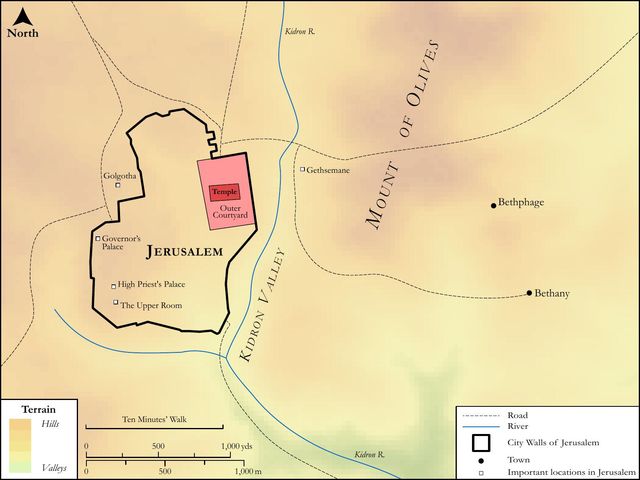
Jesus' discourse takes place in Jerusalem, likely within the Temple courts, during the Feast of Tabernacles. This festival was a time of great national celebration and religious fervor, drawing large crowds from across Israel and the Diaspora. The Temple environment was a hub for religious teaching and debate, making it a natural setting for Jesus to confront the prevailing theological views of the day. The Jewish leaders, particularly the Pharisees, represented the established religious authority, deeply rooted in the Mosaic Law and oral traditions. Their challenge to Jesus' authority and claims stemmed from their understanding of messianic prophecy, their interpretation of the Law, and their perceived threat to their own power and influence. The concept of "belief" (pisteuō) in this context was not merely intellectual assent but a profound reorientation of one's life and allegiance, a commitment to a person as the ultimate source of truth and salvation, which was a radical departure for many accustomed to a system of works and ritual.
Key Themes
ShowHideJohn chapter 8 is rich with theological themes that culminate in the response seen in John 8:30. A central theme is the Authority and Power of Jesus' Words, demonstrating that His teachings are not merely human wisdom but divine revelation, capable of transforming hearts and minds. This contrasts sharply with the spiritual blindness and hardness of heart exhibited by many of the Jewish leaders, highlighting the theme of Spiritual Discernment vs. Blindness. Another critical theme is the Nature of True Belief, which is presented as an active, personal commitment to Jesus as the Son of God, distinct from superficial or intellectual agreement. This genuine faith is portrayed as the pathway to Freedom from Sin and Spiritual Slavery, a concept Jesus elaborates on immediately after this verse in John 8:31-36. Finally, the chapter underscores Jesus' Divine Identity and Unity with the Father, as His claims to be "I AM" and His assertion of doing only the Father's will are the very words that evoke belief.
Exposition and Analysis
ShowHideKey Word Analysis
ShowHideThis verb signifies "to talk, i.e., utter words." In the context of Jesus, it emphasizes the act of verbal communication, highlighting that it was the very words He uttered, the content of His discourse, that served as the catalyst for belief. It underscores the direct, revelatory nature of His teaching.
This adjective denotes "much (in any respect) or (plural) many." Its inclusion here is significant, indicating that Jesus' message was not universally rejected but found a receptive audience among a substantial number of listeners, contrasting with the persistent unbelief of the religious elite.
Derived from pistis (faith), this crucial verb means "to have faith (in, upon, or with respect to, a person or thing), i.e., credit; by implication, to entrust (especially one's spiritual well-being to Christ)." Coupled with the preposition "on" (Greek, eis), it signifies more than mere intellectual assent; it implies a deep, active trust, reliance, and commitment, a placing of one's entire confidence and spiritual destiny into Jesus.
Verse Breakdown
ShowHide"As he spake these words"
This clause directly links the act of Jesus' speaking to the subsequent response. The "words" refer to the powerful, authoritative, and self-identifying declarations Jesus had just made, particularly His claims of divine origin, His unity with the Father, and His role as the Son of Man who would be "lifted up." It underscores the inherent power and truthfulness of His message.
"many believed on him"
This phrase describes the immediate and positive outcome of Jesus' discourse. The "many" indicates a significant portion of the crowd, not just a few isolated individuals. The phrase "believed on him" (Greek: episteusan eis auton) is critical, signifying a profound, saving faith. It implies a movement of intellectual understanding, emotional conviction, and volitional commitment, where individuals placed their trust, allegiance, and spiritual destiny into Jesus as the Messiah and Son of God, accepting His claims as truth.
Literary Devices
ShowHideThe verse employs several literary devices. Narrative Transition is evident as it marks a shift from the intense theological debate and confrontation that characterized the preceding verses to a moment of positive response and burgeoning faith. This creates a dramatic pivot in the narrative flow of John chapter 8. There is also a strong element of Contrast, as the belief of "many" stands in stark opposition to the persistent unbelief, hostility, and spiritual blindness of the Jewish leaders who had been challenging Jesus. This highlights the differing responses to divine truth. Furthermore, the use of "many" serves as Emphasis, underscoring the widespread impact of Jesus' words and the significant number of people whose hearts were opened to His message, despite the prevailing opposition.
Theological and Thematic Connections
ShowHideJohn 8:30 powerfully illustrates the inherent power of God's Word, incarnated in Jesus Christ, to penetrate human hearts and elicit a saving response. This belief is not a casual intellectual agreement but a profound, life-altering trust that places one's entire spiritual well-being into Christ. It underscores the New Testament's consistent teaching that salvation is by grace through faith, a faith that is awakened by hearing and responding to the truth of Jesus' person and work. This verse serves as a foundational example of how divine revelation, when truly heard and received, leads to genuine conversion and a transformed relationship with God.
Reflection and Application
ShowHideThe scene in John 8:30 is a timeless testament to the enduring power of Jesus' words and the call to respond with genuine faith. It challenges us to consider the depth of our own belief. Is our faith merely intellectual assent to facts about Jesus, or is it a dynamic, active trust that places our entire being "on Him"? Just as Jesus' words in the Temple court had the power to transform lives, the Gospel message continues to possess that same transformative power today. We are called to listen attentively to His words in Scripture, allowing them to penetrate our hearts, expose our sin, and lead us into deeper commitment. This verse reminds us that true belief is not passive but leads to a life of following and obeying Christ, embracing the freedom He offers from the bondage of sin. It encourages us to share this powerful message, trusting that God will use His Word to draw others to Himself.
Questions for Reflection
ShowHideFAQ
ShowHideWhat kind of "belief" is described in John 8:30?
ShowHideThe "belief" described in John 8:30 is a profound, saving faith, not merely intellectual agreement. The Greek verb pisteúō (to believe) combined with the preposition eis (into/on) signifies a deep, active trust and commitment to Jesus. It means placing one's full confidence, reliance, and spiritual destiny into Him, accepting His claims as true and entrusting one's life to Him as the Messiah and Son of God. This is the same kind of faith that leads to salvation throughout the New Testament, as seen in passages like John 3:16.
Christ-Centered Fulfillment
ShowHideJohn 8:30 powerfully foreshadows the universal call to faith in Christ, demonstrating that Jesus Himself is the ultimate object and enabler of saving belief. His words, emanating from His divine nature and perfect unity with the Father, are not mere human teachings but the very revelation of God, designed to draw humanity into a relationship with the Creator. This verse anticipates the broader New Testament emphasis on faith in Jesus as the sole means of salvation, as articulated by Peter in Acts 4:12 that "there is none other name under heaven given among men, whereby we must be saved." The "many" who believed represent the firstfruits of a vast multitude from every nation, tribe, and tongue who would eventually place their trust in the crucified and risen Christ, fulfilling the promise that all who believe in Him will not perish but have eternal life (John 3:16). Jesus, as the Word made flesh (John 1:14), speaks words of life that bring conviction and lead to genuine, transformative faith, ultimately uniting believers with God through His redemptive work on the cross and His resurrection.