


Hosea 12:6
Bible text: King James Version (1769 Blayney text) · Public domain
Bible text: Berean Standard Bible · Public domain
Bible text: American Standard Version (1901) · Public domain
Bible text: World English Bible, Messianic edition · Public domain
Bible text: Geneva Bible (1599) · Public domain
Bible text: Young's Literal Translation · Public domain
- וְאַתָּהve·'a·Tahand youH859Conj-w ¦ Pro-2msPronoun Personal 2nd Singular Masculineוְandאַתָּהyou
- בֵּאלֹהֶיךָbe·lo·Hei·khain your GodH430Prep-b ¦ N-mpc ¦ 2msNoun Plural Masculine ConstructבֵּinאלֹהֶיGodךָyour
- תָשׁוּבta·Shuvyou will returnH7725V-Qal-Imperf-2msVerb Qal Imperfect 2nd Singular Masculine
- חֶסֶדChe·sedloyaltyH2617N-msNoun Singular Masculine Absolute
- וּמִשְׁפָּטu·mish·Patand justiceH4941Conj-w ¦ N-msNoun Singular Masculine Absoluteוּandמִשְׁפָּטjustice
- שְׁמֹרshe·MorkeepH8104V-Qal-Imp-2msVerb Qal Imperative 2nd Singular Masculine
- וְקַוֵּהve·ka·Vehand waitH6960Conj-w ¦ V-Piel-Imp-2msVerb Piel Imperative 2nd Singular Masculineוְandקַוֵּהwait
- אֶל'eltoH413PrepPreposition
- אֱלֹהֶיךָ'e·lo·Hei·khayour GodH430N-mpc ¦ 2msNoun Plural Masculine ConstructאֱלֹהֶיGodךָyour
- תָּמִידta·MidcontinuallyH8548N-msNoun Singular Masculine Absolute
English is a literal word-by-word gloss of the Hebrew, not the KJV's wording. Why?
This is the original text the KJV's translators worked from — each Hebrew word with its own literal English meaning in this verse, prepared by scholars at Tyndale House, Cambridge. The KJV translates whole sentences, not word by word, so its wording differs: one Hebrew word can become several English words, and the KJV may choose “the LORD” where the gloss reads “Yahweh”. Both are faithful — they answer different questions. For the KJV's own rendering, switch to the KJV text.
Details
See on the biblical-era map
Study this verse
Public-domain commentary
Matthew Henry
From his Commentary on the Whole Bible. Henry comments on passages, not single verses — this entry covers Hosea 12:1–6. His four-level outline is real structure in the source text, so it is rendered as structure.
In these verses,
I.Ephraim is convicted of folly, in staying himself upon Egypt and Assyria, when he was in straits (Hos 12:1):
Ephraim feeds on wind, that is, feeds himself with vain hopes of assistance from man, when he is at variance with God; and, when he meets with disappointments, he still pursues the same game, and greedily pants and follows after the east wind, which he cannot catch holy of, nor, if he could, would it be nourishing, nay, would be noxious. We say of the wind in the east, It is good neither for man nor beast. It was said (Hos 8:7), He sows the wind; and as he sows so he reaps (He reaps the whirlwind); and as he reaps so he feeds - He feeds on the wind, the east wind. Note, Those that make creatures their confidence make fools of themselves, and take a great deal of pains to put a cheat upon their own souls and to prepare vexation for themselves: He daily increaseth lies, that is, multiplies his correspondences and leagues with his neighbours, which will all prove deceitful to him; nay, they will prove desolation to him. Those very nations that he makes his refuge will prove his ruin. Those that stay themselves upon lies will be still coveting to increase them, that they may build their hopes firmly upon them; as if many lies twisted together would make one truth, or many broken reeds and rotten supports one sound one, which is a great delusion and will prove to them a great desolation; for those that observe lying vanities the more they increase them the more disappointments they prepare for themselves and the further they run from their own mercies. The men of Ephraim did so when they thought to secure the Assyrians in their interests by a solemn league, signed, sealed, and sworn to: They make a covenant with the Assyrians, but they will find there is no hold of them; that potent prince will be a slave to his word no longer than he pleases. They thought to secure the Egyptians for their confederates by a rich present of the commodities of their country, not only to purchase their favour, but to show that their friendship was worth having: Oil is carried into Egypt. But the Egyptians, when they had got the bribe, dropped the cause, and Ephraim was never the better for them. Oleum perdidit et operam - The oil and the labour are both lost. This was feeding on wind; this was increasing lies and desolation.
II.Judah is contended with too, and Jacob, which includes both Ephraim and Judah (Hos 12:2):
The Lord has also a controversy with Judah; for though he had a while ago ruled with God, and been faithful with the saints, yet now he begins to degenerate. Or though, in keeping close to the house of David and the house of Aaron, and in them to the covenants of royalty and priesthood, they were so far in the right, in the former they ruled with God and in the latter were faithful to the saints, yet upon other accounts God had a controversy with them, and would punish them. Note, Man's being in the right in some things, in the main things, will not exempt them from correction, and therefore should not exempt them from reproof, for those things wherein they are in the wrong. There were those of the seven churches of Asia whom Christ approved and commended, and yet he adds, Nevertheless I have something against thee. So here; though the seed of Jacob are a people near to God, yet God will punish them according to the evil ways they are found in and the evil doings they are found guilty of; for God sees sin even in his own people, and will reckon with them for it.
III.Both Ephraim and Judah are put in mind of their father Jacob, whose seed they were and whose name they bore (and it was their honour), of the extraordinary things which he did and which God did for him, that they might be the more ashamed of themselves for degenerating from so illustrious a progenitor and staining the lustre of so great a name, and yet that they might be engaged and encouraged to return to God, the God of their father Jacob, in hopes for his sake to find favour with him. He had called this people Jacob (Hos 12:2), threatening to punish them; but how shall I give them up? How shall that dear name be forgotten?
1.Three glorious things concerning Jacob the person Jacob the people are here put in mind of; but by brief hints only, for it is presumed that they knew the story: - (1.) His struggling with Esau in the womb: There he took his brother by the heel, Hos 12:3. We have the story Gen 25:26. It was an early act of bravery, and an effort for the best precedency, a pious ambition for that birthright in the covenant which Esau is justly branded as profane for despising. But his degenerate seed, by mingling with the nations, and making leagues with them, profaned that crown, and laid that honour in the dust, which he so gloriously put in for. Then it was that the dominion was given to him: The elder shall serve the younger. Then he was owned of God as his beloved: Jacob have I loved, but Esau have I hated. But they had by their sin forfeited both the love of God and dominion over their neighbours. (2.) His wrestling with the angel. "Remember how your father Jacob had power with God by his own strength, the strength he had by the gift of God, who pleaded not against him by his great power, but put strength into him," Job 22:6. The angel he wrestled with is called God, and therefore is supposed to be the Son of God, the angel of the covenant. "God was both a combatant with Jacob and an assistant of him, showing, in the latter respect, greater strength than in the former, fighting as it were against him with his left hand and for him with his right, and to that putting greater force." So, Dr. Pocock. The providence of God fought against him when he met with one danger after another, in his return homewards; but the grace of God enabled him to go on cheerfully in his way, and, when his faith acted upon the divine promise that was for him prevailed above his fears that arose from the divine providences that wee against him, then by his strength he had power with God. But it refers especially to his prayer for deliverance from Esau, and for a blessing: He had power over the angel and prevailed, for he wept and made supplication. Here was a mixture of the greatest courage and the greatest tenderness, Jacob wrestling like a champion and yet weeping like a child. Note, Prayers and tears are the weapons with which the saints have obtained the most glorious victories. Thus Jacob commenced Israel - a prince with God; his posterity was called Israel, but they were unworthy the name, for they had forfeited and lost their communion with God, and their interest in him, by revolting from their duty to him. (3.) His meeting with God at Bethel: God found him in Bethel, and there he spoke with us. God found him the first time in Bethel, as he went to Padanaram (Gen 28:10), and a second time after his return, Gen 35:9, etc. It is probable that this refers to both; for in both God spoke to Jacob, and renewed the covenant with him, and the prophet might very well say, There he spoke with us who are the seed of Jacob, for both times that God spoke with Jacob at Bethel he spoke with him concerning his seed. Gen 28:14, Thy seed shall be as the dust of the earth; and Gen 35:12, This land I will give unto thy seed. Thus God then covenanted with him and his seed after him. Now justly are they upbraided with this; for in that very place which their father Jacob called Bethel - the house of God, in remembrance of the communion he there had with God, did they set up one of the calves, and worship it; thus they turned that Bethel into a Beth-aven - a house of iniquity. There God spoke with them exceedingly great and precious promises, which they had despised and lost the benefit of.
2.Two inferences are here drawn from these stories concerning Jacob, for instruction to his seed: -
(1.)Here is a use of information. From what passed between God and Jacob we may learn that Jehovah, the Lord God of hosts, is the God of Israel; he was the God of Jacob, and this is his memorial throughout all the generations of the seed of Jacob (Hos 12:5) - the more shame for those who forgot the memorial of their church, deserted the God of their fathers, and exchanged a Lord of hosts for Baalim. Note, Those only are accounted the people of God that keep up a memorial of God, such a memorial of him as he himself has instituted, by which he makes himself known and will have us to remember him. Here are two memorials of his, by which he is distinguished from all others, and is to be acknowledged and adored by us.
[1.]The former denotes his existence of himself. He is Jehovah, much the same with I AM, the same that was, and is, and is to come, infinite, eternal, and unchangeable. Jehovah is his memorial, his peculiar name.
[2.]The latter denotes his dominion over all: He is the God of hosts, that has all the hosts of heaven and earth at his beck and command, and makes what use he pleases of them. Jacob saw Mahanaim - God's two hosts, about the time that he wrestled with the angel (Gen 32:1, Gen 32:2), and so learned to call God the God of hosts, and transmitted it to us as his memorial. God's names, titles, and attributes, are the memorials of him; there is no need for images to be such. And that which was a revelation of God to one is his memorial to many, to all generations.
(2.)Here is a use of exhortation, Hos 12:6. "Is this so, that Jacob thy father had this communion with the Lord God of hosts, and is this still his memorial?" Then,
[1.]Let those that have gone astray from God be converted to him: Therefore turn thou to thy God. He that was the God of Jacob is the God of Israel, is thy God; from him thou hast unjustly and unkindly revolted; therefore turn thou to him by repentance and faith, turn to him as thine, to love him, obey him, and depend upon him.
[2.]Let those that are converted to him walk with him in all holy conversation and godliness: "Keep mercy and judgment, mercy in relieving and succouring the poor and distressed, judgment in rendering to all their due; be kind to all; do wrong to none. Keep piety and judgment" (so it may be read); "live righteously and godly in this present world; be devout and be honest. Do not only practise these occasionally, but be careful, and constant, and conscientious in the practice of them." [3.] Let those that walk with God be encouraged to live a life of dependence upon him: "Wait on thy God continually, with a believing expectation to receive from him all the succours and supplies thou standest in need of." Those that live a life of conformity to God may live a life of confidence and comfort in him, if it be not their own fault. Let our eyes be ever towards the Lord, and let us preserve a holy security and serenity of mind under the protection of the divine power and the influence of the divine favour, looking, without anxiety, for a dubious event, and by faith keeping our spirits sedate and even; this is waiting on God as our God in covenant, and this we must do continually.
Historical interpretation
Historical reception
2 surviving comments on this verse. Each one is dated, so this reads as a timeline rather than a list.
Select a marker to jump to its quote. Markers stagger vertically where authors wrote within a few decades of each other.
Combine justice with mercy, spending in mercy what you possess with justice. It is written, “Keep mercy and justice, and draw near to thy God always.” Because God loves mercy and justice, he who takes care to do mercy and justice draws near to God. It remains, then, for each to examine himself and for the rich person to take careful inventory of the private resources from which he is to offer gifts to God, to make sure that he has not oppressed a poor person, or used force against one weaker than himself, or cheated one dependent upon him, thus exercising license rather than justice. We are bidden to practice fairness and justice also toward those who serve us. Do not employ force because you are in command, and do not take advantage because it is within your power to do so.
The judgment therefore of the Lord with Judah: and a visitation upon Jacob. He will render to him according to his ways, and according to his inventions he will recompense him. In the womb he supplanted his brother: and in his strength he had success with the angel, and he prevailed over the angel, and was strengthened: he wept and made supplication to him: he found him in Bethel, and there he spoke with us. And the Lord God of hosts, the Lord is his memorial, therefore turn to thy God, keep mercy and judgment, and hope in thy God always. And the judgment of the Lord with Judah, that he may revenge Jacob, and his ways according to his inventions will render unto him. In the womb he supplanted his brother, and by his strength he had success with God, and he had power with the angel, and prevailed: he wept, and made supplication to him: he found him in Bethel, and there he spoke with him. And the Lord of hosts will be his memorial, and thou Israel shalt be turned to thy God, keep mercy and judgment, and approach thy God always. Ephraim feedeth on the wind, and followeth after the east wind: he daily multiplieth lies and desolation: and they have made a covenant with the Assyrians, and oil is carried into Egypt. Now all their wickedness is in Gilgal, for there I hated them: for the wickedness of their practices I will cast them forth out of my house: I will love them no more, all their princes are revolters. However, he calls visitation scourges and punishments, so that he who has restored Ephraim, what he deserved, may also restore Judah, who is also of the seed of Jacob, according to its ways and inventions, who has not only been deceived by chance error, and fell by human frailty; but he sought and found in what he should sin and fall. However, he tells how much good Judah, that is, Jacob, has received, and the son is named in the father, and the ancient history is remembered, so that the mercy of God towards Jacob and his hardness against the Lord may also be known. While he was still in Rebecca's womb, he supplanted his brother Esau (Gen. 25), not by his own strength, which he could not feel, but by the mercy of God, who knows and loves those whom he has predestined. And he did not only supplant his brother in the womb; but he also wrestled with an angel in his strength, when he fought against the angel all night by the stream (Gen. 32). And because he wrestled with the angel, he received the name Isar, which in Hebrew means "directed" or "straightest". And he prevailed," he said, "against the angel; and by his blessing, whom he had conquered, he was strengthened. He also wept, and asked him, that is, the angel, saying: "I will not let you go, unless you bless me." And when he fled to Mesopotamia by the counsel of his father and mother, the same angel found him in Bethel, who spoke to him, spoke with us, that is, spoke in the father and with the sons, and loved Jacob and Judas: from that time until the present, his name, which was given to him by the angel and by God, endures in memory. When things are this way, and you, O Judas, imitate your parent, mourn and plead with the Lord of hosts, and turn to Him. Keep both mercy and judgment, and when you have done this, always hope in your God, making progress by good deeds. On account of what is in Hebrew, "he wept and begged him: he found him in Bethel, and there he spoke with us," we read in the Vulgate edition: "they wept and begged me, being in" a "house they found me, and there it was" said "to them;" "a" is interpreted as "pain." So, if anyone weeps, and does penance, and implores the Lord, they will find him in the pain of their heart, and when they call upon him, they will hear him respond to them. We can understand the Ecclesiastical (Jewish) man who is rebuked by the Lord because he does not remember his previous benefits but rather sins daily, and he reveals what those benefits are: "When you were born in the faith, the Church gave birth to you and you supplanted your Jewish or Gentile brother and received his birthright, and in your strength you were directed with the angel, either conquering opposing strengths or strengthened by the blessings of the angel who is God, and you prevailed in the image against an angel so that you could prevail against men, and you were strengthened". And when you had achieved victory, you wept, and you begged the angel of the Lord, and remembering the sins of old, you found him in Bethel, that is, in the house of God, which is the Church, or in his own house, of pain and tears and penitence. And we know who this Judas was, there, he said, he spoke with us, that is, with us Christians, and from that time until the present day, we are known by the name of Christ and are corrected by him. So, Ecclesiastical man, who is called Judas, and confesses, turn daily through penance to your Lord, and if by chance you have sinned, imitate the prophet saying: "I have labored in my groaning, every night I will wash my bed; I will water my couch with my tears" (Ps. 6:7). Let it be enough to have said this, but keep the commandments of God, show mercy to others, so that you may also obtain mercy. Judge with true judgment, so that in whatever you judge, you may be judged. And always hope in your God, whether you draw near to your God constantly, so that at every time, making progress in virtue, you draw near to your God.
Continue studying Hosea 12:6 across the web’s major study libraries — every link below opens this exact verse, chapter, or book on the destination site.
Read & Compare
 BibleGatewayThis verse in more than 200 translations and 70 languages.
 Bible.comThe YouVersion reader — hundreds of translations, reading plans, and highlights.
 ESV.orgCrossway's official English Standard Version reader.
 NET BibleThe NET translation with 60,000+ translators' notes on every rendering decision.
 STEP BibleTyndale House's free study tool — original text, vocabulary, and scholarly resources.
 BibliaLogos Bible Software's free web reader.
 USCCBThe New American Bible (Revised Edition) with the U.S. bishops' study notes.
Commentaries
 BibleHub CommentariesDozens of classic commentaries on this verse, gathered on one page.
 StudyLightMore than 100 commentary sets — the largest collection on the web.
 BibleRefPlain-English commentary on what this verse means, verse by verse.
 Enduring WordDavid Guzik's free commentary on this chapter, widely used by Bible teachers.
 Bible Study ToolsVerse commentary alongside Greek and Hebrew study aids.
Original Language & Research
- BibleHub InterlinearThe verse word by word — original language, transliteration, and English.
- BibleHub LexiconEvery word's original-language definition and Strong's entry.
 Blue Letter BibleDeep-study tools — Strong's numbers, concordance, and word studies.
 SefariaThe Hebrew text with Rashi and centuries of Jewish commentary.
Sermons, Hymns & Audio


TrulyRandomVerse is not affiliated with these sites and doesn’t control their content. They’re linked because they’re genuinely useful.
Summary
Hosea 12:6 serves as a pivotal prophetic exhortation, calling the unfaithful nation of Israel to a profound spiritual reorientation. It encapsulates the essence of true covenant faithfulness, urging them to abandon their reliance on foreign powers and deceitful practices, instead returning wholeheartedly to God through genuine repentance, diligent practice of mercy and justice, and unwavering, continuous trust in His divine provision and guidance. This verse offers a timeless blueprint for a life of integrity and devotion, rooted in a restored relationship with the Lord.
Context
ShowHideLiterary Context
Hosea 12 is a powerful and poignant chapter within the larger prophetic book, which consistently diagnoses Israel's spiritual adultery and pronounces divine judgment while simultaneously holding out the hope of restoration. Immediately preceding Hosea 12:6, the prophet recounts the story of Jacob, Israel's patriarch, highlighting his wrestling with God and his subsequent reliance on the Lord (Hosea 12:3-5). This serves as a stark contrast to the current generation, who, despite their heritage, have abandoned God for idols and foreign alliances. The call to "turn to thy God" in Hosea 12:6 is therefore a direct response to the preceding indictment of Ephraim's deceit and reliance on "wind" (Hosea 12:1), preparing the way for further condemnation of their injustice and pride in subsequent verses (Hosea 12:7-8), yet still holding out the possibility of a return to the covenant relationship.
Historical & Cultural Context
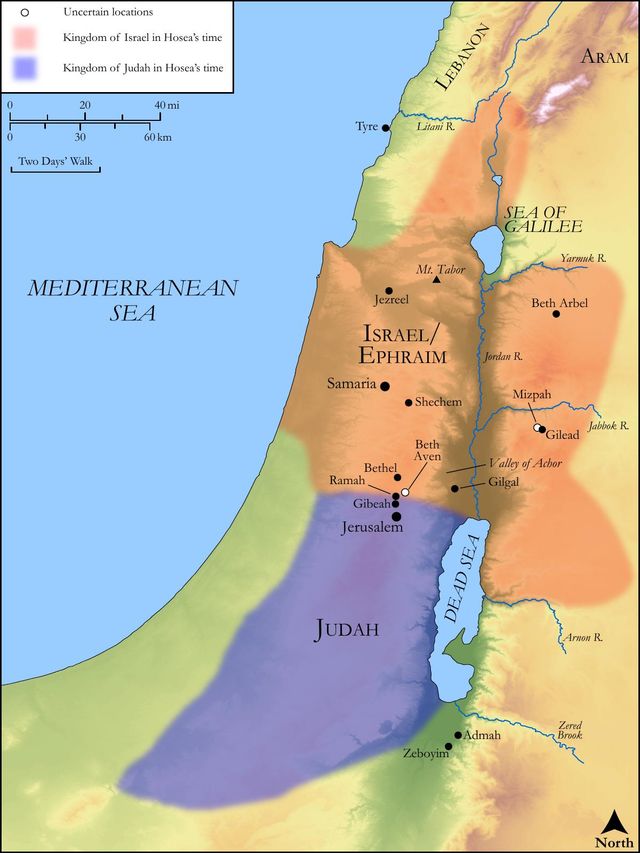
The prophecy of Hosea is set against the tumultuous backdrop of the 8th century BCE, a period of political instability and moral decay in the Northern Kingdom of Israel (often referred to as Ephraim). The nation was caught between the rising empires of Assyria and Egypt, oscillating between alliances with one or the other, rather than trusting in their covenant God. This era was marked by widespread idolatry, syncretism (mixing the worship of the LORD with Baal worship), and the oppression of the poor by the wealthy and powerful. Economically, Israel was engaging in deceitful trade practices, as alluded to in Hosea 12:7, where Ephraim is described as a "merchant" with "the balances of deceit" in his hand. The call to "keep mercy and judgment" directly addresses this societal breakdown, urging a return to the ethical standards of the Mosaic Law, which emphasized care for the vulnerable and equitable dealings within the community.
Key Themes
ShowHideHosea 12:6 powerfully encapsulates several core themes prevalent throughout the book of Hosea and the broader prophetic literature. The most prominent is Repentance (Teshuvah), signified by the command to "turn thou to thy God," which is a call for a complete reorientation of life away from sin and back towards a right relationship with Yahweh. This turning is not merely intellectual assent but requires Covenant Faithfulness, expressed through the active practice of "mercy (חֶסֶד, chesed) and judgment (מִשְׁפָּט, mishpat)". These terms represent the ethical demands of the covenant, reflecting God's own character—His steadfast love and justice—which He expects His people to embody. Finally, the instruction to "wait on thy God continually" emphasizes Dependence and Trust, urging persistent hope and reliance on the Lord's sovereignty and provision, a stark contrast to Israel's prevailing tendency to trust in human alliances and their own strength, as seen throughout Hosea 7 and Hosea 8.
Exposition and Analysis
ShowHideKey Word Analysis
ShowHideThis primitive root means "to turn back (hence, away) transitively or intransitively, literally or figuratively." It often carries the idea of returning to a starting point or, in a spiritual context, repentance—a fundamental change of direction from sin towards God. In Hosea 12:6, it is an imperative, demanding a decisive and immediate reorientation of life and allegiance.
This rich Hebrew term is defined as "kindness; by implication (towards God) piety; rarely (by opposition) reproof, or (subject.) beauty; favour, good deed(-liness, -ness), kindly, (loving-) kindness, merciful (kindness), mercy, pity, reproach, wicked thing." In this context, chesed refers to steadfast love, loyalty, and covenant faithfulness, both God's toward His people and their expected reciprocal faithfulness toward Him and each other. It embodies the relational and compassionate aspects of righteous living.
mishpat properly means "a verdict (favorable or unfavorable) pronounced judicially, especially a sentence or formal decree." It encompasses "justice, including a participant's right or privilege (statutory or customary), or even a style." Here, it signifies ethical conduct, righteous governance, and the upholding of justice in society, ensuring fairness and equity, particularly for the vulnerable.
This primitive root means "to bind together (perhaps by twisting), i.e. collect; (figuratively) to expect." It conveys the sense of patient endurance, hopeful expectation, and persistent reliance. To "wait on thy God continually" implies a posture of active trust and dependence, not passive idleness, but a confident anticipation of God's intervention and guidance.
Verse Breakdown
ShowHide"Therefore turn thou to thy God:"
This opening clause functions as a direct, urgent imperative. The "therefore" links it to the preceding indictment of Israel's unfaithfulness and deceit, presenting repentance as the only logical and salvific response. The command to "turn" (Hebrew: shuv) signifies a complete spiritual U-turn, a radical departure from their current path of idolatry and self-reliance, and a decisive return to Yahweh, their covenant God. It emphasizes a personal and national re-alignment of allegiance and affection.
"keep mercy and judgment,"
This phrase outlines the practical outworking of genuine repentance. "Keep" (Hebrew: shamar) implies guarding, observing, and diligently practicing. "Mercy" (chesed) refers to steadfast love, covenant loyalty, and compassionate kindness, particularly in relationships. "Judgment" (mishpat) denotes justice, righteousness, and equitable conduct. Together, they represent the ethical core of the Mosaic Law and the very character of God. This is a call to live out one's faith in tangible acts of love and justice within the community, correcting the oppression and unrighteous dealing prevalent in Israel.
"and wait on thy God continually."
This final clause emphasizes the posture of ongoing dependence and hopeful expectation. "Wait" (Hebrew: qavah) suggests a patient, persistent, and eager looking to God. The adverb "continually" (tamid) underscores the unending nature of this reliance. It is not a one-time act but a perpetual orientation of trust, acknowledging God's sovereignty and timing in all circumstances, rather than resorting to human schemes or foreign alliances, which Israel had repeatedly done. This calls for a life lived in constant communion and expectation of divine guidance and provision.
Literary Devices
ShowHideHosea 12:6 employs several powerful Literary Devices to convey its urgent message. The most prominent is the Imperative Mood, seen in "turn," "keep," and "wait," which underscores the direct, non-negotiable nature of God's command to His people. This creates a sense of immediacy and divine authority. There is also clear Parallelism in the structure, particularly in the repeated phrase "thy God," which serves as a Thematic Repetition emphasizing the singular object of Israel's devotion and trust. The act of "turning" itself functions as a Metaphor for repentance, vividly portraying a change in direction and allegiance. Furthermore, the pairing of "mercy and judgment" creates a Merism, representing the totality of righteous living and ethical conduct required by the covenant, encompassing both relational compassion and societal justice. The phrase "wait on thy God continually" utilizes Hyperbole to stress the absolute and unceasing nature of the required dependence, contrasting sharply with Israel's intermittent and unreliable faithfulness.
Theological and Thematic Connections
ShowHideHosea 12:6 distills the essence of prophetic theology, serving as a timeless summary of God's expectations for His covenant people. It highlights that true relationship with God is not merely ritualistic but demands a holistic transformation encompassing both inward repentance and outward ethical living. The call to "turn to thy God" echoes the consistent prophetic plea for teshuvah (repentance), emphasizing that God's desire is for His people to return to Him, not just to cease sinning. The pairing of "mercy and judgment" reveals God's own character and His demand for His people to reflect that character in their social interactions. This is the practical outworking of faith, demonstrating that genuine piety cannot be separated from mercy and just dealing. Finally, "waiting continually" underscores the necessity of absolute and unwavering dependence on God, rejecting self-reliance or trust in worldly powers, a theme central to the covenant relationship. This verse encapsulates the core of what it means to live in covenant with a holy and just God, whose steadfast love calls for a reciprocal life of faithful obedience and trust.
Reflection and Application
ShowHideHosea 12:6 offers a profound and enduring blueprint for spiritual vitality that transcends its ancient context, speaking directly to the heart of every believer today. It reminds us that our faith is not passive but requires active, continuous engagement. The command to "turn to thy God" is a perpetual invitation to repentance, urging us to regularly examine our hearts, confess our deviations, and reorient our lives towards Christ. This turning is not an isolated event but a daily discipline of aligning our will with God's. Furthermore, "keeping mercy and judgment" challenges us to embody God's character in our daily interactions. Are we extending grace and compassion to others, especially the poor and the afflicted? Are we dealing justly and truthfully with those around us, reflecting God's righteousness in a broken world? Finally, "waiting on thy God continually" calls for a radical trust that counters the modern impulse for immediate gratification and self-sufficiency. It encourages us to cultivate a posture of patient expectation, knowing that God is sovereign and faithful, and His timing is perfect. This verse is a holistic call to a life of dynamic faith, expressed through ongoing repentance, ethical living, and unwavering dependence on the Lord.
Questions for Reflection
ShowHideFAQ
ShowHideWhat does "turn thou to thy God" specifically mean for a modern believer?
ShowHideFor a modern believer, "turn thou to thy God" (Hebrew: shuv) is a call to ongoing repentance and spiritual reorientation. It means consciously and consistently turning away from sin, self-sufficiency, and worldly distractions, and turning back towards God in faith and obedience. This involves a daily commitment to seek God's will, confess failures, and align one's life with the teachings of Christ. It's not just a one-time conversion but a continuous process of drawing nearer to God, much like the prodigal son's return to his father (Luke 15:11-32).
How do "mercy and judgment" relate to each other in this verse?
ShowHide"Mercy" (chesed) and "judgment" (mishpat) are two foundational pillars of God's character and His covenant demands. They are not opposing concepts but complementary aspects of righteous living. "Mercy" speaks to steadfast love, compassion, and loyalty—the relational and gracious dimension. "Judgment" speaks to justice, fairness, and ethical conduct—the structural and moral dimension. To "keep mercy and judgment" means to live a life that embodies both compassionate care for others and a commitment to truth, fairness, and righteousness. It's about loving your neighbor as yourself (Matthew 22:39) while also upholding what is right and just in society, as exemplified in Micah 6:8.
Christ-Centered Fulfillment
ShowHideHosea 12:6, with its call to "turn to thy God: keep mercy and judgment, and wait on thy God continually," finds its ultimate and perfect fulfillment in Jesus Christ. He is the embodiment of the very God to whom Israel was called to return, and in His life, death, and resurrection, He provides the means for that return. Jesus perfectly demonstrated "mercy" (chesed) through His compassionate ministry, healing the sick, feeding the hungry, and extending grace to sinners, culminating in His ultimate act of love on the cross (John 3:16). He also perfectly upheld "judgment" (mishpat), not only by living a sinless life that fulfilled all righteousness (Matthew 3:15), but also by rebuking those who "omitted the weightier matters of the law, judgment, mercy, and faith" (Matthew 23:23), and by establishing the kingdom of God where true justice reigns (Isaiah 9:7). Furthermore, Jesus perfectly exemplified what it means to "wait on thy God continually," living in constant, dependent communion with the Father, always seeking His will and trusting in His timing, even unto death (Luke 22:42). Through Christ, humanity is empowered to truly "turn to God" through repentance and faith in His atoning work (Acts 3:19), to be transformed by the Spirit to "keep mercy and judgment" as new creations (Ephesians 2:10), and to "wait on God continually" with steadfast hope, knowing that He who began a good work in us will bring it to completion (Philippians 1:6). Thus, Hosea's ancient command becomes a living reality for all who are in Christ.