


Genesis 6:17
- וַאֲנִיva·'a·Niand IH589Conj-w ¦ Pro-1csPronoun Personal 1st Singular common genderוַandאֲנִיI
- הִנְנִיhi·Nihere IH2009Prt ¦ 1csParticle InterjectionהִנְhereנִיI
- מֵבִיאme·Vi'[am] about to bringH935V-Hiphil-Prtcpl-msVerb Hiphil Participle Singular Masculine Absolute
- אֶת'et<obj.>H853DirObjMParticle Object Indicator
- הַמַּבּוּלha·ma·Bulthe floodH3999Art ¦ N-msNoun Singular Masculine Absoluteהַtheמַּבּוּלflood
- מַיִםma·yimwaterH4325N-mpNoun Plural Masculine Absolute
- עַל'alonH5921PrepPreposition
- הָאָרֶץha·'A·retzthe earthH776Art ¦ N-fsNoun Singular Feminine Absoluteהָtheאָרֶץearth
- לְשַׁחֵתle·sha·Chetto destroyH7843Prep-l ¦ V-Piel-InfVerb Piel Infinitive Constructלְtoשַׁחֵתdestroy
- כָּלkolallH3605N-mscNoun Singular Masculine Construct
- בָּשָׂרba·SarfleshH1320N-msNoun Singular Masculine Absolute
- אֲשֶׁר'a·SherwhichH834RelParticle Relative
- בּוֹbo[is] in <the> itPrep-b ¦ 3msSuffix Personal 3rd Singular Masculineבּ[is] in <the>וֹit
- רוּחַRu·ach[the] breath ofH7307N-fscNoun Singular Feminine Construct
- חַיִּיםchai·YimlifeH2416N-mpNoun Plural Masculine Absolute
- מִתַּחַתmi·Ta·chatfrom underH8478Prep-m ¦ N-mscNoun Singular Masculine Constructמִfromתַּחַתunder
- הַשָּׁמָיִםha·sha·Ma·yimthe heavensH8064Art ¦ N-mpNoun Plural Masculine Absoluteהַtheשָּׁמָיִםheavens
- כֹּלkolallH3605N-msNoun Singular Masculine Absolute
- אֲשֶׁר'a·SherthatH834RelParticle Relative
- בָּאָרֶץba·'A·retz[is] on the earthH776Prep-b ¦ N-fsNoun Singular Feminine Absoluteבָּ[is] on theאָרֶץearth
- יִגְוָעyig·Va'<it> will dieH1478V-Qal-Imperf-3msVerb Qal Imperfect 3rd Singular Masculine
English is a literal word-by-word gloss of the Hebrew, not the KJV's wording. Why?
This is the original text the KJV's translators worked from — each Hebrew word with its own literal English meaning in this verse, prepared by scholars at Tyndale House, Cambridge. The KJV translates whole sentences, not word by word, so its wording differs: one Hebrew word can become several English words, and the KJV may choose “the LORD” where the gloss reads “Yahweh”. Both are faithful — they answer different questions. For the KJV's own rendering, switch to the KJV text.
Details
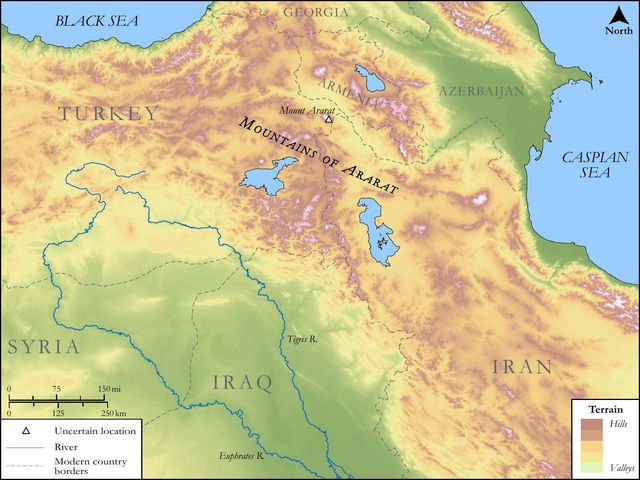
See on the biblical-era map


Study this verse
Public-domain commentary
Matthew Henry
From his Commentary on the Whole Bible. Henry comments on passages, not single verses — this entry covers Genesis 6:13–21. His three-level outline is real structure in the source text, so it is rendered as structure.
Here it appears indeed that Noah found grace in the eyes of the Lord. God's favour to him was plainly intimated in what he said of him, Gen 6:8-10, where his name is mentioned five times in five lines, when once might have served to make the sense clear, as if the Holy Ghost took a pleasure in perpetuating his memory; but it appears much more in what he says to him in these verses - the informations and instructions here given him.
I.God here makes Noah the man of his counsel, communicating to him his purpose to destroy this wicked world by water.
As, afterwards, he told Abraham his resolution concerning Sodom (Gen 18:17, Shall I hide from Abraham?) so here "Shall I hide from Noah the thing that I do, seeing that he shall become a great nation?" Note, The secret of the Lord is with those that fear him (Psa 25:14); it was with his servants the prophets (Amo 3:7), by a spirit of revelation, informing them particularly of his purposes; it is with all believers by a spirit of wisdom and faith, enabling them to understand and apply the general declarations of the written word, and the warnings there given. Now,
1.God told Noah, in general, that he would destroy the world (Gen 6:13): The end of all flesh has come before me; I will destroy them; that is, the ruin of this wicked world is decreed and determined; it has come, that is, it will come surely, and come quickly. Noah, it is likely, in preaching to his neighbours, had warned them, in general, of the wrath of God that they would bring upon themselves by their wickedness, and now God seconds his endeavours by a particular denunciation of wrath, that Noah might try whether this would work upon them. Hence observe,
(1.)That God confirmeth the words of his messengers, Isa 44:26.
(2.)That to him that has, and uses what he has for the good of others, more shall be given, more full instructions.
2.He told him, particularly, that he would destroy the world by a flood of waters: And behold, I, even I, do bring a flood of waters upon the earth, Gen 6:17. God could have destroyed all mankind by the sword of an angel, a flaming sword turning every way, as he destroyed all the first-born of the Egyptians and the camp of the Assyrians; and then there needed no more than to set a mark upon Noah and his family for their preservation. But God chose to do it by a flood of waters, which should drown the world. The reasons, we may be sure, were wise and just, though to us unknown. God has many arrows in his quiver, and he may use which he please: as he chooses the rod with which he will correct his children, so he chooses the sword with which he will cut off his enemies. Observe the manner of expression: "I, even I, do bring a flood; I that am infinite in power, and therefore can do it, infinite in justice, and therefore will do it." (1.) It intimates the certainty of the judgment: I, even I, will do it. That cannot but be done effectually which God himself undertakes the doing of. See Job 11:10. (2.) It intimates the tendency of it to God's glory and the honour of his justice. Thus he will be magnified and exalted in the earth, and all the world shall be made to know that he is the God to whom vengeance belongs; methinks the expression here is somewhat like that, Isa 1:24, Ah, I will ease me of mine adversaries.
II.God here makes Noah the man of his covenant, another Hebrew periphrasis of a friend (Gen 6:18): But with thee will I establish my covenant.
1.The covenant of providence, that the course of nature shall be continued to the end of time, notwithstanding the interruption which the flood would give to it. This promise was immediately made to Noah and his sons, Gen 9:8, etc. They were as trustees for all this part of the creation, and a great honour was thereby put upon him and his.
2.The covenant of grace, that God would be to him a God and that out of his seed God would take to himself a people. Note,
(1.)When God makes a covenant, he establishes it, he makes it sure, he makes it good; his are everlasting covenants.
(2.)The covenant of grace has in it the recompence of singular services, and the fountain and foundation of all distinguishing favours; we need desire no more, either to make up our losses for God or to make up a happiness for us in God, than to have his covenant established with us.
III.God here makes Noah a monument of sparing mercy, by putting him in a way to secure himself in the approaching deluge, that he might not perish with the rest of the world: I will destroy them, says God, with the earth, Gen 6:13. "But make thee an ark; I will take care to preserve thee alive." Note, Singular piety shall be recompensed with distinguishing salvations, which are in a special manner obliging. This will add much to the honour and happiness of glorified saints, that they shall be saved when the greatest part of the world is left to perish. Now,
1.God directs Noah to make an ark, Gen 6:14-15. This ark was like the hulk of a ship, fitted not to sail upon the waters (there was no occasion for that, when there should be no shore to sail to), but to float upon the waters, waiting for their fall. God could have secured Noah by the ministration of angels, without putting him to any care, or pains, or trouble, himself; but he chose to employ him in making that which was to be the means of his preservation, both for the trial of his faith and obedience and to teach us that none shall be saved by Christ but those only that work out their salvation. We cannot do it without God, and he will not without us. Both the providence of God, and the grace of God, own and crown the endeavours of the obedient and diligent. God gave him very particular instructions concerning this building, which could not but be admirably well fitted for the purpose when Infinite Wisdom itself was the architect.
(1.)It must be made of gopher-wood. Noah, doubtless, knew what sort of wood that was, though we now do not, whether cedar, or cypress, or what other.
(2.)He must make it three stories high within.
(3.)He must divide it into cabins, with partitions, places fitted for the several sorts of creatures, so as to lose no room.
(4.)Exact dimensions were given him, that he might make it proportionable, and might have room enough in it to answer the intention and no more. Note, Those that work for God must take their measures from him and carefully observe them. Note, further, It is fit that he who appoints us our habitation should fix the bounds and limits of it.
(5.)He must pitch it within and without - without, to shed off the rain, and to prevent the water from soaking in - within, to take away the bad smell of the beasts when kept close. Observe, God does not bid him paint it, but pitch it. If God gives us habitations that are safe, and warm, and wholesome, we are bound to be thankful, though they are not magnificent or nice.
(6.)He must make a little window towards the top, to let in light, and (some think) that through that window he might behold the desolations to be made in the earth.
(7.)He must make a door in the side of it, by which to go in and out.
2.God promises Noah that he and his shall be preserved alive in the ark (Gen 6:18): Thou shalt come into the ark. Note, What we do in obedience to God, we ourselves are likely to have the comfort and benefit of. If thou be wise, thou shalt be wise for thyself. Nor was he himself only saved in the ark, but his wife, and his sons, and his sons' wives. Observe,
(1.)The care of good parents; they are solicitous not only for their own salvation, but for the salvation of their families, and especially their children.
(2.)The happiness of those children that have godly parents. Their parents' piety often procures them temporal salvation, as here; and it furthers them in the way to eternal salvation, if they improve the benefit of it.
IV.God here makes Noah a great blessing to the world, and herein makes him an eminent type of the Messiah, though not the Messiah himself, as his parents expected, Gen 5:29.
1.God made him a preacher to the men of that generation. As a watchman, he received the word from God's mouth, that he might give them warning, Eze 3:17. Thus, while the long-suffering of God waited, by his Spirit in Noah, he preached to the old world, who, when Peter wrote, were spirits in prison (Pe1 3:18-20), and herein he was a type of Christ, who, in a land and age wherein all flesh had corrupted their way, went about preaching repentance and warning men of a deluge of wrath coming.
2.God made him a saviour to the inferior creatures, to keep the several kinds of them from perishing and being lost in the deluge, Gen 6:19-21. This was a great honour put upon him, that not only in him the race of mankind should be kept up, and that from him should proceed a new world, the church, the soul of the world, and Messiah, the head of that church, but that he should be instrumental to preserve the inferior creatures, and so mankind should in him acquire a new title to them and their service.
(1.)He was to provide shelter for them, that they might not be drowned. Two of every sort, male and female, he must take with him into the ark; and lest he should make any difficulty of gathering them together, and getting them in, God promises (Gen 6:20) that they shall of their own accord come to him. He that makes the ox to know his owner and his crib then made him know his preserver and his ark.
(2.)He was to provide sustenance for them, that they might not be starved, Gen 6:21. He must victual his ship according to the number of his crew, that great family which he had now the charge of, and according to the time appointed for his confinement. Herein also he was a type of Christ, to whom it is owing that the world stands, by whom all things consist, and who preserves mankind from being totally cut off and ruined by sin; in him the holy seed is saved alive, and the creation rescued from the vanity under which it groans. Noah saved those whom he was to rule, so does Christ, Heb 5:9.
Historical interpretation
Five Centuries of Reception
3 surviving comments on this verse. Each one is dated, so this reads as a timeline rather than a list.
Select a marker to jump to its quote. Markers stagger vertically where authors wrote within a few decades of each other.
Hippolytus, the Targumist expositor, said: The names of the wives of the sons of Noah are these: the name of the wife of Sem, Nahalath Mahnuk; and the name of the wife of Cham, Zedkat Nabu; and the name of the wife of Japheth, Arathka. These, moreover, are their names in the Syriac Targum. The name of the wife of Sem was Nahalath Mahnuk; the name of the wife of Cham, Zedkat Nabu; the name of the wife of Japheth, Arathka.
Therefore God gave intimation to Noah, and informed him of the coming of the flood, and of the destruction of the ruined (wicked).
And God Most High ordered him to descend from the holy mount, him and his sons, and the wives of his sons, and to build a ship of three storeys. The lower storey was for fierce, wild, and dangerous beasts. Between them there were stakes or wooden beams, to separate them from each other, and prevent them from having intercourse with each other. The middle storey was for birds, and their different genera. Then the upper storey was for Noah himself and his sons-for his own wife and his sons' wives.
Noah also made a door in the ship, on the east side. He also constructed tanks of water, and store-rooms of provisions.
When he had made an end, accordingly, of building the ship, Noah, with his sons, Sem, Chain, and Japheth, entered the cave of deposits.
And on their first approach, indeed, they happily found the bodies of the fathers, Adam, Seth, Enosh, Kainan, Mahaliel, Jared, Mathusalach, and Lamech. Those eight bodies were in the place of deposits, viz., those of Adam, Seth, Enosh, Kainan, Mahaliel, Jared, Mathusalach, and Lamech.
Noah, moreover, took the body of Adam. And his sons took with them offerings. Sem carried gold, Chain myrrh, and Japheth frankincense. Then, leaving the cave of deposits, they transferred the offerings and the body of Adam to the holy mount.
And when they sat down by the body of Adam, over against paradise, they began to lament and weep for the loss of paradise.
Then, descending from the holy mount, and lifting up their eyes towards paradise, they renewed their weeping and wailing, (and) uttered an eternal farewell in these terms: Farewell! peace to thee, O paradise of God! Farewell, O habitation of religion and purity! Farewell, O seat of pleasure and delight!
Then they embraced the stones and trees of the holy mount, and wept, and said: Farewell, O habitation of the good! Farewell, O abode of holy bodies!
Then, after three days, Noah, with his sons and his sons' wives, came down from the holy mount to the base of the holy mount, to the ship's place. For the (ark) was under the projecting edge of the holy mount.
And Noah entered the ship, and deposited the body of Adam, and the offerings, in the middle of the ship, upon a bier of wood, which he had prepared for the reception of the body.
And God charged Noah, saying: Make for thyself rattles of boxwood (or cypress). Now r)m
Make also the hammer (bell) thereof of the same wood. And the length of the rattle shall be three whole cubits, and its breadth one and a half cubit.
And God enjoined him to strike the rattles three times every day, to wit, for the first time at early dawn, for the second time at mid-day, and for the third time at sunset.
And it happened that, as soon as Noah had struck the rattles, the sons of Cain and the sons of Vahim ran up straightway to him, and he warned and alarmed them by telling of the immediate approach of the flood, and of the destruction already hasting on and impending.
Thus, moreover, was the pity of God toward them displayed, that they might be converted and come to themselves again. But the sons of Cain did not comply with what Noah proclaimed to them. And Noah brought together pairs, male and female, of all birds of every kind; and thus also of all beasts, tame and wild alike, pair and pair.
Behold, I will bring the waters of a flood upon the earth, to destroy all flesh in which there is the breath of life under heaven. Everything that is on the earth shall perish, and I will establish my covenant with you, and you shall enter the ark, you and your sons, and the rest. The waters of the flood brought upon the earth killed all flesh that was found outside the ark, but Noah and all that were in the ark were saved. Washing the world with the water of baptism saves whomever it finds faithfully abiding in the unity of the holy Church; but those who receive baptism outside the Church from heretics or schismatics die unless they repent by returning to catholic unity. Likewise, when the time of the final judgment comes, whoever is found persevering in faith and action in the holy Church shall be saved eternally; those separated from the Church by faith, action, or both, perish.
From the beginning “the spirit of God moved over the waters,” and over and again Scripture testifies to the fact that water is purifying. It was with water that God washed away the sin of the world in the time of Noah.
Continue studying Genesis 6:17 across the web’s major study libraries — every link below opens this exact verse, chapter, or book on the destination site.
Read & Compare
 BibleGatewayThis verse in more than 200 translations and 70 languages.
 Bible.comThe YouVersion reader — hundreds of translations, reading plans, and highlights.
 ESV.orgCrossway's official English Standard Version reader.
 NET BibleThe NET translation with 60,000+ translators' notes on every rendering decision.
 STEP BibleTyndale House's free study tool — original text, vocabulary, and scholarly resources.
 BibliaLogos Bible Software's free web reader.
 USCCBThe New American Bible (Revised Edition) with the U.S. bishops' study notes.
Commentaries
 BibleHub CommentariesDozens of classic commentaries on this verse, gathered on one page.
 StudyLightMore than 100 commentary sets — the largest collection on the web.
 BibleRefPlain-English commentary on what this verse means, verse by verse.
 Enduring WordDavid Guzik's free commentary on this chapter, widely used by Bible teachers.
 Bible Study ToolsVerse commentary alongside Greek and Hebrew study aids.
Original Language & Research
- BibleHub InterlinearThe verse word by word — original language, transliteration, and English.
- BibleHub LexiconEvery word's original-language definition and Strong's entry.
 Blue Letter BibleDeep-study tools — Strong's numbers, concordance, and word studies.
 SefariaThe Hebrew text with Rashi and centuries of Jewish commentary.
Sermons, Hymns & Audio


TrulyRandomVerse is not affiliated with these sites and doesn’t control their content. They’re linked because they’re genuinely useful.
Summary
Genesis 6:17 presents God's solemn and emphatic declaration to Noah, announcing His imminent and universal judgment upon all land-dwelling, air-breathing life on earth through a cataclysmic flood. This pivotal verse underscores the profound severity of human sin and God's righteous resolve to cleanse a world utterly corrupted by wickedness, marking a decisive moment of divine justice that paves the way for a new beginning for humanity and creation.
Context
ShowHideLiterary Context
This divine pronouncement functions as the climactic declaration of judgment within the pre-Flood narrative, immediately following God's profound grief and resolve to "blot out" humanity due to their pervasive wickedness. Genesis 6:5 states that "every inclination of the thoughts of the human heart was only evil all the time," leading to God's sorrow and decision in Genesis 6:6-7. However, the narrative pivots with the crucial statement that Noah "found grace in the eyes of the Lord" (Genesis 6:8). Verse 17 is God's direct, detailed communication to Noah, specifying the scope and nature of the impending cataclysm for which Noah has been commanded to build the ark (Genesis 6:13-16). It sets the stage for the global deluge described in Genesis 7.
Historical & Cultural Context
The concept of a great flood is not unique to the biblical narrative, with similar accounts found in ancient Near Eastern literature, such as the Sumerian King List, the Atrahasis Epic, and the Epic of Gilgamesh. However, the biblical account of the Flood in Genesis 6, Genesis 7, Genesis 8, Genesis 9 stands apart by emphasizing the moral and theological reasons for the judgment. Unlike polytheistic myths where floods are often capricious acts of quarreling deities, the Genesis Flood is presented as a righteous, deliberate act of the one sovereign God in response to humanity's pervasive moral corruption and violence (Genesis 6:11-12). The pre-Flood world, as depicted in Genesis, was characterized by an extreme proliferation of evil, necessitating a divine intervention to preserve the possibility of a righteous remnant and a new start.
Key Themes
ShowHideGenesis 6:17 contributes significantly to several overarching themes within the book of Genesis and the broader biblical narrative. It powerfully illustrates the theme of Divine Sovereignty and Judgment, demonstrating God's absolute authority over creation and His active role in executing justice against sin. It underscores the Gravity and Pervasiveness of Sin, revealing that unchecked human wickedness leads to cosmic disorder and necessitates a radical divine response. Furthermore, it introduces the theme of Judgment as a Prelude to New Creation and Covenant, as the Flood, while destructive, clears the way for a renewed earth and a covenant with Noah, foreshadowing God's pattern of preserving a remnant and initiating new beginnings after judgment, as seen later in the Abrahamic covenant in Genesis 12 and beyond.
Exposition and Analysis
ShowHideKey Word Analysis
ShowHideThis word, translated "flood," specifically refers to the unique, divinely sent deluge of Noah's time. Unlike ordinary floods, mabbûwl denotes a cataclysmic, universal event of judgment. Its use here emphasizes the extraordinary nature and unprecedented scale of the impending disaster, distinguishing it from any natural phenomenon. It signifies a divine act of overwhelming destruction.
Translated "destroy," this verb carries a strong sense of corruption, ruin, and bringing to utter desolation. It implies not just physical destruction but also the undoing or marring of something previously whole or good. In this context, it highlights that God's judgment is a response to the profound moral corruption of "all flesh," aiming to utterly ruin and remove that which has been defiled.
Translated "breath" in "breath of life," this word encompasses "wind," "breath," and "spirit." Here, it refers to the vital life principle, the very essence of animation that God imparted at creation. Its presence signifies life, and its withdrawal signifies death. The phrase "breath of life" (combining rûwach with chay, "life") underscores that the life being destroyed is that which God Himself originally bestowed, emphasizing His sovereign right to both give and take away life.
Verse Breakdown
ShowHide"And, behold, I, even I, do bring a flood of waters upon the earth"
This opening clause immediately establishes the divine speaker and His absolute agency. The emphatic repetition, "I, even I" (Hebrew: ʼănîy ʼănîy), powerfully conveys God's personal, unwavering resolve and unchallengeable authority in initiating this cataclysm. This is not a passive observation or a delegated task, but a direct, sovereign act of the Creator. The "flood of waters" (mabbûwl mayim) is presented not as a natural disaster but as a divinely orchestrated instrument of judgment, signifying God's direct intervention in human history to address the profound moral decay that had engulfed the world.
"to destroy all flesh, wherein [is] the breath of life, from under heaven"
This segment articulates the explicit purpose and comprehensive scope of the judgment. "To destroy" (l'shacheth) emphasizes the complete ruin intended. "All flesh" (kôl bâsâr) signifies every living creature, including humans and land animals, highlighting the universality of the judgment. The phrase "wherein is the breath of life" (rûwach chay) is profoundly significant, echoing God's original act of creation in Genesis 2:7, where He breathed the breath of life into Adam, making him a living being. Its use here signifies a reversal of creation, a withdrawal of the very life principle God had imparted. The phrase "from under heaven" further underscores the global, comprehensive reach of this destruction, leaving no place untouched.
"and every thing that [is] in the earth shall die"
This final clause reiterates and reinforces the universal scope and ultimate consequence of the judgment. "Every thing that is in the earth" (kôl ʼerets) serves as a comprehensive summary, leaving no ambiguity about the totality of the impending death. The verb "shall die" (gâvaʻ) confirms the cessation of all life for those not preserved in the ark, emphasizing the finality and severity of God's righteous judgment against a world deeply steeped in violence and spiritual rebellion.
Literary Devices
ShowHideGenesis 6:17 employs several potent literary devices to convey its profound message. The most striking is Emphasis through repetition, specifically the emphatic "I, even I," which underscores God's personal agency, sovereign power, and unwavering resolve in executing judgment. This repetition leaves no doubt about the divine origin and certainty of the Flood. Hyperbole or Totality is evident in phrases like "all flesh" and "every thing that is in the earth," which convey the comprehensive and universal nature of the destruction, emphasizing that no life outside of God's specific provision would be spared. The phrase "breath of life" functions as a powerful instance of Allusion and Reversal of Creation, directly recalling God's original life-giving act in Genesis 2:7, thereby highlighting that God is sovereignly withdrawing the very life He once imparted. Finally, the verse employs Anthropomorphism in portraying God as actively "bringing" the flood, emphasizing His direct and intentional involvement in the unfolding events, rather than a passive or distant deity.
Theological and Thematic Connections
ShowHideGenesis 6:17 stands as a powerful testament to God's absolute sovereignty and His unwavering commitment to justice. The emphatic "I, even I" leaves no doubt that the Flood is a deliberate act of divine judgment, not a random natural disaster. This verse unequivocally asserts God's authority over life and death, demonstrating that His holiness demands a response to pervasive sin. It highlights the profound consequences of human rebellion, illustrating that sin, when left unchecked, leads to cosmic disorder and divine wrath, necessitating a radical cleansing. Yet, within this declaration of judgment, the broader narrative implicitly points to God's concurrent plan for salvation through Noah, foreshadowing His consistent pattern of preserving a remnant and offering a path to new life even amidst deserved destruction.
Reflection and Application
ShowHideGenesis 6:17 serves as a profound and sobering reminder of God's holy character and the absolute certainty of His justice. It challenges us to take sin seriously, recognizing that God is not indifferent to wickedness and that consequences, both individual and corporate, are inevitable. This verse also encourages a deep reverence for God's sovereignty, reminding us that He is actively involved in the affairs of His creation, bringing both judgment and, as the broader narrative shows, salvation for those who walk in His ways. It prompts us to consider the depth of our own sin and the desperate need for God's grace, which alone can provide refuge from His righteous wrath. Ultimately, it calls us to live lives of obedience and righteousness, aligning ourselves with God's perfect will and finding our security in His divine provision.
Questions for Reflection
ShowHideFAQ
ShowHideDoes "all flesh" literally mean every living creature on earth?
ShowHideYes, the text indicates a universal destruction of all land-dwelling, air-breathing life, except for those preserved by God's specific command within the ark. This includes humans, land animals, and birds. Marine life is generally understood to have survived, as the judgment was a flood, not a drying up of waters, and they are not described as having the "breath of life" in the same manner as land creatures in the creation account.
Why was such a drastic measure like a global flood necessary?
ShowHideThe Bible describes humanity's wickedness as "great in the earth" and that "every intention of the thoughts of his heart was only evil continually" (Genesis 6:5). The earth was also "filled with violence" (Genesis 6:11). The Flood was God's righteous response to this pervasive, unrepentant corruption, a necessary act of divine justice to cleanse the earth and preserve a righteous remnant through Noah, thereby allowing for a new beginning.
Does God still judge humanity in such a comprehensive way today?
ShowHideWhile God promised never to destroy the earth again by a flood (Genesis 9:11), the Bible clearly teaches that there will be a future, final judgment of all humanity. This ultimate judgment will not be by water, but by fire (2 Peter 3:7). The Flood serves as a historical precedent and a prophetic type, illustrating God's ultimate justice and His sovereign prerogative to judge sin, as Jesus Himself alluded to in Matthew 24:37-39.
What is the significance of "the breath of life" in this context?
ShowHideThe phrase "breath of life" (rûwach chay) directly links back to God's original act of creation in Genesis 2:7, where He breathed life into Adam, making him a living being. Its use in Genesis 6:17 highlights that God is withdrawing the very life He imparted. This signifies a profound reversal of creation, emphasizing that life itself is a gift from God, and He has the sovereign right to both give and take it away, especially in response to profound sin and rebellion.
Christ-Centered Fulfillment
ShowHideGenesis 6:17, with its declaration of universal judgment and the divine provision of an ark for salvation, powerfully foreshadows the person and redemptive work of Jesus Christ. The Flood narrative highlights humanity's desperate need for salvation from divine wrath, a need that no human effort or animal sacrifice could truly meet. Just as Noah and his family found refuge and salvation through the waters of judgment in the ark, believers today find salvation through Christ, who bore the full judgment for sin on the cross. The ark, a divine provision for salvation in the midst of judgment, is a profound type of Christ, our ultimate refuge and means of deliverance. Peter explicitly links the salvation through water in Noah's time to Christian baptism, which is a symbol of the salvation we receive through the resurrection of Jesus Christ. Christ's atoning work fulfills the need for a perfect sacrifice that appeases God's wrath, offering not just escape from judgment but a new creation and eternal life to all who believe. He is the Lamb of God who takes away the sin of the world (John 1:29), providing the ultimate means by which humanity can be reconciled to a holy God and avert the final, eternal judgment.