


Genesis 6:22
Bible text: King James Version (1769 Blayney text) · Public domain
Bible text: Berean Standard Bible · Public domain
Bible text: American Standard Version (1901) · Public domain
Bible text: World English Bible, Messianic edition · Public domain
Bible text: Geneva Bible (1599) · Public domain
Bible text: Young's Literal Translation · Public domain
- וַיַּעַשׂvai·Ya·'asand he didH6213Conj-w ¦ V-Qal-ConsecImperf-3msVerb Qal Consecutive Imperfect 3rd Singular Masculineוַandיַּעַשׂhe did
- נֹחַNo·achNoahH5146N-proper-mNoun Proper Masculine
- כְּכֹלKe·kholaccording to allH3605Prep-k ¦ N-msNoun Singular Masculine Absoluteכְּaccording toכֹלall
- אֲשֶׁר'a·SherthatH834RelParticle Relative
- צִוָּהtzi·Vahhe commandedH6680V-Piel-Perf-3msVerb Piel Perfect 3rd Singular Masculine
- אֹתוֹ'o·To<obj.> himH853DirObjM ¦ 3msParticle Object Indicatorאֹת<obj.>וֹhim
- אֱלֹהִים'E·lo·HimGodH430N-mpNoun Plural Masculine Absolute
- כֵּןkensoH3651AdvAdverb
- עָשָׂה'a·Sahhe didH6213V-Qal-Perf-3msVerb Qal Perfect 3rd Singular Masculine
English is a literal word-by-word gloss of the Hebrew, not the KJV's wording. Why?
This is the original text the KJV's translators worked from — each Hebrew word with its own literal English meaning in this verse, prepared by scholars at Tyndale House, Cambridge. The KJV translates whole sentences, not word by word, so its wording differs: one Hebrew word can become several English words, and the KJV may choose “the LORD” where the gloss reads “Yahweh”. Both are faithful — they answer different questions. For the KJV's own rendering, switch to the KJV text.
Details
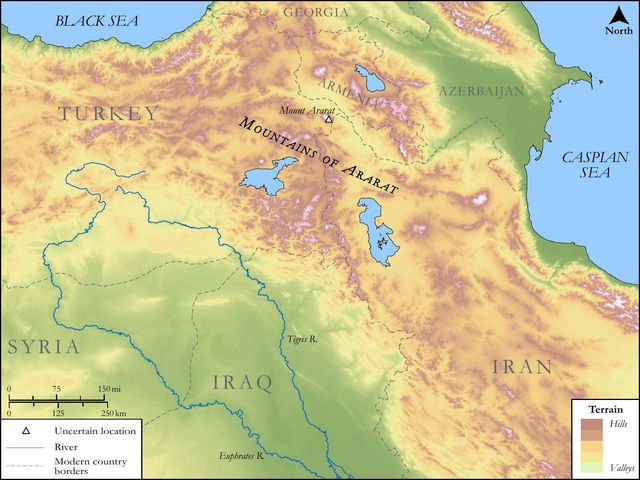
See on the biblical-era maps


Study this verse
Public-domain commentary
Matthew Henry
From his Commentary on the Whole Bible. Henry comments on passages, not single verses — this entry covers Genesis 6:22.
Noah's care and diligence in building the ark may be considered, 1. As an effect of his faith in the word of God. God had told him he would shortly drown the world; he believed it, feared the threatened deluge, and, in that fear, prepared the ark. Note, We ought to mix faith with the revelation God has made of his wrath against all ungodliness and unrighteousness of men; the threatenings of the word are not false alarms. Much might have been objected against the credibility of this warning given to Noah. "Who could believe that the wise God, who made the world, should so soon unmake it again, that he who had drawn the waters off the dry land (Gen 1:9, Gen 1:10) should cause them to cover it again? How would this be reconciled with the mercy of God, which is over all his works, especially that the innocent creatures should die for man's sin? Whence could water be had sufficient to deluge the world? And, if it must be so, why should notice be given of it to Noah only?" But Noah's faith triumphed over all these corrupt reasonings. 2. As an act of obedience to the command of God. Had he consulted with flesh and blood, many objections would have been raised against it. To rear a building, such a one as he never saw, so large, and of such exact dimensions, would put him upon a great deal of care, and labour, and expense. It would be a work of time; the vision was for a great while to come. His neighbours would ridicule him for his credulity, and he would be the song of the drunkards; his building would be called Noah's folly. If the worst came to the worst, as we say, each would fare as well as his neighbours. But these, and a thousand such objections, Noah by faith got over. His obedience was ready and resolute: Thus did Noah, willingly and cheerfully, without murmuring and disputing. God says, Do this, and he does it. It was also punctual and persevering: he did all exactly according to the instructions given him, and, having begun to build, did not leave off till he had finished it; so did he, and so must we do. 3. As an instance of wisdom for himself, thus to provide for his own safety. he feared the deluge, and therefore prepared the ark. Note, When God gives warning of approaching judgments, it is our wisdom and duty to provide accordingly. See Exo 9:20, Exo 9:21; Eze 3:18. We must prepare to meet the Lord in his judgments on earth, flee to his name as a strong tower (Pro 18:10), enter into our chambers (Isa 26:20, Isa 26:21), especially prepare to meet him at death and in the judgment of the great day, build upon Christ the Rock (Mat 7:24), go into Christ the Ark. 4. As intended for warning to a careless world; and it was fair warning of the deluge coming. Every blow of his axes and hammers was a call to repentance, a call to them to prepare arks too. But, since by it he could not convince the world, by it he condemned the world, Heb 11:7.
Continue studying Genesis 6:22 across the web’s major study libraries — every link below opens this exact verse, chapter, or book on the destination site.
Read & Compare
 BibleGatewayThis verse in more than 200 translations and 70 languages.
 Bible.comThe YouVersion reader — hundreds of translations, reading plans, and highlights.
 ESV.orgCrossway's official English Standard Version reader.
 NET BibleThe NET translation with 60,000+ translators' notes on every rendering decision.
 STEP BibleTyndale House's free study tool — original text, vocabulary, and scholarly resources.
 BibliaLogos Bible Software's free web reader.
 USCCBThe New American Bible (Revised Edition) with the U.S. bishops' study notes.
Commentaries
 BibleHub CommentariesDozens of classic commentaries on this verse, gathered on one page.
 StudyLightMore than 100 commentary sets — the largest collection on the web.
 BibleRefPlain-English commentary on what this verse means, verse by verse.
 Enduring WordDavid Guzik's free commentary on this chapter, widely used by Bible teachers.
 Bible Study ToolsVerse commentary alongside Greek and Hebrew study aids.
Original Language & Research
- BibleHub InterlinearThe verse word by word — original language, transliteration, and English.
- BibleHub LexiconEvery word's original-language definition and Strong's entry.
 Blue Letter BibleDeep-study tools — Strong's numbers, concordance, and word studies.
 SefariaThe Hebrew text with Rashi and centuries of Jewish commentary.
Sermons, Hymns & Audio


TrulyRandomVerse is not affiliated with these sites and doesn’t control their content. They’re linked because they’re genuinely useful.
Summary
serves as a profound capstone to God's detailed instructions for the ark, powerfully affirming Noah's absolute and unreserved obedience. This verse highlights Noah's exemplary faithfulness, demonstrating his complete trust in God's word and his diligent, precise execution of every divine command, setting him apart in a world marked by pervasive corruption and rebellion.
Context
ShowHideLiterary Context
This verse concludes the narrative segment in Genesis 6:9-22, which details God's covenant with Noah and the comprehensive instructions for building the ark. It follows the somber declaration of God's grief over human wickedness and His decision to destroy all life (Genesis 6:5-7). Amidst this impending judgment, Noah is introduced as a righteous man who "found grace in the eyes of the LORD" (Genesis 6:8). The preceding verses (Genesis 6:14-21) meticulously outline the ark's dimensions, materials, and the command to bring all living creatures, presenting a monumental and unprecedented task. Genesis 6:22 acts as the definitive statement of Noah's response, validating his unique standing before God and setting the stage for the flood narrative in Genesis 7.
Historical & Cultural Context
The concept of a global flood, while unique in its biblical scope, is echoed in the flood narratives of the nations, suggesting a shared memory of a catastrophic event among the descendants of Noah. In Noah's time, human society had descended into profound moral decay, characterized by violence and corruption (Genesis 6:11-12). Against this backdrop, Noah's righteousness and "walking with God" (Genesis 6:9) were exceptionally counter-cultural. The task of building an ark of such immense proportions would have been an undertaking of decades, requiring extraordinary faith, engineering skill, and sustained labor in a pre-industrial age. Noah's obedience would have been a public spectacle, likely inviting ridicule and skepticism from a world unaware of the impending divine judgment.
Key Themes
ShowHideGenesis 6:22 powerfully encapsulates several core themes prevalent throughout the book of Genesis and the broader biblical narrative. It underscores the theme of Divine Sovereignty and Judgment, as God exercises His absolute right to judge human sin and execute His plans. Simultaneously, it highlights God's Grace and Election, as Noah alone is chosen for preservation, not based on his merit but on God's sovereign favor (Genesis 6:8). Most prominently, the verse exemplifies Faith Expressed Through Obedience. Noah's "walking with God" (Genesis 6:9) is tangibly demonstrated through his complete and precise adherence to God's commands, illustrating that true faith is active and responsive to divine revelation. This sets a pattern for the covenant relationship, where God initiates and humanity responds in obedience, leading to blessing and the furtherance of God's redemptive plan.
Exposition and Analysis
ShowHideKey Word Analysis
ShowHideThis primitive root means "to do or make, in the broadest sense and widest application." In Genesis 6:22, it signifies Noah's active, complete, and precise execution of God's commands. It implies not just passive agreement but diligent, sustained labor and accomplishment of the task. The repetition of this verb ("Thus did Noah...so did he") emphasizes the totality of his action.
Meaning "rest" or "comfort." While the name itself foreshadows the rest and new beginning Noah brings to humanity after the flood, in this verse, it specifically identifies the individual who embodies perfect obedience. His name becomes synonymous with the act of faithful compliance, distinguishing him as the sole human instrument through whom God's plan for preservation would be realized.
An intensive root meaning "to constitute, enjoin." This word highlights the authoritative nature of God's instructions to Noah. It was not a suggestion or a request, but a direct, binding order from the supreme God (H430, ʼĕlôhîym). The use of this strong verb underscores the divine origin and mandatory nature of the ark's construction, to which Noah responded with unwavering submission.
Verse Breakdown
ShowHide"Thus did Noah;"
This opening clause immediately establishes Noah as the obedient actor. The word "Thus" (כֵּן, kēn) points back to the preceding detailed instructions, indicating that Noah's actions were a direct and faithful response to what God had just communicated. It's a declarative statement of his compliance, setting the tone for the rest of the verse.
"according to all that God commanded him,"
This crucial phrase specifies the nature and extent of Noah's obedience. The inclusion of "all" (כֹּל, kōl) is emphatic, stressing that Noah omitted nothing and added nothing to God's instructions. It highlights the meticulous detail of God's commands (as seen in Genesis 6:14-21) and Noah's perfect adherence to every single aspect, from the type of wood to the precise dimensions and the inhabitants. The source of the command is explicitly "God" (אֱלֹהִים, ʾĕlōhīm), underscoring the divine authority behind the instructions.
"so did he."
This concluding clause reiterates and reinforces the opening statement, creating a powerful literary inclusio. The repetition of "did" (עָשָׂה, ʿāśāh) emphasizes the completeness and finality of Noah's obedience. It confirms that his actions precisely mirrored God's will, leaving no room for doubt about his faithfulness. This phrase serves as the ultimate commendation of Noah's character and his response to divine revelation.
Literary Devices
ShowHideGenesis 6:22 masterfully employs Repetition and Emphasis to underscore Noah's complete obedience. The structure "Thus did Noah... so did he" creates a powerful literary frame, with the verb "did" (Hebrew: ʿāśāh) appearing at both the beginning and end of the statement, highlighting the totality of his actions. The phrase "according to all that God commanded him" is central to this emphasis, with "all" (Hebrew: kōl) serving as a strong intensifier, leaving no ambiguity about the comprehensiveness of Noah's compliance. This meticulous repetition and emphasis serve to cement Noah's status as an exemplar of faith and obedience, setting him apart from the disobedient world. Furthermore, this verse functions as Foreshadowing, anticipating future instances in the biblical narrative where God's people are called to precise obedience (e.g., the construction of the tabernacle in Exodus, where the phrase "as the LORD commanded Moses" is frequently repeated).
Theological and Thematic Connections
ShowHideGenesis 6:22 is a foundational text for understanding the nature of biblical obedience. It teaches that true faith is not merely intellectual assent but an active, comprehensive, and precise response to God's revealed will. Noah's obedience was not partial or selective; it was total, reflecting a deep trust in God's wisdom and sovereign plan, even when the task was unprecedented and seemingly impossible. This perfect compliance positioned Noah and his family as the recipients of divine salvation, demonstrating that while salvation is by grace, obedience is the fruit and evidence of that grace, essential for participating in God's redemptive purposes.
Reflection and Application
ShowHideNoah's unwavering obedience in Genesis 6:22 provides a timeless model for believers today. It challenges us to examine the depth and breadth of our own obedience to God's revealed will. Just as Noah's faith compelled him to act on God's word, even when the task seemed daunting, illogical, or the outcome uncertain, our faith should similarly lead to diligent action, trusting in God's wisdom and sovereign plan above our own understanding or societal norms. This narrative reminds us that many of God's callings require sustained effort, patience, and perseverance, urging us to remain faithful in carrying out His commands, knowing that a life of obedient faith is foundational to being effectively used by God for His redemptive purposes in the world and experiencing His promised blessings.
Questions for Reflection
ShowHideFAQ
ShowHideWas Noah's obedience unique, or is it expected of all believers?
ShowHideWhile Noah's specific task of building the ark was unique in its scope and context, the principle of complete and unwavering obedience to God's commands is a universal expectation for all believers. Noah serves as an exemplary model of the faith and submission that God desires from His people, demonstrating that true faith is always active and responsive to divine instruction.
What does "according to all that God commanded him" specifically imply?
ShowHideThis phrase emphasizes the totality, precision, and comprehensiveness of Noah's obedience. It means he did not omit any part of God's instructions, nor did he add any of his own ideas or modifications. Every detail, from the dimensions of the ark to the materials used and the inhabitants to be gathered, was followed exactly as God commanded, reflecting a perfect alignment of his will with God's.
How does Noah's obedience relate to the concept of grace?
ShowHideNoah "found grace in the eyes of the LORD" (Genesis 6:8), which highlights God's sovereign choice and unmerited favor as the initiator of the relationship and the plan of salvation. Noah's subsequent obedience was a response to that grace, demonstrating his faith and worthiness to be used by God. Grace precedes and enables obedience, and obedience then demonstrates the reality and transformative power of that grace in a person's life, showing that true faith is always active.
Christ-Centered Fulfillment
ShowHideNoah's ark, meticulously constructed in perfect obedience to God's command, stands as a profound type of salvation through judgment, ultimately fulfilled in the person and work of Jesus Christ. Just as Noah's obedience secured the physical salvation of his family from the flood, Christ's perfect and unwavering obedience to the Father's will, culminating in His sacrificial death on the cross, secured spiritual and eternal salvation for all who believe. Jesus is the ultimate Ark, the divinely appointed means by which humanity can escape the judgment of God's wrath and enter into new life. His life was marked by complete submission to the Father, as He declared, "I always do what pleases him" (John 8:29). Noah's faithful completion of his monumental task foreshadows Christ's triumphant declaration, "It is finished" (John 19:30), signifying the perfect fulfillment of the Father's redemptive plan through His Son's absolute and unreserved obedience, providing the only way to be saved from the coming judgment (Acts 4:12).