


Genesis 6:9
Bible text: King James Version (1769 Blayney text) · Public domain
Bible text: Berean Standard Bible · Public domain
Bible text: American Standard Version (1901) · Public domain
Bible text: World English Bible, Messianic edition · Public domain
Bible text: Geneva Bible (1599) · Public domain
Bible text: Young's Literal Translation · Public domain
- אֵלֶּה'E·lehtheseH428PrtParticle Demonstrative
- תּוֹלְדֹתtol·Dot[are] [the] accounts ofH8435N-fpcNoun Plural Feminine Construct
- נֹחַNo·achNoahH5146N-proper-mNoun Proper Masculine
- נֹחַNo·achNoahH5146N-proper-mNoun Proper Masculine
- אִישׁ'ish[was] a manH376N-msNoun Singular Masculine Absolute
- צַדִּיקtza·DikrighteousH6662Adj-msAdjective Singular Masculine Absolute
- תָּמִיםta·MimblamelessH8549Adj-msAdjective Singular Masculine Absolute
- הָיָהha·Yahhe wasH1961V-Qal-Perf-3msVerb Qal Perfect 3rd Singular Masculine
- בְּדֹרֹתָיוbe·do·ro·Tavin his generationsH1755Prep-b ¦ N-fpc ¦ 3msNoun Plural Feminine Constructבְּinדֹרֹתָיgenerationsוhis
- אֶת'etwithH854PrepPreposition
- הָאֱלֹהִיםha·'E·lo·Him<the> GodH430Art ¦ N-mpNoun Plural Masculine Absoluteהָ<the>אֱלֹהִיםGod
- הִתְהַלֶּךְhit·ha·lekhhe walked aboutH1980V-Hithpael-Perf-3msVerb Hithpael Perfect 3rd Singular Masculine
- נֹחַNo·achNoahH5146N-proper-mNoun Proper Masculine
English is a literal word-by-word gloss of the Hebrew, not the KJV's wording. Why?
This is the original text the KJV's translators worked from — each Hebrew word with its own literal English meaning in this verse, prepared by scholars at Tyndale House, Cambridge. The KJV translates whole sentences, not word by word, so its wording differs: one Hebrew word can become several English words, and the KJV may choose “the LORD” where the gloss reads “Yahweh”. Both are faithful — they answer different questions. For the KJV's own rendering, switch to the KJV text.
Details
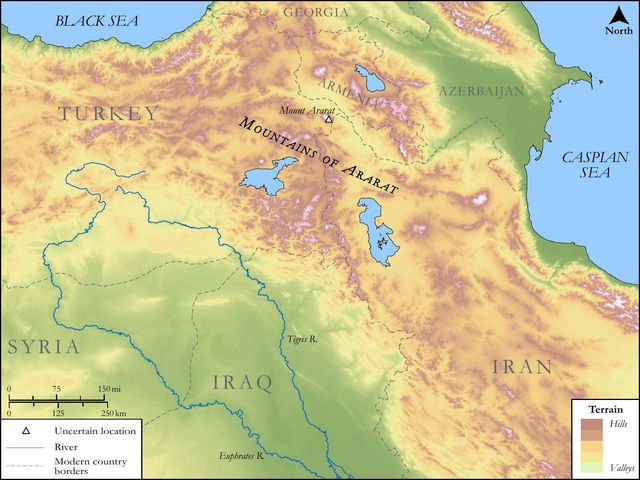
See on the biblical-era maps


Study this verse
Public-domain commentary
Matthew Henry
From his Commentary on the Whole Bible. Henry comments on passages, not single verses — this entry covers Genesis 6:8–10.
We have here Noah distinguished from the rest of the world, and a peculiar mark of honour put upon him. 1. When God was displeased with the rest of the world, he favoured Noah: But Noah found grace in the eyes of the Lord, Gen 6:8. This vindicates God's justice in his displeasure against the world, and shows that he had strictly examined the character of every person in it before he pronounced it universally corrupt; for, there being one good man, he found him out, and smiled upon him. It also magnifies his grace towards Noah that he was made a vessel of God's mercy when all mankind besides had become the generation of his wrath: distinguishing favours bring under peculiarly strong obligations. Probably Noah did not find favour in the eyes of men; they hated and persecuted him, because both by his life and preaching he condemned the world. But he found grace in the eyes of the Lord, and this was honour and comfort enough. God made more account of Noah than of all the world besides, and this made him greater and more truly honourable than all the giants that were in those days, who became mighty men and men of renown. Let this be the summit of our ambition, to find grace in the eyes of the Lord; herein let us labour, that, present or absent, we may be accepted of him, Co2 5:9. Those are highly favoured whom God favours. 2. When the rest of the world was corrupt and wicked, Noah kept his integrity: These are the generations of Noah (this is the account we have to give of him), Noah was a just man, Gen 6:9. This character of Noah comes in here either, (1.) As the reason of God's favour to him; his singular piety qualified him for singular tokens of God's loving-kindness. Those that would find grace in the eyes of the Lord must be as Noah was and do as Noah did; God loves those that love him: or, (2.) As the effect of God's favour to him. It was God's good-will to him that produced this good work in him. He was a very good man, but he was no better than the grace of God made him, Co1 15:10. Now observe his character. [1.] He was a just man, that is, justified before God by faith in the promised seed; for he was an heir of the righteousness which is by faith, Heb 11:7. he was sanctified, and had right principles and dispositions implanted in him; and he was righteous in his conversation, one that made conscience of rendering to all their due, to God his due and to men theirs. Note, None but a downright honest man can find favour with God. That conversation which will be pleasing to God must be governed by simplicity and godly sincerity, not by fleshly wisdom, Co2 1:12. God has sometimes chosen the foolish things of the world, but he never chose the knavish things of it. [2.] He was perfect, not with a sinless perfection, but a perfection of sincerity; and it is well for us that by virtue of the covenant of grace, upon the score of Christ's righteousness, sincerity is accepted as our gospel perfection. [3.] He walked with God, as Enoch had done before him. He was not only honest, but devout; he walked, that is, he acted with God, as one always under his eye. He lived a life of communion with God; it was his constant care to conform himself to the will of God, to please him, and to approve himself to him. Note, God looks down upon those with an eye of favour who sincerely look up to him with an eye of faith. But, [4.] That which crowns his character is that thus he was, and thus he did, in his generation, in that corrupt degenerate age in which his lot was cast. It is easy to be religious when religion is in fashion; but it is an evidence of strong faith and resolution to swim against a stream to heaven, and to appear for God when no one else appears for him: so Noah did, and it is upon record, to his immortal honour.
Historical interpretation
Six Centuries of Reception
7 surviving comments on this verse. Each one is dated, so this reads as a timeline rather than a list.
Select a marker to jump to its quote. Markers stagger vertically where authors wrote within a few decades of each other.
Let us steadfastly contemplate those who have perfectly ministered to his excellent glory... Noah, being found faithful, preached regeneration to the world through his ministry; and the Lord saved by him the animals which, with one accord, entered into the ark.
Do you see how the Lord created our nature to enjoy free will? I mean, how did it happen, tell me, that while those people showed enthusiasm for wickedness and rendered themselves liable to punishment, this man opted for virtue, shunned association with them and thus felt no effect of punishment? Is it not crystal clear that each person chose wickedness or virtue of his own volition? You see, if that were not the case and freedom did not have its roots in our nature, those people would not have been punished, nor would others receive reward for their virtue. Since, however, everything has been allowed to remain with our choice owing to grace from on high, punishment duly awaits the sinners, and reward and recompense those who practice virtue.
Therefore, in praise of Noah, Scripture not merely called him “blameless” but added “among the men of his day” to make it clear that he was so at that time when the obstacles to virtue were many. Besides, other men were illustrious after him, yet he will have no less praise than they. For he was blameless in his own time.
The Scriptures have shown us the gravity of human wickedness and the severity of the punishment that had to be inflicted on it. They then point out to us the one who amid such a multitude had been able to keep a sincere virtue. Virtue in fact is admirable even for itself. If someone cultivates virtue among those who refuse it, he makes it much more worthy of admiration. Therefore the Scriptures, as though in admiration of this just man, point out the contrast: that only one man who was living among those who soon would experience the wrath of God, this Noah, “found favor in the eyes of the Lord God.” He “found favor,” but “in the eyes of God”; not simply “he found favor” but “in the eyes of the Lord God.” This is said in order to show us that he had a single purpose, that is, to be praised by that eye that never sleeps or rests. He had no care for human glory or scorn or irreverence.
(Verse 9) Noah was a righteous and blameless man in his generation, pleasing to God. Specifically, it says 'in his generation' to show that his righteousness was not according to the perfected righteousness, but according to the righteousness of his generation. And this is what is said in Hebrew: Noah was a righteous man, blameless in his generations, he walked with God; that is, he followed in his footsteps.
Speaking of Noah, our unerring Scriptures tell us that he "was a just and perfect man in his generation," meaning that he was perfect as far as citizens of the city of God can be perfect during the pilgrimage of this present life, not, of course, as perfect as they are to be in that immortal life in which they will be as perfect as the angels of God.
These are the generations of Noah. Noah was a just and perfect man in his generations; he walked with God. Noah is praised with the same commendation as Enoch, namely that he followed the footsteps of the divine command with upright steps of good works, and thus, while the world perished, he was saved in the ark. Noah was just and perfect, not as the saints are to be perfected in that immortality in which they will be equal to the angels of God, but as perfect as one can be in this pilgrimage; and therefore it is added, in his generations, to signify that he was just according to the righteousness of his generations, namely, those generations in which Seth, Enos, Enoch, and the other holy and perfect men of that time lived. To these generations, the following text of Holy Scripture indicates, also belonged his sons Shem and Japheth.
Continue studying Genesis 6:9 across the web’s major study libraries — every link below opens this exact verse, chapter, or book on the destination site.
Read & Compare
 BibleGatewayThis verse in more than 200 translations and 70 languages.
 Bible.comThe YouVersion reader — hundreds of translations, reading plans, and highlights.
 ESV.orgCrossway's official English Standard Version reader.
 NET BibleThe NET translation with 60,000+ translators' notes on every rendering decision.
 STEP BibleTyndale House's free study tool — original text, vocabulary, and scholarly resources.
 BibliaLogos Bible Software's free web reader.
 USCCBThe New American Bible (Revised Edition) with the U.S. bishops' study notes.
Commentaries
 BibleHub CommentariesDozens of classic commentaries on this verse, gathered on one page.
 StudyLightMore than 100 commentary sets — the largest collection on the web.
 BibleRefPlain-English commentary on what this verse means, verse by verse.
 Enduring WordDavid Guzik's free commentary on this chapter, widely used by Bible teachers.
 Bible Study ToolsVerse commentary alongside Greek and Hebrew study aids.
Original Language & Research
- BibleHub InterlinearThe verse word by word — original language, transliteration, and English.
- BibleHub LexiconEvery word's original-language definition and Strong's entry.
 Blue Letter BibleDeep-study tools — Strong's numbers, concordance, and word studies.
 SefariaThe Hebrew text with Rashi and centuries of Jewish commentary.
Sermons, Hymns & Audio


TrulyRandomVerse is not affiliated with these sites and doesn’t control their content. They’re linked because they’re genuinely useful.
Summary
Genesis 6:9 serves as a pivotal introduction to Noah, presenting him as a singular figure of righteousness and integrity amidst a world consumed by pervasive wickedness. This verse sets the stage for God's impending judgment and the preservation of humanity, highlighting Noah's unique character—his justice, blamelessness, and intimate fellowship with God—as the divine rationale for his selection to survive the coming deluge. It paints a vivid picture of a man set apart by his faithful walk in a depraved generation, providing a stark contrast to the surrounding moral decay.
Context
ShowHideLiterary Context
Genesis 6:9 introduces the fifth major section of Genesis, marked by the recurring toledot formula, "These are the generations of..." (Hebrew: tôwlᵉdâh, H8435). This literary device, seen previously in Genesis 2:4 and Genesis 5:1, signals a shift in narrative focus from the general history of humanity to the specific lineage and story of Noah. It immediately follows the somber declaration of God's grief over humanity's profound corruption and violence, where "every intention of the thoughts of his heart was only evil continually" (Genesis 6:5). In stark contrast to this bleak backdrop of universal depravity and God's resolve to destroy all living things (Genesis 6:7), Genesis 6:9 presents Noah as a beacon of hope, having "found grace in the eyes of the Lord" (Genesis 6:8), thereby explaining why he and his family would be spared from the impending judgment.
Historical & Cultural Context
The pre-Flood world described in Genesis 6 is characterized by an unprecedented escalation of sin, violence, and moral degradation. The "Nephilim" and "mighty men" mentioned in Genesis 6:4 suggest a society dominated by powerful, perhaps tyrannical, individuals who contributed to the pervasive wickedness. This era predates the Mosaic Law, meaning Noah's righteousness was not adherence to a codified legal system but rather an internal moral compass aligned with God's inherent standards for humanity, likely revealed through conscience and direct divine communication. The phrase "in his generations" underscores the exceptional nature of Noah's character, as he maintained his integrity despite being immersed in a culture that had completely abandoned God. His walk with God was a radical counter-cultural act in a world given over to unbridled evil.
Key Themes
ShowHideGenesis 6:9 contributes significantly to several overarching themes within the book of Genesis and the broader biblical narrative. It highlights the theme of Divine Judgment and Grace, demonstrating that while God's justice necessitates judgment against sin, His grace provides a means of salvation for the righteous. Noah's character introduces the theme of the Righteous Remnant, a faithful few preserved by God amidst widespread apostasy, a pattern that recurs throughout biblical history (e.g., Elijah in 1 Kings 19). The concept of "walking with God" establishes a profound theme of Intimate Fellowship and Obedience, echoing Enoch's walk with God and setting a precedent for a personal, relational faith that transcends mere ritual. Finally, the verse foreshadows the Covenantal Relationship that God will establish with Noah after the Flood (Genesis 9:8-17), emphasizing that divine covenants are often initiated through individuals who demonstrate faithfulness and a genuine relationship with God.
Exposition and Analysis
ShowHideKey Word Analysis
ShowHideFrom the root tsâdaq (צָדַק), meaning "to be just" or "righteous." This term describes Noah as "just" or "righteous," signifying not merely moral uprightness but a state of being in right relationship with God and conforming to His divine standards. In a world where human thoughts were continually evil (Genesis 6:5), Noah stood apart by aligning his life with divine truth and exhibiting integrity in his dealings.
From the root tâmam (תָּמַם), meaning "to be complete" or "sound." This word describes Noah as "perfect" or "blameless." It does not imply absolute sinlessness but rather a wholeness of character, integrity, and unwavering devotion. It conveys an unblemished quality in his conduct and relationships, particularly remarkable given the pervasive corruption of his era. Noah was uncorrupted by the prevailing evil, demonstrating a complete and sound character before God.
A primitive root meaning "to walk," used in a great variety of applications, both literally and figuratively. In the phrase "walked with God," it signifies an intimate, continuous relationship characterized by deep fellowship, obedience, and a conscious awareness of God's presence. This "walk" implies a life consistently lived in accordance with God's will, marked by submission to His leading and a personal knowledge of Him that transcended mere religious observance.
Verse Breakdown
ShowHide"These are the generations of Noah:"
This opening phrase utilizes the toledot formula (Hebrew: tôwlᵉdâh, H8435), a common literary marker in Genesis that signals a new section focusing on the lineage and narrative unfolding from the named individual. It shifts the narrative focus from the general wickedness of humanity to the specific story of Noah and the unfolding events of the Flood, introducing his personal history and the events associated with him.
"Noah was a just man"
This clause introduces the first of Noah's three defining characteristics. The Hebrew term tsaddîyq (H6662) indicates that Noah was righteous, upright, and conformed to God's moral standards. In a world characterized by profound moral decay, Noah stood out as one who lived in right relationship with God and demonstrated ethical integrity in his actions.
"and perfect in his generations,"
The second characteristic describes Noah as "perfect" (Hebrew: tâmîym, H8549), signifying completeness, soundness, or blameless integrity. This does not mean sinless perfection but rather a wholeness of character and an unwavering devotion, an unblemished integrity in his conduct and relationships. The phrase "in his generations" (Hebrew: dôwr, H1755) emphasizes that his blamelessness was particularly remarkable given the pervasive corruption of his era, highlighting his unique moral fortitude amidst a depraved society.
"and Noah walked with God."
This profound phrase, echoing the description of Enoch in Genesis 5:24, signifies an intimate, continuous, and personal relationship with God. It implies a life lived in conscious awareness of God's presence, characterized by consistent obedience, submission to His will, and a deep, personal communion. This "walk" was the foundation of his righteousness and perfection, making him the chosen vessel for God's redemptive plan.
Literary Devices
ShowHideGenesis 6:9 employs several significant literary devices to convey its profound message. The most prominent is the Toledot Formula ("These are the generations of Noah"), which serves as a structural marker throughout Genesis, signaling a new narrative segment and emphasizing the genealogical and historical progression of God's plan. This verse also utilizes Contrast, setting Noah's exceptional character in stark opposition to the pervasive wickedness described in the preceding verses (Genesis 6:5-7). The Repetition of Noah's name three times in the verse ("Noah... Noah... Noah") serves to emphasize his central role and unique significance in the unfolding narrative. Finally, the phrase "walked with God" is a powerful Idiom, conveying a deep, intimate, and continuous relationship of fellowship and obedience, transcending a mere physical act and signifying a profound spiritual communion.
Theological and Thematic Connections
ShowHideGenesis 6:9 powerfully encapsulates the biblical theme of divine particularity in the face of universal corruption. While humanity as a whole had fallen into deep depravity, God's sovereign grace identified and preserved a righteous individual. Noah's character, described as "just" and "perfect," along with his intimate "walk with God," illustrates that genuine righteousness is not merely external conformity but an internal disposition rooted in a living relationship with the Creator. This verse sets the stage for the Flood narrative not as an arbitrary act of destruction, but as a just judgment against sin, tempered by the grace that found expression in Noah's preservation. It underscores that even in the darkest times, God always maintains a remnant through whom His redemptive purposes will continue.
Reflection and Application
ShowHideNoah's life, as presented in Genesis 6:9, offers a compelling paradigm for contemporary believers navigating a morally complex world. His ability to maintain integrity and cultivate a vibrant, intimate relationship with God, even amidst widespread corruption, serves as a powerful testament to the possibility of counter-cultural faithfulness. This verse challenges us to examine the quality of our own "walk with God"—is it characterized by consistent obedience, conscious awareness of His presence, and deep fellowship? Noah's example reminds us that true righteousness is not about outward perfection but about a heart fully devoted to God, striving for blamelessness in our conduct and relationships, regardless of the prevailing societal norms. His story encourages us that even one faithful individual can be profoundly significant in God's redemptive purposes, serving as a vessel through whom divine grace can flow into a broken world.
Questions for Reflection
ShowHideFAQ
ShowHideWhat does "generations of Noah" mean in this context?
ShowHideThis phrase, a common toledot formula (Hebrew: tôwlᵉdâh, H8435) in Genesis, signals a new narrative section. It introduces the account of Noah's life, his descendants, and the significant events that unfold during his time, particularly the Flood. It's a literary device used to structure the book's history, shifting the focus to Noah's personal story and his role in God's unfolding plan for humanity.
Was Noah truly "perfect" in the sense of being sinless?
ShowHideNo, the Hebrew word tâmîym (H8549), translated as "perfect," does not imply absolute sinlessness. Rather, it means complete, sound, blameless, or having integrity. It refers to Noah's moral and spiritual wholeness and his unblemished character relative to the pervasive corruption of his time. He was fully devoted and upright in his relationship with God, demonstrating a profound integrity that set him apart from his contemporaries.
What does "Noah walked with God" imply about his relationship with the divine?
ShowHideThis profound phrase signifies a deep, intimate, and continuous fellowship with God. It suggests a life lived in conscious awareness of God's presence, characterized by consistent obedience, submission to His will, and a personal, ongoing communion. It echoes the description of Enoch in Genesis 5:24, indicating a profound spiritual bond and a life aligned with divine purpose, making Noah a unique figure in a godless generation.
How did Noah's character influence God's decision to save him and his family?
ShowHideWhile Noah's character is highlighted in Genesis 6:9, the preceding verse (Genesis 6:8) states that Noah "found grace in the eyes of the Lord." This indicates that his salvation was ultimately an act of God's sovereign grace. However, Noah's righteousness was a response to that grace and an indicator of his receptivity to God's will, making him the chosen vessel through whom God would preserve humanity. His faithful walk with God demonstrated the faith that God honored, enabling him to participate in God's redemptive plan.
Christ-Centered Fulfillment
ShowHideGenesis 6:9, by highlighting Noah's unique righteousness and his intimate "walk with God," profoundly foreshadows the ultimate Righteous One, Jesus Christ. Noah, as a "just man" (Hebrew: tsaddîyq, H6662) who delivered his family from divine judgment through an ark, serves as a powerful type of Christ, who is perfectly just and delivers His people from the judgment of sin through His atoning sacrifice. Just as Noah and his family were preserved through water, believers are saved through Christ's death and resurrection, symbolized by baptism, which Peter explicitly connects to the Flood in 1 Peter 3:20-21. Furthermore, Jesus Himself refers to the "days of Noah" as a parallel to the conditions preceding His second coming, emphasizing the need for spiritual readiness and a righteous walk in a world oblivious to impending judgment, as seen in Matthew 24:37-39. Noah's faith, as highlighted in Hebrews 11:7, points to the perfect faith of Christ and the pathway of salvation offered through Him, demonstrating that salvation has always been by grace through faith, culminating in the person and work of our Lord Jesus.